
14 Cozy Breakfast Nook Seating Ideas for Small Spaces
A breakfast nook bench with a solid, hollow base wastes roughly six square feet of floor. Cozy breakfast nook seating in a city apartment has to earn its footprint twice, once for sitting and once for stowing things.
The 14 ideas below cover benches, stools, banquettes, and the paint and lighting moves that stretch a 5-by-6-foot corner. Each one comes with a measurement or a trade-off, so you can judge it before spending a dollar.
Making Cozy Breakfast Nook Seating Work in Compact Spaces
Cozy breakfast nook seating works best when a bench claims the wall and the other seats are light enough to lift with one hand. Plan on 24 inches of table edge per person and a seat height of 17-18 inches.
Start with these four building blocks, then layer the rest.
1. A lift-lid storage bench
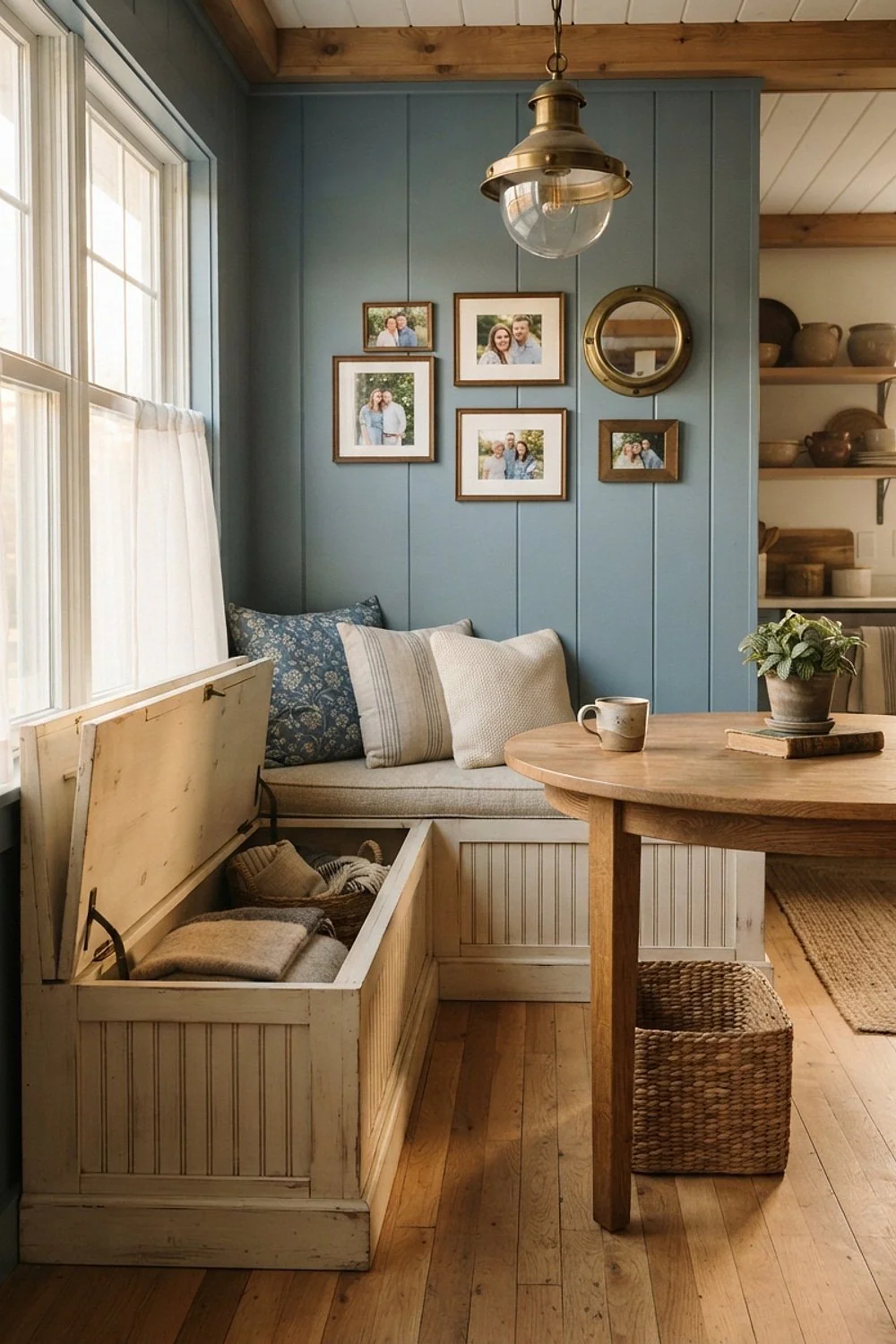
A 48-inch bench with a hinged lid runs about $180 in birch veneer and swallows roughly 4 cubic feet of table linens, spare bulbs, and the roasting pan that only appears at Thanksgiving. That turns dead floor into a closet, which is why it suits renters with no pantry.
Check the hardware before buying. Lids without soft-close stays drop on fingers, and the bench needs 3 inches of clearance from the wall or the lid won’t open fully.
2. Three cushions in one saturated color
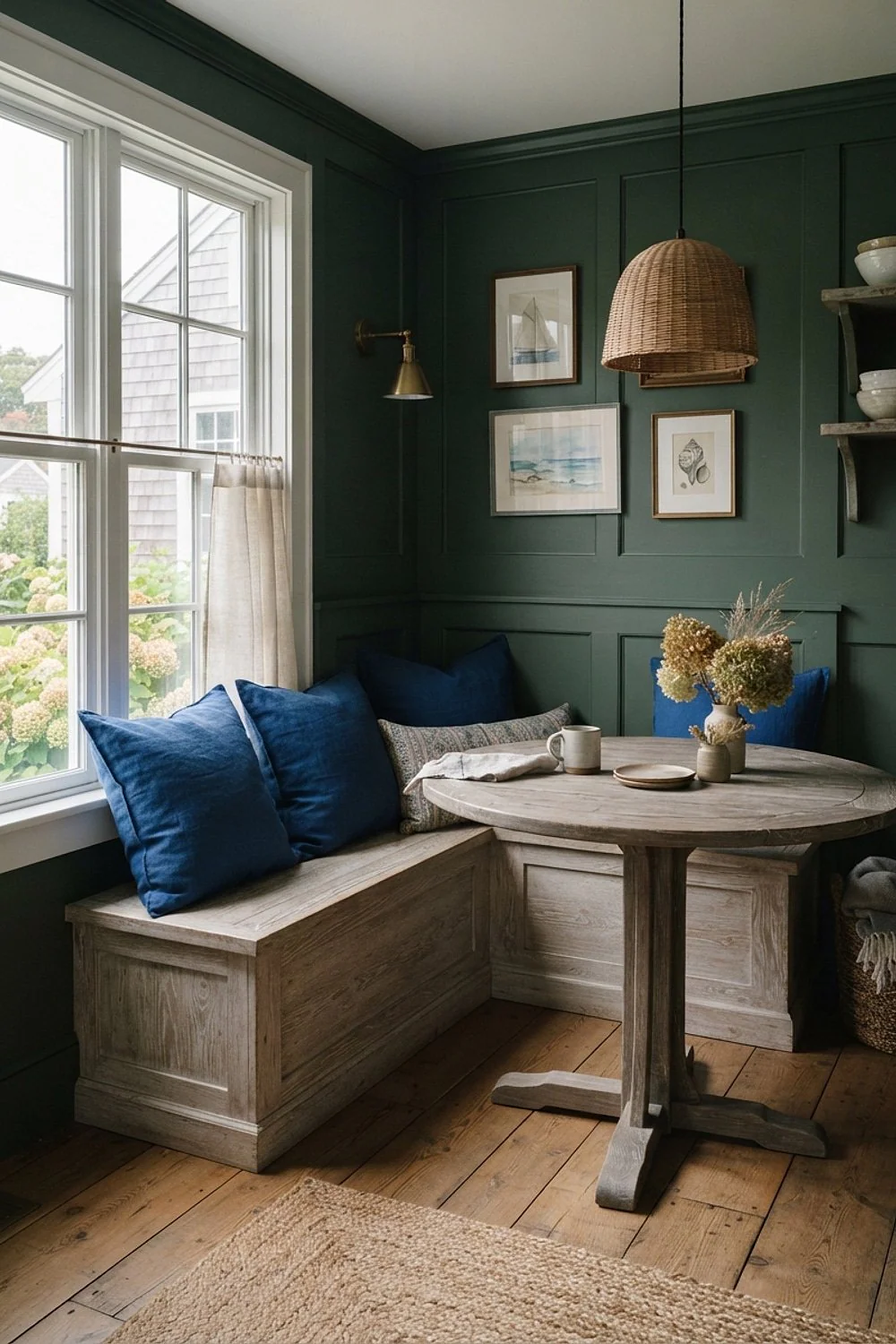
Terracotta, olive, or mustard repeated across every seat makes a mismatched, thrifted nook read as a deliberate choice. The eye sees one color block instead of four unrelated objects, so the corner looks calmer even when the furniture is chaotic.
Skip any shade that matches the wall exactly, because the seat disappears into the background. Pick a color two or three steps deeper than the paint behind it.
3. A 30-inch round pedestal table
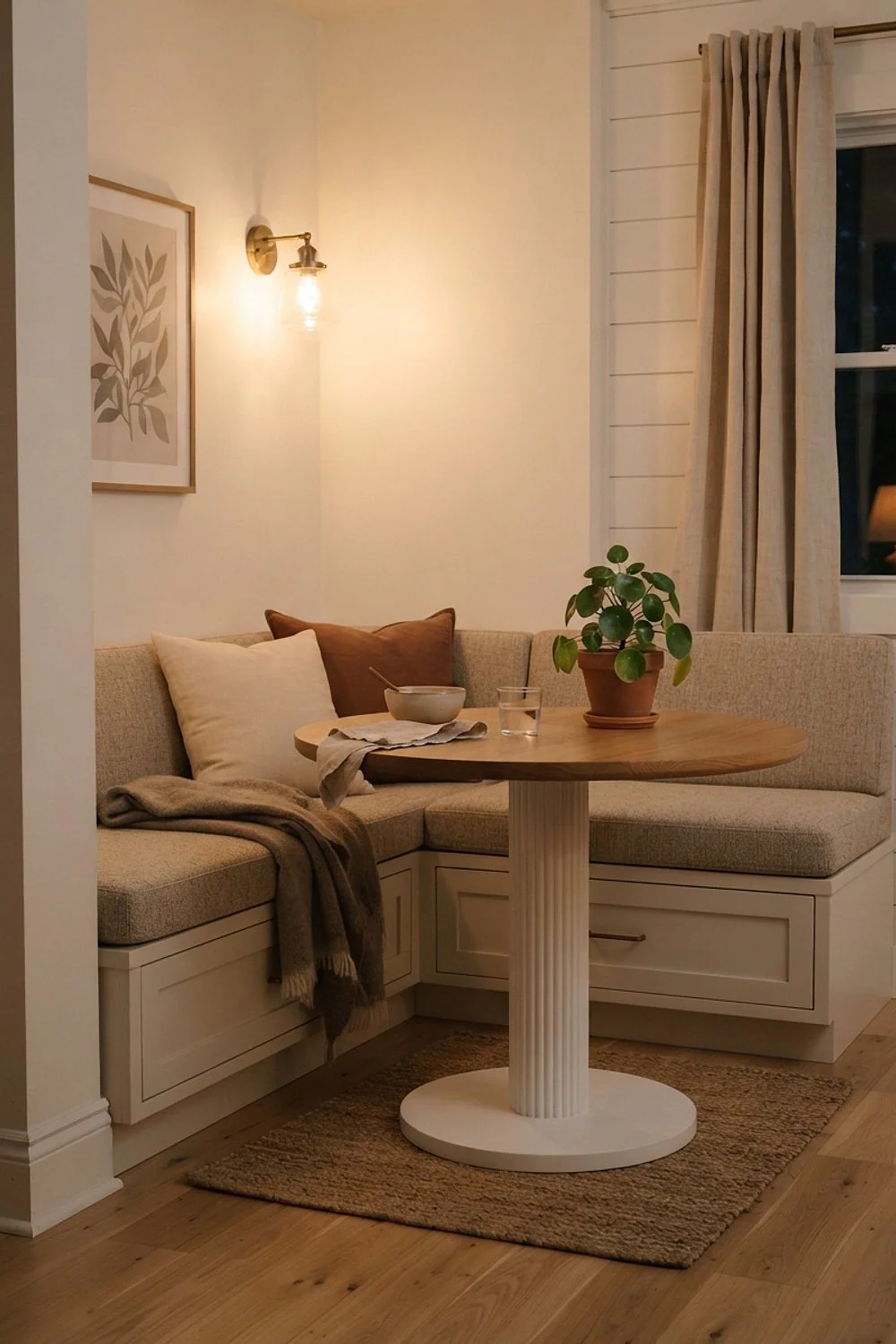
A round top 30 inches across seats two comfortably and four if everyone is friendly. The single center base leaves knees free, and there are no corners to catch a hip on the way to the coffee maker.
Here’s the counterintuitive part: a round table has less surface than a square one of the same width, yet it feels roomier in a tight nook. Anything over 36 inches, though, leaves less than 30 inches of walkway in most apartments.
4. A drop-leaf table against the wall
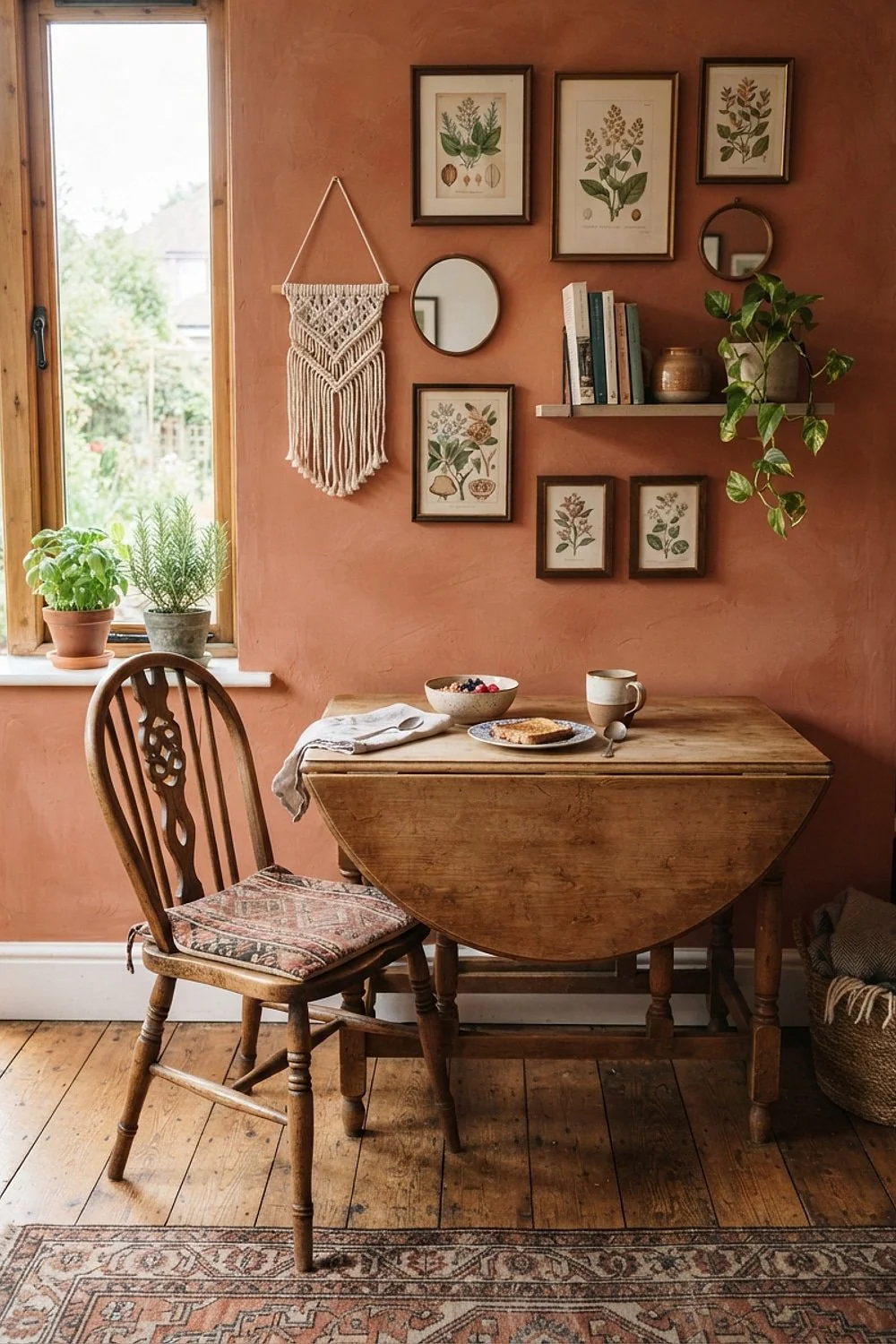
A drop-leaf with both leaves down is often only 10 inches deep, so it parks flush against the wall and frees the floor for vacuuming and cartwheeling toddlers. Raise one leaf for coffee for two, both for four.
Studio dwellers get the most from it, since it flips between desk and dining table in about ten seconds. Look for swing-out gate legs, because tabletop-only hinges sag within a year.
Cozy Breakfast Nook Seating That Survives Daily Chaos
Anything within arm’s reach of a breakfast table gets splashed, dragged, and sat on in wet coats. Judge every material and shape by how it behaves on a rushed Tuesday morning, not on photo day.
5. One oversized lumbar pillow in the corner
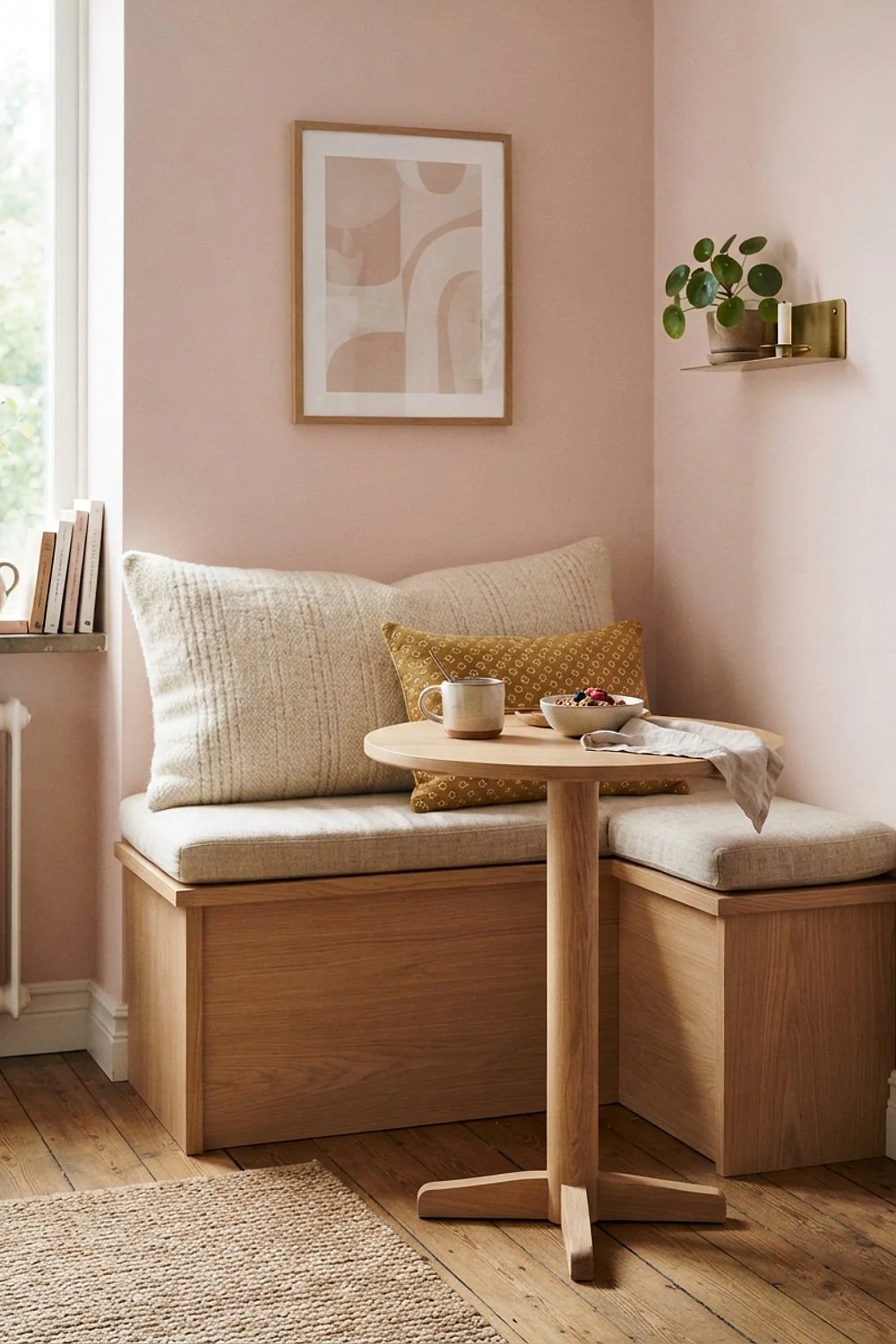
A 12-by-24-inch lumbar pillow tucked into the corner of the bench gives the back a target and gives the eye a focal point. Linen-cotton blends with a zip cover cost about $35 and go straight into the wash.
Choose a feather-and-foam insert over polyester fill, which flattens within weeks. And keep the count to one, because three pillows on a 48-inch bench leave nowhere for people.
6. Performance fabric on the seat

A seat covered in performance velvet or a coated weave rated for 30,000 double rubs or more shrugs off spilled coffee, backpack zippers, and a toddler’s sticky hands. The sealed surface lets liquid sit long enough to blot.
That suits families with kids, or any nook that doubles as a homework spot. Bouclé looks lovely and snags on the first set of keys. Plain untreated linen is the other trap. It stains permanently, so use it only on back cushions that nothing touches.
7. An L-shaped corner banquette
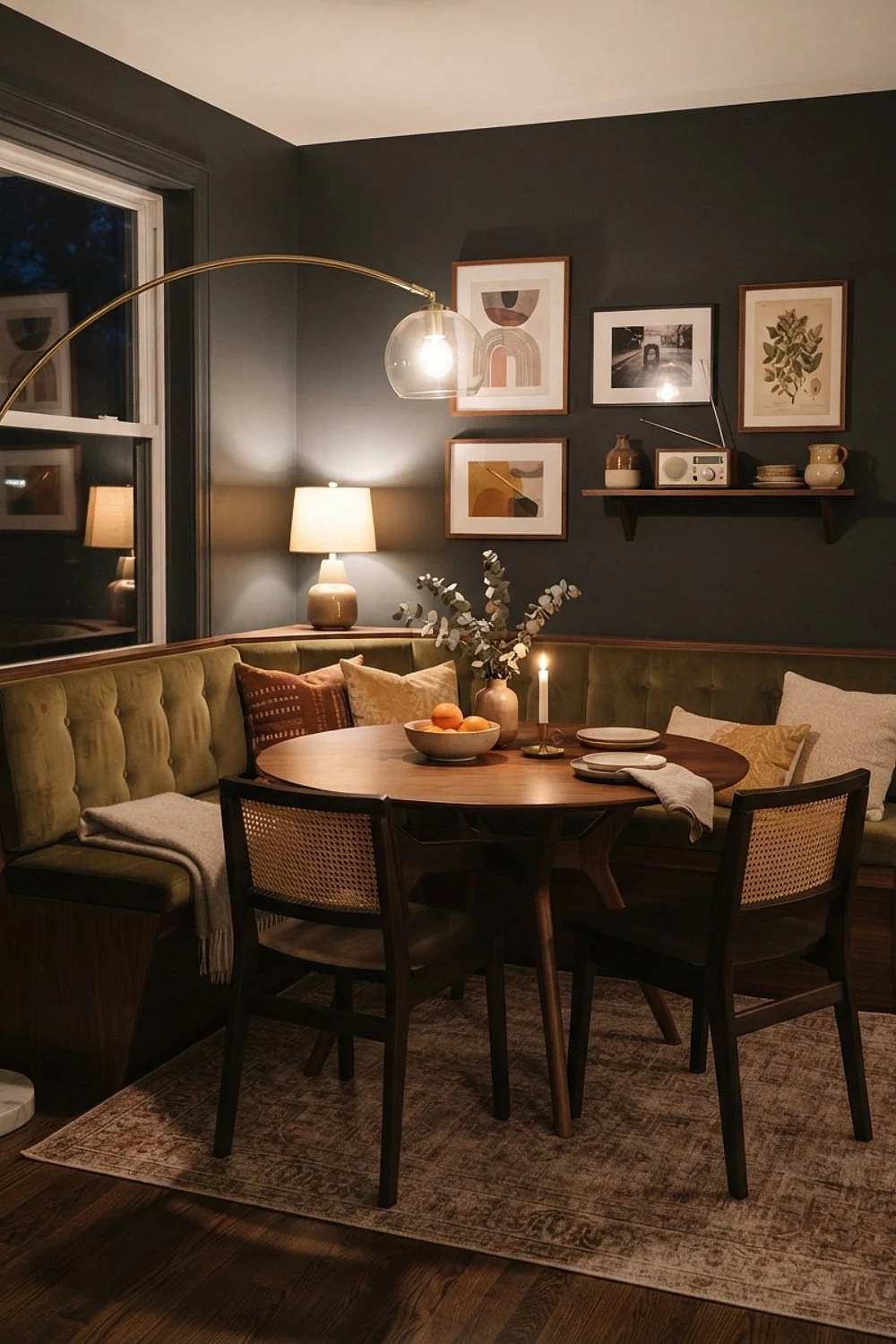
Two 42-inch legs tucked into a corner seat four people in about 5 by 5 feet, far more than four loose chairs would. The wall does the work that chair backs usually do, which frees 8-10 inches of floor.
Whoever sits in the middle has to slide along the bench to get out (this only works if the corner is truly square, and plenty of older buildings aren’t). Measure all three wall angles before ordering anything custom.
8. A 17-inch seat depth with a leaning back
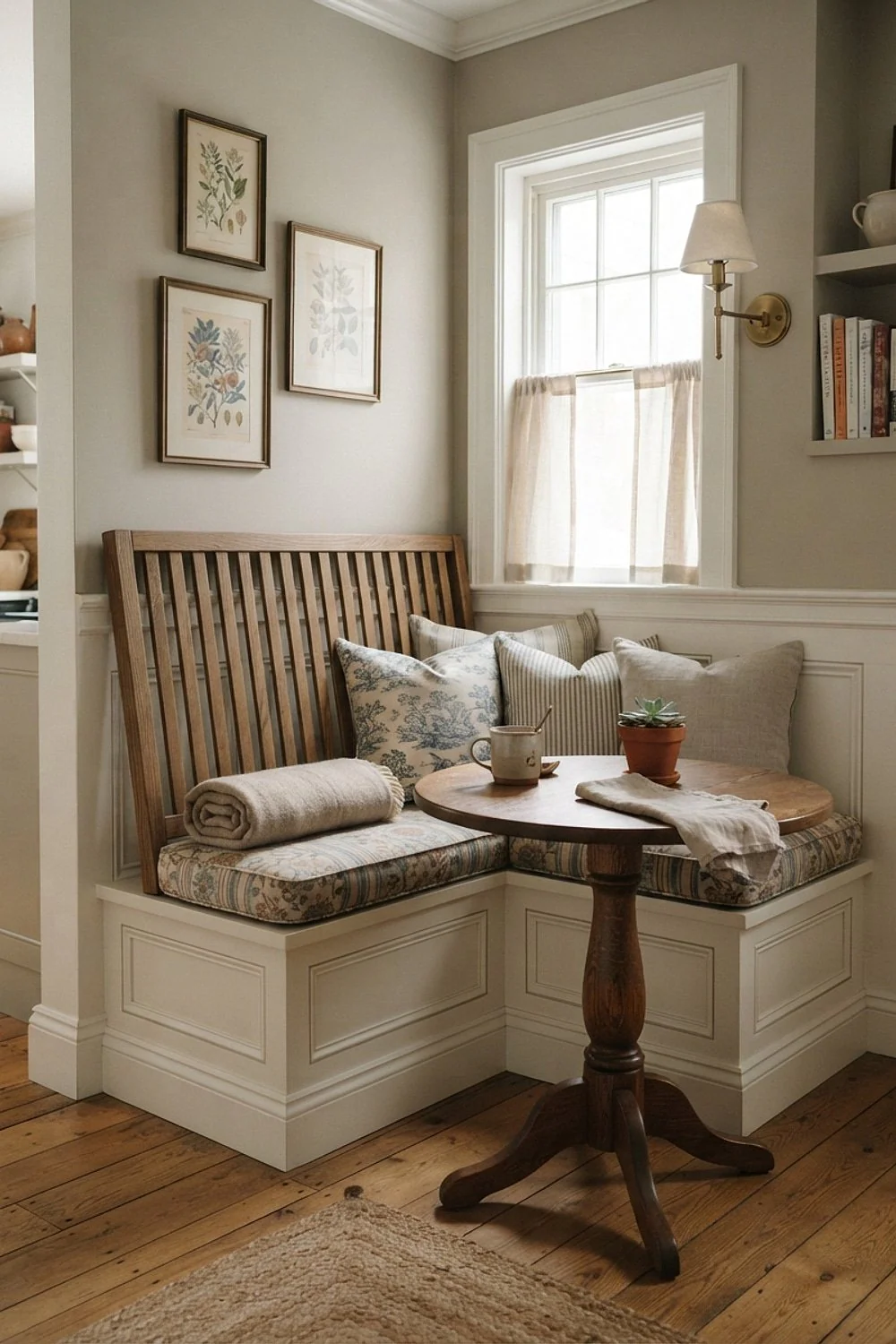
A bench seat 17 inches deep, with a back cushion angled at about 100 degrees, lets people sit through a long Sunday breakfast without sliding into a slouch. Depths past 20 inches leave short legs dangling and lower backs unsupported.
During a January cold snap, a window-side bench also leaks chill, so a wool or thick felt seat pad is worth the extra 2 inches of height. Use 3-inch high-density foam underneath it.
Things that elevate the room
Cozy breakfast nook seating looks twice its size when the ceiling, walls, and chair legs all do some visual work. These three moves cost almost nothing and make the nook feel deeper than it measures.
9. A plug-in pendant hung low
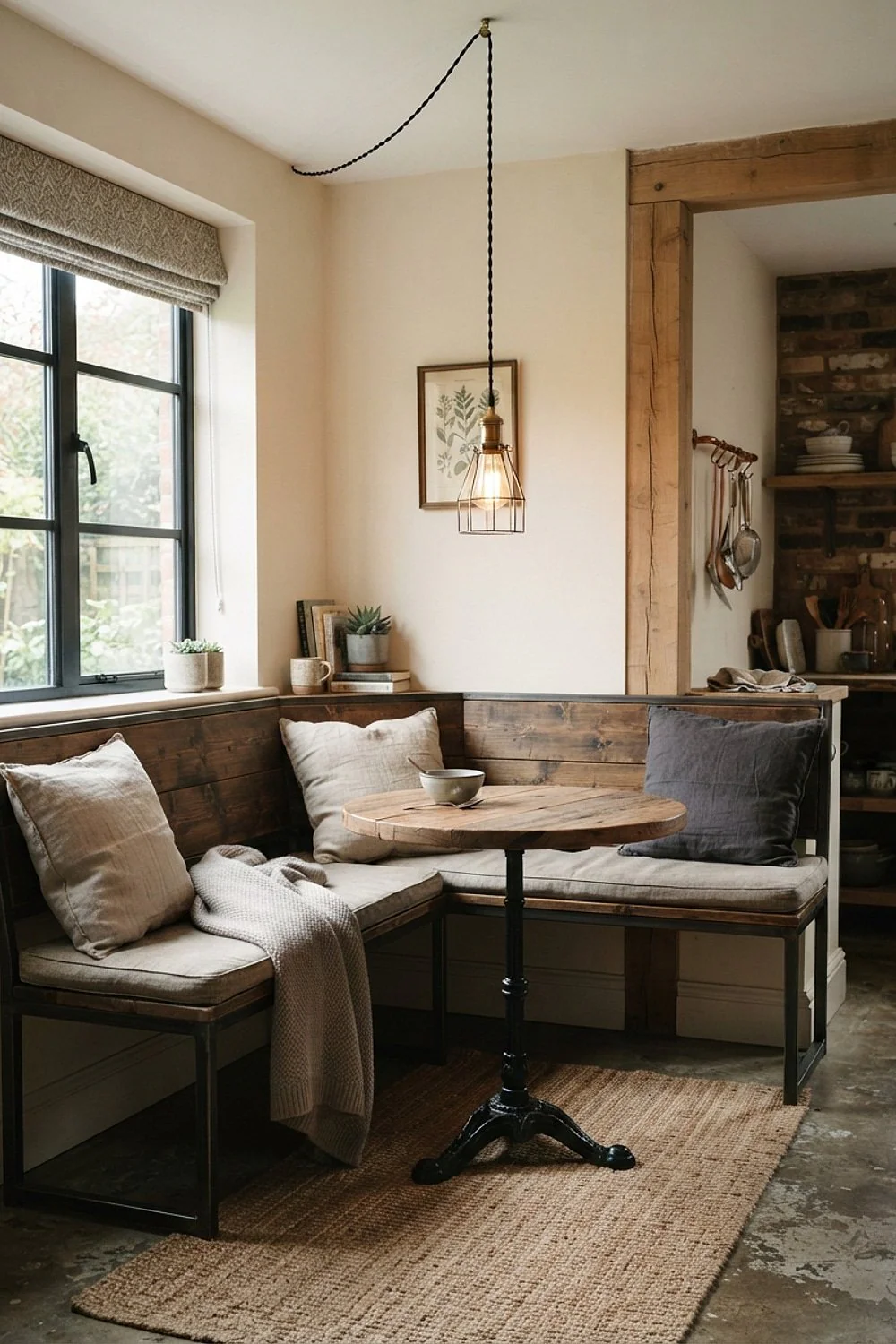
A plug-in swag pendant, around $40, hung 30-34 inches above the tabletop pools light on the table and lets the ceiling and corners fall away into shadow. At 4pm in winter, that glow beats any overhead fixture.
Use a 2700K bulb, since 5000K daylight tubes make breakfast feel like an office. Renters can hook the cord over a ceiling hook and skip the electrician.
10. Open-leg chairs, no arms
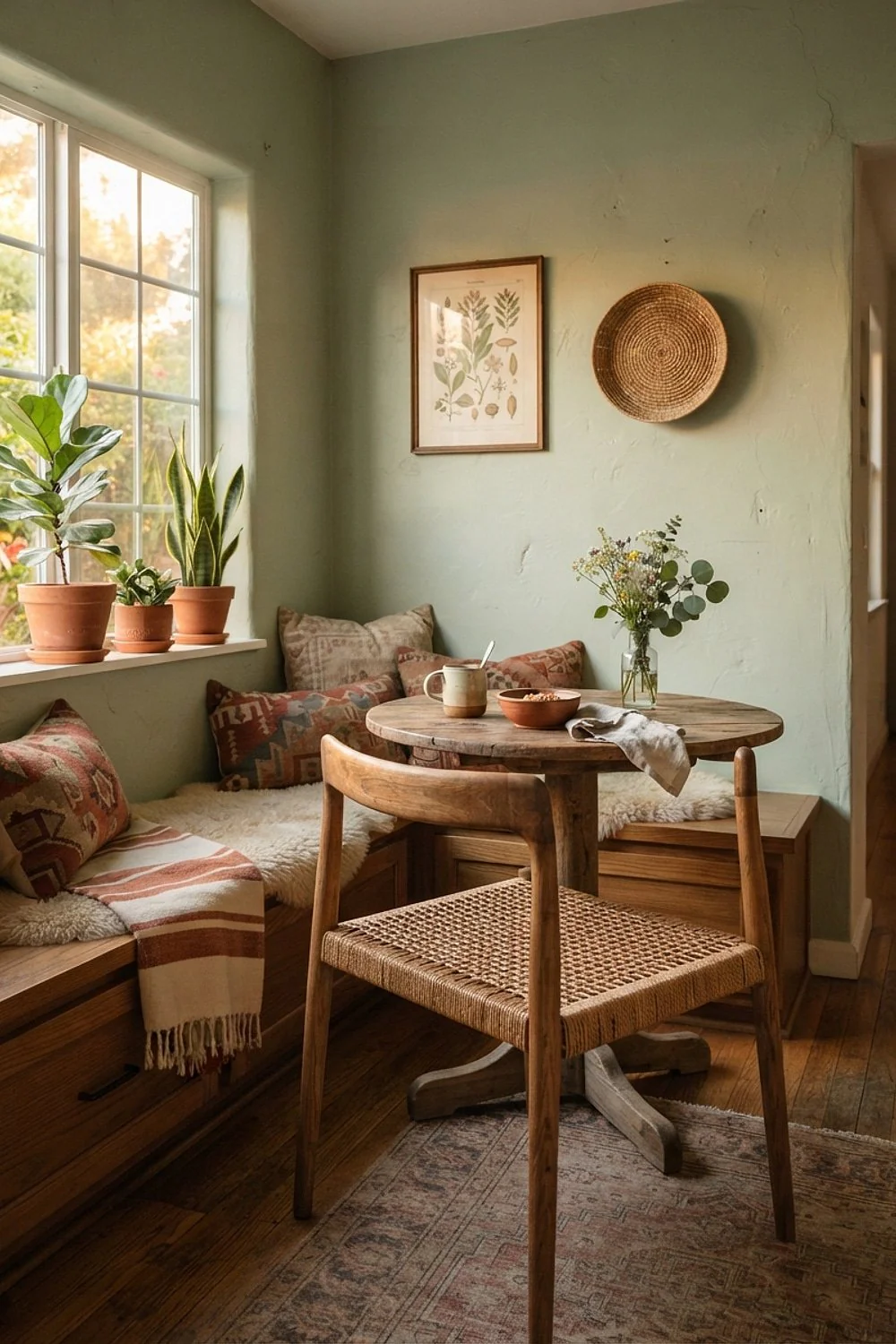
Upholstered armchairs are the usual mistake in a small nook, because each arm eats 3-4 inches of width and the skirted base blocks the view of the floor. Slim wood or metal legs show the floor running underneath, which reads as more room.
Choose a seat width of 16-18 inches, and test that every chair slides fully under the table. Anything that sticks out 6 inches becomes a shin magnet.
11. Deep green walls instead of white
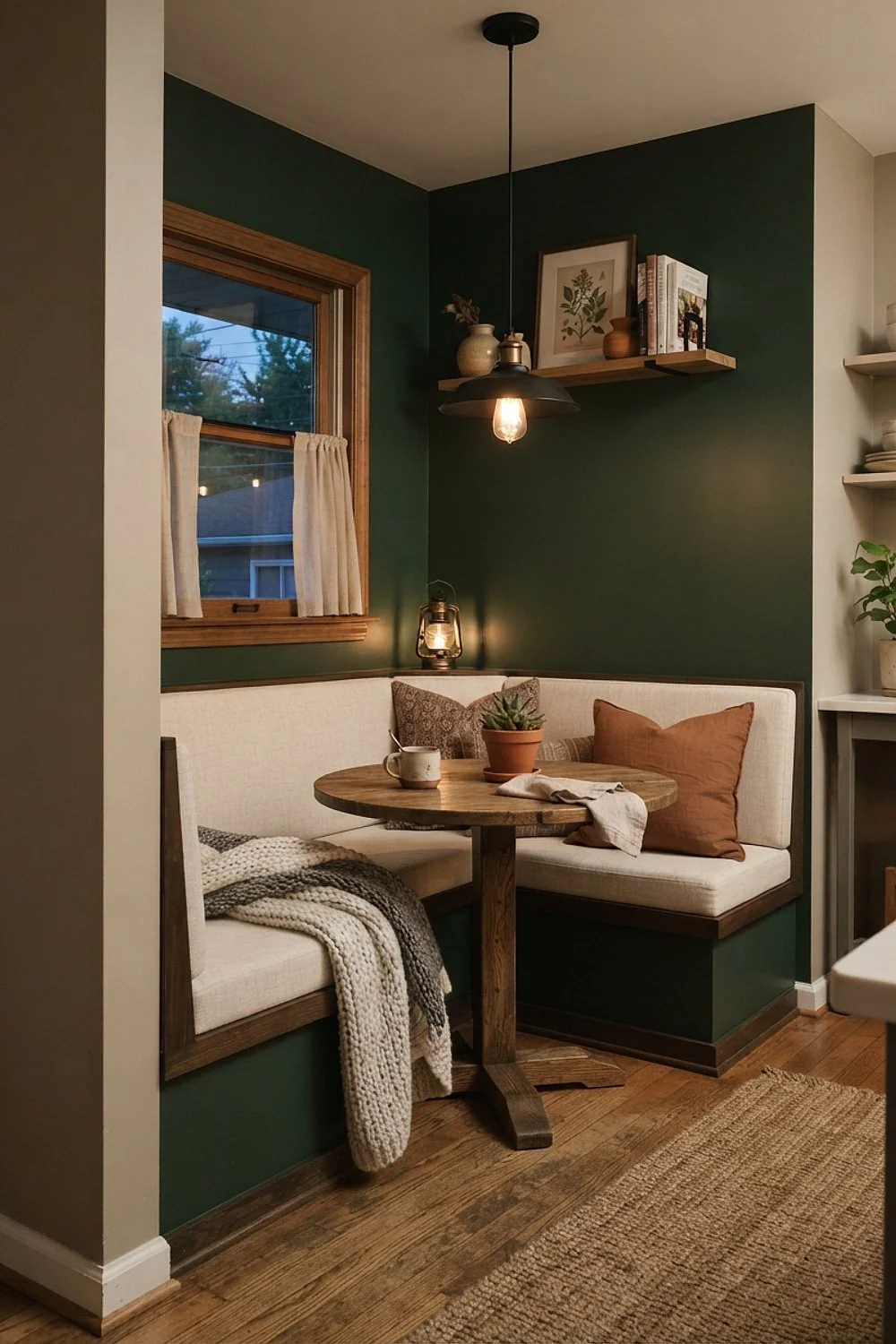
Pale paint is the standard advice for tiny rooms, and a nook is one place to ignore it. Deep green or inky navy blurs the corners, so the walls stop reading as walls and the alcove feels like it recedes.
Use matte or eggshell, since gloss shows every roller mark. A windowless nook is the exception, because dark paint without daylight just makes a cave.
Key pieces and where to find them
Furniture that does two jobs earns its place in a nook, as long as neither job gets worse because of the other. These three pieces hold up.
12. A wall-mounted fold-down table
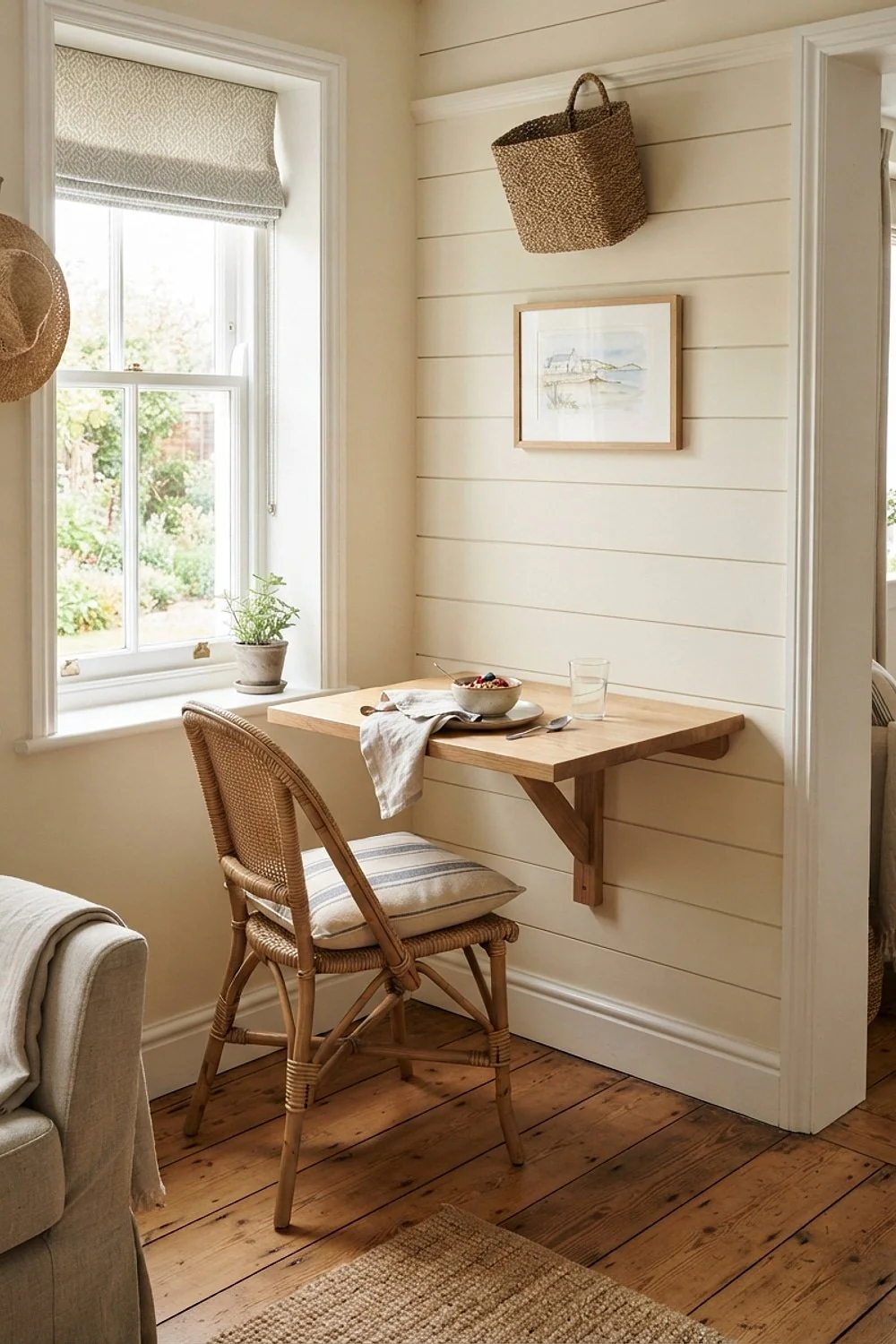
A fold-down table measuring 24 by 36 inches sits 3 inches off the wall when closed and holds two plates and a laptop when open. It suits narrow galley kitchens where a standing table would block the fridge.
Screw it into studs, never drywall anchors, because leaning elbows load the hinge more than the plates do. Add a folding bracket rated for at least 50 pounds.
13. A storage ottoman as the extra seat

When guests drop by, an ottoman about 18 inches across, around $60, doubles as a fifth seat and hides place mats inside. Because it slides under the table when it’s not needed, it adds seating without permanently crowding walkways.
That makes it a smart fit for small kitchens and budget-minded households that host only occasionally. Pick a firm top, since a soft one sags and tips a mug. And skip tufted tops, which trap crumbs in every button. Also measure the gap under the tabletop first, so the ottoman clears the apron.
14. A narrow rolling cart as a sideboard

A cart 12 inches deep and about 30 inches tall carries the toaster, mugs, and fruit bowl during breakfast, then rolls beside the sofa afterward. That keeps the table clear and the counters empty, because everything lives on one movable surface instead of spreading across several.
It suits tight eat-in kitchens and open-plan apartments where a built-in sideboard will not fit. Locking casters matter here. A cart that drifts when someone leans on it gets abandoned in a month. Check for a shelf lip too, so mugs stay put.
Mood board breakdown
Cozy breakfast nook seating falls apart when every idea above shows up at once. Choose one item per job and check the clearances.
- Leave 30-36 inches between the table edge and the nearest walkway.
- Keep the seat 10-12 inches below the tabletop.
- Pick one storage piece, either the bench or the ottoman.
- Limit the color palette to three shades.
- Hang one light source, centered on the table.
Common mistakes
The same few errors show up in almost every cramped breakfast corner. Fixing them costs less than replacing the furniture.
- Buying a table before measuring the bench depth.
- Choosing a rug larger than the table, which catches chair legs.
- Hanging a ceiling light higher than 40 inches above the table.
- Filling the wall with small frames instead of one large piece.
Start with the corner you already have
Cozy breakfast nook seating comes down to a handful of choices: a bench that stores, a table that fits, fabric that forgives, and a light hung low enough to draw the eye in. Get those four right and the rest is cushions.
Save or pin this list for the day you’re ready to start. Begin with one step, measuring the corner’s width and depth, before you buy anything.
Frequently Asked Questions
How much space do you need for cozy breakfast nook seating?
A bench plus a 30-inch round table fits in about 4 by 5 feet. Allow 30 inches of clearance in front of the nook so people can pass behind seated diners.
Can cozy breakfast nook seating work in a rental?
Yes, with freestanding pieces. A flat-pack storage bench, a plug-in pendant, and washable cushion covers all come out when the lease ends, and no wall repair is needed.
What is the best fabric for a breakfast nook bench?
Performance velvet or a coated woven fabric rated for 30,000 double rubs or more is the safest choice. Both wipe clean and resist snagging, unlike bouclé or plain linen.
How do you make a narrow nook feel less cramped?
Use open-leg chairs, hang a pendant light low over the table, and paint the walls a deep color. Those three moves make the corners soften and the nook look deeper.



7 Comments