
26 Earth Tone Living Room Updates Your Landlord Will Love
Beige bores. But an earth tone living room built entirely from removable pieces can look layered and deliberate, even when the white walls, builder-grade carpet and hollow-core doors stay exactly as they were on move-in day.
Below are 26 ideas, each one peelable, liftable or foldable, plus a plain-English look at what landlords tend to permit and a move-out routine that protects the deposit. Nothing here needs a drill, a roller or a patch kit.
Earth Tone Living Room Without Losing Your Deposit
Start with the biggest surfaces, since the floor, the sofa and the light bulbs set the temperature of everything else. Get those right and the smaller pieces fall into place.
1. A 9×12 jute rug over rental carpet
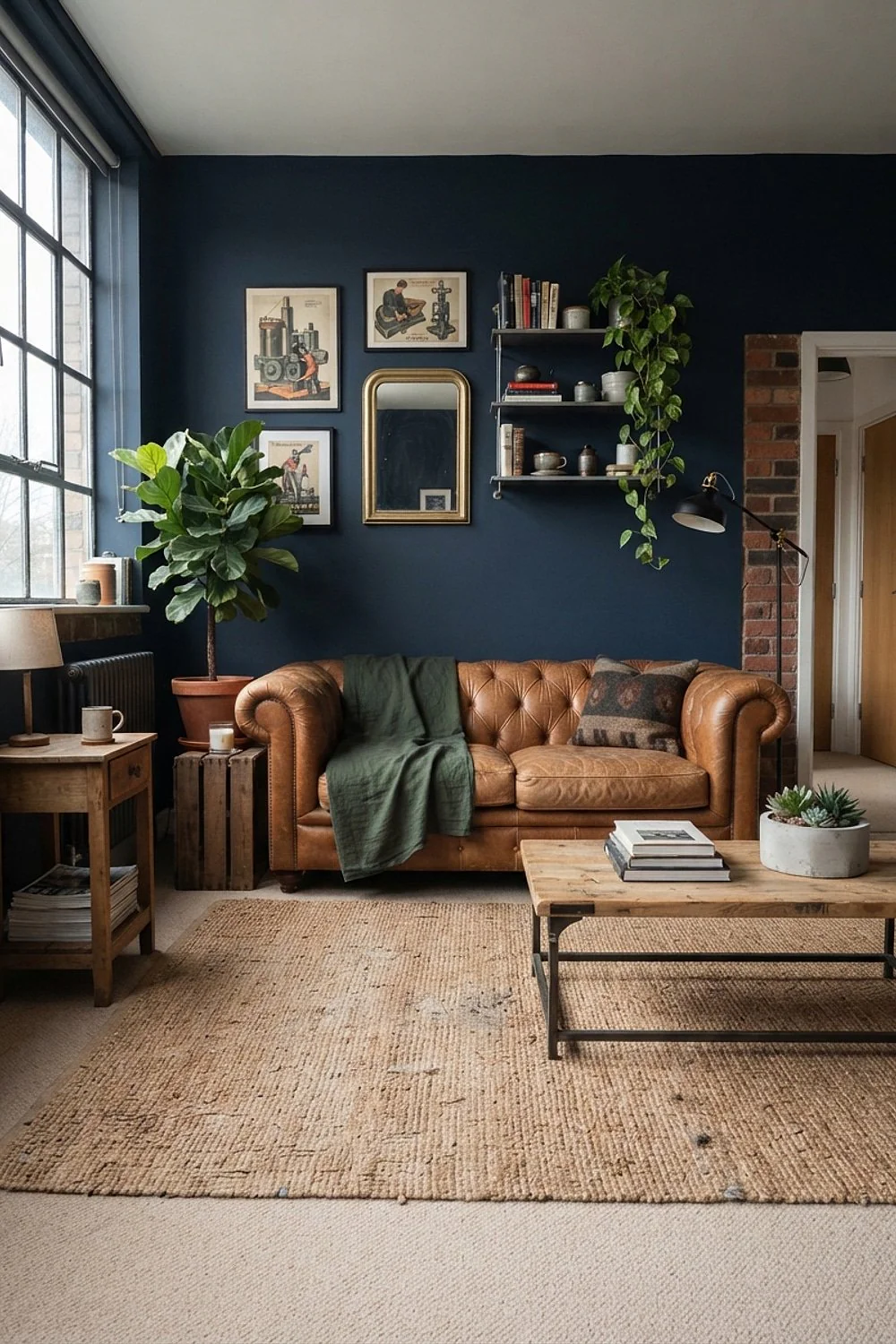
A 9×12 jute rug hides tired carpet or scuffed laminate in one move. In a typical 12×15 living room it leaves about 18 inches of floor showing on each side, and the front legs of every seat should sit on it. Expect to spend $180-300 for a flat weave.
It suits open rooms best. Jute sheds fibers and hates spills, so a household with kids should pick a jute-cotton blend and add a pad cut one inch smaller than the rug.
2. Lidded seagrass baskets for the clutter

Lidded seagrass baskets, about 16 inches square, swallow remotes, chargers and dog toys behind a texture that echoes the rug. The lid hides the mess completely, and the natural fiber reads as decor instead of storage.
Slide two under a console or line three along a wall. They suit small rooms with no closet nearby, especially rentals where built-ins are off the table. Skip open-weave styles unless a fabric liner goes inside, because small objects poke through the gaps and snag knit throws.
3. A burnt sienna throw on one sofa arm

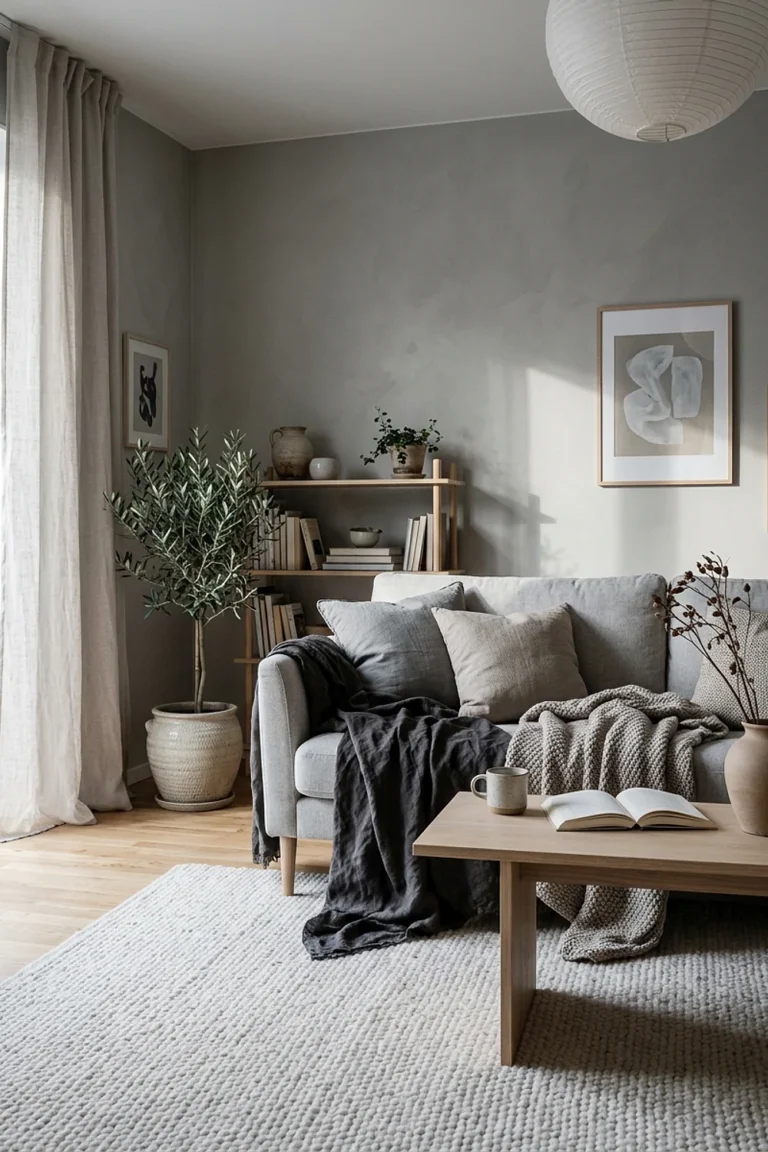
A burnt sienna throw folded over one sofa arm brings in clay color without a drop of paint. Choose a shade one step deeper than the sofa so the contrast looks planned rather than accidental.
This works best on gray or cream sofas, where the warm tone stands out, and it costs far less than reupholstering. On a brown sofa, go lighter, like camel, or the two merge into one muddy block. Avoid draping it over both arms, which looks like a set.
4. Pulling the sofa 8 inches off the wall

Pulling the sofa 8-10 inches off the wall gives the room breathing space and room for a slim console behind it. The walkway behind should stay at least 30 inches wide, or the setup starts to feel like a hallway.
It suits rooms wider than about 13 feet. In a narrower room, keep the sofa tight to the wall and let a rug define the zone instead.
5. A linen-blend slipcover in oatmeal or stone
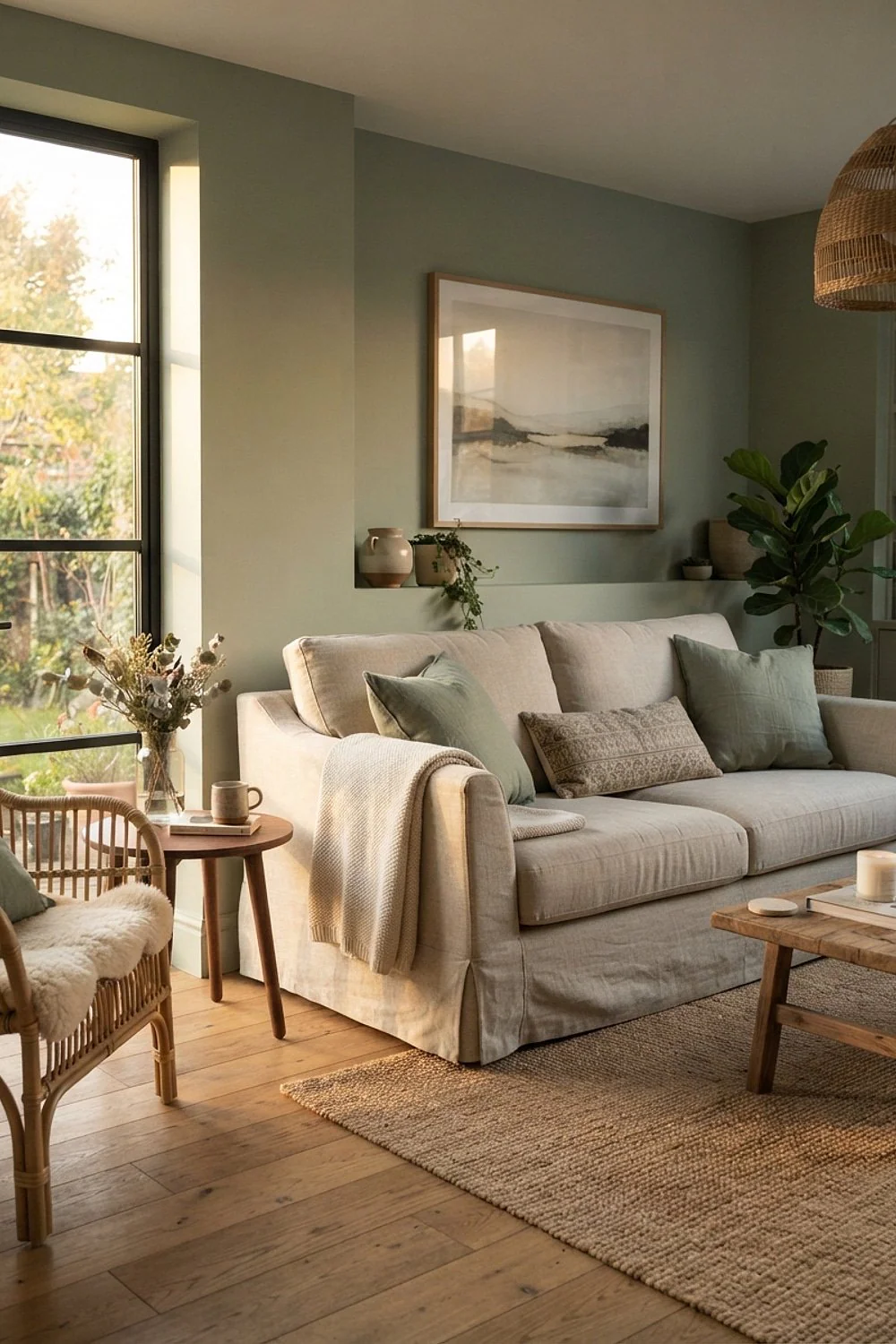
A linen-blend slipcover hides a dated sofa in about twenty minutes. It has to survive a dog, a toddler and six guests on movie night, which is why a machine-washable blend beats pure linen, since pure linen wrinkles and holds stains. Budget $90-140 for a loveseat.
Measure arm width and back height before ordering. A cover with 5-10% stretch fits odd shapes far better than a rigid one.
6. 2700K bulbs in the lamps already there

Swapping existing bulbs for 2700K, roughly 800 lumens each, turns flat white light into the amber glow earth tones depend on. A cool 4000K bulb makes terracotta look like a dull orange sticker, because blue-leaning light strips out the red in clay and wood.
This fits rooms with only overhead lighting and renters who cannot rewire anything. Match the socket size, and check the dimmer rating on any bulb going into a dimmable fixture, since a mismatch can buzz or flicker.
Textures that keep an earth tone living room from going flat
Neutral palettes live or die on surface variety. Mix at least three textures, such as nubby, smooth and woven, so the eye has something to travel across.
7. Bouclé pillow covers on 20-inch inserts
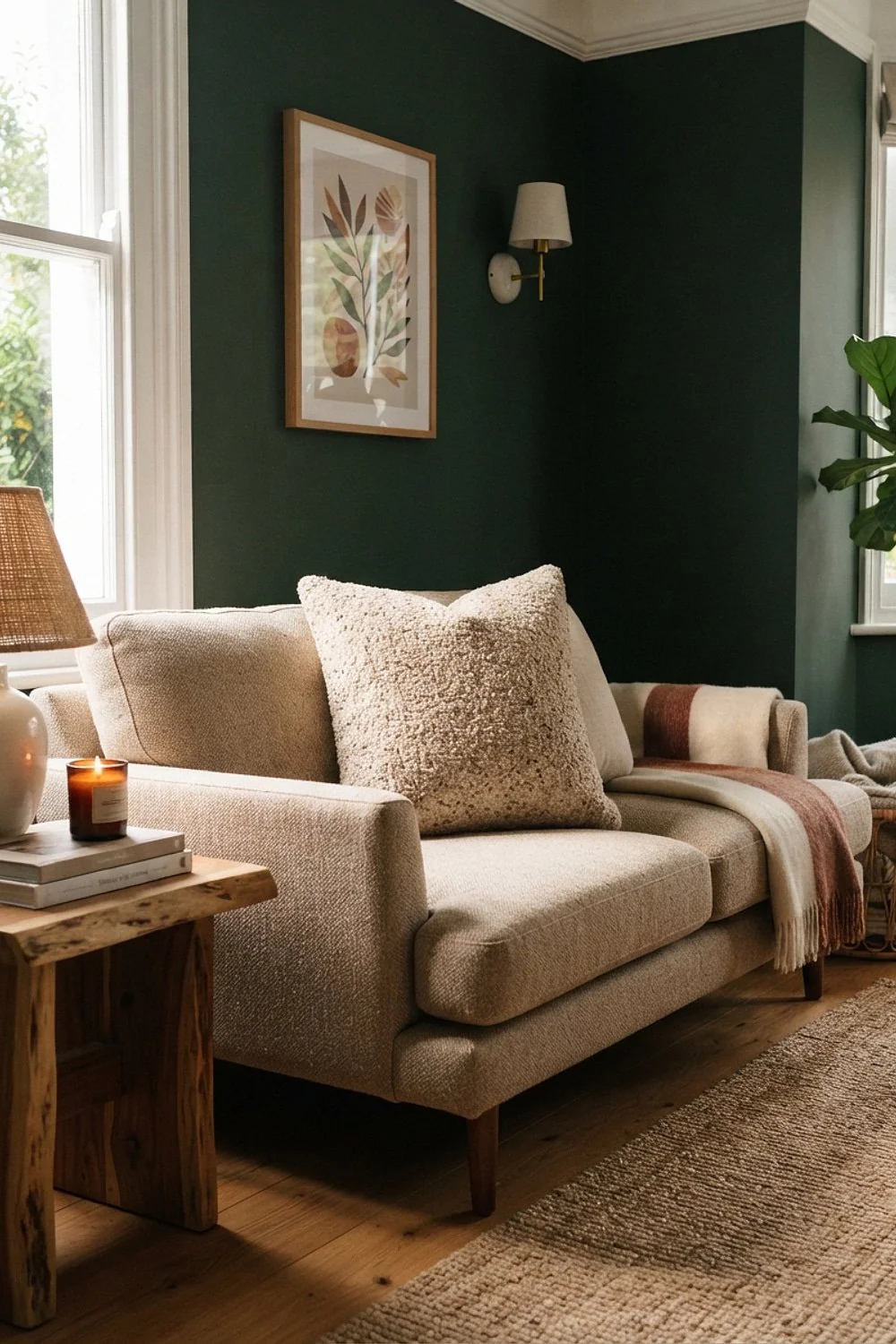
Bouclé covers on 20-inch inserts give a nubby surface that catches light at the edges, and cream bouclé feels like a sheep’s fleece under your palm. The looped texture adds depth to a plain sofa without adding another color.
They suit TV-night households where pillows get squashed and hugged, since the loops hide flattening and small stains. Check the fiber label. A cotton blend holds up, while all-polyester bouclé pills within a season.
8. Skipping the matched brown set

Five pieces in the exact same chocolate brown flatten a room faster than any other move. Wood, leather and clay each lean a different direction, so mix reddish, yellowish and gray-browns on purpose.
A living room with a single brown dominating every surface feels like a waiting room. Break it up with cream, rust and one deep green. This suits anyone furnishing slowly from secondhand finds, since mismatched woods stop looking like mistakes. Boxed furniture sets are the usual culprit.
9. Pillows in uneven groups with one pattern
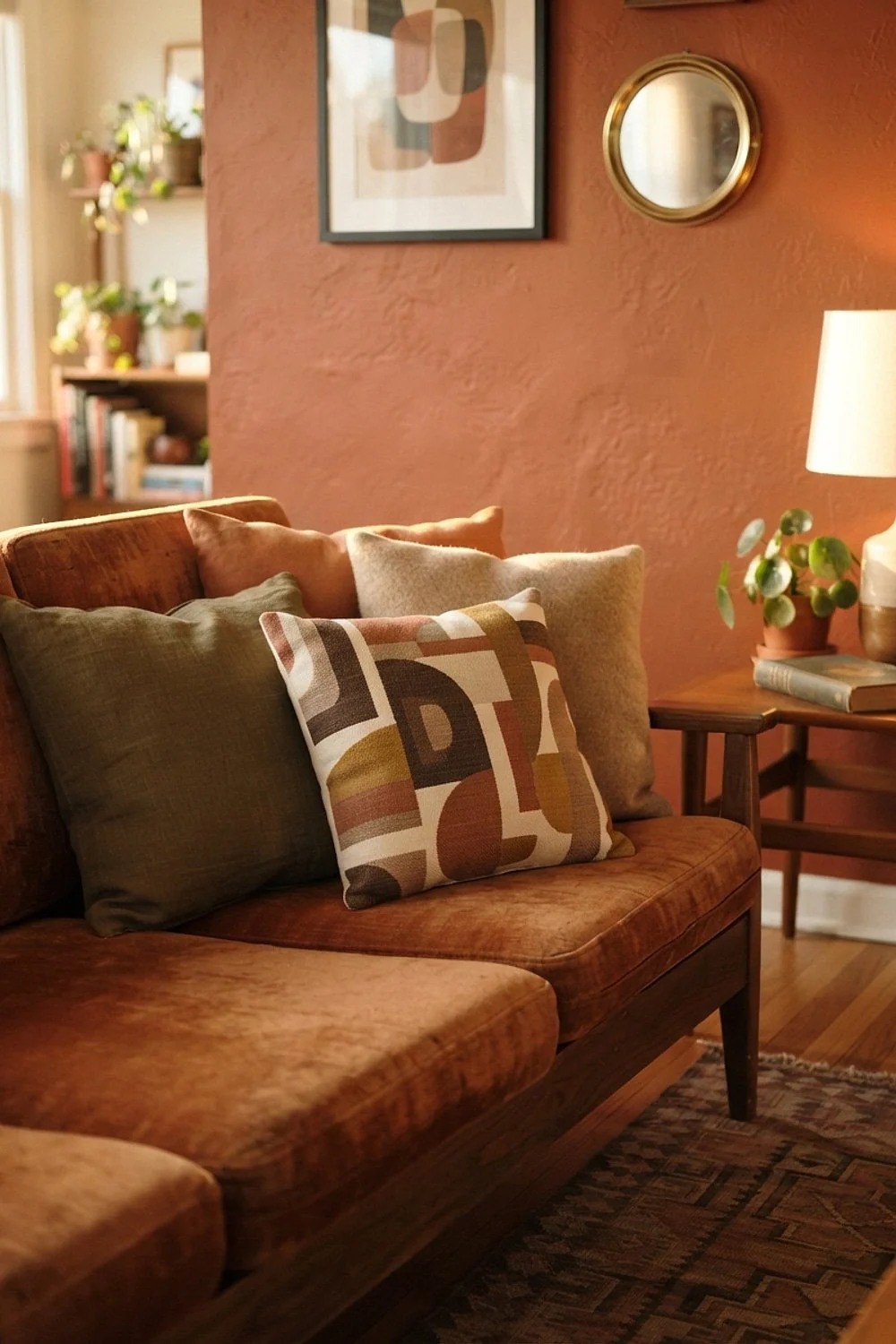
Pillows grouped in rust, cream and olive, with exactly one patterned cover among them, read as collected rather than bought as a set. Vary the sizes too, mixing 20-inch squares with one 12×20 lumbar.
This suits anyone with a long sofa, where an odd count like five fills the span without looking symmetrical. Pattern works best when it repeats a color already in the room, like a rust stripe on cream. Avoid two competing patterns, which turn the pile busy.
10. A storage ottoman as coffee table

A storage ottoman about 30 inches square works as coffee table, footrest and blanket vault. Set a wooden tray on top for drinks and a candle. Prices run around $120 for a solid one.
It suits family rooms where corners get bumped, since there are no sharp edges. Choose performance velvet or a tight weave, because loose weaves collect pet hair.
11. Long curtains on a no-drill tension rod

Panels 84 or 96 inches long make a window look taller than it is when the rod sits at the very top of the frame. Oat linen filters afternoon light into a soft gold. (Most tension rods sag past about 48 inches under heavy fabric, so check the rating before buying.)
Lined panels block more glare and cold. Keep the weight modest if the window is wide.
12. A three-tier rattan rolling cart

A three-tier rattan cart about 28 inches tall works as a side table by the sofa and rolls aside when guests arrive. Use the bottom tier for baskets and the top for a lamp or plant.
It suits tight rooms where a fixed table would block traffic. Check the wheels, because hard plastic ones scratch laminate and need felt strips taped around them.
Walls without nails, paint or regret
White walls are the biggest obstacle in a rental, and the best fixes there rely on adhesive that releases cleanly.
13. One wall of clay-toned peel-and-stick wallpaper
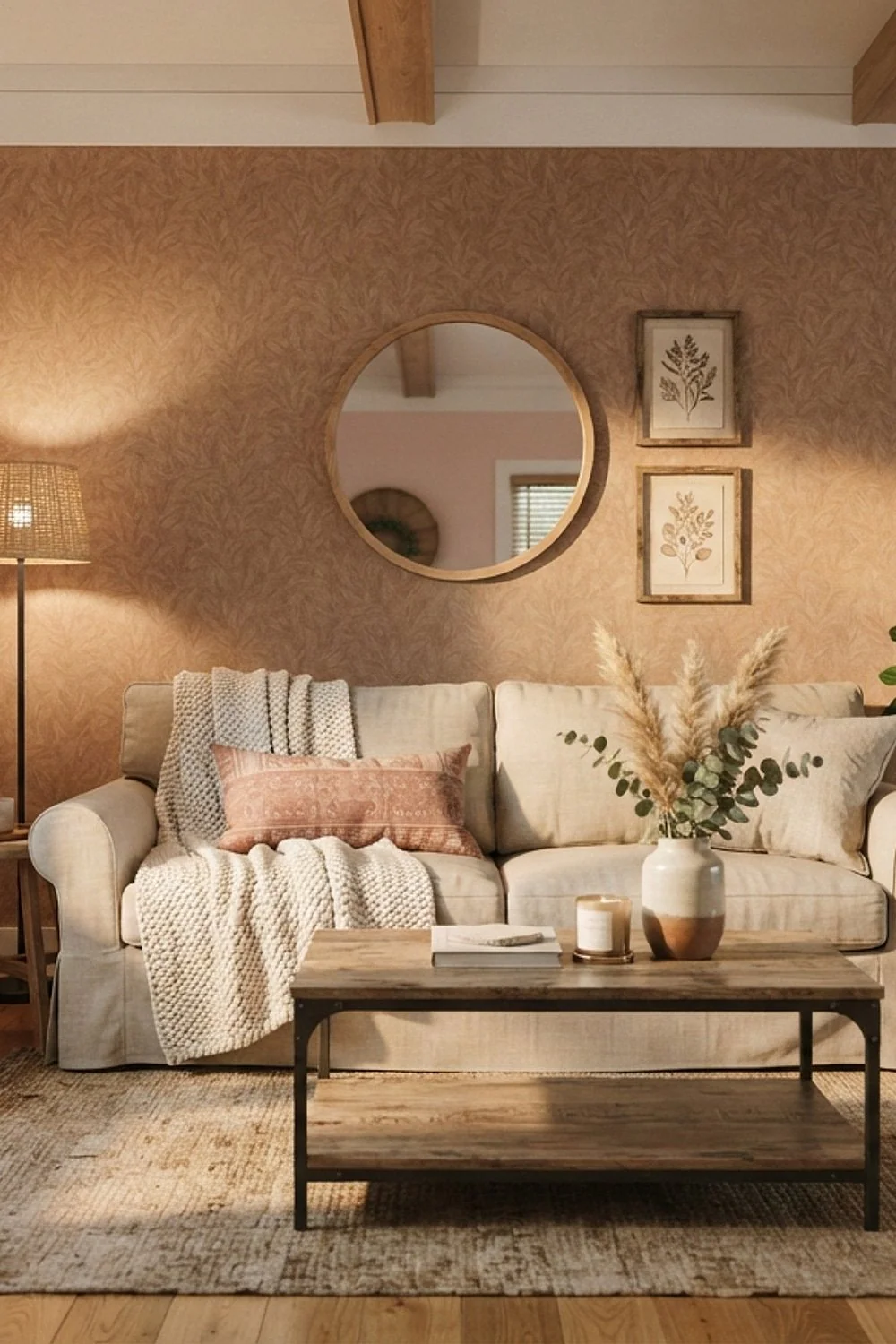
A clay or olive peel-and-stick wallpaper behind the sofa changes the whole room, because one saturated wall anchors the palette and makes the neutral furniture in front look intentional.
A single 20.5-inch roll runs $30-40, and a typical sofa wall takes three to five of them, so budget $90-200 for the wall.
This suits renters who cannot paint. Test a scrap in a closet corner first. Heavily textured rental paint won’t grip, and smooth matte walls hold best.
14. A gallery wall planned on kraft paper
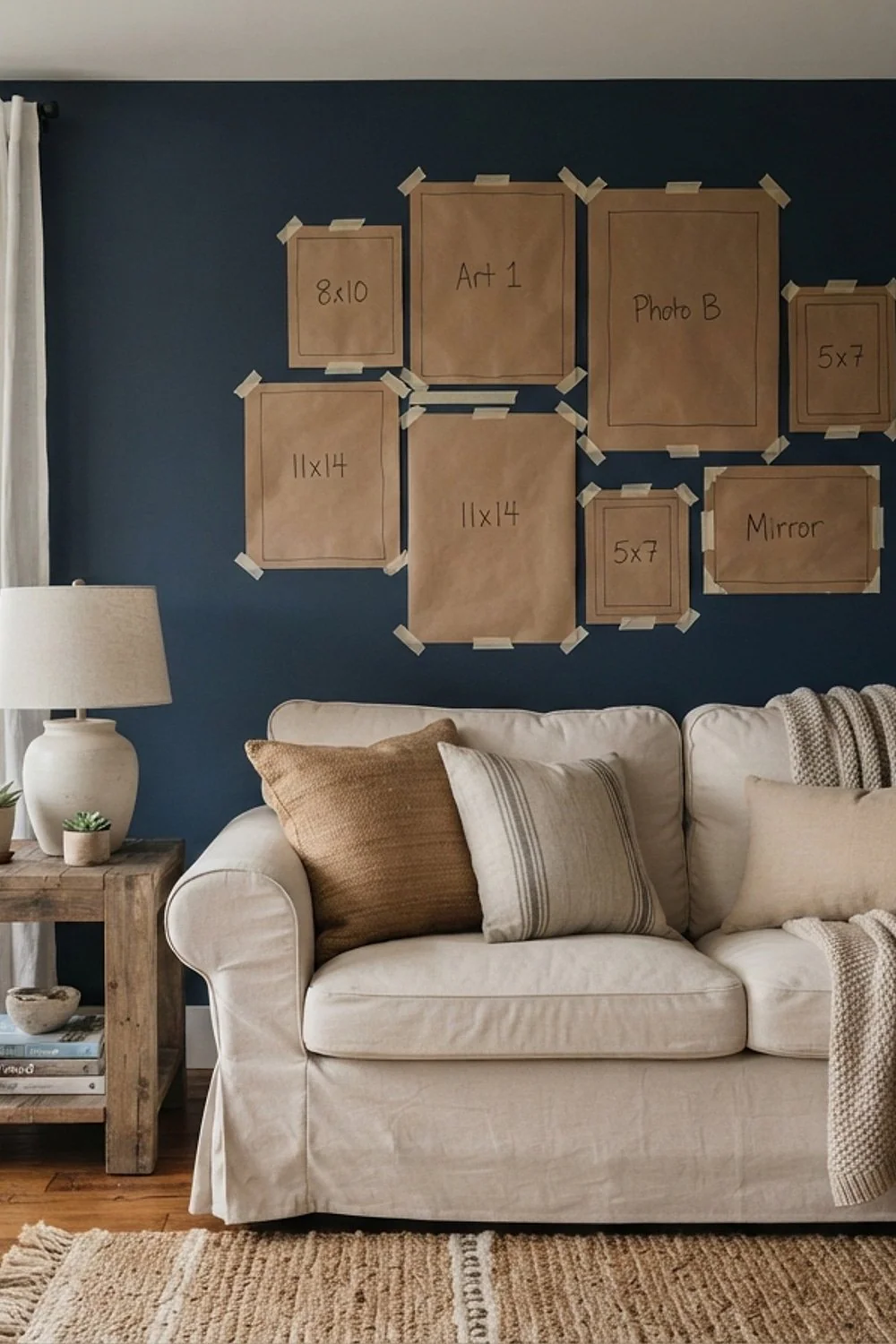
Trace each frame onto kraft paper, tape the templates to the wall with painter’s tape, and rearrange until the spacing feels right. Two to three inches between frames is the usual gap, tight enough to read as one group.
Then swap each template for a strip-mounted frame. It suits anyone who dreads a crooked grid, and the paper means no practice holes. Avoid mixing gaps, since one wide space breaks the group apart.
15. A leaning wood-frame mirror

A wood-framed mirror about 60 by 24 inches leans against the wall and doubles the light from a side window. Oak reads pale and Scandinavian, while walnut stain reads deeper and moodier.
Put a rubber or felt pad under the bottom edge so it can’t slide. Tall mirrors can tip in homes with kids, so tuck a piece of museum putty beneath the frame.
16. A plug-in sconce with a cord cover

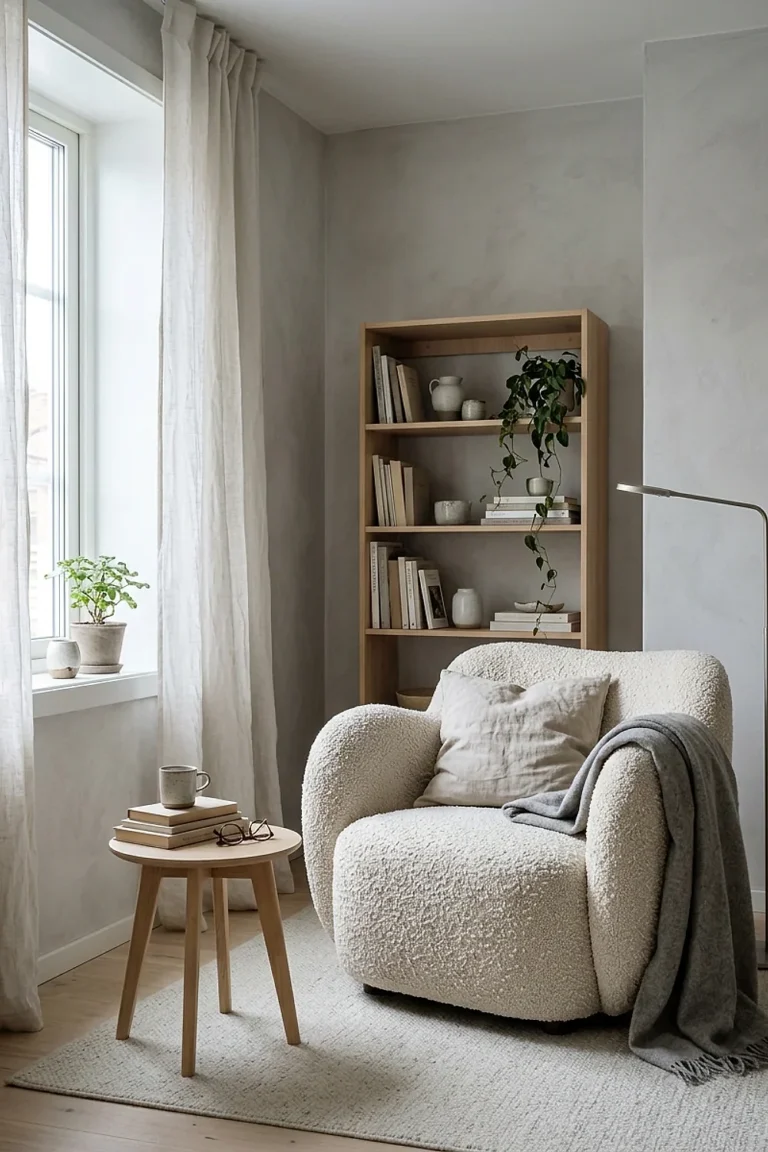
A plug-in sconce with a fabric-wrapped cord hangs from a removable hook and lights a dark corner at eye level. Prices start around $35. Because it needs only an outlet, it adds warmth without an electrician. A corner beside a reading chair is the ideal spot.
A paintable cord cover in wall color hides the wire, which suits renters. Pick a lightweight model, under about two pounds. Heavy brass fixtures overload adhesive hooks within weeks.
17. A woven wall hanging to soften echo

A large woven hanging, around 30 by 40 inches, absorbs the hollow echo of a bare room with hard floors. Natural wool in cream and rust adds depth without bulk, and the thick fibers trap sound better than flat art.
Hang it from two adhesive hooks rather than one, so it stays level. This suits apartments with neighbors, since the fabric muffles sound a little. Avoid expecting miracles: one hanging softens echo but will not replace a rug or curtains.
18. Weight ratings before any strips go up

A heavy frame on adhesive strips is the classic gamble. Stay well under the package rating, clean the wall with rubbing alcohol, press each strip for 30 seconds, and wait an hour before hanging.
Skip strips entirely on textured walls, brick or fresh paint that is less than a month old. Lean heavy art on a shelf or the floor instead.
19. Matte clay vases in uneven heights

Matte vases in clay, ochre and bone, ranging from 8 to 18 inches, look best bunched on a mantel or shelf with their heights staggered. Leave a few inches between them so shadows fall naturally.
This is the cheapest way to repeat the palette, ideal for a tight budget or a rental with no paint allowed. Use dried stems like pampas or eucalyptus that need no water. Avoid glossy glaze, which reflects light and breaks the matte look.
Furniture, surfaces and greenery
These last pieces finish the room. Most of them are freestanding, so moving out takes an afternoon.
20. Wood-grain film over a laminate coffee table
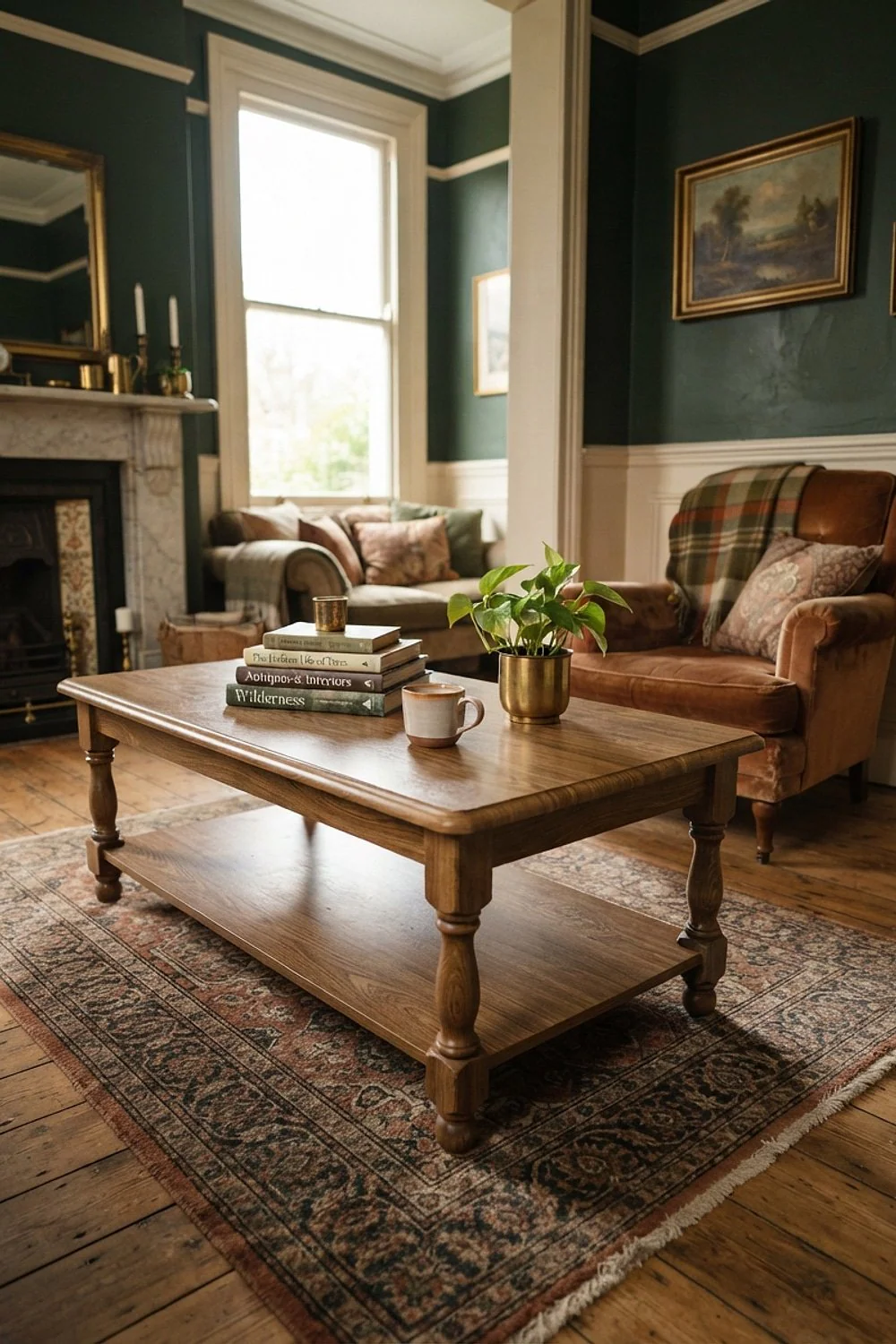
Wood-grain adhesive film turns a glossy white laminate table into something that looks like walnut. It wipes clean in seconds, which matters when drinks tip over on a busy weekend.
It suits anyone stuck with a dated table and no budget for solid wood. Smooth the film with a card, working from the center outward, to push out bubbles. Test removal with a hairdryer on a corner first, since cheap films leave residue on older laminate.
21. Tall branches in a 24-inch floor vase
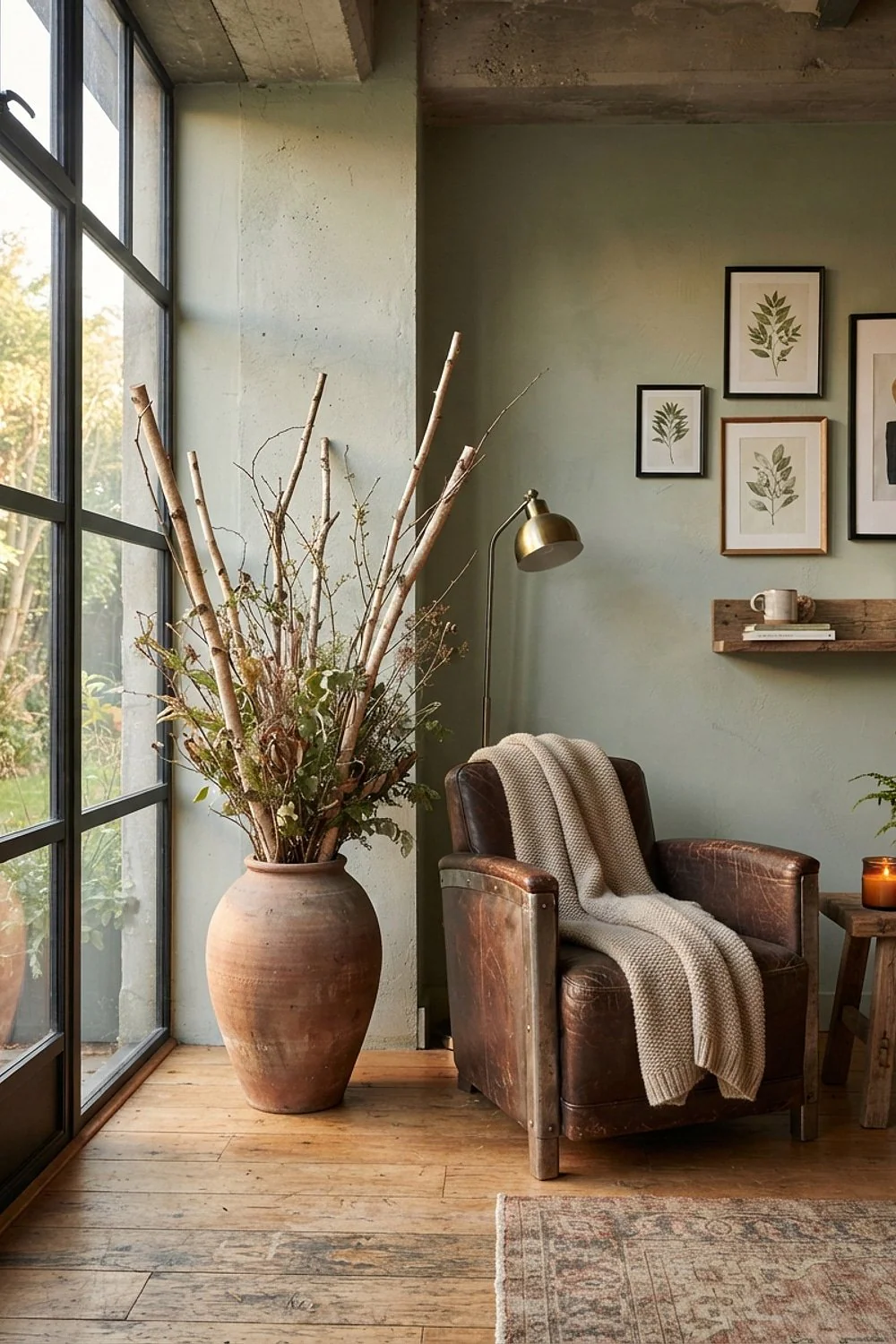
Branches or pampas stems standing 5-6 feet tall in a 24-inch ceramic floor vase fill an empty corner that a small plant would only dot. The height pulls the eye upward in rooms with low ceilings.
Weight the vase with a bag of pebbles. This suits corners beside a sofa arm, but keep stems out of the path of a wagging tail.
22. A freestanding ladder shelf

A ladder shelf about 72 inches tall leans against the wall and is only 14 inches deep at the base. It holds books, baskets and plants without a single screw, and the narrow footprint leaves walkway space.
That makes it a fit for renters and small rooms. Anchor it with a removable furniture strap only if the landlord approves. Otherwise, load heavy items on the lower shelves so the weight sits low, and keep it away from toddlers who climb.
23. Terracotta pots with an olive or pothos
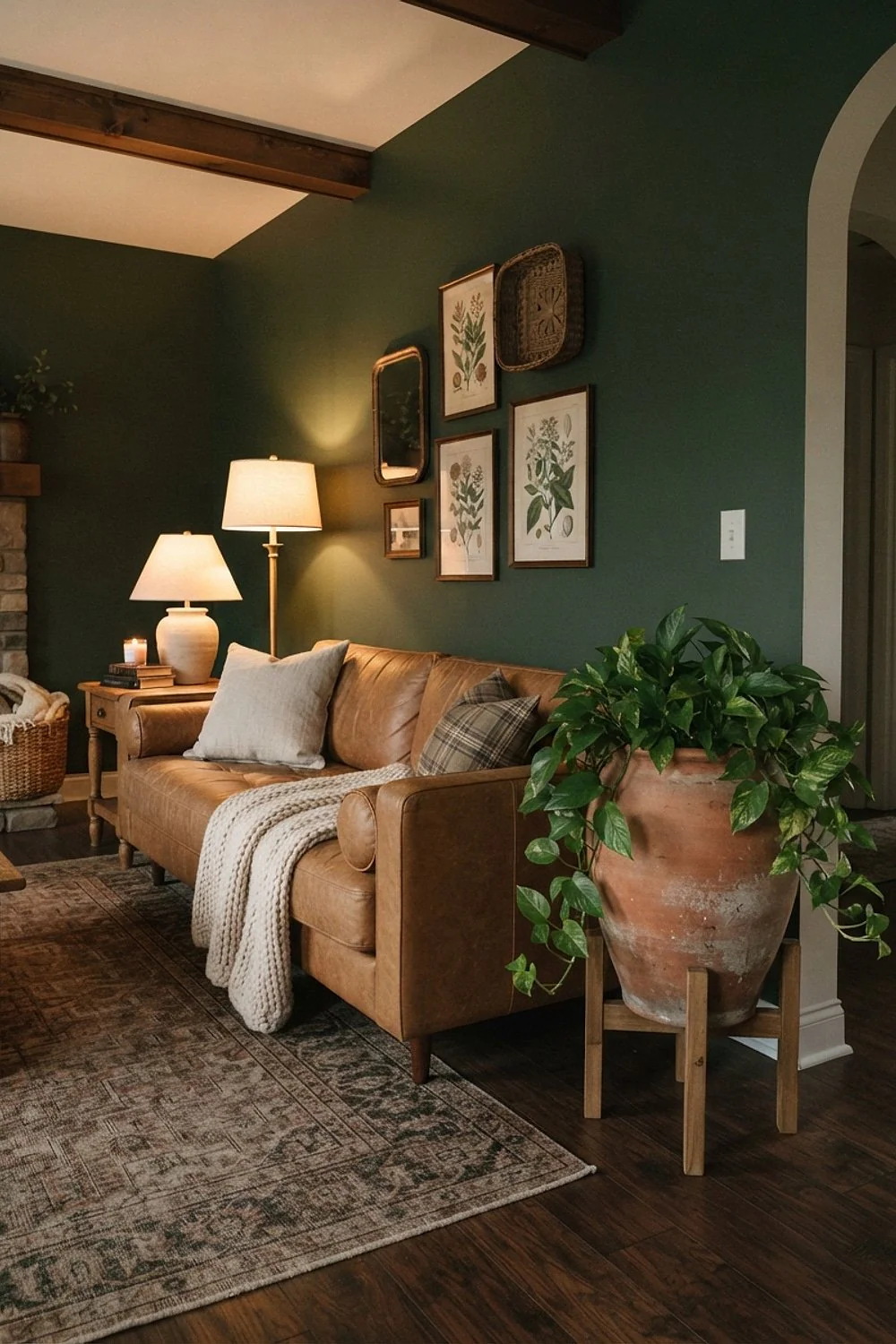
A 10-inch terracotta pot with a trailing pothos brings in green that sits comfortably beside clay and rust. Real olive trees need a bright south window, so faux ones suit darker rooms better.
Pothos tolerates low light, so it suits a shelf far from the window. Terracotta breathes and wicks moisture through its walls, which means it can leave rings on wood. Use a saucer or cork mat underneath, and water in the sink.
24. Two swivel chairs angled toward each other
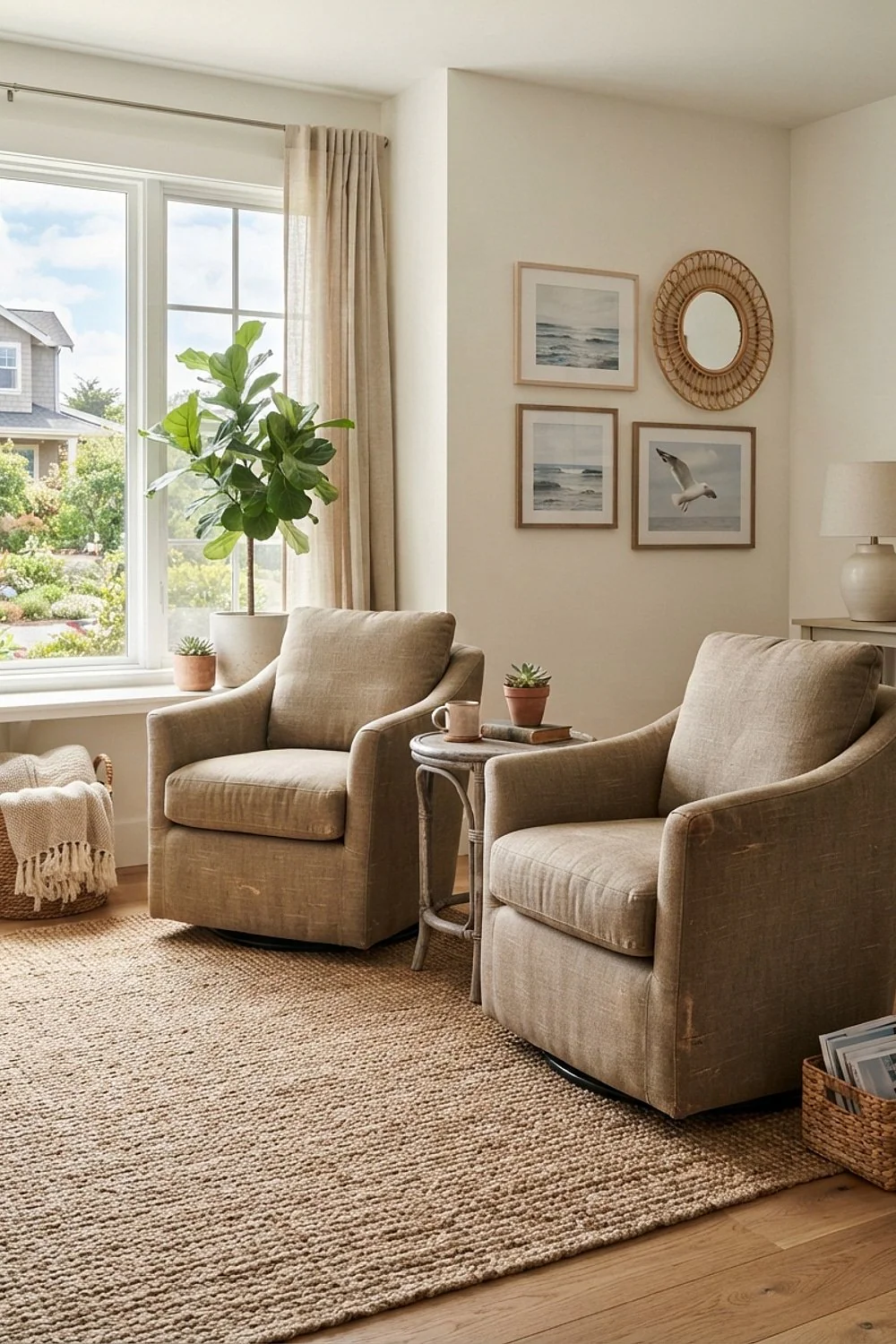
Two swivel chairs angled about 45 degrees toward each other create a conversation corner that doesn’t need a second sofa. Keep roughly 8 feet between them for easy talking, since farther apart forces raised voices.
It suits long, narrow rooms where one sofa takes all the wall space. The swivel lets someone face the TV without dragging a chair. Avoid chairs with wide arms in tight rooms, which block the walkway when turned.
25. A cognac leather pouf

A cognac leather pouf, around 18 inches across, works as a footrest, extra seat and side table. Real leather darkens and softens with use, while faux leather cracks within a couple of years.
Real ones run $80-150, which makes the extra cost easy to justify over a pouf replaced twice. It suits anyone who wants an accent that ages well. Rotate it every month so the sun doesn’t fade one side.
26. Flameless candles on a timer

Flameless LED pillar candles, about 3 by 6 inches, set to a timer switch on at 4:30 on a gray November afternoon, just as the daylight fades. Their amber glow plays well against clay and wood.
They suit rentals with strict no-open-flame lease terms. Pick ones with a flickering effect rather than a steady glow, which looks more like wax.
What landlords usually allow
An earth tone living room made of rugs, lamps and textiles rarely raises a flag, because nothing touches the structure. The trouble starts when adhesive meets wall paint or when something gets bolted down.
- Usually fine: rugs, furniture, freestanding lamps, curtains on tension rods, leaning mirrors, plants.
- Ask first: peel-and-stick wallpaper, adhesive hooks on painted walls, furniture anchors.
- Usually no: nails, screws, wall anchors, and anything painted or stained directly on a surface.
Put the approval in writing, even if it is just a text. A dated message beats a verbal okay when the deposit is on the line.
Undoing everything on move-out day
The order matters. Start with the adhesive and finish with the floor.
- Pull each hook strip straight down along the wall, slowly. Adhesive strips release by stretching, so pulling outward is what tears paint.
- Warm peel-and-stick wallpaper with a hairdryer on low for 30 seconds, then peel at a shallow angle. Cold January walls make it brittle, so heat helps.
- Wipe any leftover residue with a cloth dampened with rubbing alcohol.
- Lift the rug and vacuum under it, then check the floor for pad marks.
- Take photos of each wall and floor for your records.
Keep the original bulbs, curtain hardware and any fixtures you swapped. Putting them back takes ten minutes.
Where the inspiration comes from
Every earth tone living room needs one light or cool element to cut the warmth. Cream, oat or a dusty green does the job.
A rough 60-30-10 split works well. Use 60% neutral base, 30% mid-tone like clay or camel, and 10% deep accent like rust or espresso.
- Too many browns in the same undertone make the room read flat.
- Cool white bulbs turn rust and ochre dull and gray.
- Skipping texture leaves the palette looking like a catalog photo with the life removed.
Start small.
Bringing it together
An earth tone living room comes together through layers rather than one big purchase. A rug, better bulbs and a throw change the room more than most people expect.
Save or pin this list so it’s ready when you start. For a first step, measure your sofa wall and your floor, then try the rug and the 2700K bulbs before buying anything else.
Frequently Asked Questions
Can an earth tone living room work with white rental walls?
Yes, and white walls are an advantage because they reflect light back onto the warm tones. Layer rust, camel and olive across rugs, pillows and curtains, and the white reads as a calm backdrop rather than a blank slate.
What sofa color works if the rental came with a gray one?
A warm oatmeal or stone slipcover is the simplest fix, since it covers the gray fully. If a slipcover is out of budget, a rust or camel throw and cream pillows will shift the undertone enough.
How many earth tones should one room use?
An earth tone living room looks best with three to four shades, such as cream, clay, olive and a dark wood. Past that, the colors compete, and the room loses the calm that makes the palette work.
Will a rug pad damage hardwood floors?
Some can. Pick a natural felt-and-rubber pad and avoid PVC-backed ones, which can leave a sticky film or discolor finishes over time. Lift the rug every few months to let the floor breathe and check for marks.


4 Comments