25 Mood Lighting Bedroom Ceiling Fixtures for Less
By the end of this list, the ceiling above your bed can glow like a boutique hotel suite for a fraction of what designers charge. Every idea below pairs a high-end original with a dupe you can buy or build this weekend.
A good mood lighting bedroom ceiling plan comes down to layers, color temperature and a few exact measurements. Here are 25 of them.
The High-End Mood Lighting Bedroom Ceiling Look, Decoded
Luxury bedrooms rarely rely on one bright fixture. They stack three or four low, hidden or diffused sources, all on dimmers, all in the 2200K-2700K range.
Here’s the counterintuitive part: fewer lumens read as more expensive. A 150-square-foot bedroom needs only about 1,500 to 3,000 lumens in total, and most budget rooms are lit at double that.
A mood lighting bedroom ceiling works when the light source is hidden, shaded or bounced. Nobody should see a bare bulb or a bright dot while lying in bed.
1. Floating pine cove ledge with LED strip
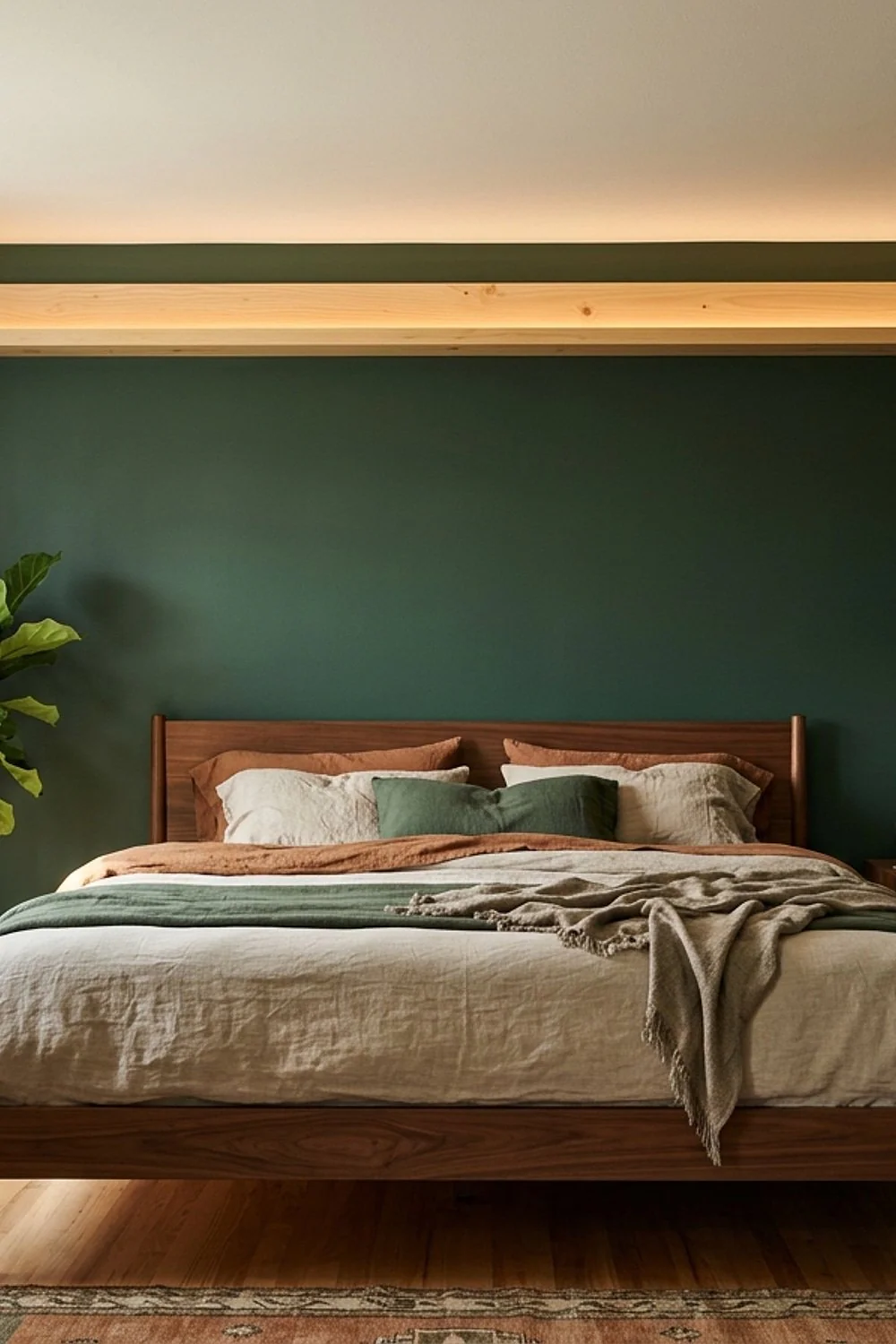
A 4-inch-deep pine ledge, mounted 6 inches below the ceiling line, hides an LED strip and throws light up and across the plaster. It’s the budget cousin of the custom plaster cove an architect would detail, and the lumber, a 16-foot strip and a driver run about $60.
This suits any bedroom with an 8-foot or higher ceiling. Under 8 feet, the ledge eats visual height and the room feels pressed down.
Set the strip at least 2 inches back from the front lip, or the diodes show up as a dotted line.
2. Oversized rice-paper lantern
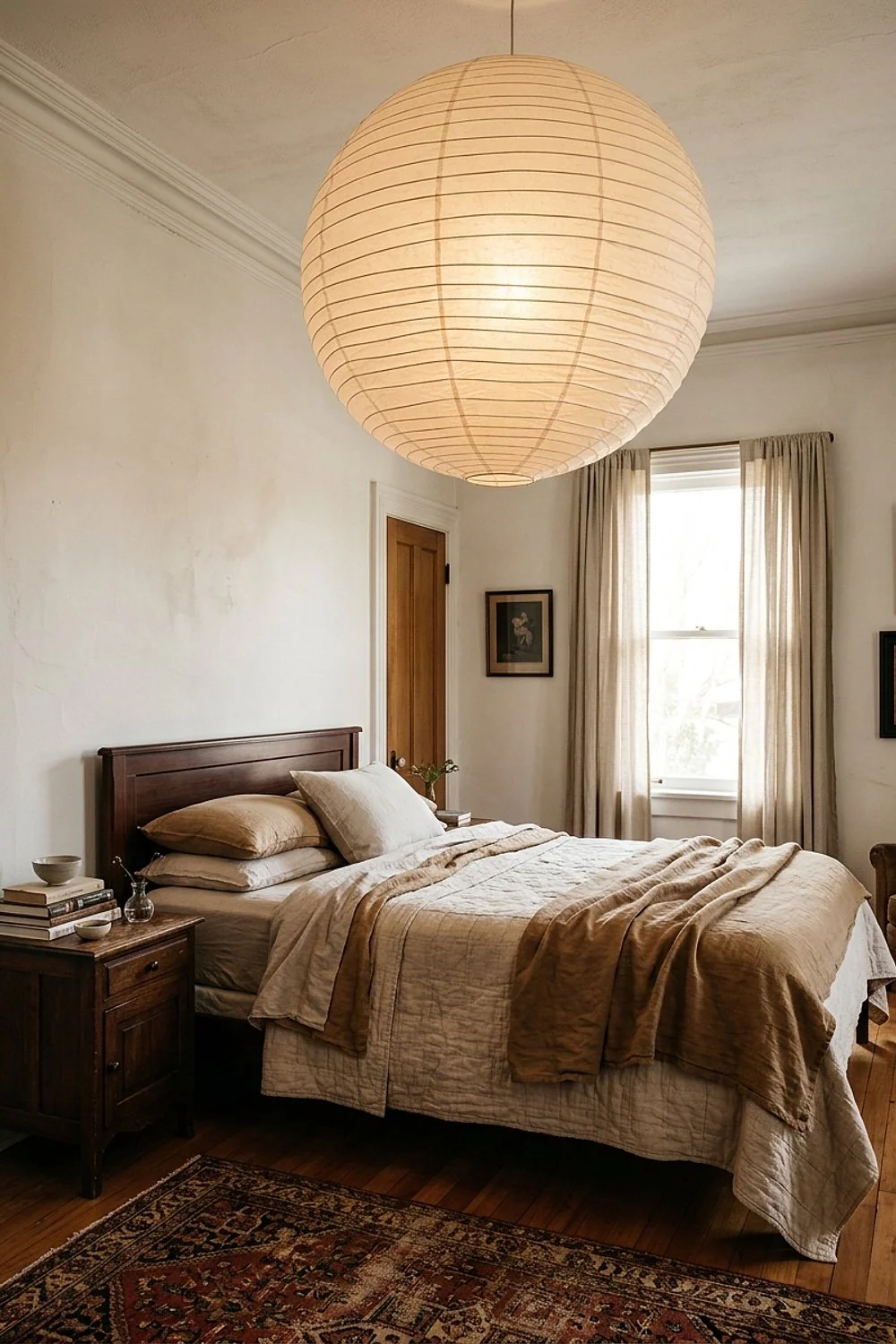
A 24-inch paper lantern on a bare cord imitates the sculptural paper lamps found in design museum shops. The dupe is a plain rice-paper sphere with a wire frame, and it weighs under a pound.
The paper scatters a single bulb into an even, low-contrast glow, which suits small rooms and rentals where a ceiling can’t be modified. Keep the bulb under 800 lumens and use an LED, since paper next to a hot filament is a real fire risk.
3. Linen drum shade pendant
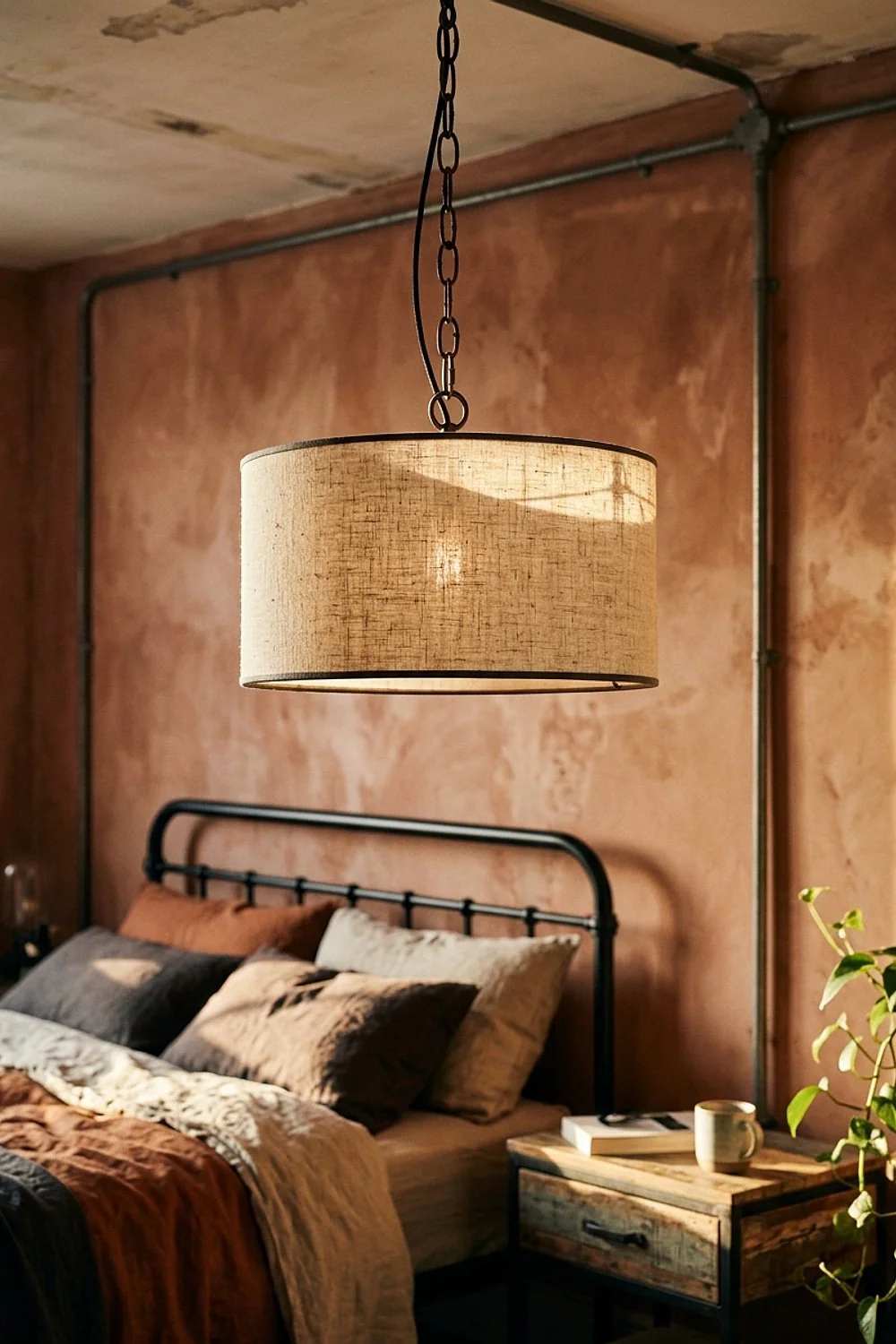
Designer drum pendants from brands like Visual Comfort run into the high hundreds. A 20-inch linen drum with a white inner liner costs closer to $70 and throws the same filtered light.
The liner matters more than the outer fabric. Without it, the bulb shows through as a hot spot, and the room lights unevenly.
Hang the bottom edge no lower than 7 feet from the floor when it sits over walking space.
4. Wafer-thin recessed disks
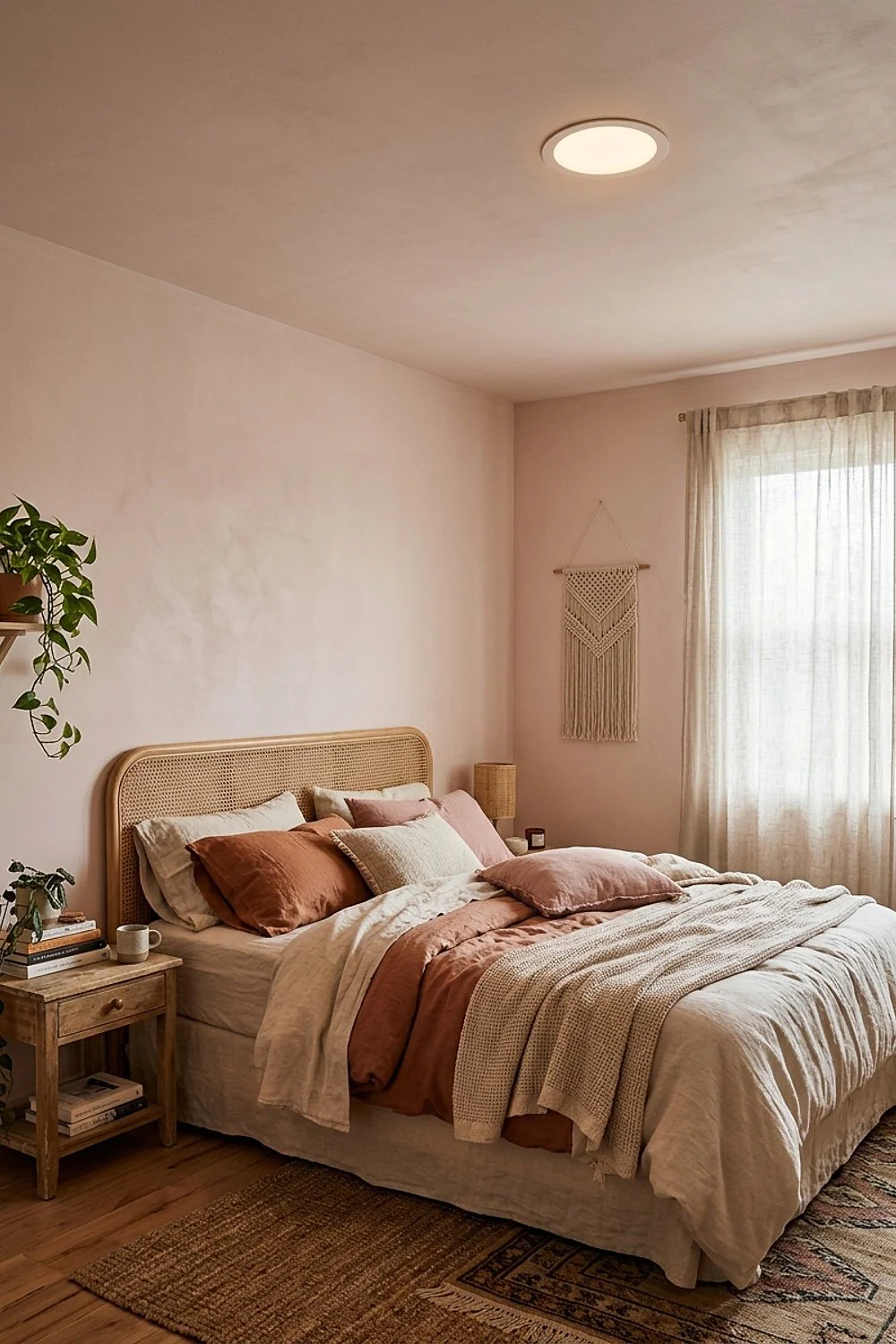
Hotel-grade recessed lights disappear into the ceiling with a flat trim and a tight beam. The dupe is a 4-inch ultra-slim LED disk with a remote junction box, which needs only about 0.5 inches of ceiling depth and no attic access.
Space them 4 to 5 feet apart and 24 inches off the wall so the light grazes the walls instead of staring down at the pillows. Never center one directly over the bed, because the glare lands right in your eyes.
5. Cotton cloud pendant
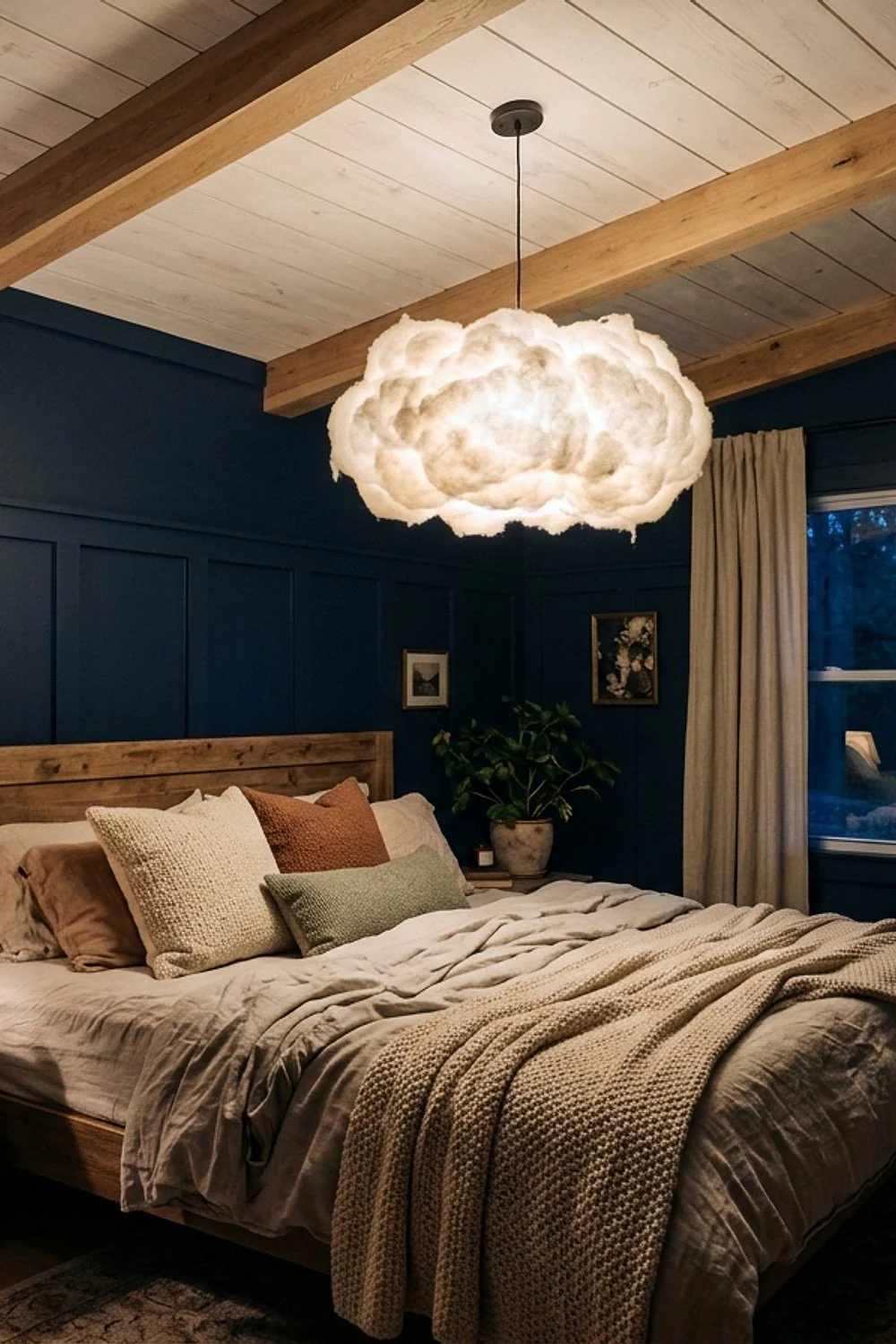
A cloud made of stretched cotton and a ring of LEDs is a staple of boutique nurseries and upscale bedrooms. Imitations run $40 to $90 and hang from a single ceiling hook.
The fabric diffuses the light so thoroughly that there’s nothing to squint at from the pillow. That makes it a sound choice for anyone who reads in bed or sleeps lightly.
Check the weight rating on the hook, since a 30-inch cloud can run 4 to 6 pounds.
6. Halo ring fixture over the bed
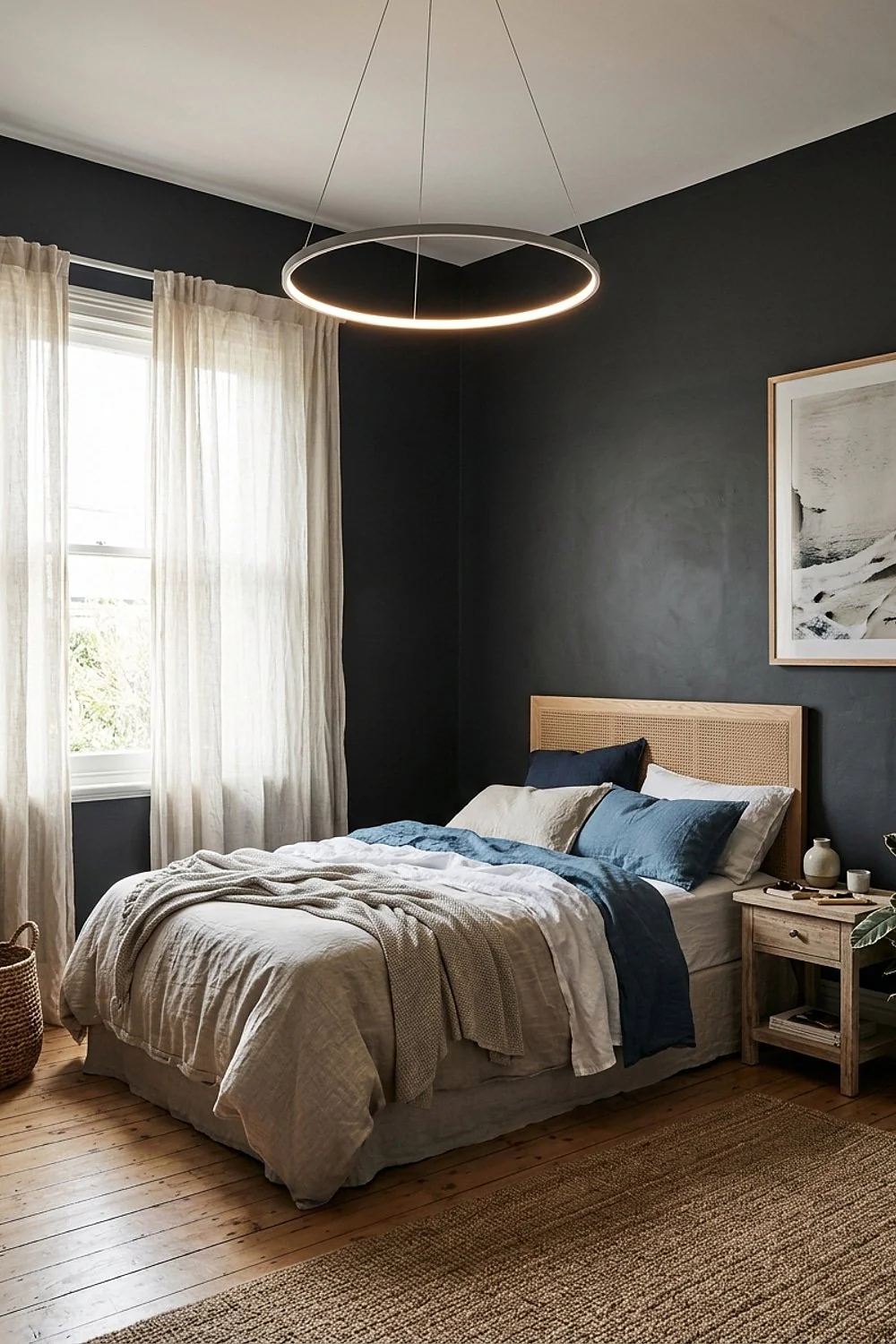
A slim 32-inch LED ring is the dupe for the minimalist metal-ring chandeliers seen in magazine bedrooms. Over a queen bed, which is 60 inches wide, a ring of 28 to 32 inches looks balanced instead of lost.
Anything under 24 inches reads as a ceiling accident. Anything over 36 inches starts crowding the room unless the ceiling reaches 9 feet.
Center it on the bed’s width rather than the room’s, and allow at least 30 inches of clearance above the highest pillow.
7. Amber 2200K dim-to-warm bulbs
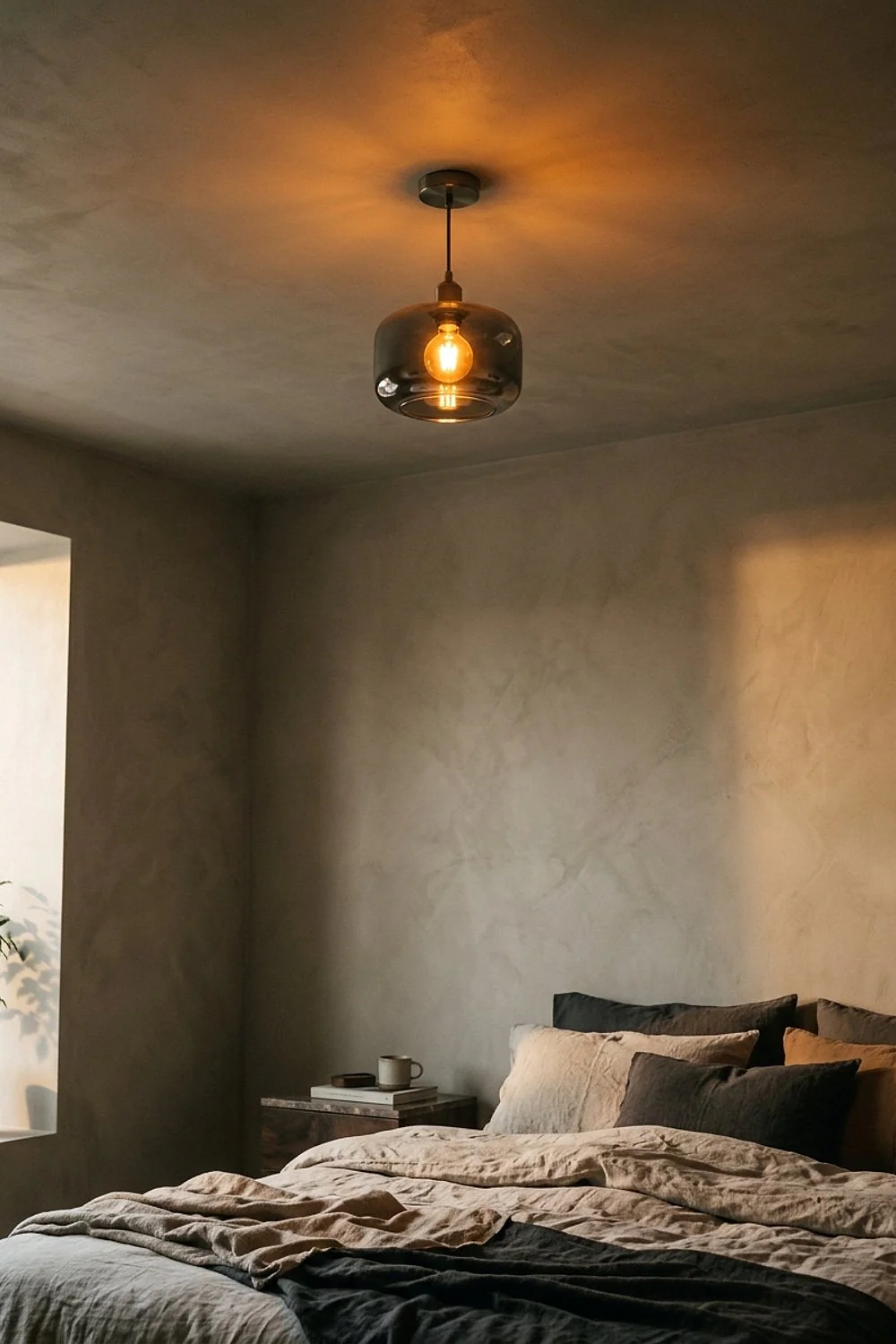
The deep amber of a candle flame is what designers chase with custom-tuned fixtures. Dim-to-warm LED bulbs slide from 2700K down to about 2200K as they dim, and they fit any standard socket.
Evening light below 2700K reads as expensive because it flatters skin and walls. The mistake is mixing bulbs at 2700K and 4000K in one room, which makes the ceiling look patchy and cheap.
8. Two separate ceiling circuits
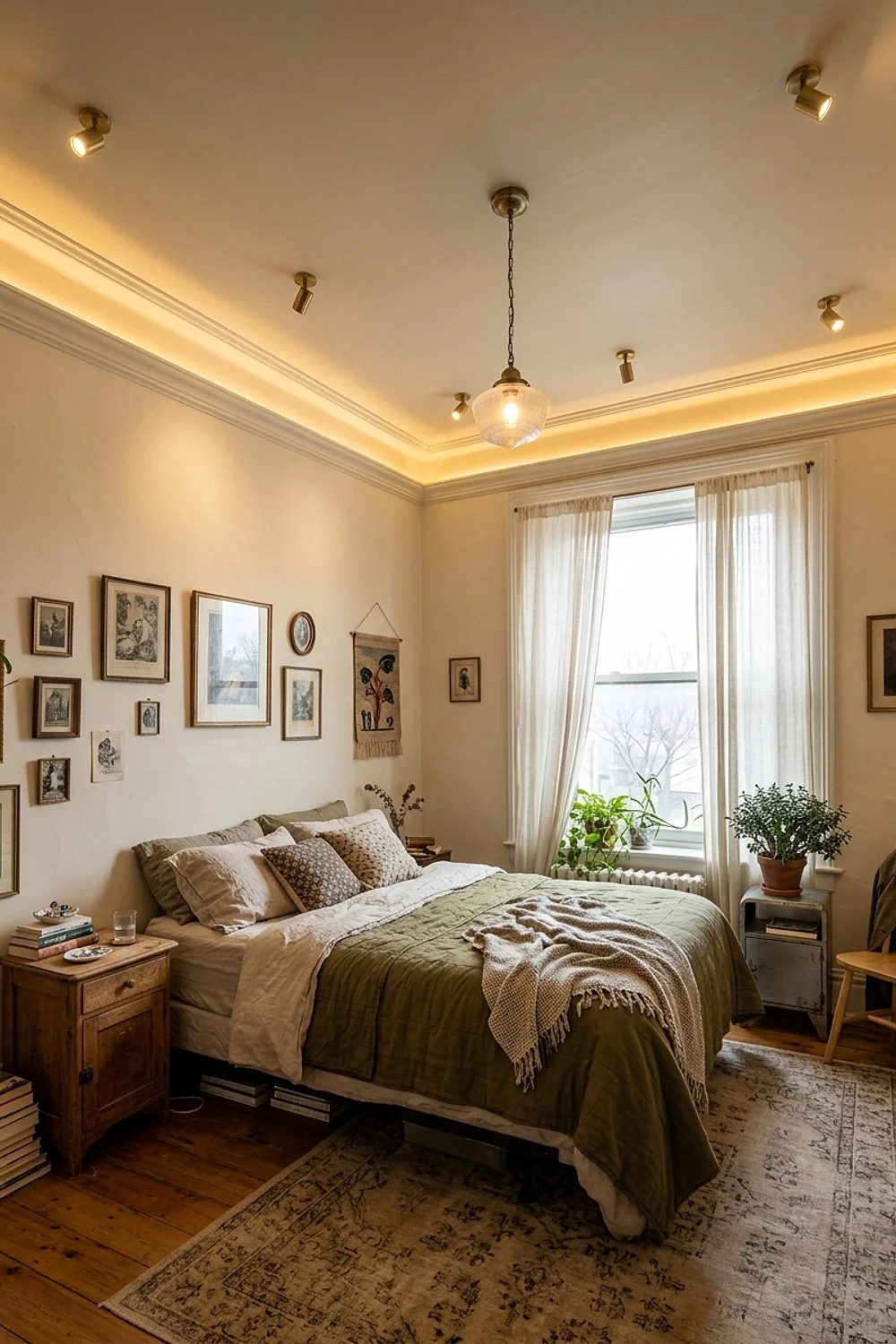
Custom homes split ceiling lighting into at least two zones, so the perimeter and the center can be controlled on their own. The dupe is a plug-in smart bulb set for one zone and a hardwired fixture for another.
This works best in rooms over 12 by 12 feet. Run the perimeter on a low setting around 10 to 20 percent for evening and leave the center fixture off, so the ceiling holds the glow instead of the lamps.
9. Smart dimmer swap
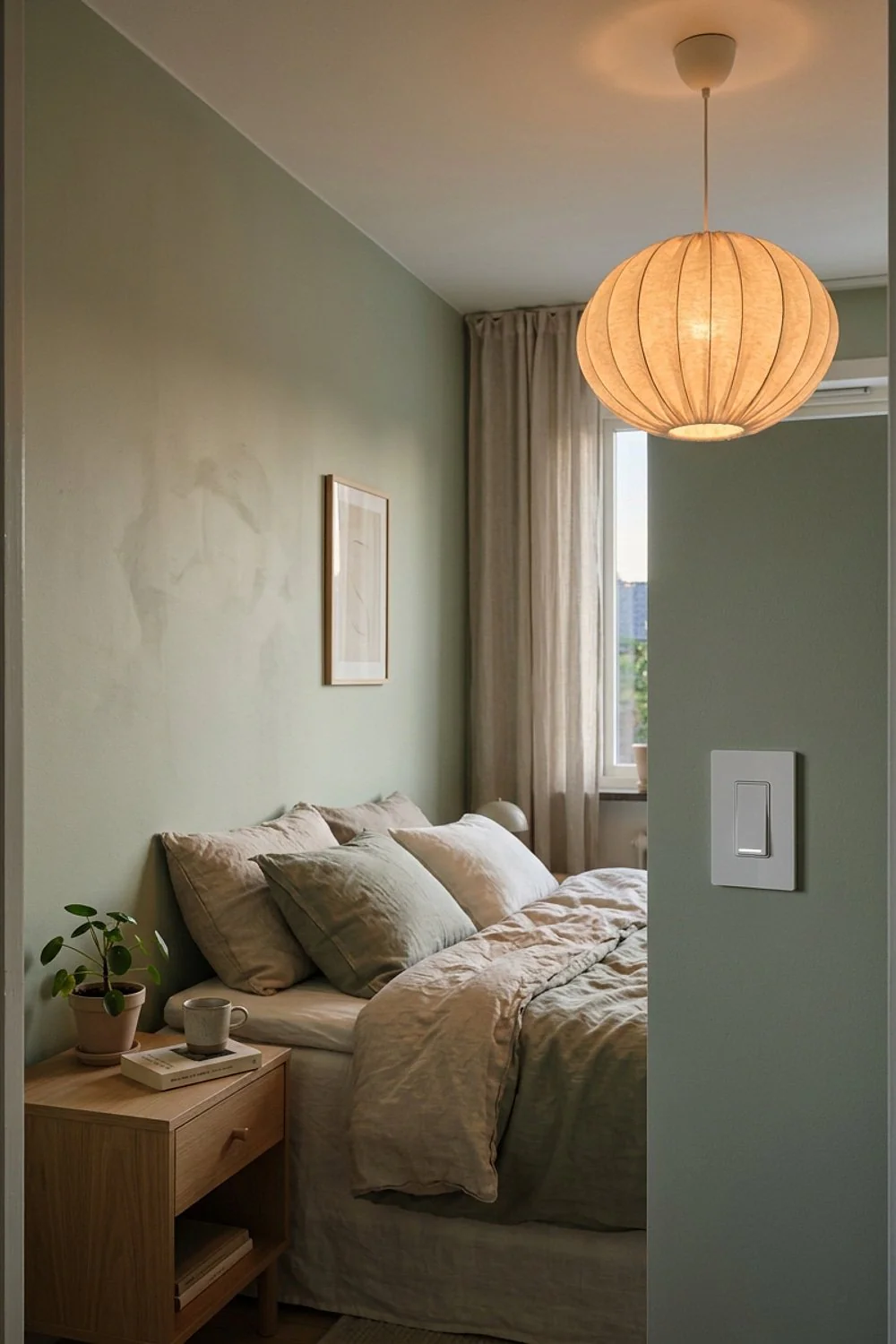
A premium wall control from Lutron gives a smooth, flicker-free fade down to 1 percent. A mid-range smart dimmer from another brand costs about $25 and does the same job for most LED loads.
Check that the dimmer is rated for LEDs and for your fixture’s total wattage, because mismatches cause the buzzing and flicker that cheapen any room. If the wall box has no neutral wire, buy a model made for that wiring.
10. Fan with a dimmable LED kit
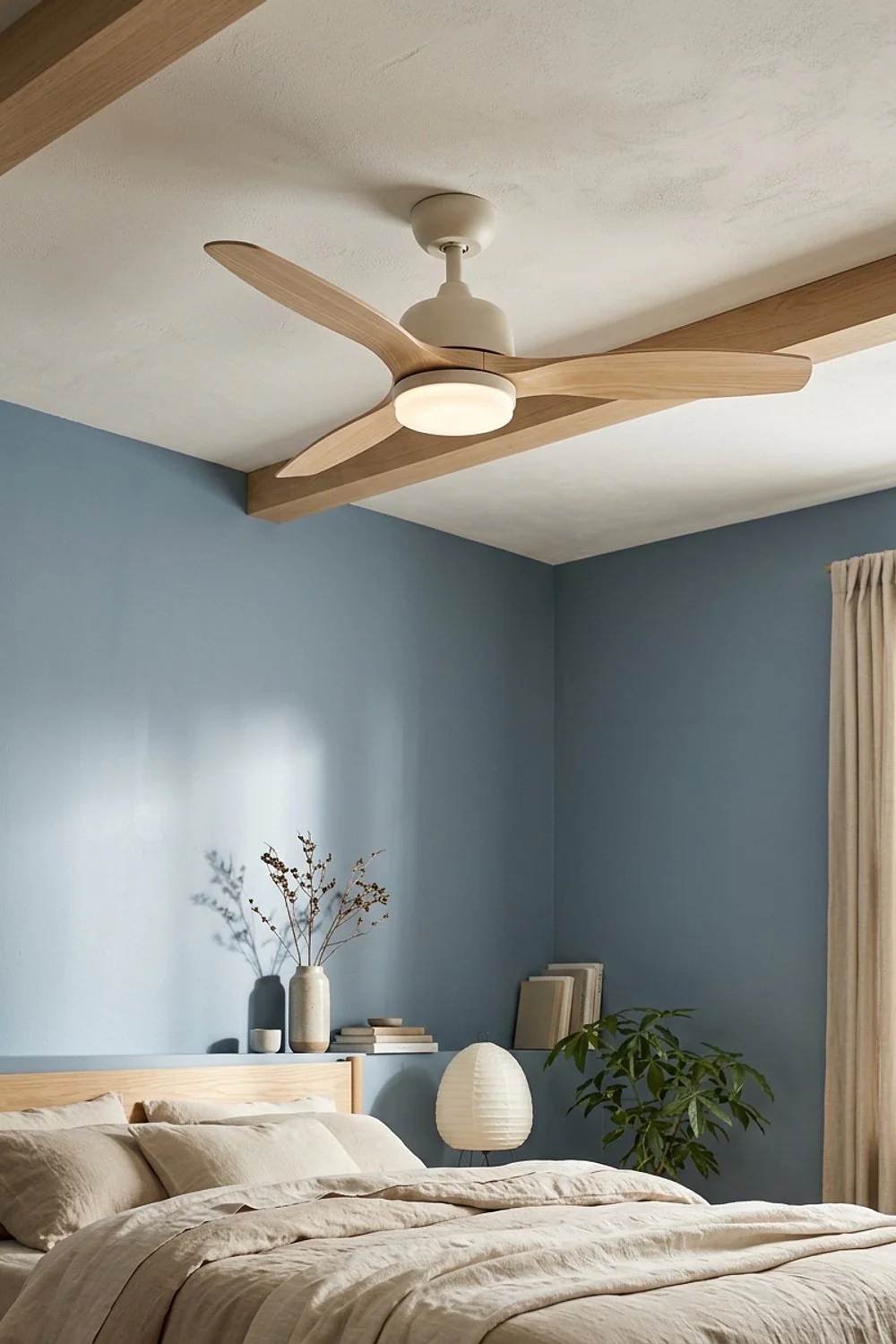
Designer fans with integrated light, such as the sleek models from high-end lines, hide the fixture inside the housing. A dimmable-light fan in the 52-inch range is the practical dupe for bedrooms between 144 and 225 square feet.
The common mistake is putting the fan and light on the same basic dimmer, which makes the motor hum. Use a fan-and-light control with separate channels, or the mood falls apart at 2 a.m.
11. Fiber-optic starry ceiling kit
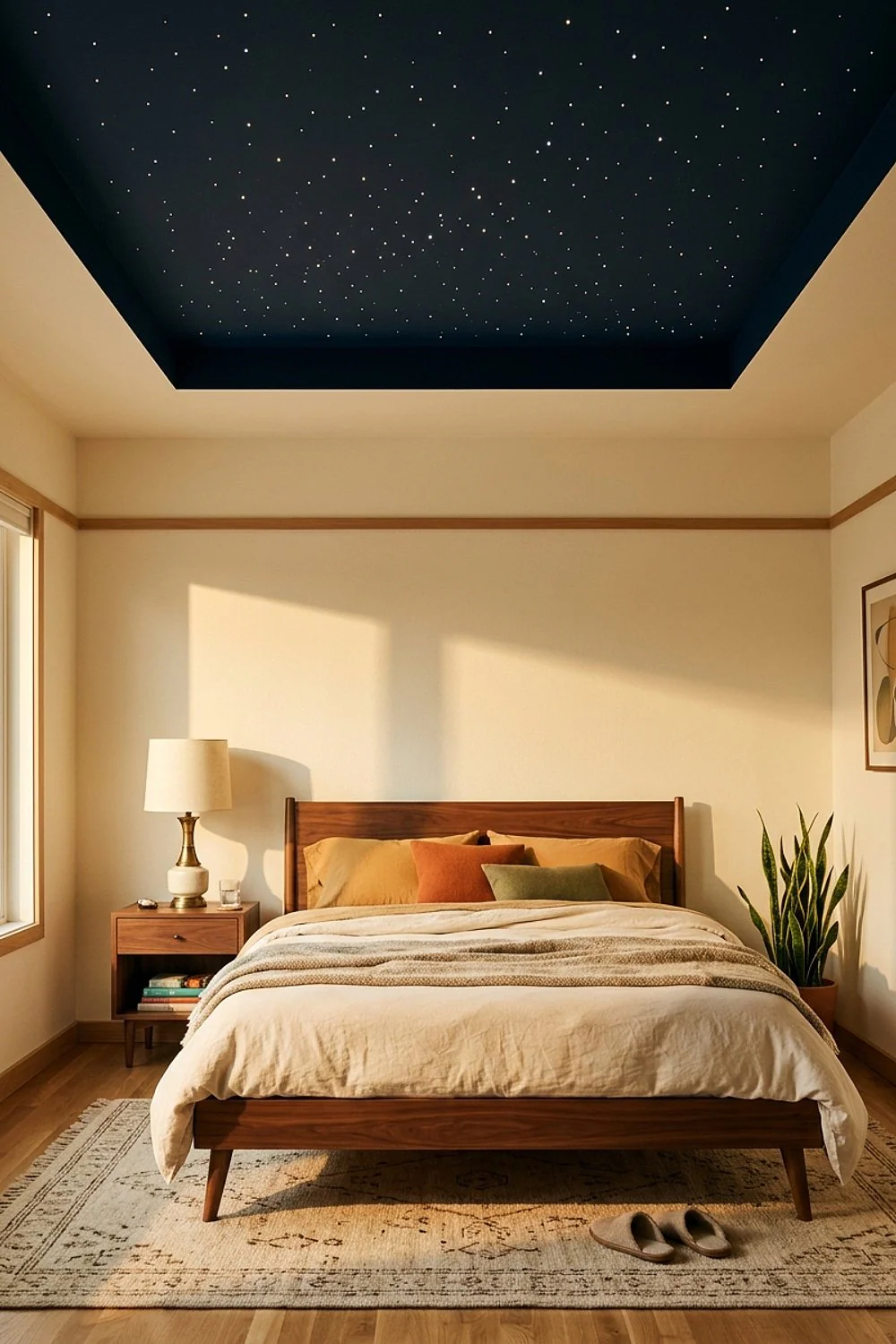
Rolls-Royce built a reputation on starlight headliners with hundreds of pinpricks of light. A fiber-optic ceiling kit does the same job in a bedroom for about $80, with 150 to 300 strands feeding from a light engine the size of a paperback.
Tuck the engine into a closet or attic space, since it runs warm and hums faintly. Poke holes in drywall with a 1/16-inch bit, and plan on a Saturday afternoon for 200 strands.
12. Rattan pendant with shadow play
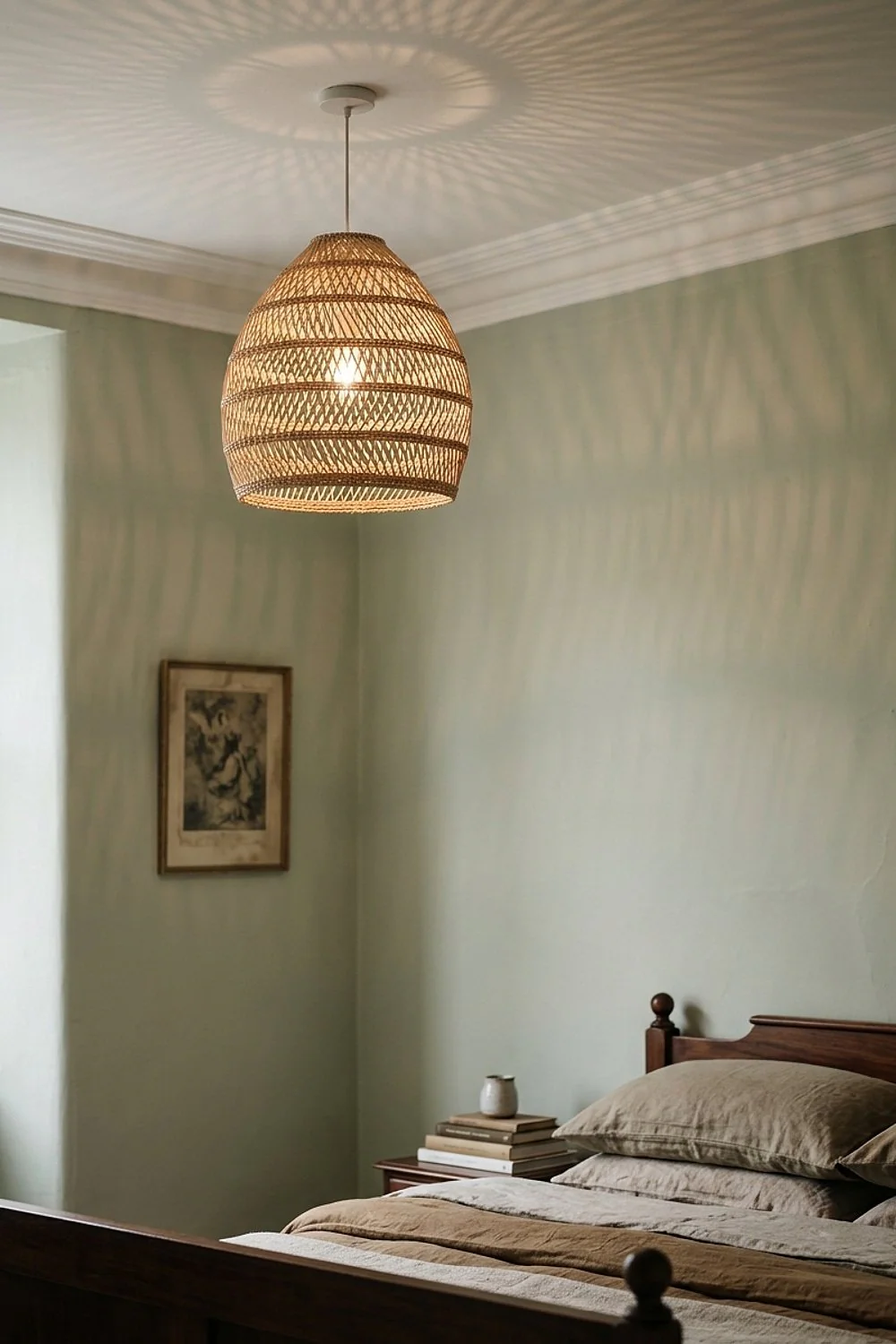
Woven pendants from design shops cast dappled shadows across the ceiling like afternoon sun through a screen. A 20-inch rattan or bamboo shade costs far less and does the same, as long as the weave is open enough.
Natural fiber suits bedrooms with white or pale plaster ceilings, where the pattern shows clearly. Over a dark ceiling the shadows vanish and the shade is just a basket.
13. Alabaster-style flush mount
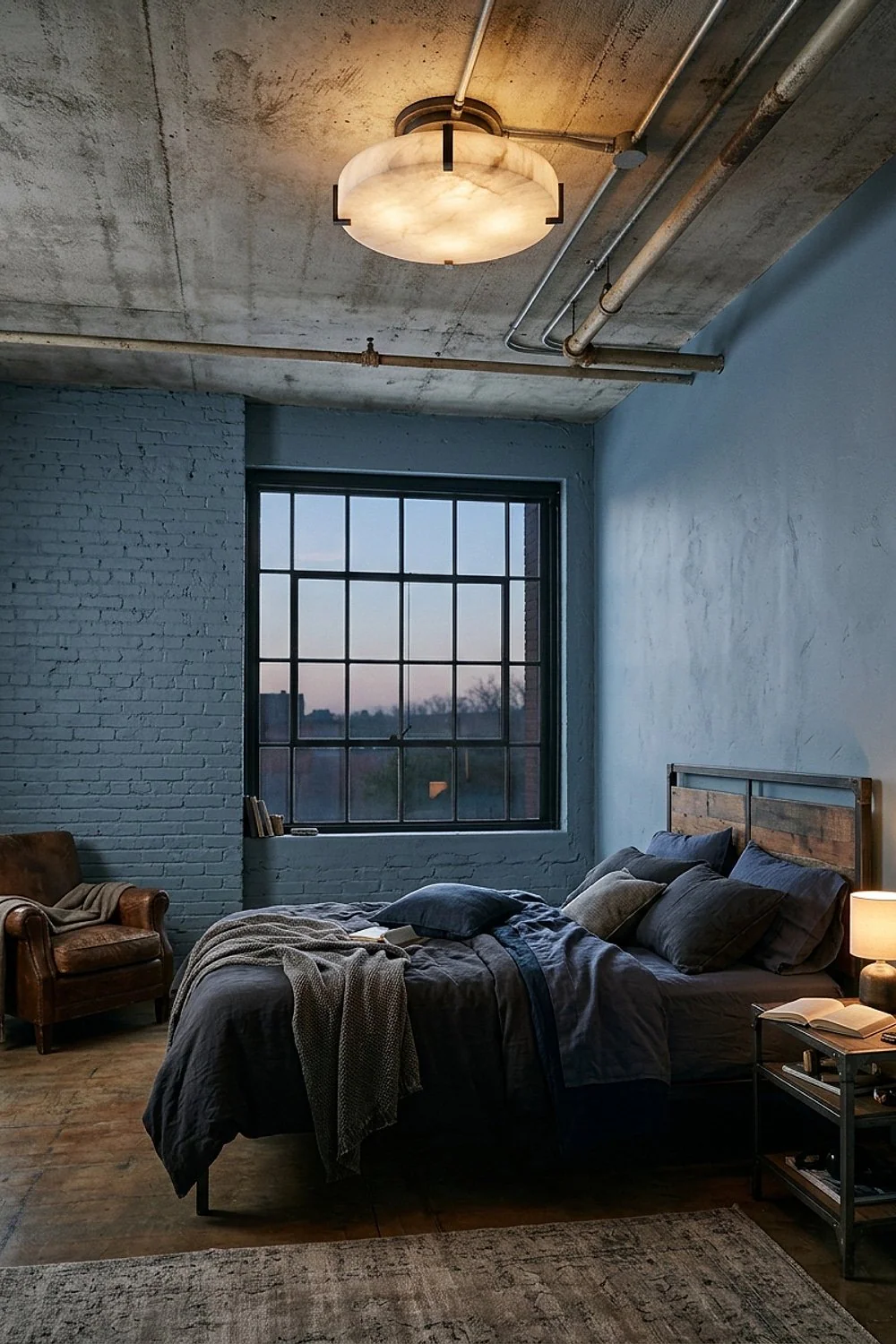
Real alabaster bowls from heritage lighting houses cost four figures and glow like candle wax. A frosted resin or marbled-glass flush mount around $90 gets close, at 14 to 16 inches across and 5 inches deep.
The stone-like finish suits low ceilings, where a pendant would hang into head space. Real alabaster is heavy, so the dupe’s lighter weight is an advantage on older plaster.
14. Wardrobe-top uplight strip
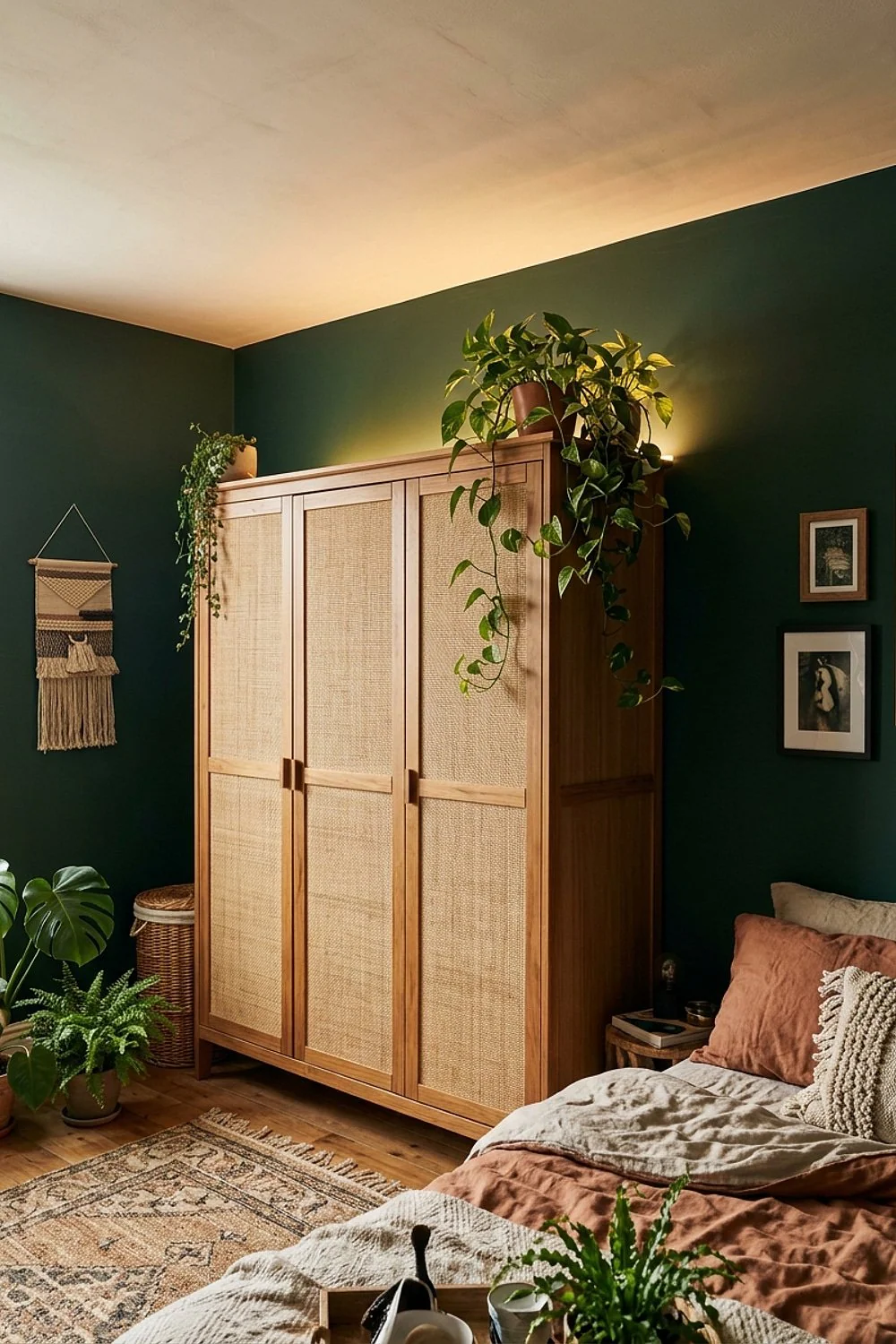
Built-in millwork with a lit crown is a signature of expensive bedrooms. Run an LED strip along the top of a freestanding wardrobe, facing the ceiling, and the same bounced light appears without any carpentry.
The wardrobe needs at least 8 inches of space between its top and the ceiling for the light to spread. Less than that, and the strip makes a harsh stripe instead of a wash.
15. Opal glass globe flush mount
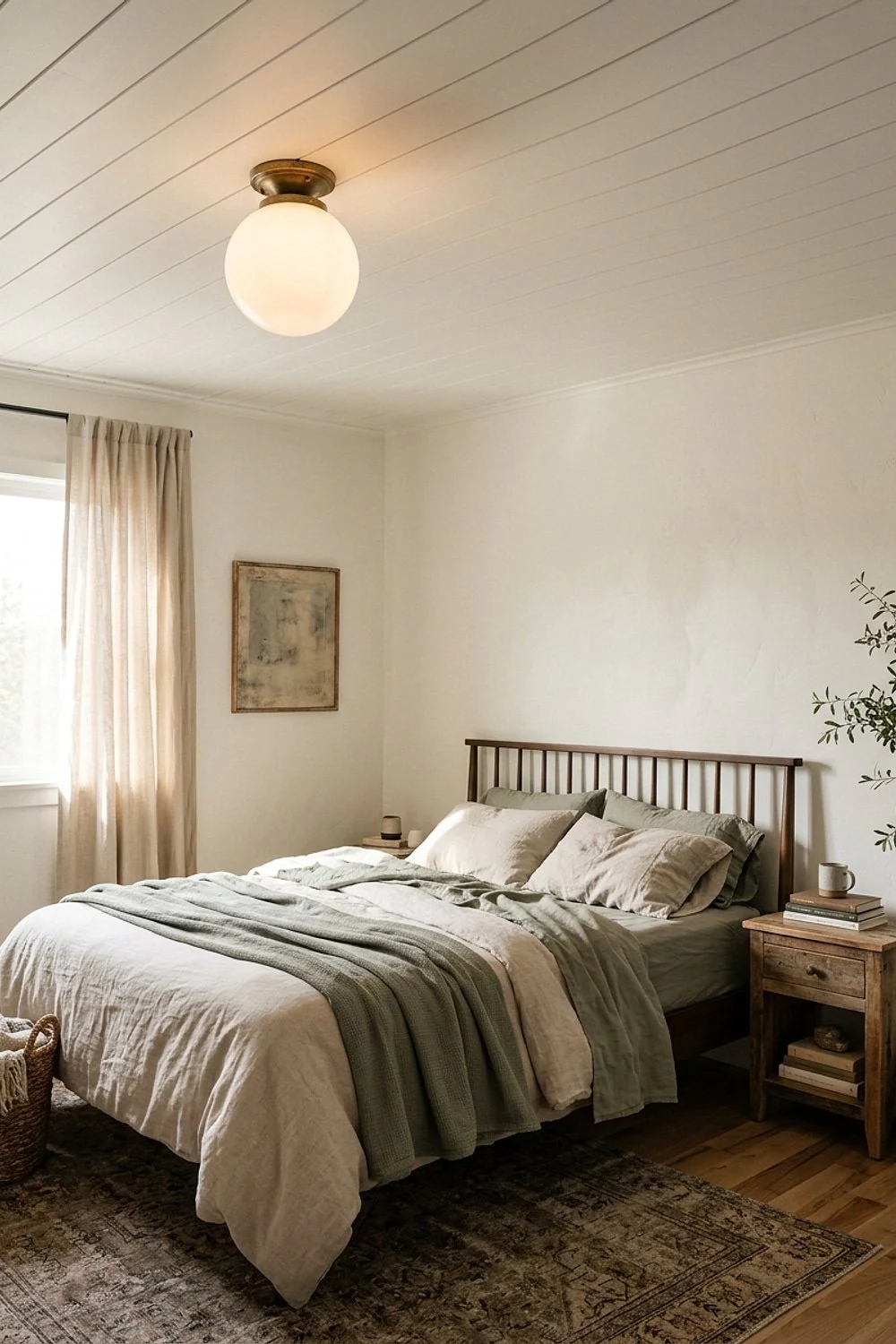
A milky opal globe shields the bulb completely, which matters when you’re lying flat and staring straight up. Designer versions come from European studios, while a 12-inch opal glass dome from a home store gets the same optical result.
Pick a dome with at least 70 percent opacity. Clear or lightly frosted glass lets a hard point of light through, and that point becomes the first thing your eyes find.
16. Linear multi-light canopy
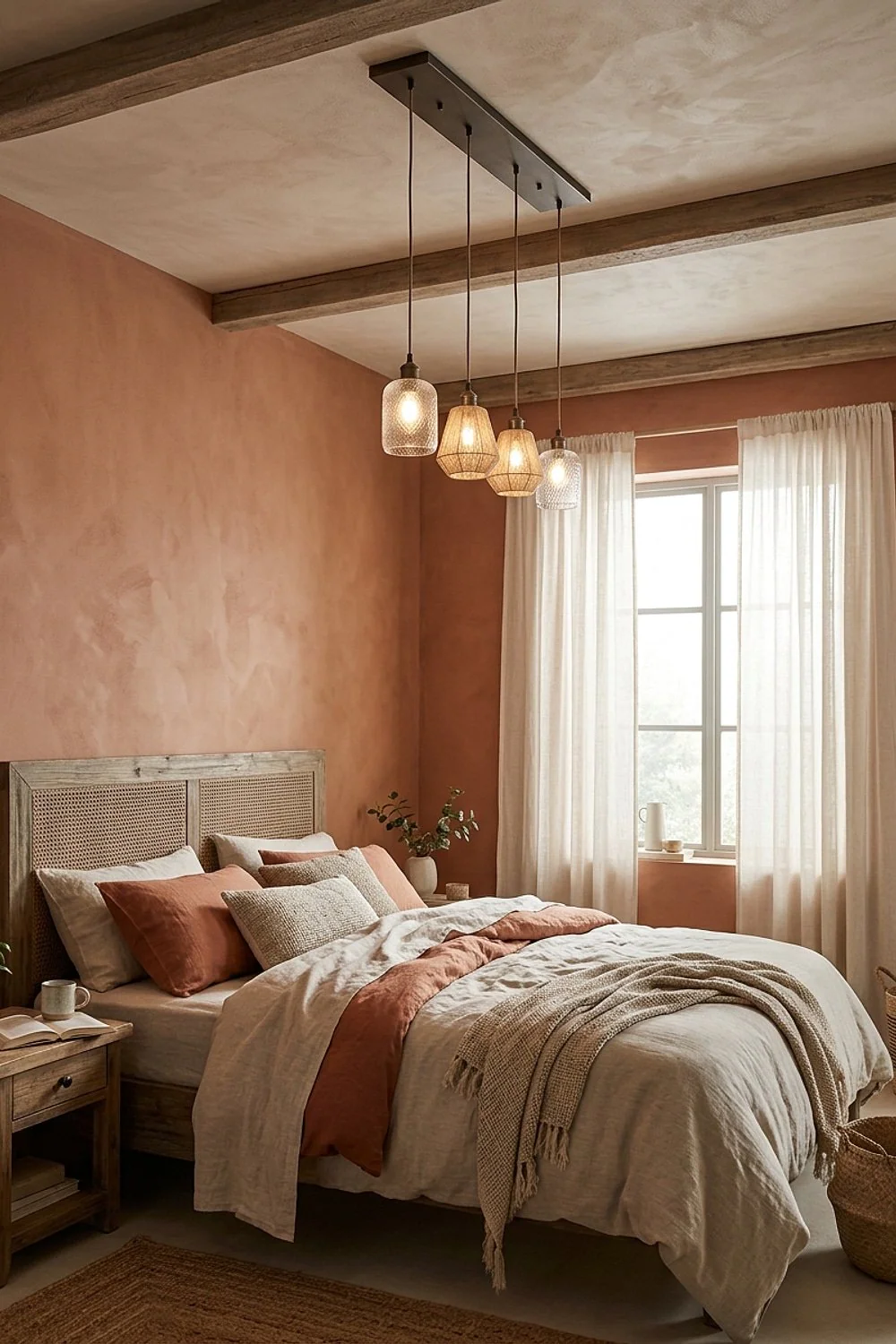
Long linear chandeliers over the bed are a favorite of high-end designers. The dupe is a 3-pendant rail canopy, around 36 inches wide, with matching 6-inch globes at staggered heights.
On a 60-inch queen bed, aim for a fixture two-thirds the headboard width. Stagger the drops by 4 to 8 inches, and keep the lowest globe at least 7 feet above the floor.
17. Tinted ceiling paint
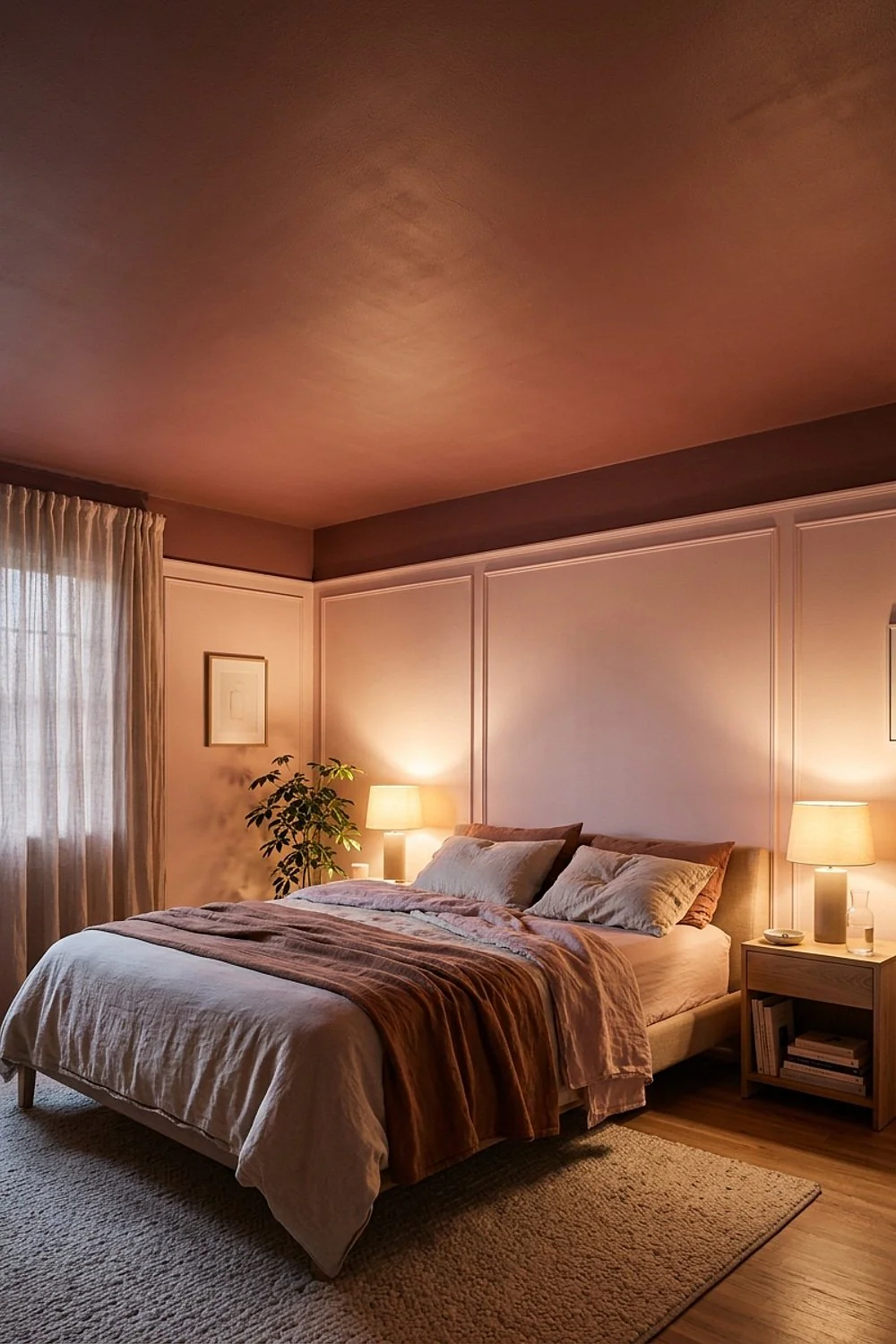
High-end painters often tint the ceiling a quarter-strength version of the wall color, such as a blush like Farrow & Ball Setting Plaster. The dupe is a matte ceiling paint tinted at 25 percent of any wall formula, which costs roughly $35 a gallon.
The tint catches indirect light and turns it into a flush of color, so pale walls pair best. Go matte, since sheen on a ceiling shows every roller mark under a cove.
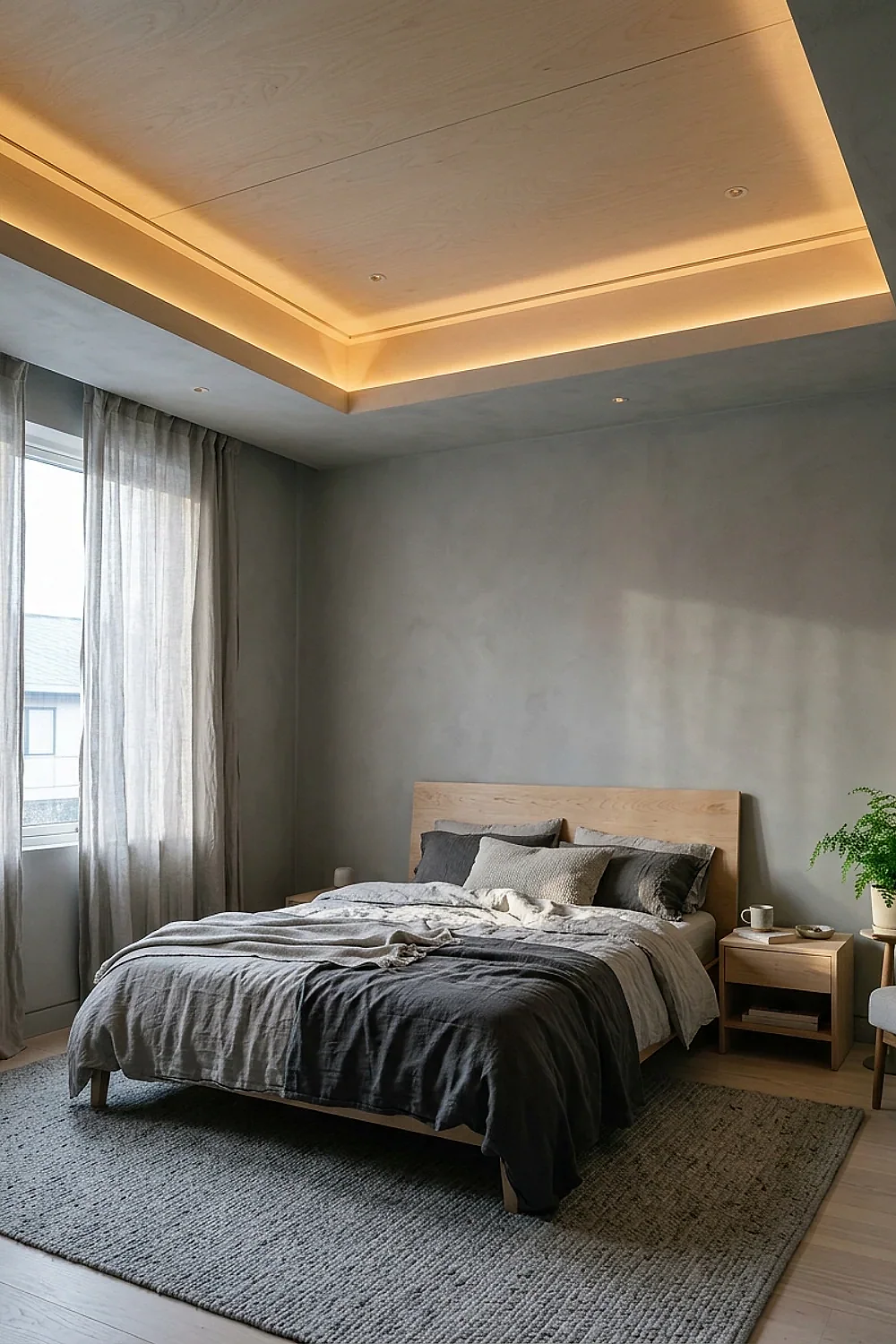
18. Faux tray ceiling with trim
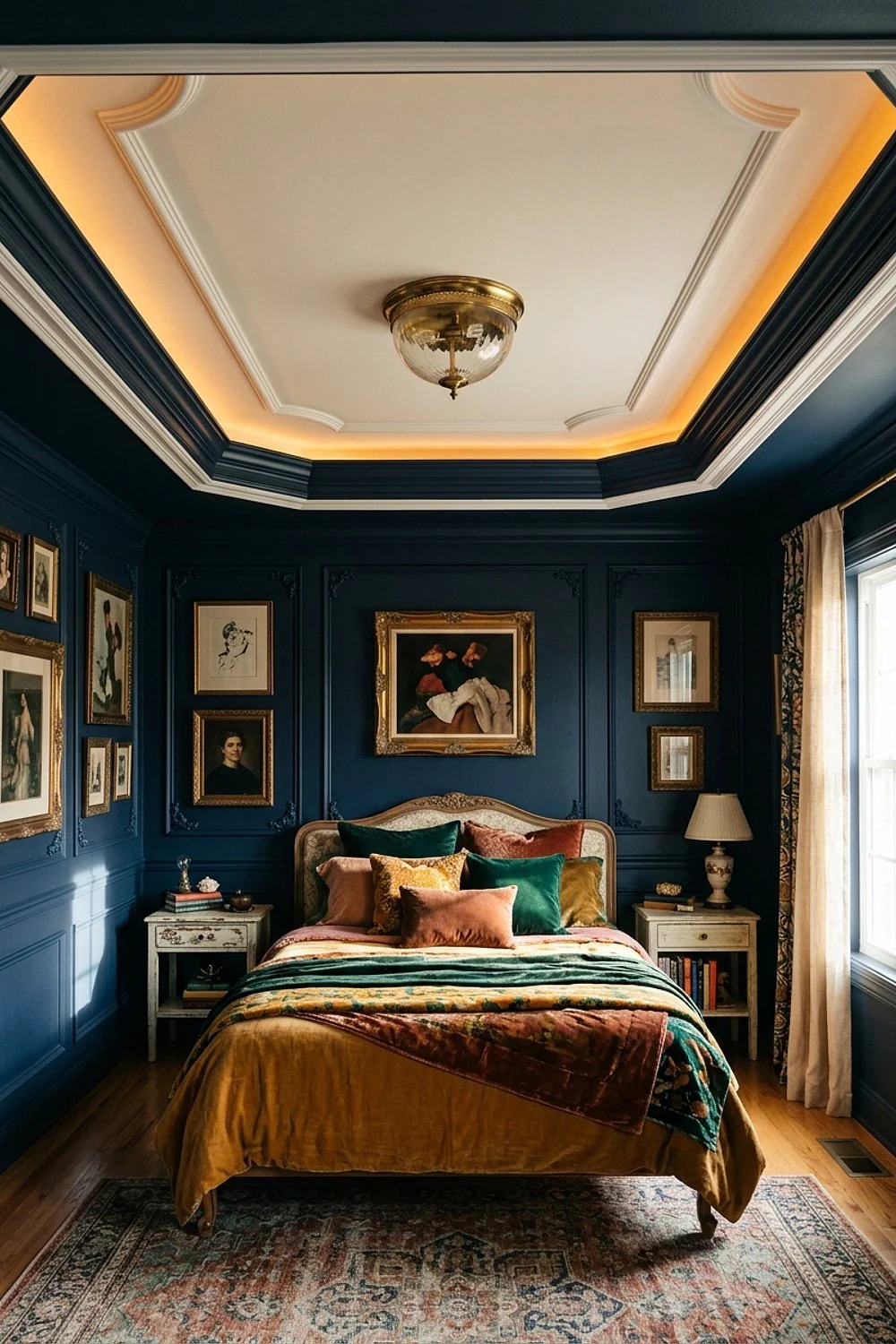
A real tray ceiling is a framing project. The dupe is a rectangle of 1×4 trim, mounted flat and set 12 inches in from each wall, with a strip of LEDs behind the inside edge.
It suits flat, featureless ceilings that need a focal point. Paint the inner panel one shade darker than the border, and the frame will appear to have real depth.
19. Smart bulbs in existing fixtures
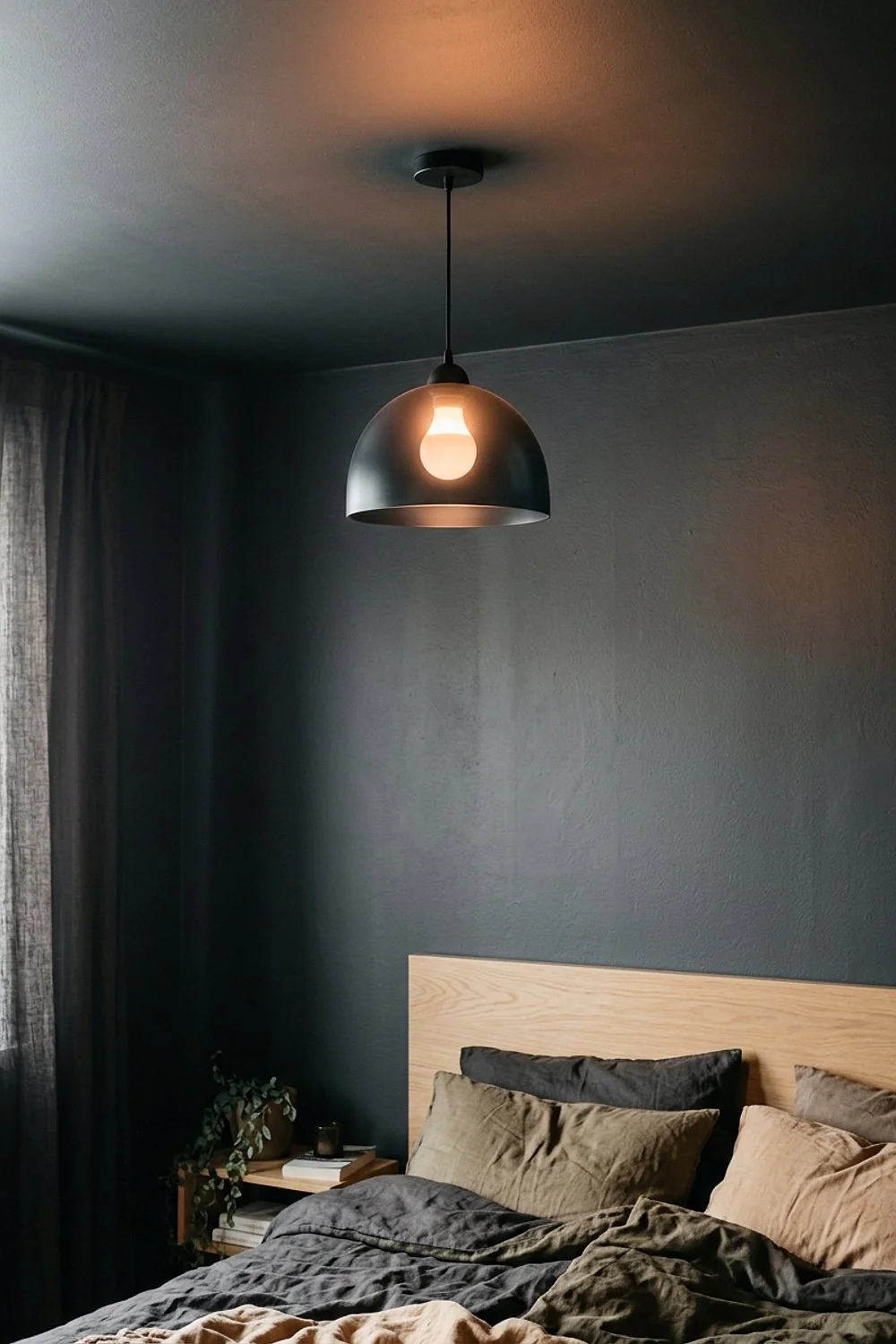
Full home-control systems from the Lutron tier run to thousands. A set of 800-lumen color-tunable smart bulbs, around $15 each, gets most of the effect in your current sockets.
These suit renters and anyone who doesn’t want electrical work. The catch is that a wall switch turned off cuts the bulb’s connection, so tape the switch on or fit a cover.
20. Aluminum channel with diffuser
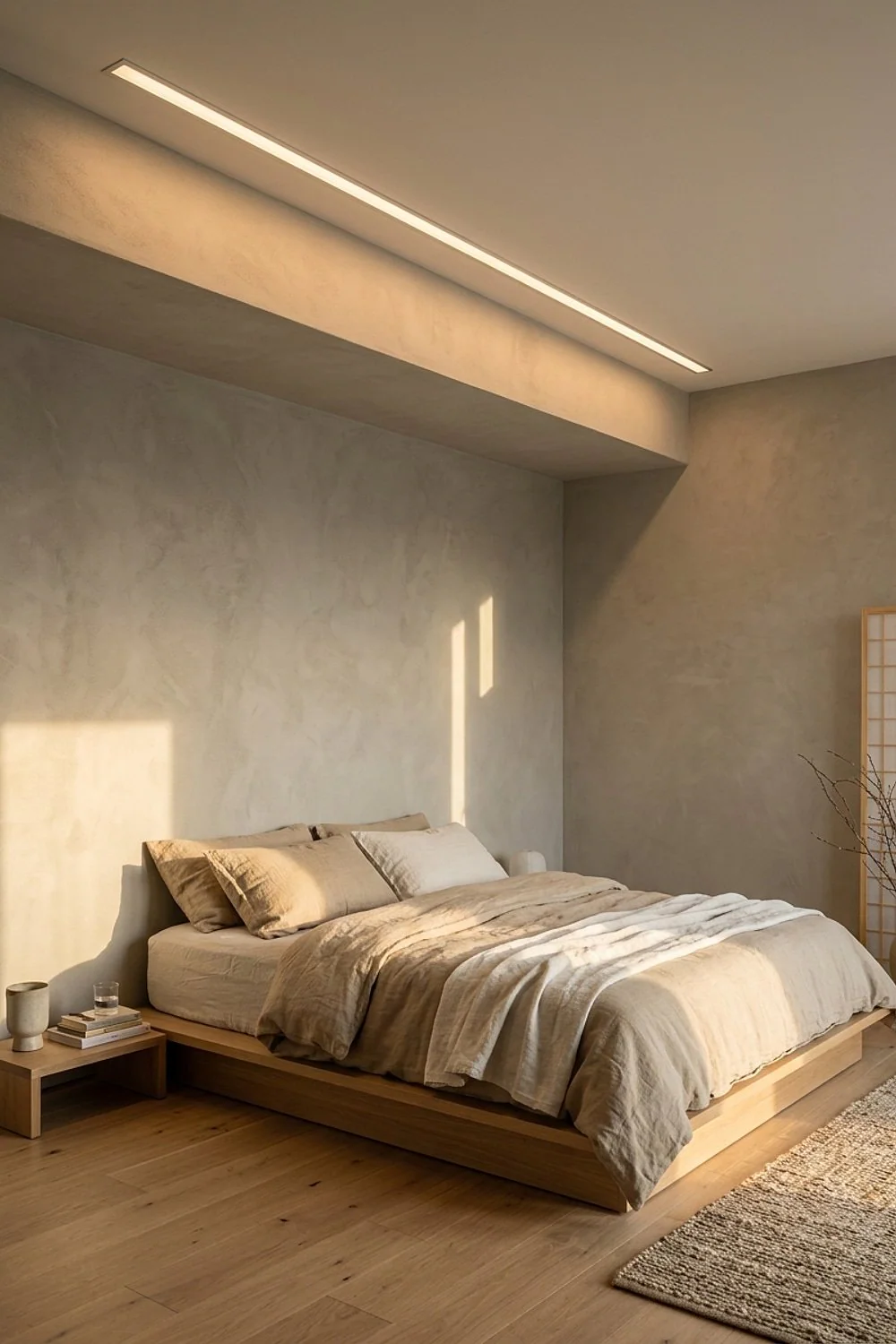
Architects specify recessed aluminum channels with frosted lenses for seamless lines of light. The dupe is a surface-mounted 1-inch channel with a snap-on diffuser, which hides the diodes completely.
Bare adhesive strips on a textured ceiling peel within months, which is the usual failure. Channels screw into place and also stay straight (this only works if the ceiling has a solid backing at the screw points).
21. Capiz shell pendant
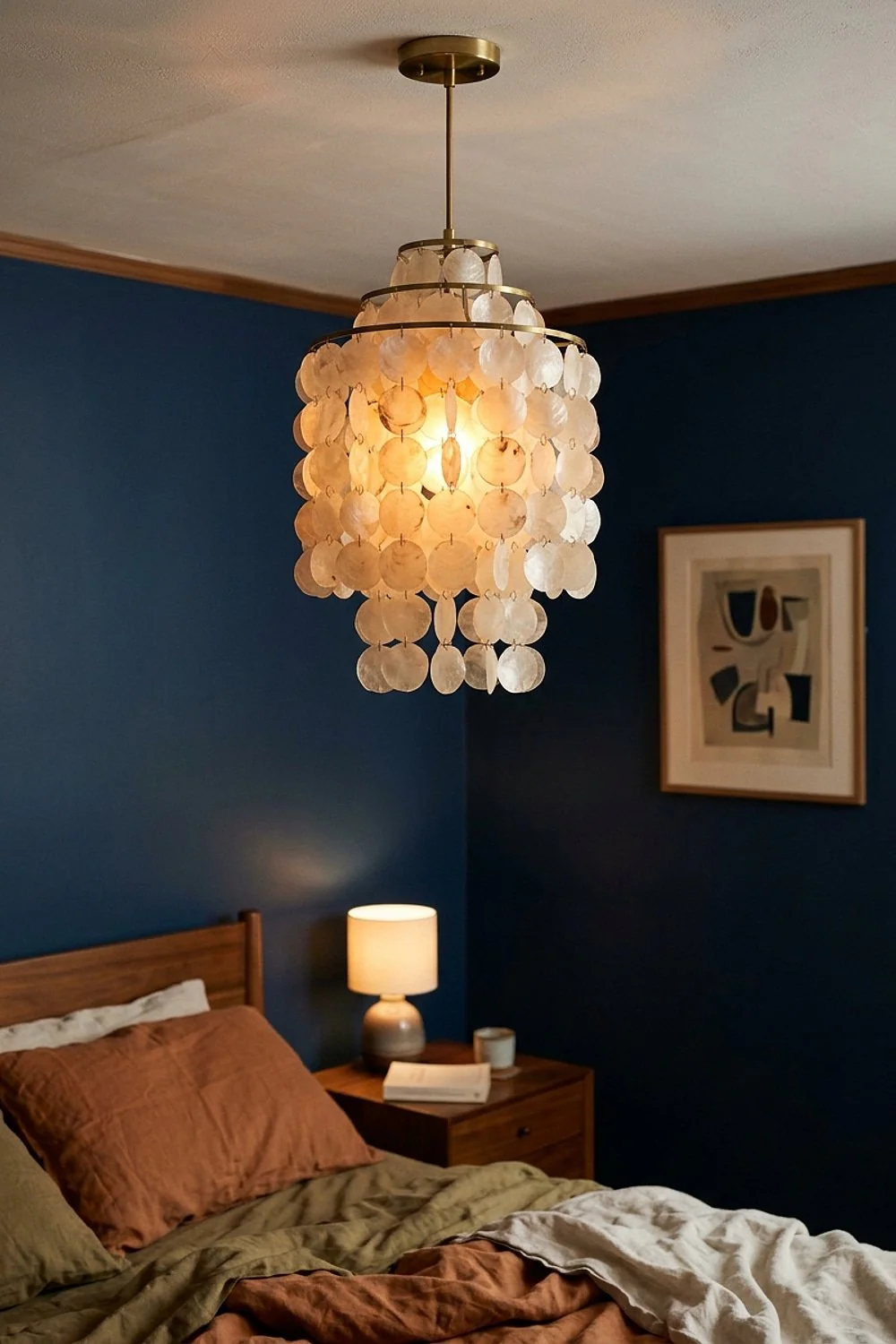
Layered shell pendants from established home brands scatter light into hundreds of small facets. A 16-inch capiz globe from a global-market retailer does it with the same pearly glimmer.
The shell diffuses a low-wattage bulb nicely in a bedroom with plain walls. In a busy, patterned room, the facets compete with everything else, so keep the rest of the ceiling quiet.
22. Gimbal spots aimed at the walls

Adjustable recessed spots, angled to wash the corners, are how designers light a bedroom without lighting the bed. Light bounced off a wall reads as a soft glow, while a direct beam on the pillows feels harsh. The dupe is a 3-inch LED gimbal downlight with a 30-degree tilt. Aim each one at the wall about 18 inches above the headboard.
This suits bedrooms with a ceiling cavity deep enough for a shallow housing and owners happy to cut holes. If the beam hits the pillows, tilt it up another 10 degrees. Matte paint also helps, since gloss creates bright hot spots.
23. Backlit voile ceiling drape
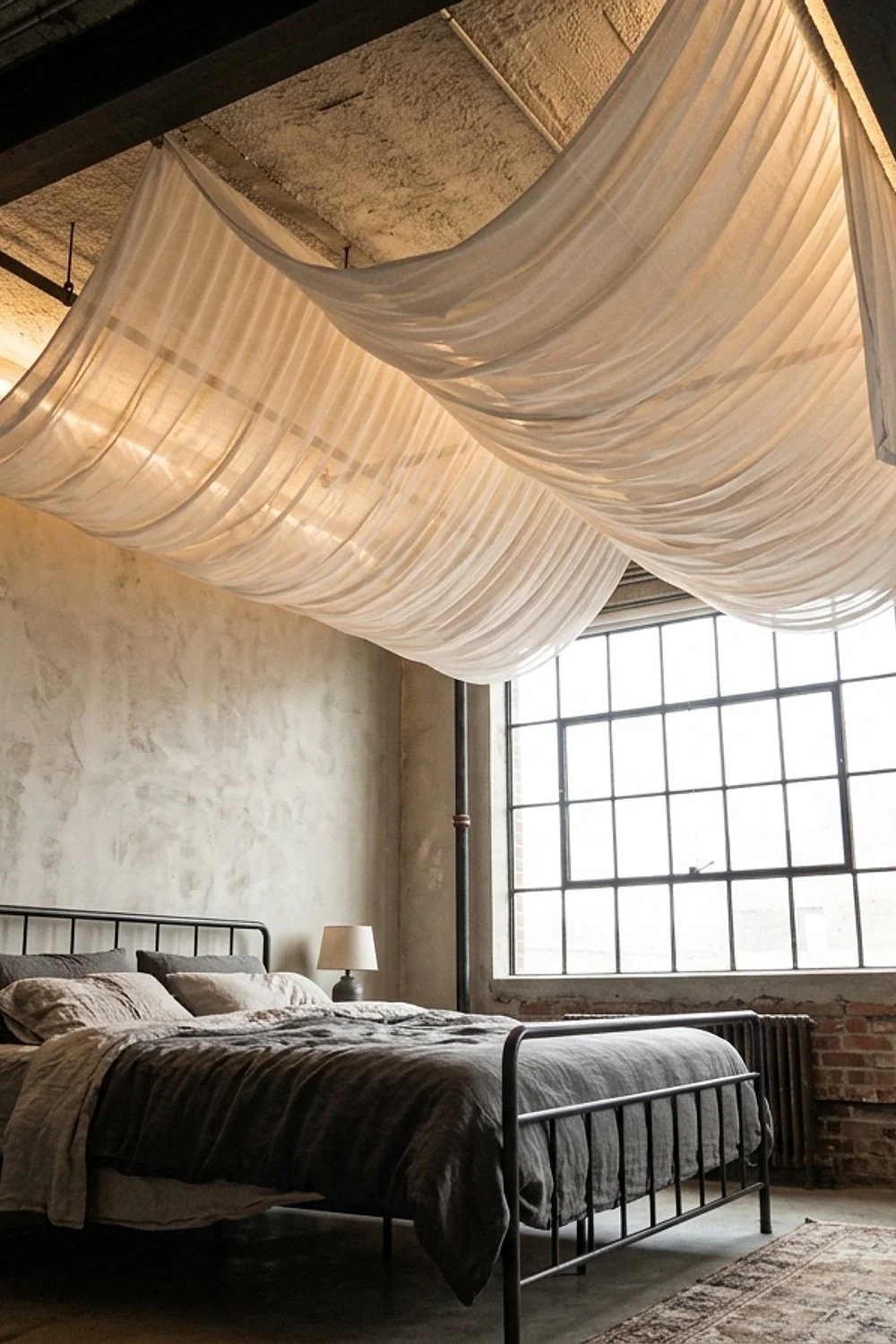
Stretched translucent ceilings from specialist installers cost several thousand dollars. A pair of sheer voile panels gathered across the ceiling, with a strip of LEDs hidden behind, creates a similar floating canopy for under $100.
It’s gentle on the eyes and good for sleep-focused rooms. Keep the fabric 3 inches from any strip, because LEDs run warm and the fabric should never touch them.
24. Smoked glass globe pendant
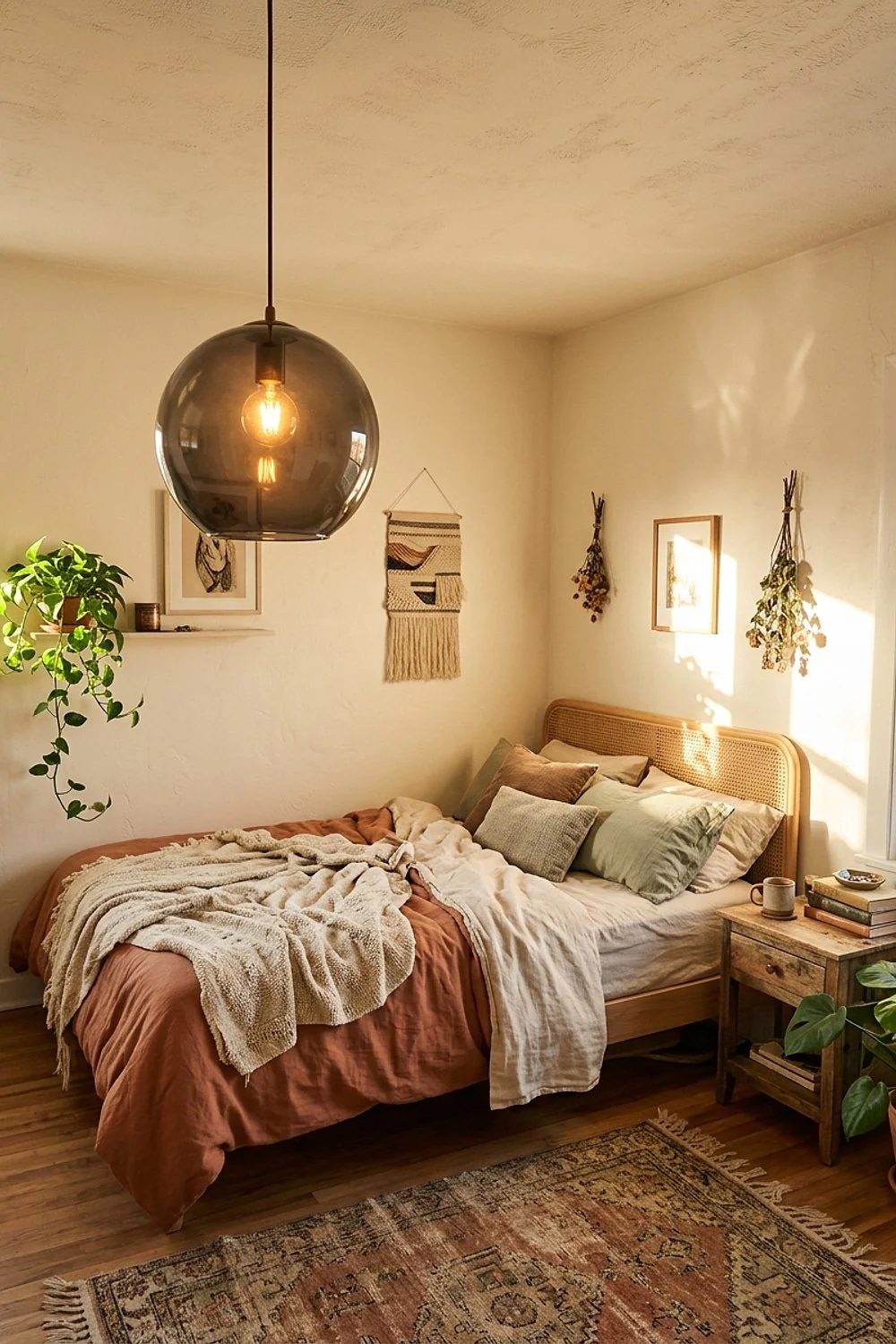
Murano-style glass pendants in smoke or amber cost hundreds, and the tint shifts every bulb toward honey. A 12-inch smoked glass globe at a fraction of the price does the same job, dropping the output by roughly 30 percent.
That loss is a feature in a bedroom. Choose a 1,000-lumen bulb behind the glass to land at a usable level, and never pair it with cool white, which turns smoke to dishwater.
25. Three saved lighting scenes
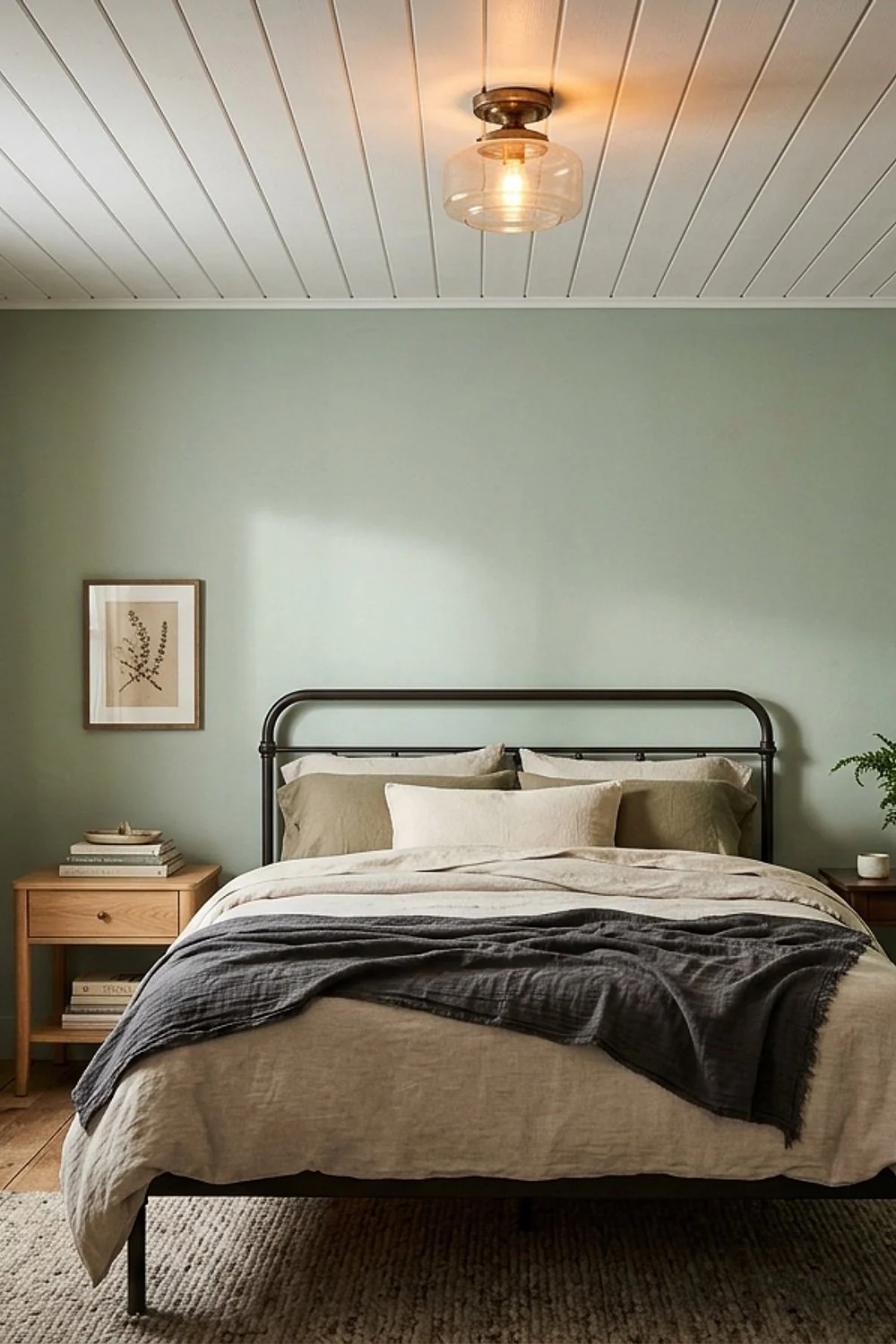
High-end homes program scenes: reading, evening and night. The dupe is a smart app or wall remote with three presets, say 60 percent for dressing, 20 percent for evening and 3 percent for midnight.
Add a 30-minute sunrise ramp, and the ceiling doubles as an alarm. Scenes only pay off if you actually name and use them, so trim the list to the three settings the room really needs.
Where to Splurge and Where to Save
Spend money where touch and heat matter, and save where the light does the work. A dimmer is the single place a cheap part is most obvious, since flicker and hum are impossible to ignore.
- Splurge on the dimmer, the driver for any LED strip, and anything hardwired over your head.
- Save on shades, paper lanterns, rattan, cotton clouds and decorative bulbs.
- Save on paint tints and trim, which cost little and change the ceiling’s color.
- Splurge on a fixture only when it’s the single large piece over the bed.
A cheap pendant on a good dimmer beats an expensive pendant on a bad one. The reverse never holds.
Plan the budget in layers too. Three small sources at 20 percent output beat one large fixture at 100 percent, so there’s no reason to buy one overpriced showpiece.
Walking through the setup
Mood lighting bedroom ceiling quality shows up in what you can’t see: no visible diodes, no hot spots, no flicker at low settings. Run the dimmer down to 5 percent in the store or the first evening, and watch for steps in brightness.
Check these before you commit to any product:
- Color rendering index of 90 or higher, so skin and fabric look natural.
- Color temperature printed on the box, between 2200K and 2700K.
- A dimming range that reaches at least 10 percent without a hum.
- Diodes spaced 0.5 inches apart or closer on any exposed strip, which prevents dotting.
Tape a strip to the ceiling for a night before drilling anything. Gray February afternoons are the best test, since a room with weak daylight shows every flaw in artificial light.
It’s not foolproof. But it works.
Bring Your Ceiling Together
A mood lighting bedroom ceiling comes together when two or three of the ideas above share one color temperature and one dimmer family. Try a cove or uplight for the wash, one diffused fixture for the center and a smart scene for control.
Save or pin this list so you can return to it when you’re ready to buy. Start with the one thing to measure first: the gap between the top of your wardrobe or wall and the ceiling.
Frequently Asked Questions
How bright should a mood lighting bedroom ceiling be?
Plan for 10 to 20 lumens per square foot at full brightness, then run it at 10 to 30 percent most evenings. A 12-by-12-foot room needs roughly 1,500 to 2,900 lumens in total across all sources.
Can I install a mood lighting bedroom ceiling in a rental?
Yes, if you stick to plug-in and no-drill options. Smart bulbs, a paper lantern on the existing fixture, a wardrobe-top uplight strip and a cord-and-hook pendant all come down without leaving marks.
What color temperature works best for bedroom ceiling lights?
Choose 2200K to 2700K for evening use. Anything above 3000K reads as office lighting and works against sleep.
Will LED strips damage my ceiling paint?
Adhesive strips can lift paint when removed, especially on flat finishes. A mounting channel or a wooden ledge avoids the problem and keeps the line of light straighter.