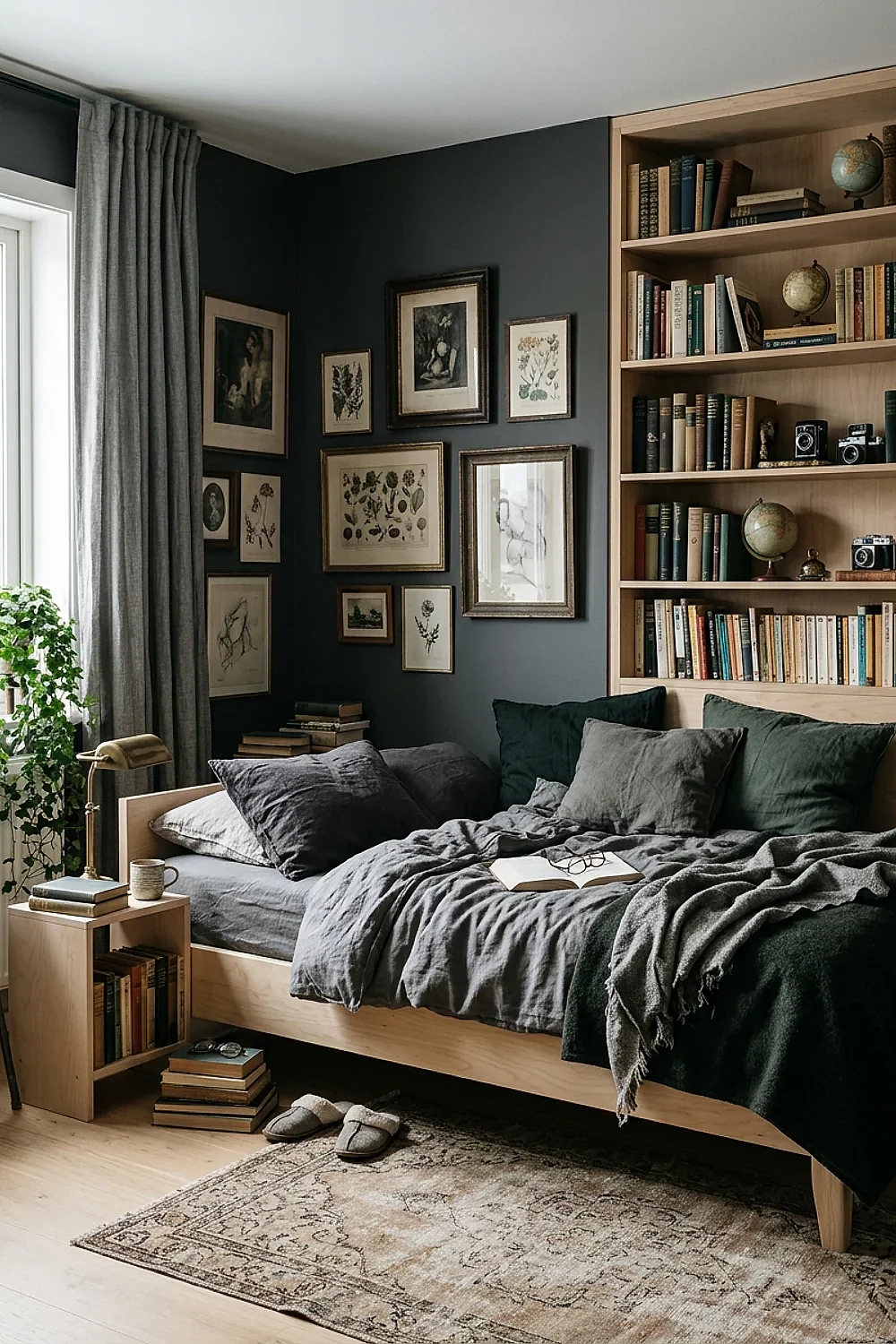
12 Dark Academia Bedroom Design Rules That Look Expensive
A 12-by-12-foot bedroom with a single north-facing window is the toughest test of dark academia bedroom design, and the best proof that the rules work. Dark walls, old books and brass lamps can feel like a velvet cocoon or a cave, depending on a handful of measurements.
Below are 12 professional rules, each tied to real dimensions, materials and trade-offs, so the room looks collected and not costumed.
The professional rules behind dark academia bedroom design
Dark academia bedroom design runs on the same principles as any good room: layered light, a 60-30-10 color split, varied visual weight and honest materials. The moody finish just makes mistakes louder. Here they are, one at a time.
1. Mount reading sconces at 52-56 inches
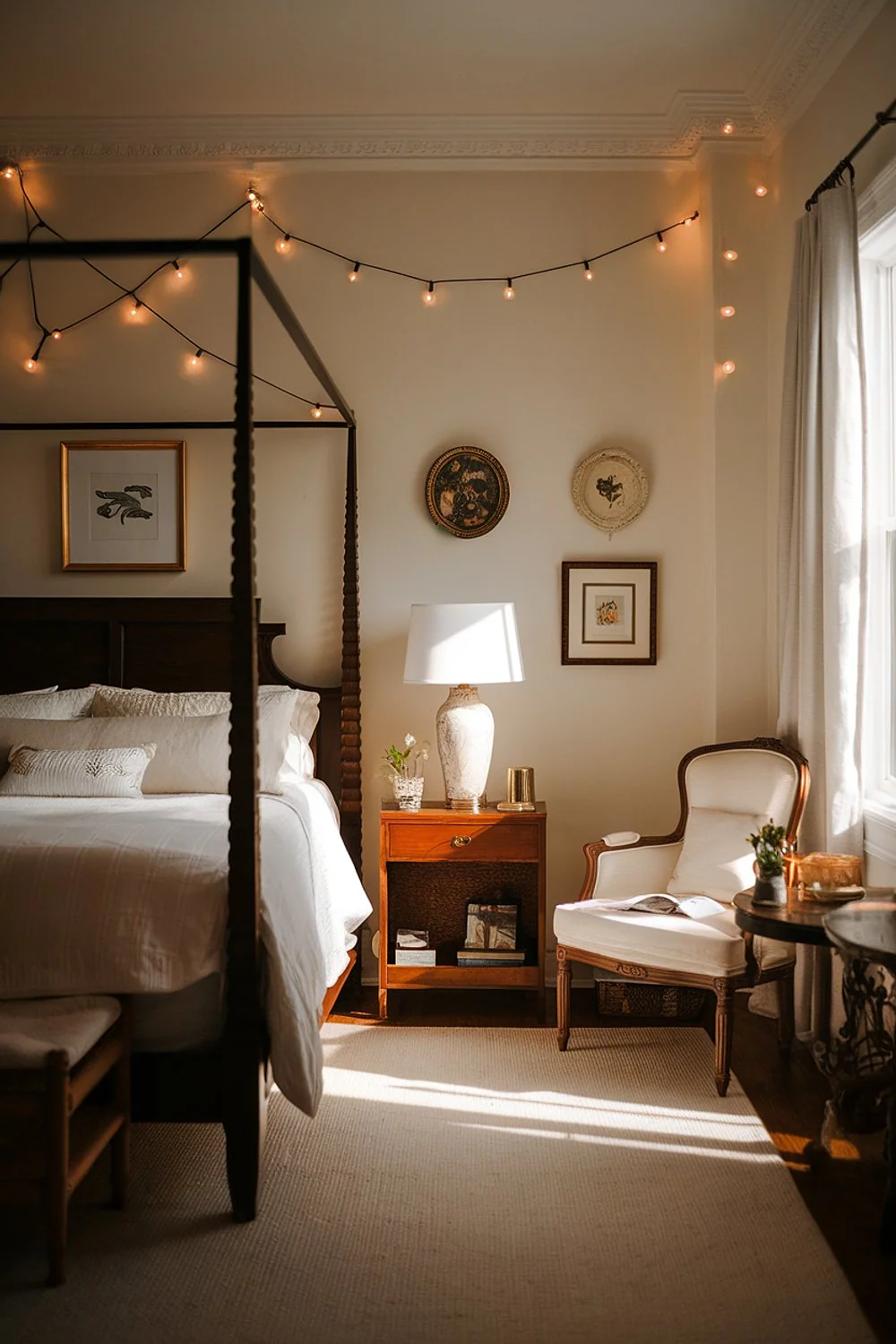
A pair of swing-arm brass sconces, mounted 52-56 inches from the floor, puts the bulb just above shoulder height when you sit up against the pillows, so light lands on the page instead of in your eyes. A plug-in pair runs about $60-$90 and saves you from hiring an electrician, which makes them ideal for renters and anyone who reads in bed.
Choose 2200-2700K bulbs. Anything cooler turns walnut and oxblood a sickly gray, and a bulb that shows below the shade will glare.
2. Pick one saturated wall color and commit
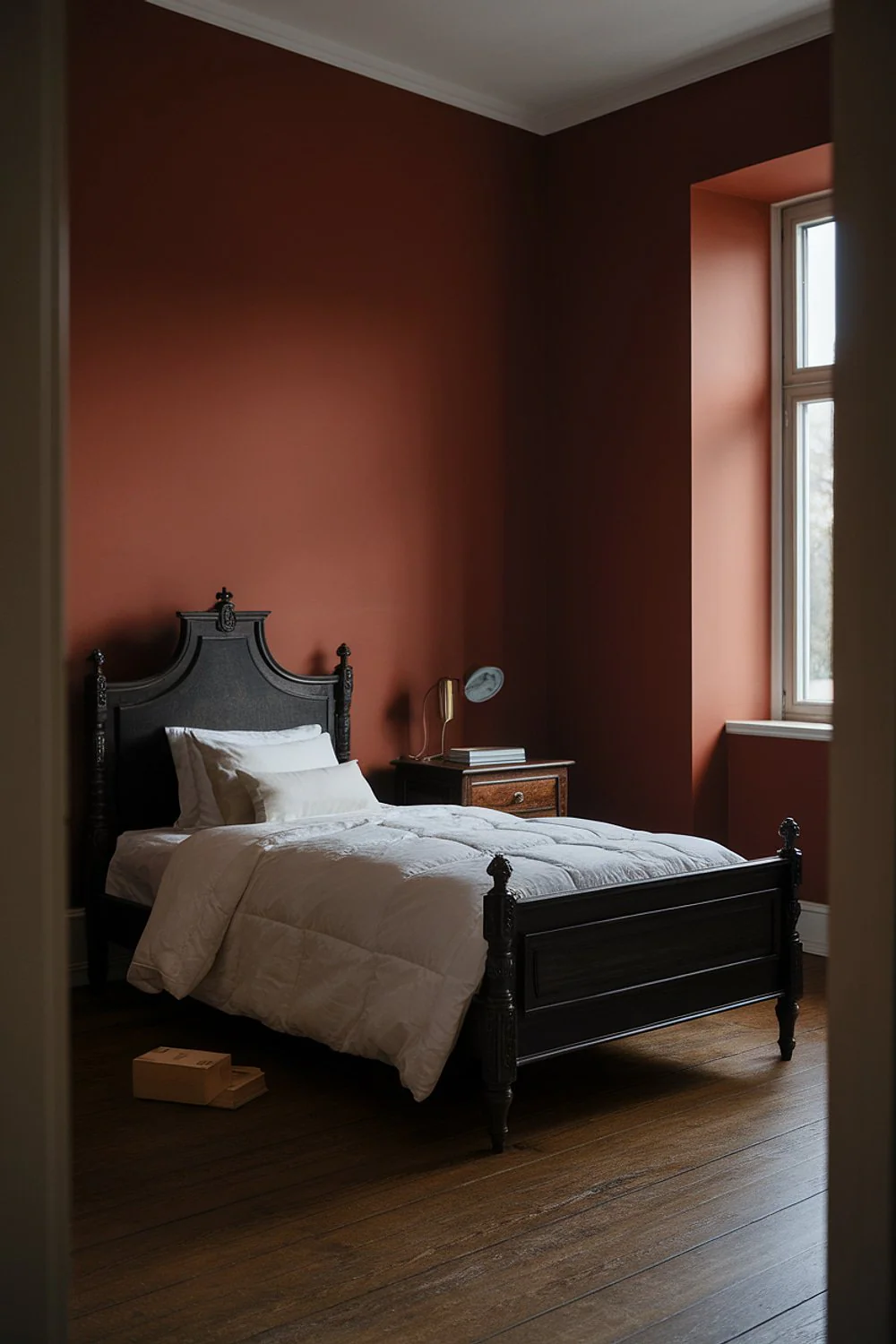
A deep green such as Farrow & Ball Studio Green or an ink navy such as Benjamin Moore Hale Navy gives the room its backbone. Use a matte or flat finish, because eggshell throws back window glare and looks like plastic at 4pm.
Sample on two walls first. North light cools a color, south light warms it, and a swatch card lies about both.
3. Hang art in a cluster, centered at 57 inches
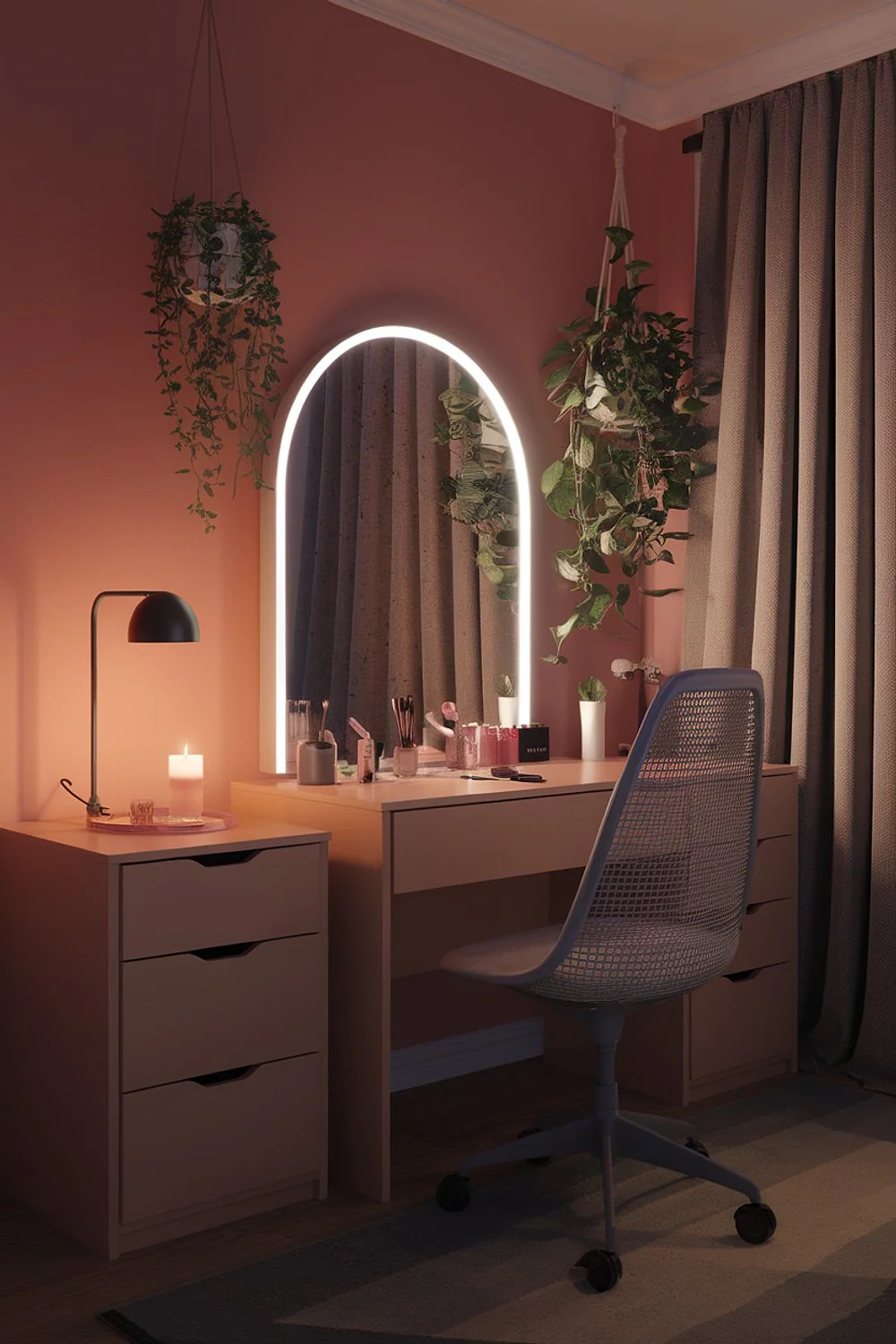
A center line of 57 inches is the height gallery professionals use, and the number holds for a gallery wall too: treat the whole cluster as one artwork centered there. Mix oil landscapes, botanical prints and a few small portraits in mismatched gilt or black frames.
Keep 2-3 inches between each frame and use odd numbers, which read as collected. Secondhand frames in uneven finishes beat a matching boxed set every time, which suits thrift shoppers on a budget. Avoid gaps over 3 inches, since the cluster drifts apart into separate pictures.
4. Choose wool, velvet and aged oak over anything shiny
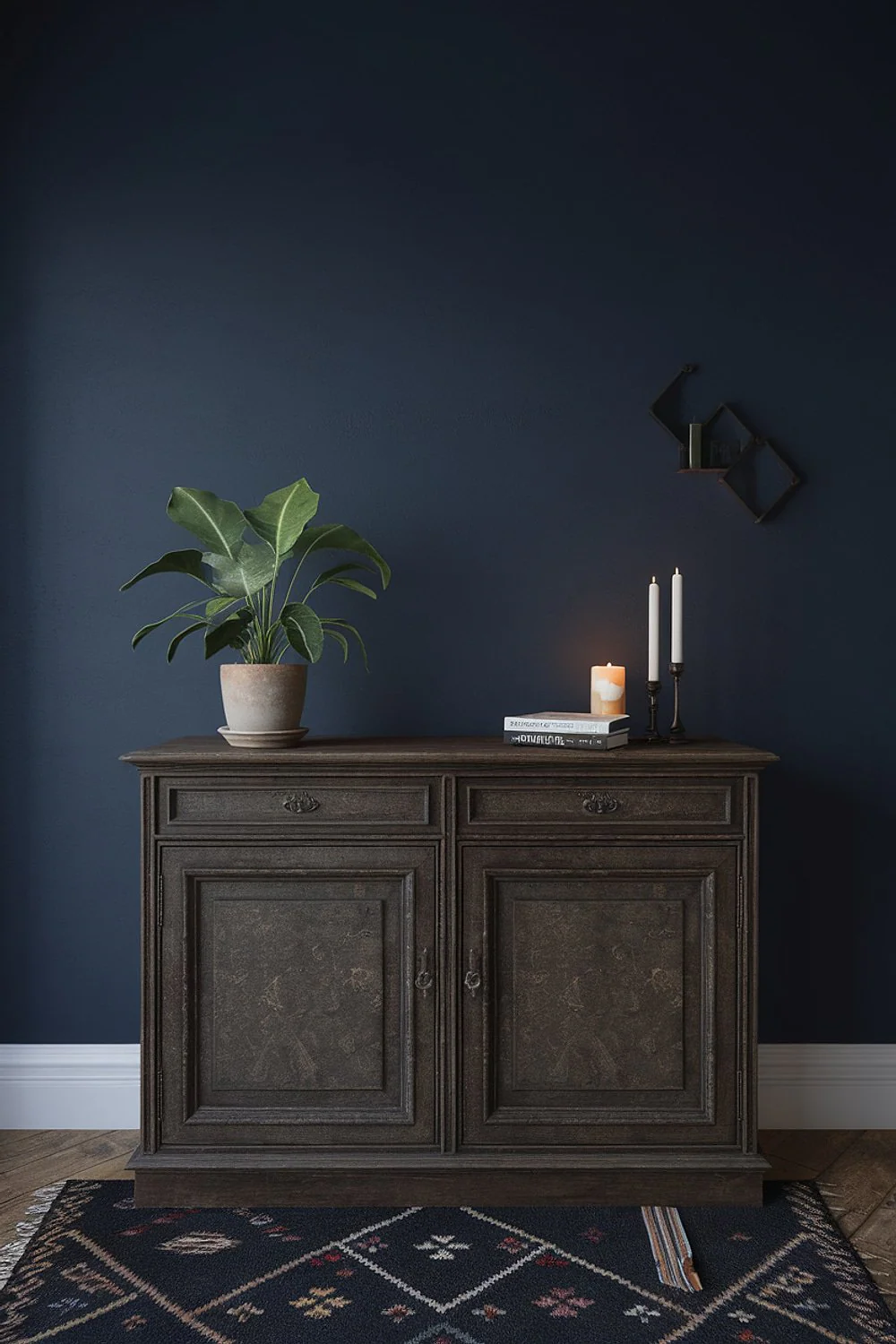
A matte wool blanket, a cotton-velvet cushion (the nap should drag under your palm) and an oak bed frame all absorb light, which is the whole point: dark academia relies on a low, soft glow, and surfaces that bounce it back flatten the mood.
Expect a good vintage oak dresser to run $150-$400 on the secondhand market, which suits anyone furnishing on a budget. Glossy lacquer and polyester satin are the usual offenders. They glare under lamplight and break the antique spell.
5. Keep the ceiling lighter than the walls
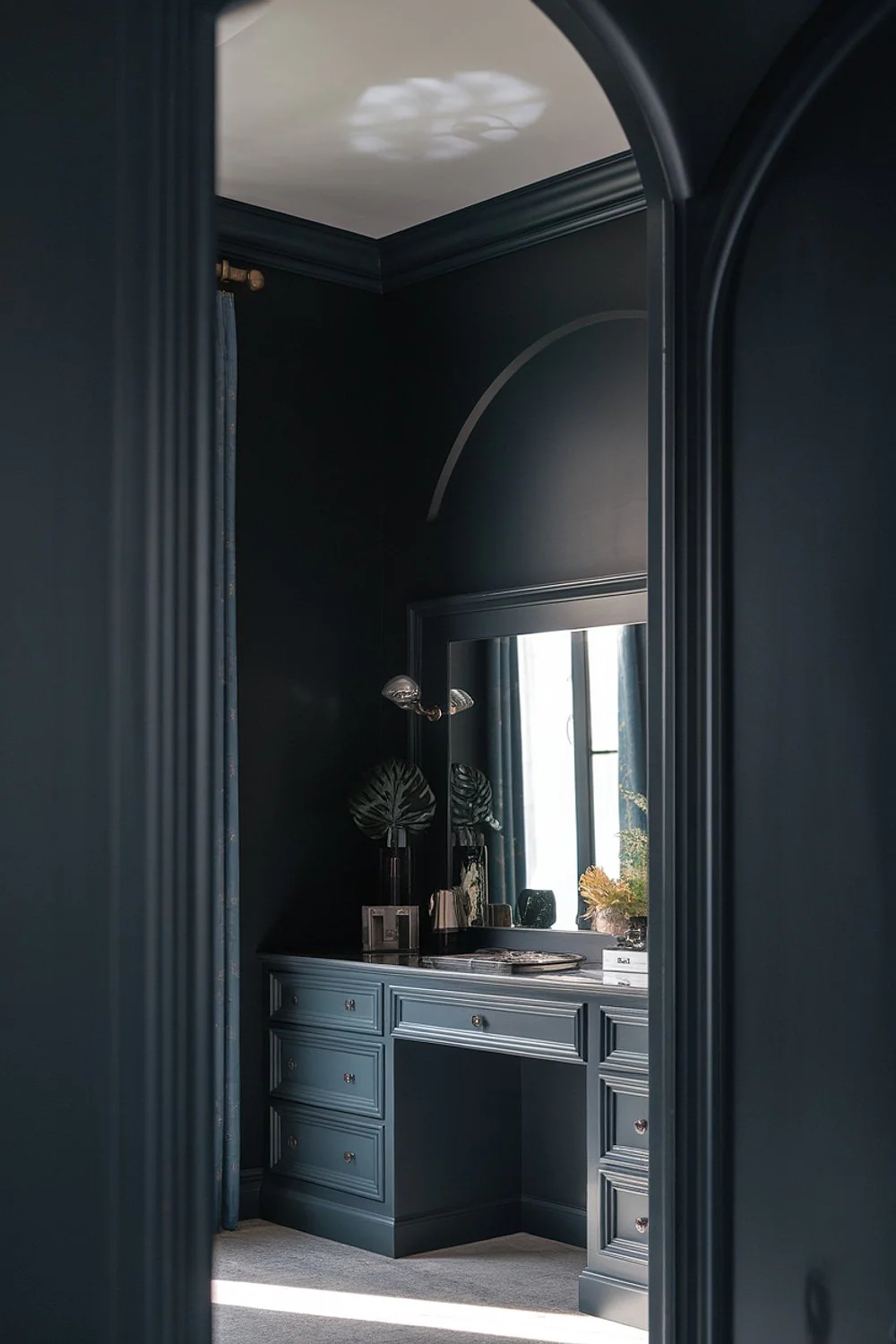
Painting walls and ceiling the same near-black feels bold and produces a low, heavy box. A ceiling two or three values lighter, such as a warm off-white, bounces lamplight upward and makes the room feel taller.
Here’s the counterintuitive part: dark walls recede when the ceiling stays pale, so a small bedroom can feel bigger than it did in white.
6. Build in a writing desk, not just a nightstand
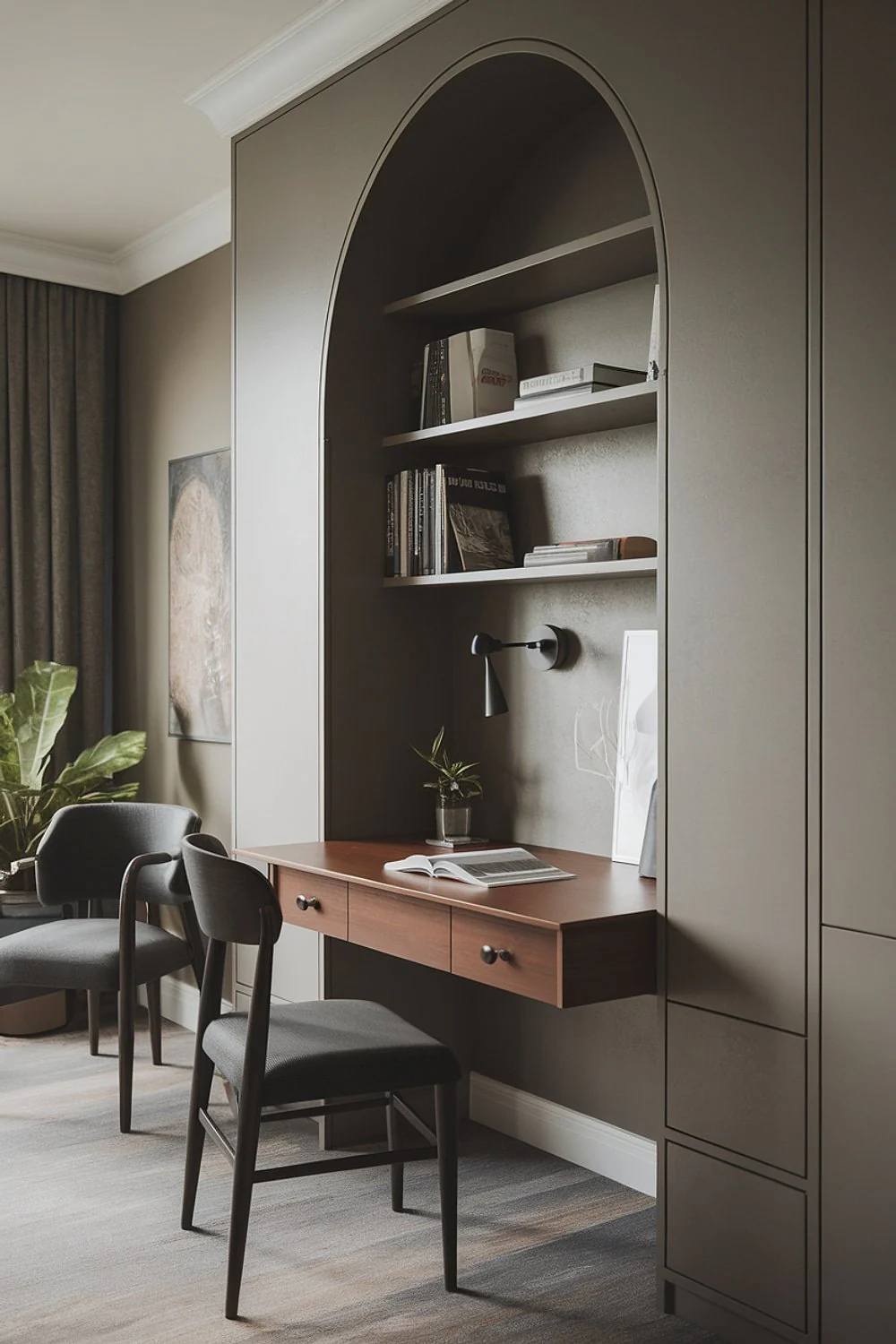
A 42-inch-wide desk with a 29-30 inch top height and an 18-inch depth fits under most windows, and the daylight that falls across it makes the spot ideal for reading and writing. Add a straight-backed chair and a green-shaded banker’s lamp, and the room earns its scholarly name.
This suits anyone who journals or works from the bedroom, and the narrow depth keeps it from crowding the floor. Skip it in a room under 100 square feet, where the walkway matters more than the desk.
7. Leave a 34-inch walkway around the bed
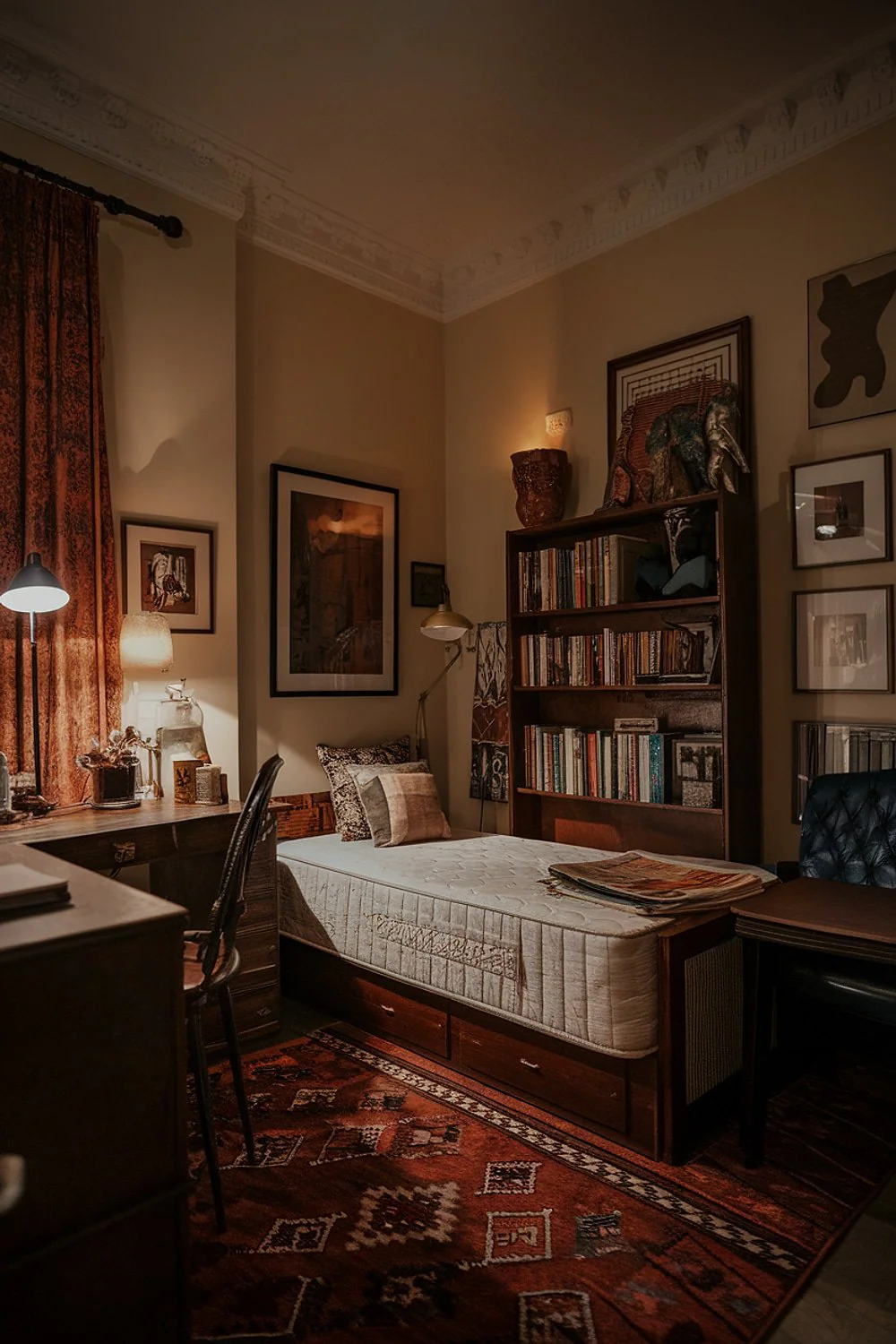
Here’s the deal: furniture crowding is the fastest way to turn a moody bedroom into a cluttered one. Keep at least 34 inches on the main walking side and 24 inches on the other, and push the bed’s head against the longest solid wall.
On a gray November afternoon, a cramped room shows every shadowed corner. Clearances keep the shadows looking intentional.
8. Size the rug to run 24 inches past the bed
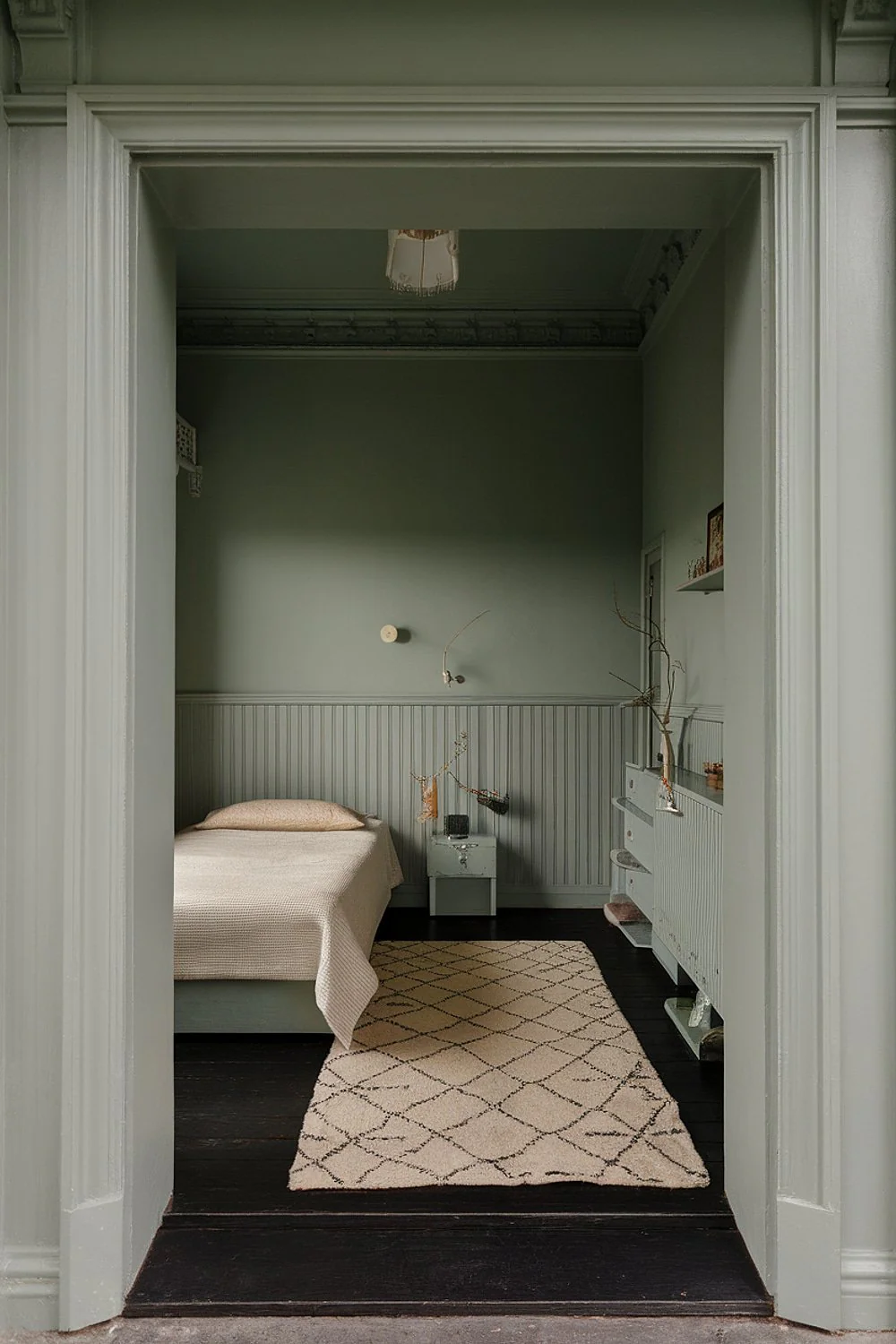
A queen bed wants an 8-by-10 rug, placed so 24 inches shows on both sides and at the foot, which frames the bed and gives bare feet something soft to land on. A 5-by-8 floats like a doormat, and that proportion error spoils the room.
Choose a faded Persian-style wool or a worn flatweave. Pattern hides dust better than solid navy, which is a real consideration in a dark room and for households with pets.
9. Shelve books on boards 11-12 inches deep
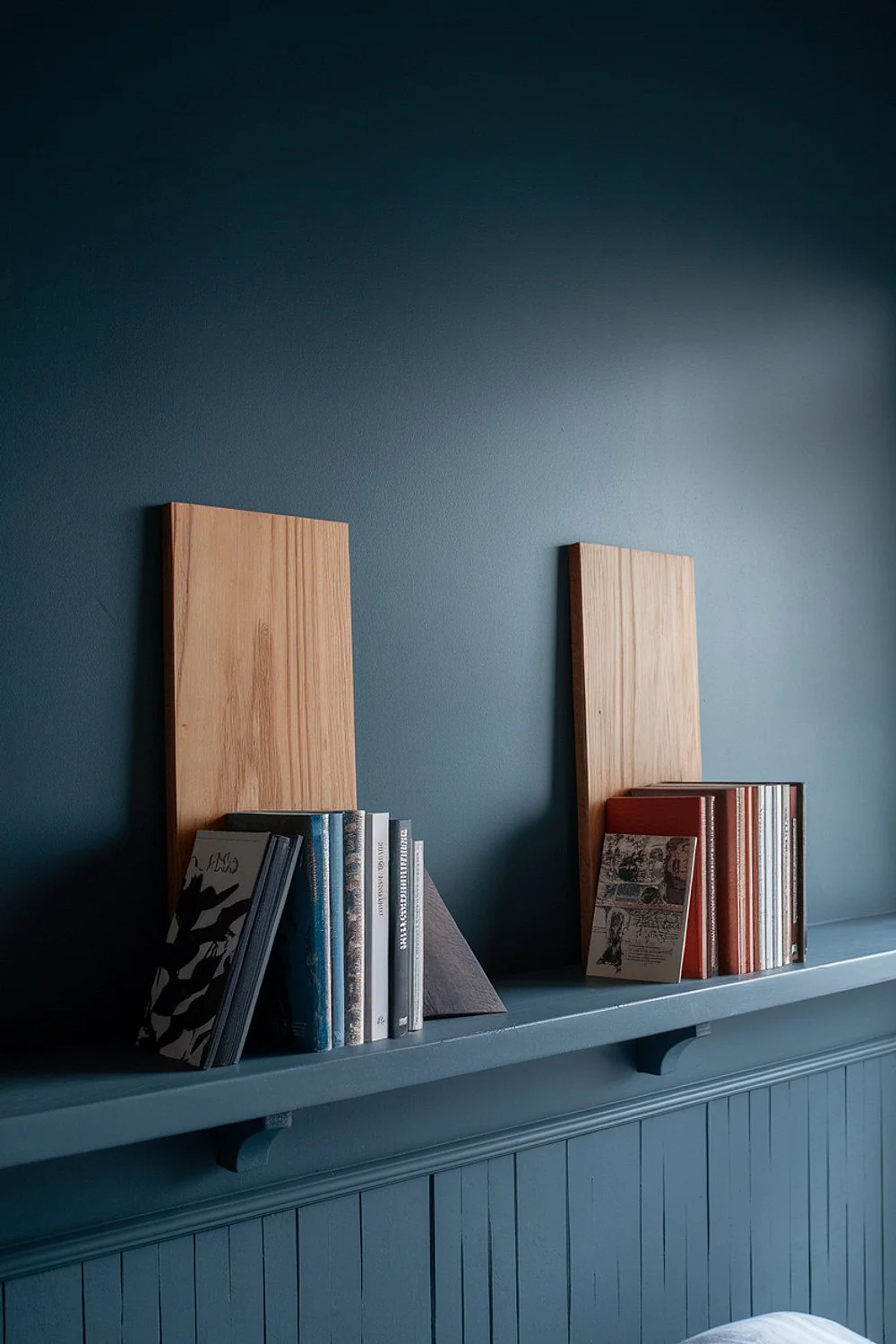
A floor-to-ceiling bookcase is the signature piece, and 11-12 inch shelf depth holds paperbacks and hardbacks without wasting floor. Set shelves 10-12 inches apart, and anchor tall units to studs. A secondhand bookcase often costs under $120.
Stack some books horizontally and leave gaps. Shelves packed edge to edge look like a library rental, and they bury the objects between them.
10. Layer bedding in cream and wool, not black
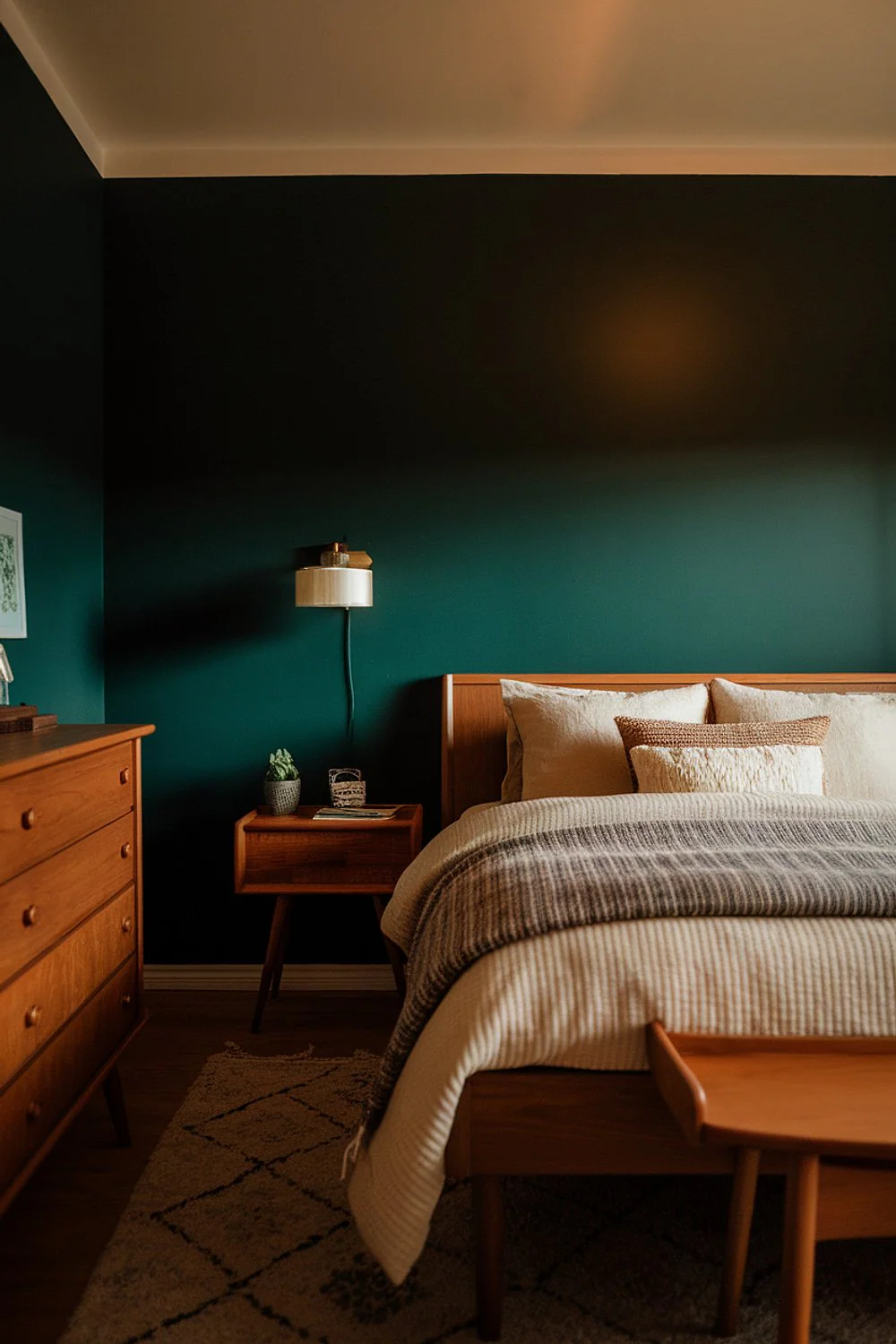
Washed linen or cotton sateen sheets in cream or oatmeal give the eye a rest against dark walls, and the lighter tones bounce a little lamplight back into the room. Add a heavy wool throw at the foot and two velvet euro pillows, 26 inches square, behind the standard ones.
All-black bedding disappears into the room and feels like sleeping in a hole. Soft contrast keeps the bed readable, which suits small or north-facing bedrooms with little daylight, though pure white can look stark, so stay with warm cream.
11. Line the curtains and hang them 4 inches above the frame
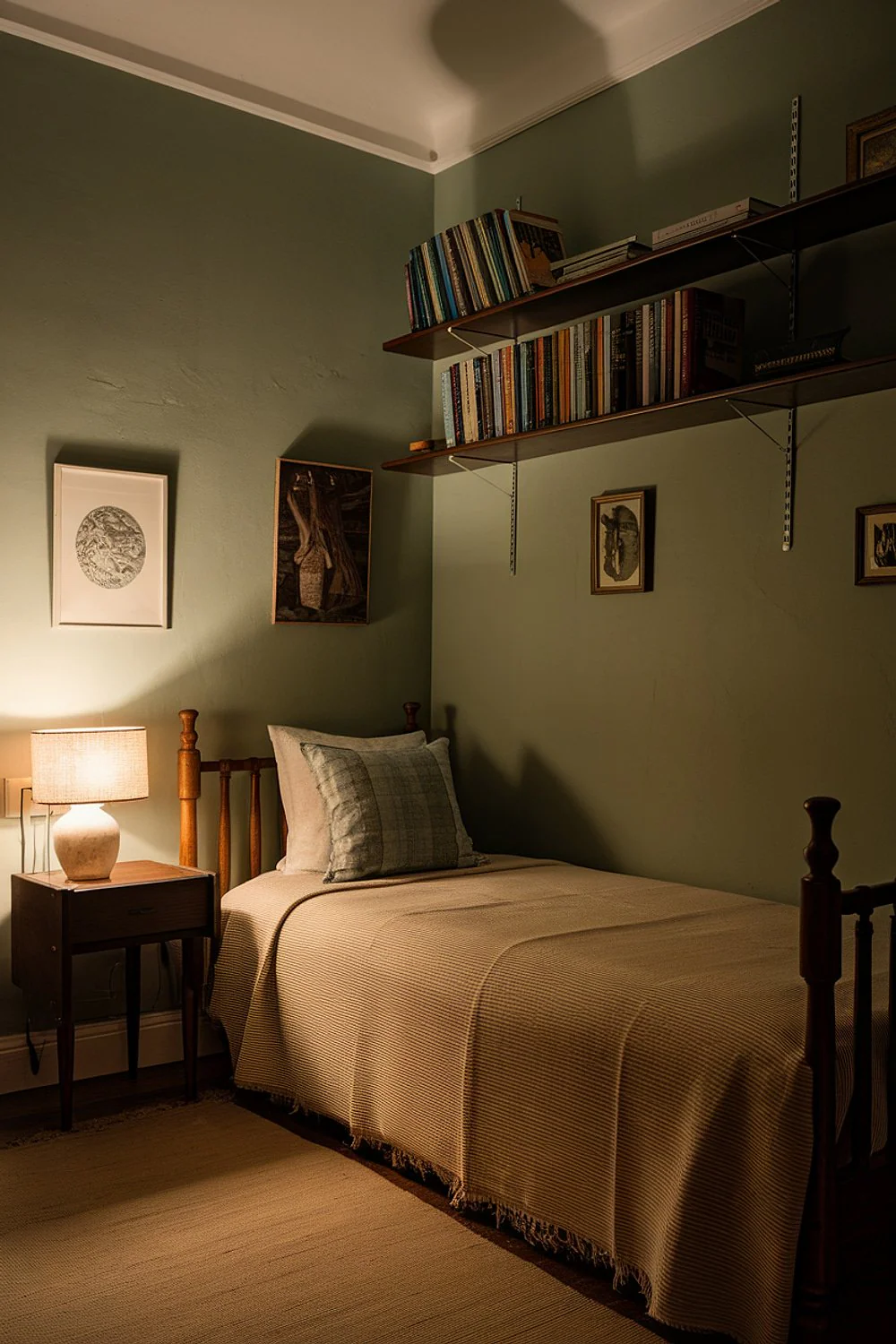
Heavy velvet or wool curtains with a blackout lining hung 4 inches above the window frame, and stacked wide so the glass stays clear, soften afternoon light into amber. They also block street glare when you want to sleep late.
Choose a rod 8-10 inches wider than the frame on each side. Short, narrow curtains are the clearest sign of a rushed room.
12. Stick to one metal and the 60-30-10 split
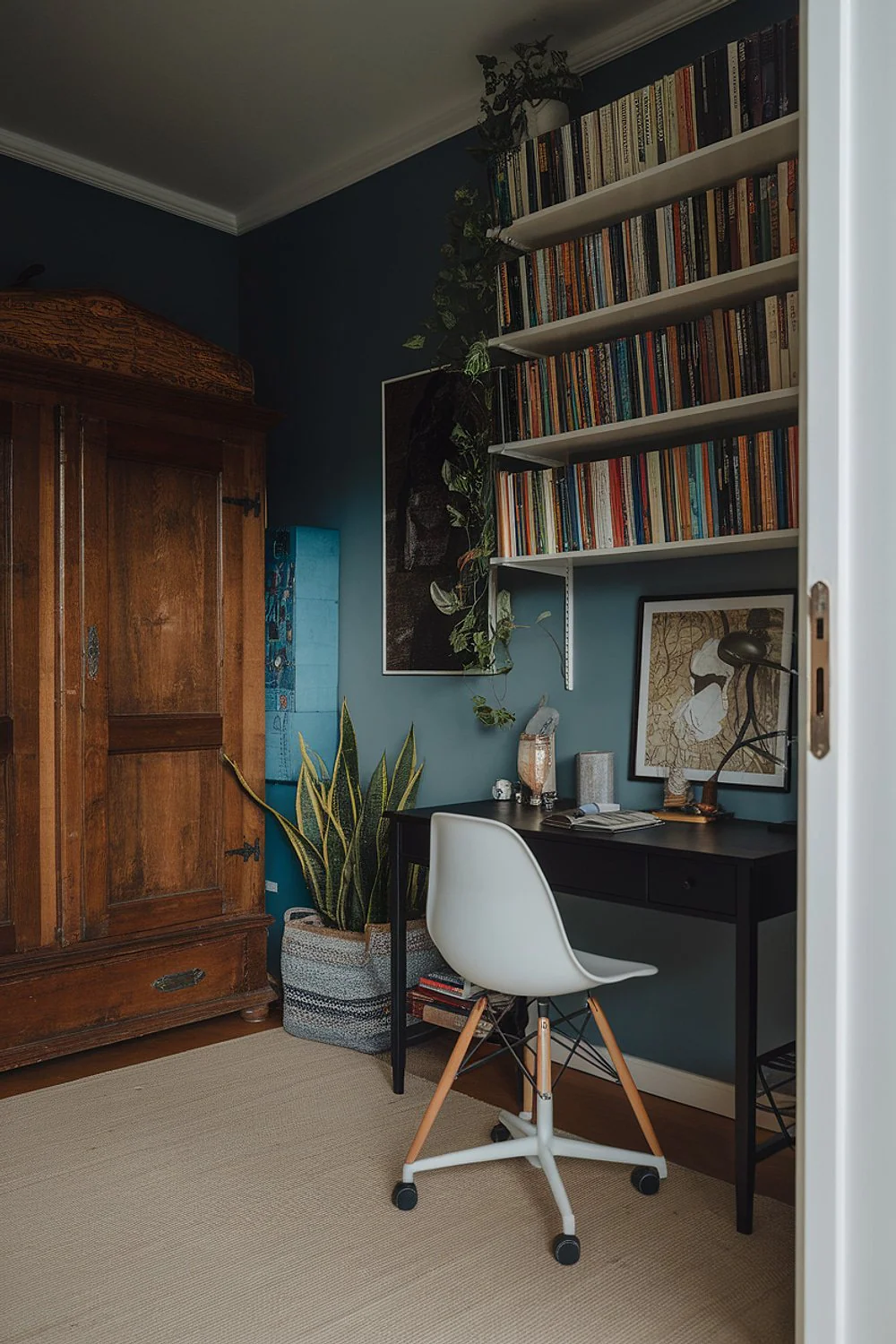
Walls and large pieces take 60 percent, rugs and bedding 30, and accents 10, following the 60-30-10 rule. In this room, the 10 is aged brass for the lamp bases, frames and curtain rod, with a single burgundy or rust note.
Mixing brass, chrome and black iron reads as confusion. Pick one, and let the rest go matte. This suits a room built from secondhand finds, since a single metal ties mismatched pieces together, but avoid polished brass, which looks new and shiny.
Breaking the dark academia bedroom design rules on purpose
Designers break rules deliberately, and they know which ones will bend. A 5-by-8 rug works under a daybed in a 9-foot room, because the bed is the only piece that needs anchoring.
Likewise, the pale ceiling can go dark in a bedroom used only after sunset. The room becomes a cocoon, and that’s the goal.
- Skip the desk when the walkway would drop below 30 inches.
- Go ahead and mix two metals if one is clearly dominant, roughly 80 to 20.
- Use a cooler 3000K bulb in a bathroom-adjacent dressing corner where you need to see skin tone.
Rule-breaking only works when the rest of the room is disciplined. One loose element looks designed; five look accidental.
Common mistakes
Dark academia bedroom design fails in predictable ways, and most trace back to light or scale. A single ceiling fixture with a 60W-equivalent bulb flattens every surface, so the room needs at least three light sources at different heights.
Look, the other repeat offender is buying decorative books by the yard. Faux spines with identical gold lettering feel hollow the moment a guest touches one.
Pros also avoid these:
- Painting all four walls before testing a sample for a full day of light.
- Hanging art at 66 inches, which is eye level for a standing person, not a bed or a chair.
- Pushing the bed into a corner, which leaves one side with 0 inches of access.
- Choosing a headboard under 40 inches tall, which looks stunted against a dark wall.
One more: a 9-foot ceiling wants a 54-60 inch headboard. Go shorter, and the bed looks lost…actually, no, scratch that: go shorter only if the bed sits under a large mirror or a piece of art that does the vertical work.
A sensible order for building the room
Order matters more than budget. Painting last means taping around finished furniture, and hanging art first means moving nails twice.
- Paint the walls and ceiling, then let the finish cure for 48 hours.
- Place the bed and the rug, checking the 34-inch and 24-inch clearances.
- Install the sconces and curtain rod at their set heights.
- Bring in the bookcase and desk, then hang the art.
- Add bedding, throws and the final accent color last.
Bringing it together
Dark academia bedroom design comes down to measurement and restraint: 52-56 inch sconces, a 57-inch art line, a rug 24 inches past the bed and one metal throughout. Get those right, and the moody finishes do the rest.
Save or pin this list so it’s on hand when the paint swatches come out. Start by measuring the longest wall and the bed, because that one number decides the rug, the walkway and the headboard height.
Frequently Asked Questions
Does dark academia bedroom design work in a small bedroom?
Yes, if the ceiling stays lighter than the walls and furniture stays low. A 10-by-10 room can carry a deep green wall, a 60-inch bed and one 36-inch-wide bookcase without feeling cramped.
What bulb color is best for a dark, moody bedroom?
Use 2200-2700K bulbs, which give a candle-to-incandescent glow. Add a dimmer, and keep lamps at three different heights so no single source flattens the walls.
Can dark academia bedroom design work in a rental?
Mostly, yes. Plug-in sconces, a large rug, lined curtains on a tension rod and framed art on removable strips deliver most of the effect without touching the paint, and a full set of these usually costs under $300.
How do I stop a dark bedroom from feeling gloomy?
Add contrast in the bedding and ceiling, and use warm, low-level light. Cream linens, a pale ceiling and a brass mirror opposite the window bounce light back into the room.



3 Comments