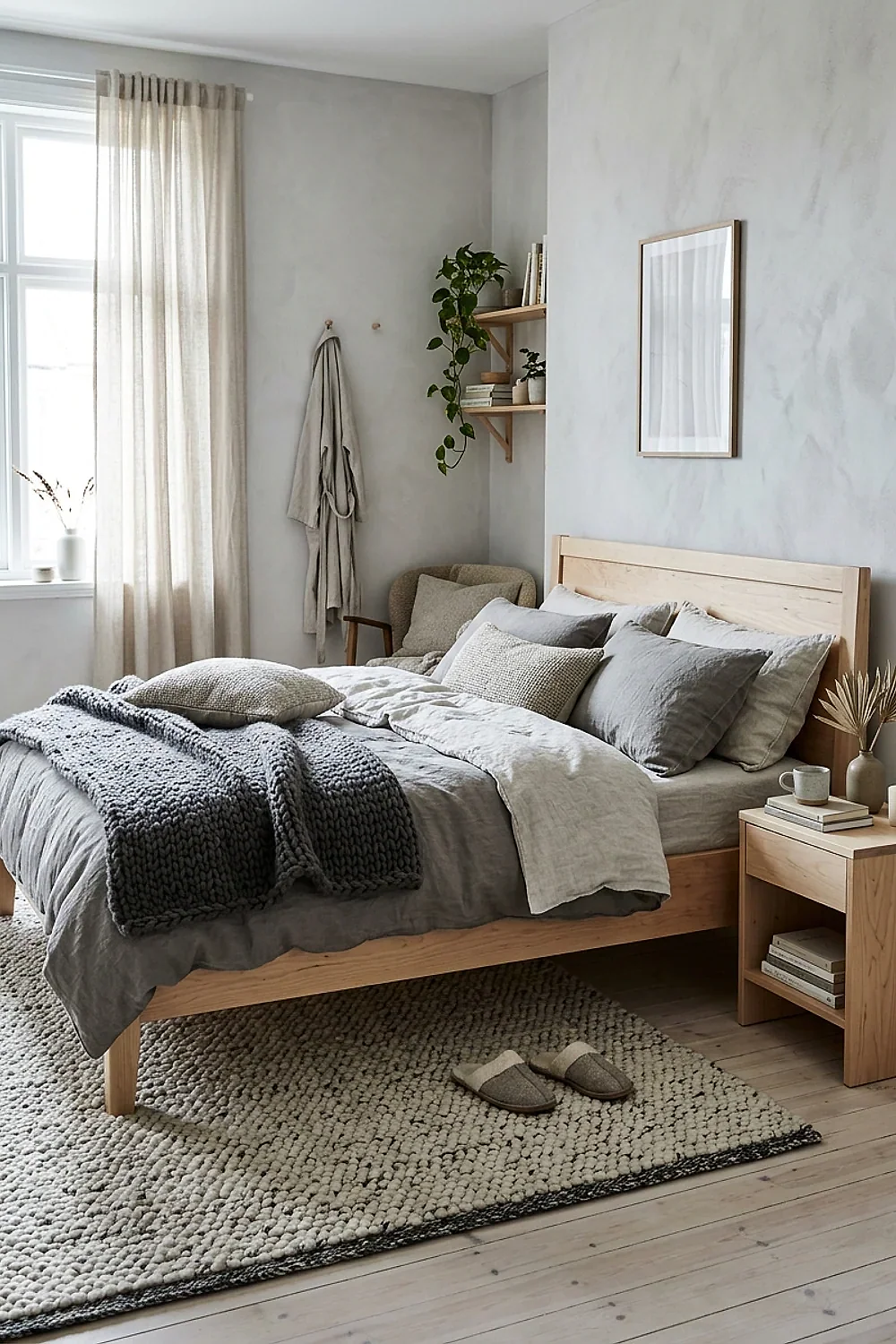
25 Hygge Bedroom Decor Ideas That Nail the Cozy Look
Most bedrooms that try for hygge fail because they’re too tidy and too bright. The best hygge bedroom decor ideas work in reverse: lower light, more fabric, and a room that looks slept in on purpose.
Picture a November Sunday at 4pm with rain on the window, a wool blanket under your hand, and one lamp throwing amber across a plaster-colored wall. Below are 25 specific ways to build that room, with sizes, materials and the upkeep each one costs you.
Hygge bedroom decor ideas: Where the inspiration comes from
Hygge (roughly “hoo-gah”) is a Danish and Norwegian word for a feeling of sheltered contentment. In a bedroom it translates to low light, natural fibers, muted color and objects you actually touch every day.
It isn’t a catalog of white wood and gray knits. It’s closer to a nest: enclosed, layered, a little imperfect. These first six ideas set the frame before any decoration happens.
1. A bed that nearly fills the room
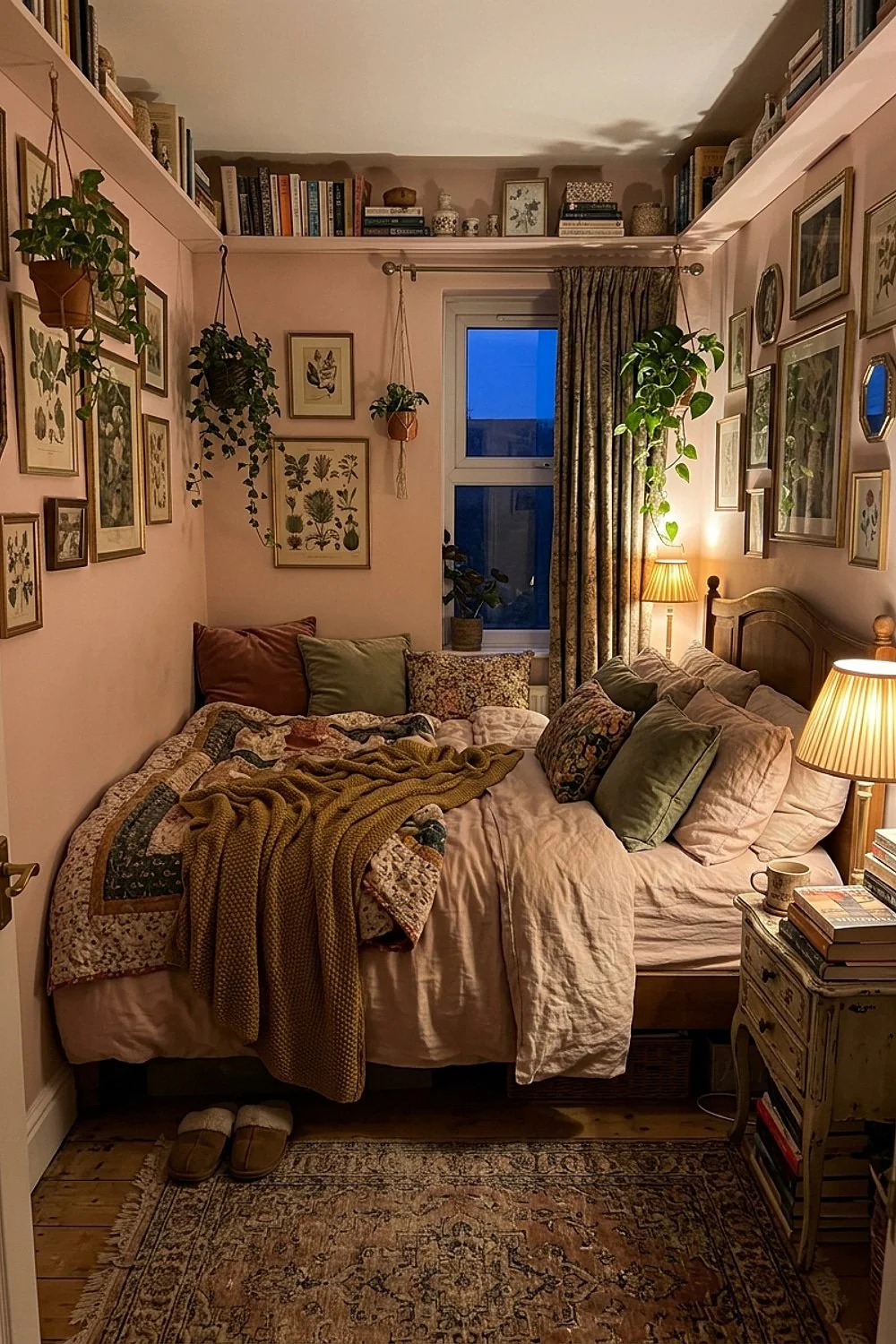
A queen bed measures 60 by 80 inches. In a 10 by 11 foot room that still leaves about 30 inches of walkway on each side once nightstands go in, which is plenty. A bed that dominates reads as a nest instead of a mistake.
Small and mid-size rooms suit this best, especially older houses with low ceilings. Skip a king in anything under 11 by 12 feet, because you’ll end up shuffling sideways to reach the closet.
2. Table lamps with fabric shades

A pair of lamps 24 to 26 inches tall, with linen or paper shades, puts light at eye level when you’re propped on pillows. The shade scatters the glow sideways instead of straight down, so the wall catches a pool that looks like late sun.
This suits anyone who reads in bed. Avoid glossy metal shades, which throw hard stripes across the ceiling and defeat the whole mood.
3. Washed linen bedding

Washed linen feels a little cool and rumpled out of the package, then settles into something broken in after roughly five washes. The fabric breathes, so it suits hot sleepers and anyone sharing a bed with a human radiator. A full sheet set from a brand like Parachute or Cultiver runs about $200 to $300.
The upkeep trade-off is plain: linen wrinkles permanently. If you want hotel-flat sheets, cotton percale is the better call.
4. Chalky, muted wall color

A wall in pale oat, greige or soft mushroom picks up the yellow of a 2700K bulb without turning clinical. Pure white walls drift blue-gray at dusk next to those bulbs, which is exactly the opposite of snug.
Choose a matte finish, since eggshell bounces glare off the bedside lamp. Brush a 2 foot square swatch and check it at 4pm and again at 9pm before you buy a gallon.
5. A lidded bench at the foot of the bed
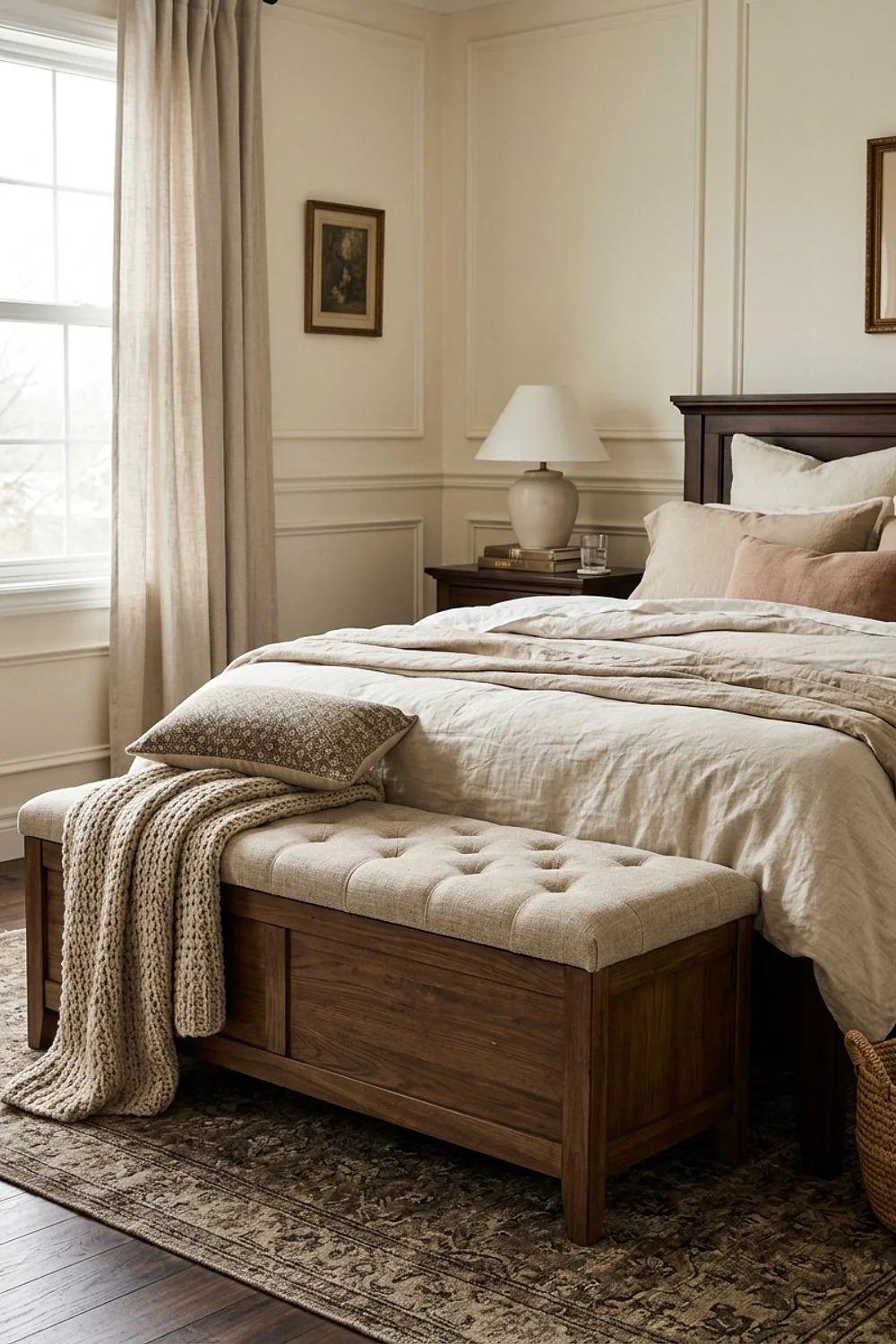
A bench about 16 inches tall and 40 to 48 inches wide gives spare blankets a home and gives you a spot to sit while pulling on socks. Rattan or seagrass with a hinged lid keeps the texture natural and hides the clutter.
It works best in rooms where the bed sits at least 30 inches from the opposite wall. The catch is dust: woven surfaces collect it, so plan a monthly pass with a brush attachment.
6. A picture ledge above the headboard
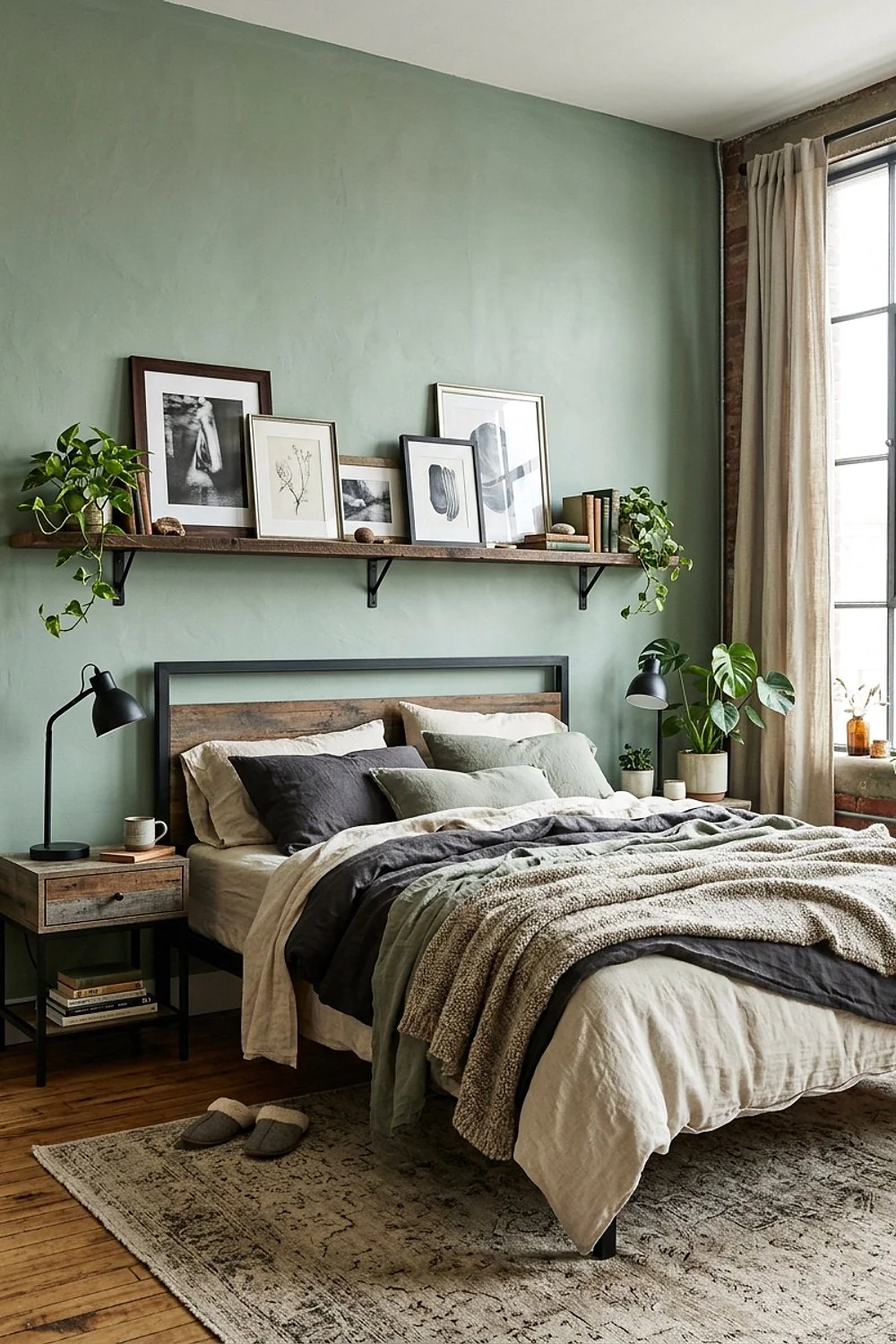
A ledge 4 to 5 inches deep, mounted about 12 inches above the headboard, holds a paperback stack, a small framed print and a bud vase. Everything stays visible and nothing needs a separate bedside table.
It’s ideal for narrow rooms where a second nightstand won’t fit. Keep heavy objects off it, since anything above your head should weigh less than a bag of sugar, and screw the ledge into studs.
Warmth you can feel under your hands
Hygge is tactile before it’s visual. These six ideas handle the fabric, flame and light that make a bedroom feel like shelter.
7. A chunky knit throw over one corner
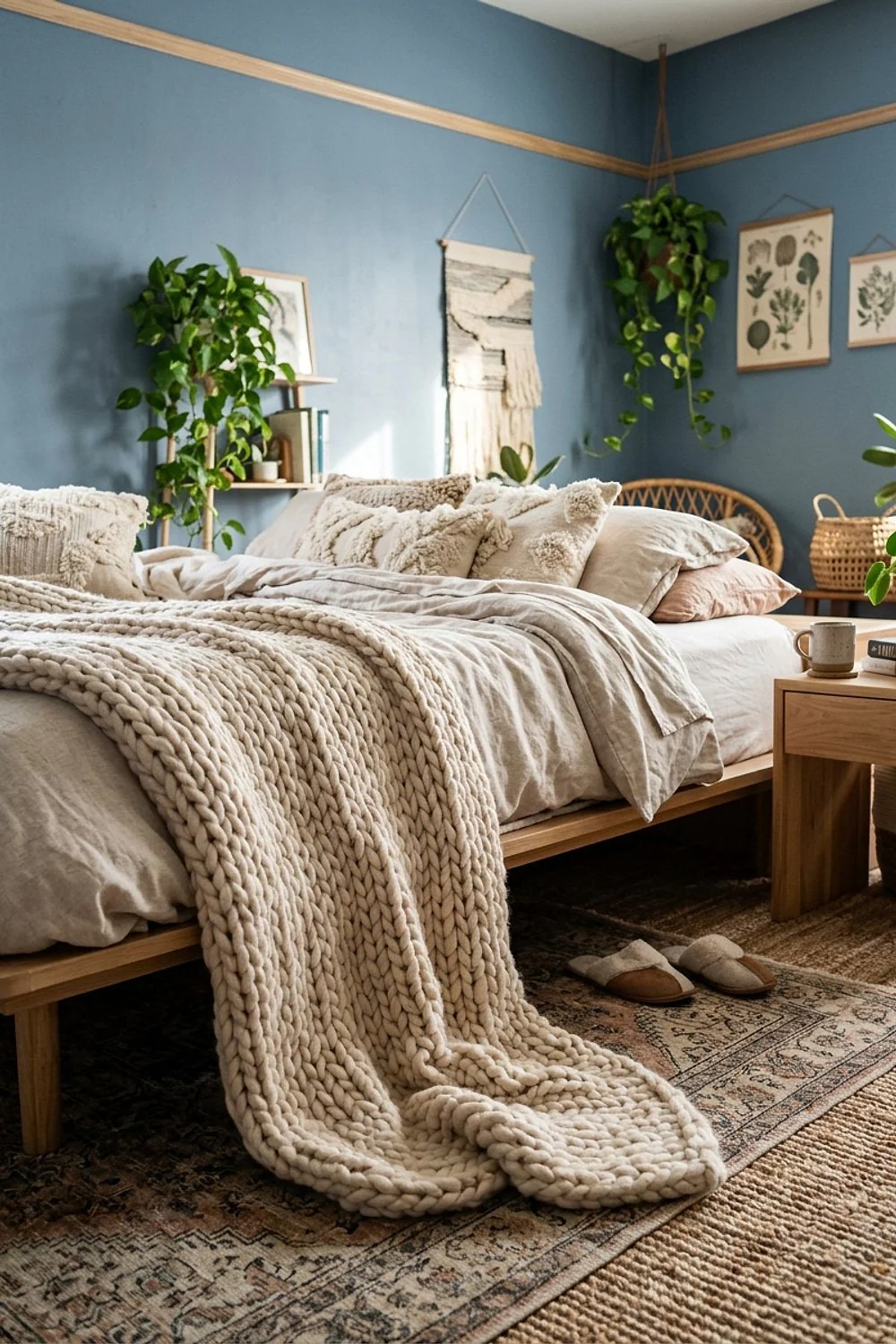
A merino or wool-blend throw around 50 by 60 inches, folded loosely over a corner of the bed, weighs about 3 pounds and drapes with some heft. That weight is what reads as comfort when you pull it over your knees at 10pm.
It suits anyone who runs cold. The trade-off is snagging: chunky knits catch on cat claws and pill with friction, so hand wash cold or dry clean.
8. Candles grouped on a wooden tray
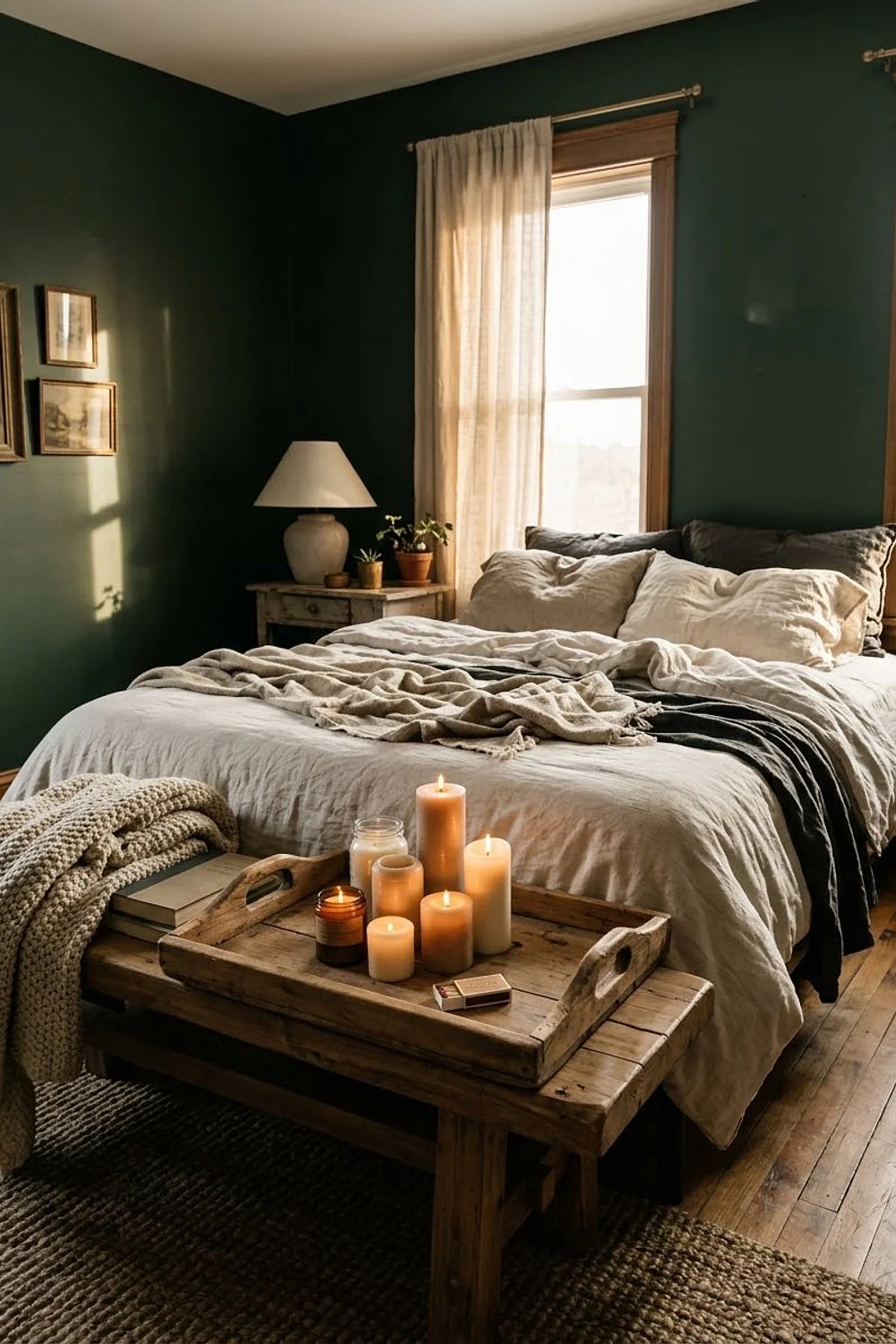
Three beeswax pillars at 3, 5 and 7 inches, set on a 12 inch wooden tray, make one flickering cluster. Beeswax burns cleaner than paraffin and gives off a faint honey smell. Expect to pay about $15 to $25 each for good ones.
Trim wicks to a quarter inch to cut soot, which otherwise smudges nearby walls. Blow them out before sleep, and use battery flame candles on any shelf below a curtain.
9. A bed placed away from the window
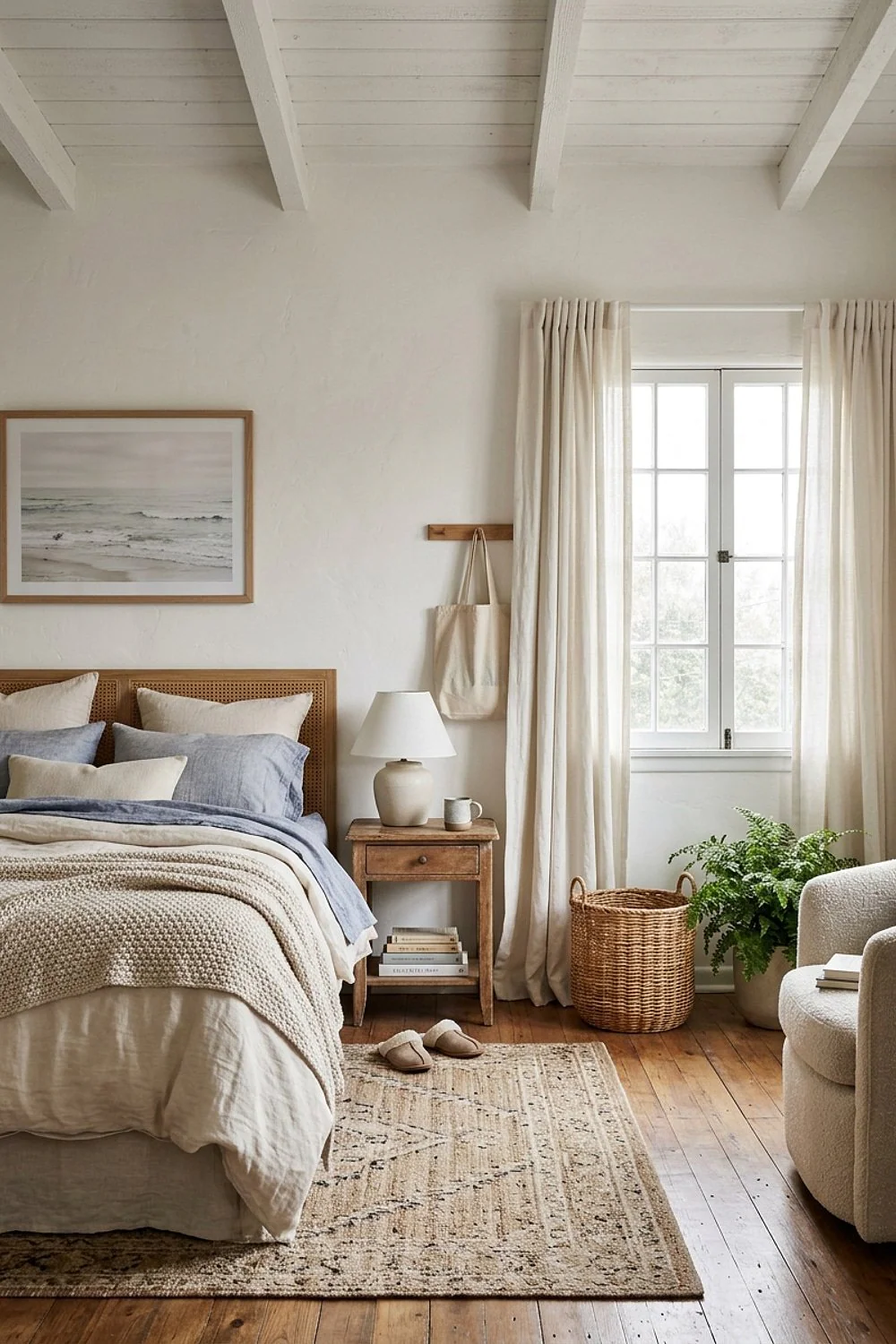
Place the headboard on a solid wall, not beneath a window. Even good windows leak cold air at night, and a sleeper’s head sits right in that draft. A wall behind the bed also gives the room a visual anchor.
This matters most in old houses with single-pane glass. If the window wall is the only option, hang a heavy lined curtain and leave at least 6 inches between fabric and mattress.
10. No overhead-only lighting
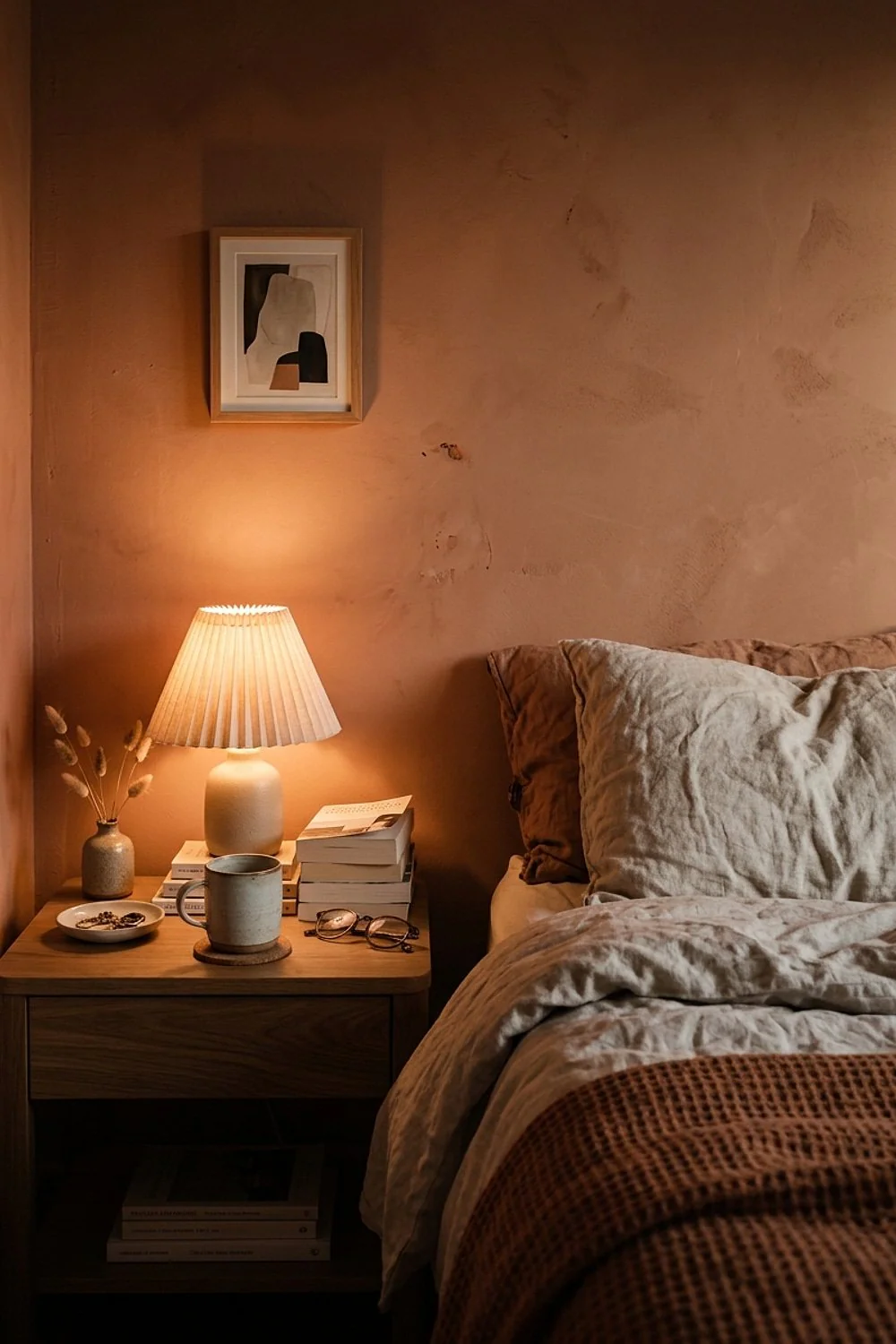
A bedroom lit by one ceiling fixture is a shoebox with the lid off: everything exposed, nothing sheltered. Here’s a counterintuitive fix. Three lamps at roughly 40 watt equivalent each feel cozier than a single 100 watt source, because pools of light create shadows to sit in.
Swap any 4000K or 5000K “daylight” bulbs first. Those are the most common reason a hygge attempt falls flat.
11. An 8 by 10 wool rug under the bed

Under a queen bed, an 8 by 10 foot rug extends about 24 inches past the sides and foot, so your bare feet land on wool at every exit. A flatweave wool in a natural oat tone costs roughly $350 to $900, depending on whether it’s hand-knotted.
It suits anyone with cold hardwood or tile. New wool sheds for the first few months, so vacuum with the beater bar off, or you’ll pull the pile out.
12. Dim-to-warm bulbs and a plug-in dimmer

Bulbs rated between 2200K and 2700K read as golden. Dim-to-warm LEDs go further, shifting toward amber as they dim, much like an old incandescent filament but at a fraction of the electricity. Pair them with an inline plug dimmer on any lamp cord.
Renters get the biggest payoff here, since nothing gets rewired. Check that the bulb and dimmer are rated to match; a mismatched pair hums or flickers.
Color, wood and quieter materials
After the light and fabrics are settled, the materials do the long-term work. These seven ideas decide whether the room ages well or looks dated in two winters.
13. An oak or ash nightstand with an oiled finish
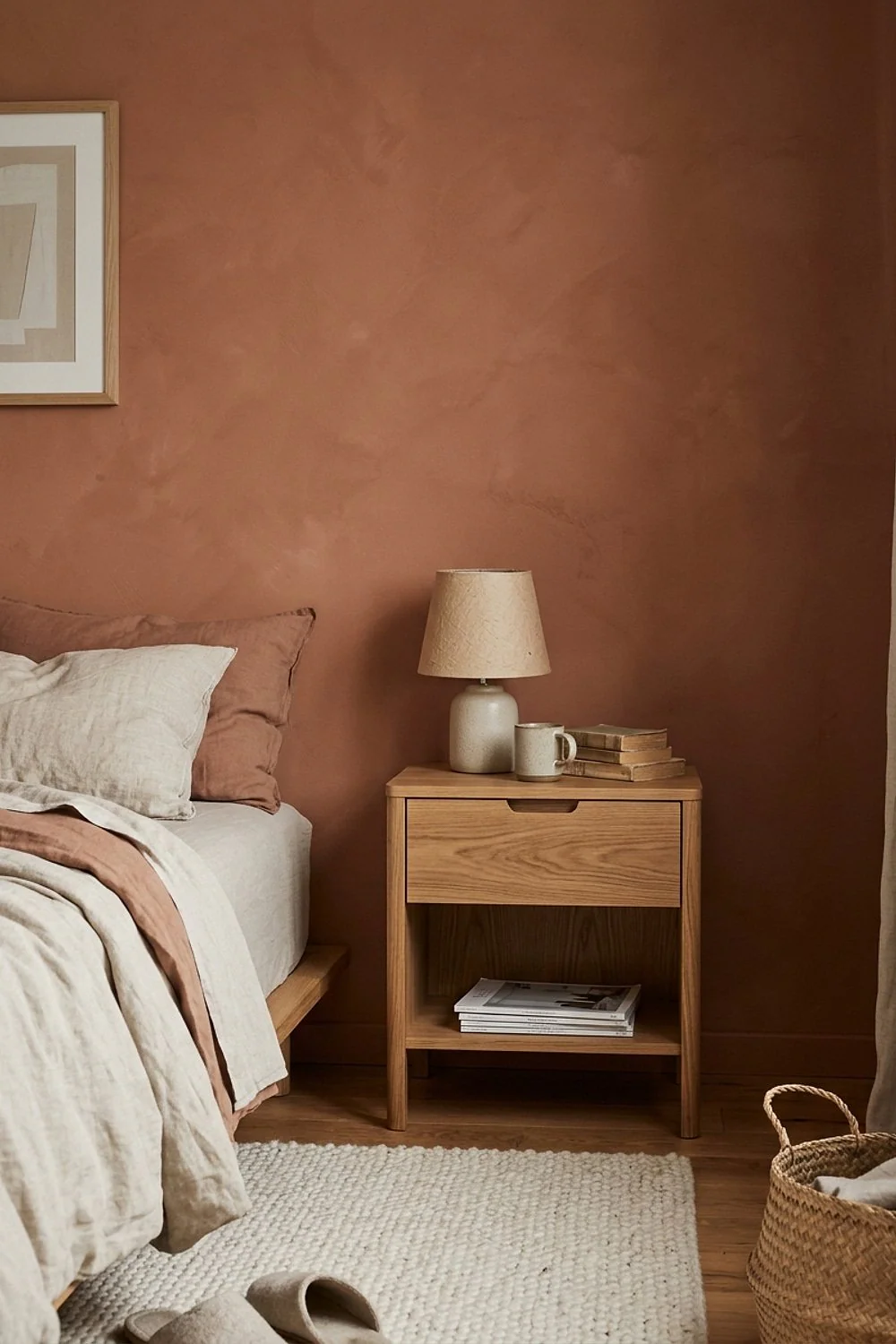
Open grain feels like something you want to touch, and oiled wood gets better with age instead of chipping. Aim for a top 20 to 24 inches high so it sits level with the mattress. Solid ash and oak both hold up for decades.
This fits anyone who prefers patina to polish. The upkeep trade-off is real: oil needs refreshing about once a year, and wet mug bases leave white rings.
14. Three muted tones and one dark note

A palette of oatmeal, clay and dusty olive, plus one deeper tone like charcoal or aubergine in a single pillow, stays calm without going flat. More than four colors in a small bedroom starts to look like a swatch book.
This approach suits north-facing rooms especially, where cool light needs earthy colors to push back. Keep the deepest tone in the smallest quantity.
15. Flat drawers under the bed
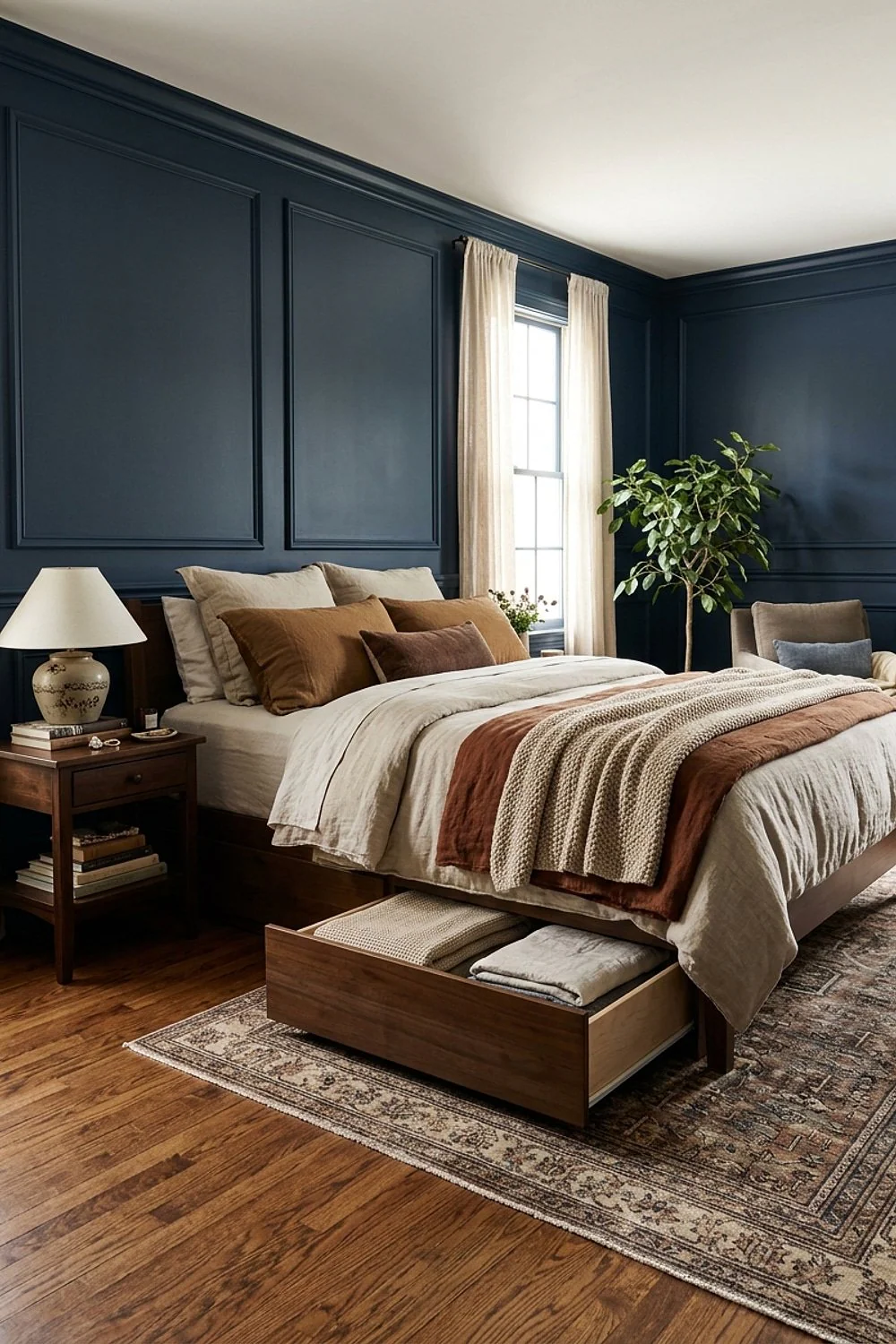
Rolling drawers 6 to 8 inches tall slide under a frame with 9 inches of clearance, taking off-season bedding out of sight. Cedar-lined or fabric-lined versions keep wool free of moths.
It’s the right move for small rooms with no closet space. Measure the clearance first, since many frames sit lower than they appear, and a drawer that won’t clear is a very large paperweight.
16. A lipped tray for the bedside mug
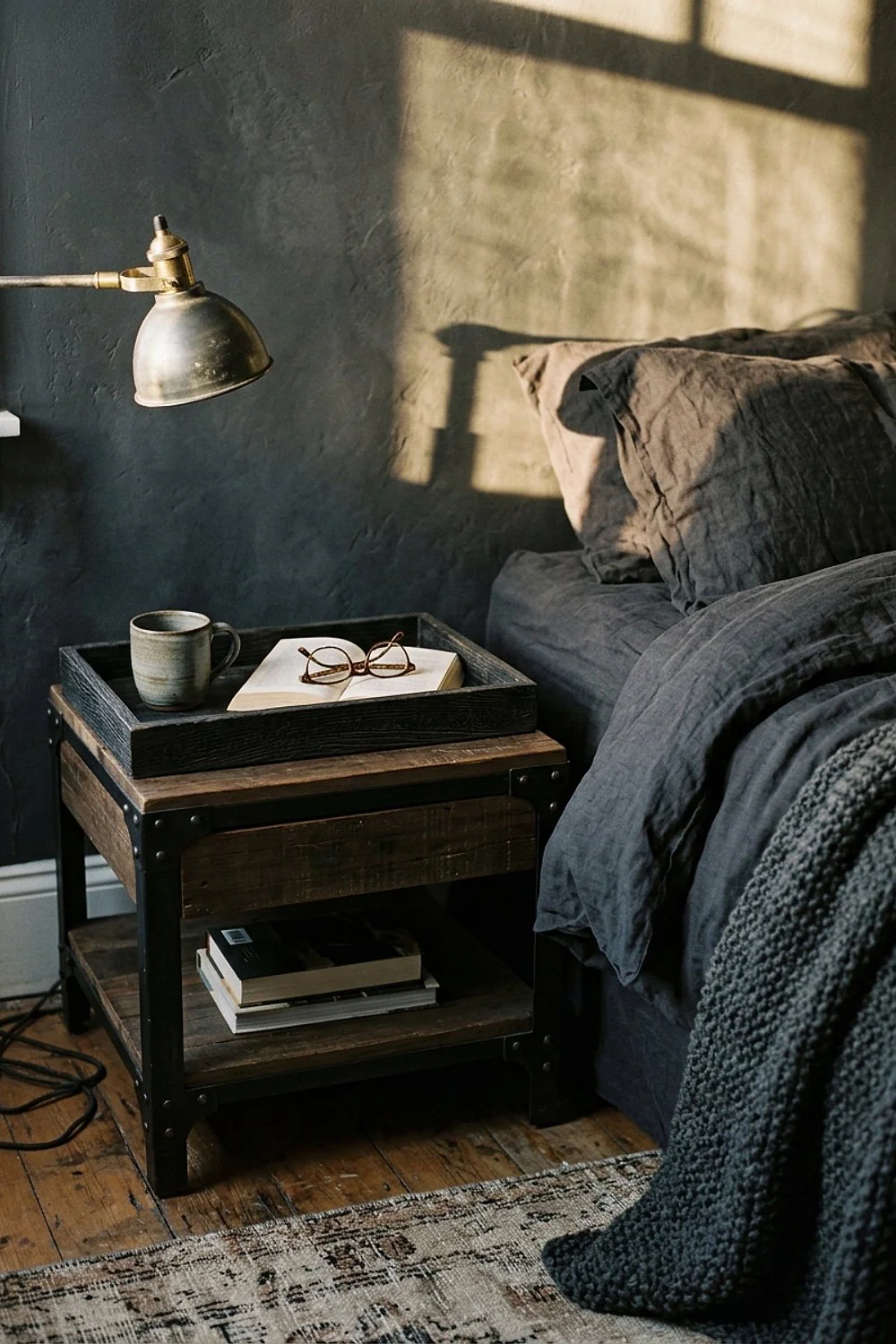
A wooden tray around 14 by 10 inches with a raised edge holds a mug, a book and a small candle on a nightstand only 12 inches wide. The ritual of a hot drink before bed is half of what the word hygge describes.
Pick wood or cork-backed, not metal, which clanks against a ceramic mug in a quiet room. Hot mugs on a veneer tabletop leave rings, and the tray prevents that.
17. A 600 fill-power down duvet

A mid-range duvet at that fill power, in a cotton cover, runs about $150 to $250 and traps heat without feeling like a sandbag. Add a folded wool blanket at the foot, so a January cold snap at 3am means a quick adjustment instead of a thermostat argument.
People with allergies should look at down-alternative fills. Wash the cover every two weeks, but the duvet itself only once or twice a year.
18. Five pillows, not eight
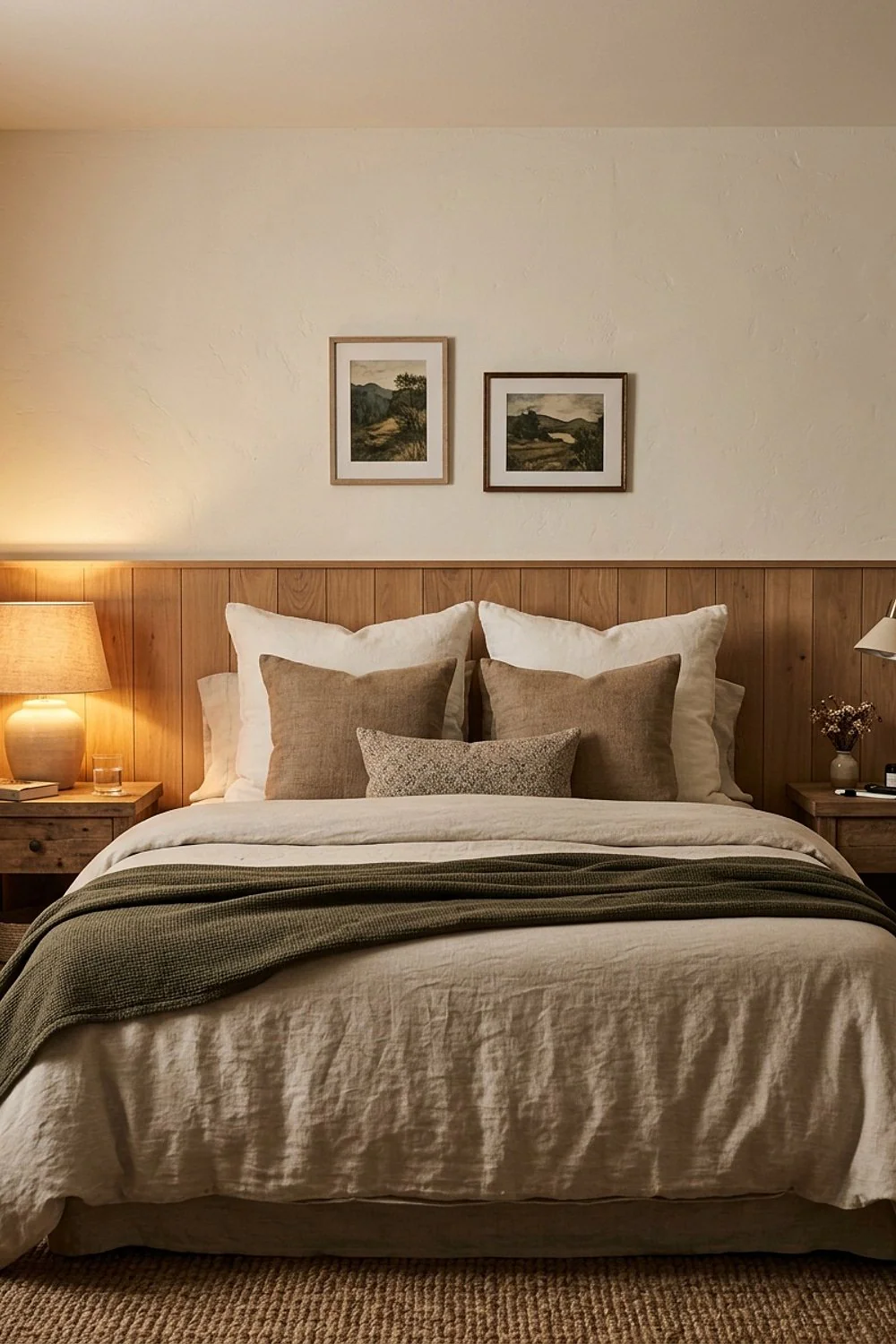
Two sleeping pillows, two 26 inch euro squares behind them and one 12 by 20 lumbar in front make a bank that looks generous. Odd numbers read as relaxed, even numbers look staged.
This suits people who read upright. Past six pillows, the nightly teardown takes two minutes and the bed gets abandoned unmade, which is the opposite of the goal.
19. A reading chair angled toward the window

An armchair about 30 inches wide, turned roughly 30 degrees toward the glass, catches the last daylight at 4pm. A floor lamp behind the shoulder takes over after dark. A footstool completes it.
It needs about 36 by 36 inches of clear floor, so it suits rooms over 120 square feet. Don’t let it become a clothes pile; a wall hook within reach solves that.
20. Mismatched bedroom furniture

A matching suite of bed, two nightstands and a dresser in one finish looks like a showroom. Mix an oak nightstand with a painted secondhand dresser and the room starts to look collected over time.
Keep two things consistent, such as wood tone or hardware color, so the mix reads on purpose. A pair of identical nightstands is fine, but then change the dresser.
Pro moves
These last five ideas are the quieter details, where hygge shifts from a good bedroom to one you’d rather not leave.
21. A headboard that’s wider than the bed

An upholstered headboard 4 to 6 inches wider than the mattress on each side, and 48 to 54 inches tall, frames the bed like a wing chair. Bouclé or wool-blend fabric gives it a woolly feel. Ready-made versions run about $300 to $600.
It suits anyone who leans against the wall to read. Bouclé snags and holds pet hair, so spot clean it and skip it if a dog sleeps on the bed.
22. Plug-in swing-arm sconces

Wall sconces with a 12 to 16 inch arm, mounted about 52 to 56 inches off the floor, free the nightstand for a mug and a book. The swinging arm pulls a small warm pool of light over the pillow.
Plug-in models cost around $45 each and need no electrician, so renters and small rooms with narrow nightstands benefit most. The cord is the visible catch, and a paintable cord cover in the wall color hides it neatly. Avoid mounting much above 56 inches, because the light then misses the page.
23. Lined linen-cotton curtains
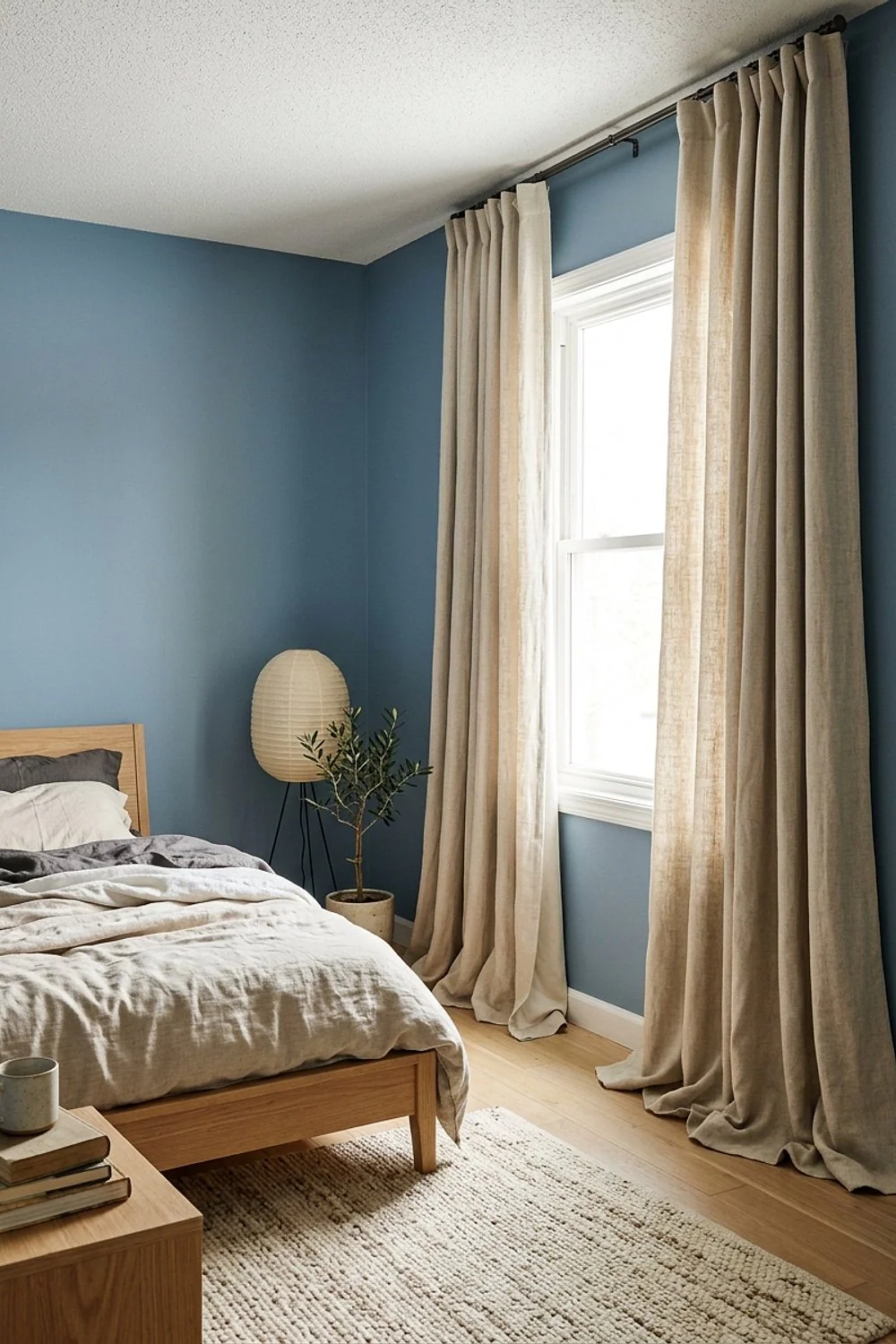
Floor-length panels in a linen-cotton blend, hung 4 to 6 inches above the window frame, soften echo and block drafts. A lining adds blackout without going plastic-stiff.
This is the right call for street-facing rooms where light and noise leak in. Linings fade in direct sun, so dry clean sparingly and rotate the panels if one side faces strong afternoon light.
24. Dried stems in rust and cream

Dried bunny tail grass, wheat and eucalyptus in a stoneware vase 8 to 12 inches tall bring straw gold and rust tones with zero watering. They fit a dresser top where fresh flowers would wilt in a week.
Dust them every few weeks with a cool hairdryer setting, and replace them yearly. Skip pampas grass, which sheds fluff across the pillows.
25. A blanket ladder in the corner

A leaning ladder about 5 feet tall with 3 to 4 rungs holds three throws and looks like a pile that decided to organize itself. It turns idle blankets into a visible, grabbable feature.
It works for anyone with floor space of 8 inches by 20 inches in a corner. Rubber feet stop slipping on hardwood, and heavier wool needs a sturdier ladder than a decorative bamboo one.
The vision board
Hygge bedroom decor ideas work best when added in a sensible order, because lighting and textiles carry more of the mood than any object. Buy in this sequence:
- Replace every bulb with 2200K to 2700K LEDs and add a plug dimmer (under $20 total).
- Lay the rug, since everything else is judged against what’s underfoot.
- Switch to linen or brushed cotton bedding in an oat or clay tone.
- Add one wool throw and five pillows, no more.
- Bring in one natural wood piece, then a single bundle of dried stems.
Test the result on a rainy afternoon around 4pm. Switch off the overhead light and stand in the doorway. If no corner looks dark and abandoned, add one more lamp.
Notes from real rooms
Hygge bedroom decor ideas go wrong in predictable ways, and most of them involve doing too much. Watch for these:
- Decorating in all-gray, which reads cold instead of calm.
- Using only one bright source of light.
- Buying faux fur in polyester, which sheds and holds static.
- Stacking more than six pillows, then never making the bed.
- Filling every surface with candles and trinkets.
Look, a bedroom isn’t a candle shop. Hygge needs empty space too, a clear nightstand corner or an open wall, so the cozy objects have room to matter.
Bringing it home
Hygge bedroom decor ideas come down to light you can sit inside, fabrics you want to touch and furniture that looks lived with. Start with bulbs and a rug, and the rest follows one purchase at a time.
Save or pin this list so it’s ready when you start. Then measure your bed wall and swap one bulb tonight to see how fast the room changes.
Frequently Asked Questions
What makes hygge bedroom decor ideas different from Scandinavian style?
Scandinavian style is a design look built on clean lines and pale wood. Hygge is a mood, so it layers texture and low light on top, and it can work with many styles.
Can I use hygge bedroom decor ideas in a rental?
Yes, because most of the effect comes from things you can take with you: bulbs, plug-in sconces, rugs, throws and curtains on tension rods. Skip painting or hanging anything that needs drilling.
How warm should the light bulbs be?
Choose 2200K to 2700K, and avoid anything labeled “daylight” or “cool white.” Dim-to-warm bulbs shift toward amber as you lower them, which suits a bedroom best.
How do I keep a hygge bedroom from collecting dust?
Choose washable textiles, put woven baskets on a monthly vacuum schedule and keep surfaces mostly clear. Wool rugs and chunky throws need a weekly pass, and dried stems a quick dusting every few weeks.




One Comment