24 Cozy Master Bedroom Decor Rules That Look Expensive
How do you make a bedroom feel calm instead of crowded? Cozy master bedrooms decor starts with proportion: how big the bed is against the room, how tall the lamp is against the nightstand, how wide the art is against the headboard.
The rules below come from long-standing interior design practice: clearance numbers, lighting layers, the 60-30-10 color split. Get the measurements right first and the soft finishing details fall into place almost on their own.
The professional rules behind cozy master bedrooms decor
The first eight rules cover the foundation: bedding, wall color, bed size, storage, and where the furniture sits. Settle these before buying a single cushion.
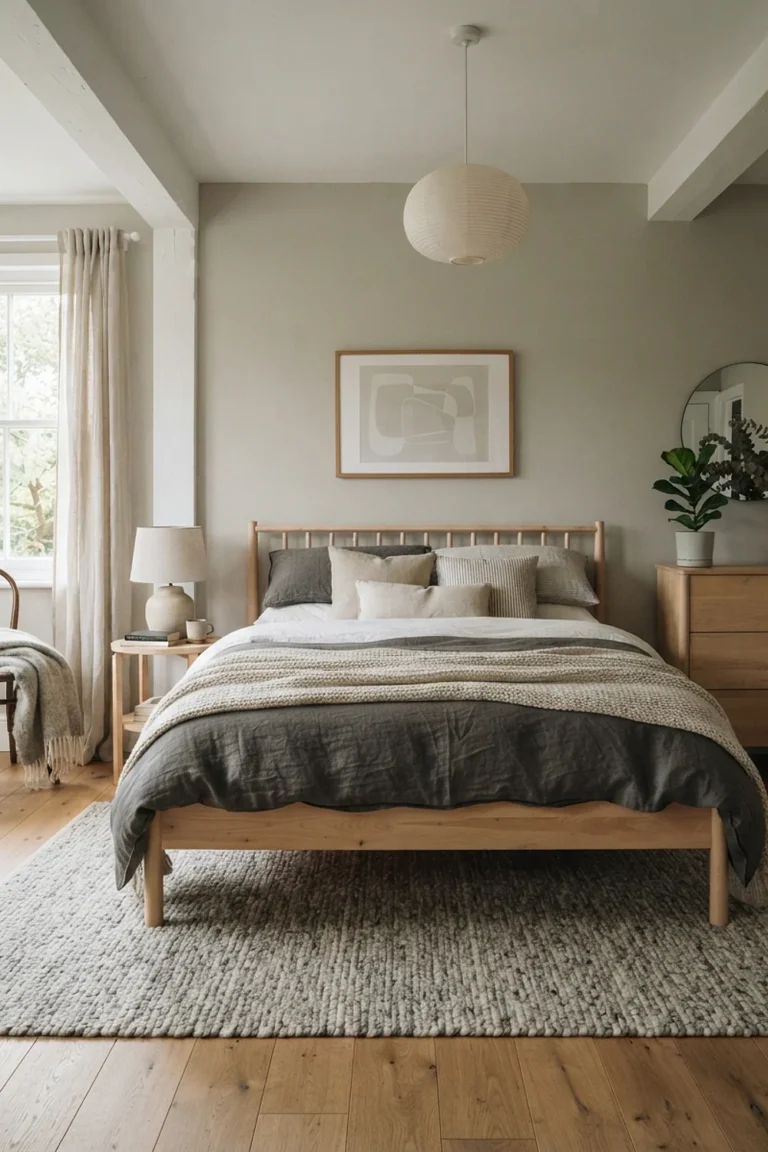
1. Three layers of bedding, never four
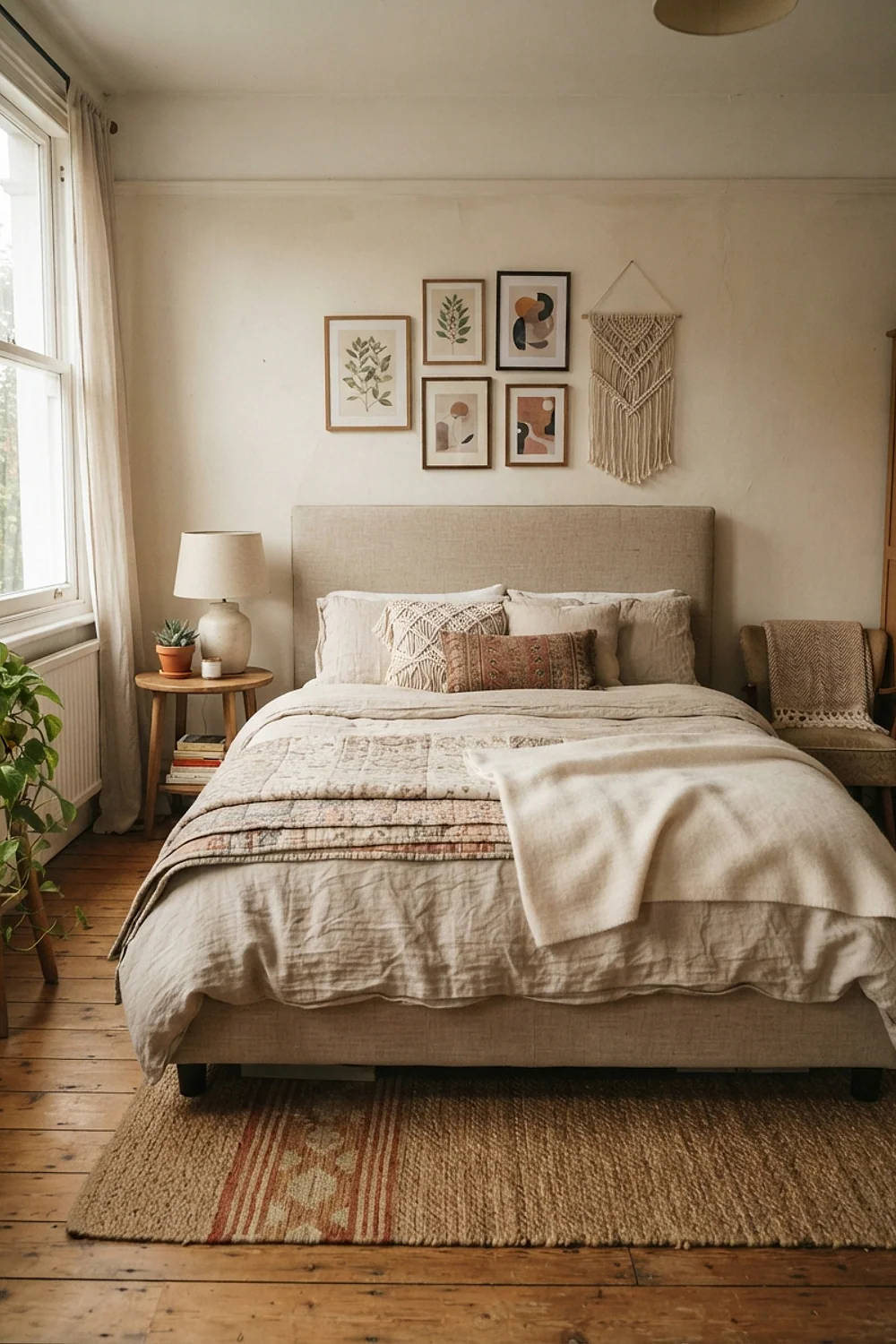
A fitted sheet, a duvet, and a 50 x 60 inch throw folded across the bottom third of the bed give the mattress depth without turning it into a pile. A cotton-linen duvet cover runs about $80-150 and holds a soft crease that looks relaxed rather than rumpled.
This suits anyone who makes the bed in under two minutes, because folded layers go back on fast. Skip the fourth layer. Past three, the bed starts to look like a showroom and nobody wants to dismantle it at 10 p.m.
2. Muted clay, greige, or dusty sage on the walls
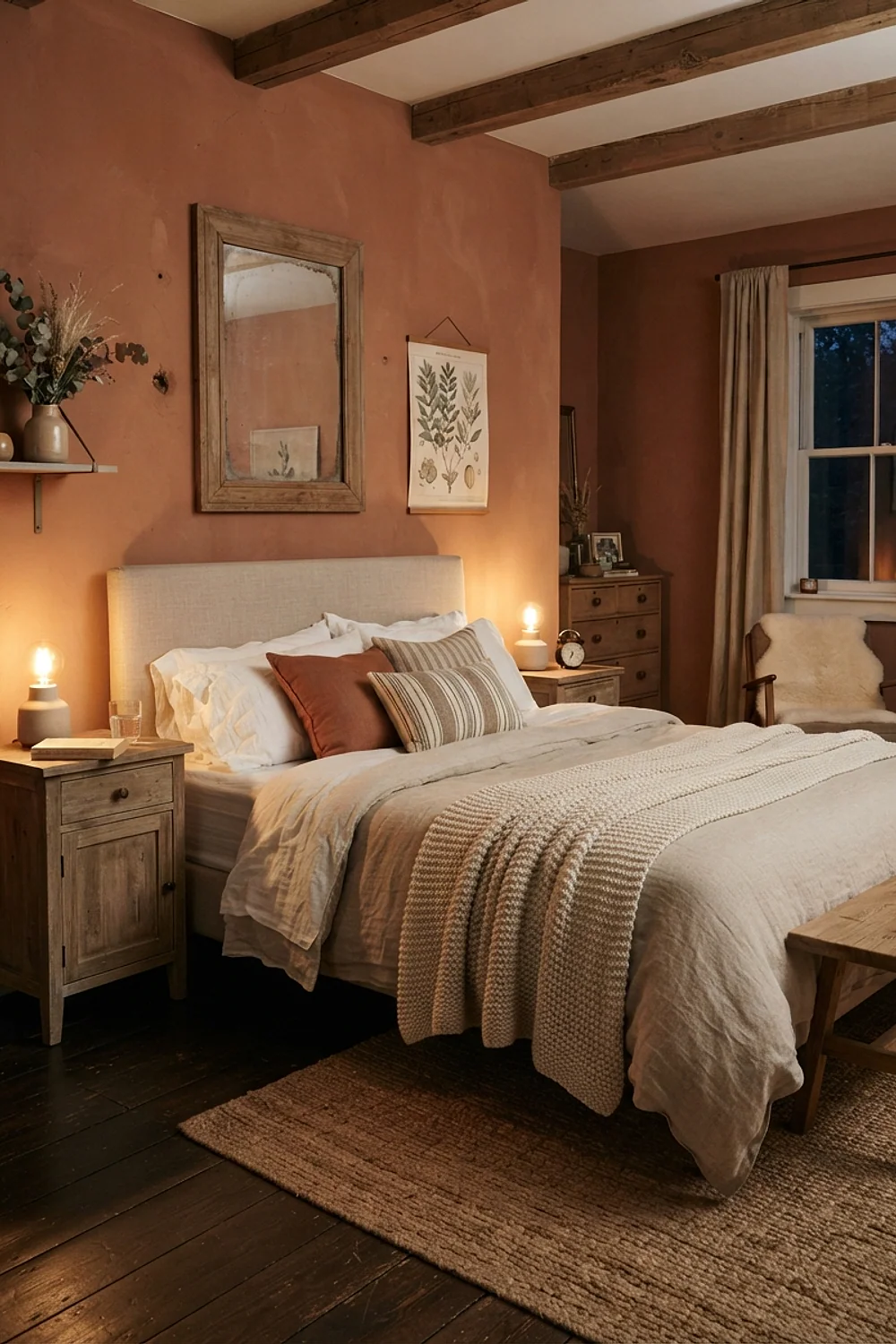
Paint with a light reflectance value between 40 and 60 stops a bedroom from bouncing glare around. At 4pm, low sun turns these colors honey-toned instead of harsh, which is exactly the mood a bedroom needs.
North-facing rooms that go gray in winter benefit most, since a cool white there reads like a hospital corridor. Brush a 2-foot square sample on two different walls and check it morning and evening before committing.
3. A king bed needs about 12 by 12 feet
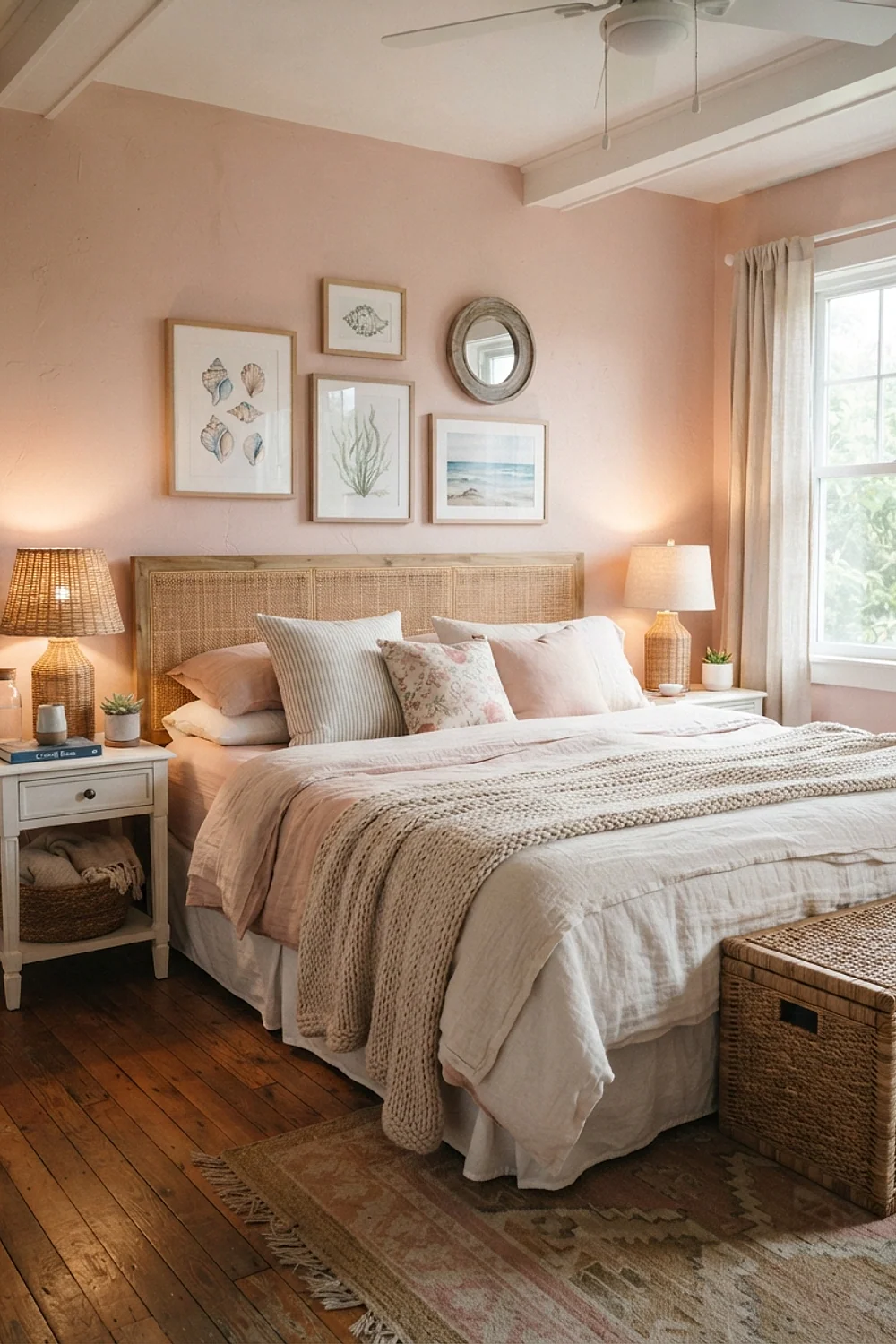
A king mattress measures 76 x 80 inches. To leave 24-30 inches of walkway on both sides and at the foot, the room should be roughly 12 x 12 feet, and anything tighter makes the bed swallow the floor.
In a smaller room, a queen (60 x 80) buys back a full walking lane. Don’t squeeze a king in just because the mattress feels luxurious; a bruised shin at midnight undoes the comfort quickly.
4. Lidded bins under the bed frame
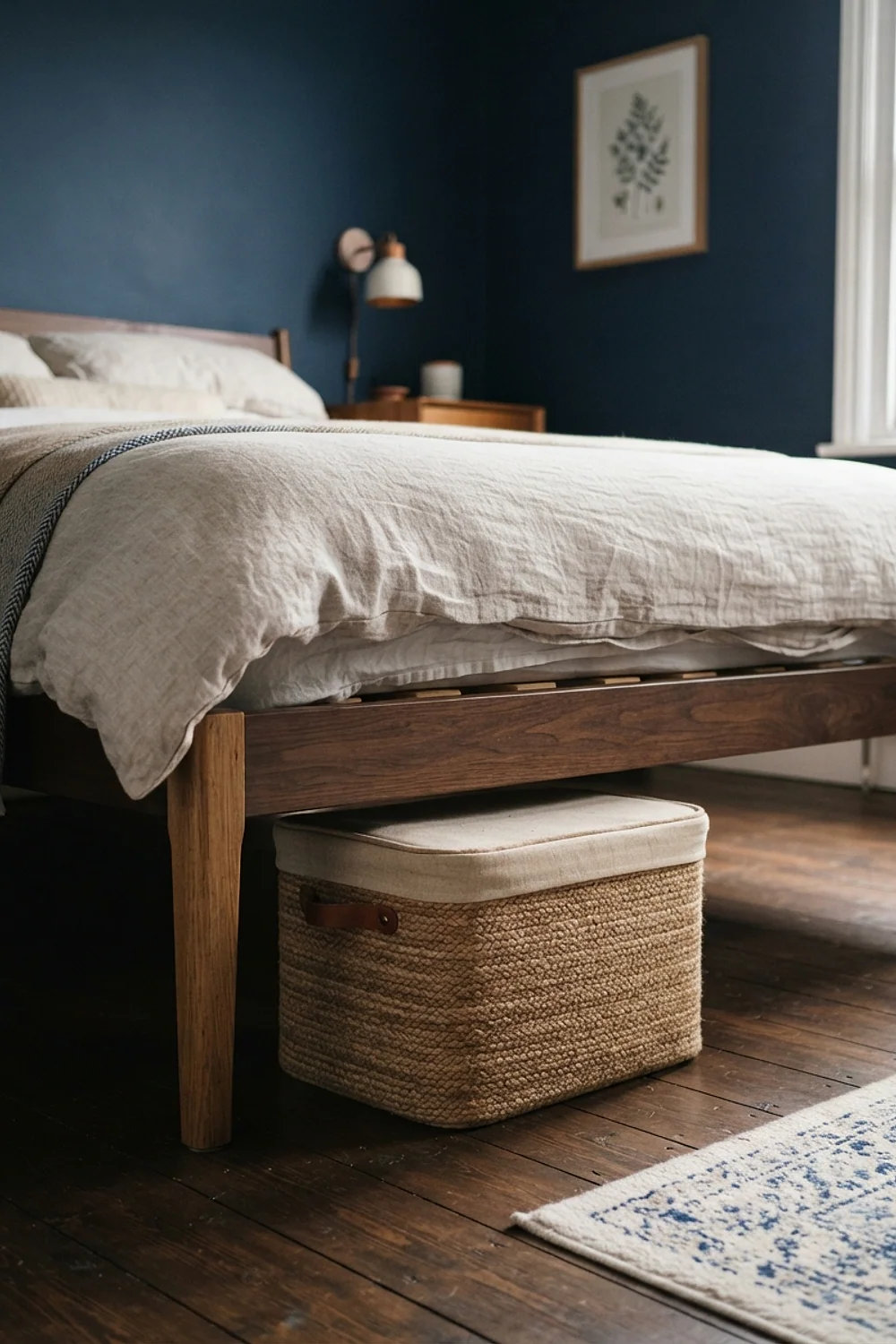
Most bed frames leave 12-16 inches of clearance, enough for lidded canvas bins at around $40 a pair. They hide off-season blankets and spare sheets, and the lids keep dust off the fabric.
This works best for people short on closet space. Store only seasonal items down there, because anything you reach for daily will end up on the floor beside the bed.
5. Nightstands level with the mattress top
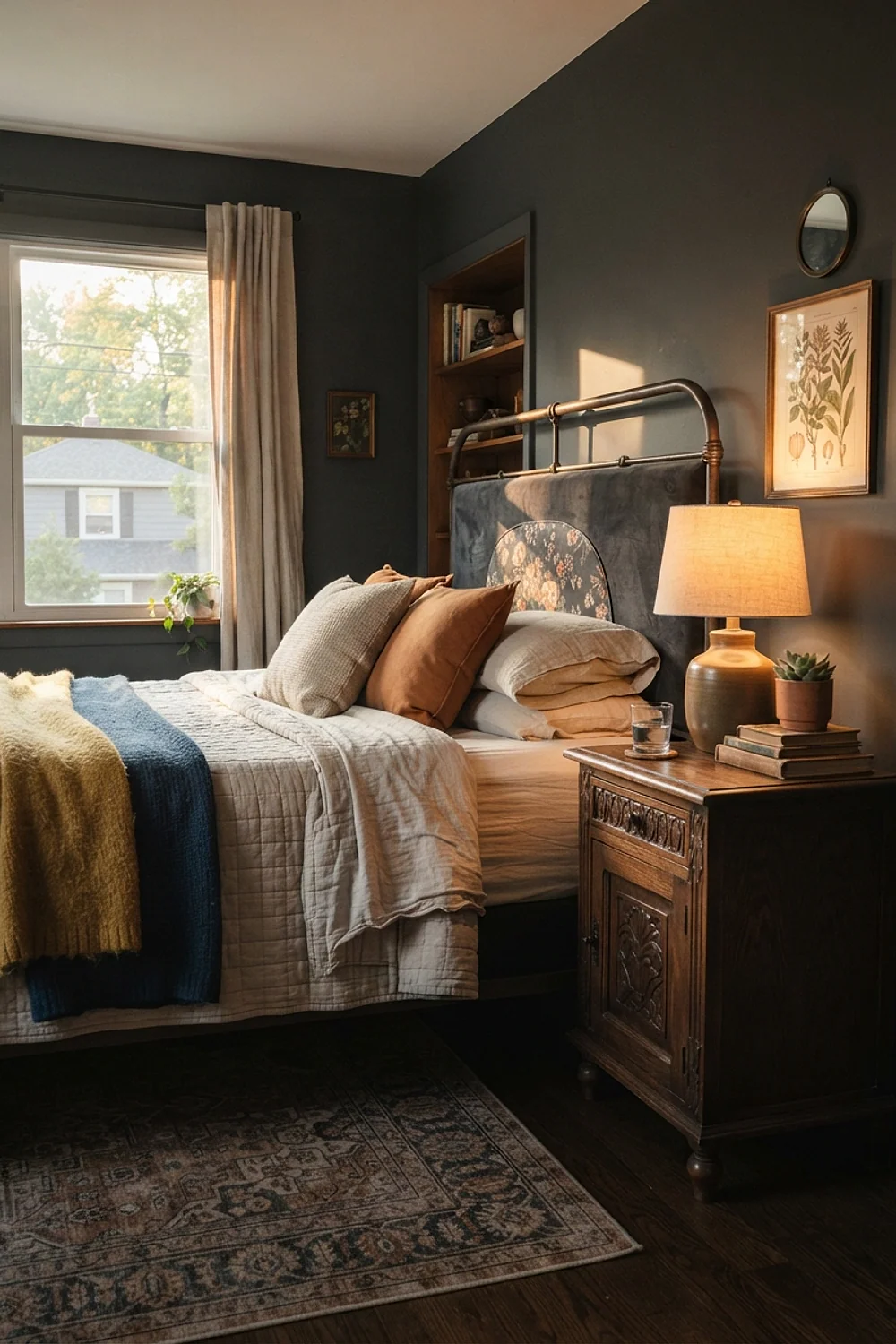
The most common bedside mistake is a table that’s too low. Mattress tops usually sit 24-28 inches off the floor, so the nightstand surface should land within 2 inches of that, or slightly above.
An 18-inch stool-style table forces an awkward reach and sends water glasses over the edge. Pairs that match in height but differ in style, say one drawer chest and one round pedestal, still look intentional.
6. Headboard on the longest solid wall
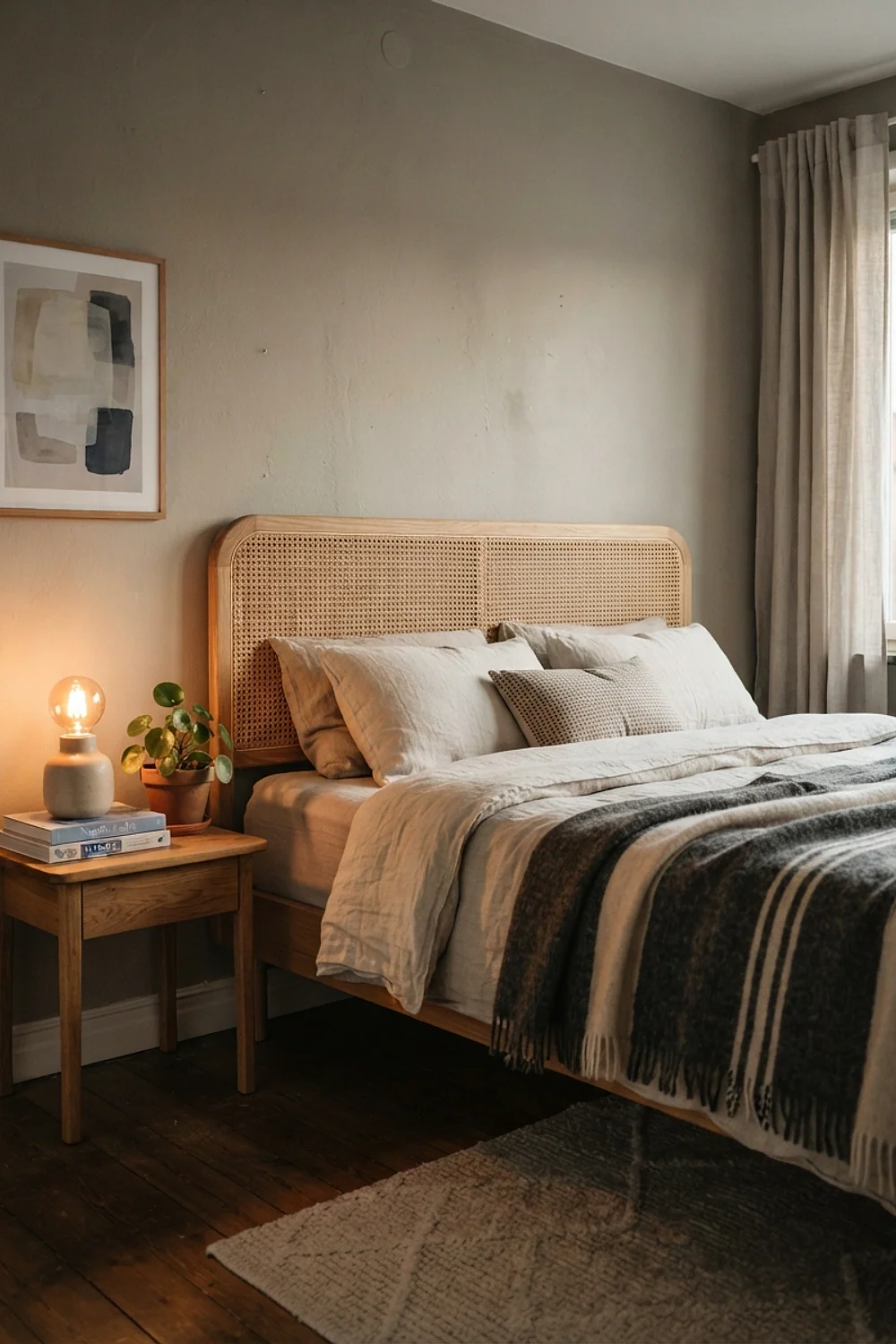
Putting the bed against the longest uninterrupted wall gives the eye a stable anchor the moment someone walks in. A headboard centered under a window works only if the window is small and high.
When the long wall has a window or door, use the short wall instead and leave at least 36 inches between the bed and the door swing. Blocking that path makes a room feel cramped even when the square footage is fine.
7. Washed linen or percale against the skin
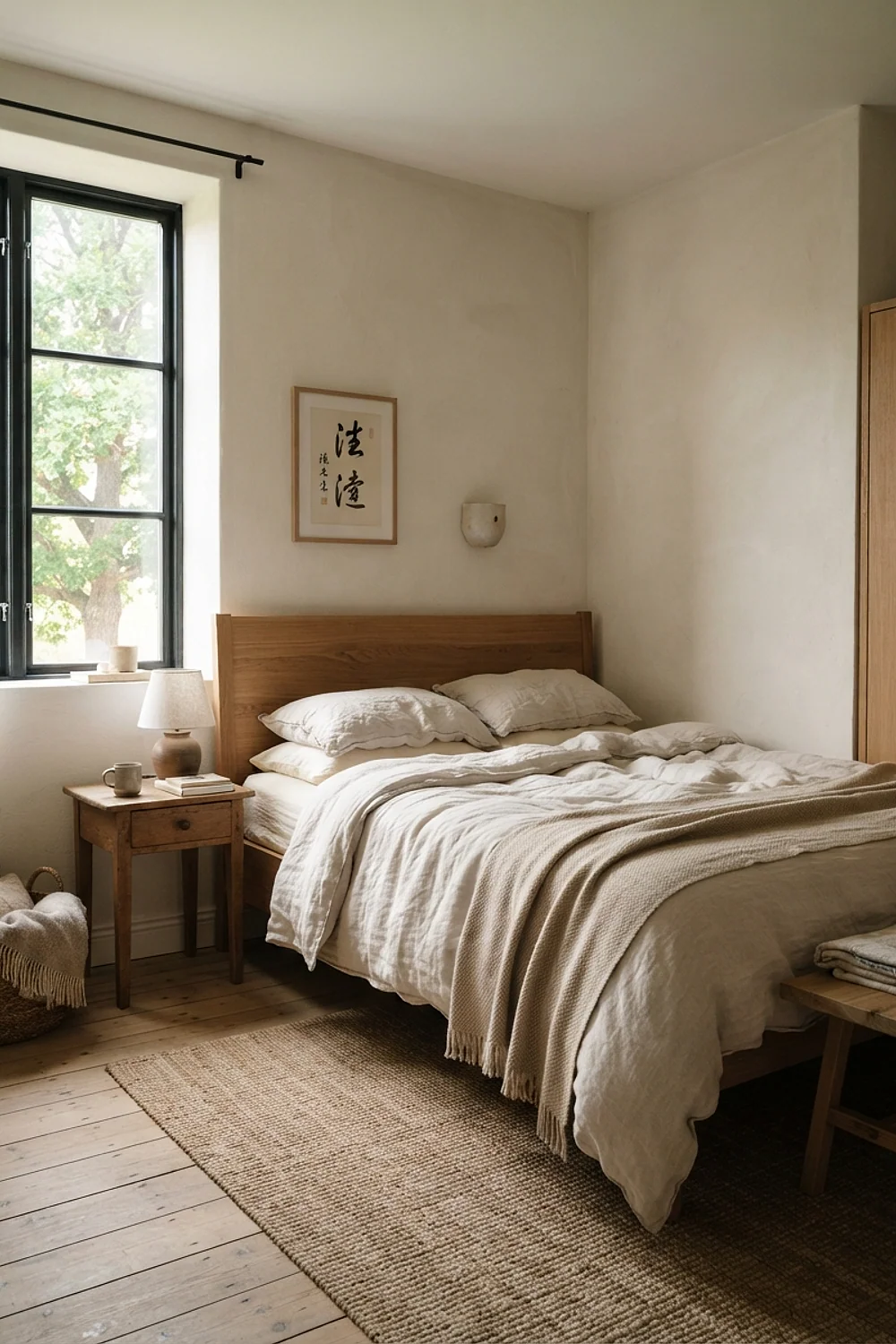
Washed linen has a dry, slightly nubby grain under the fingers and softens with every cycle. Percale feels crisp and cool, while sateen is slick and drapey.
Hot sleepers should choose percale or linen, and cold sleepers can go for brushed cotton flannel from November through March. Steer clear of polyester blends on the bed itself because they trap heat and pill within a season.
8. A bench at the foot, 18 inches tall
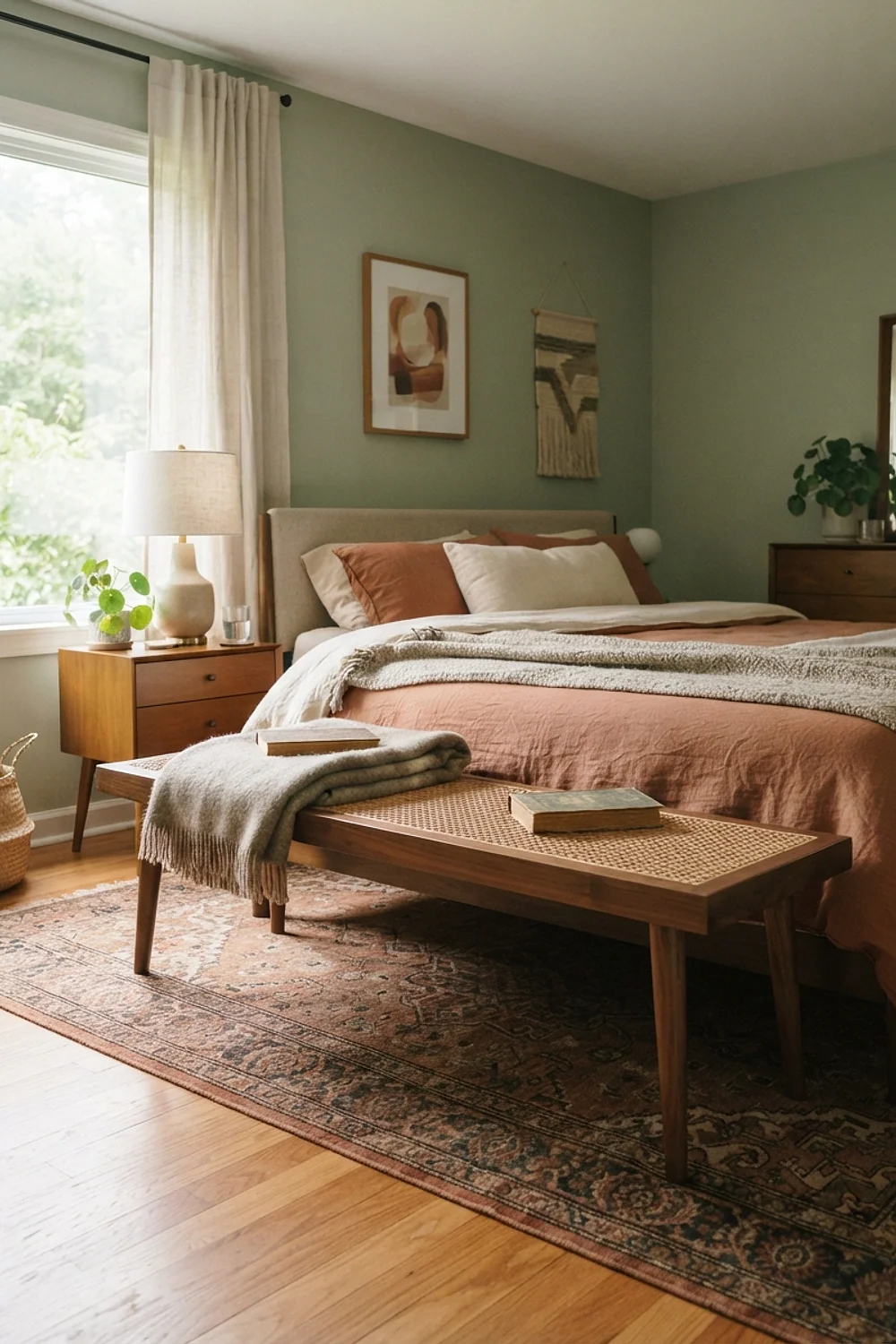
A bench with an 18-inch seat height works as a landing spot for shoes, a folded robe, or the morning’s outfit. Width should be about two-thirds to three-quarters of the bed, so 48-60 inches for a king.
It suits rooms with at least 36 inches beyond the footboard. In tighter layouts, pick a bench no deeper than 16 inches, or skip it, because a bench you have to sidestep is just an obstacle.
Pro moves
Rules nine through sixteen deal with light, textiles, and scale. This is where a tidy bedroom becomes one people actually want to stay in.
9. Three light sources at three heights
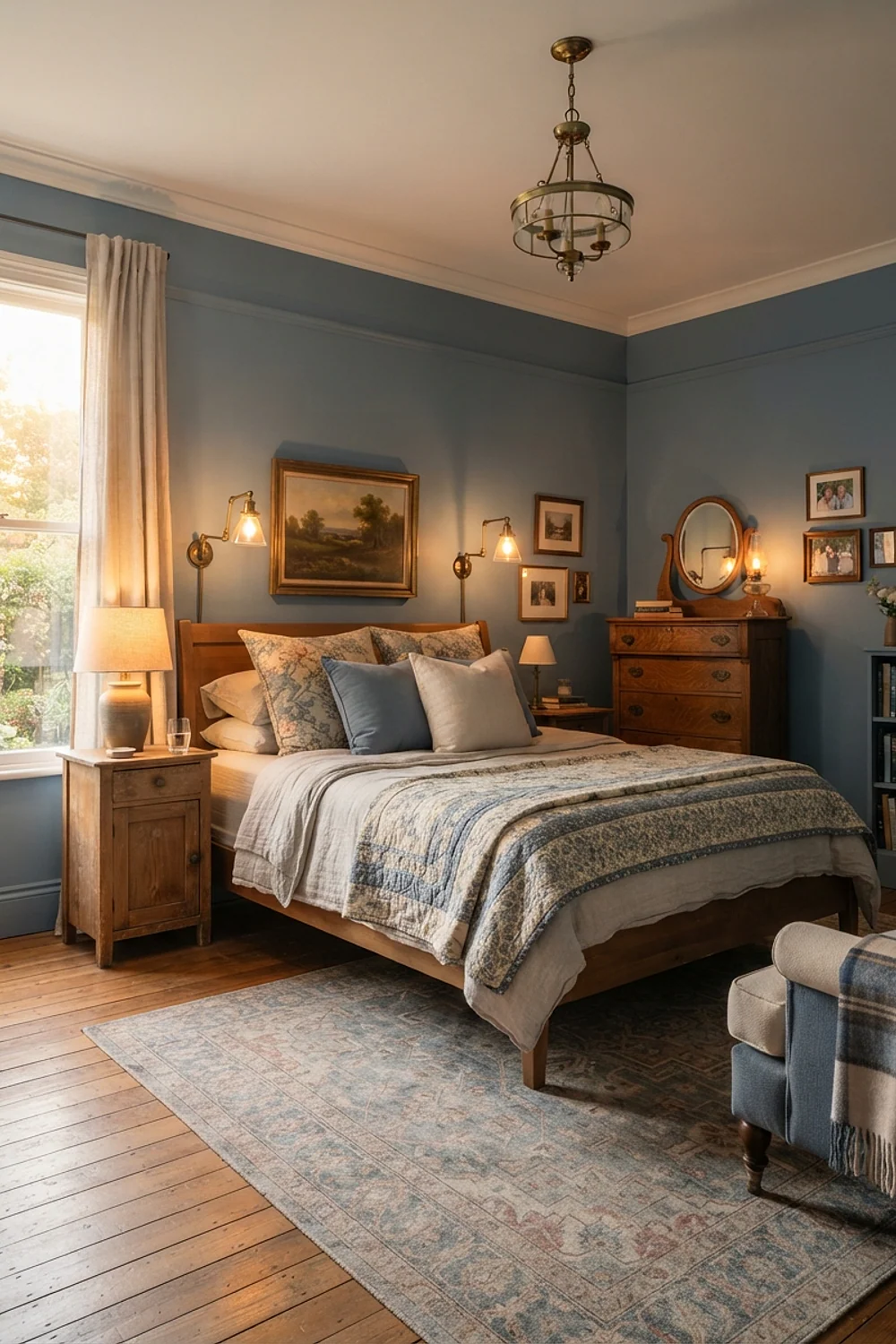
A ceiling fixture, two bedside lamps, and a low floor lamp or sconce give three heights of light. Bulbs rated 2700K cast the amber glow that signals evening, while 4000K makes a bedroom feel like an office.
Put every source on a dimmer or smart plug so the room can shift from reading brightness to a 20 percent glow. A single overhead fixture on its own flattens everything, including the bed.
10. A 9 x 12 rug that extends 18-24 inches past the bed
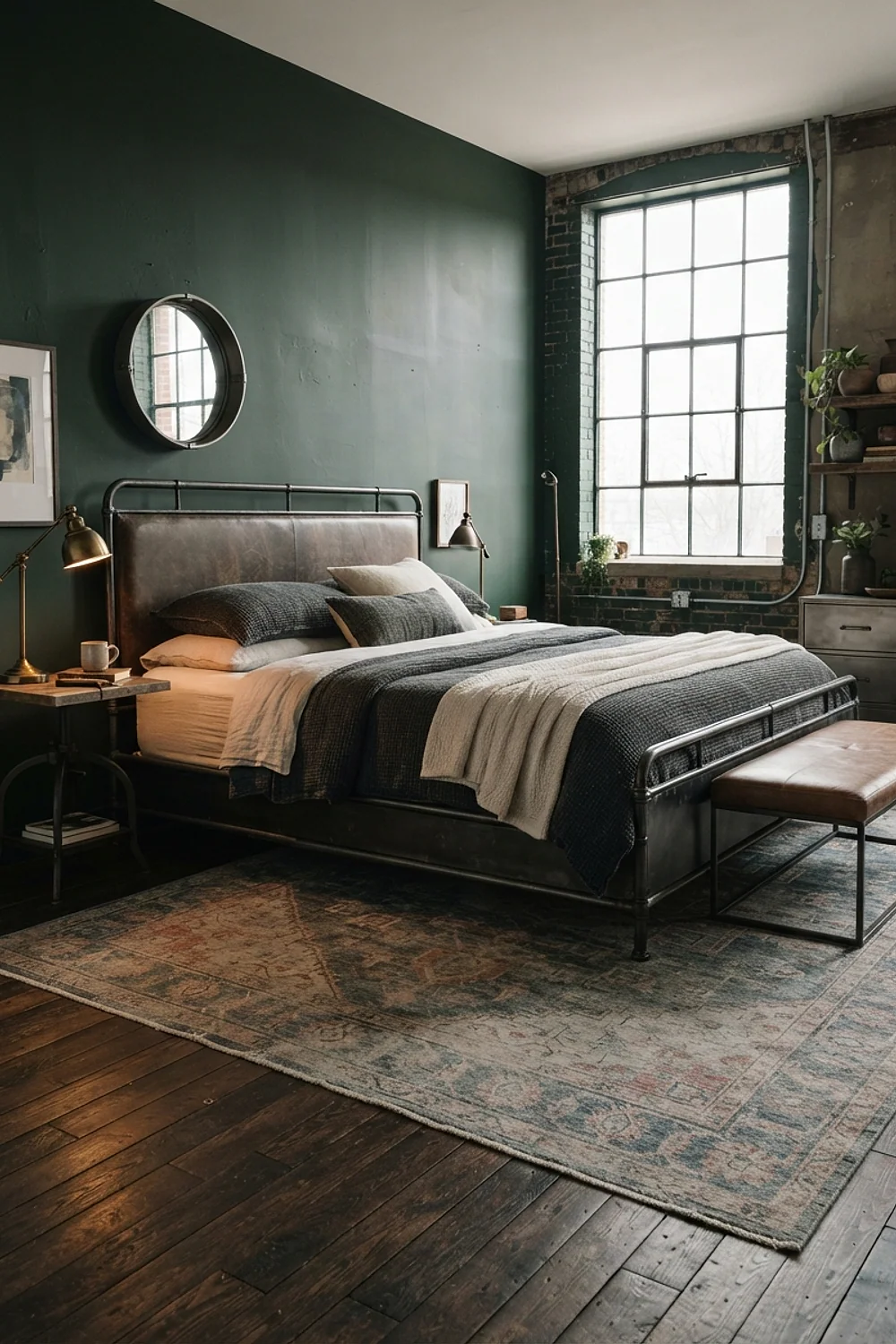
Under a queen or king, a 9 x 12 foot rug leaves 18-24 inches of pile on both sides and at the foot. Expect $300-600 for wool or a wool blend. Stepping out of bed onto a thick pile is one of the few comfort upgrades you feel instantly, the soft give under bare soles on a cold morning.
A rug that stops at the bed’s edge makes the room look like it’s shrinking. Pick a low pile of about half an inch if the door scrapes the floor.
11. A headboard 54-60 inches tall
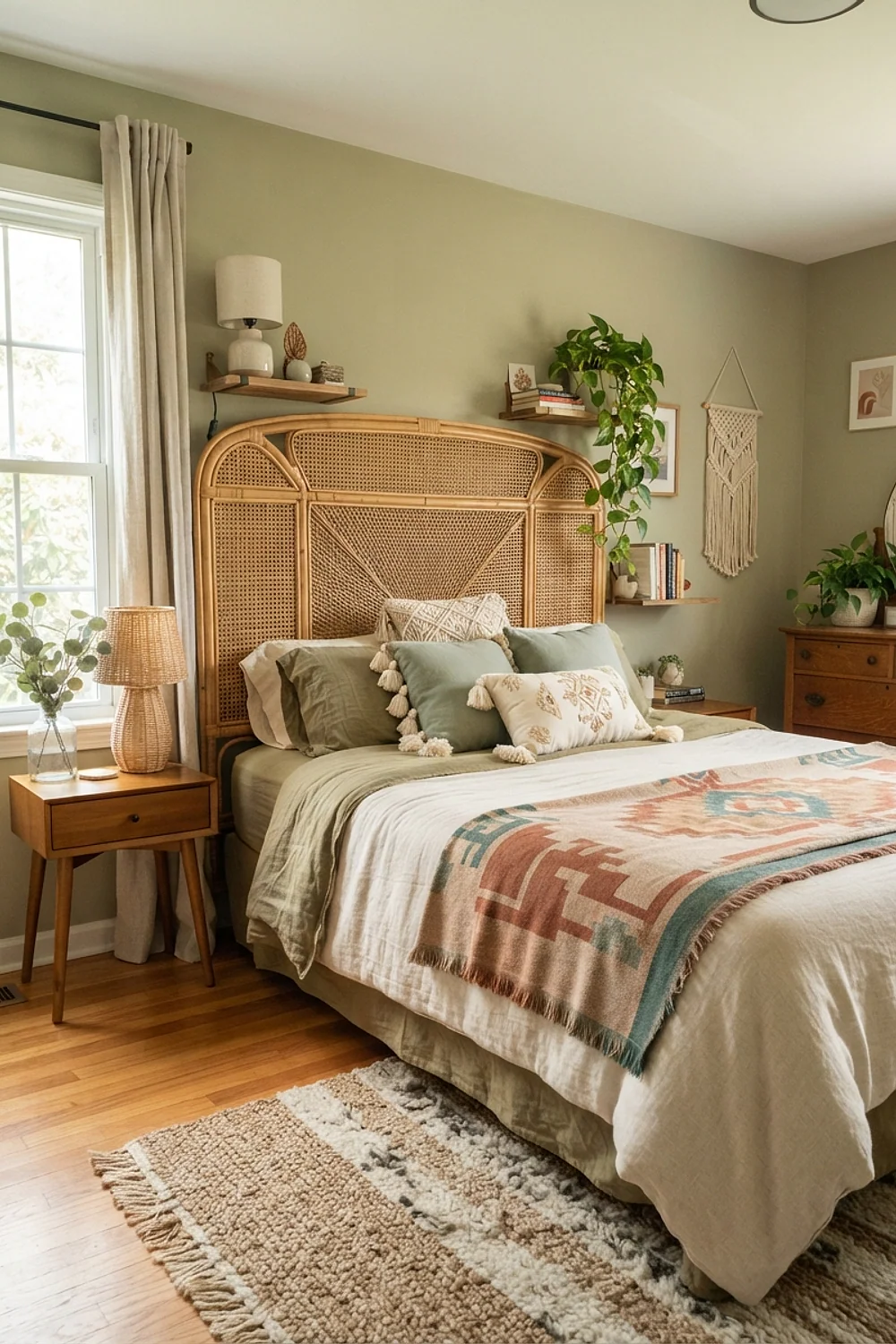
An upholstered headboard rising 54-60 inches off the floor gives pillows something to lean on and fills the wall above the mattress. Velvet or bouclé both feel good against the shoulders.
This works best in rooms with 8-foot ceilings or higher. Shorter than 48 inches looks undersized behind a king, and a headboard that wraps wider than the mattress by 4-6 inches on each side looks deliberate.
12. Walls, trim, and ceiling in one color family
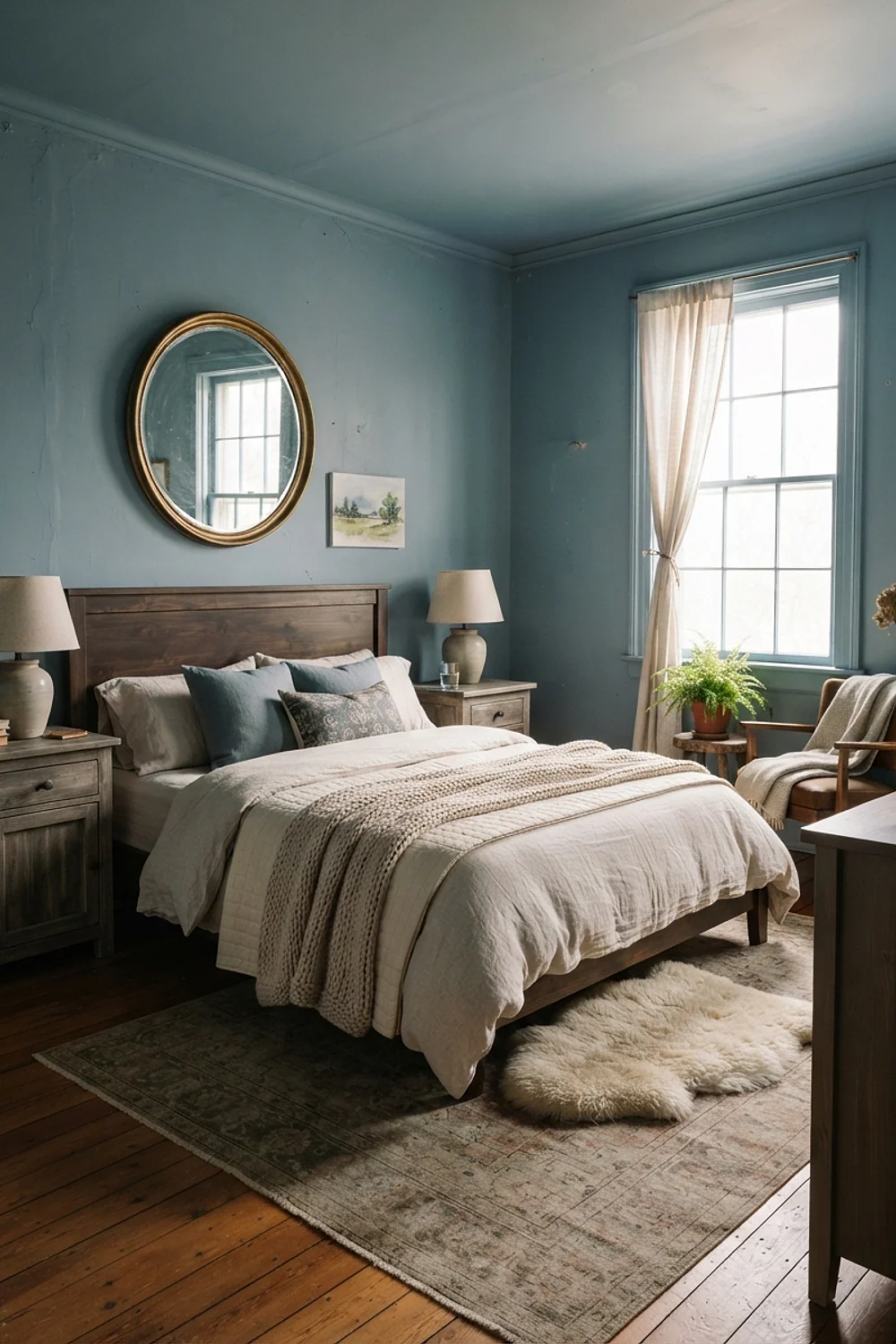
The 60-30-10 rule puts roughly 60 percent of a bedroom in the dominant tone (walls and ceiling), 30 percent in a secondary one (bedding, curtains), and 10 percent in an accent. Painting trim and ceiling a shade lighter than the walls blurs the edges and makes the room feel softer.
It’s a good fit for rooms with awkward angles or sloped ceilings. Stay away from bright white trim against muted walls, which draws a harsh outline around every window.
13. Art two-thirds the width of the bed
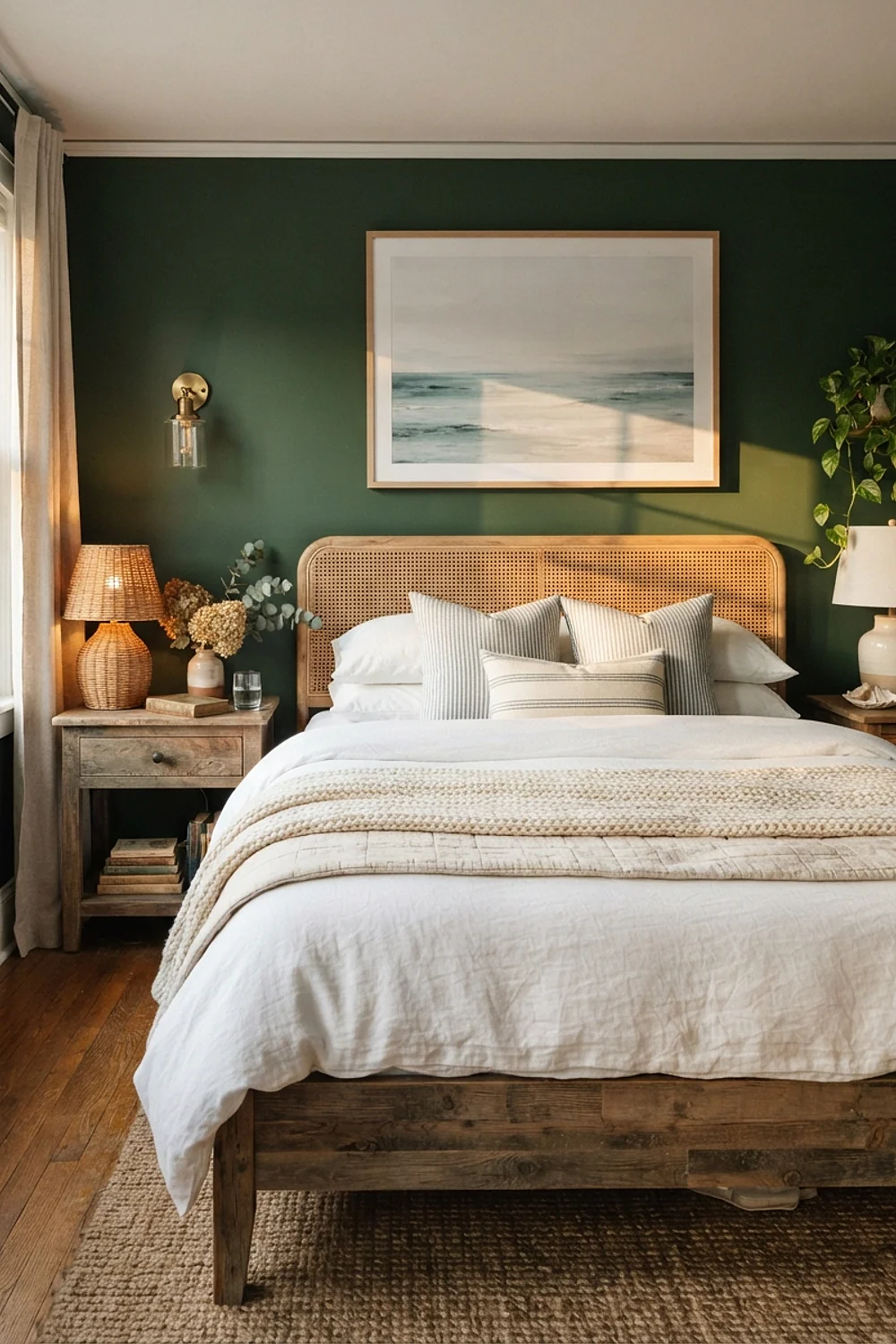
A single piece or grouping over the bed should span about two-thirds of the headboard’s width, hung 6-8 inches above it. For a 76-inch king, that means 50-ish inches of art.
Small frames floating over a wide bed look lost. If one large canvas is out of budget, a gallery arrangement of three or four frames, arranged as a single rectangle, reads as one piece.
14. A blanket chest or low dresser for overflow
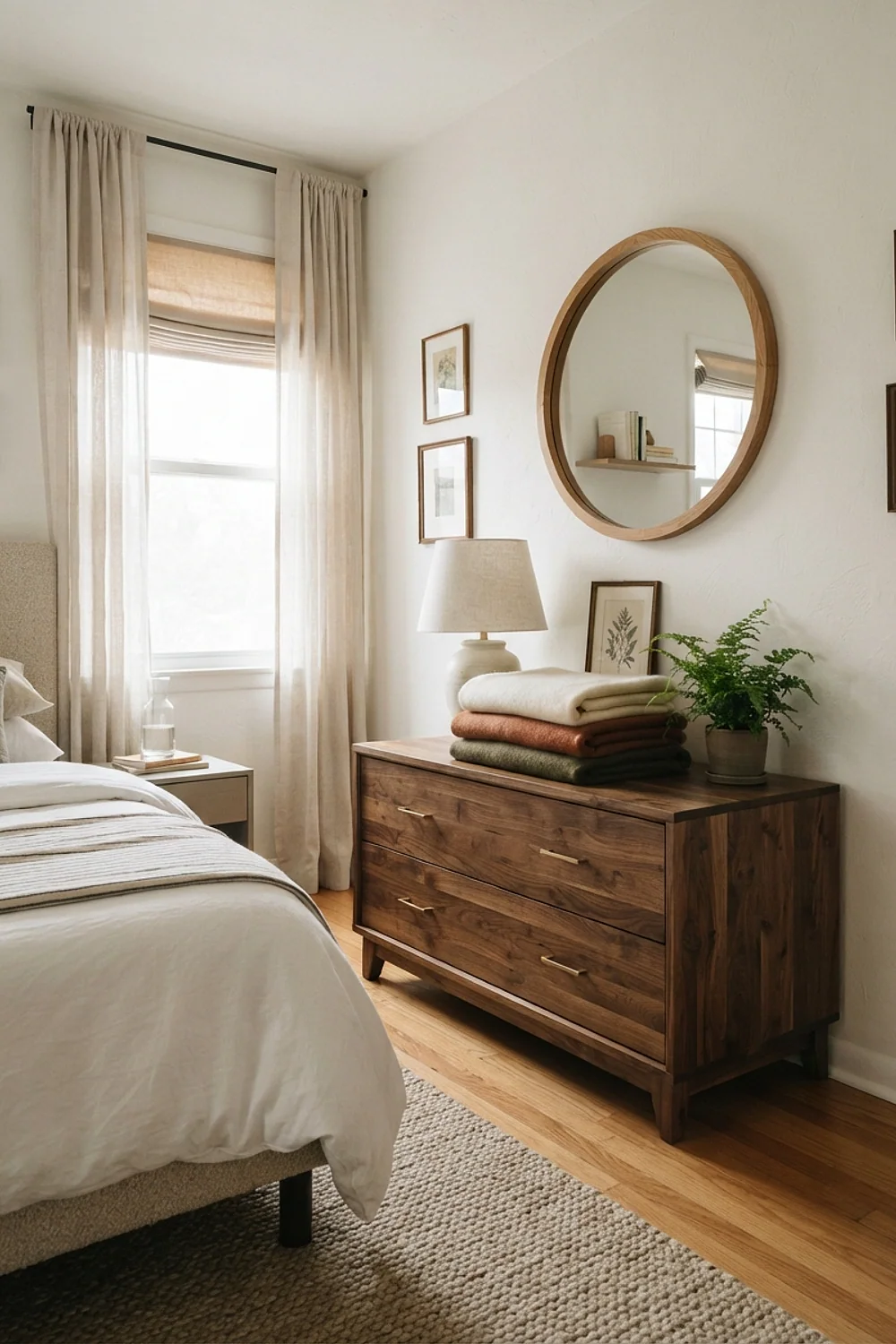
A 36-inch-wide, three-drawer dresser holds a surprising amount of folded knitwear, and a lidded blanket chest swallows two extra duvets. Keeping both under 32 inches tall leaves the wall above open for a mirror or art.
Choose the chest if the room is already narrow, since it can sit at the bed’s foot without eating floor space. A tall armoire in a small room will loom over the bed and darken the whole corner.
15. Curtains hung high and wide
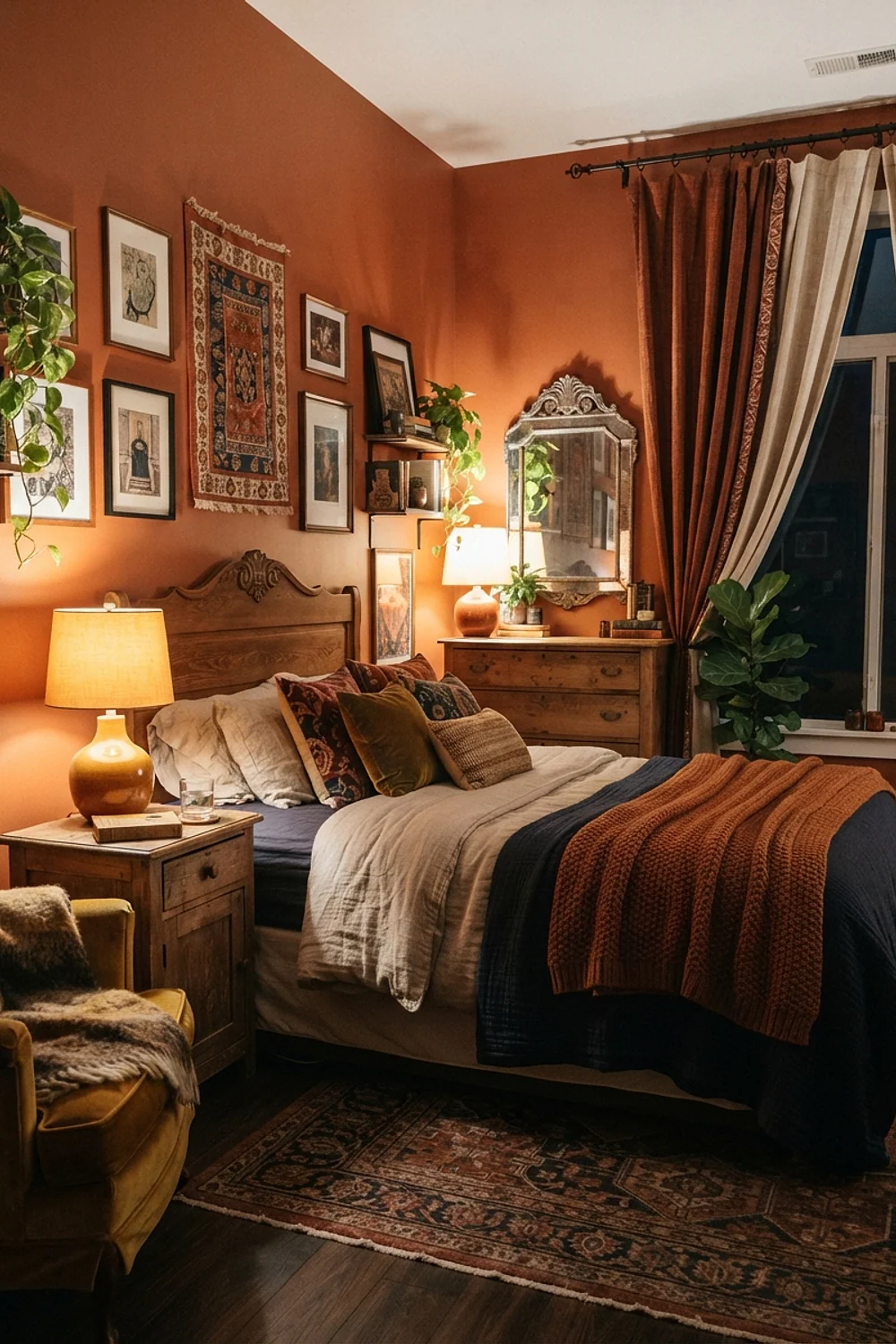
Mount the rod 4 inches above the window frame and extend it 8-12 inches past each side. Actually, no, scratch that: on an 8-foot ceiling, hang it 6 inches above the frame, or even near the ceiling, because height is what makes the window look taller.
Floor-length panels that just kiss the floor, with a half-inch gap at most, look tailored. Hanging them right at the window frame is the most common mistake, and it makes a bedroom look shorter than it is.
16. An armchair corner, 30 by 32 inches
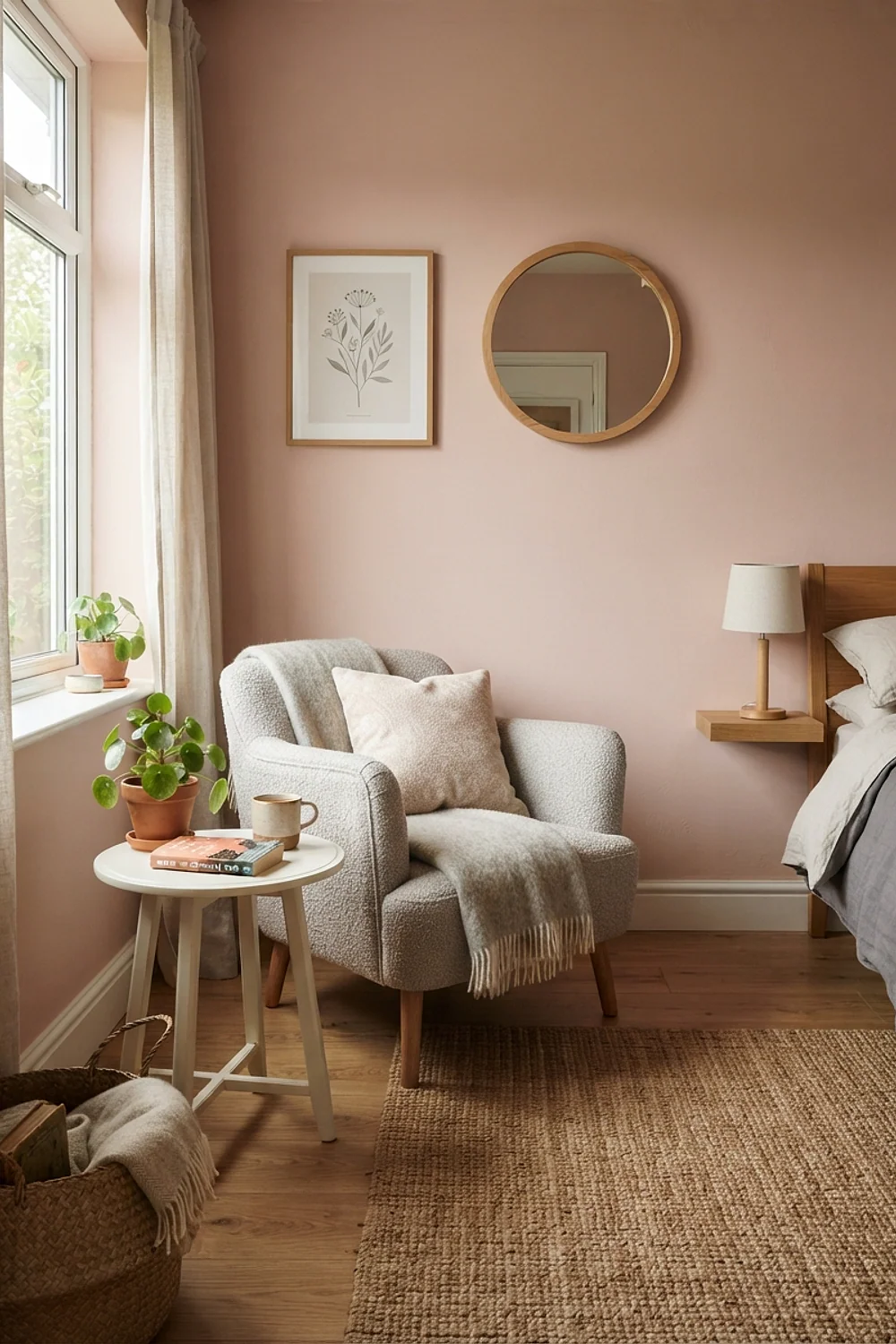
A compact armchair around 30 x 32 inches fits into the corner of a 10 x 14 foot bedroom without crowding the bed. With a small side table and a reading light, it becomes the room’s second personality.
It’s worth it if there’s a free corner and at least 30 inches of clear path behind the chair. If the room is tighter than that, hang a clothes hook or two instead, and don’t use the chair as a laundry pile.
The finishing touches
The last eight rules cover the finishing layer: materials, function, sleep comfort, and the small arrangements that make the room feel lived in.
17. No more than two wood tones
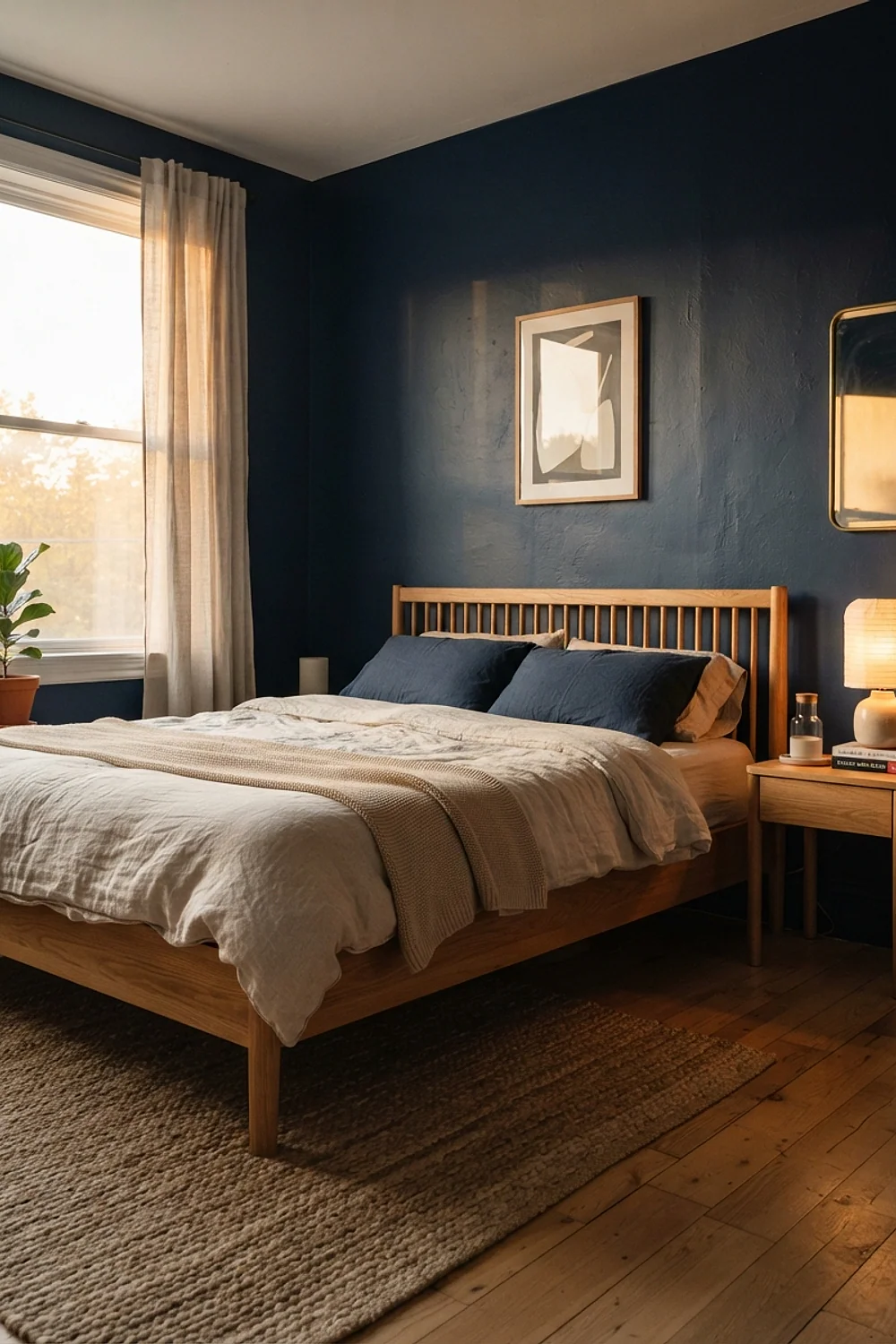
Walnut nightstands with an oak dresser can work, but a third wood in a floor, headboard, or chair starts to look like a furniture clearance. Match the undertone (warm or cool) even when the species differ.
This is the rule for bedrooms stocked with secondhand finds, where mixing is inevitable. Black metal lamp bases, a painted piece, or a woven headboard act as neutral breaks between the woods.
18. Blackout lining behind decorative curtains
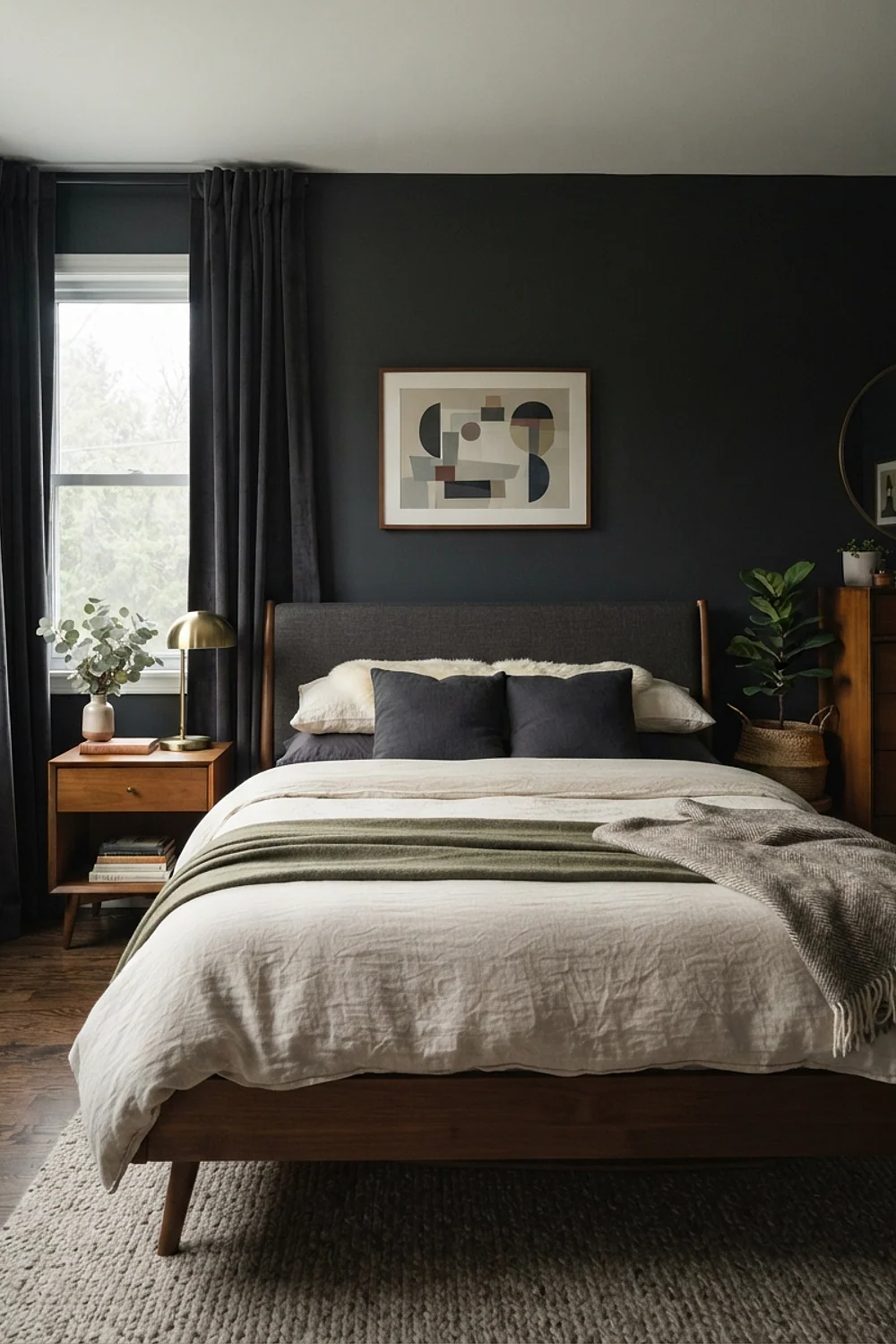
A layered window uses a blackout liner or roller shade behind a pair of linen or cotton curtains. The shade does the light-blocking, and the curtains do the softening and sound dampening.
This suits shift workers, city bedrooms facing streetlights, and anyone sleeping past sunrise in June. Make sure the shade mounts inside the frame with no more than a quarter-inch gap on each side, or light leaks around the edges.
19. Plug-in wall sconces at 60 inches
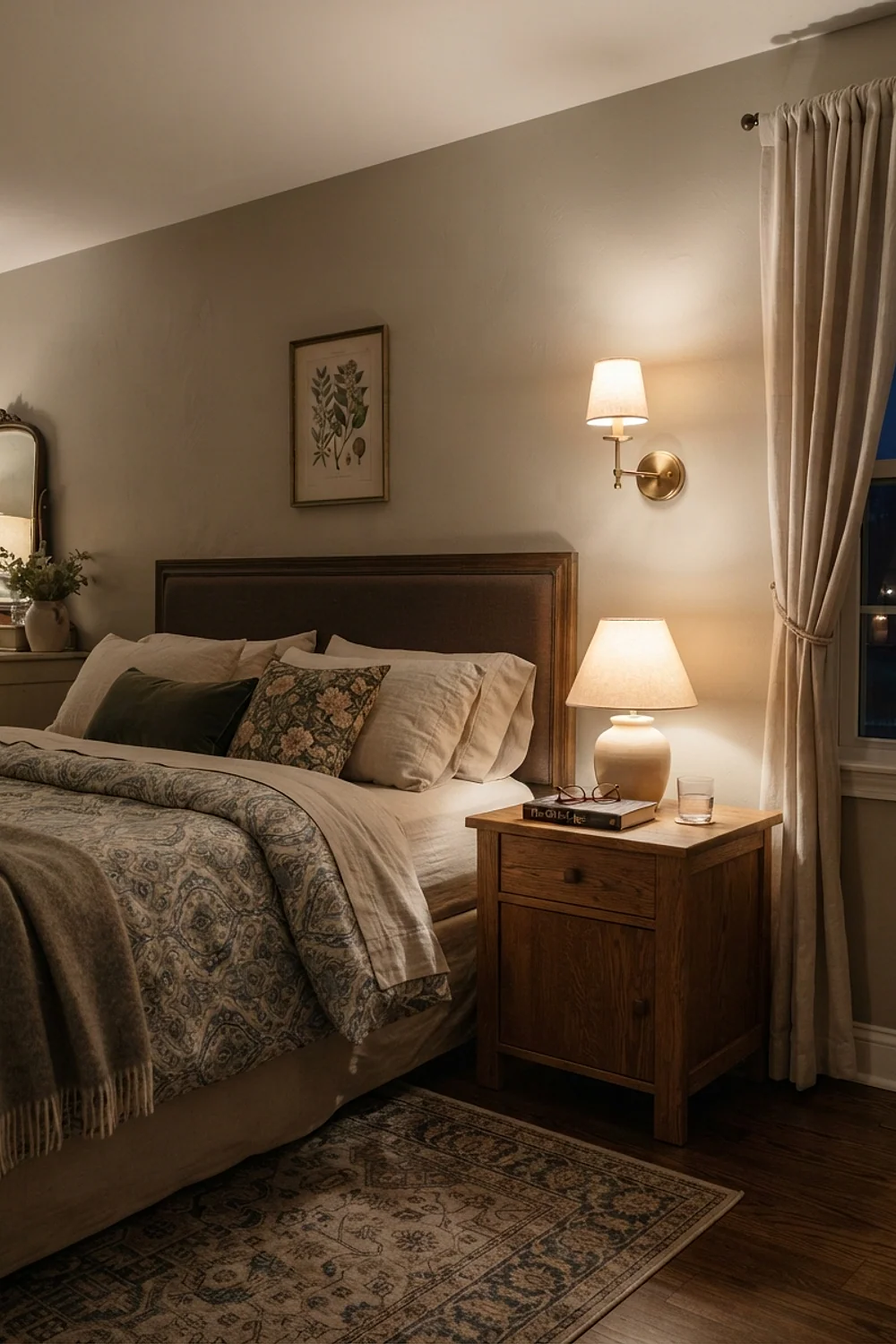
Wall sconces with a cord cover, mounted about 60 inches off the floor, free up the nightstand surface completely. A plug-in pair runs $60-120 and needs no electrician.
They’re ideal for narrow nightstands and for renters who can’t rewire. Aim the arm so the bulb sits at shoulder height when sitting up in bed, or the glare lands right in your eyes.
20. Two sleeping pillows, two Euro shams, one lumbar
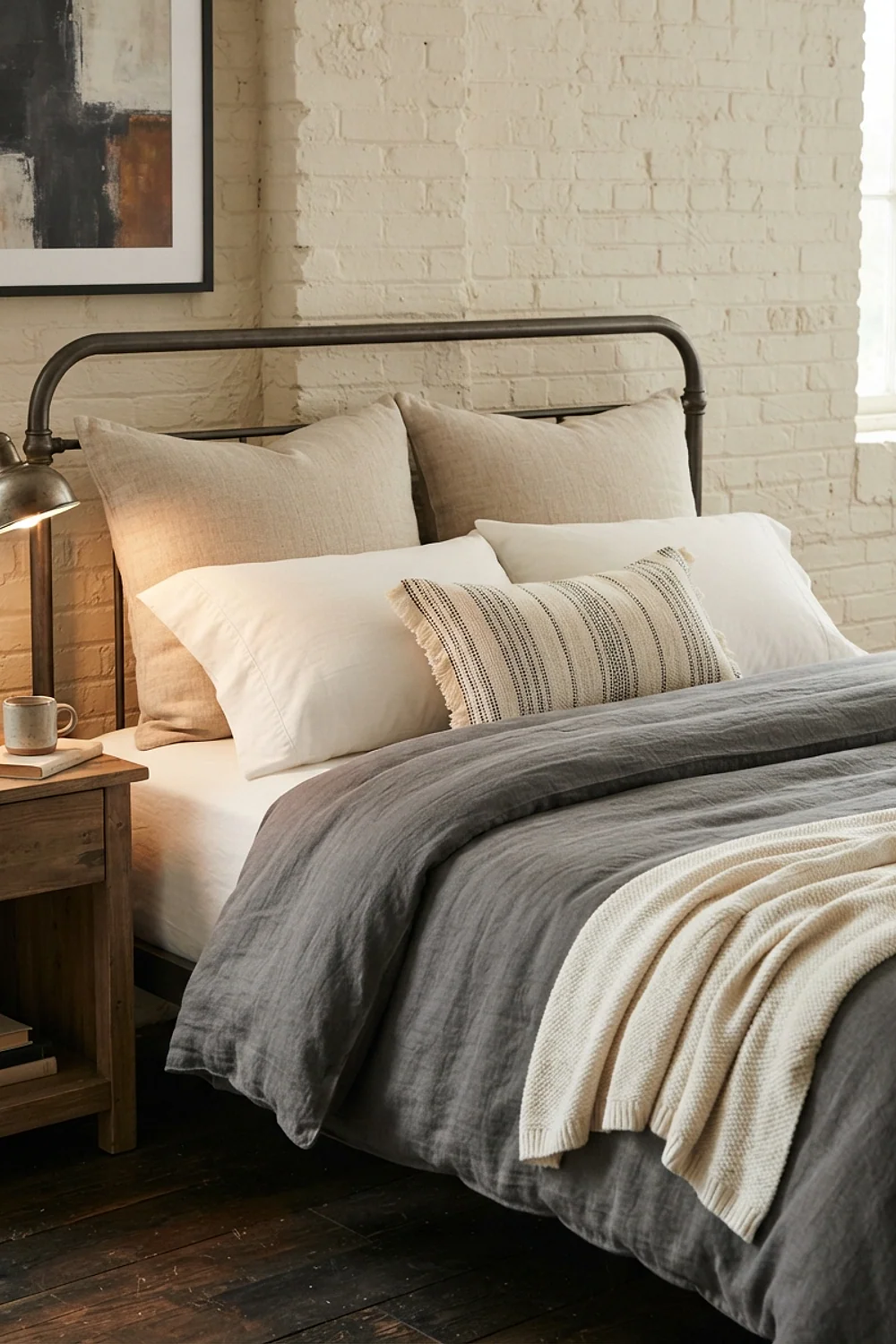
On a king, two sleeping pillows in the front, two 26 x 26 inch Euro shams behind, and one 12 x 20 lumbar in the middle make a full, symmetrical arrangement. A velvet lumbar under the hand is the one you’ll keep reaching for.
Queens look better with one fewer sham. Pillow count creeps up quickly; if the pile takes more than 30 seconds to move at night, it’s too big.
21. A nightstand vignette in odd numbers
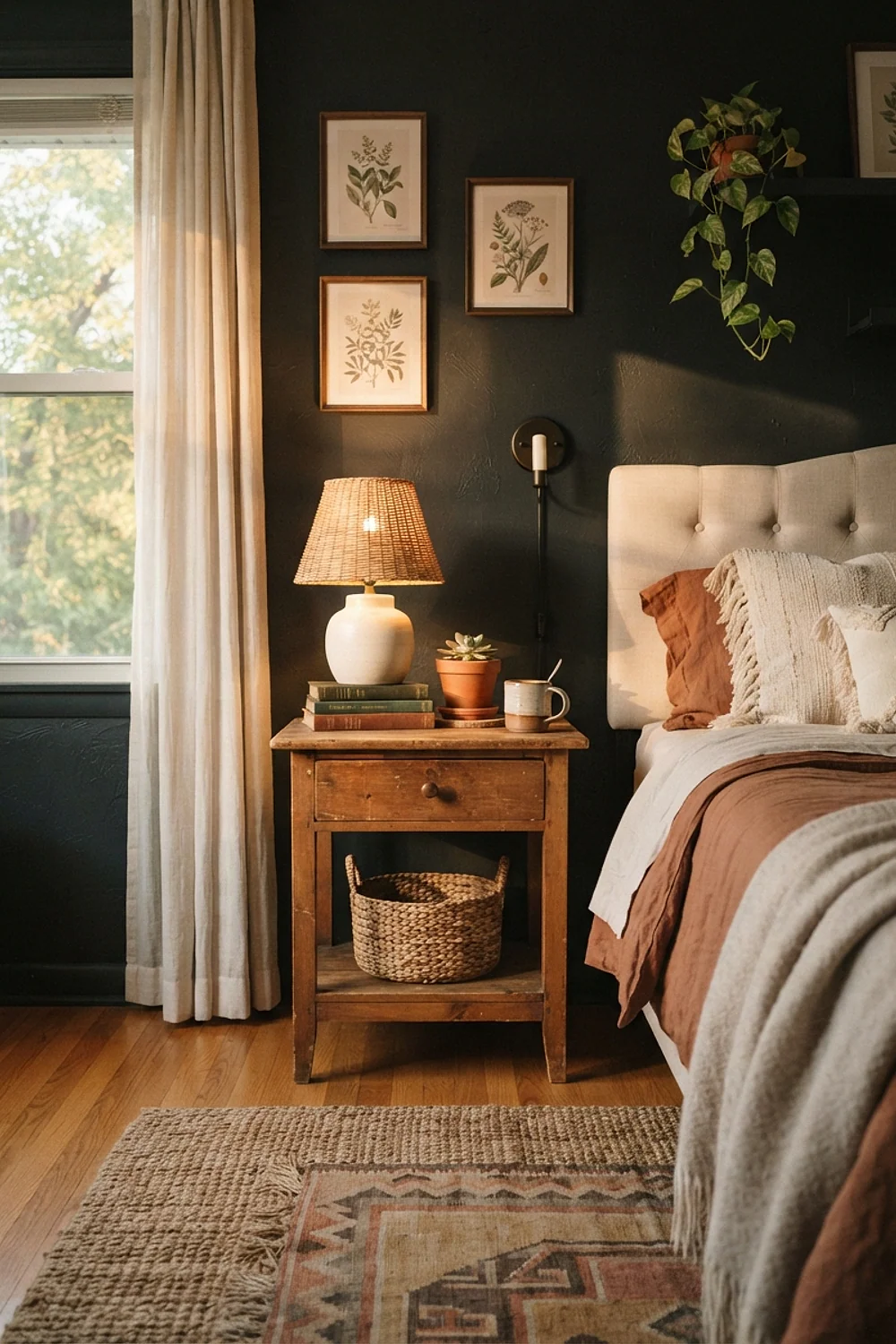
A lamp, a stack of two books, and a small tray holding a glass and ring dish form a group of three that looks composed. Varying heights (tall lamp, low stack, flat tray) matters more than matching colors.
This works on a 20-24 inch wide table, where fewer objects read as intentional. Adding a fourth or fifth item just invites dust and leaves no space for a phone charger.
22. One accent color, used three times
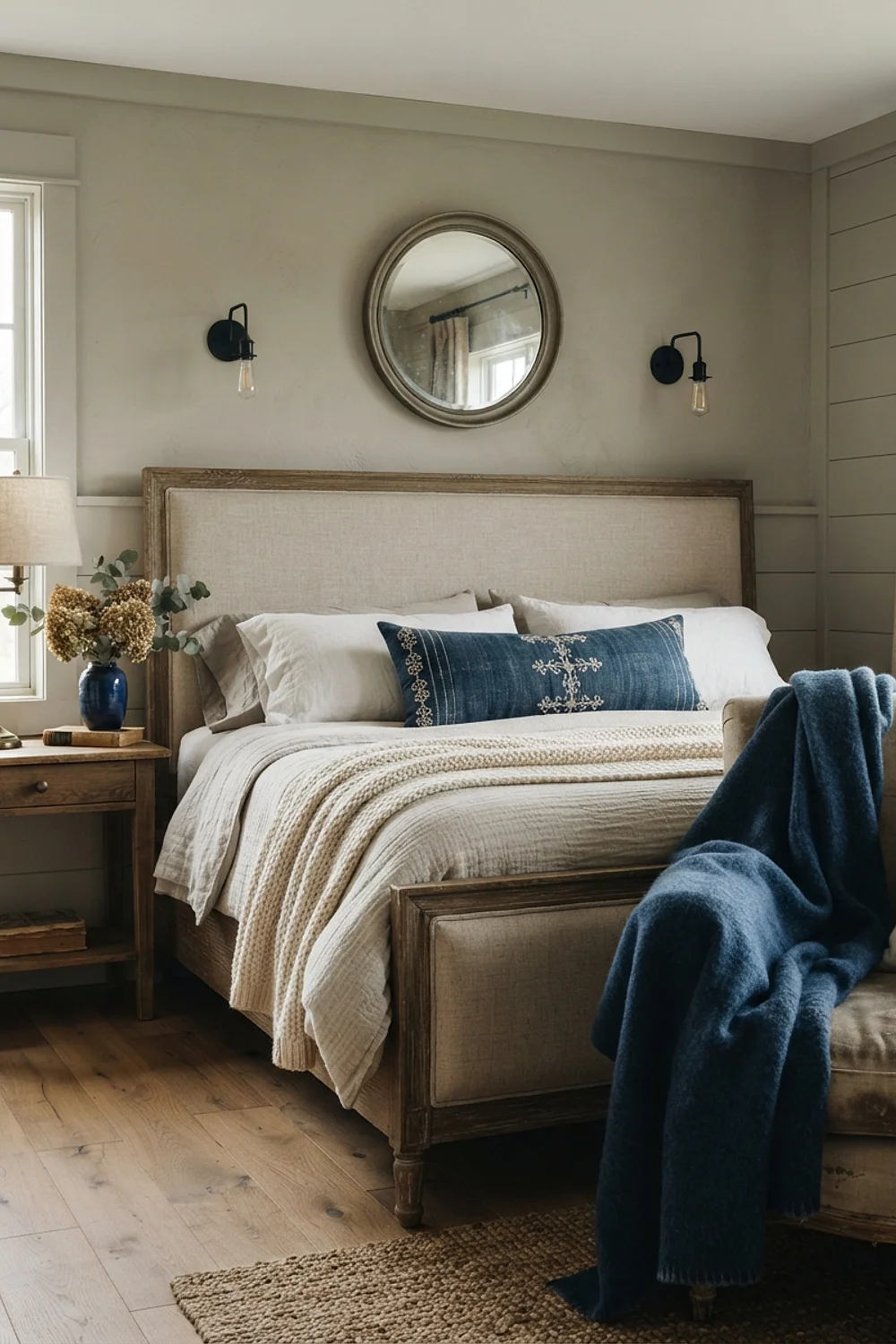
Choose a single accent, such as rust, deep teal, or mustard, and repeat it three times across the room: a pillow, a piece of art, a throw. Repetition ties it together; a one-off looks accidental.
This is a good fit for rooms with neutral walls and bedding. Swap the accent seasonally, rust in a dark November, soft blue in July, rather than repainting anything.
23. A mirror two-thirds the width of the dresser
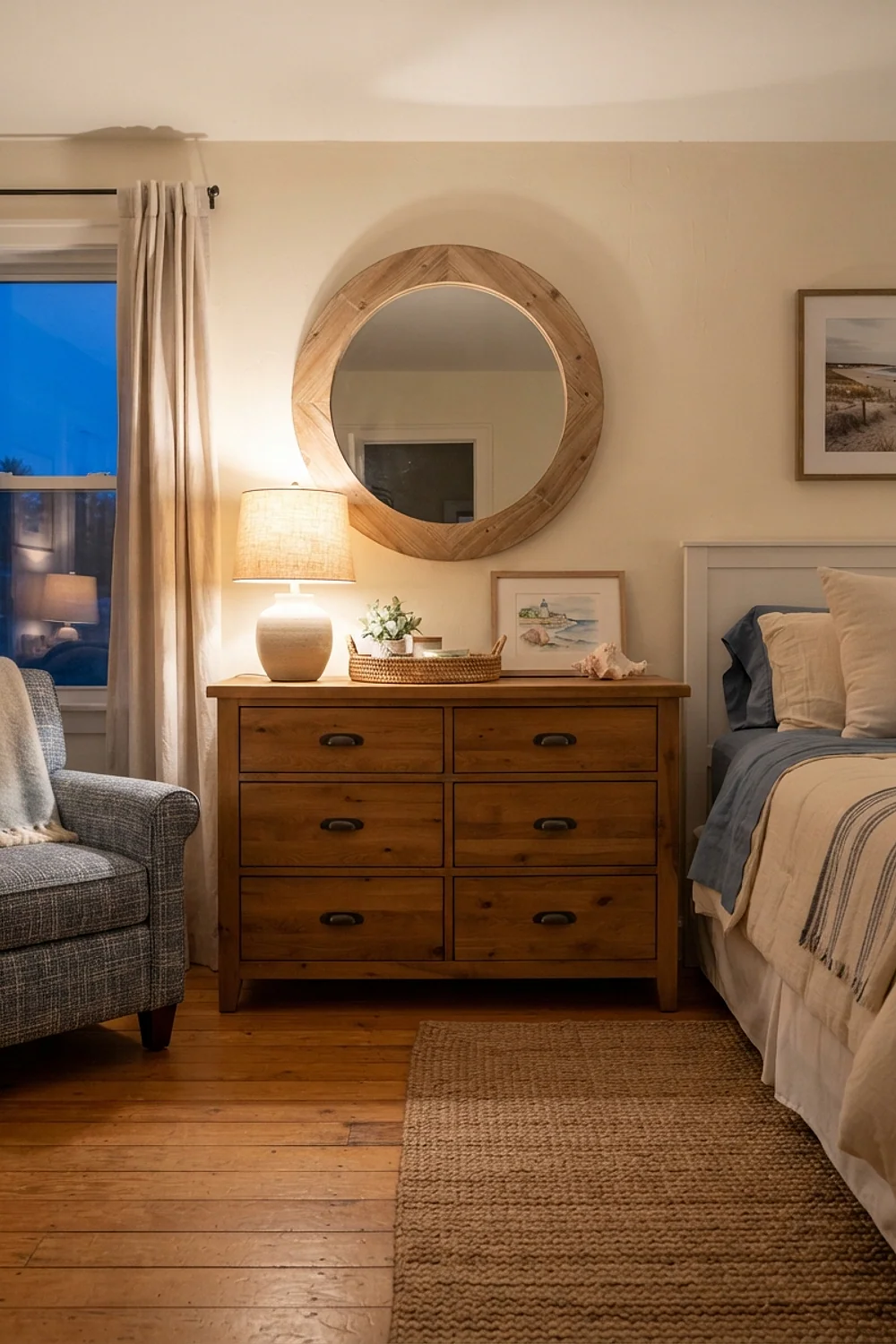
Over a 54-inch dresser, a mirror around 36 inches wide looks balanced, and a vertical rectangle reads taller than a round one. Expect $90-200 for a decent wood-framed mirror.
Hang it so the bottom edge sits 6-8 inches above the dresser top. Placing it opposite a window doubles the daylight, but avoid placing it directly facing the bed, where it can feel unsettling at night.
24. A lidded seagrass hamper out of sight
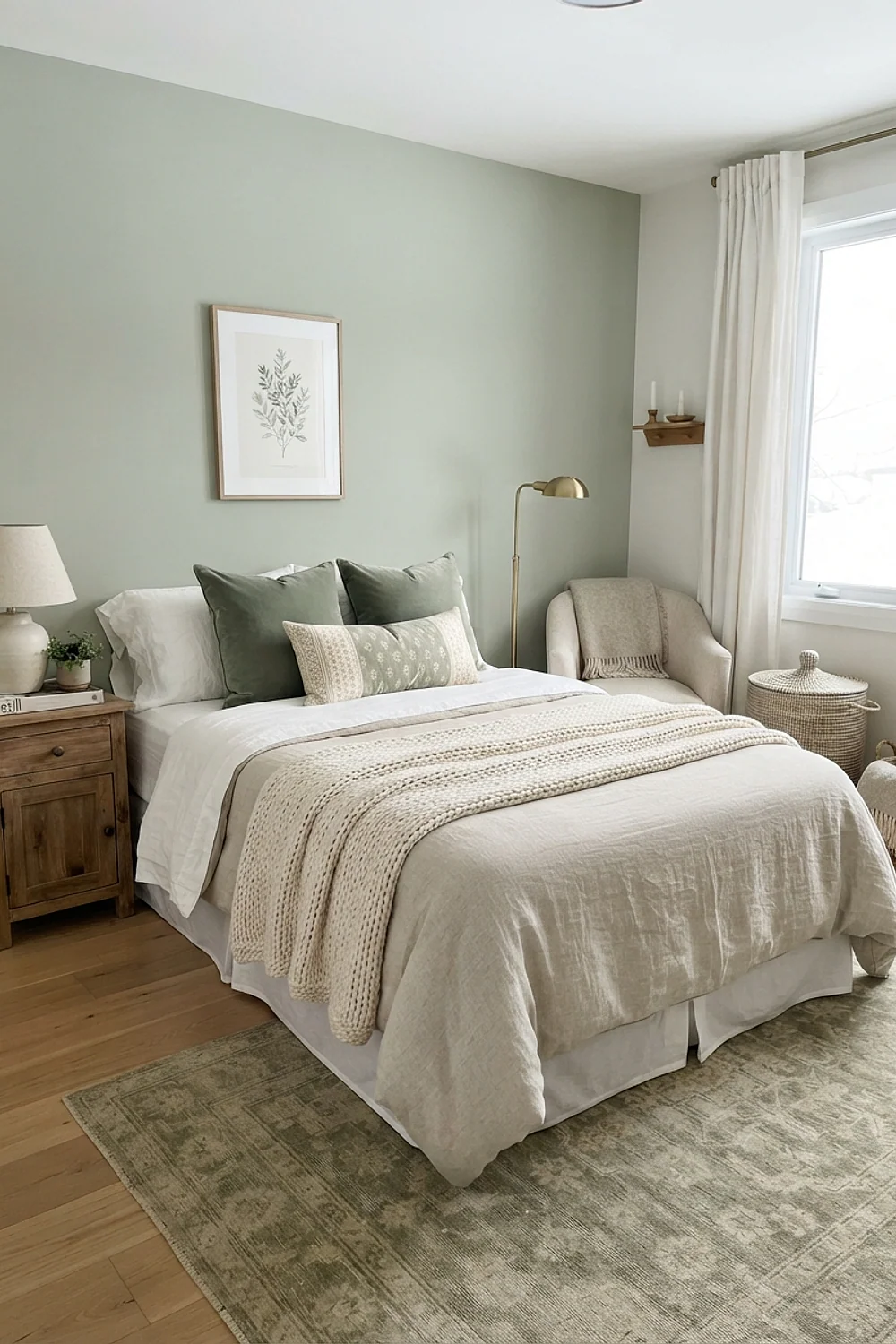
A lidded hamper about 24 inches tall in woven seagrass or rattan keeps laundry out of view and adds natural texture next to the dresser. The lid also traps odor between wash days.
It suits couples who share a room and need a drop zone that doesn’t fight the decor. Tuck it into a corner or beside the closet, not at the foot of the bed where it blocks the walkway.
Breaking the rules on purpose
Cozy master bedrooms decor doesn’t need every rule applied to the letter. Some of the best rooms break a guideline deliberately, as long as the proportions still add up.
Here’s the counterintuitive one: dark paint can make a small bedroom feel bigger. Deep green or charcoal on all four walls blurs the corners, so the eye stops measuring the box. On a gray February afternoon, that depth reads as a cocoon rather than a cave.
- Mismatched nightstands work if they’re within 2 inches of each other in height.
- Skipping the headboard works if the wall behind has a painted arch or large art.
- A tiny rug breaks the 9 x 12 rule if two runners flank the bed instead.
- Pushing the bed into a corner works in rooms under 10 x 10 feet, where the walkway matters more than symmetry.
Each exception keeps the core idea intact: leave clearance, balance heights, and don’t let any single piece overpower the room.
Mistakes that keep showing up
Cozy master bedrooms decor goes wrong in predictable ways, and most of them come down to scale or spacing. These are the ones that show up again and again.
- Buying the bed before measuring the room, then discovering a 24-inch walkway shrank to 14.
- Hanging art too high, so the center sits above 60 inches instead of 57.
- Relying on one overhead light with no lamps.
- Choosing a rug that stops at the bed’s edge.
- Stacking six decorative pillows that are removed and replaced nightly.
- Spending $400 on a statement chandelier and nothing on a dimmer switch that costs under $30.
The fix for nearly all of them is a roll of painter’s tape. Mark the bed, rug, and nightstands on the floor and wall before buying, and walk around the outline for a day.
Where to start
Cozy master bedrooms decor is built in a clear order: furniture scale first, then light, then textiles, then the small objects. Reverse that order and the room fights itself.
Save or pin this list so it’s handy when the shopping starts. For a first move, measure the room and tape out the bed and rug on the floor before buying anything.
Frequently asked questions
Can cozy master bedrooms decor work in a rental?
Yes, because most of it relies on movable pieces. Plug-in sconces, a 9 x 12 rug, layered bedding, curtains on a tension or adhesive-free rod, and peel-and-stick wallpaper all come off at move-out. Skip anything that needs drilling beyond a few small nail holes.
How much does it cost to refresh a master bedroom?
A realistic refresh of bedding, a rug, lamps, and curtains runs about $800-1,500 if bought new, and noticeably less with secondhand furniture. Start with bedding and lighting, since those change the room’s feel faster than furniture does.
How do I keep a cozy master bedroom from feeling dark?
Use 2700K bulbs at three heights, hang a mirror opposite the window, and keep curtains pushed fully off the glass during the day. Cozy master bedrooms decor works best with mid-tone walls, since very dark colors absorb most of the light you add.
Should the TV go in a master bedroom?
A TV is fine if it’s hidden or small, but a 55-inch screen glowing at the foot of the bed pulls attention away from everything else. A wall-mounted 32-inch model on an arm, or a cabinet with doors, keeps the bedroom restful.