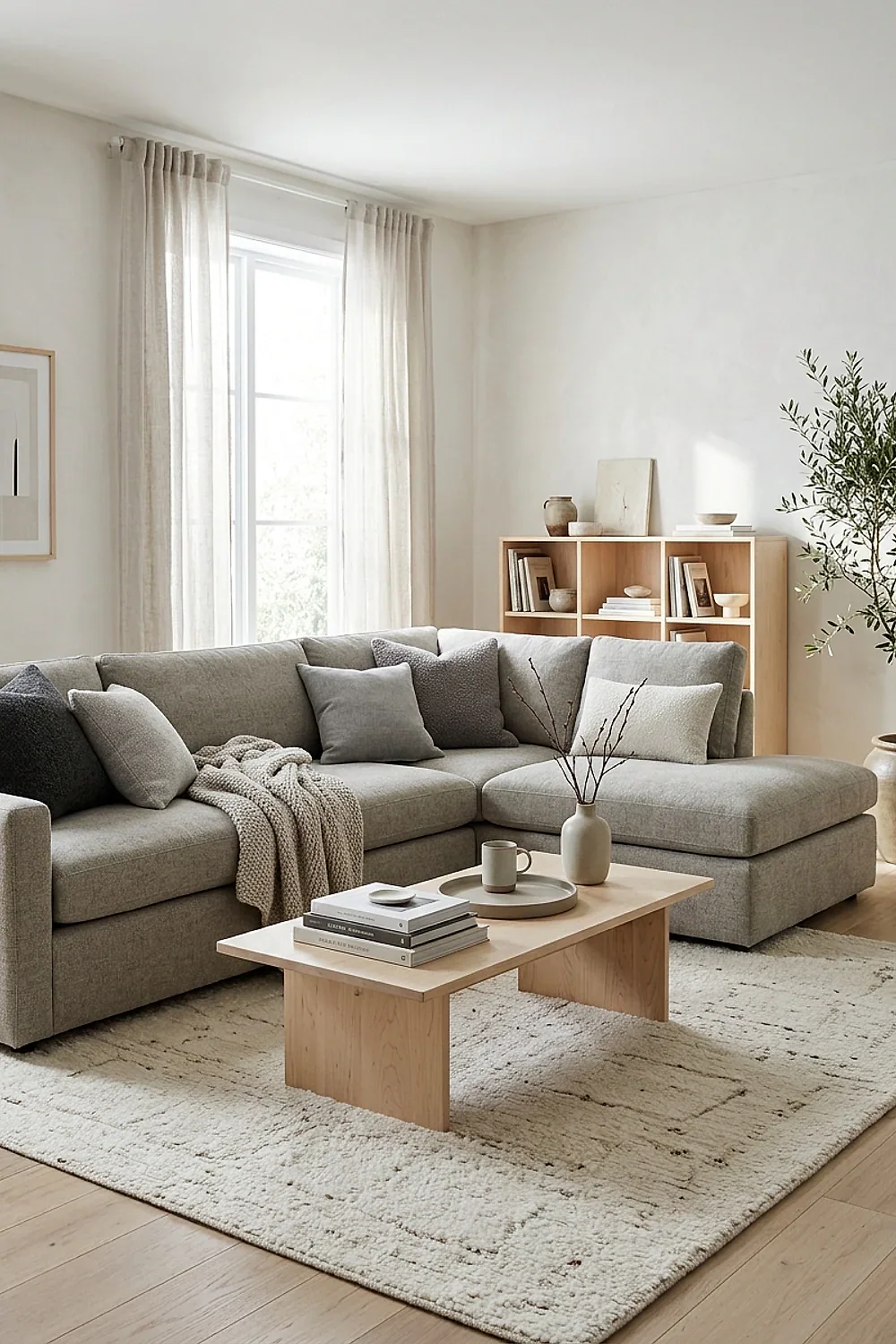
25 Plush Sectional Sofa Styling Swaps That Look Expensive
Most people assume a big, soft sectional needs a big, layered pile of extras to look finished. In practice, the sofa looks best when almost everything around it is taken away. Plush sectional sofa styling is an editing job first and a shopping job a distant second.
Below are 25 specific moves, each one about subtracting, resizing or choosing better rather than buying more. Work through them in order, and the sofa will start to look like the calm center of the room.
Plush sectional sofa styling: Small details, big impact
1. A 30-inch walkway around the sofa
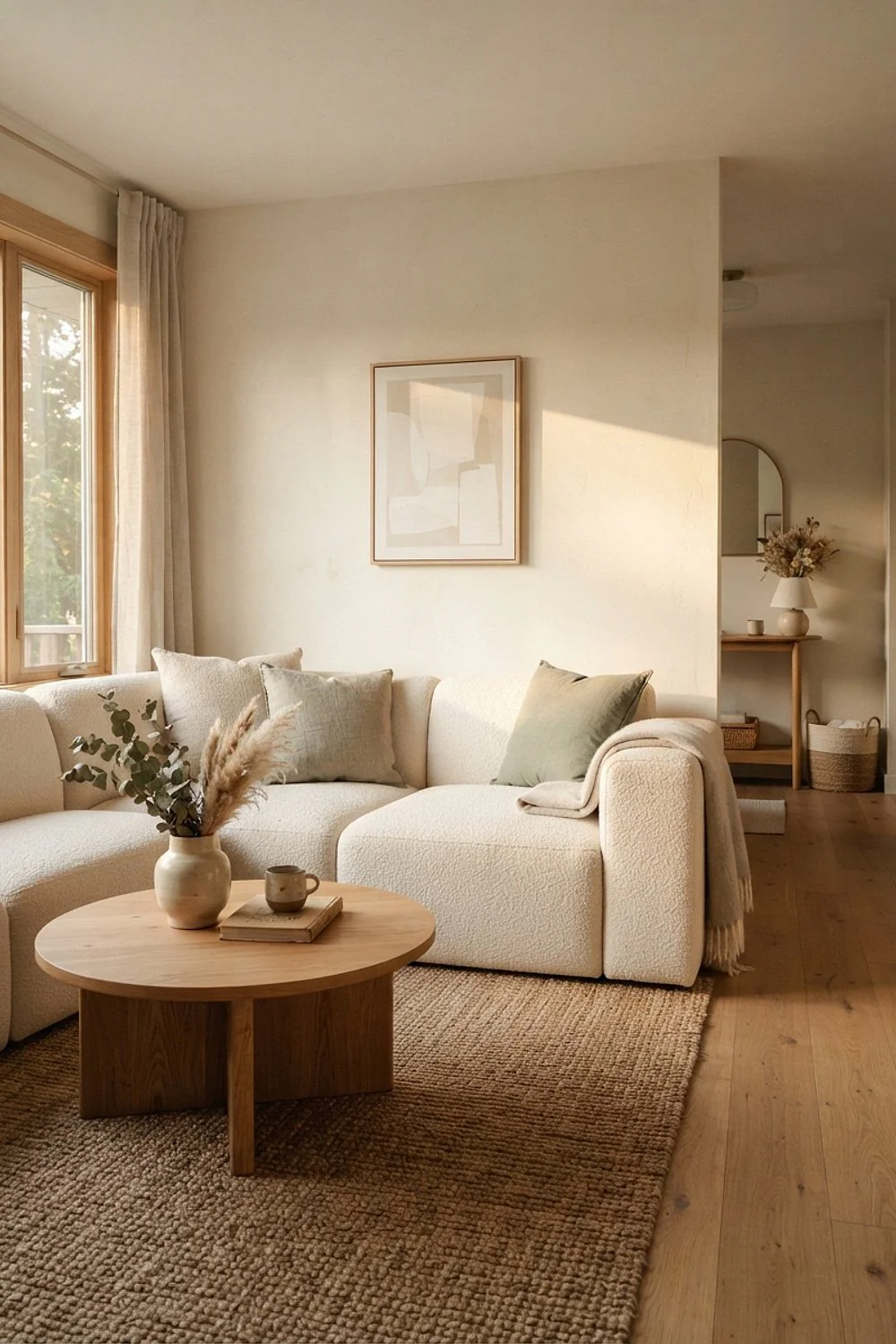
Before anything gets added, tape the sectional’s footprint on the floor and check the gaps. A walkway of 30-36 inches on every open side keeps a 110-inch sectional from swallowing the room.
This matters most in rooms under 14 by 16 feet. If the gap is tighter than 24 inches, remove a side table before you consider shrinking the sofa.
2. One sofa color, one mid-tone
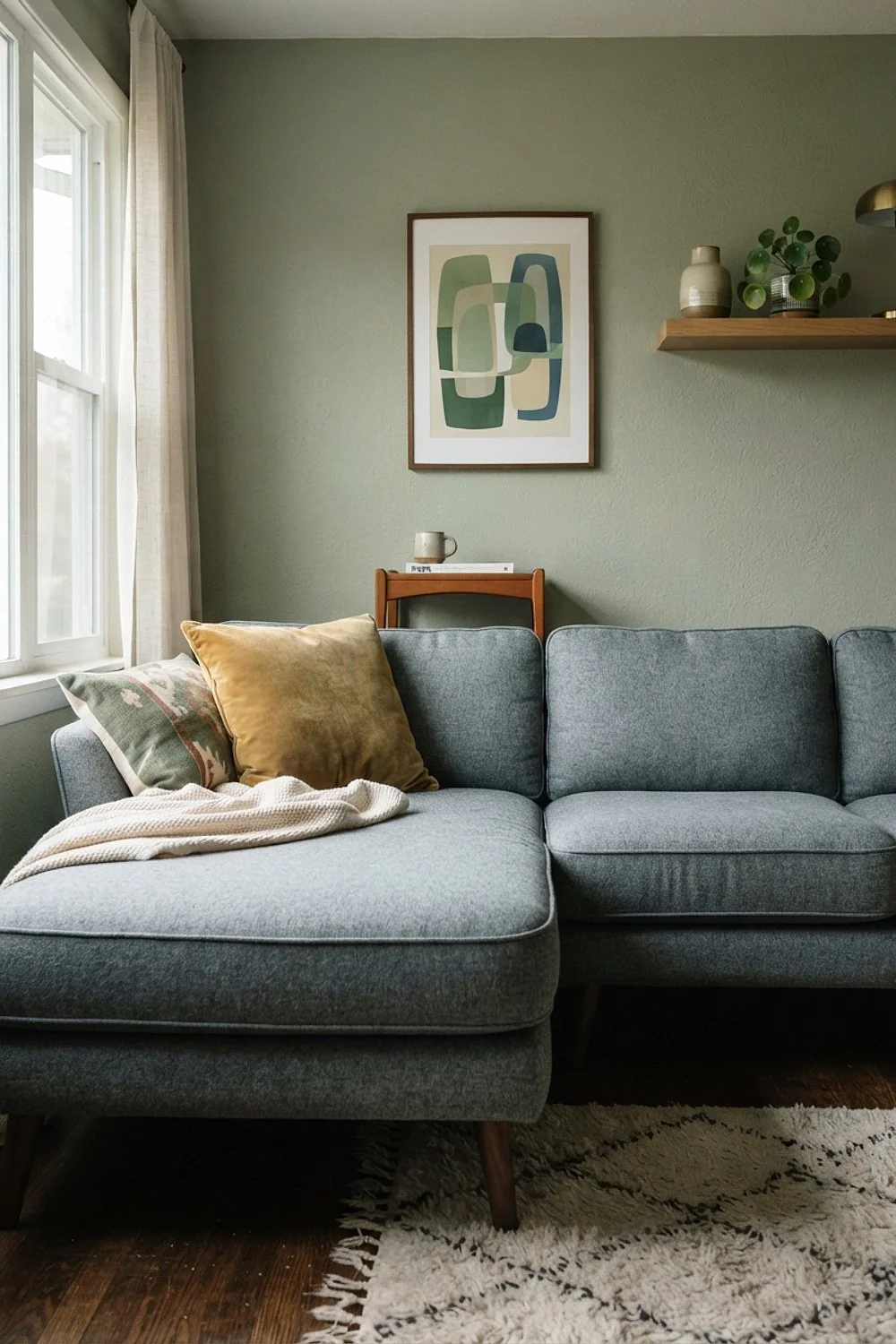
Oatmeal, greige and warm stone fabrics hide crumbs and pet hair better than white, and they don’t show every shadow the way charcoal does. Pick a single shade and let it carry the room.
Skip two-tone upholstery on a sectional. The chaise and the corner already create enough visual breaks, so a second color just chops the shape into pieces.
3. A gap of 12 inches behind the sofa
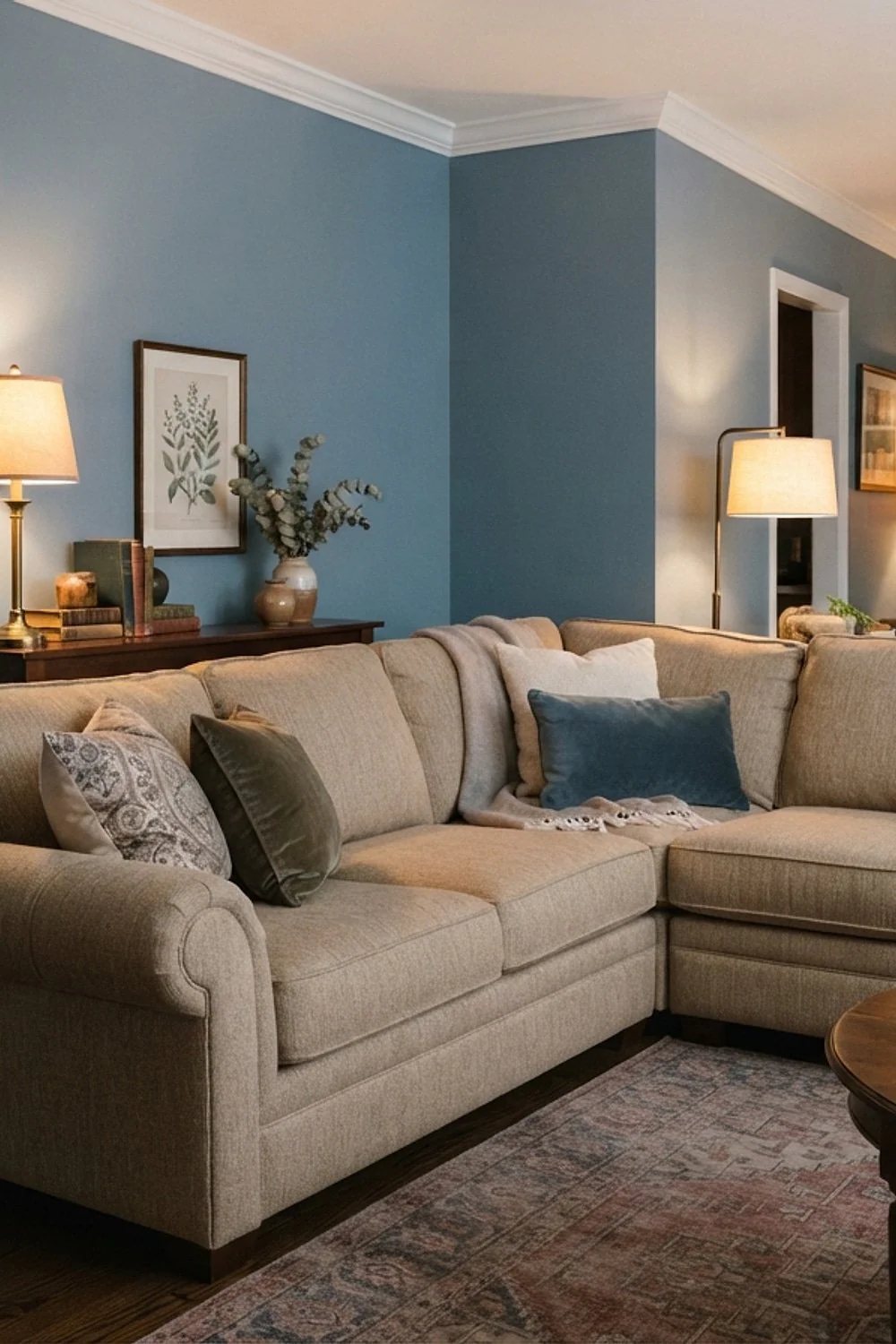
Pulling the back of the sectional 12 inches off the wall makes a plush piece look lighter, because shadow and air sit behind it. The gap also gives vacuum access, which is the practical argument, since dust and pet hair collect along a wall edge.
This suits open-plan rooms and wide living rooms, where a floating sofa also marks the edge of the seating zone. In a narrow room, push it flush and accept the trade-off rather than blocking a doorway or pinching a walkway.
4. One floor lamp in place of three table lamps
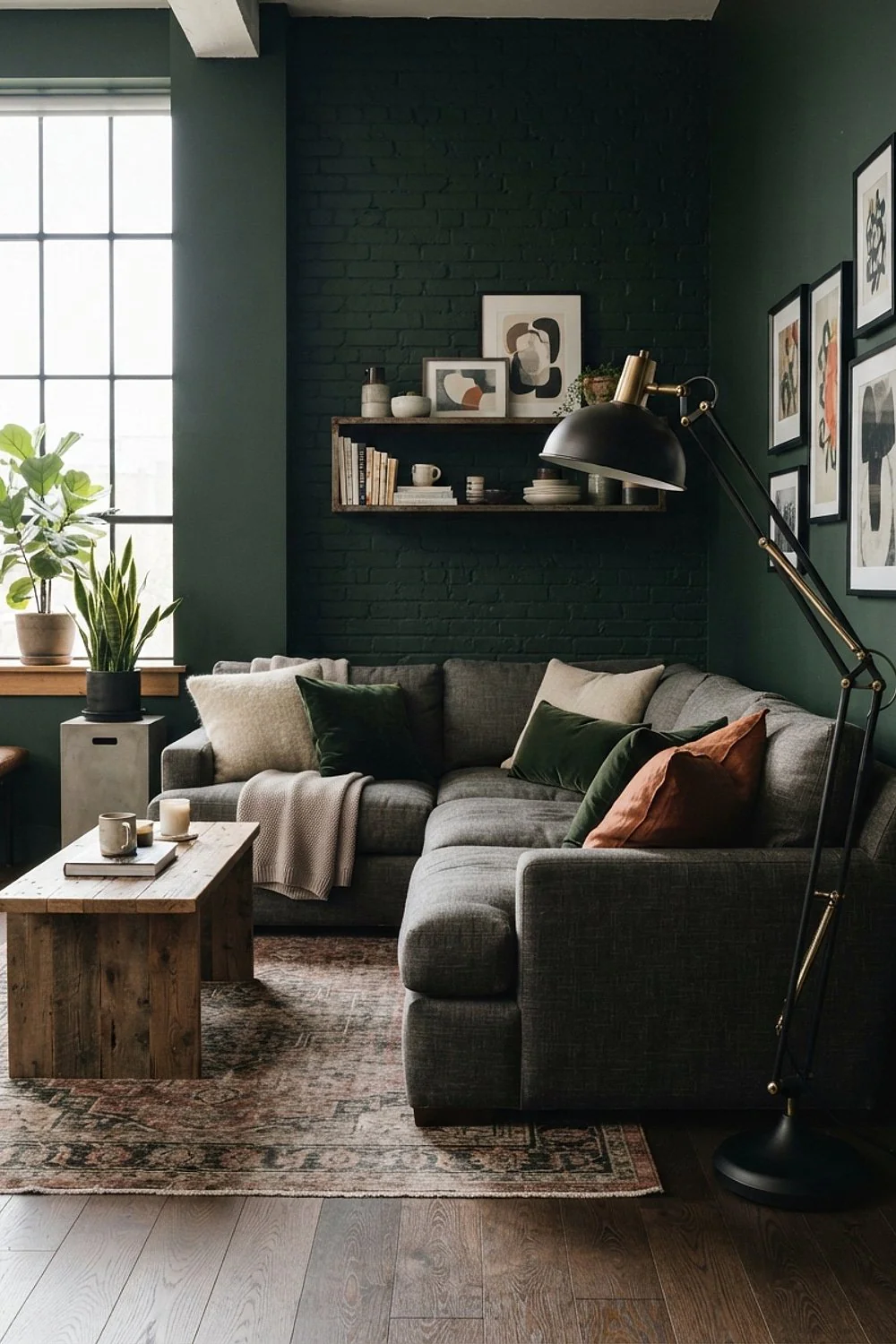
A single arc lamp with a linen shade, reaching over the corner of the sectional, replaces a cluster of small lamps. Use a 2700K bulb so the fabric reads as cream instead of gray.
At 4pm in winter, that one lamp does more than a row of tiny ones because it lights the seat, not the side table. Avoid shades darker than the sofa, which soak up the glow.
5. Five pillows, no more
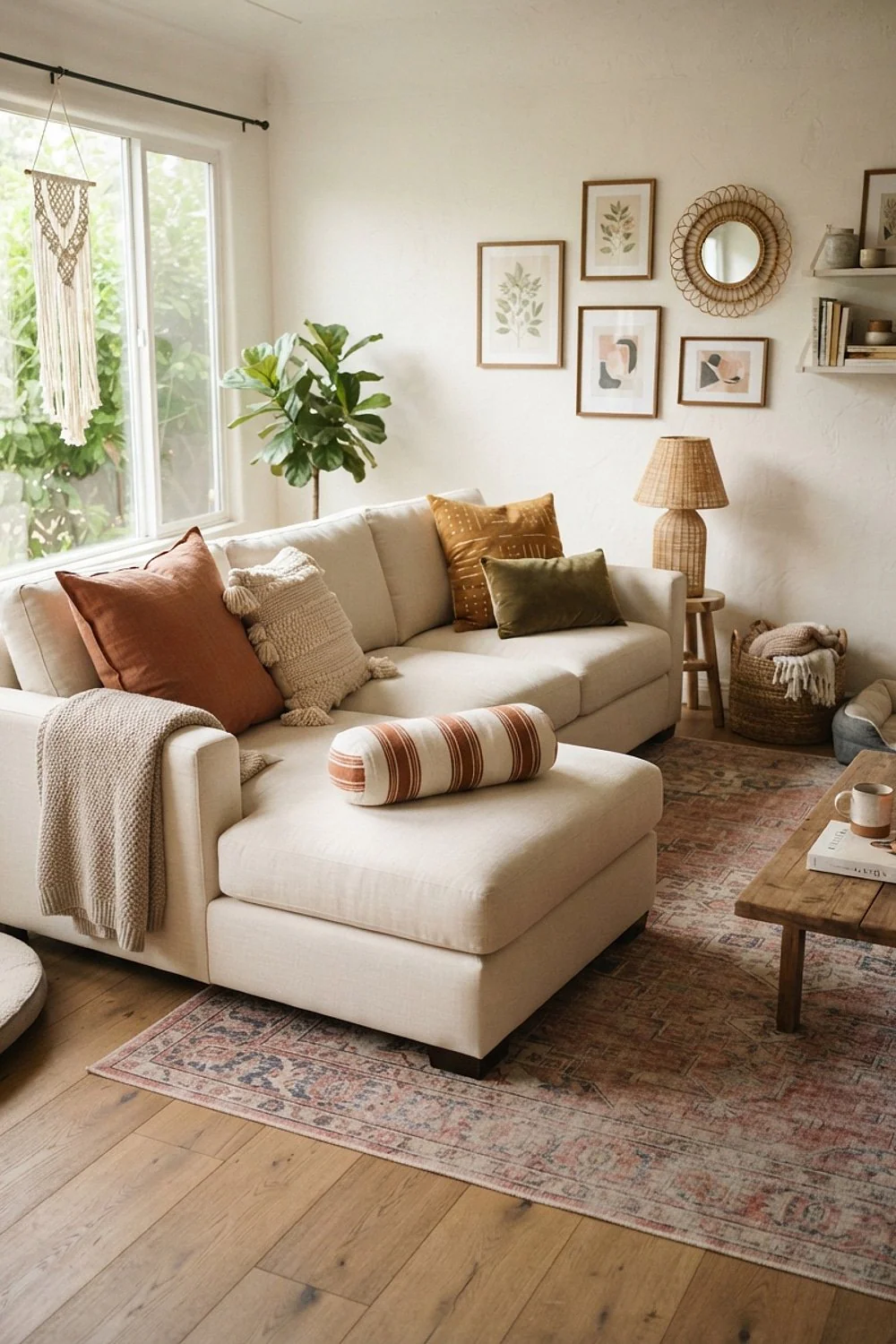
Two 22-inch squares per end and a single 12 by 20 lumbar at the corner is the whole pillow count, which makes five. A deep sectional can handle that and still leave room to actually sit.
Pillow overload is the fastest way to turn plush into cluttered, and it hurts most in smaller living rooms where the sofa is also the daily lounging spot. When someone wants to lie down, every extra cushion ends up on the floor anyway.
6. Retire the four-color pillow set
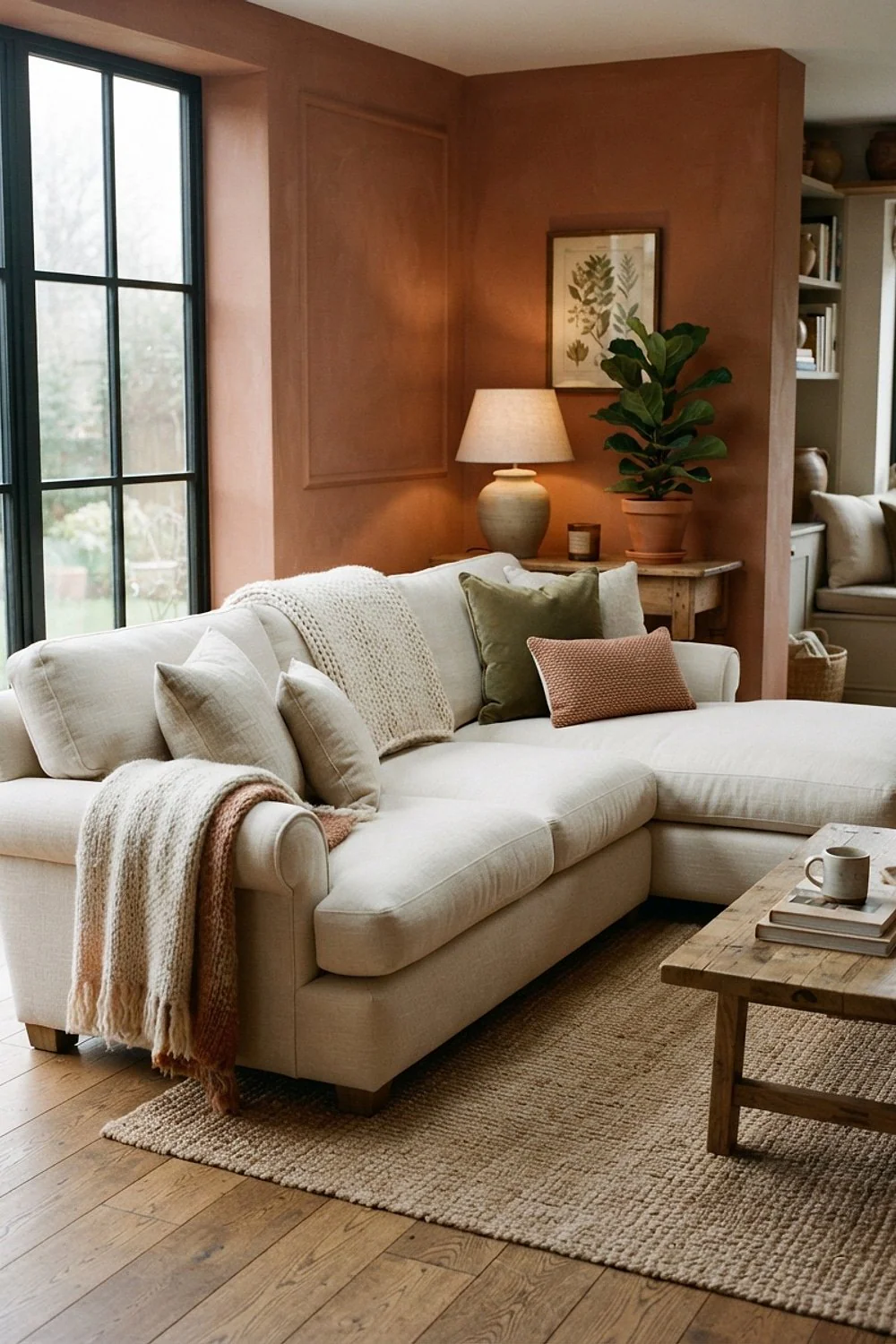
The common mistake is buying pillows in three accent shades plus a pattern, then spreading them evenly. The eye can’t rest anywhere, so the sofa reads as busy even with only five pieces on it.
Choose two tones of the same family instead, such as sand and tobacco, and let texture do the variety. Bouclé next to a flat linen is plenty.
7. A bare chaise
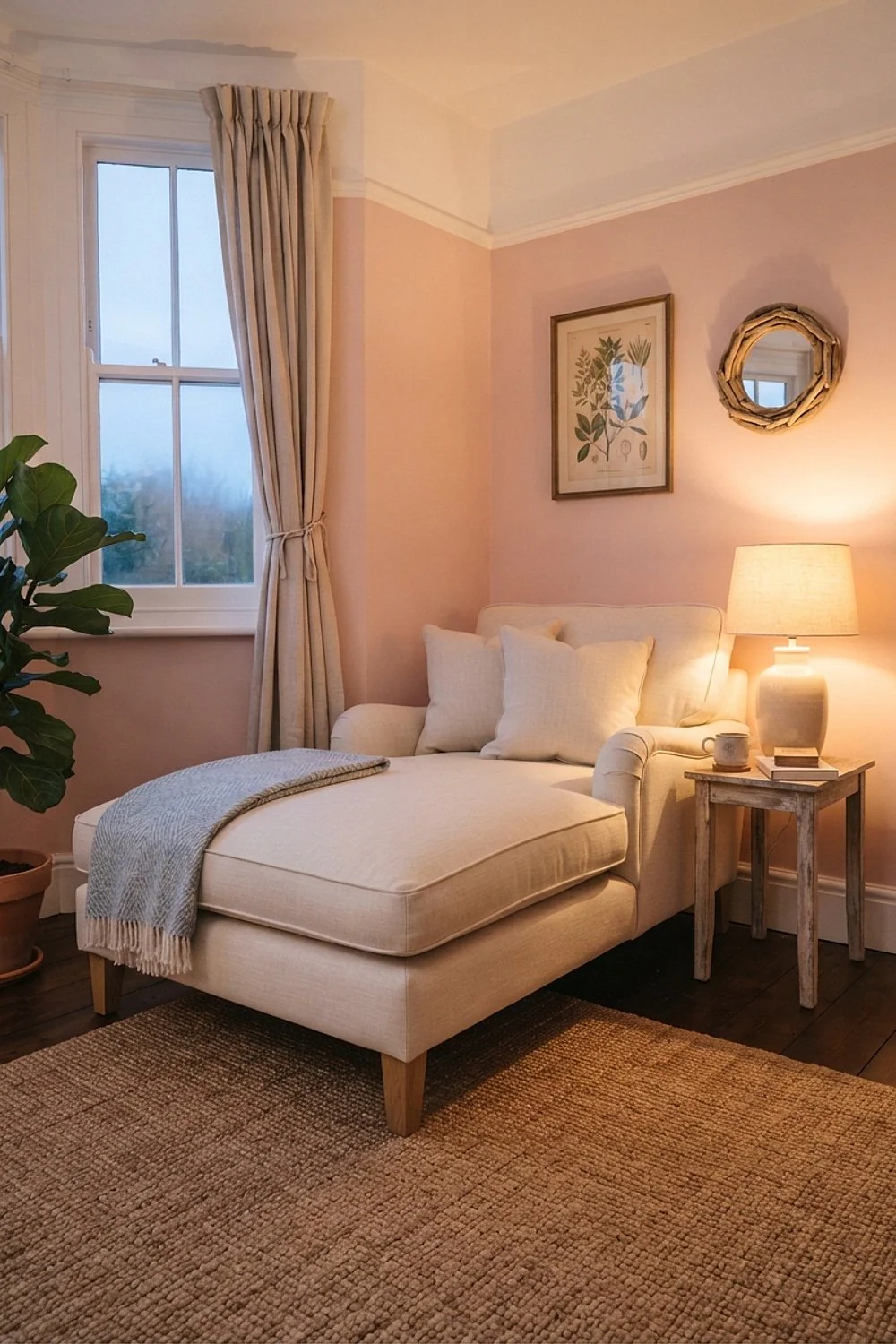
Leave the chaise end empty. It is the part of the sectional meant for stretching out, and a pillow or a stack of books there defeats the purpose, because the first step before lying down becomes clearing it.
This suits anyone who naps, reads or watches a film lying down, and households where one person claims that corner every evening.
Keep the throw within reach on the arm so the chaise stays clear until someone needs it. Avoid parking a laptop or remote there.
8. A lidded storage ottoman in place of a coffee table
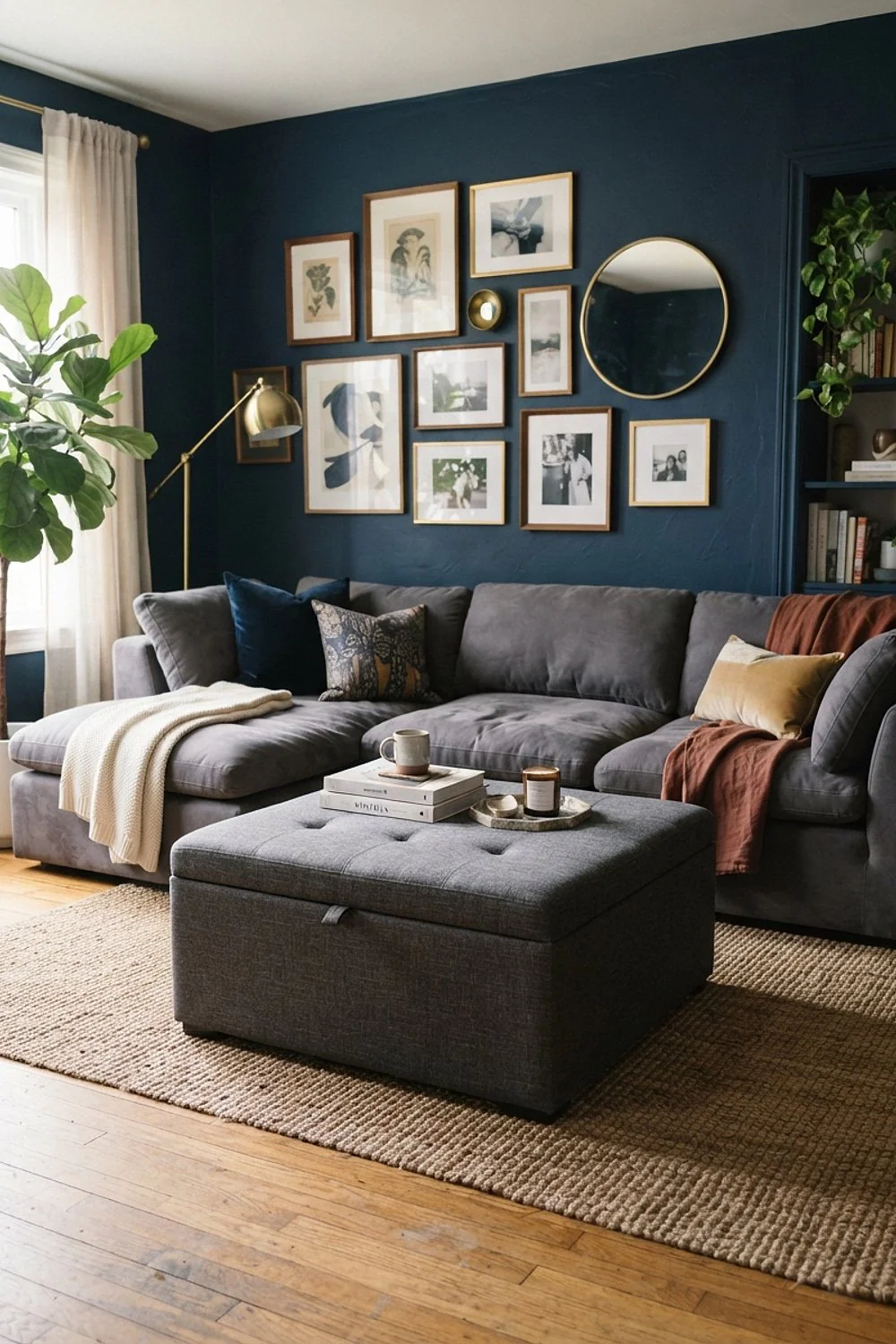
A 36-inch upholstered storage ottoman, around $200 for a decent one, swallows remotes, games and spare blankets behind a lid. It also handles the occasional foot rest, which a glass table never could.
Pick a fabric one shade darker than the sofa so it reads as a companion and not a twin. Tray on top for drinks, and nothing else.
9. One fabric family
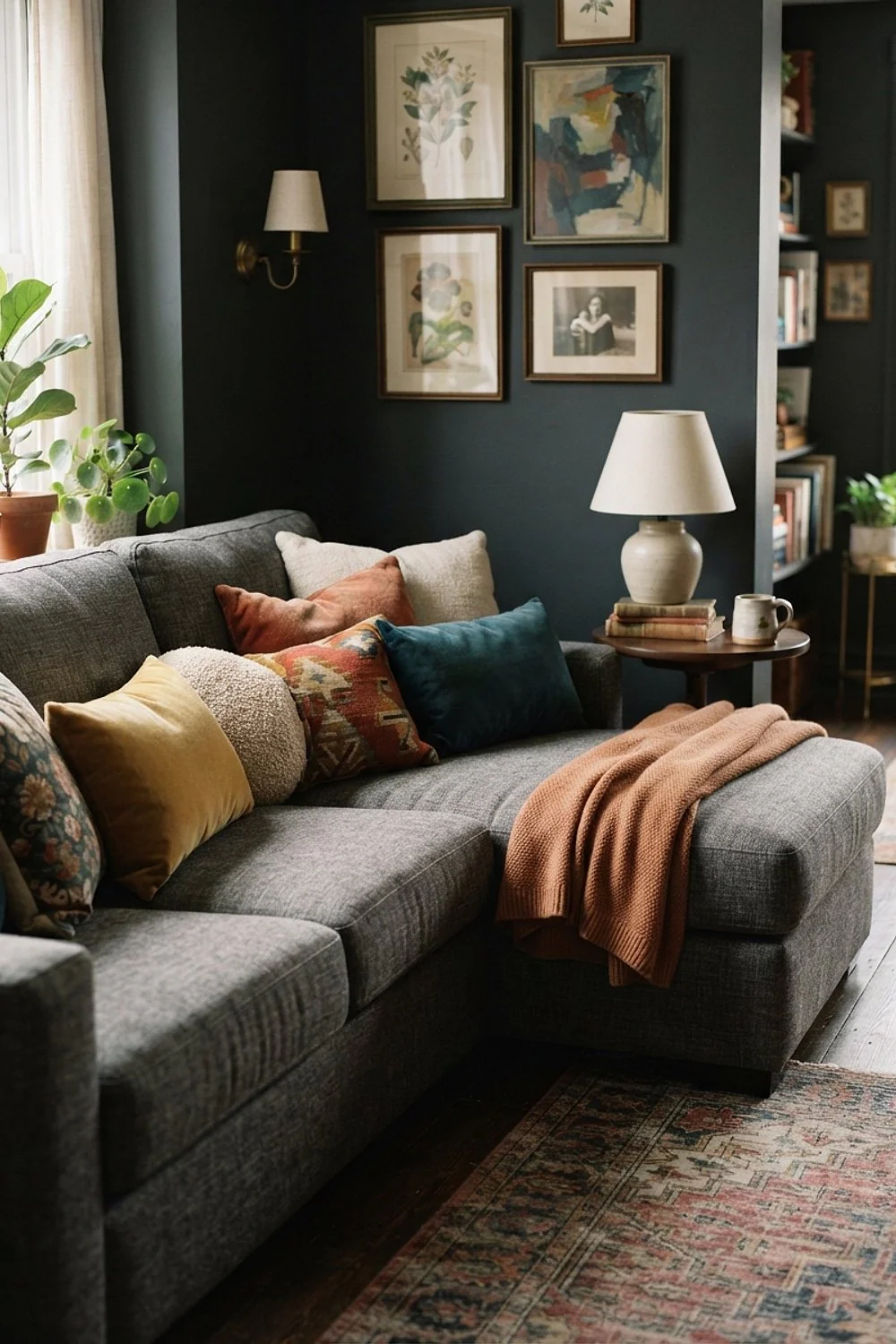
Performance chenille, bouclé and heavy linen all work, but only one of them should be in the sofa’s immediate zone. Mix three and the plushness stops looking intentional, because competing textures fight for attention.
For homes with kids or dogs, a tight-weave performance fabric with a rub count above 50,000 is the safer choice, since the dense surface resists stains and wear. Loose bouclé loops snag on claws and leave pulled threads, so skip it in pet households.
10. A single throw, folded
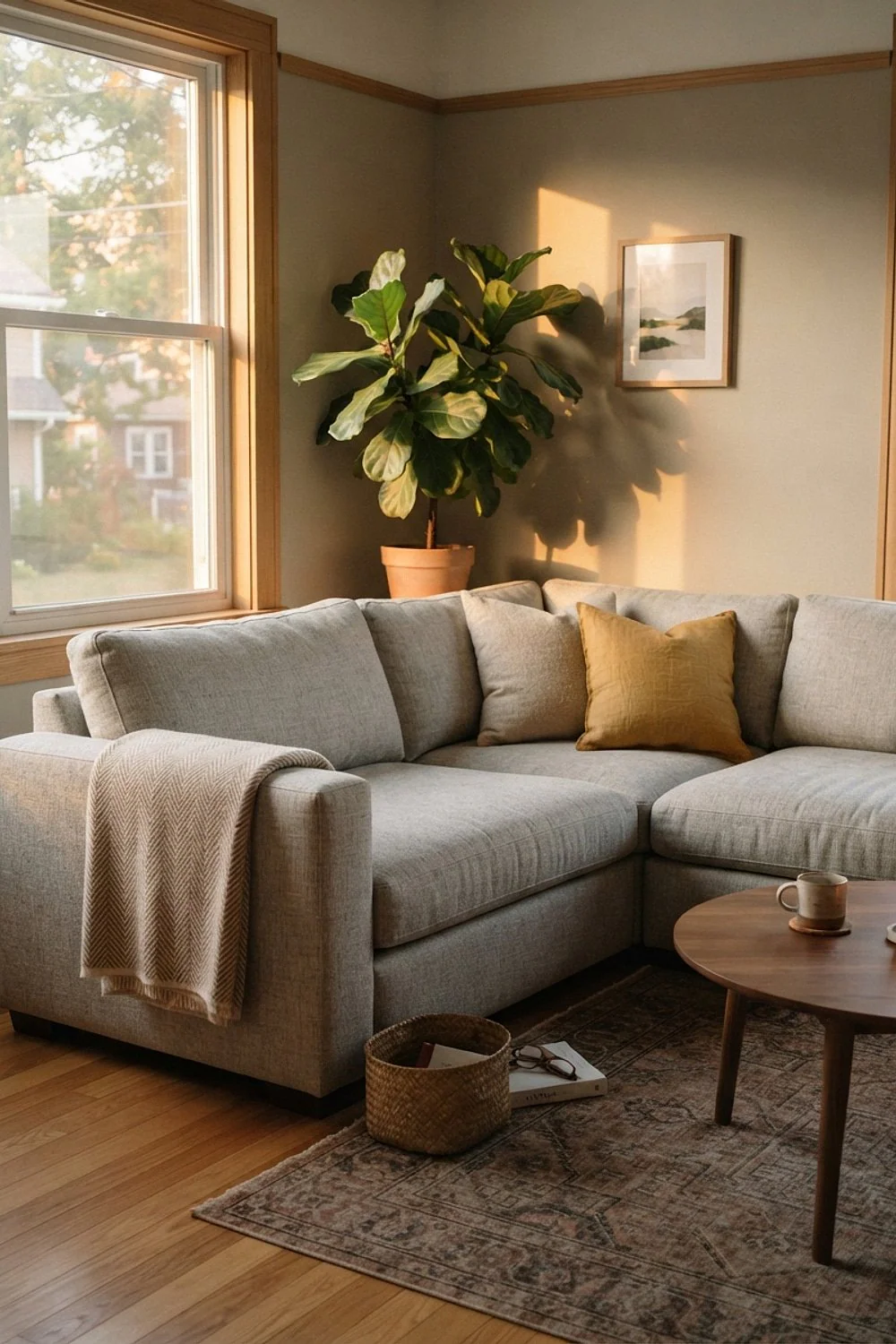
One 50 by 60 inch wool or cotton-linen throw, folded in thirds over the back of the chaise, is all the softness the sofa needs. It is also the only layer anyone will pick up daily, so it earns its place. Wool suits cooler rooms, while cotton-linen stays comfortable in warm climates, so choose by climate rather than color alone.
Skip the faux-fur extras. Two throws means one lives on the floor, and the sofa suddenly looks lived in the wrong way.
11. An 8 by 10 rug that goes under the front legs
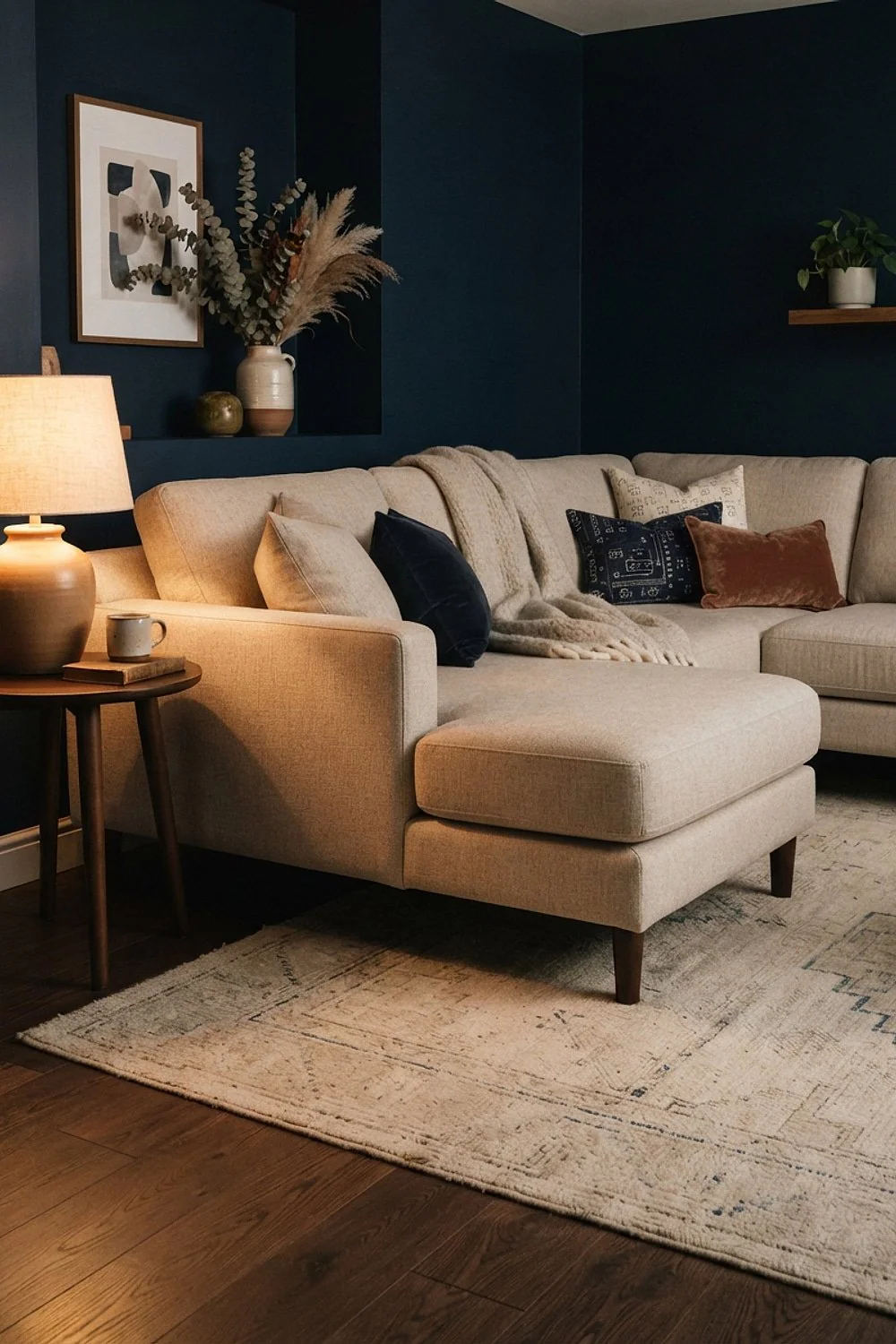
A rug too small makes a sectional float like a boat on a puddle. An 8 by 10 low-pile wool-blend, typically $250 to $500, should sit under the front legs of every piece.
Choose a flat weave in a tone close to the sofa. A shaggy rug fights the plush upholstery, and crumbs vanish into it, which is a problem in busy households.
12. Walls in a pale warm white
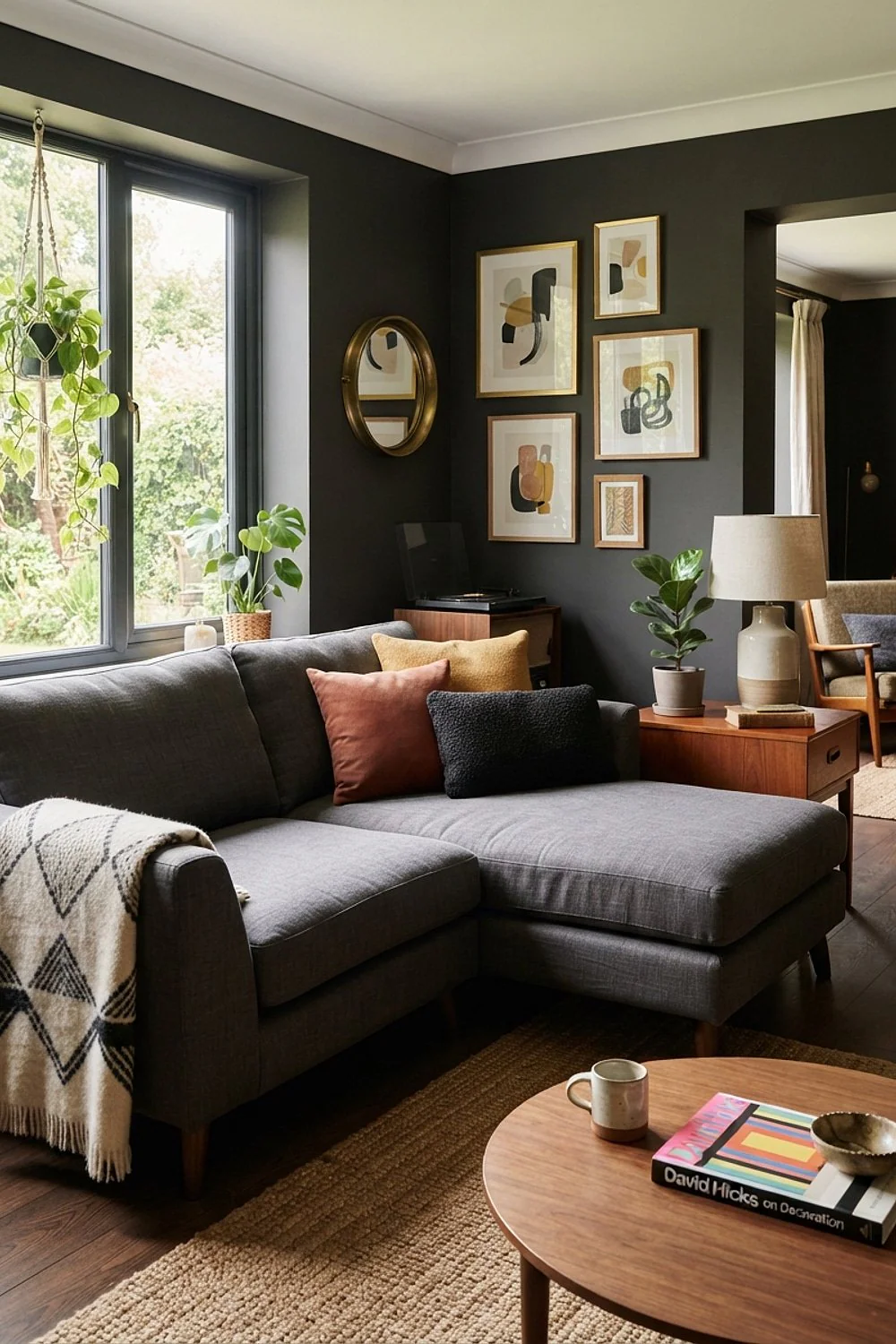
A soft white with a hint of yellow, something like Benjamin Moore Swiss Coffee, bounces light back onto the sofa and keeps cream upholstery from looking dingy. Gray walls turn the same fabric drab by 5pm.
Paint matters more than art here. Do the wall first, because a cool white next to a warm sofa will always look slightly off.
13. The corner side table, and only one
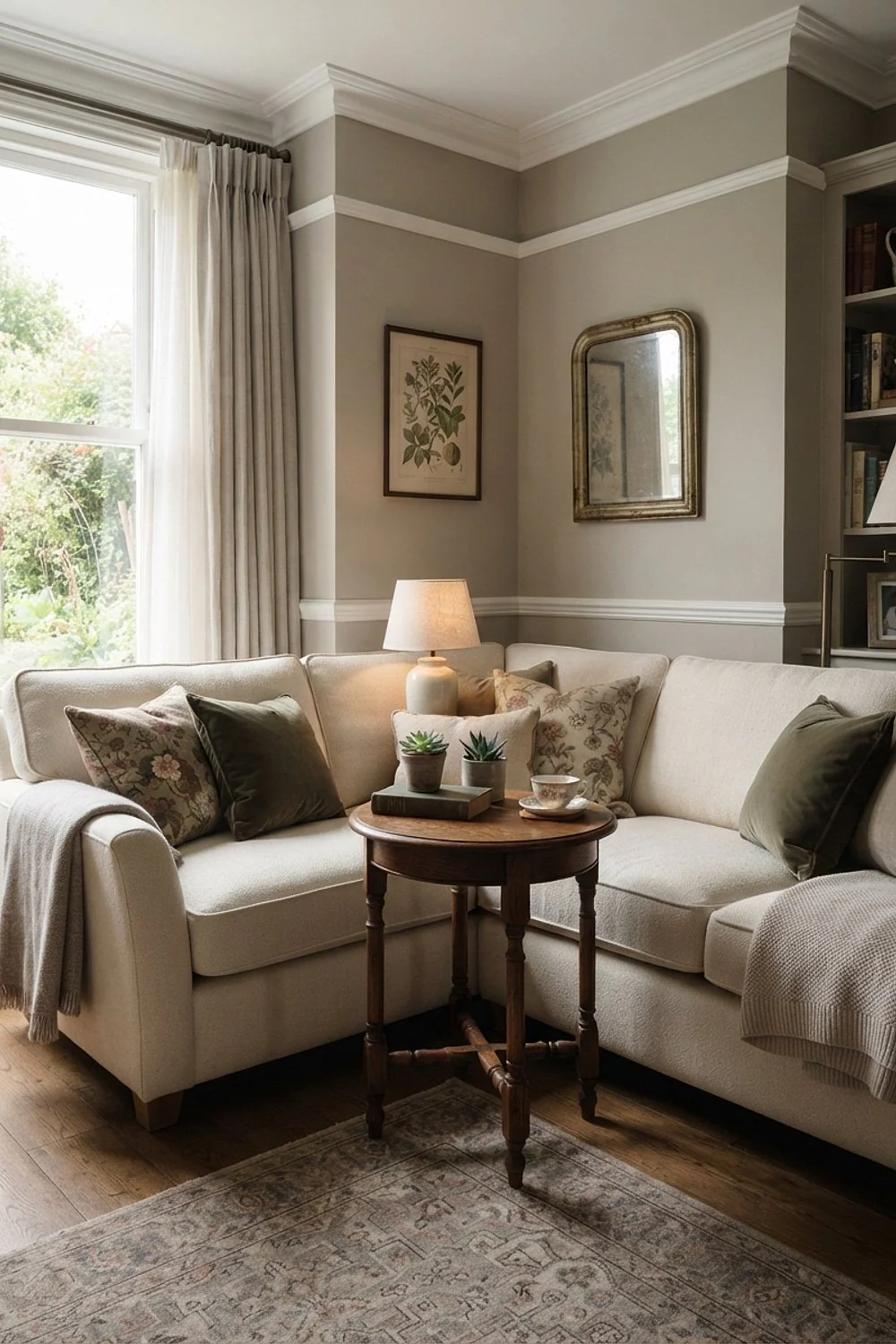
A round 18-inch table in the corner where the two sofa sections meet handles drinks and a lamp base. Round shapes soften the sectional’s hard angle, and a curved edge is gentler on shins in a tight room. This suits apartments and small rooms where one lamp and one surface cover every need.
Don’t add a table at the chaise end too. Reaching over a pillow for a mug is a small price compared with a second surface to clear.
14. A dimmer switch on the overhead light
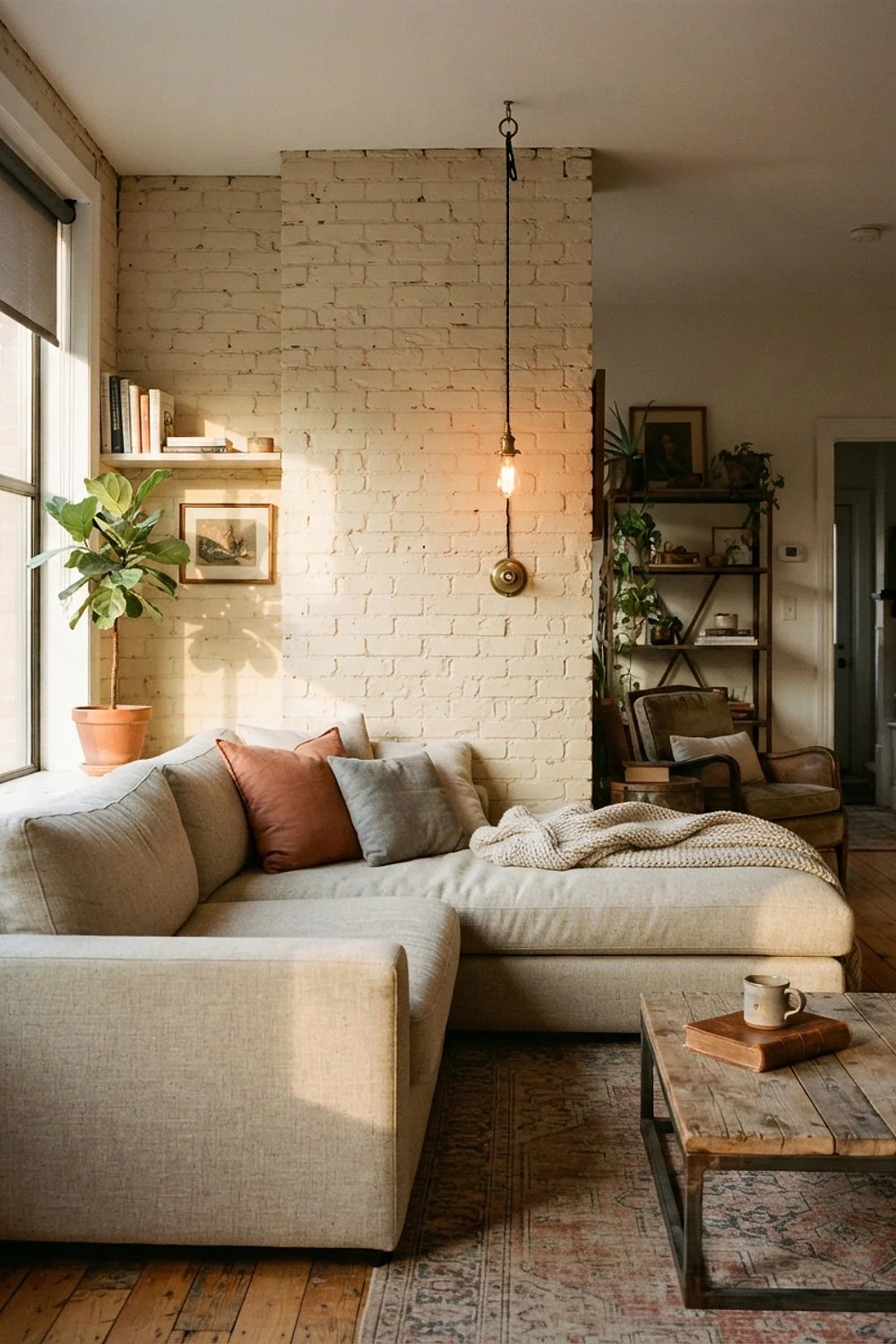
A $25 dimmer swap lets the ceiling fixture drop to about 30 percent at night, which is when plush fabric looks its best. Harsh overhead light flattens the texture.
This suits renters too, since a plug-in dimmer for a lamp does the same job. Overhead lights on full are the quickest way to make a calm room feel like an office.
15. Two objects on the tray
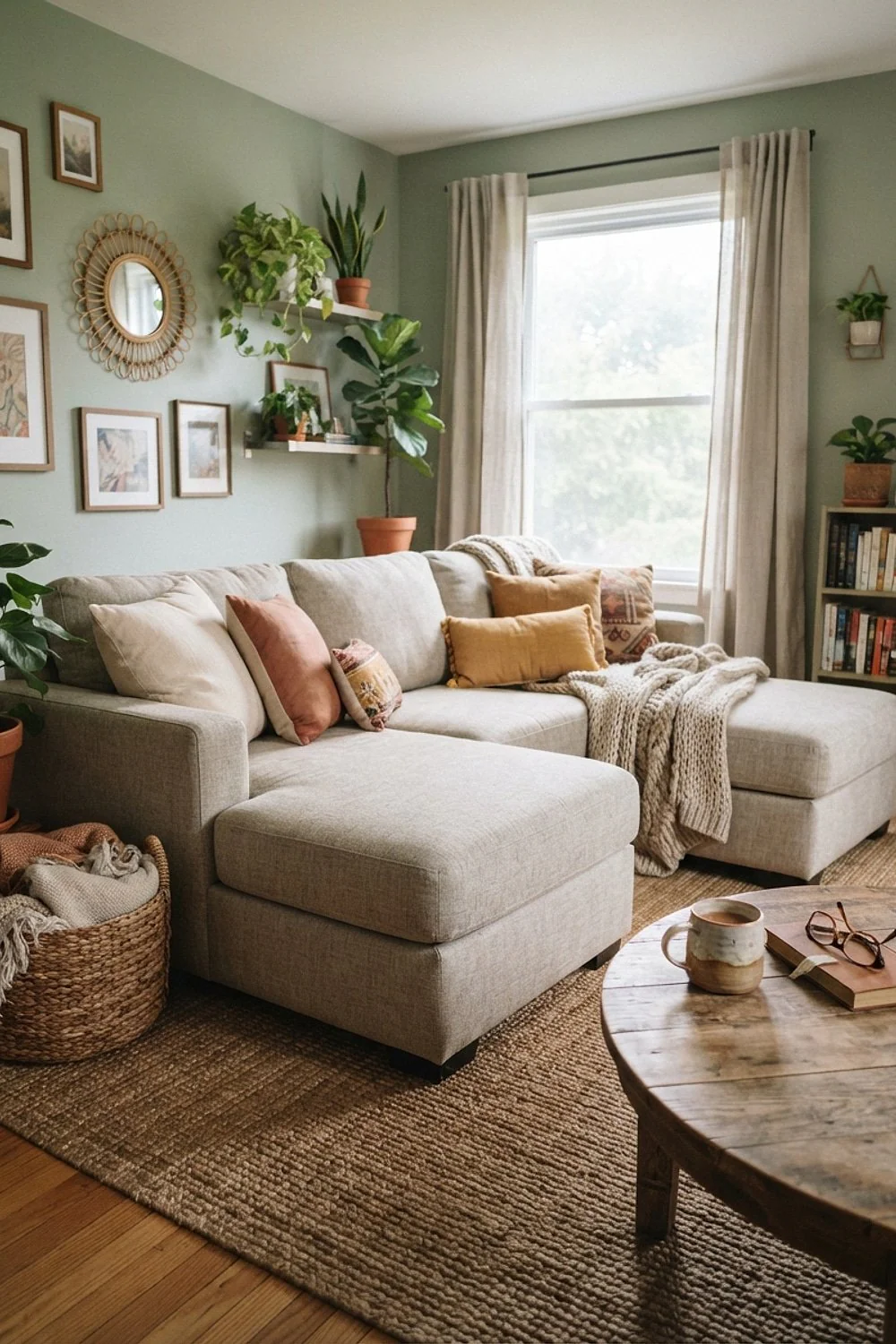
A wood or stone tray carries a candle and a small bowl, and that’s the whole display. Three objects start to read as a collection, and collections need dusting.
This is for anyone tempted to treat the ottoman as a shelf, and it works best on a low ottoman where the tray doubles as a stable surface for a drink.
Keep height variation to under 6 inches so the tray stays low and easy to move. A tall vase breaks that limit and tips the moment the tray is lifted.
16. No console table stuffed behind the sofa
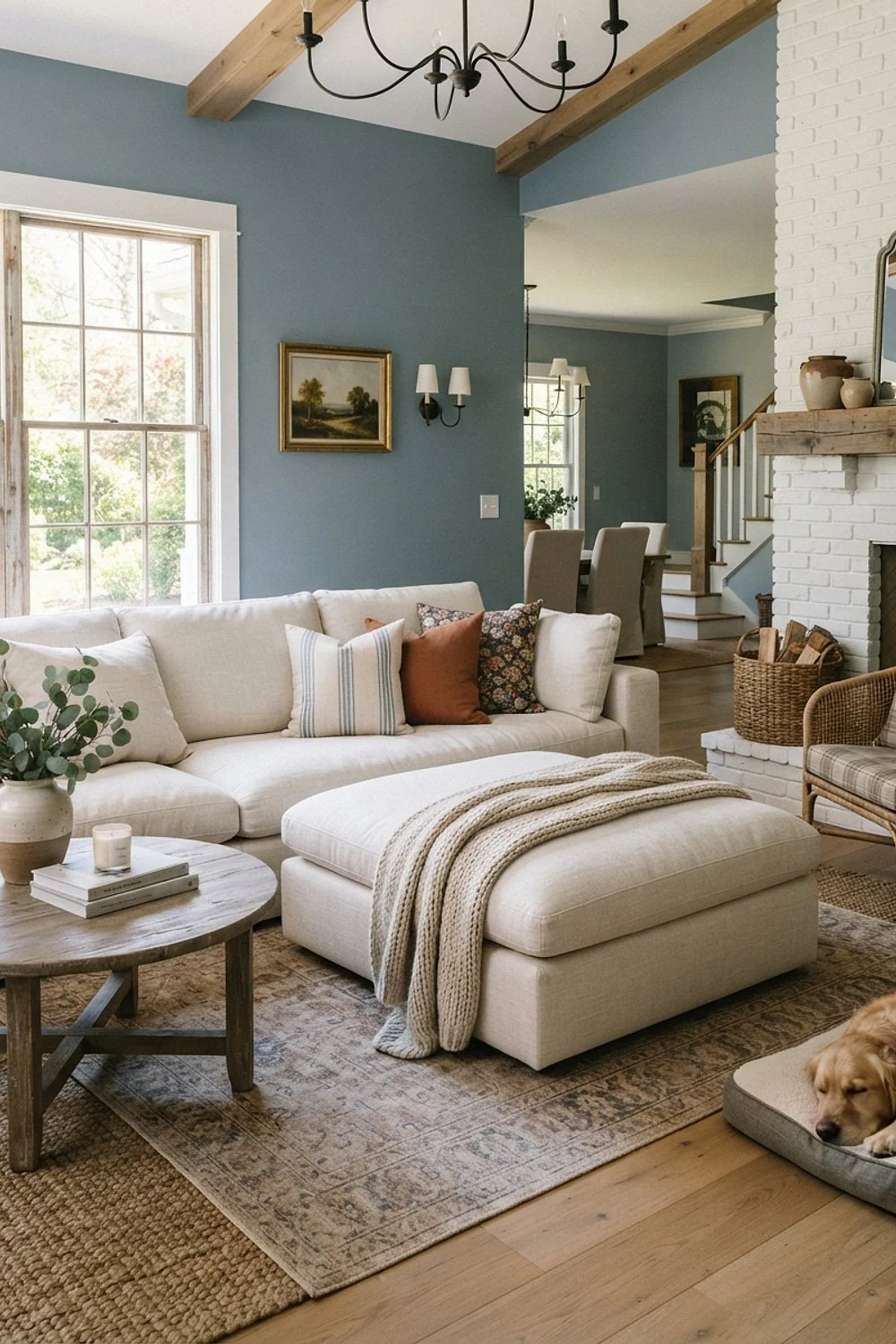
A console behind a floating sectional invites a row of framed photos, baskets and plants, and the back of the sofa becomes a display wall nobody asked for. Cut it.
If the room needs a surface, one narrow 10-inch ledge along the wall does the job. That keeps the sofa back clean from every angle, which matters most in open-plan rooms where the sofa is seen from behind as well as the front. Anything deeper becomes a landing zone for mail.
17. Cords gone, with one power strip hidden
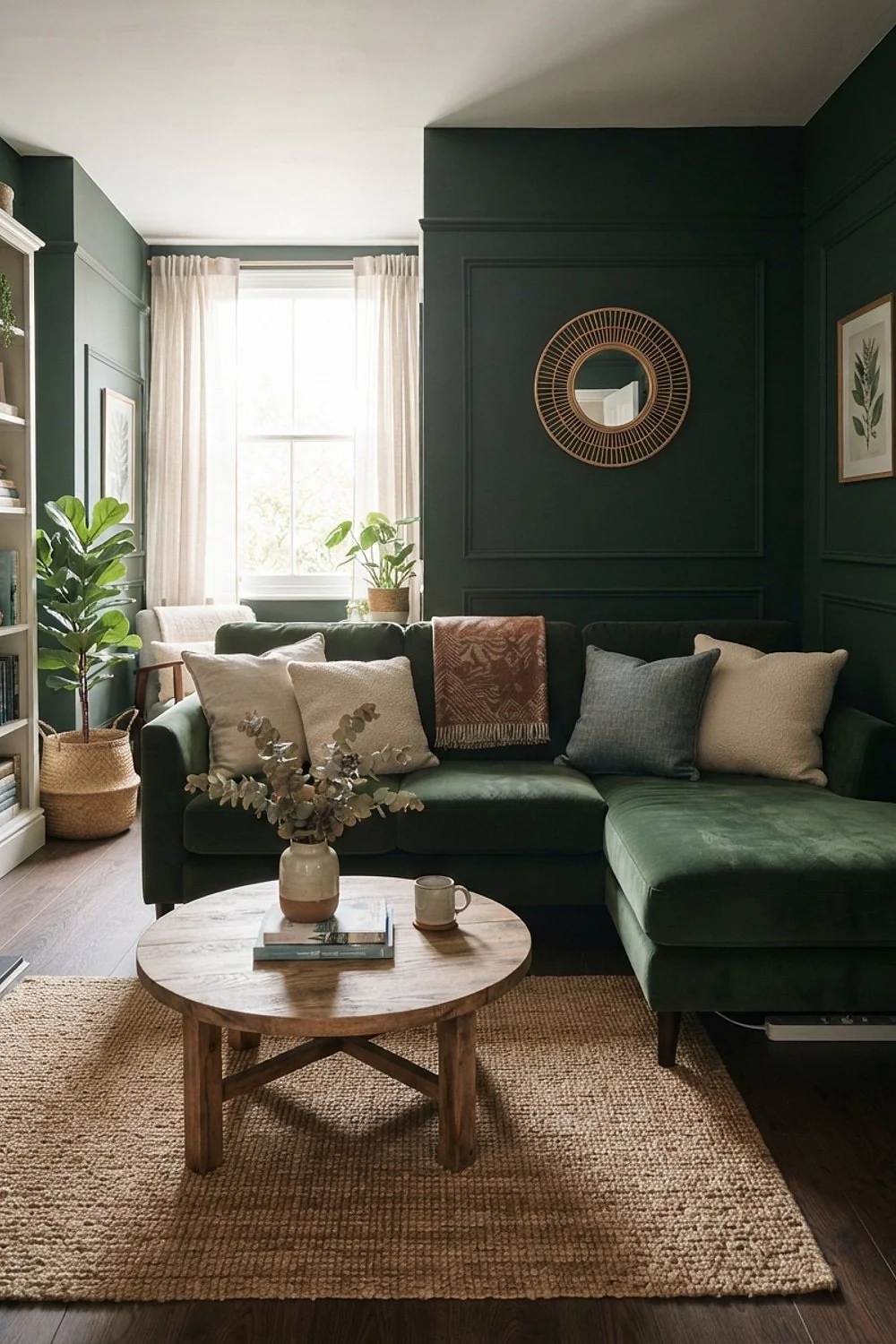
A flat cable cover in the wall color and a power strip tucked inside the ottoman remove the spaghetti of chargers. Visible cords are the cheapest way to make an expensive sofa look temporary.
For a sectional with built-in USB ports, route the cables down the back leg. Anyone sitting there will thank you the first time a phone hits 3 percent.
18. One lidded basket for blankets
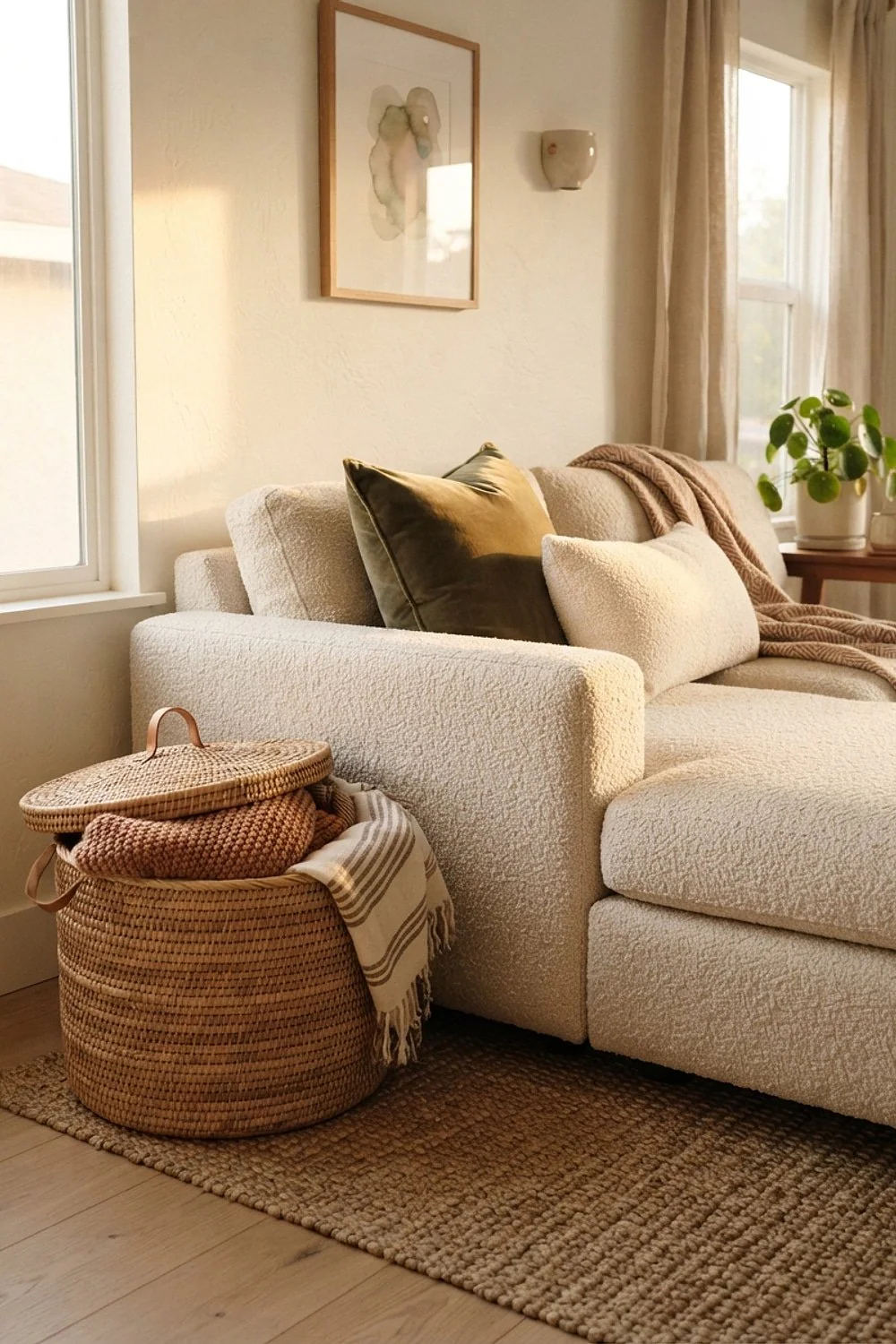
A 16-inch woven basket with a lid, around $60, holds the overflow throws and keeps them off the floor. A basket without a lid is just a new place for clutter to show. Check that the lid sits snugly, since a loose one slides off and defeats the point.
Put it beside the chaise, not at the corner. The corner is already taken by the side table, and a lid needs space to lift. In a household with frequent overnight guests, this is where spare bedding lives between visits.
19. One wood tone
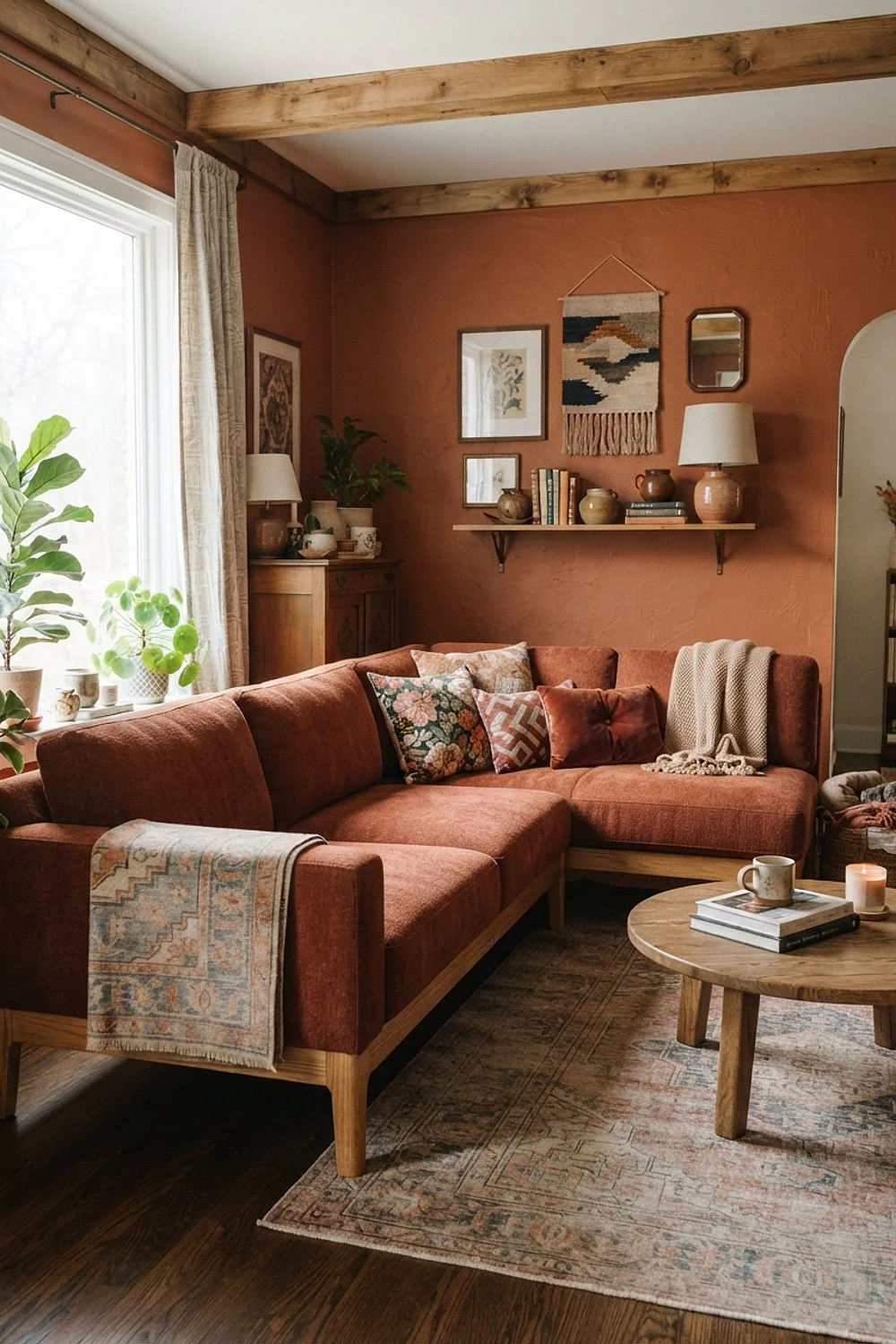
Oak, walnut and ash can all appear in a living room, but the zone around the sectional should hold only one. Matching the ottoman feet, side table and tray in the same wood quiets the whole arrangement.
Mixed finishes start to read as accidents beside a big plush upholstered form.
Anyone on a budget can start with the wood already in the room, such as the floor or a media console, and buy the small pieces to match it. Walnut against oatmeal is a combination worth repeating.
20. Back cushions re-stuffed, not replaced
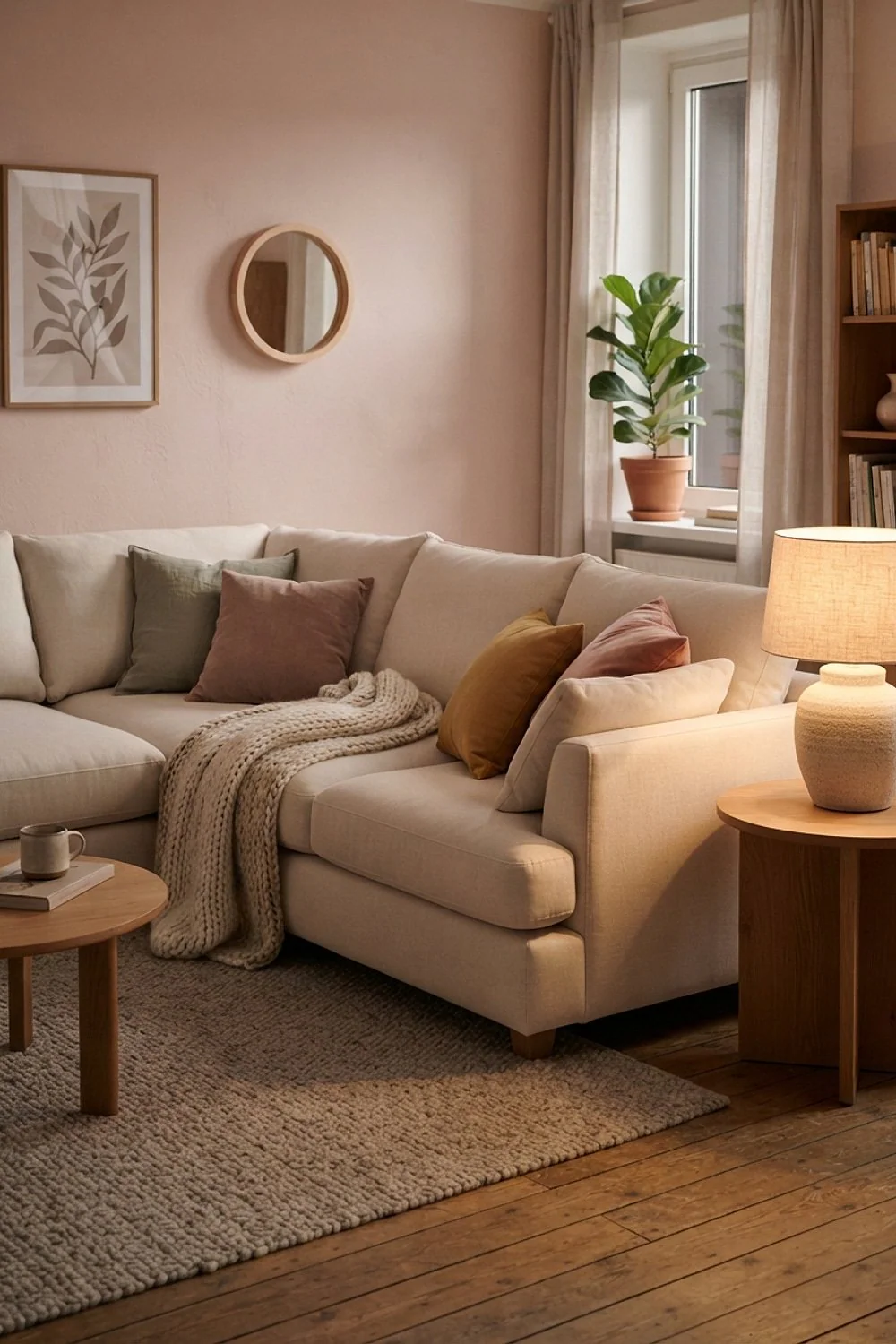
Sagging back cushions get a new life from a down-alternative wrap or a firmer insert, usually under $40 per cushion. A wrap suits cushions that are only slightly flat, while a firmer foam insert fits cushions that have collapsed completely. Fluffing them daily for about 20 seconds keeps the lines crisp.
This beats buying more pillows to prop things up. A plush sofa should look soft but still hold its shape. Measure the cushion cover first, because an insert more than an inch too large will strain the seams.
21. One large piece of art, two-thirds the sofa’s width
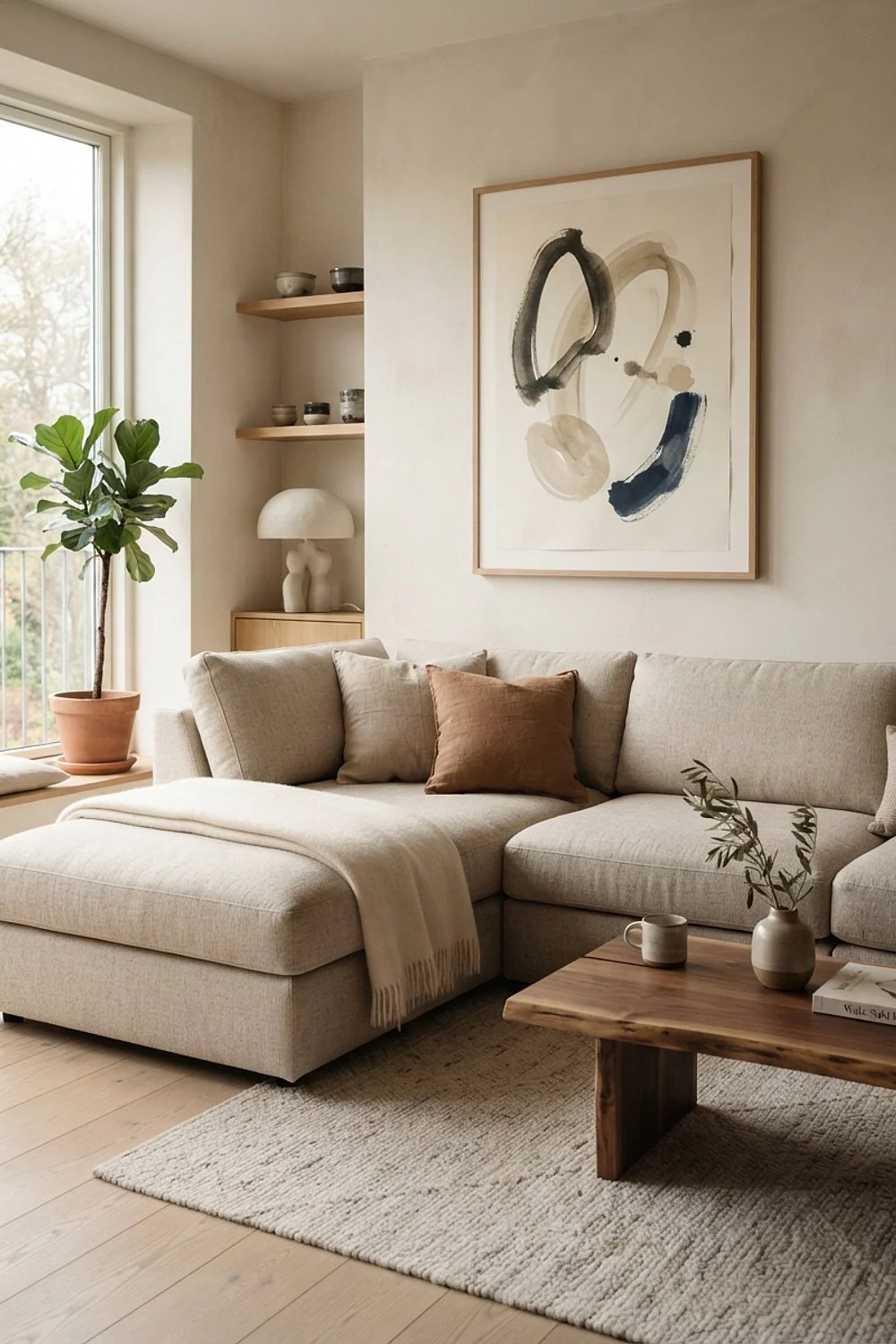
Above a 120-inch sectional, a single 60 to 80 inch wide piece of art in a thin frame beats a gallery wall. Hang it so the bottom edge sits 8 to 10 inches above the back cushions, with a mat to calm the edges.
Small prints above a big sofa look lost. If the budget is tight, a framed fabric remnant or a large print at a copy shop can fill that role for well under $100.
22. A single black accent
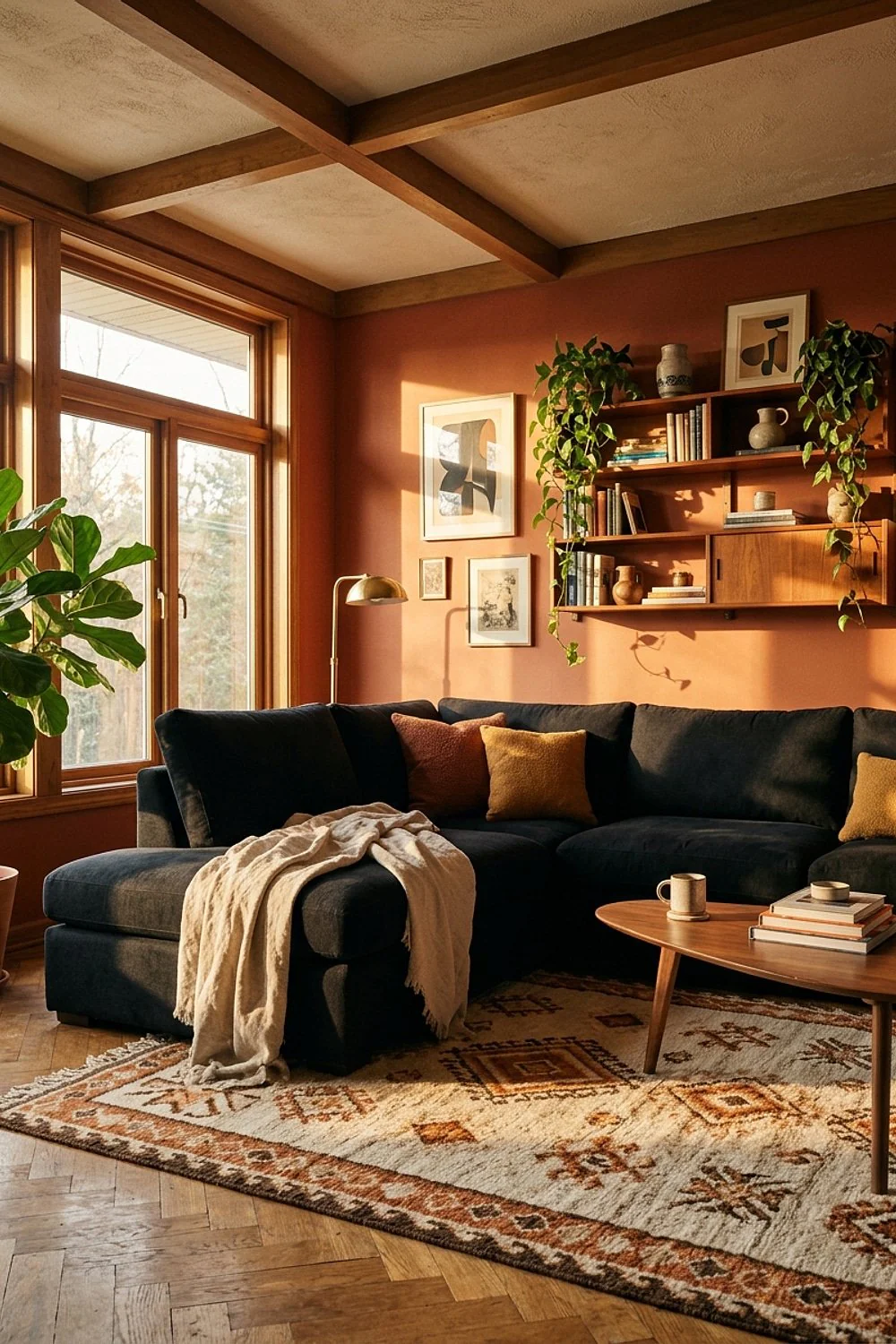
One thin black metal lamp base or a black picture frame gives the neutral palette a point of contrast. Everything else stays in the cream-to-tan range. This suits rooms where cream, oat and tan can look washed out, especially north-facing rooms with cool light.
The trap is repeating black four times and ending up with a hotel lobby. One dark note is enough to anchor a soft palette. Thin lines work better than heavy ones, because a bulky black piece pulls attention away from the sofa.
23. A side table the same height as the arm
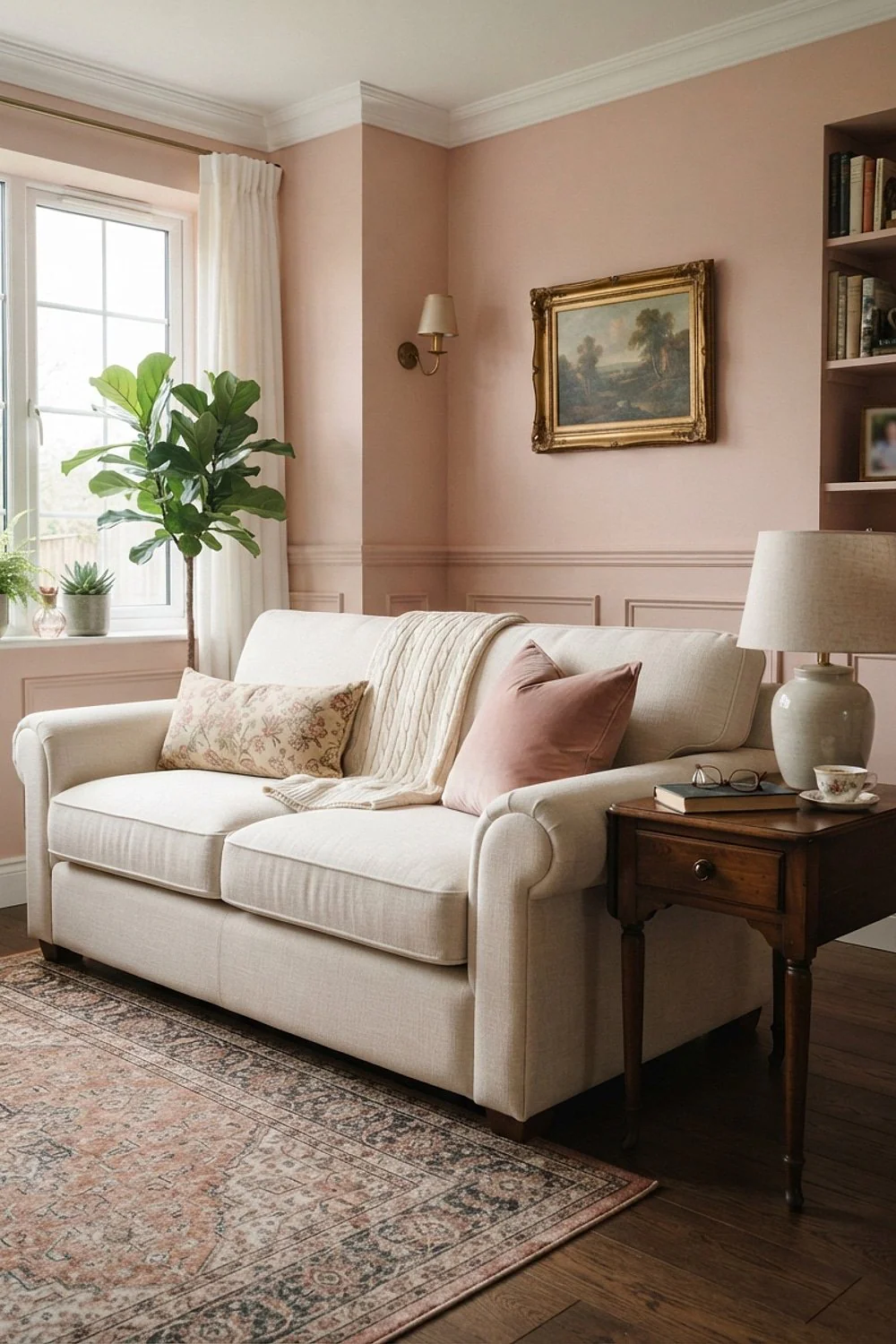
Most sectional arms land between 24 and 28 inches high. A side table within an inch or two of that height lines up as a clean horizontal, and a drink never has to travel uphill.
Measure before buying, since the pillowed arms on plush sofas often run taller than catalog photos suggest. A table that’s 4 inches too short looks like a mistake.
24. Linen curtains hung 4 inches below the ceiling
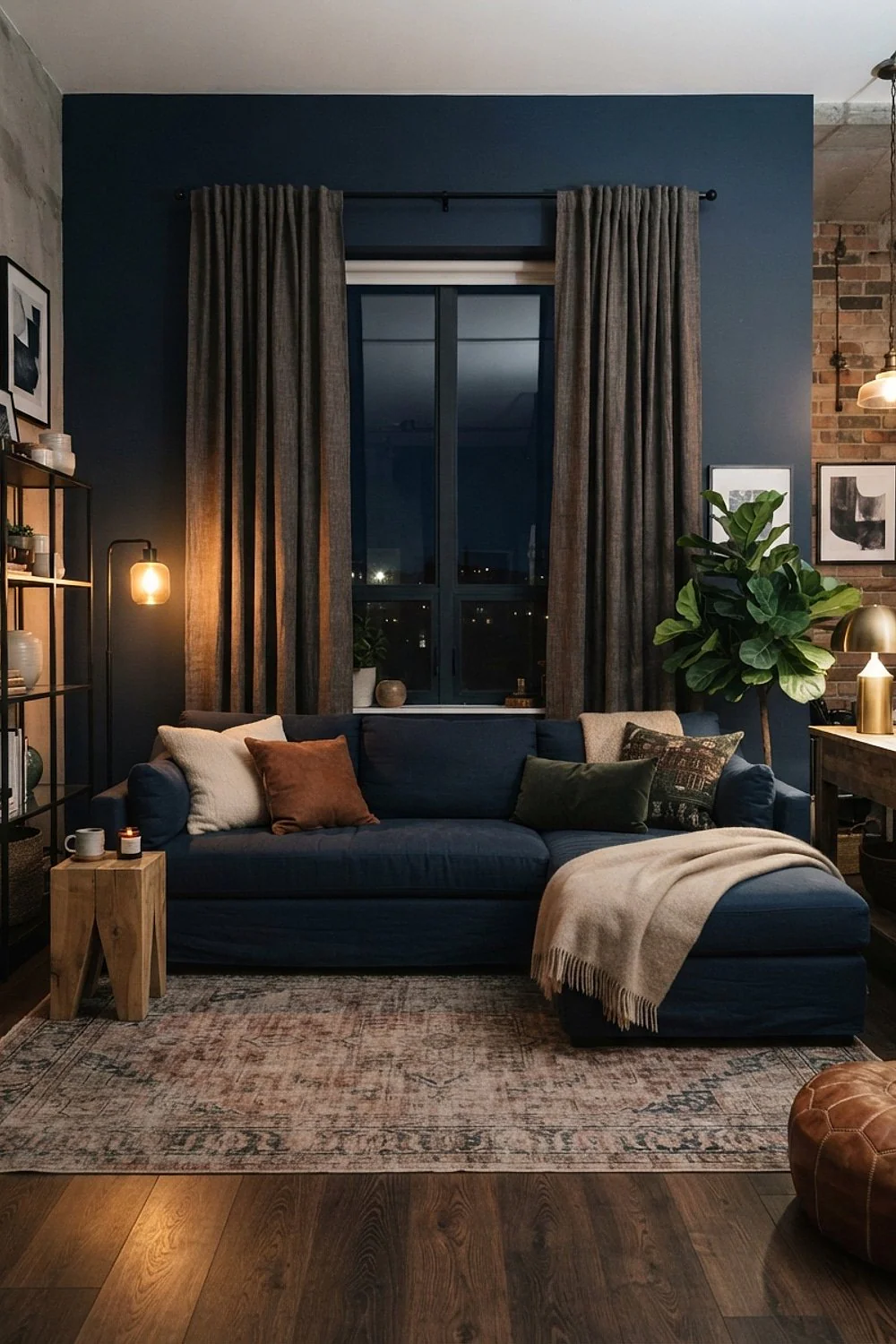
Floor-to-ceiling linen panels in a pale oat shade filter the afternoon sun instead of blocking it. At 4pm the light turns the sofa fabric a soft gold, which is the best the room will ever look. This suits west-facing rooms and rooms with short windows, where the extra height makes the window look taller.
Hang the rod near the ceiling, about 4 inches below it, not just above the window frame. A low rod chops the wall into two awkward bands.
25. A visible stretch of empty arm
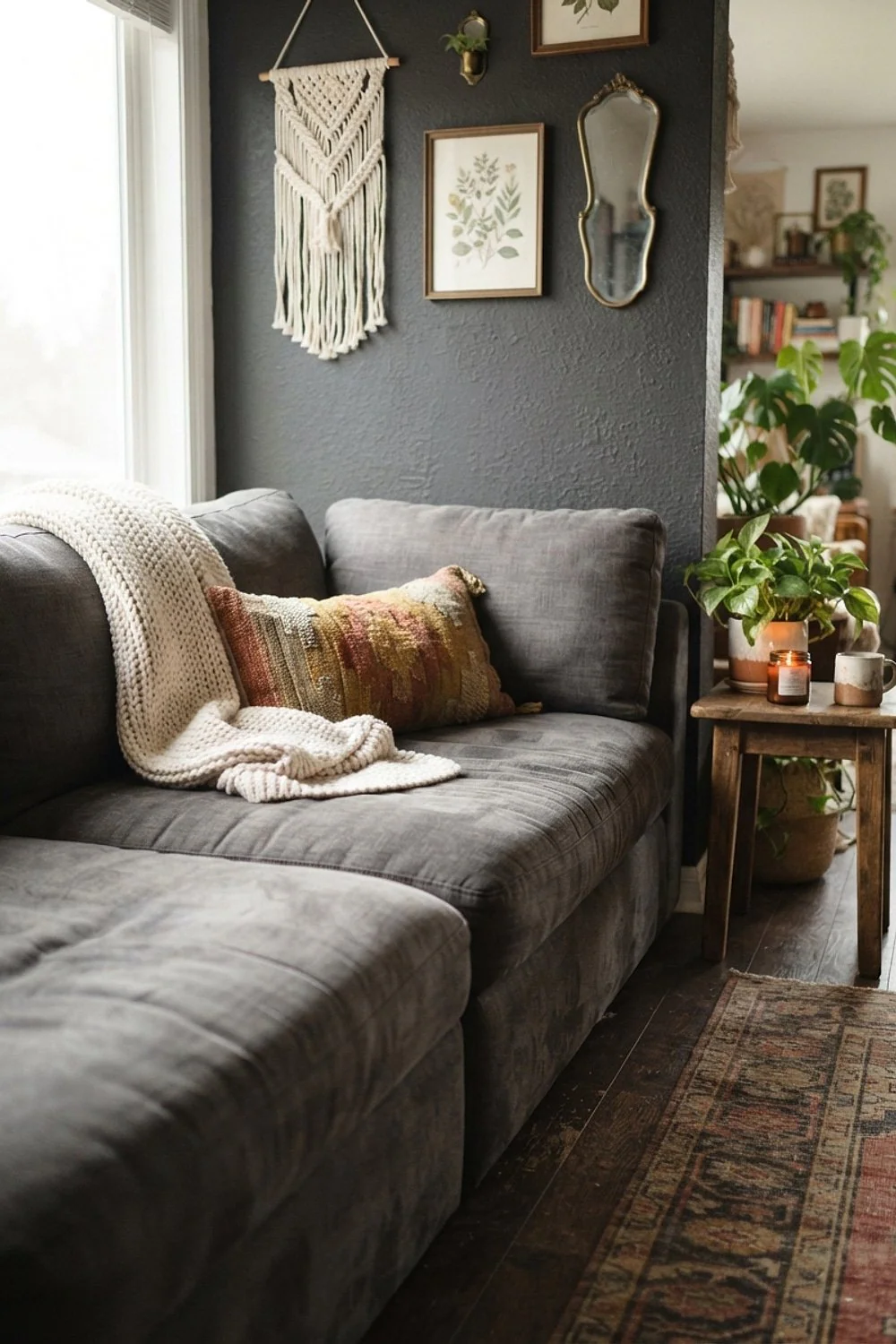
Leave one arm of the sectional completely bare. No tray, no book, no pillow, nothing. That empty stretch tells the eye where to rest.
Negative space is the least intuitive tool on this list, and it’s the one that makes the other 24 look deliberate. It costs nothing, so it suits any budget, and it matters most in small rooms where every surface tempts a decoration. Choose the arm farthest from the side table. Resist filling it, even when guests arrive.
Things that elevate the room
Plush sectional sofa styling gets easier once the obvious offenders leave the room. Start with the things that carry no function and offer no comfort.
- Decorative pillows beyond the fifth one
- Any second throw blanket on the sofa itself
- Small side tables squeezed in at the chaise end
- Trays holding more than two objects
- Visible cords and remote clutter
Pull these out in one sitting, then leave the room alone for a few days. Two weeks into the edit, the gaps stop feeling like missing pieces and start to feel like space.
Here’s the counterintuitive part: a plush sofa looks softer with fewer soft things around it. Crowding it with textiles flattens the contrast that makes the upholstery stand out.
The finishing touches
Plush sectional sofa styling can tip into showroom territory if every surface is cleared. The fix is warmth from materials, not from objects.
Choose wood with a visible grain, a wool rug with a little weight, and bulbs at 2700K. Add one living plant, such as a 24-inch fiddle leaf or a rubber plant, in a matte ceramic pot.
Real life is the stress test. A sectional that survives a Friday movie night with kids, a dog and a spilled drink needs washable covers, a flat-weave rug and a basket for the chaos. Anything fragile gets dropped from the list.
Keep one personal object in view, such as a single framed photo or a ceramic bowl from a trip. It’s not foolproof. But it works.
Bringing It Together
Plush sectional sofa styling comes down to a few decisions repeated with discipline: fewer pillows, one palette, one light source and a lot of empty floor. The sofa already provides the comfort, so the rest of the room only has to stay out of its way.
Save or pin this list so it’s handy when the editing starts. Begin with number 1: tape the footprint on the floor and measure the walkways before buying or moving anything.
Frequently Asked Questions
How many pillows should a plush sectional have?
Five is a workable ceiling for a standard 110 to 125 inch sectional. Two per end plus one lumbar at the corner keeps the sofa inviting without crowding the seats. Fewer is fine if the household naps on it often.
Does plush sectional sofa styling work in a small living room?
Yes, with adjustments. Keep a 30-inch walkway, skip the side table at the chaise, and pull the sofa flush to the wall if the room is narrower than 11 feet. One light-toned rug and pale walls will keep the room from feeling swallowed.
What color rug goes best under a cream sectional?
A flat-weave rug in sand, oatmeal or a muted taupe is the safest choice. It keeps contrast low and hides crumbs better than white. Avoid heavy patterns, which compete with the sofa’s texture.
How do I keep plush sectional sofa styling from looking boring?
Vary texture rather than color: bouclé, linen, wool and wood in the same palette. One dark accent, like a black lamp base, gives the eye a focal point. The goal is calm, not blank.


One Comment