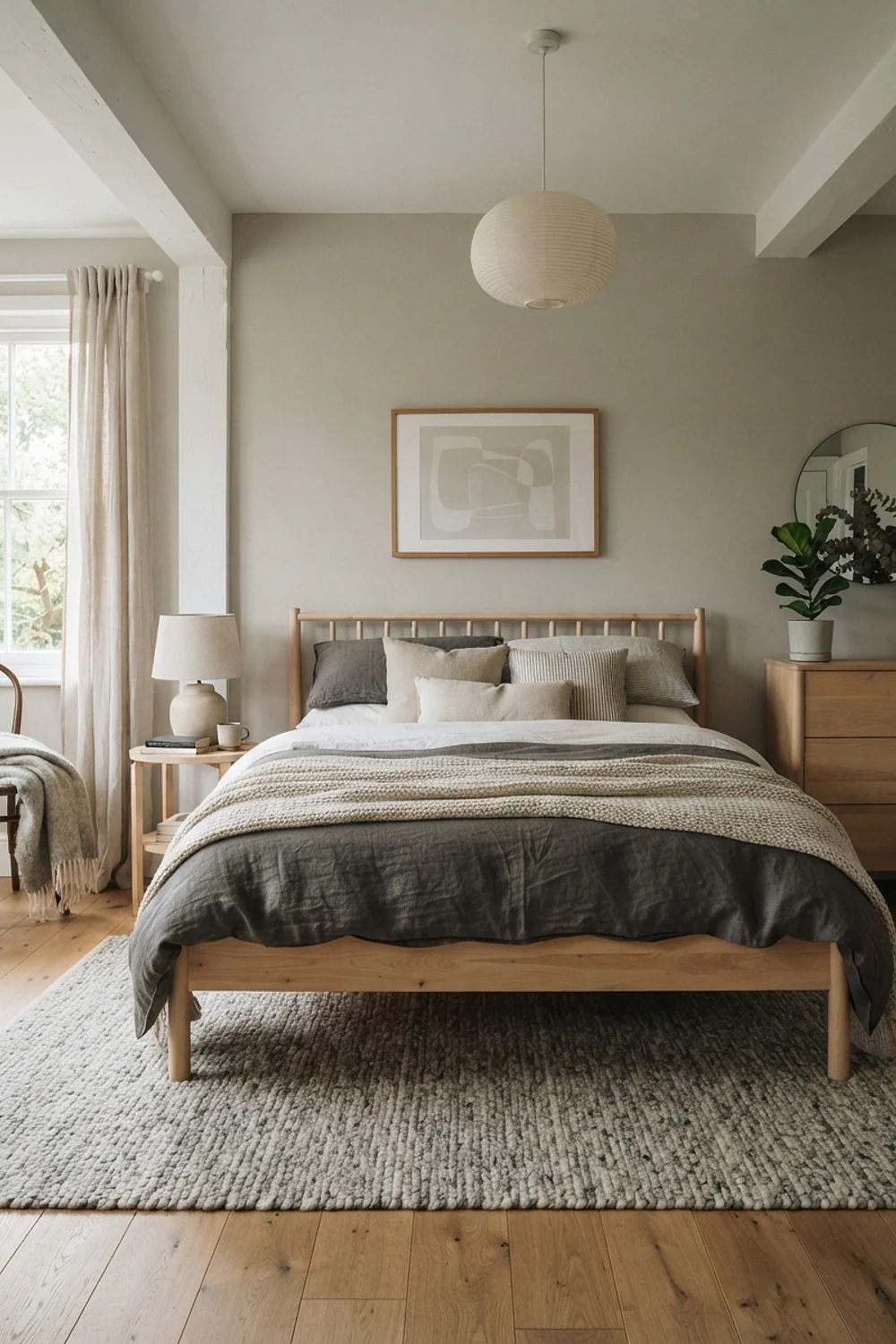
21 Master Bedroom Decor Ideas for Renters
Most renters assume a finished bedroom needs a fresh coat of paint and a few drilled shelves, but the best master bedrooms decor comes from things that lean, drape, plug in, or peel off cleanly. A 60-by-80-inch queen bed already takes up about 33 square feet, so what surrounds it matters more than any single wall.
This list is 21 removable fixes, sorted from the biggest visual wins to the small finishing details. Every one can be undone in under 10 minutes, and none of them needs a drill.
Master bedrooms decor without losing your deposit
Start with the biggest surfaces: the wall behind the bed, the floor beside it, and the headboard zone. These four ideas change how the room reads from the doorway, which is where first impressions of a bedroom actually happen.
1. A headboard that bolts to the bed frame
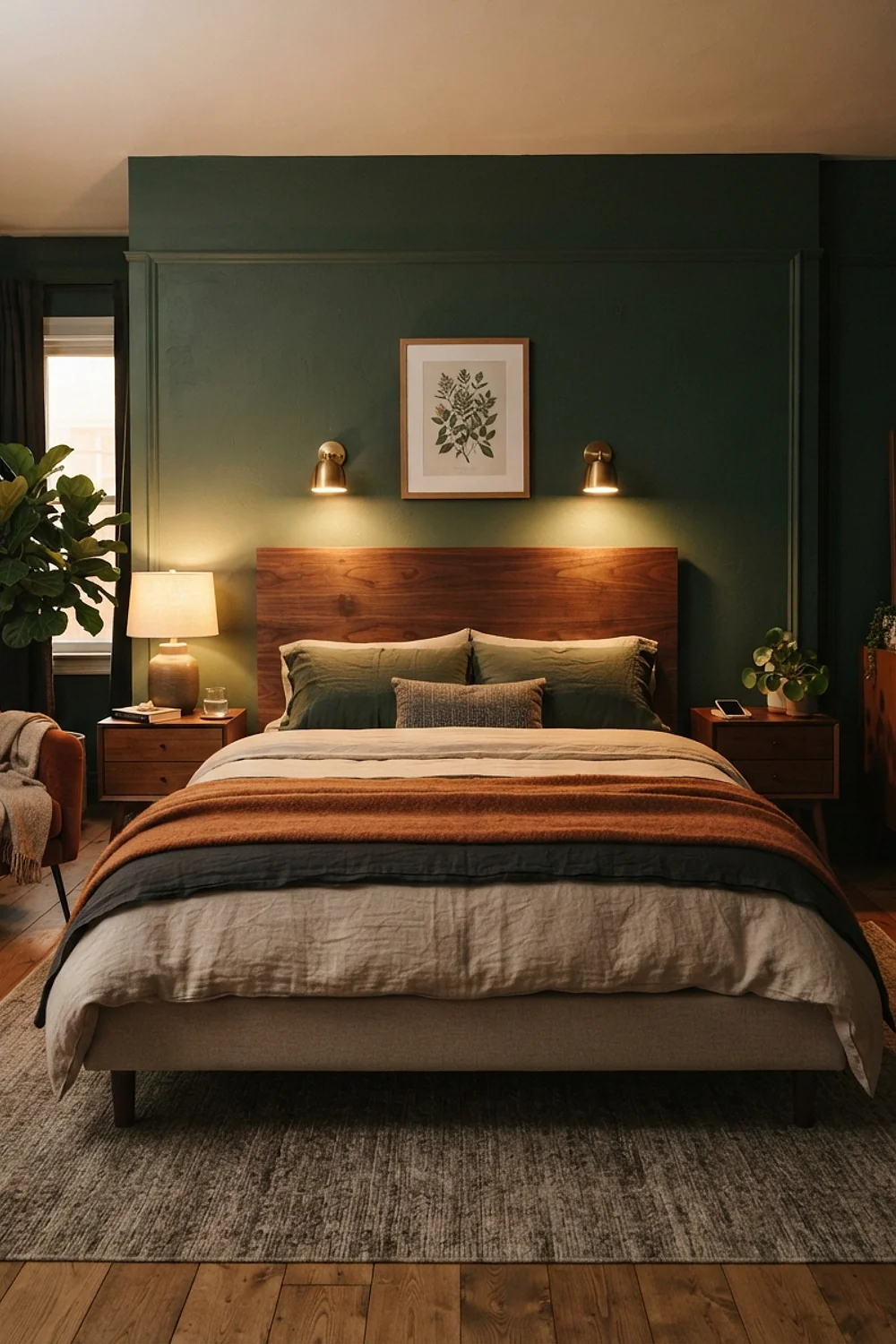
Many freestanding upholstered headboards attach to the metal bed frame with two or four bolts, so the wall stays untouched. A 60-inch-wide headboard standing 48-54 inches tall gives a queen bed a proper backdrop without any mounting.
This suits renters with a standard rails-and-slats frame. Check the bolt-hole spacing before buying, because frames vary, and measure the gap between mattress and wall so the headboard doesn’t leave the bed sitting 3 inches out into the room.
2. Peel-and-stick wallpaper on one wall only
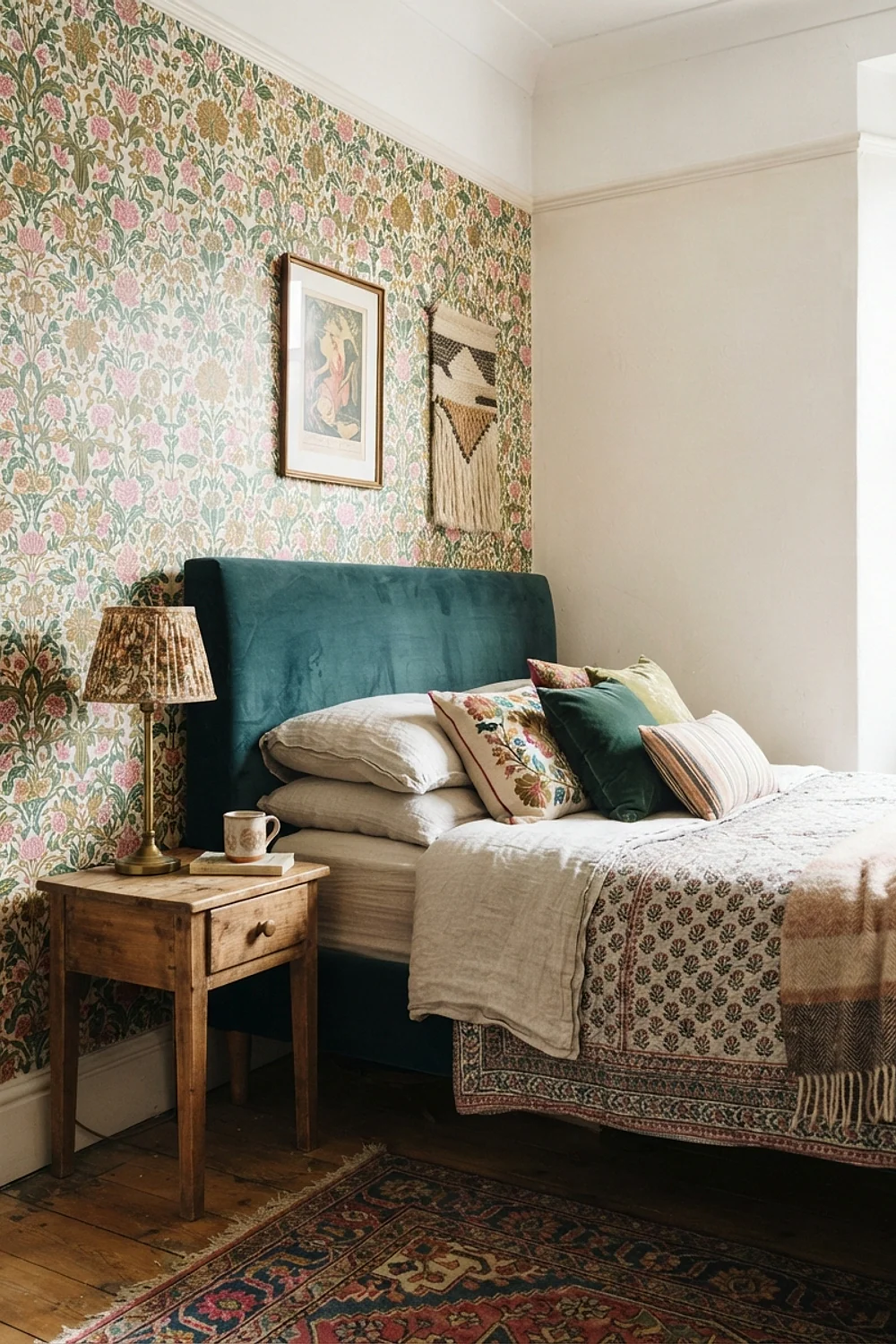
Three 20.5-inch-wide panels of removable wallpaper, from brands like Tempaper or NuWallpaper, cover roughly 5 feet of wall behind a bed. That’s enough to frame the headboard without turning the room into a commitment.
Test a 12-inch scrap in a closet corner first. Flat or eggshell paint releases the adhesive cleanly, while a textured or cheap matte finish can lift paint on removal, and that’s a deposit problem.
3. A leaning floor mirror, 65 inches tall
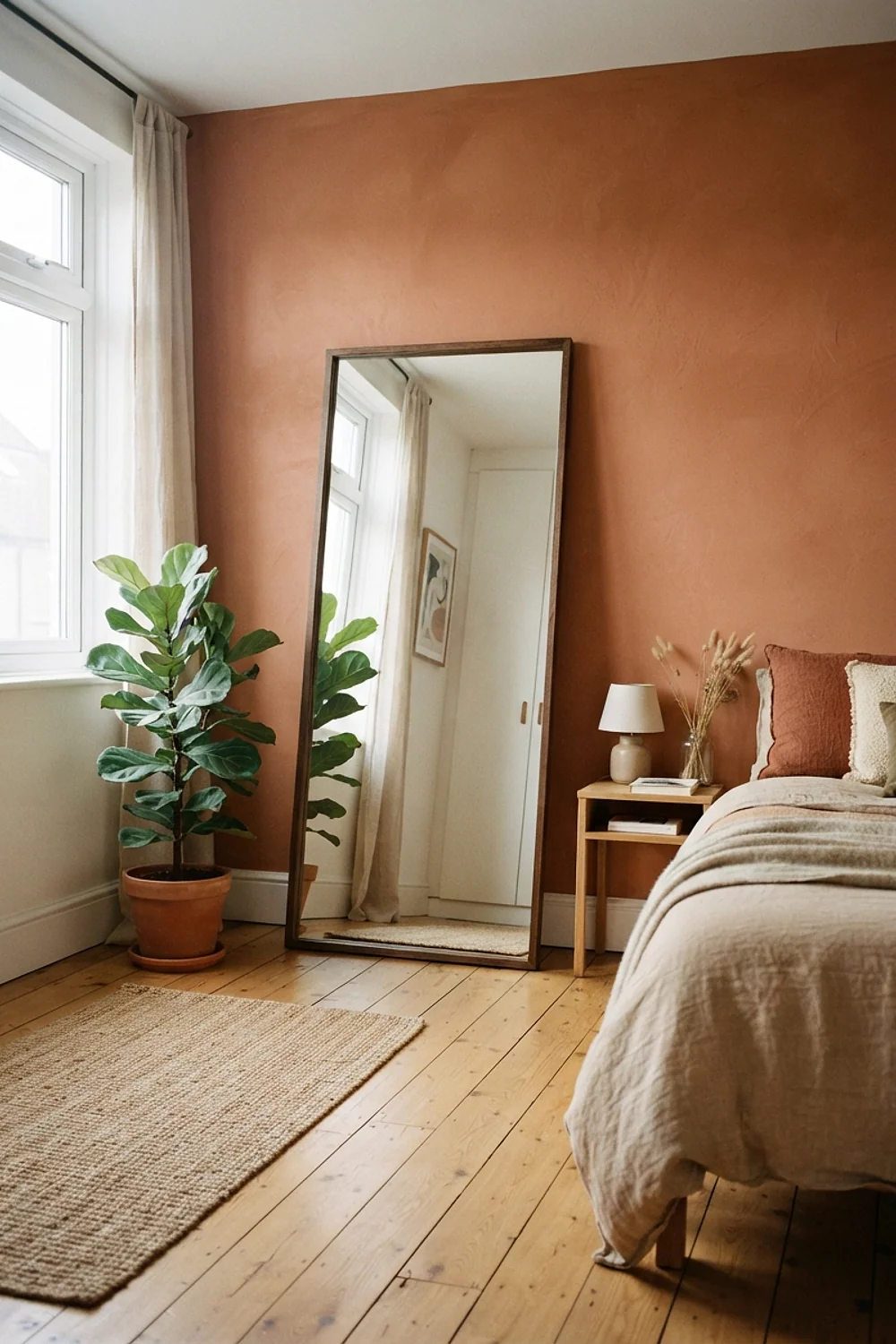
A mirror around 65 by 22 inches, leaned against the wall at a slight backward angle, doubles the light from a single window. At 4pm on a February afternoon, it throws a long pale rectangle across the floor that no lamp can fake.
Put a felt pad or rubber stopper under the bottom edge so the glass doesn’t slide on hardwood. And keep it away from the bedside, since a mirror that faces the bed pulls the eye straight to unmade sheets.
4. An 8-by-10 rug that reaches past the nightstands
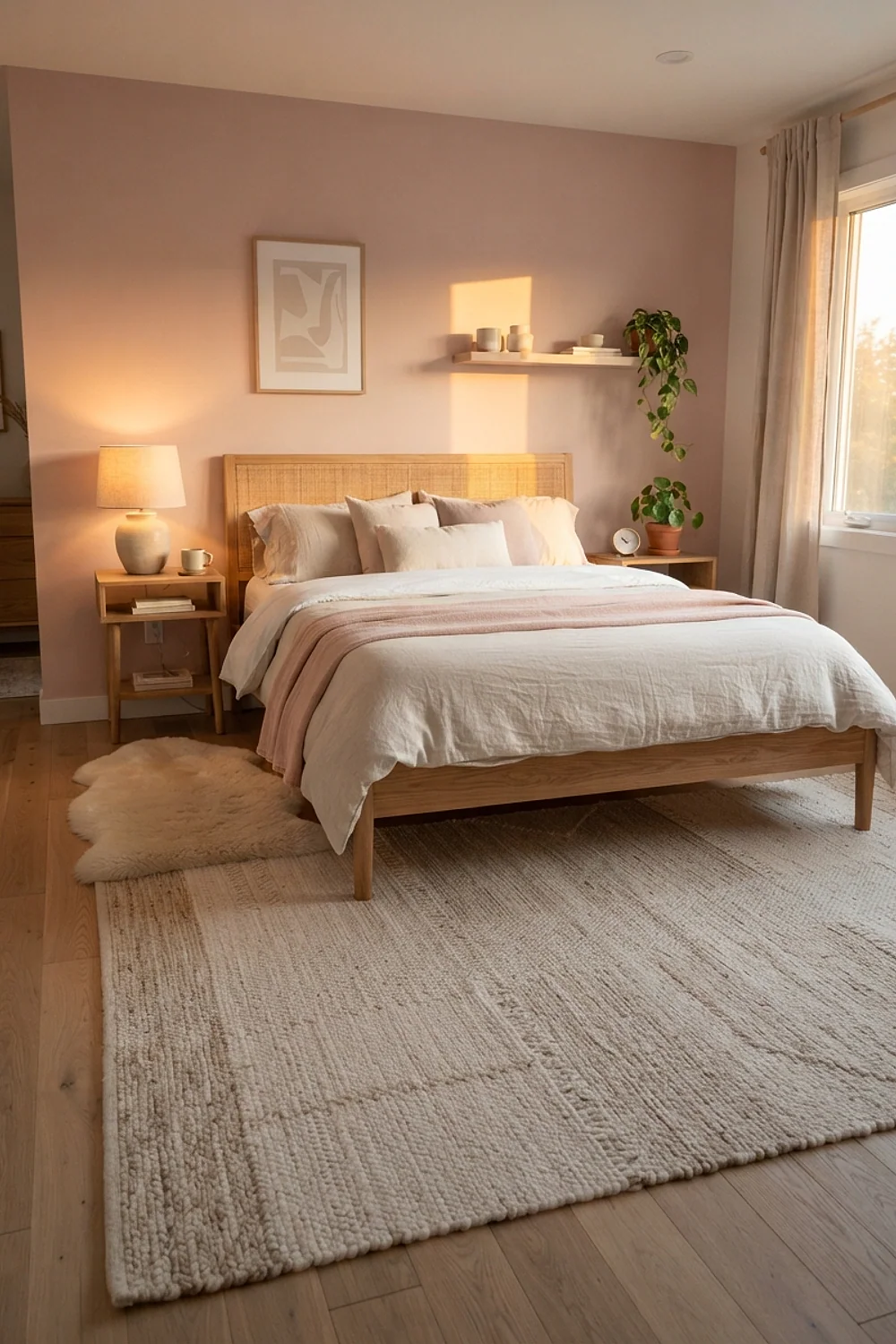
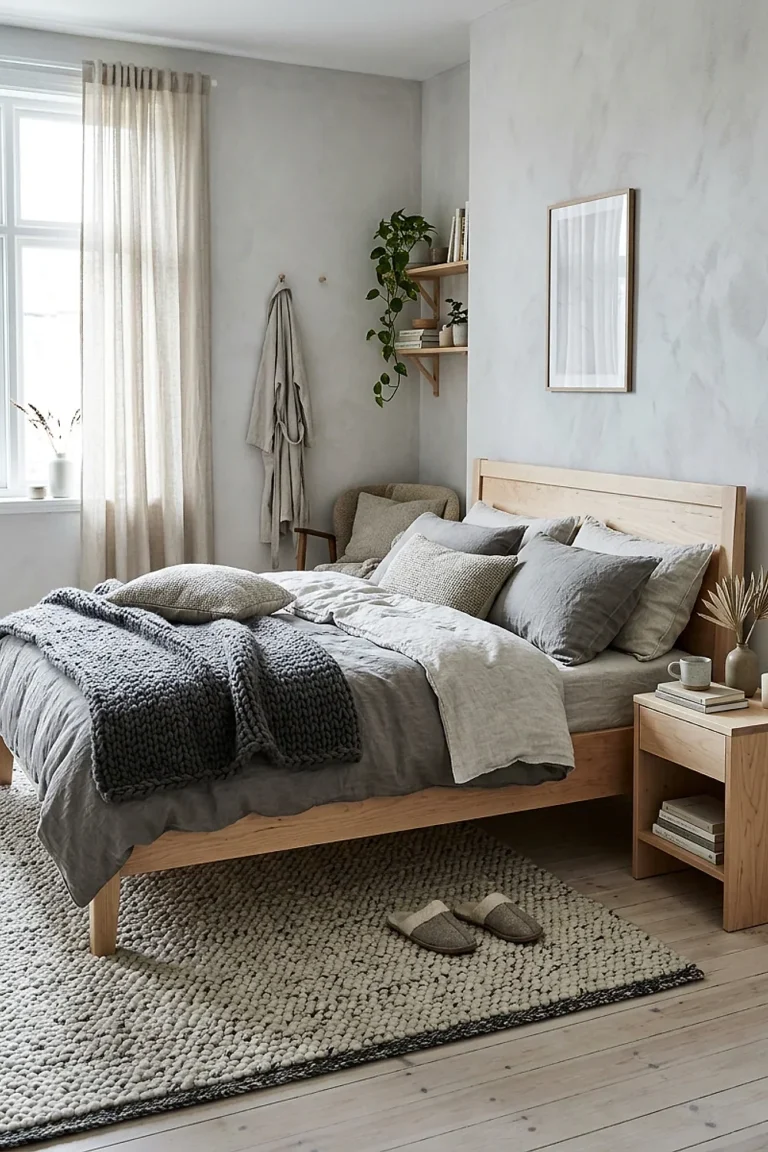
An 8-by-10 rug under a queen bed leaves about 18 inches of rug on each side, enough for bare feet to land on wool, not cold floor. Slide it so the bottom third of the bed sits on it, which keeps the layout from looking floaty.
The common mistake is buying a 5-by-8, which makes the room look smaller by comparison. A flatweave with a thin non-slip pad also won’t catch the door, and it costs less than a plush shag.
Bedding and soft layers that do the heavy lifting
Master bedrooms decor lives or dies in the textiles, since the bed is the largest object in the room. These five ideas cost nothing in deposit terms and move with you when the lease ends.
5. A 90-by-90 duvet on a queen bed
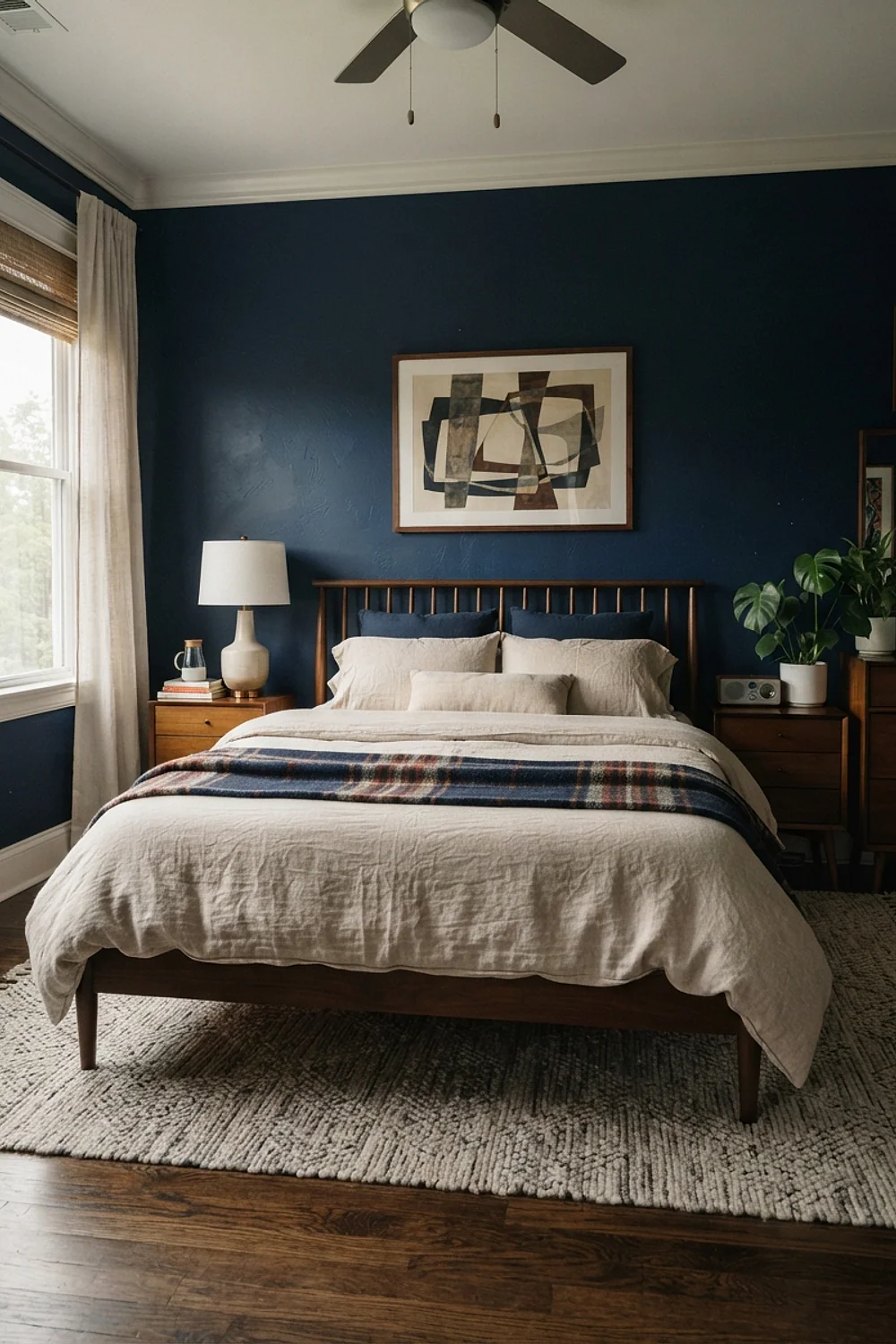
A duvet cover sized 90 by 90 inches hangs 12-14 inches past the mattress edge on each side, hiding the frame and reading as generous instead of tight. Linen and washed cotton hold that drape better than slick microfiber.
This works for any renter with a mismatched or builder-grade frame. Pick one color, such as oatmeal or deep olive, and let the texture carry the interest.
6. Euro shams standing at the back
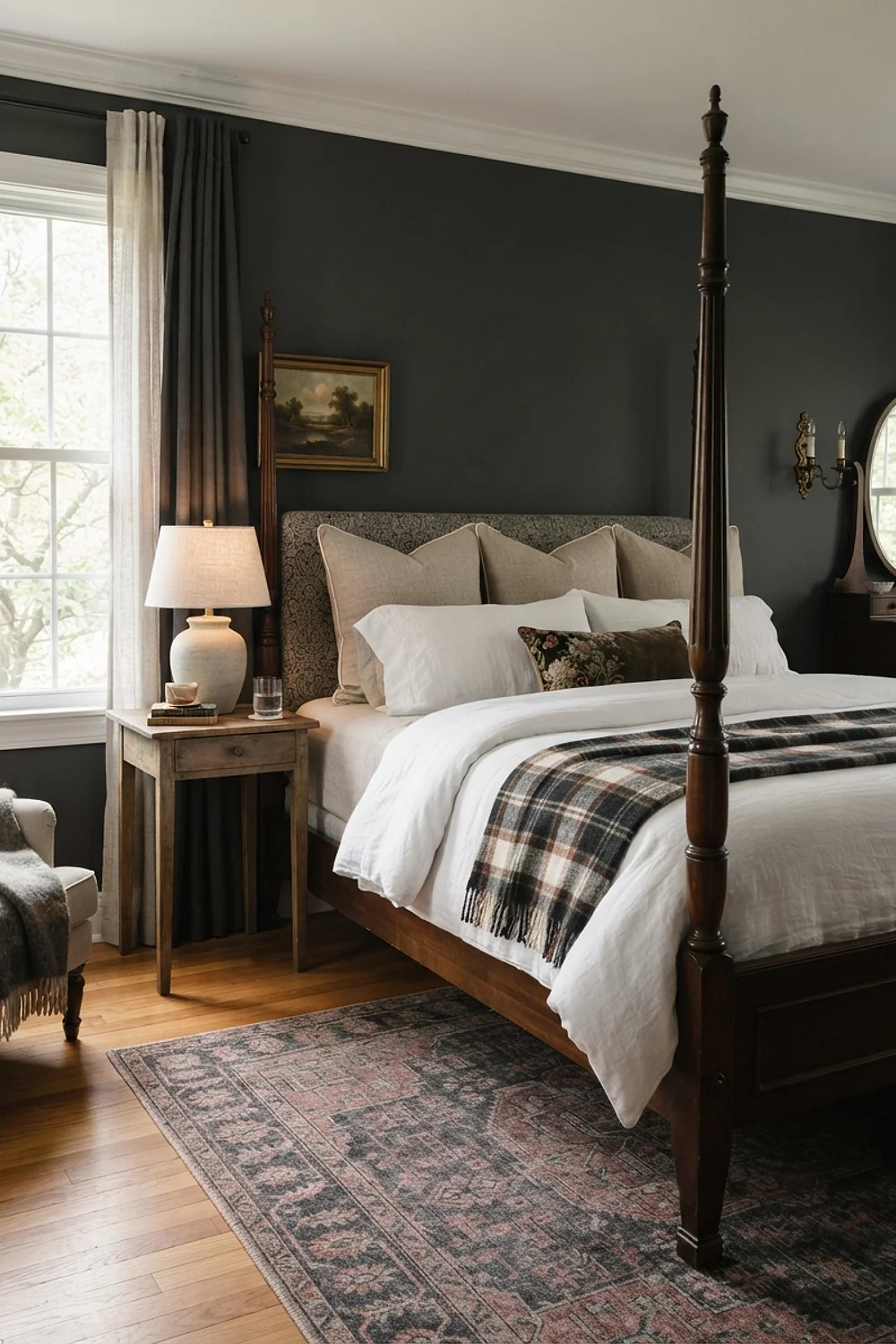
Two 26-by-26-inch Euro shams propped against the headboard fill the gap between pillow and wall. They give a bed height, which matters most when the headboard is short or missing, because the shams create a soft backrest where the wall would otherwise show.
This suits anyone who makes the bed daily and wants a hotel look without a lot of fuss. Skip the pile of eight decorative cushions. Two shams, two standard pillows, and one 12-by-20 lumbar is enough, and it takes about 30 seconds to remake each morning.
7. A heavy throw folded in thirds
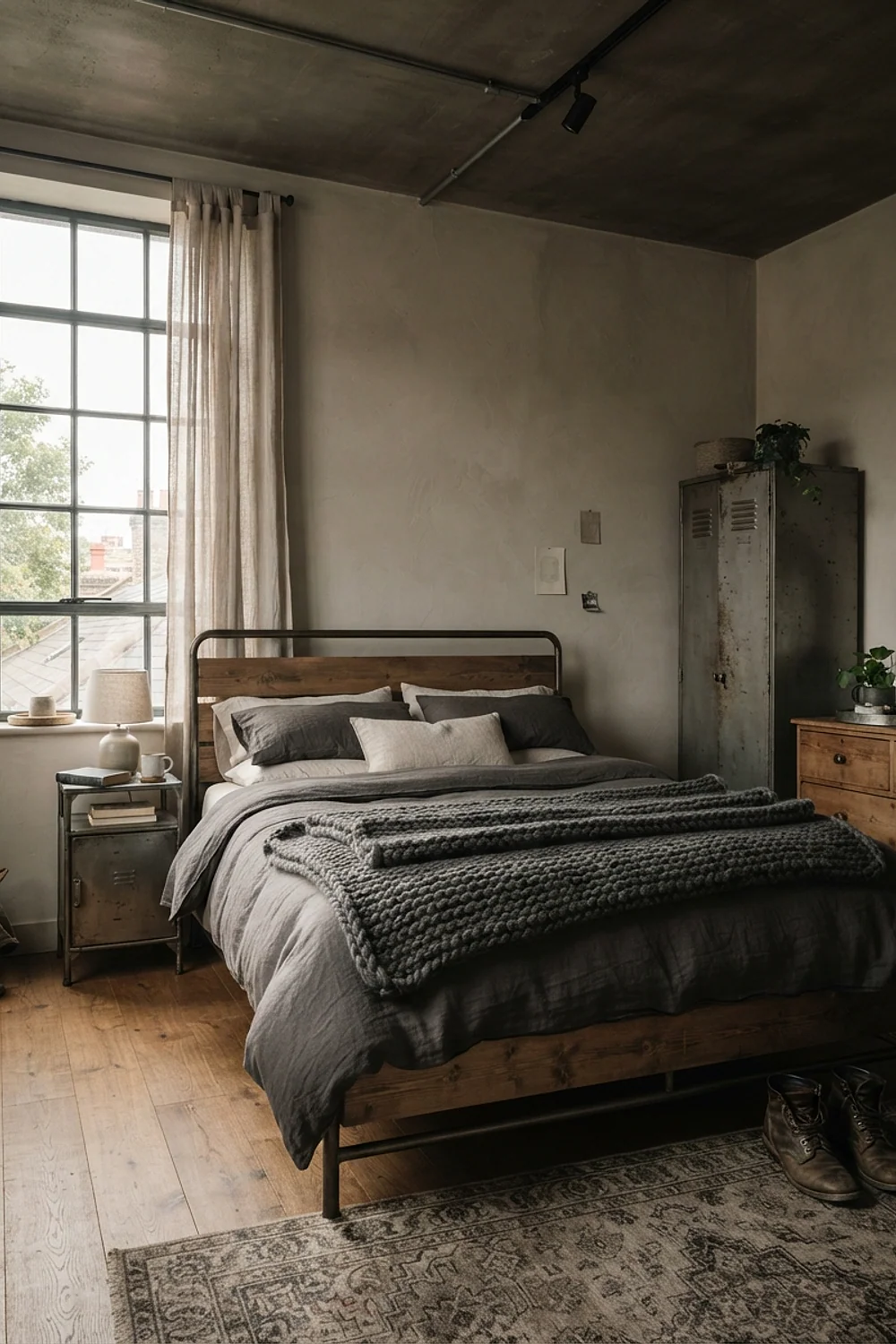
A chunky knit or boucle throw, about 50 by 60 inches, folded in thirds across the bottom quarter of the bed, adds a second texture where the eye lands first. Wool weighs roughly 3 pounds, which is why it stays put.
Choose a color two shades off the duvet, not an exact match. Same-tone layers photograph flat and look flat in person too.
8. Curtains on a tension rod inside the window frame
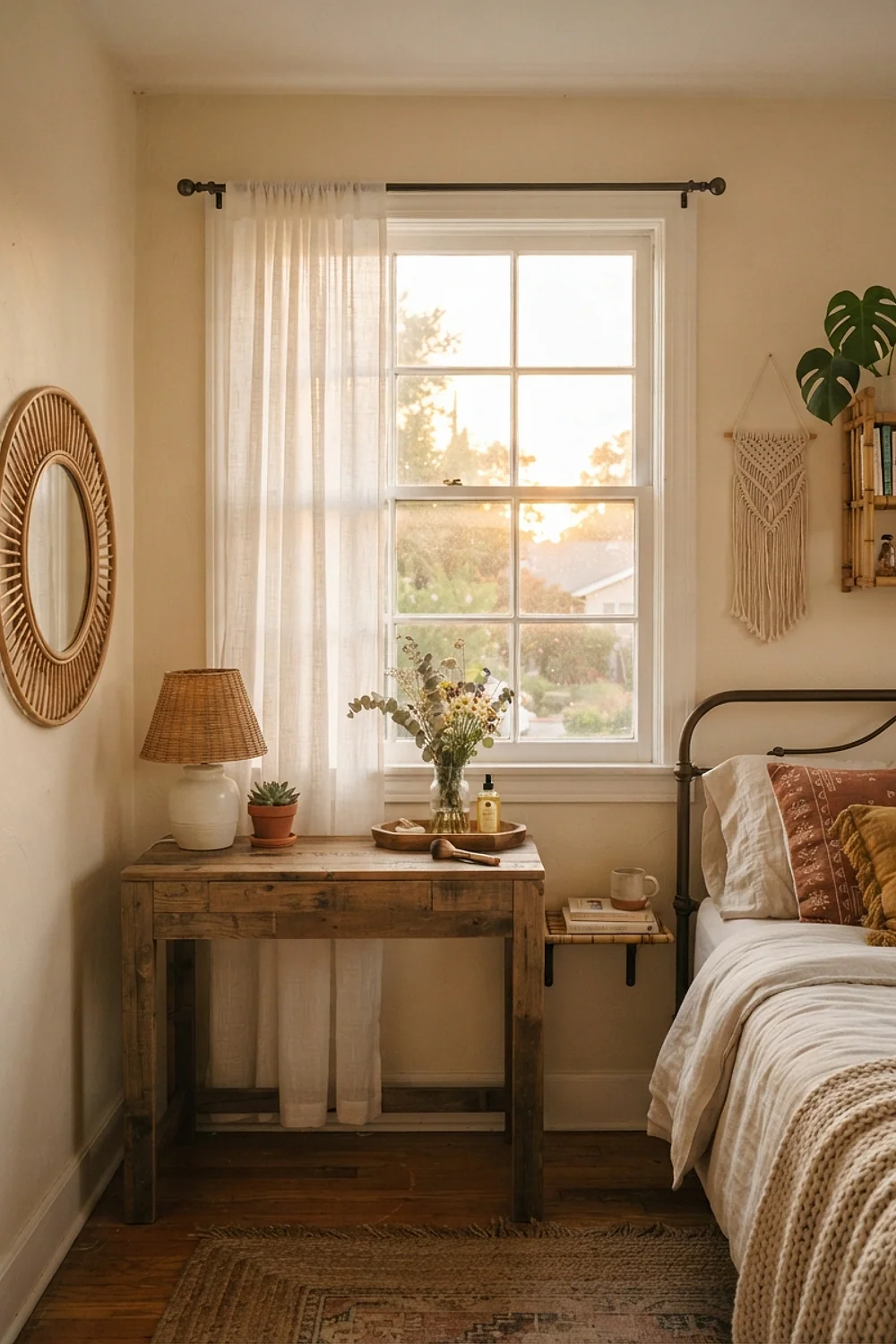
A tension rod, adjustable up to about 120 inches, holds curtains inside a recessed window frame without a single bracket. Hang panels to the floor with a 1-inch gap, and use clip rings so the fabric slides freely.
Tension rods sag under heavy lined drapes past 60 inches wide, so add a center support or pick a rod with a 1-inch diameter. Check that the frame is solid wood or metal, since drywall returns won’t hold the pressure.
9. A blackout liner behind lighter curtains
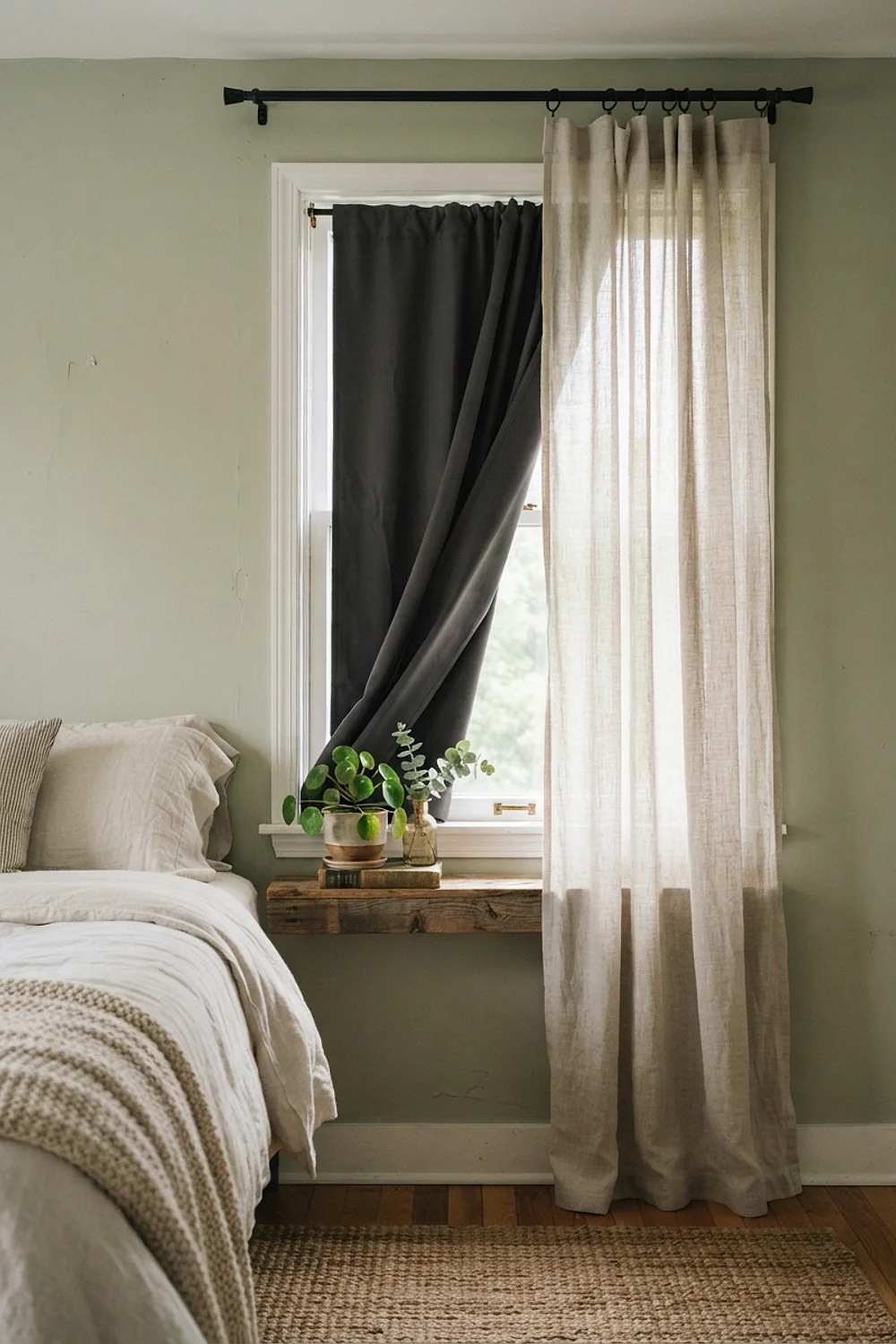
Linen panels look soft, but they leave streetlight in the room at 2am. A separate blackout liner hung on the same rod blocks around 99 percent of light and lets the outer layer stay airy.
This is the fix for ground-floor rentals or east-facing windows that flood the room at 5:45 in the morning. Liners wash separately, which also extends the life of the pretty outer curtain.
Lighting you can unplug and take with you
Overhead fixtures are the landlord’s, and they’re almost always a flat 4000K disc. Master bedrooms decor improves fast when light comes from lamp height instead.
10. Plug-in sconces with a 6-foot cord
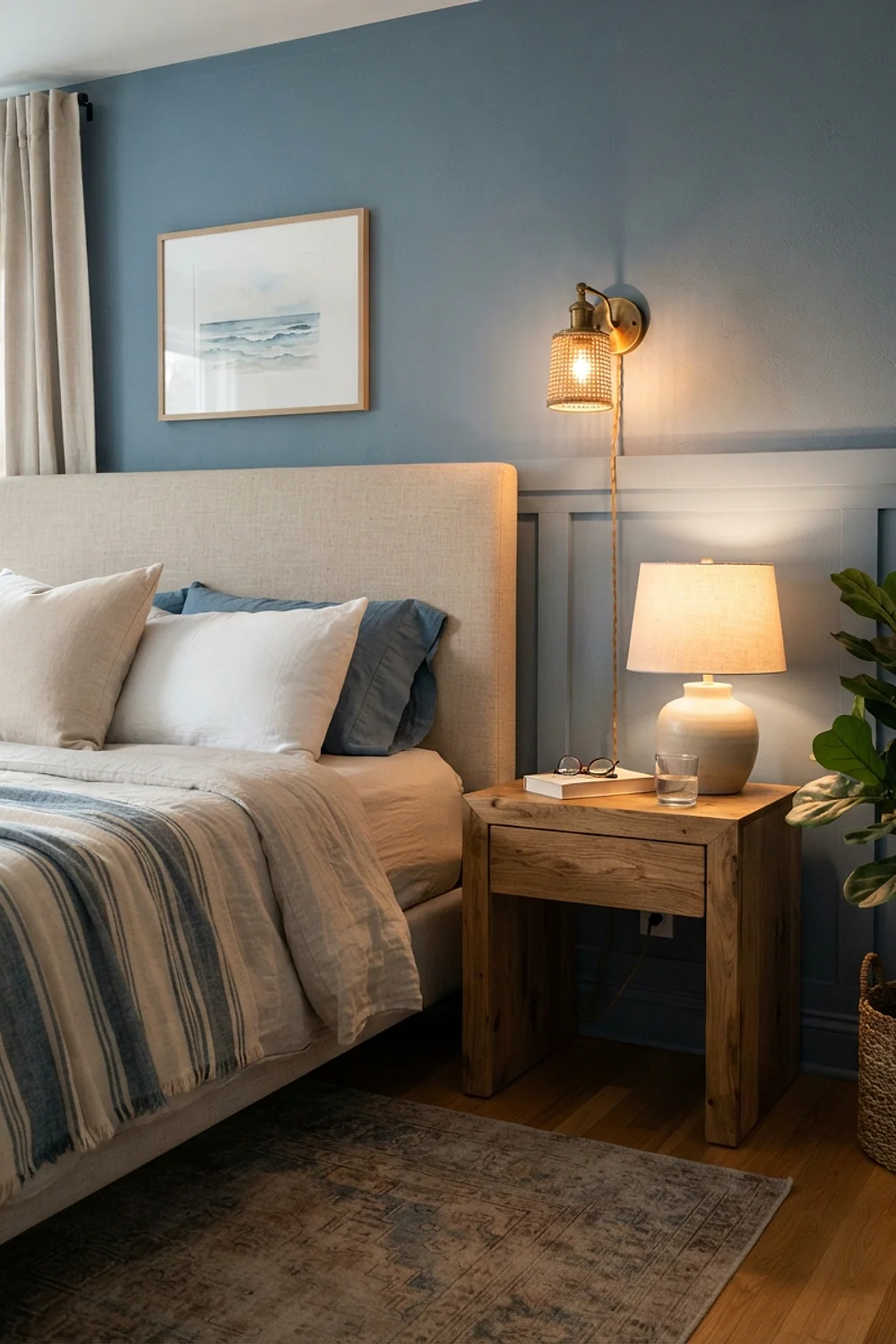
A plug-in wall sconce hangs on an adhesive hook or leans on a nightstand shelf and reaches the outlet through a 6-foot cord. Set the lamp center about 60 inches off the floor, roughly 8 inches above a mattress surface at 24-26 inches.
Hide the cord in a paintable cord cover or a white raceway that sticks on with adhesive. Both peel away in one pull, which beats chasing wire staples out of the plaster.
11. A matched pair of table lamps, 26-28 inches tall
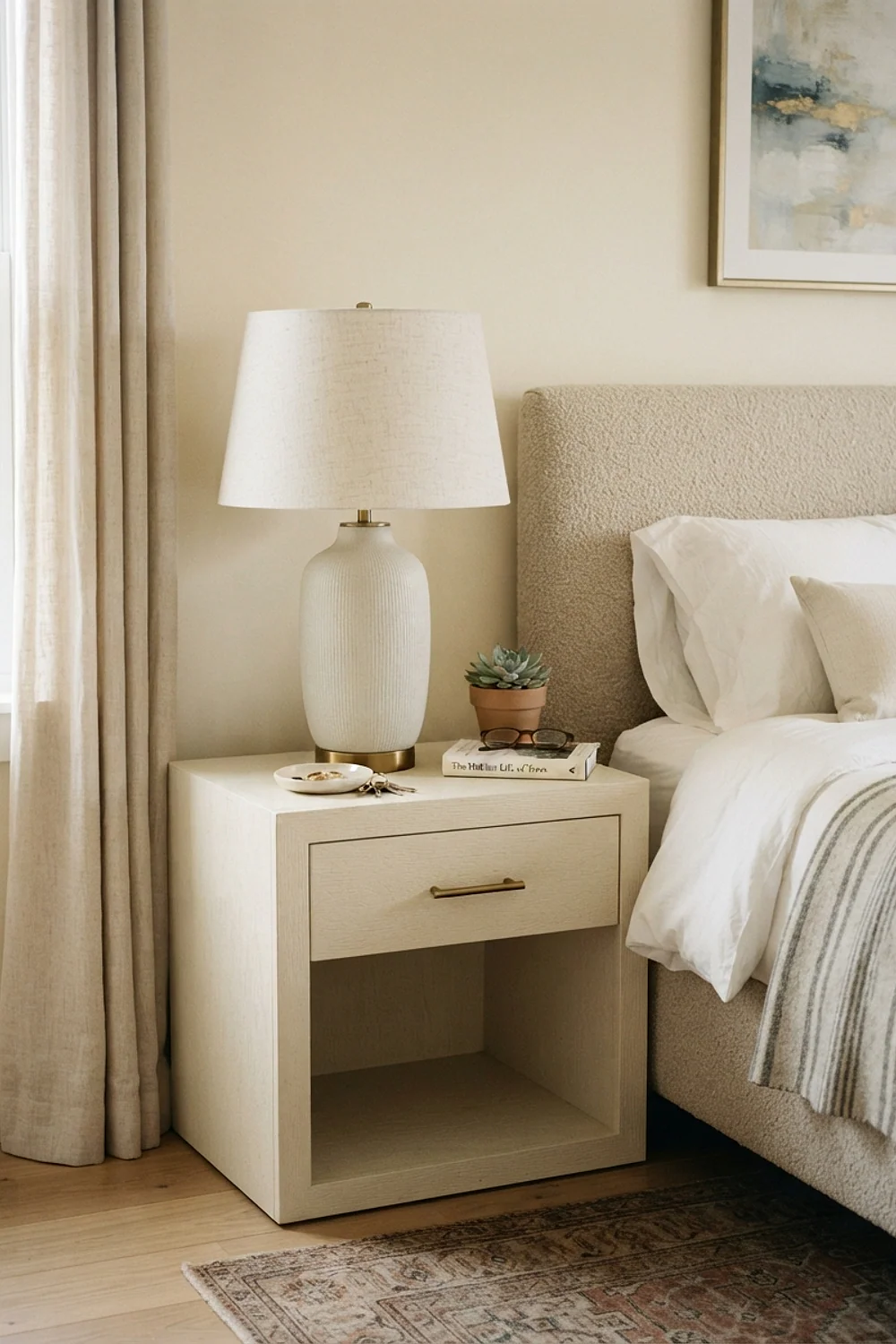
Lamps at 26-28 inches put the bulb near eye level when sitting up in bed, so the light falls over a book instead of straight into the eyes. A ceramic base with a linen drum shade is hard to beat.
Make sure the shade’s widest point is no wider than the nightstand’s depth, usually 15-18 inches. Otherwise it swallows the surface and knocks the water glass off.
12. Bulbs rated 2700K
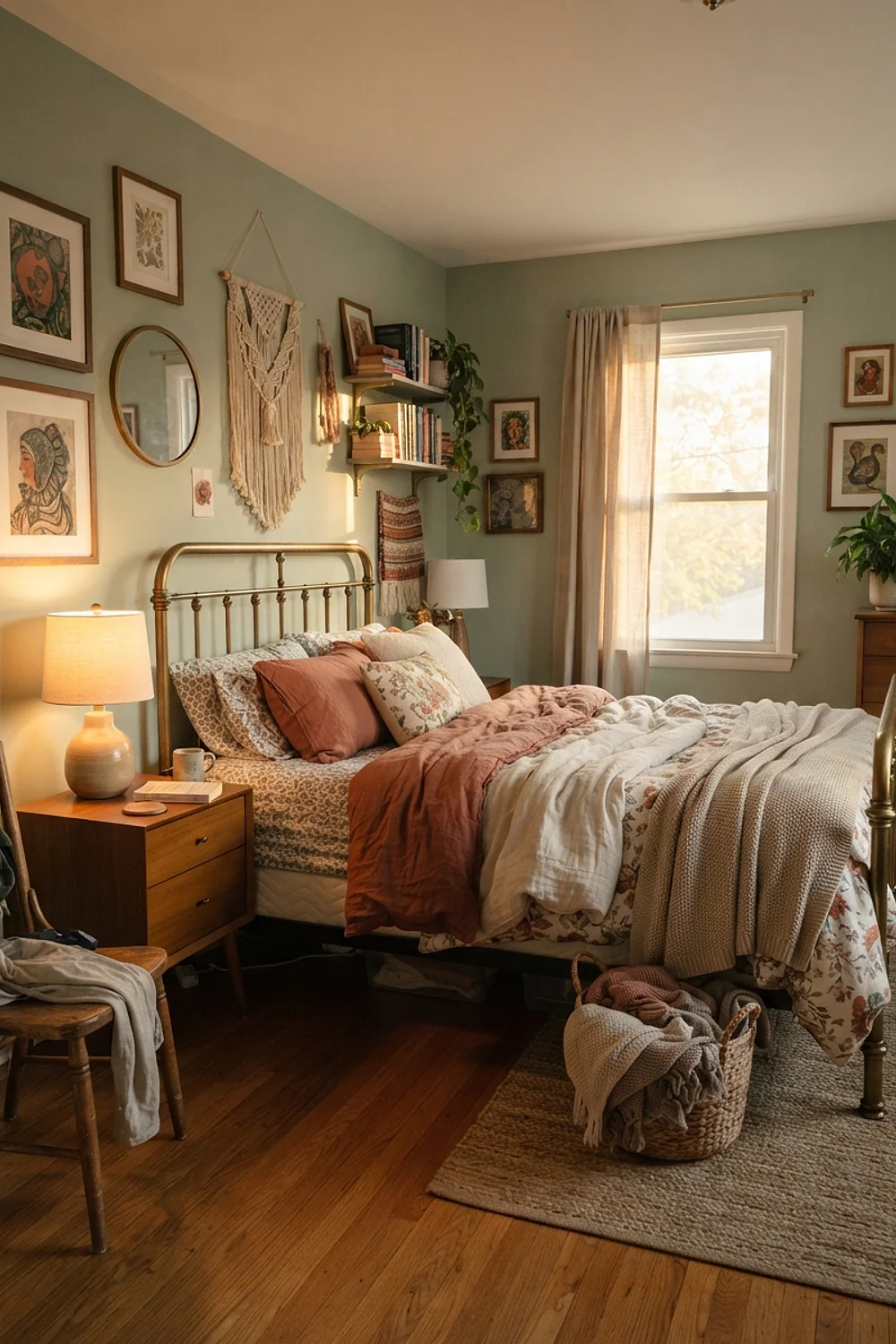
Swapping every bulb for a 2700K warm white changes the room more than most furniture does. The color sits close to candlelight, so skin tones and wood both turn honey-colored instead of gray.
Look for 800 lumens in the table lamps and 450 in the sconces, since bedrooms need less glare than kitchens. Keep the landlord’s original bulbs in a labeled bag for move-out.
13. An adhesive LED strip behind the headboard
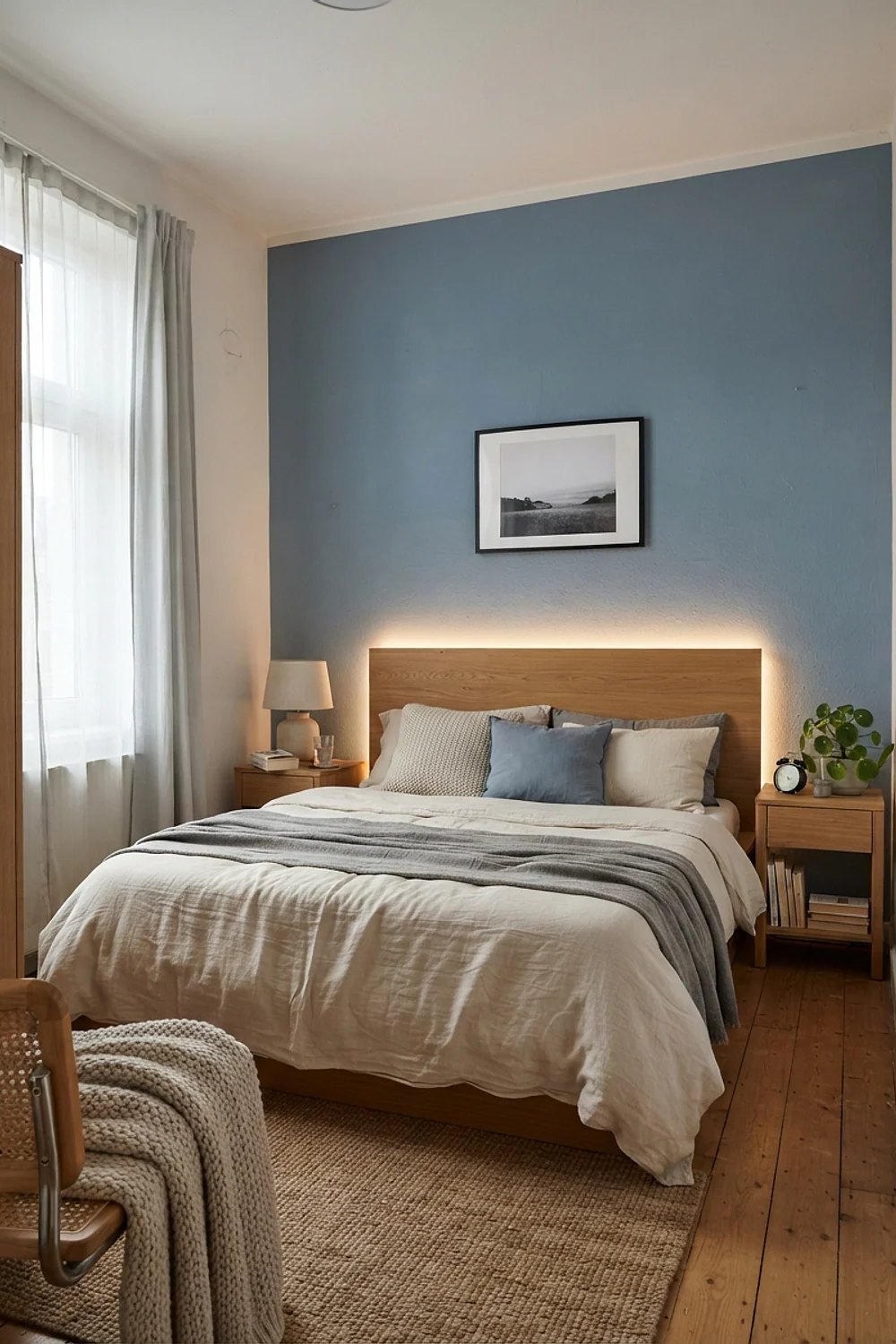
A 10-foot warm LED strip on the back of a freestanding headboard throws a wash of glow up the wall. It stays hidden, and the adhesive grips the headboard instead of the paint.
Pick a strip with a dimmer remote and a 2700K setting, because the default blue-white looks like a dental office. This is the one idea in the list that suits the dark corners of a basement-level suite best.
Walls, art, and hardware that stay off the plaster
The wall is where renters feel most stuck. Three small adjustments solve it without anything that leaves a mark.
14. Art leaning along the dresser top
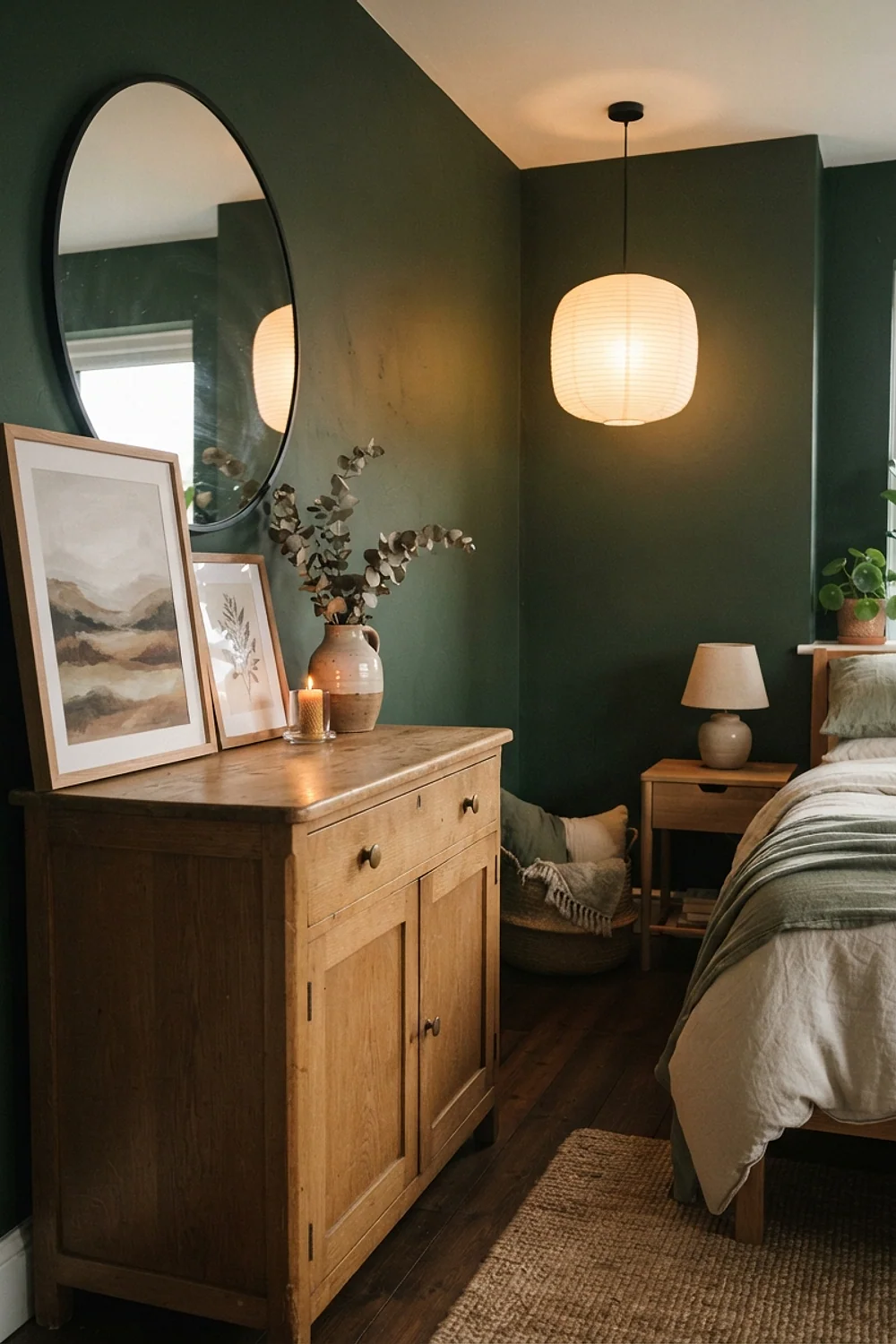
Three frames of different heights, say 16, 20, and 24 inches, leaned against the wall behind a dresser look relaxed. Overlap them by about 2 inches, and the arrangement looks deliberate instead of unfinished. Put the tallest at the back corner and the smallest in front, so every piece stays visible.
This works for renters or anyone who dislikes drilling holes, and it lets art be swapped in minutes. Heavy glass can tip, so add a strip of museum putty under each bottom edge, especially in homes with kids or pets.
15. A gallery grid on large Command strips
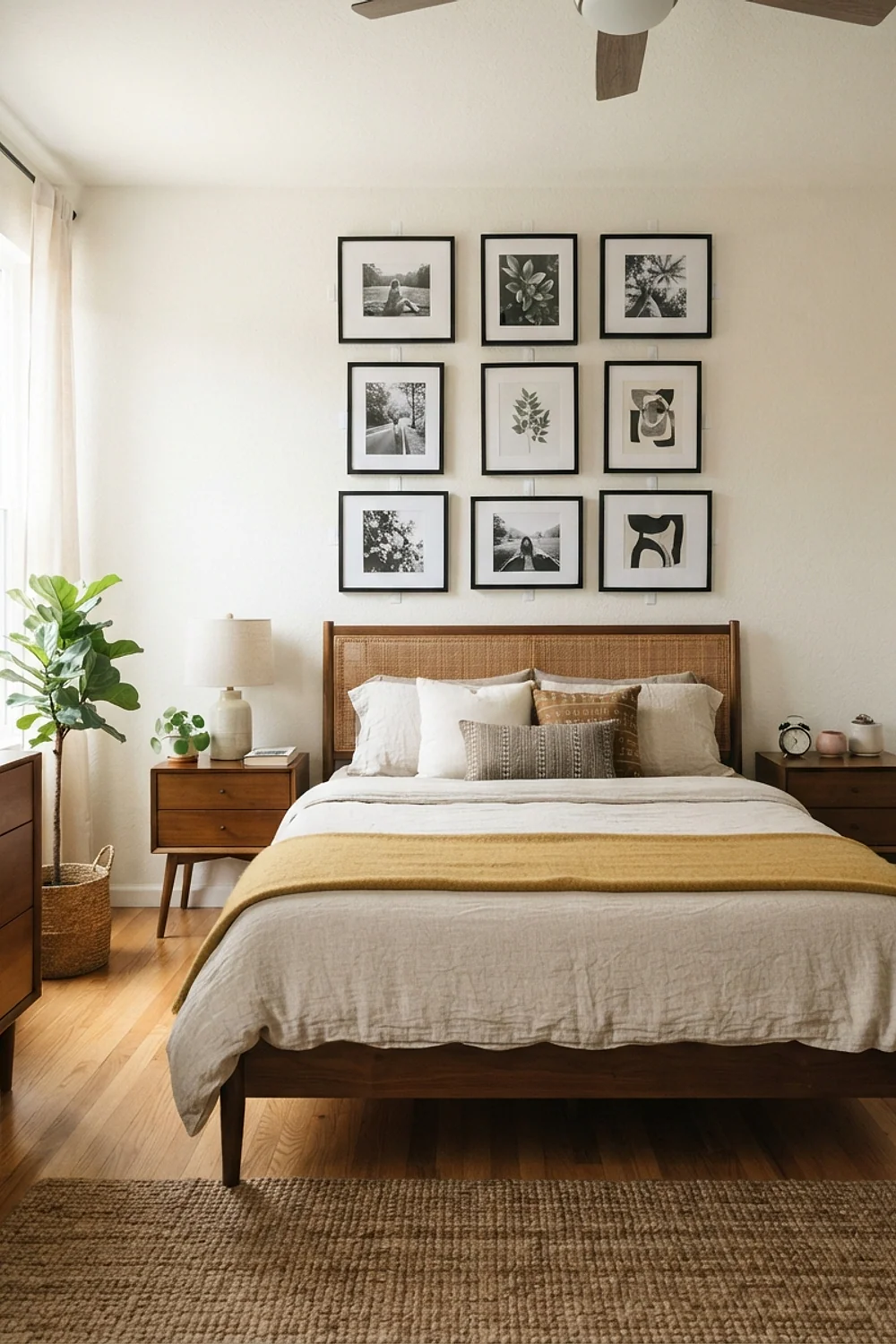
Large Command picture hanging strips, four pairs per frame, hold around 16 pounds when applied properly. Lay out six frames on the floor first, with 2 inches between each, then transfer to the wall.
Press each strip for 30 seconds and wait an hour before hanging, which is the step most people skip. Never use them on textured walls or fresh paint under 4 weeks old, where the adhesive can’t bond.
16. A 48-inch bench at the foot of the bed
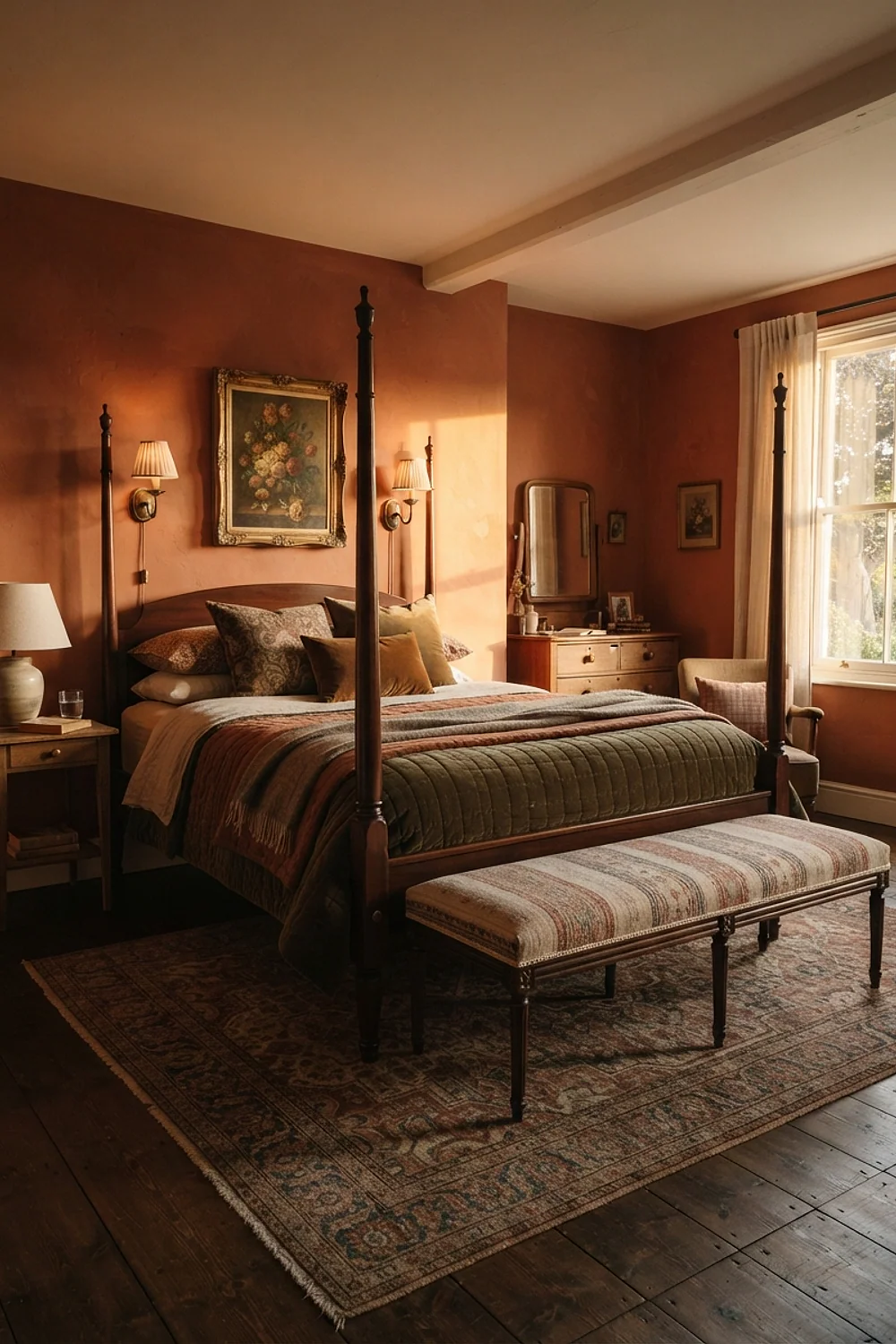
A bench about 48 inches wide and 18 inches tall closes the end of a queen bed and gives shoes and folded laundry a landing spot. Leave at least 30 inches of walkway past it, or the room starts feeling like an obstacle course.
Upholstered velvet feels soft under the hand but shows pet hair, while a woven seagrass top wipes clean. Pick the surface that matches how the bed gets used at night.
17. Bed risers for 8 inches of storage
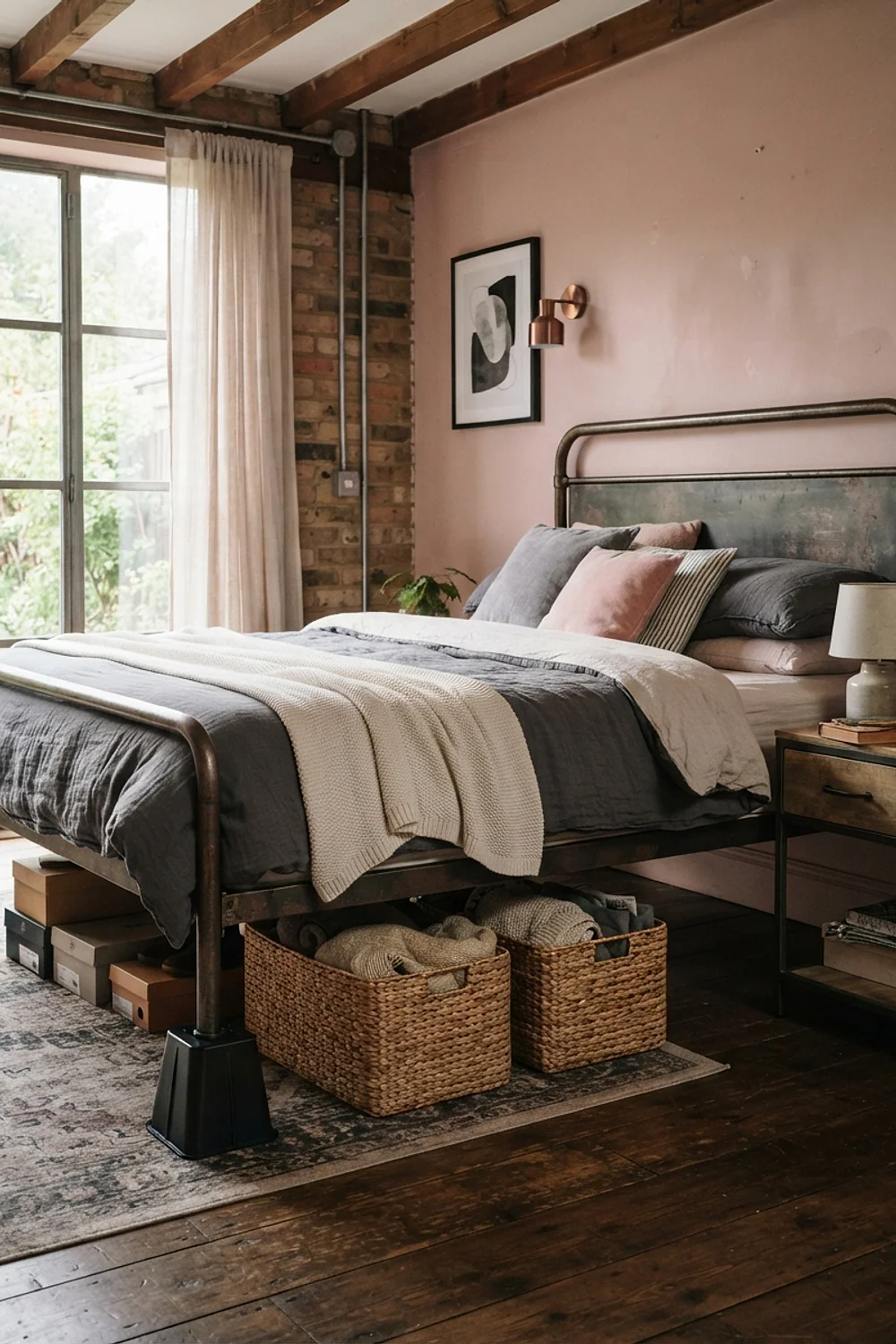
Plastic or wood risers lift the frame 6-8 inches, which opens up space for flat storage bins measuring 34 by 16 by 6 inches. That’s a winter-coat zone without a closet.
The counterintuitive part: a higher bed also makes a small room feel bigger, since the eye finds more floor underneath. Confirm the frame’s leg style fits the riser cups first.
Things that elevate the room
Master bedrooms decor often gets stuck at clutter, not style. These four ideas deal with the stuff that doesn’t look good, plus the small touches that make a bedroom feel complete.
18. Over-the-door hooks and a closet tension rod
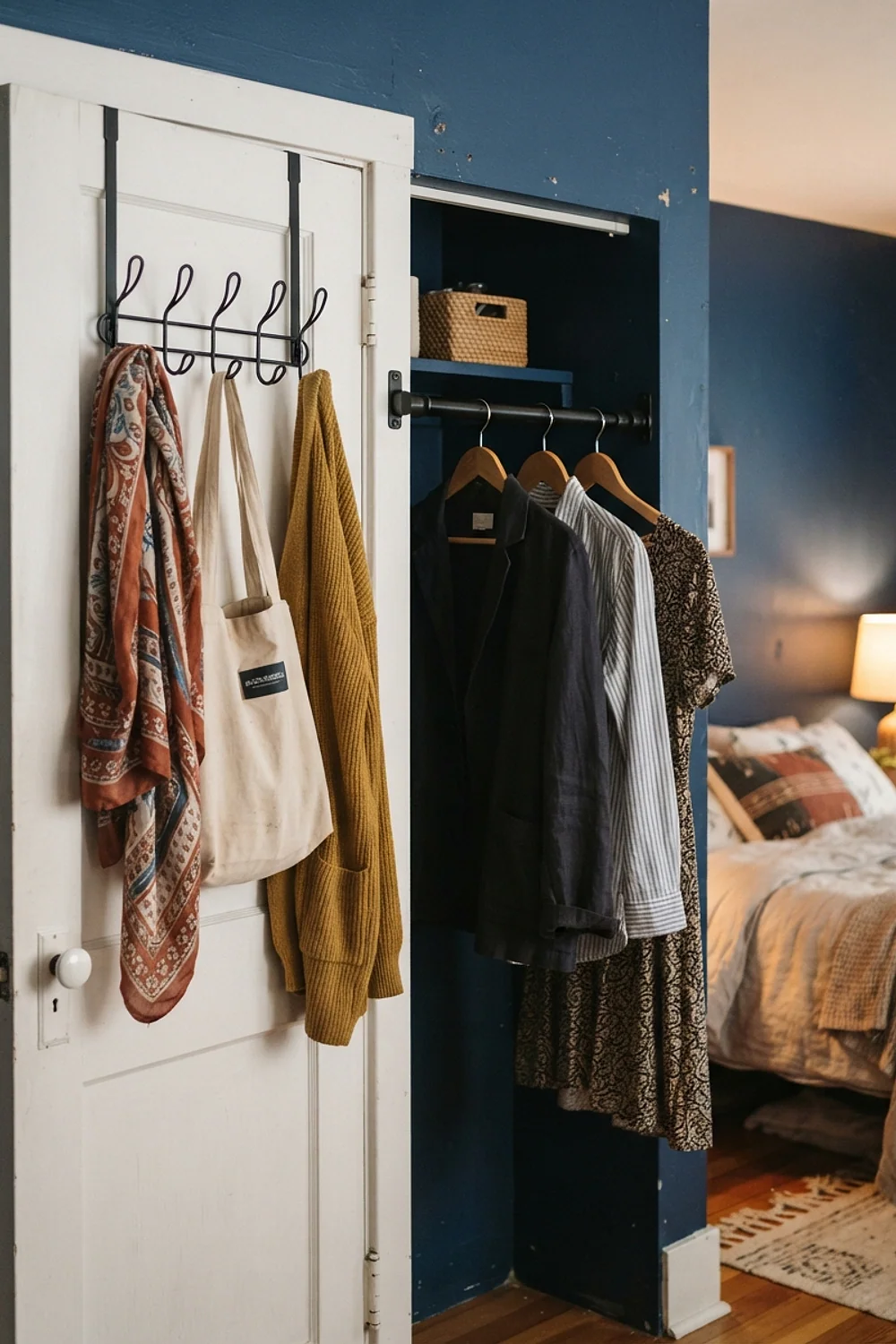
A second tension rod hung 40 inches below the top closet rod doubles hanging space for shirts and folded trousers. Over-the-door hooks, in brass or matte black, hold robes and tomorrow’s outfit at eye level.
Use slim velvet hangers, about 0.2 inches thick, to gain roughly 30 percent more rail room. Check the door’s clearance gap, since some hooks scrape the frame.
19. A 3-panel folding screen across a corner
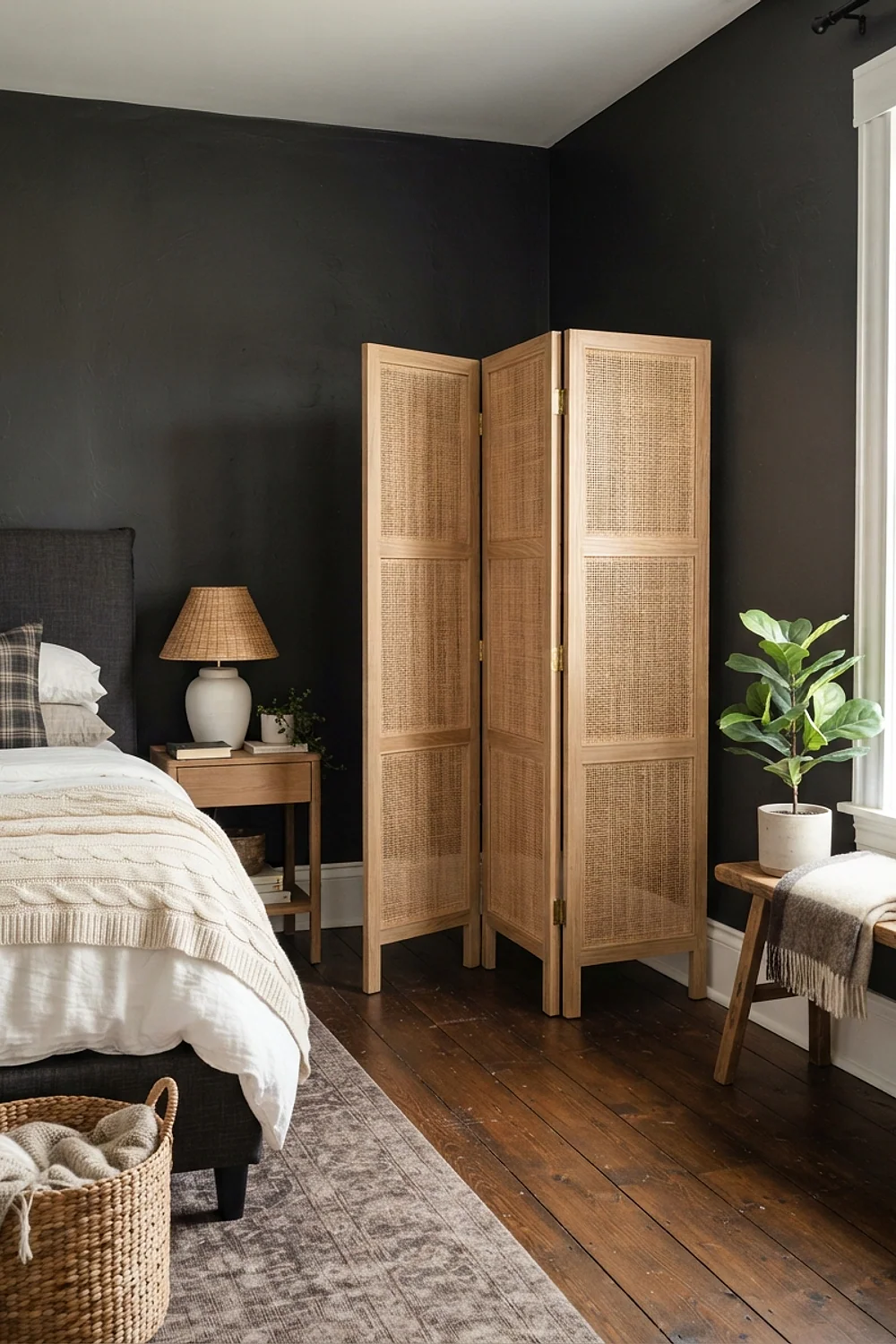
A folding screen, 66 inches tall with three 18-inch panels, hides a laundry basket, treadmill, or desk from the bed. It’s the cleanest way to split a bedroom that doubles as a home office.
Hang a linen panel or an upcycled textile over a plain frame if the finish is dull. Place it at least 12 inches from any heating vent so the fabric stays safe.
20. A trailing pothos on a nightstand shelf
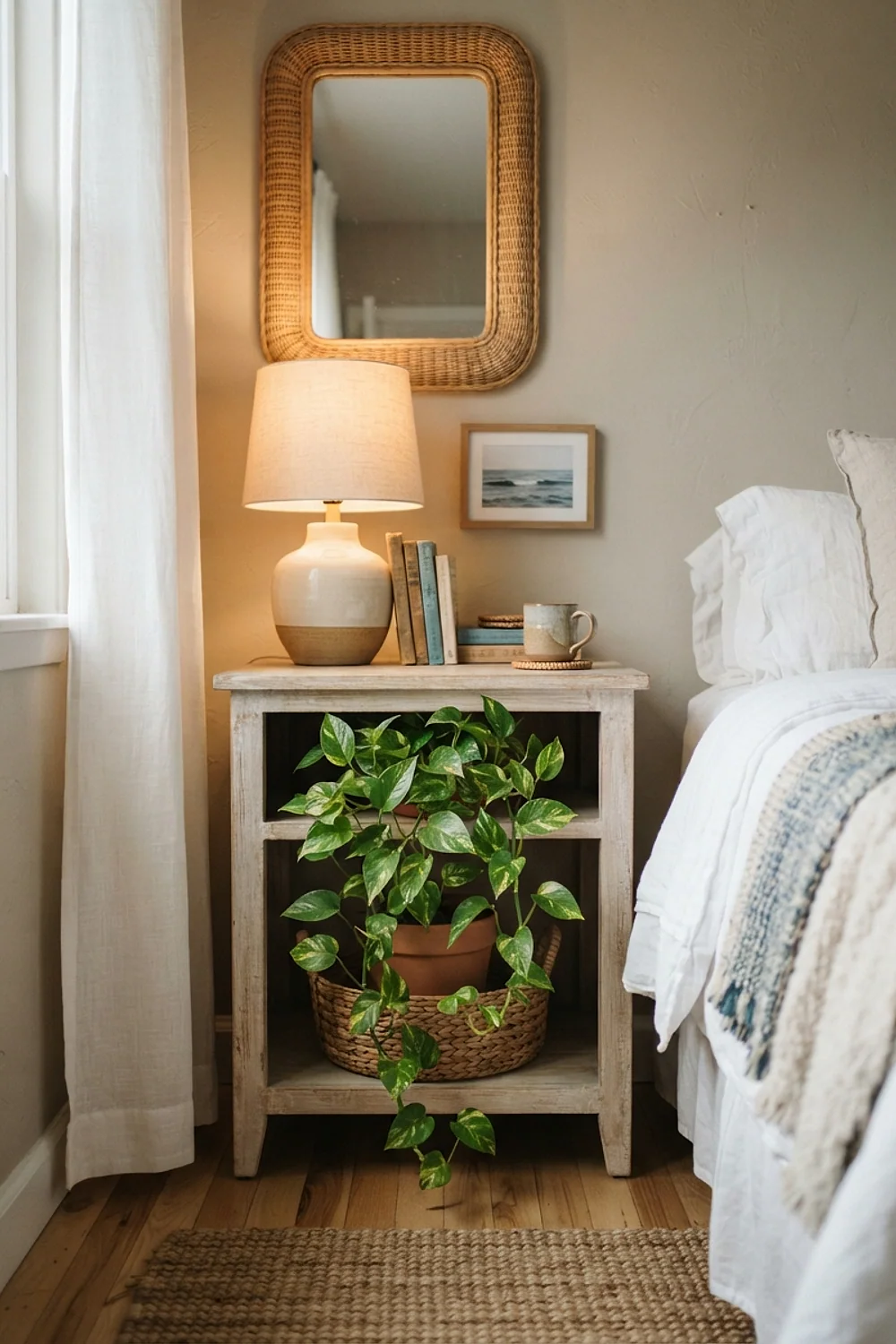
A pothos tolerates the low light of an east window and drapes 24 to 36 inches over a shelf edge, so one plant softens the hard lines of a nightstand shelf. A glazed ceramic pot, about 6 inches wide, gives color and a shape that lamps and frames can’t.
It suits busy sleepers and renters who want greenery without much care. Skip anything fussy, like fiddle-leaf figs, that sulks when moved. Pothos roots in a jar of water, so a cutting stays alive between apartments.
21. A dresser tray and a diffuser
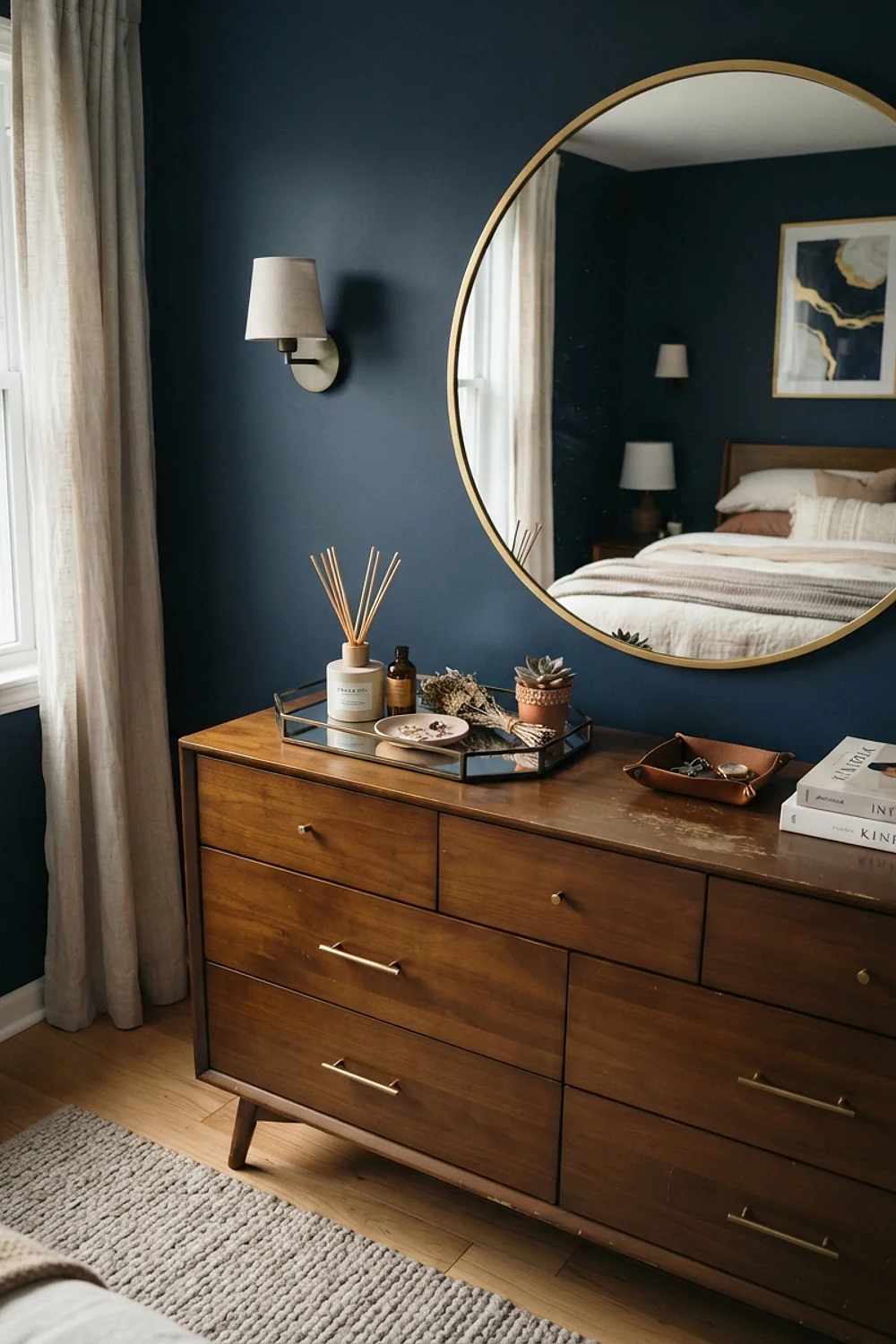
A 12-by-16-inch tray on the dresser corrals perfume, a watch, and a candle so the surface reads as a vignette instead of a dumping ground. Wood, marble, or brass all work.
Add a small ultrasonic diffuser with a lavender or cedar oil. It’s the last 5 percent that makes the room smell like a hotel, and it leaves nothing behind.
What landlords actually allow
Lease language varies, but most standard leases separate “alterations” from “decor.” The usual rule is that anything you can remove without repairs is fair game, while anything that needs patching isn’t.
Read the clause on nails and adhesives before using the ideas above. A written email reply from the landlord beats a verbal okay every time.
- Usually fine: freestanding furniture, rugs, lamps, tension rods, curtains, plants.
- Often allowed with a request: removable wallpaper, adhesive hooks, small nail holes.
- Almost never allowed: painting, drilling, replacing fixtures, floor tile.
Ask about removable wallpaper in writing, and mention the brand. A named product with a documented removal process makes the answer easier to give.
Undoing everything on move-out day
Plan 90 minutes for a full bedroom reset, and start with the adhesive items, since they need the most patience. Pulling too fast is the main reason paint comes off with the strip.
- Pull each Command strip tab straight down, parallel to the wall, stretching it slowly for about 10 seconds until it releases.
- Peel wallpaper from the top corner at a 45-degree angle, warming stubborn patches with a hair dryer for 30 seconds.
- Wipe adhesive residue with a damp microfiber cloth and a drop of dish soap.
- Reinstall the original bulbs and any fixtures you swapped.
- Photograph every wall and corner before handing over the keys.
Hang art at 57 inches center height. Actually, no, scratch that. For a bedroom, 52-54 inches reads better, since the eye is lower when sitting or lying down.
Conclusion
Good master bedrooms decor in a rental comes down to layers you can carry out the door: textiles, lamps, a big rug, and a few things that lean instead of hang.
Start with the rug and the bedding, because they shift the room most for the least risk. Then add light at lamp height, and finish with the small pieces.
Save or pin this list so it’s ready when the next lease starts, and measure your bed wall and your window frame before buying anything.
Frequently Asked Questions
What is the easiest master bedrooms decor change for a renter?
Swap the bedding and add an 8-by-10 rug. Both are fully removable, they cover the most visual area, and they work in almost any lease situation.
Can I use removable wallpaper for master bedrooms decor in a rental?
Usually yes, but ask in writing first. It peels cleanly from eggshell or satin paint, so test a small scrap in a closet corner before covering a full wall.
How high should I hang lamps or art in a bedroom?
Center art at 52-54 inches from the floor and place sconces about 60 inches up. Bedrooms feel better with lower sight lines than living rooms, since most time is spent seated or lying down.
How do I make a small bedroom look bigger without painting?
Use a leaning mirror, raise the bed on risers, and hang curtains close to the ceiling line on a tension rod. A full-size rug also helps, since a rug that’s too small makes the room look boxed in.