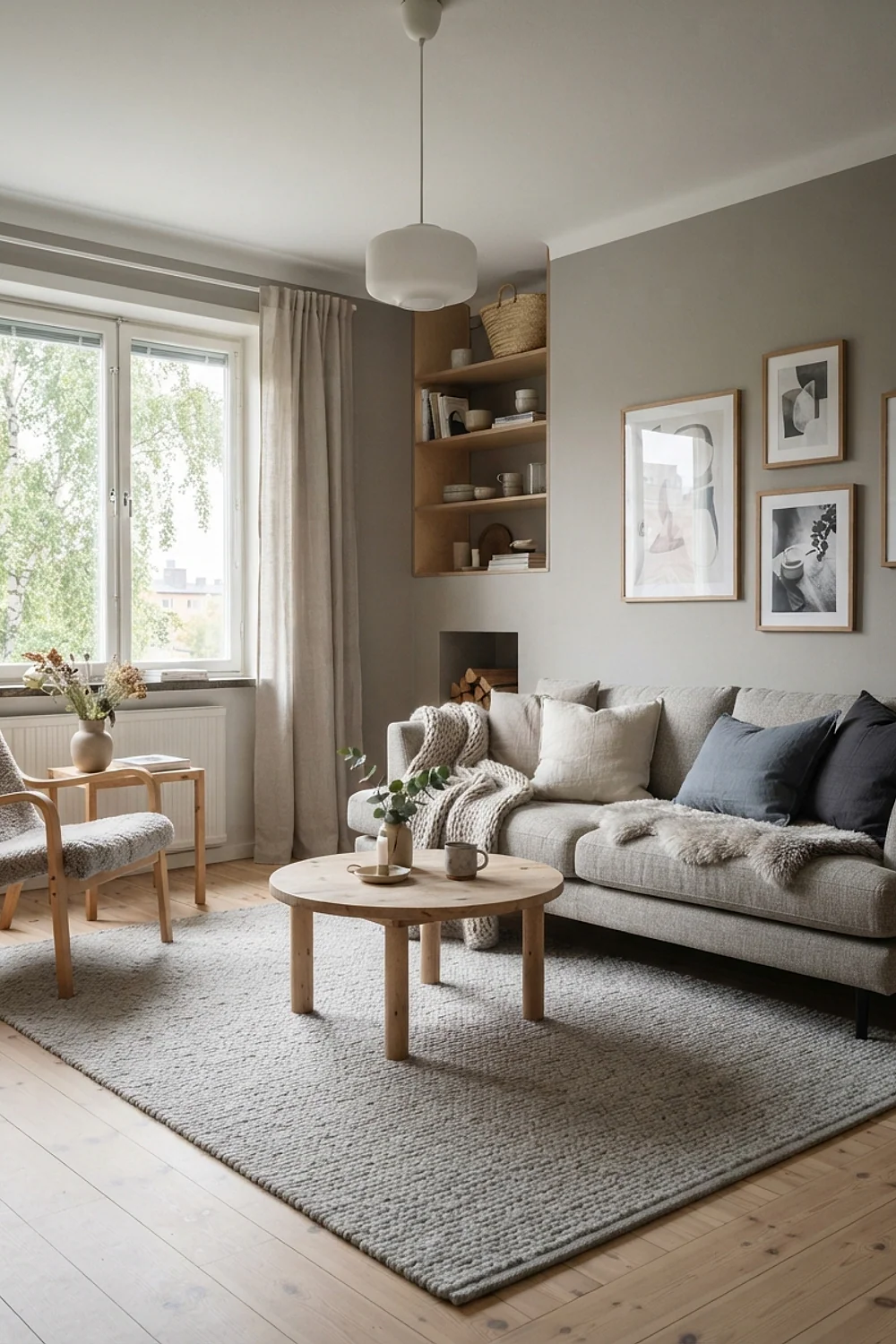
16 Living Room Decor Cozy Classics That Never Go Out of Style
Why do some living rooms still feel inviting after forty years while others look tired in five? The answer to living room decor cozy that lasts is mostly proportion, honest materials, and shapes with a long paper trail.
Below are 16 classics, each with the reason it has held its place, the room it suits, and the mistake that sinks it. Most are secondhand-friendly, and all of them reward a tape measure.
Why these living room decor cozy classics never age
Every piece here has survived because it solves a problem in a way that hasn’t been improved on. A sofa arm at the right height, a lamp that lights a page without glare, a rug that grips a floor. Trends come and go, but those problems stay.
Living room decor cozy starts with scale. Check how big a piece is against the wall behind it, the furniture beside it, and the walkway in front of it before anything else. A good object in the wrong size fails faster than an average object in the right one.
1. A tufted leather Chesterfield with rolled arms
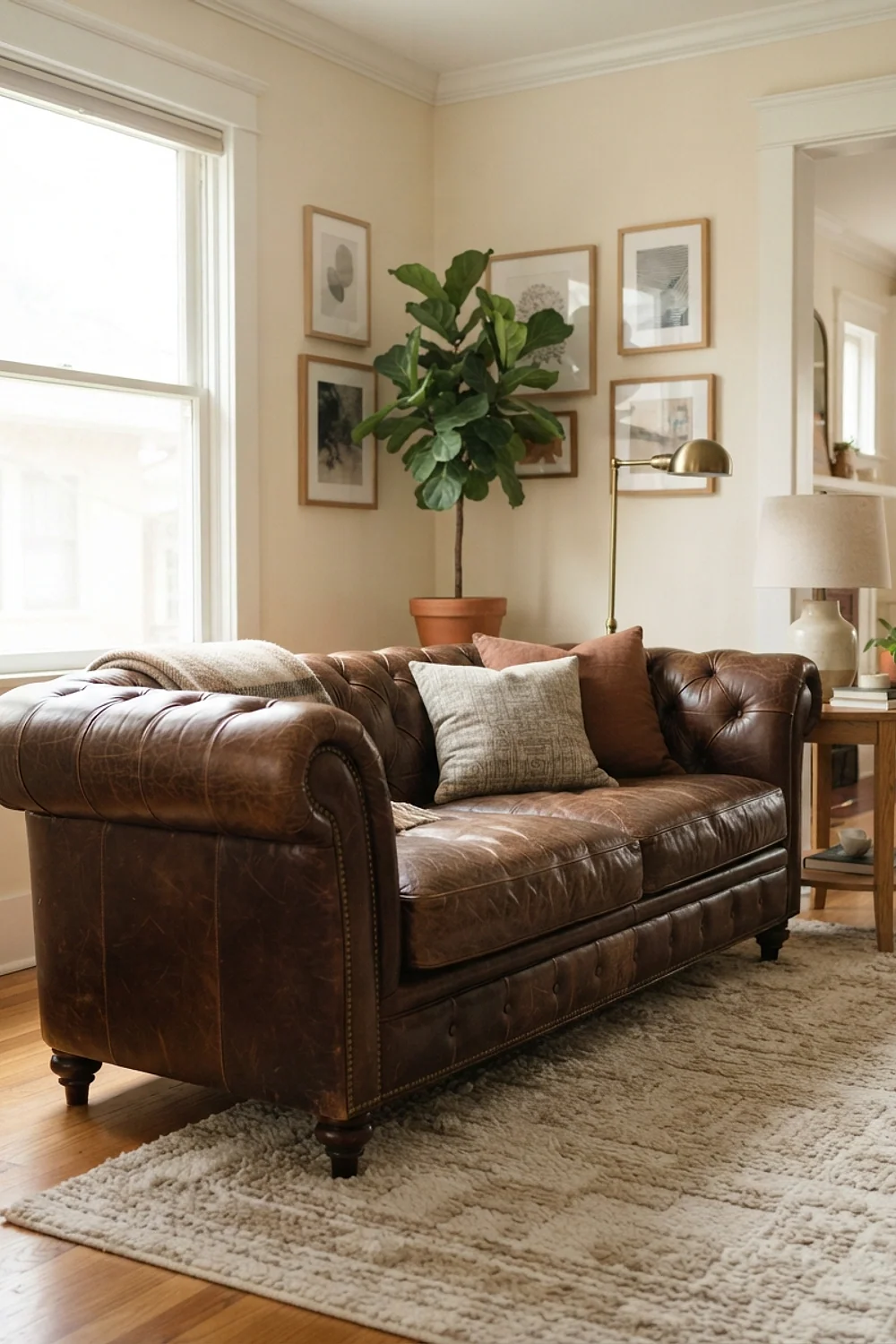
The Chesterfield has arms and back at the same height, a shape that dates to the 19th century and has never really left. The deep buttoning holds the hide taut over its filling, so the seat doesn’t sag into a bowl after a decade.
It suits rooms of at least 12 by 14 feet, where an 84-inch body still leaves a 30-inch walkway. A hide-leather version starts around $2,500. The trade-off is honest: leather sticks to bare legs in July, so keep a linen throw nearby.
2. A hand-knotted wool rug, 8 by 10 feet
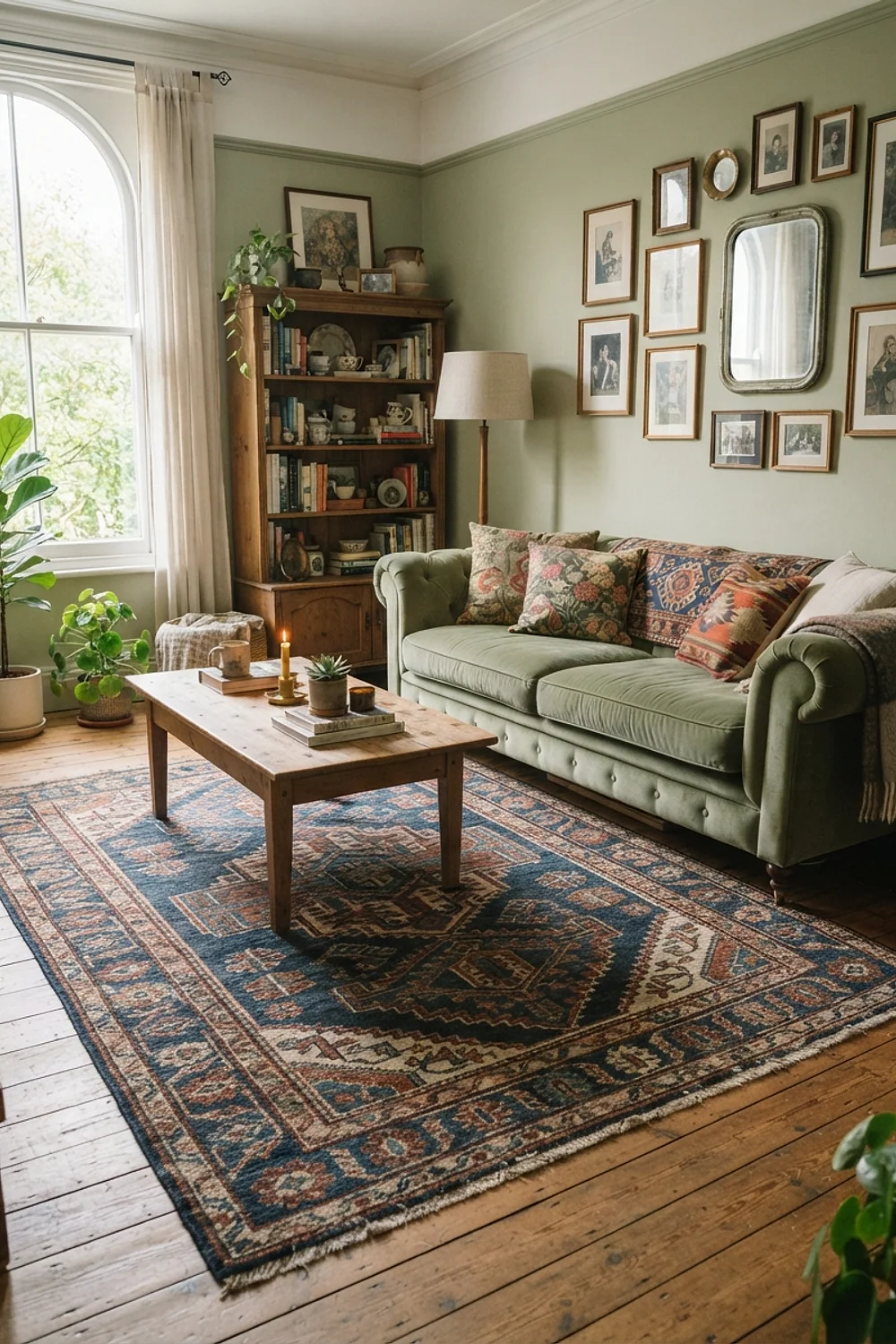
Wool carries natural lanolin, which gives spills a few minutes to be blotted before they soak in. A hand-knotted Persian, Turkish, or Moroccan weave also springs back under foot, which is why these patterns have been made for centuries.
Here’s the counterintuitive part: a larger rug makes a small room read bigger, because it leaves a border of only 10-12 inches of bare floor. The common failure is a 5 by 8 rug floating like a doormat. The front legs of every seat should rest on the wool.
3. Built-in bookshelves painted the wall color
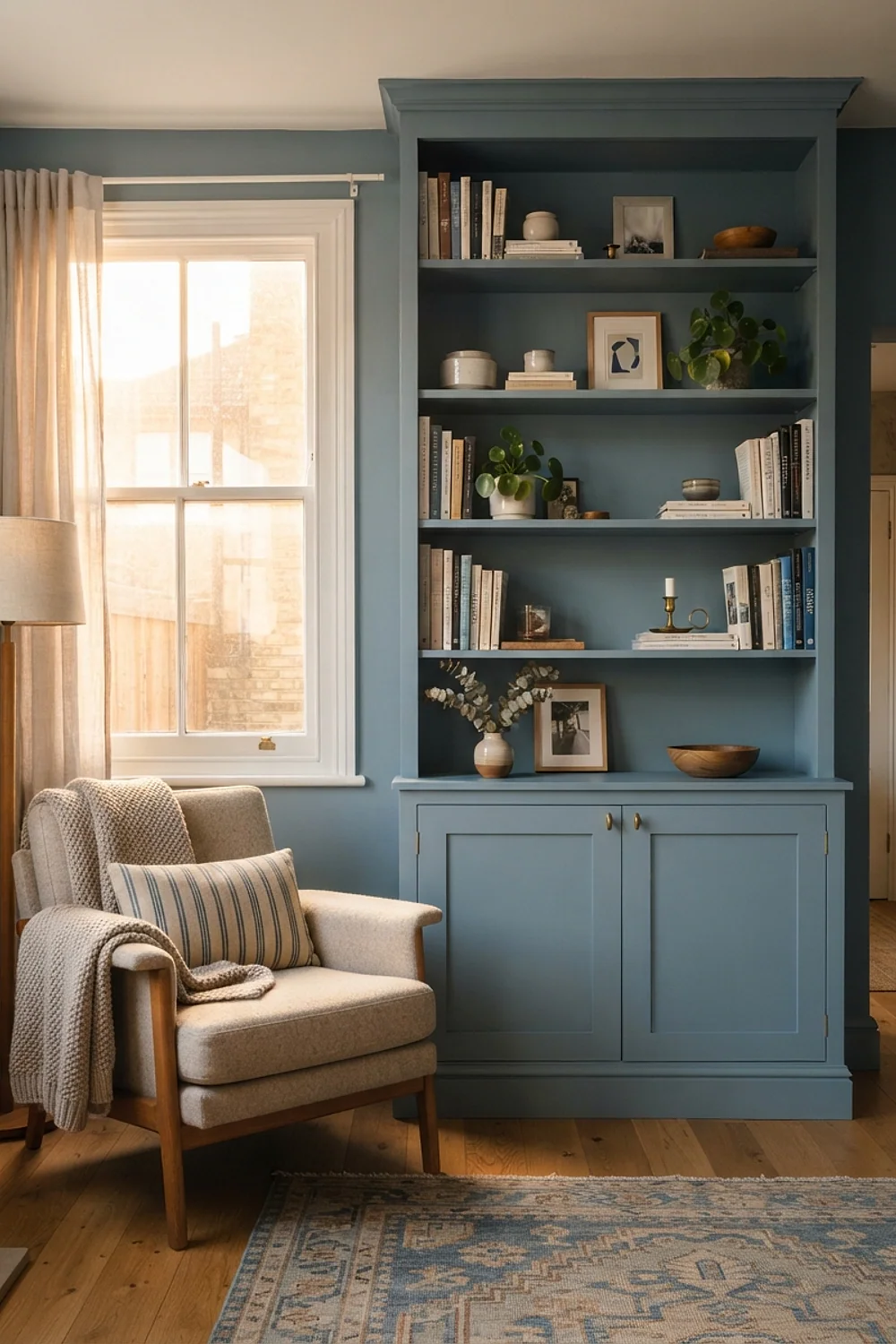
Shelves 11-12 inches deep hold hardcovers, baskets, and a few framed photos without swallowing the room. Go past 14 inches and the back rows turn into shadow storage nobody can reach.
Boards three-quarters of an inch thick sag when they span more than 32 inches, so add a vertical divider or step up to 1.25-inch stock. Painting the shelves the same shade as the wall makes the books the decoration. This works best on one spare wall of 10 feet or more.
4. A tartan or herringbone wool throw
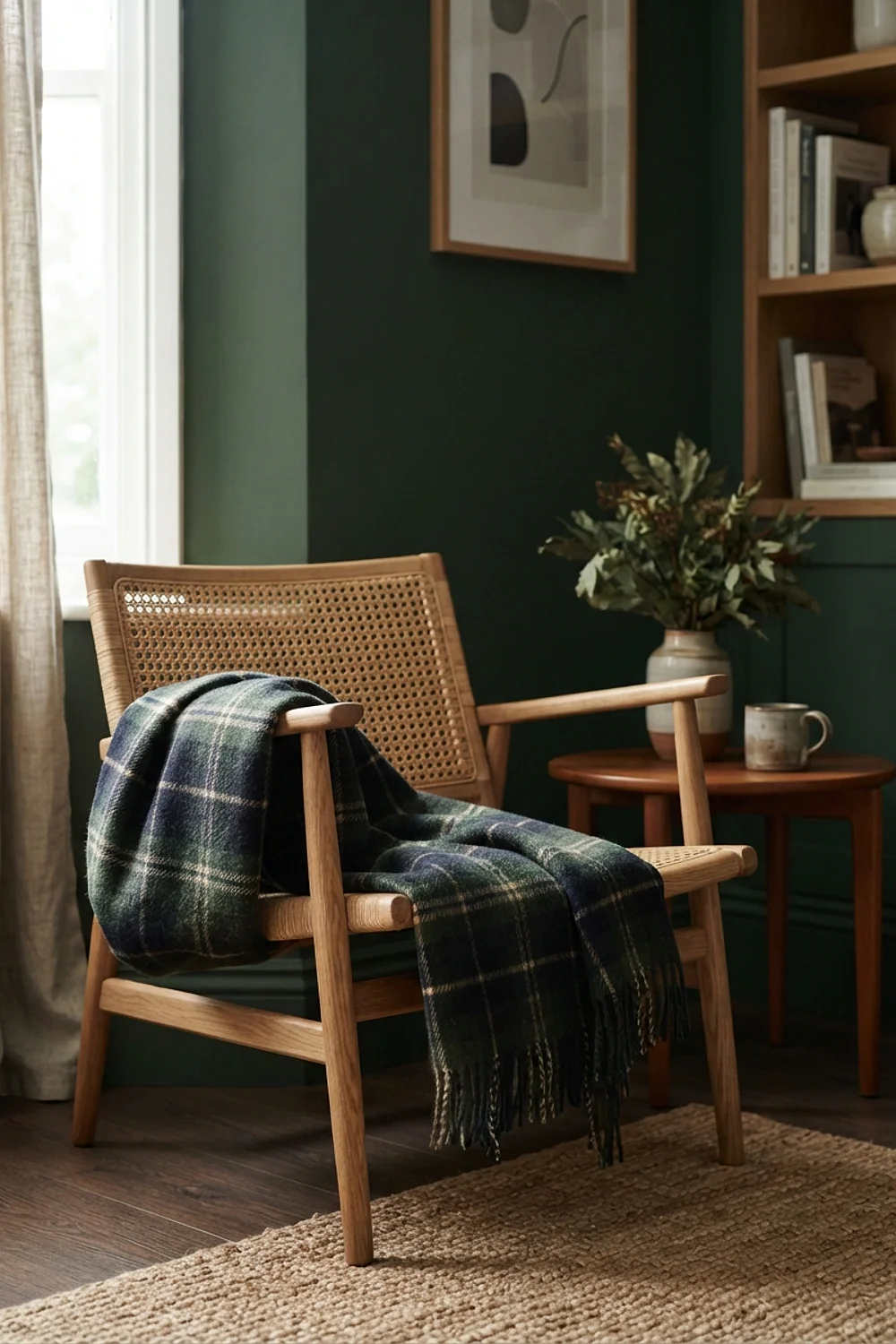
A 50 by 70 inch throw gives a sofa something to reach for at 6pm when the radiators tick on. Wool regulates temperature, stays comfortable even when slightly damp, and has been woven into tartans in Scottish and Welsh mills for generations.
Read the label before buying. Acrylic imitations pill within a season and crackle with static, while lambswool or merino holds up. Fold it lengthwise in thirds over a sofa arm instead of stuffing it in a heap.
5. A gallery wall of botanical prints
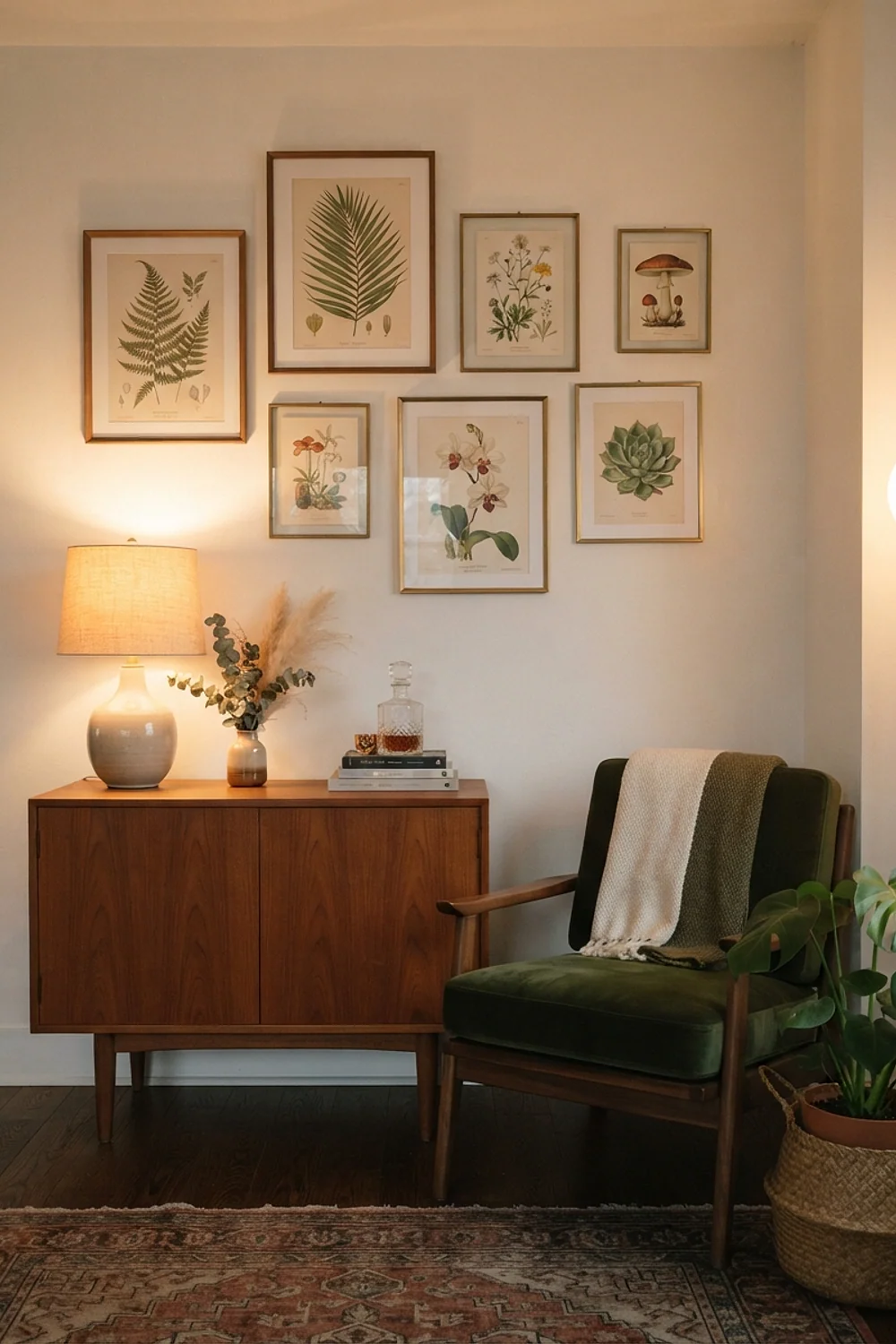
Botanical engravings come from the 18th-century natural history boom, and they still work because the line drawing is quiet. Matching black or oak frames keep a dozen different prints from looking like clutter.
Leave 2-3 inches between frames and center the group around 57 inches from the floor. Over an 84-inch sofa, the whole arrangement should span roughly 56 inches, about two-thirds the sofa’s width. Hung wider, the wall starts to feel like a shop display.
6. A solid wood coffee table at the right length
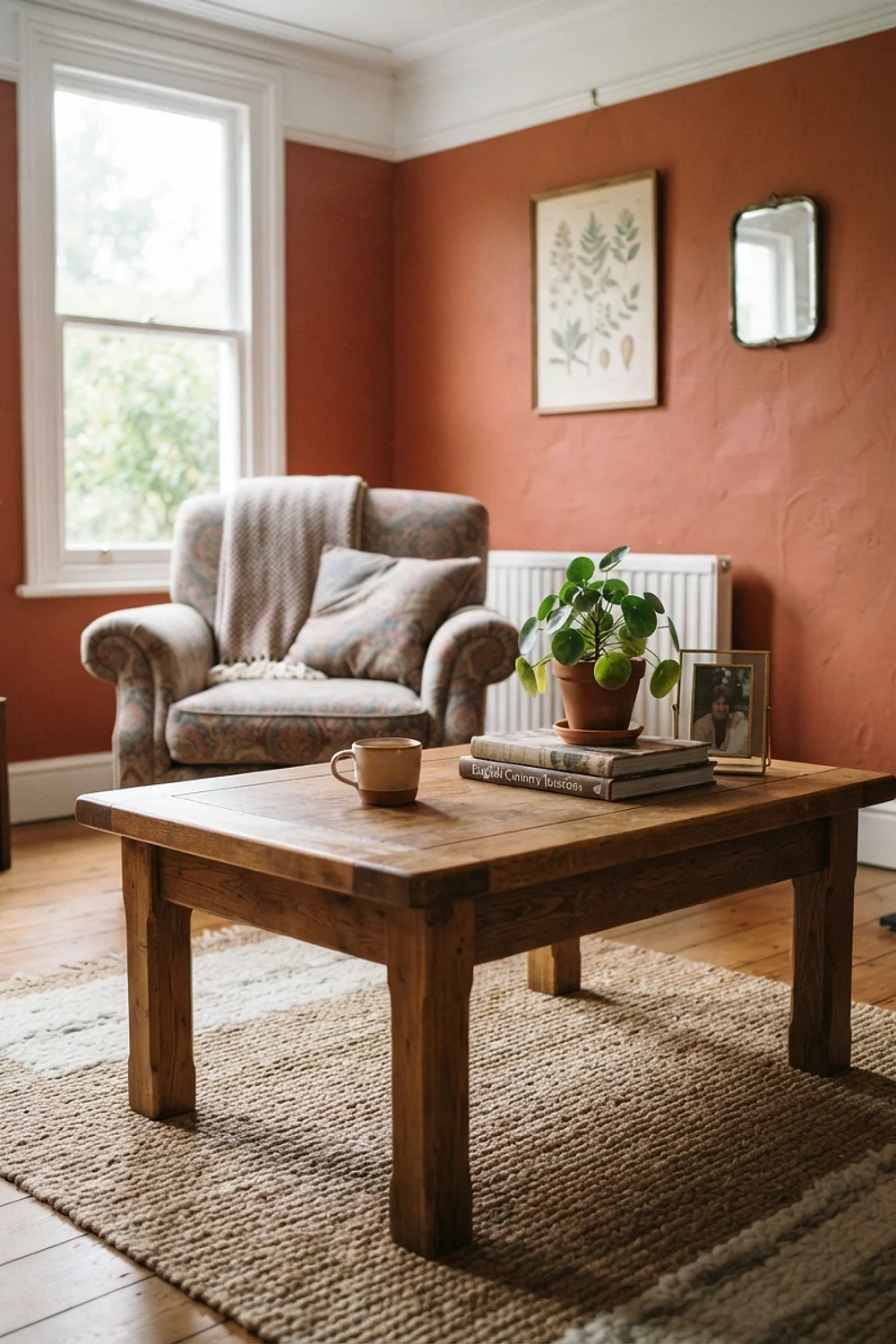
A coffee table 16-18 inches tall sits level with the sofa seat or an inch or two below it, so a mug doesn’t require a reach. The usual mistake is buying one as long as the sofa. Two-thirds of the sofa’s length, about 56 inches against an 84-inch sofa, is the proportion that reads right.
Leave 14-18 inches between table edge and sofa cushions. Round tops suit narrow rooms and homes with children, since there’s no corner at hip height.
7. Deep green walls in the shade of an old library
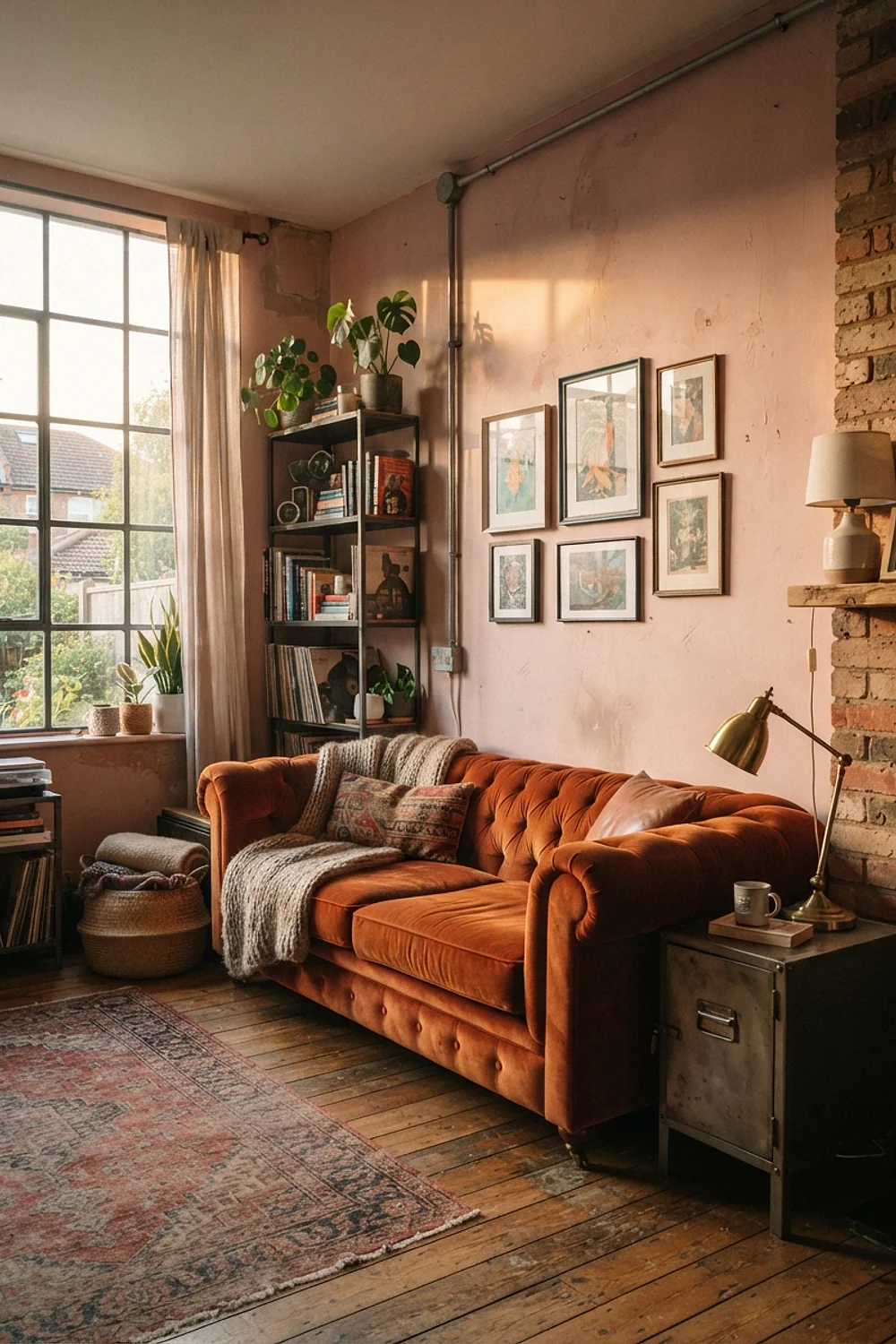
Green sits in the middle of the spectrum, so it reads calm under gray daylight and turns golden under lamps. English country houses leaned on it for centuries. A deep green such as Farrow & Ball Studio Green costs about $110 a gallon, and that’s money well spent on a color this hard to fake.
Paint the ceiling and trim the same shade in a small north-facing room and commit fully. Half-measures look muddy. Test a two-foot swatch on two walls and check it at 4pm, when the light shifts.
8. Two sofas facing each other
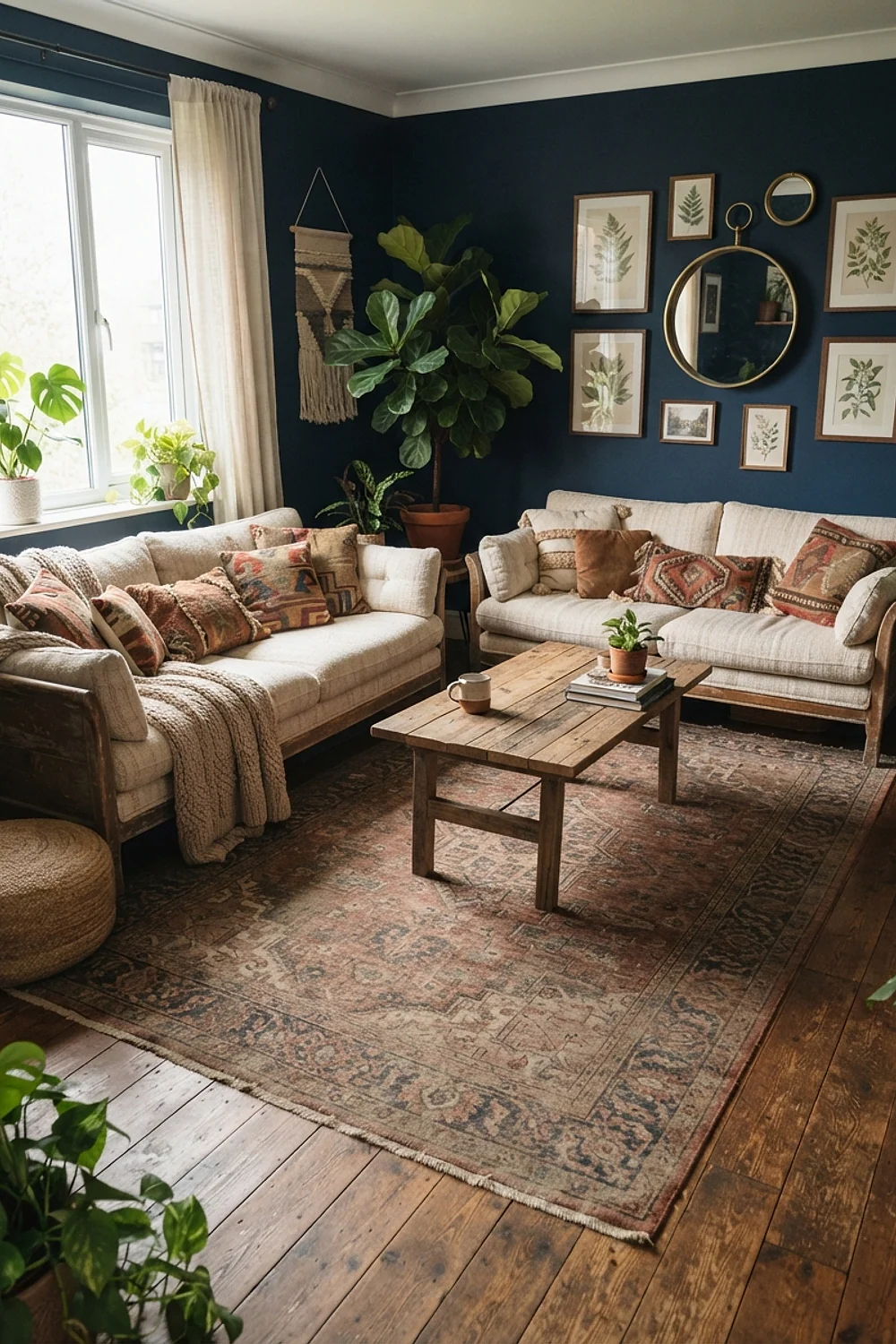
Two sofas across a coffee table is the old club-room layout, and it still produces the best conversation. Seats should sit 7-10 feet apart, close enough to talk without raising your voice.
This suits rooms at least 14 feet wide with a fireplace or window at one end. In narrow rooms, a single sofa against the long wall frees the walkway. Pushing every chair to the perimeter leaves a dead zone in the center that no rug can fix.
9. Floor-length linen curtains hung high
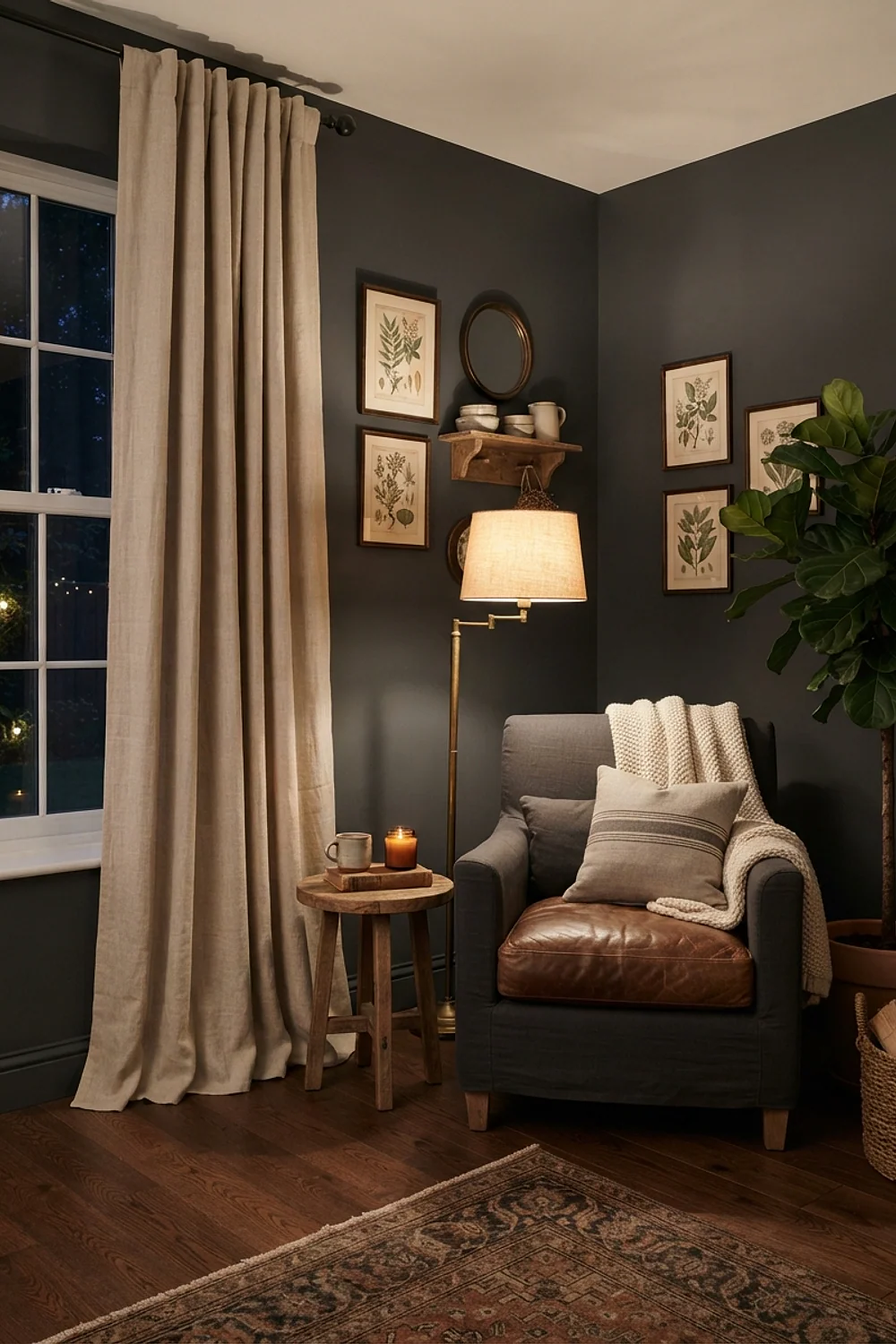
Curtains hung 4-6 inches below the ceiling, with the rod extending 8-12 inches past each side of the window frame, make a 36-inch window read as tall. The fabric should be at least twice the width of the window, because skimpy panels look cheap.
Hem them to graze the floor, a half inch above it. (This only works with ceilings of 8 feet or more, since lower rooms get overwhelmed by that much fabric.)
10. A pair of brass table lamps
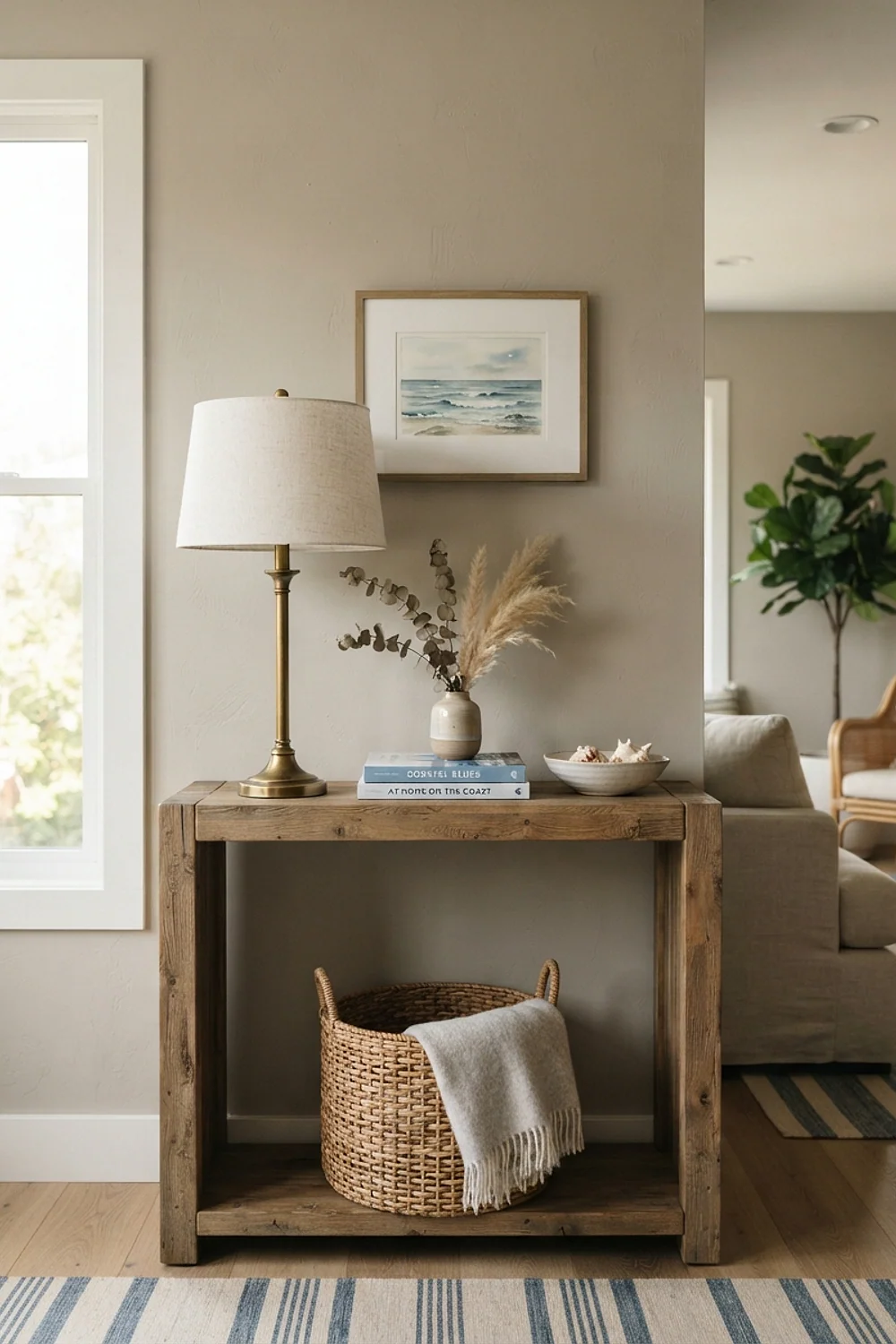
On a gray November afternoon, overhead light flattens a room, while two lamps at opposite ends of the sofa make pools of gold. Lamps 26-30 inches tall put the bulb at seated eye level, so the bottom of the shade should sit at about chin height to prevent glare.
Use 2700K bulbs around 800 lumens each. Unlacquered brass darkens over the years, and that patina is the reason to choose it. Lacquered brass stays shiny and looks fine, but it never develops that depth.
11. A 36-inch leather ottoman
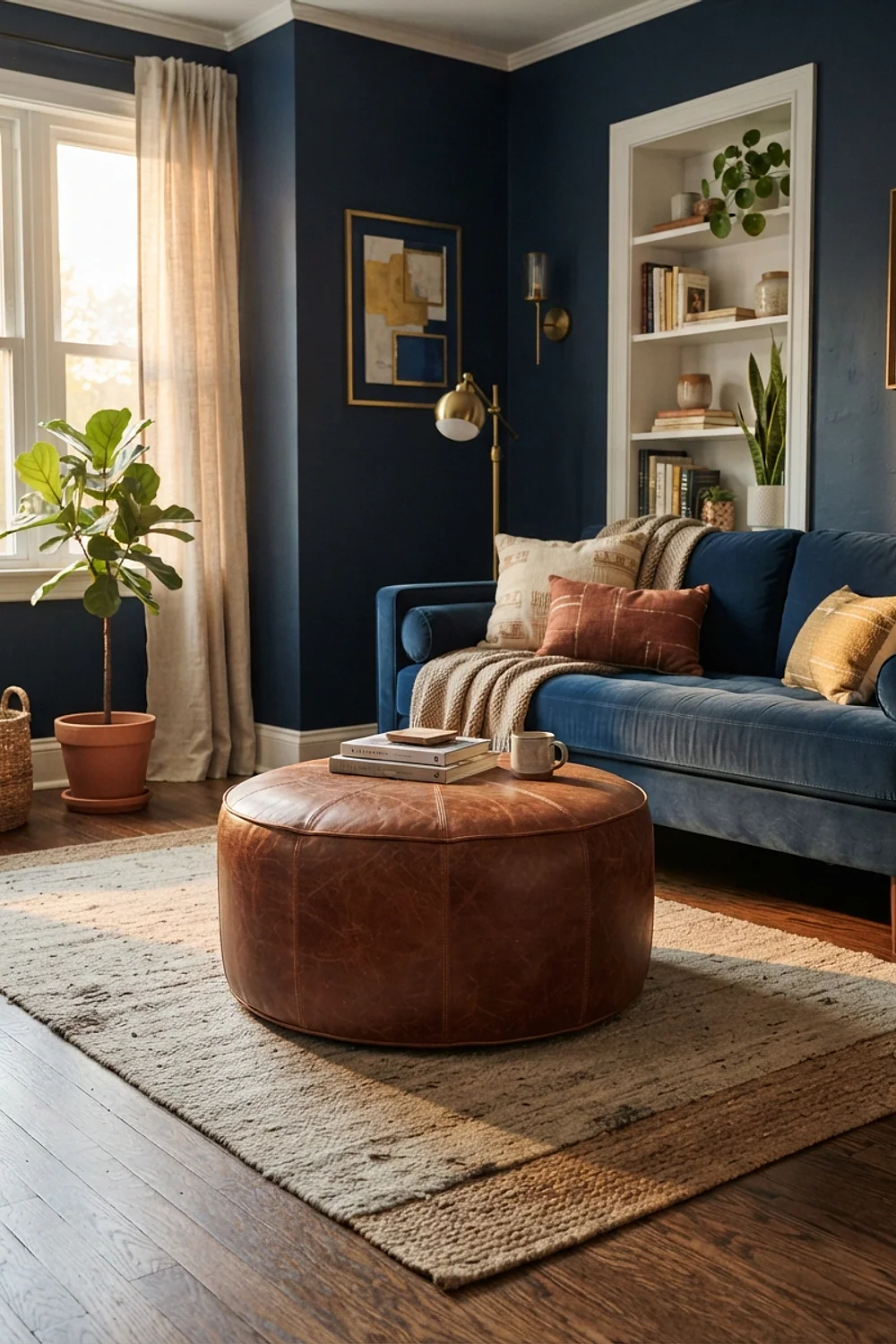
An ottoman does three jobs: footrest, extra seat for guests, and table once a tray is on top. At 36 inches square and 16-18 inches tall, it fits in front of most armchairs without blocking the walkway.
Choose a flat top over a deeply tufted one, or the tray will wobble. It suits families with small children, because the corners are padded. A lift-top version holds a few throws, though the hinge adds a pinch hazard.
12. A secondhand solid oak or walnut sideboard
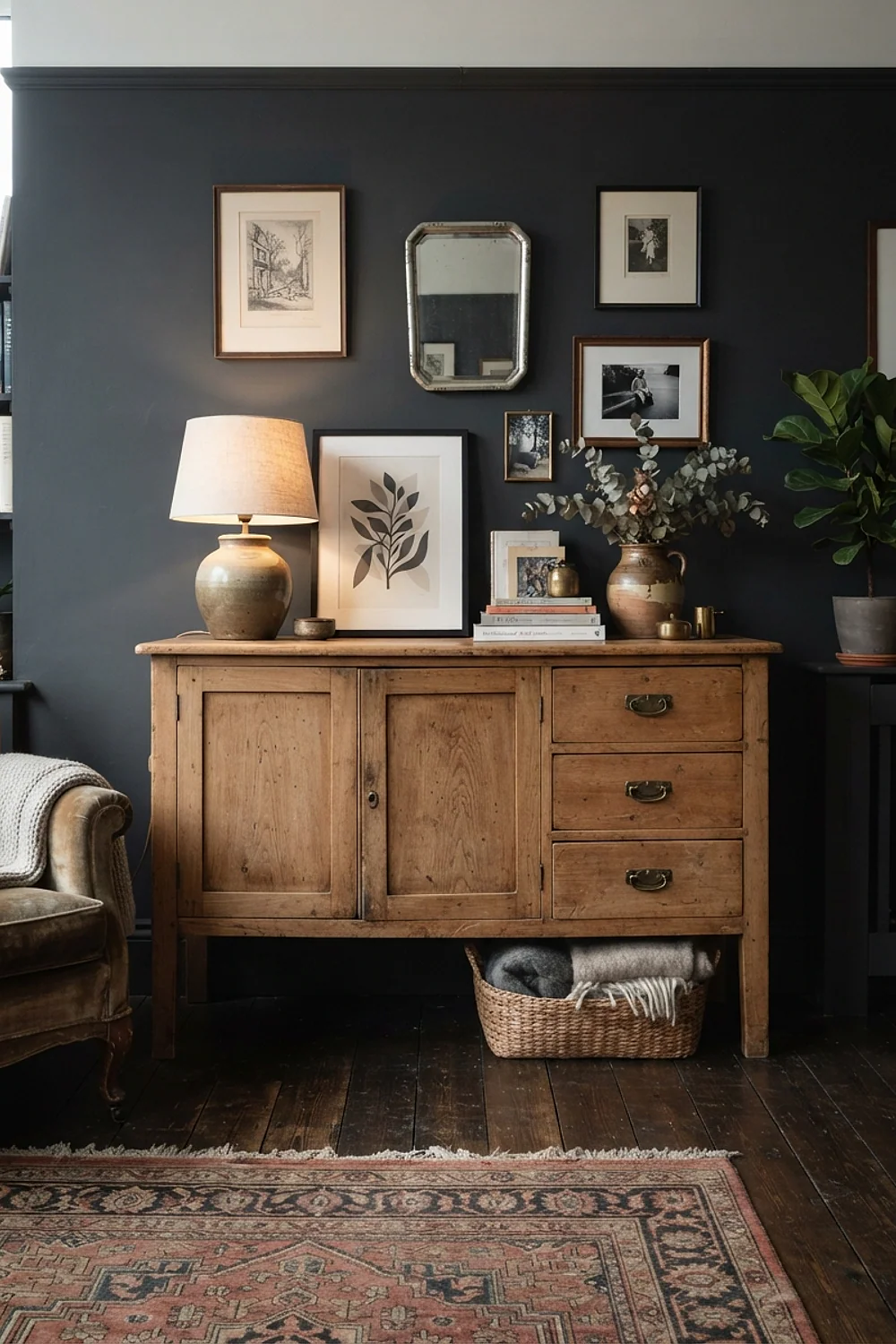
Pull a drawer and look at the corners. Interlocking dovetails mean real joinery, while staples and visible glue lines point to particleboard. Solid wood can be sanded and refinished several times, but veneer thinner than a sixteenth of an inch can’t.
Dealers often price a 60-inch sideboard between $300 and $900, a fraction of retail for something comparable. Check for pinhole holes (woodworm) and sniff the drawers for damp. A musty smell rarely leaves.
13. A leather-strapped steamer trunk
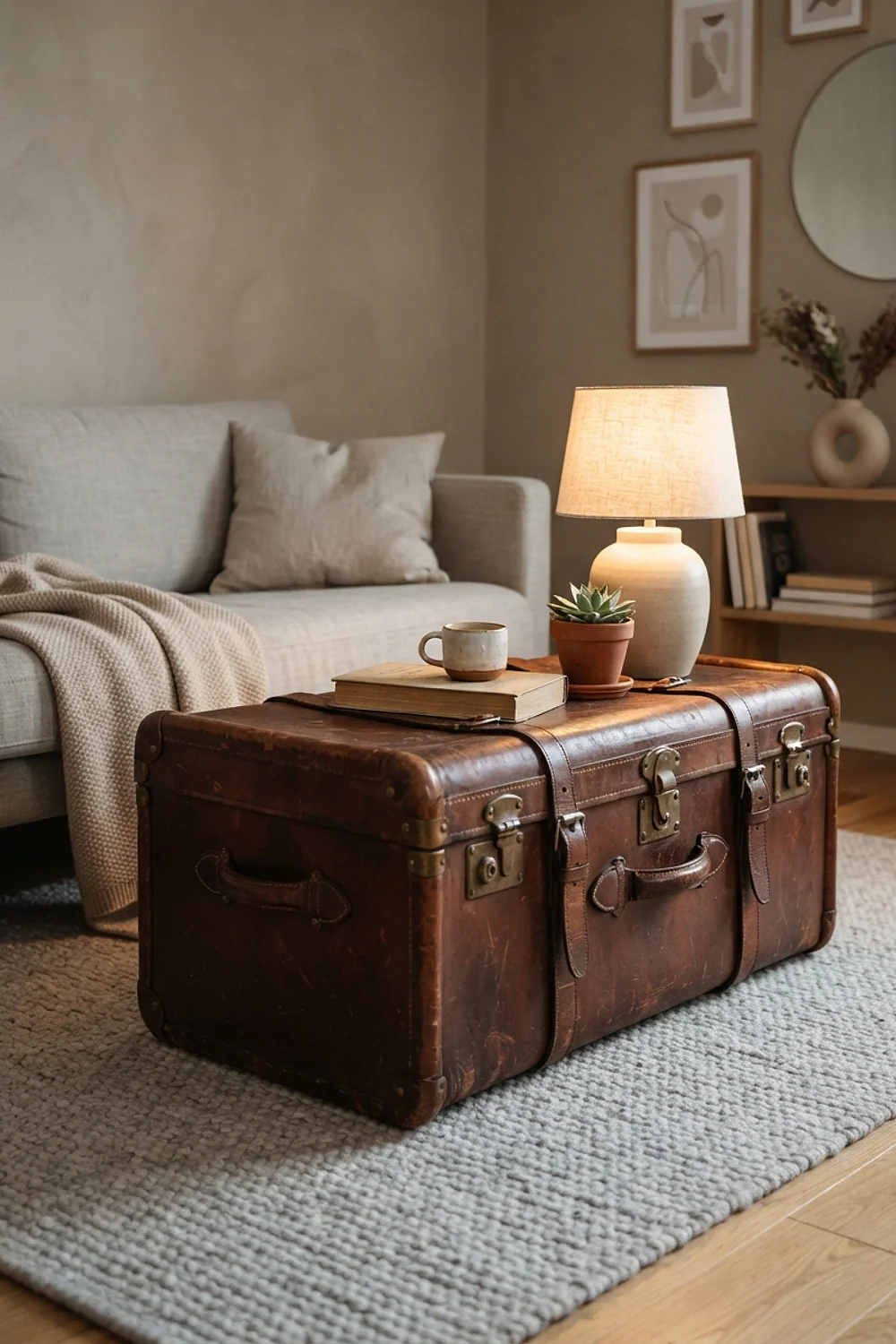
A trunk around 36 by 20 by 18 inches works as a side table and hides throws, board games, and cables. The shape comes from 19th-century travel, and it still earns its place in rooms with no closet.
Keep the lid clear of heavy stacks, or it won’t open easily. Stick felt pads under the feet so brass corners don’t scratch hardwood. Skip hard plastic imitations, because their lids warp within a few years.
14. Velvet cushions with feather-and-down inserts
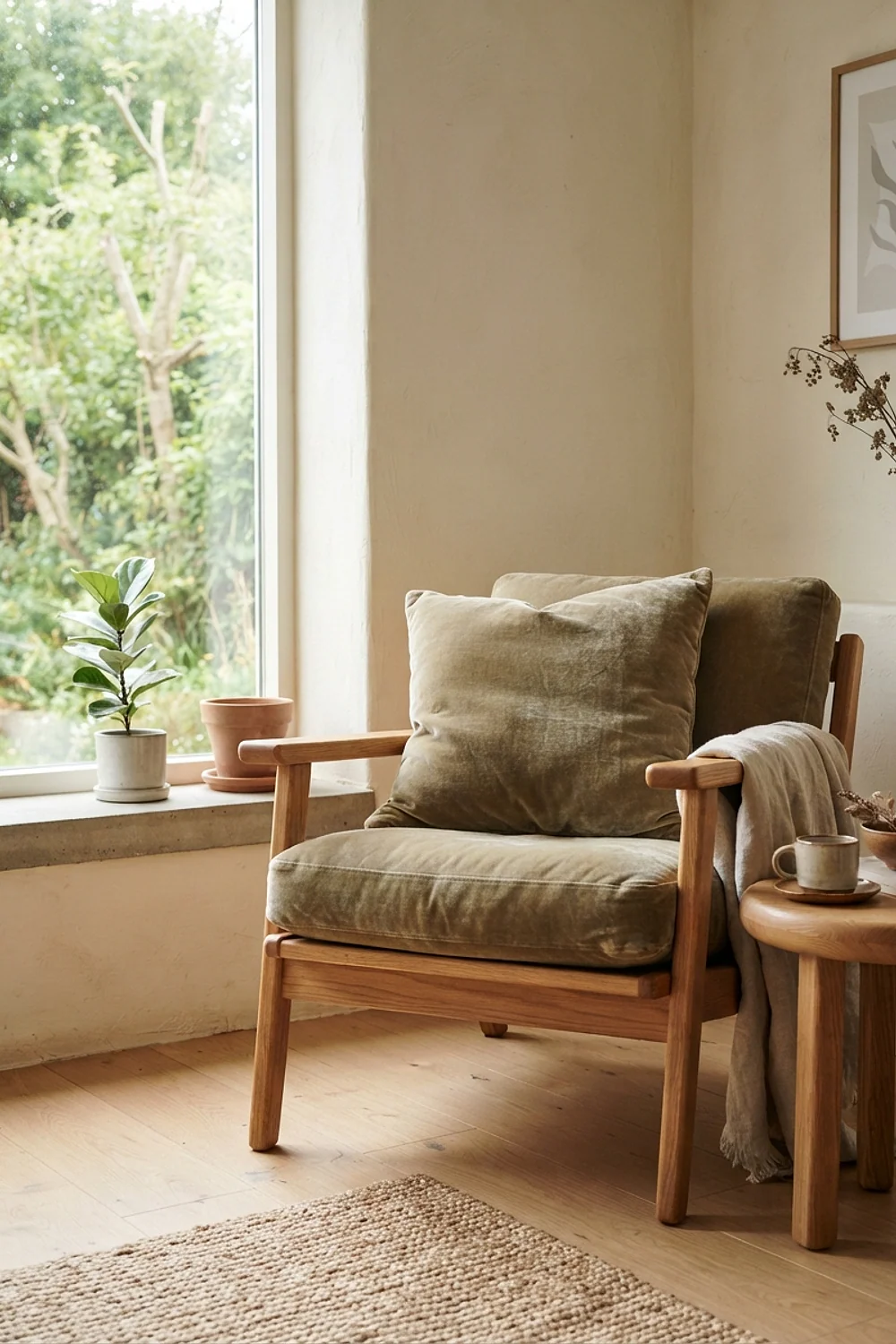
Cotton velvet shifts shade as a hand brushes the pile, which gives a sofa depth without adding pattern. Stuff a 22-inch cover with a 24-inch insert and it plumps properly instead of drooping at the corners.
Good ones run $40-$90 each, and polyester inserts flatten within a year. On an 84-inch sofa, three to five cushions looks right. Use an odd number, and don’t match every one.
15. A gilt or oak-framed mirror over the mantel
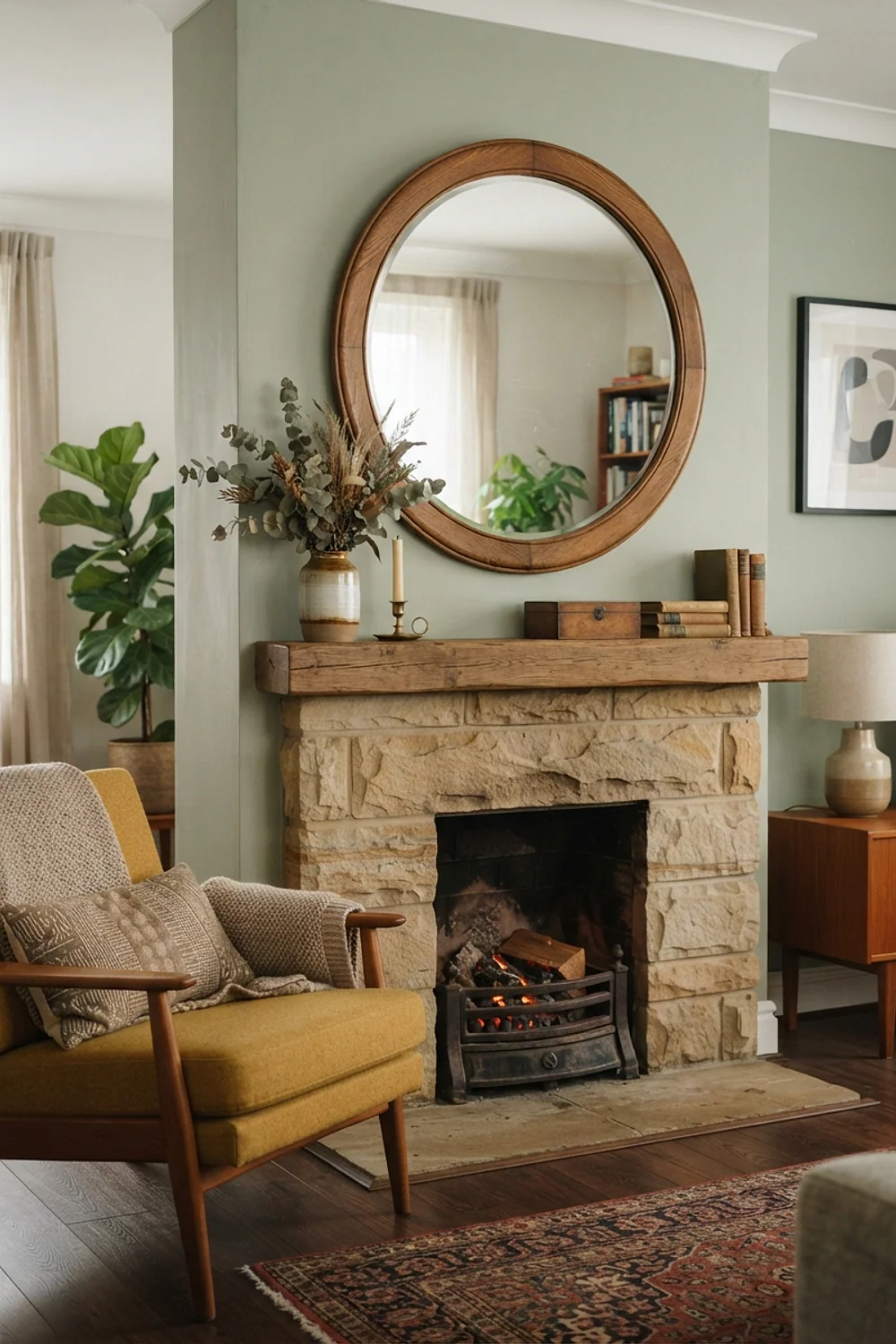
Pier glasses in 18th-century houses doubled the light from a few candles, and the trick works with any window. Hang the mirror so it catches the 4pm sun from the opposite wall and the room brightens without another lamp.
Make it about two-thirds the width of the mantel, with the bottom edge 4-8 inches above the shelf. Hung too high, it floats. Make sure it reflects something worth seeing, not a pile of mail.
16. Two or three wood tones instead of a matched suite
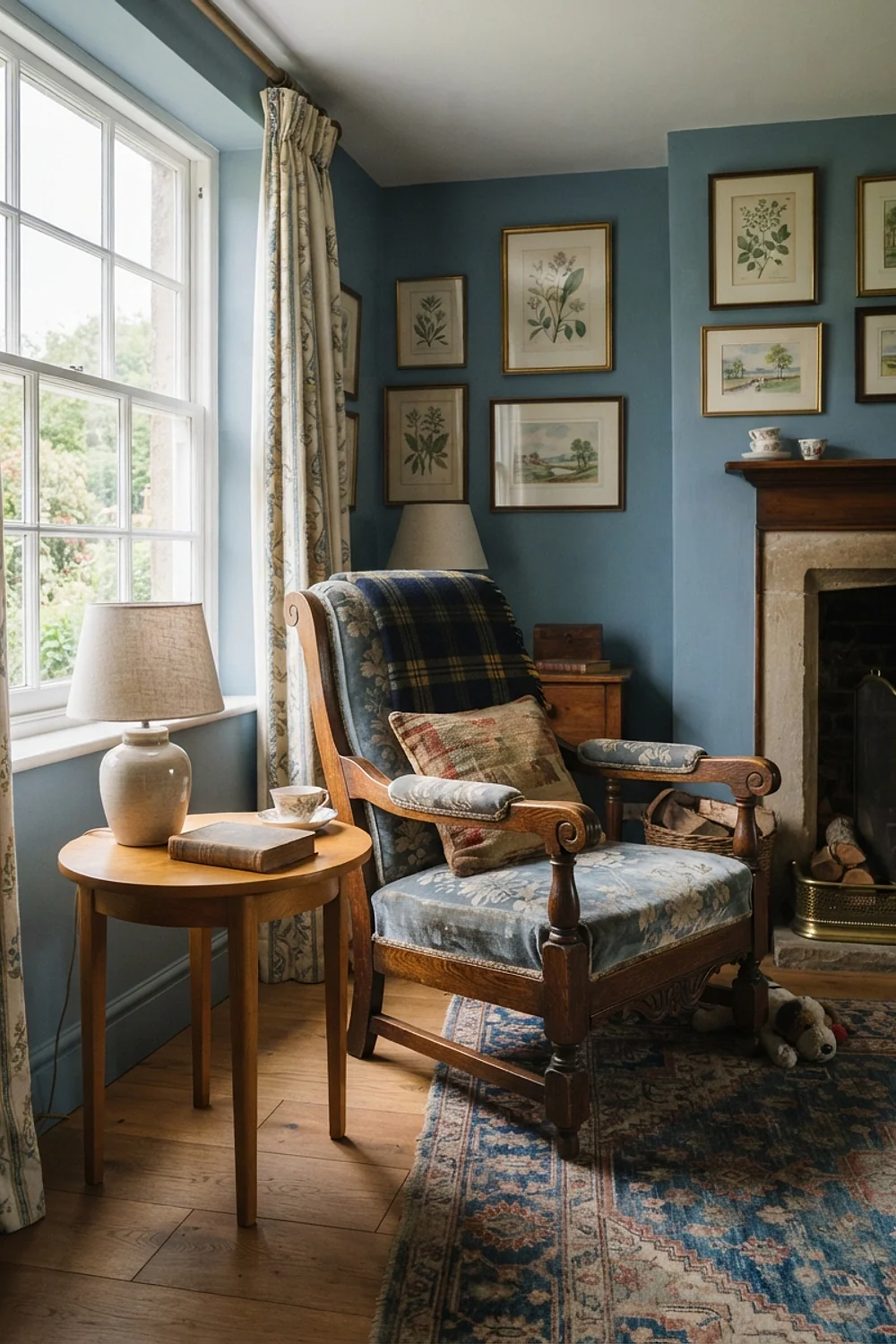
An oak sideboard, a walnut side table, and a painted bookcase look collected. A matched suite from one showroom flattens a room, because every surface carries the same grain and the same shine.
Keep undertones similar, either all reddish or all yellow, and repeat each tone at least twice across the room. Three tones is a sensible ceiling. This approach is also the cheapest way to furnish a room, since mixed secondhand pieces are easy to find.
The pieces that earn their place
The test for living room decor cozy that lasts is simple: would this piece still make sense with a different rug, a different wall color, and a different house? A solid oak sideboard passes. A neon sign does not.
Spend on anything you touch daily or can’t replace easily. Save on what changes with the season.
- Spend: sofa frame, wool rug, solid wood tables, lamps with proper wiring.
- Save: cushion covers, throws, frames, candles, and anything with a printed trend pattern.
- Skip: matched furniture sets, flat-pack “leather” sofas that flake, and rugs under 8 feet in a large room.
Proportion decides everything.
A fad is usually an outsized gesture: an oversized pouf, a huge arc lamp, a sofa with a 40-inch seat depth. A classic fits the room whether the room is 10 by 12 or 16 by 20.
Updating living room decor cozy classics without losing them
Living room decor cozy doesn’t have to look like a museum. A classic piece keeps its value when the things around it change, so refresh the cheap layers and leave the structure alone.
- Swap the cushion covers each season. Rust and ochre in autumn, pale linen in spring.
- Repaint one wall or the trim, not the whole room, and live with it for a week before committing.
- Change lamp shades before lamps. A new linen drum shade costs less than $40 and shifts the light.
- Rotate the art every year. Keep the frames, change the prints.
- Move one piece. A chair turned 15 degrees can reset a layout.
The common error is changing everything at once. Replace one thing, stand in the doorway, and look again at 4pm and again after dark before touching the next.
Keeping a cozy room classic
A living room decor cozy that lasts comes from pieces sized to the room, made from materials that age well, and arranged for real conversation. Start with the largest item, the sofa or rug, and let the rest follow its measurements.
Save or pin this list so it’s on hand when the tape measure comes out, and begin with the rug: measure the floor, then check that the front legs of the sofa and chairs will sit on it.