15 Thanksgiving Decorations Table Ideas That Fill Every Seat
Pressed linen has a dry, papery crispness under your palm, and by 4pm in November the low sun turns every glass rim on the table amber. That’s the feeling a good thanksgiving decorations table is built around, and none of it depends on a big budget.
Below are 15 ideas, from runners to dimmer bulbs. Each one comes with the reasoning, the setup it suits, and the mistake to dodge. Most lean on thrifted, grocery-store, or reusable pieces, because the cheaper route beats the pricey one more often than you’d expect.
Understanding the thanksgiving decorations table look
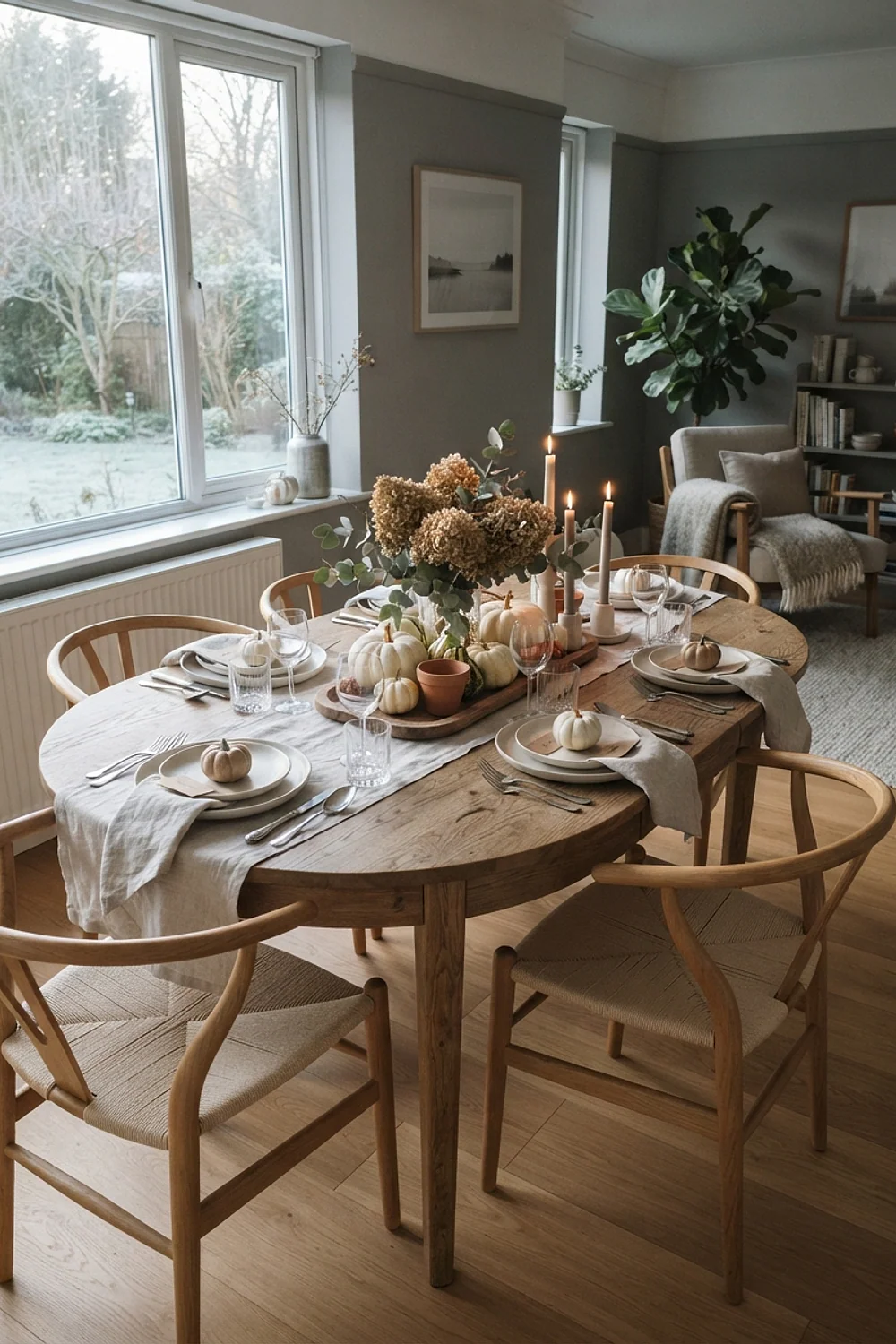
A thanksgiving decorations table works in four layers: a base (cloth or runner), a low centerpiece, a place setting, and light. Get those four right and everything else is extra.
The style borrows from harvest tables of the 1800s, where whatever was ripe went down the middle of the board. That’s why real gourds, branches, and bread baskets still feel right, and why shiny plastic turkeys never do.
The 15 ideas below are sorted roughly from the base layer up to the finishing details.
1. A washed-linen runner in rust or oatmeal
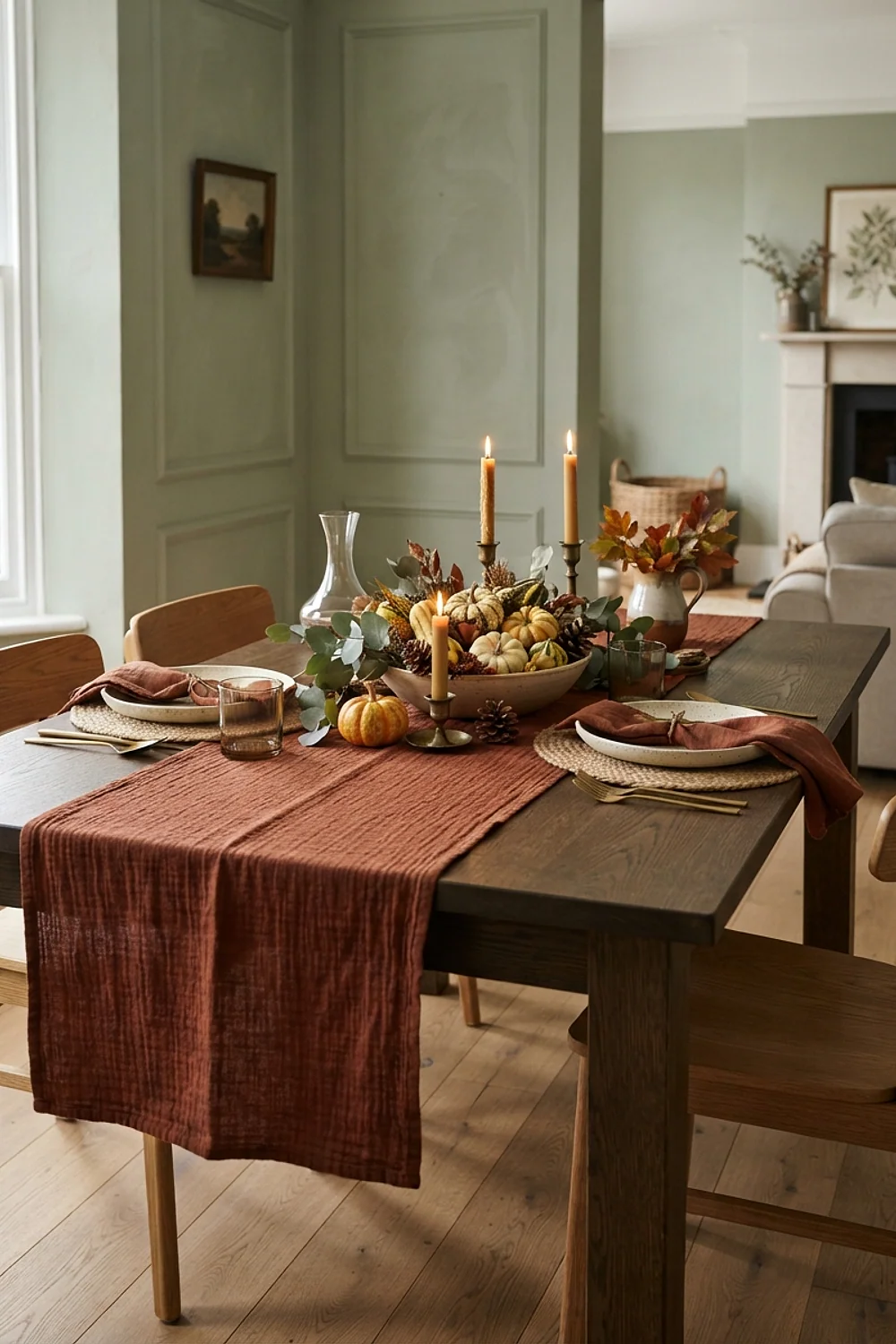
A linen runner 14 inches wide, hanging 8 to 10 inches past each end of the table, gives the table a spine without hiding the wood. Rust, oatmeal, and olive read as autumn without waving a cartoon turkey at anyone. Washed linen has a soft, slightly rumpled hand that forgives wrinkles.
It suits any wood table you actually like looking at. Skip polyester versions with a sheen, because they catch candlelight like a plastic tablecloth and slide when someone leans an elbow.
Measure the table first. A runner that stops 3 inches short of the end looks like a mistake, not a choice.
2. Handwritten place cards on kraft tags
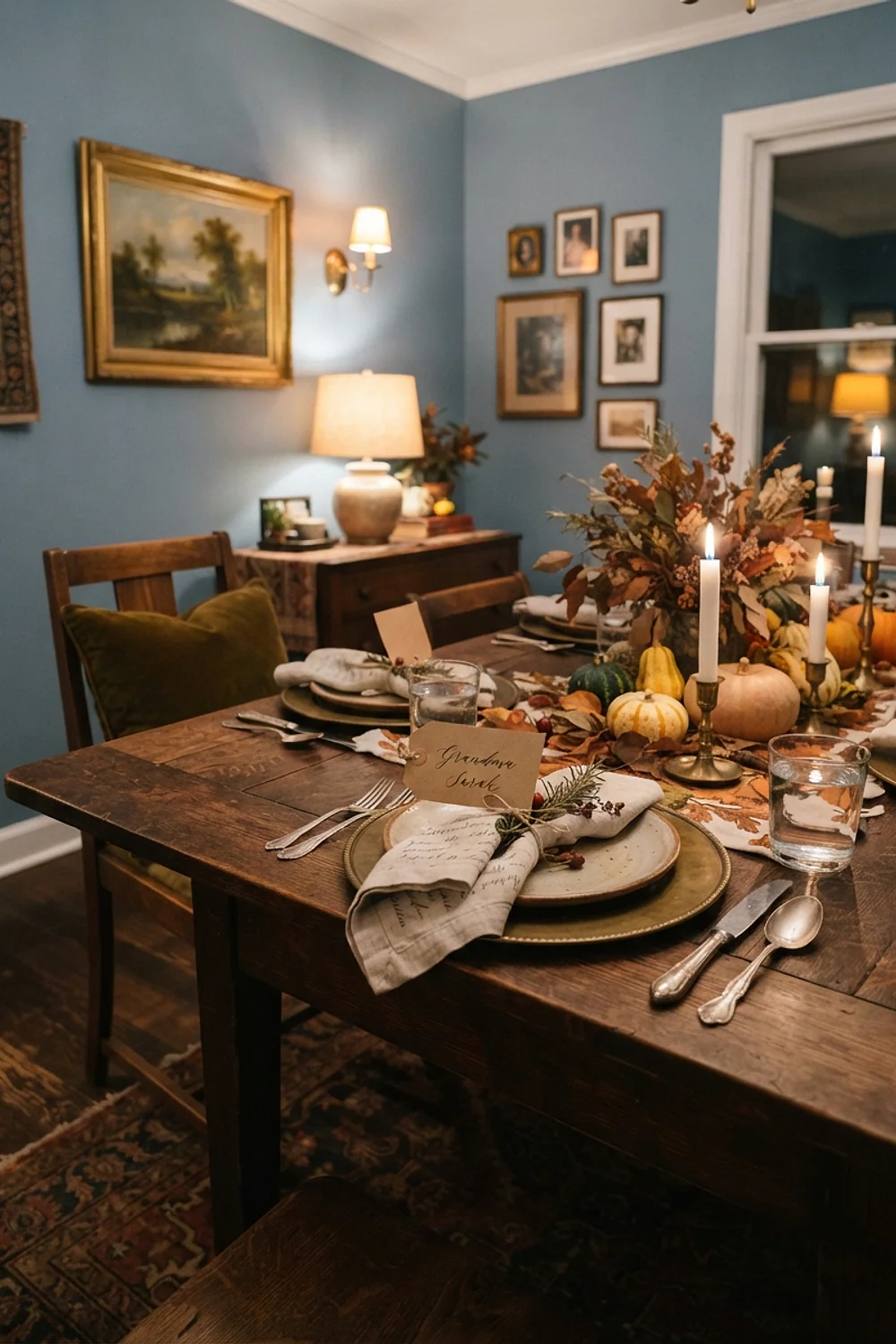
Kraft tags about 2 by 3.5 inches, propped against a glass or tucked into a folded napkin, tell twelve people where to sit before anyone has to ask. That matters most at a mixed table, where the uncle who loves debating shouldn’t land next to the cousin who hates it.
Write first names only, in letters about half an inch tall. Use a 0.5 mm felt-tip pen, since ballpoints skip on the rough paper.
Don’t pre-write cards a week ahead if the guest list is still shifting. Retyping a cardboard tag at 3pm on the day is nobody’s idea of fun.
3. Seat pads and chair-back throws
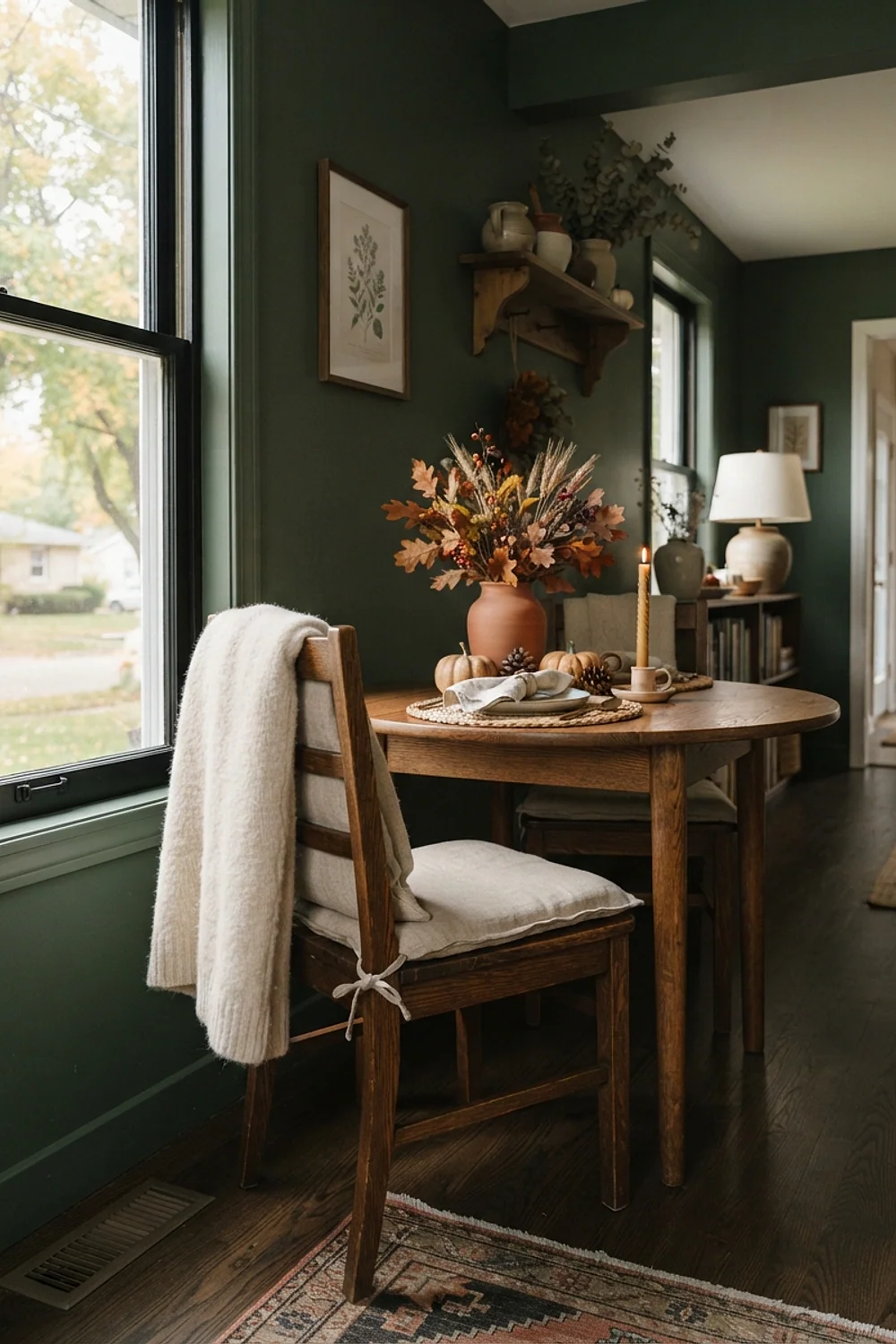
Thin foam pads in tie-on linen covers, around 1.5 inches thick, make a hard dining chair bearable through a three-hour dinner. Wooden seats start to ache near the 90-minute mark, which is exactly when the coffee comes out and people want to linger.
A wool or faux shearling throw folded over each chair back adds texture, and it unifies chairs that don’t match. That’s a real help if borrowed folding chairs are joining the table.
Keep pads under 2 inches. Anything thicker pushes knees into the table apron and makes guests sit too high.
4. Unscented tapers in thrifted brass holders
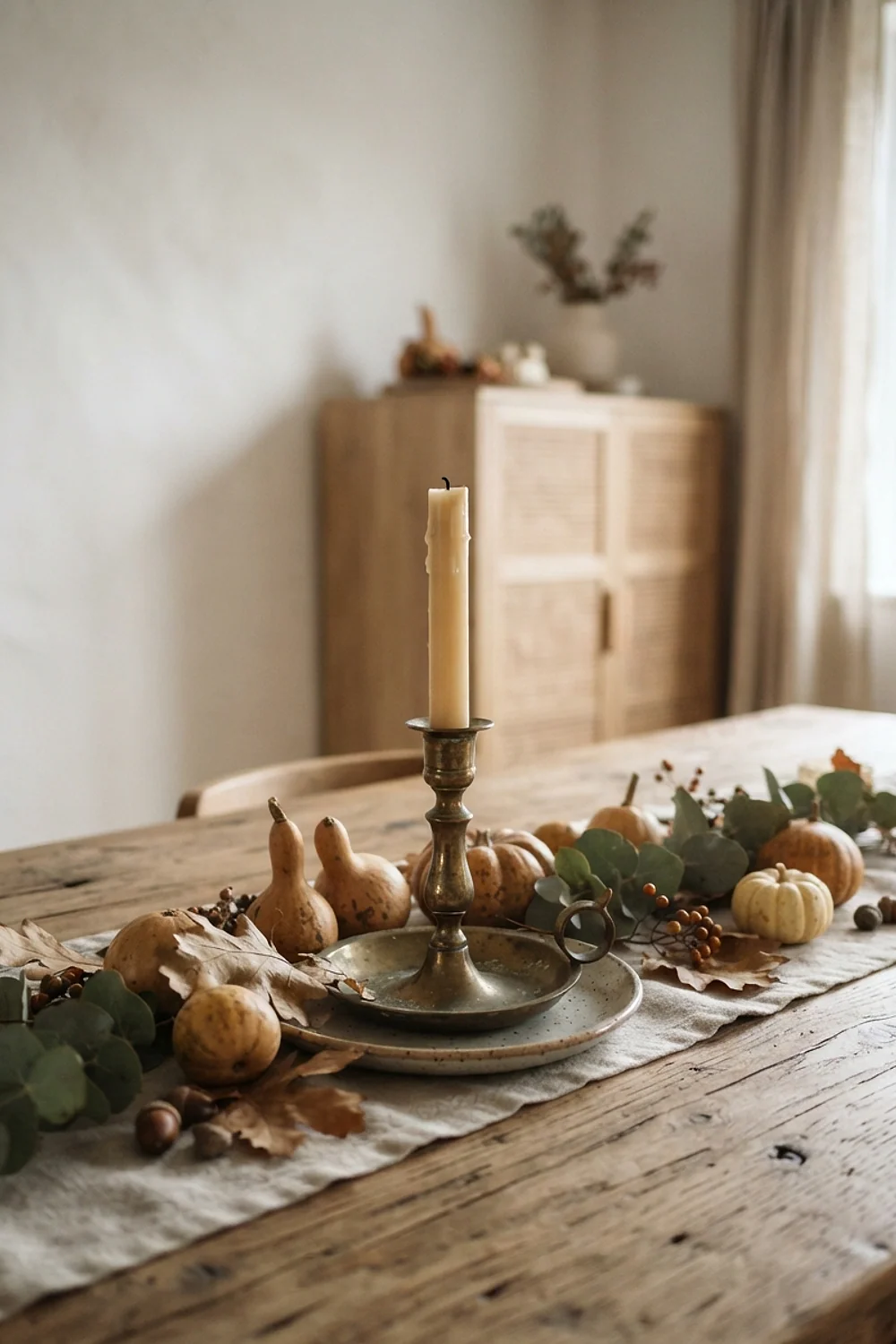
Thrifted brass candlesticks run about $3 to $6 a pair, against $40 or more for new ones, and the patina looks better under flame anyway. Pick unscented tapers, because cinnamon or pumpkin-spice wax fights with the smell of the food. A 10-inch taper burns roughly 8 hours, so one pack covers the whole afternoon.
Watch the flame height. Flames between 10 and 14 inches above the tabletop land at seated eye level and glare into faces. Use holders at least 8 inches tall with 10-inch tapers, or drop to votives under 4 inches.
5. A bar cart or stool parked beside the table
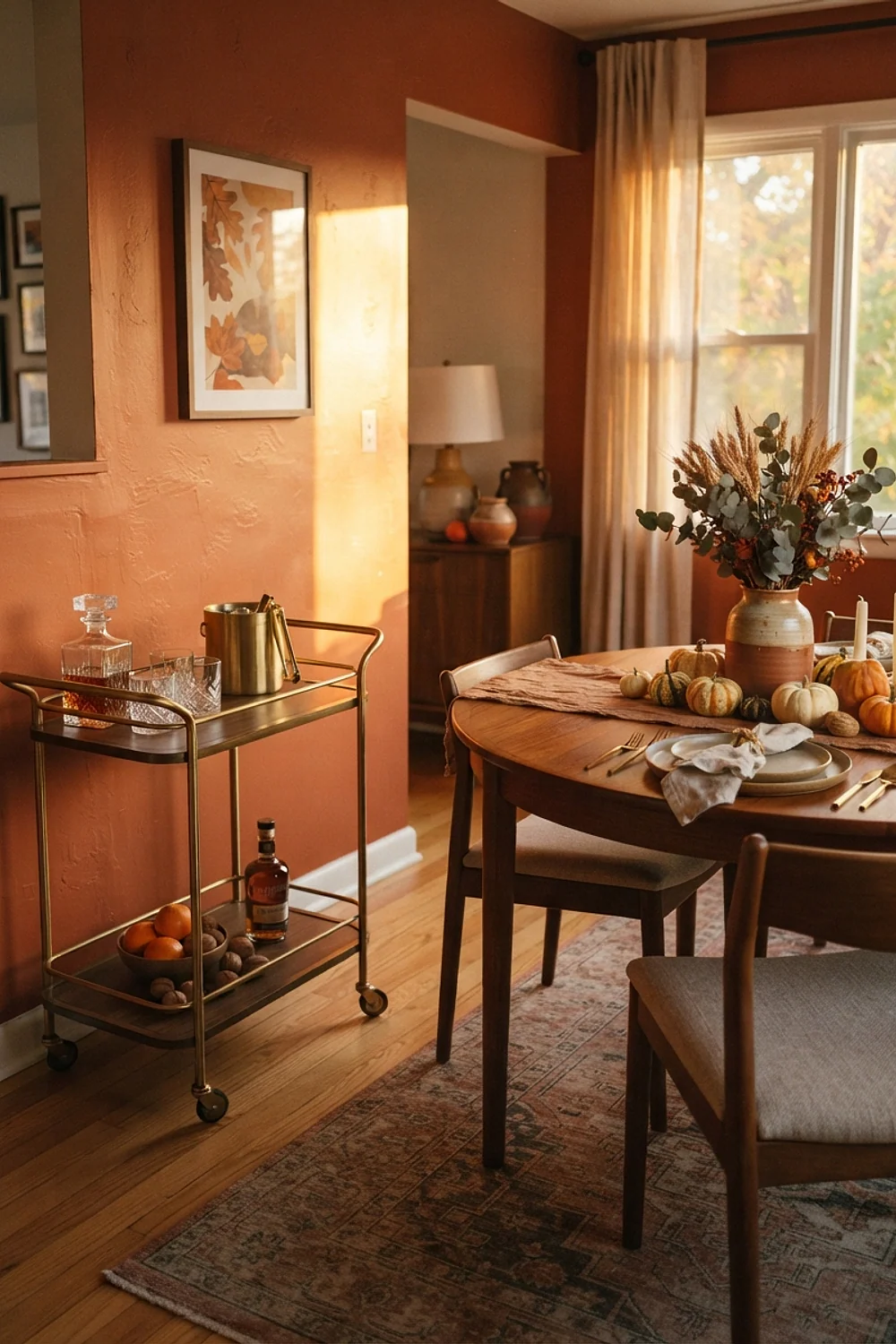
A rolling bar cart or a sturdy stool beside the table holds extra platters, gravy, and bread, so the tabletop stays clear for decoration. A crowded surface kills any centerpiece, and the cart gives the overflow a legitimate home.
It suits small dining rooms with no buffet or sideboard. Pull a cart in from the kitchen, kitchen island, or hallway, and nobody has to buy anything.
Lock the casters before loading it. A cart that drifts six inches under a full gravy boat is a stain waiting to happen.
6. Natural rattan or seagrass chargers
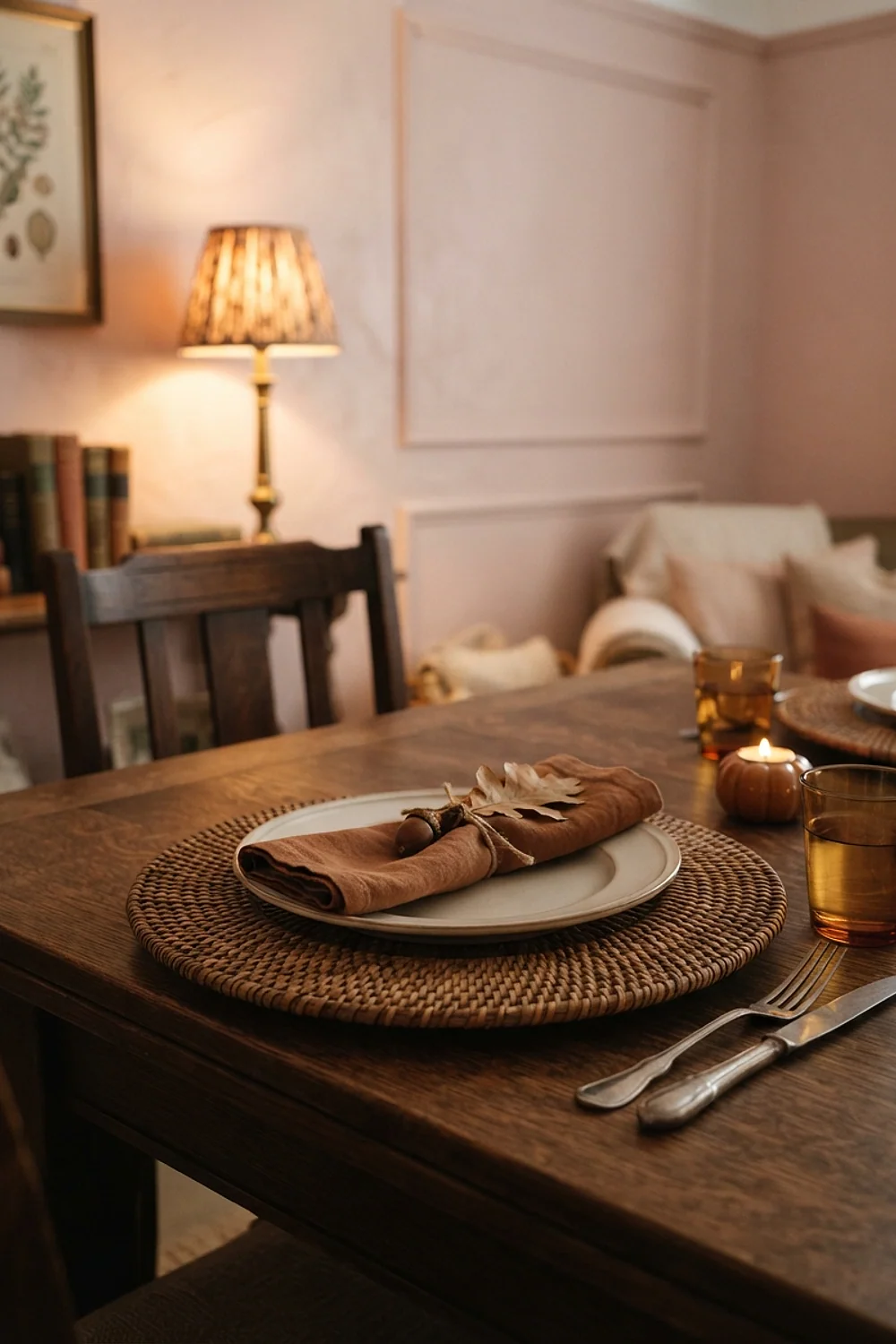
Rattan chargers about 13 inches across give each place a textured base and make white or cream plates stand out. They work well with mixed or inherited dinnerware, since the woven ring ties odd plates together.
The trade-off is the weave. Stemmed glasses snag and wobble on it, so place glasses just above the knife, off the charger. Seagrass also soaks up spills and stains, so choose wood or cork if small children are at the table.
7. A 10 to 12 inch center band down the middle
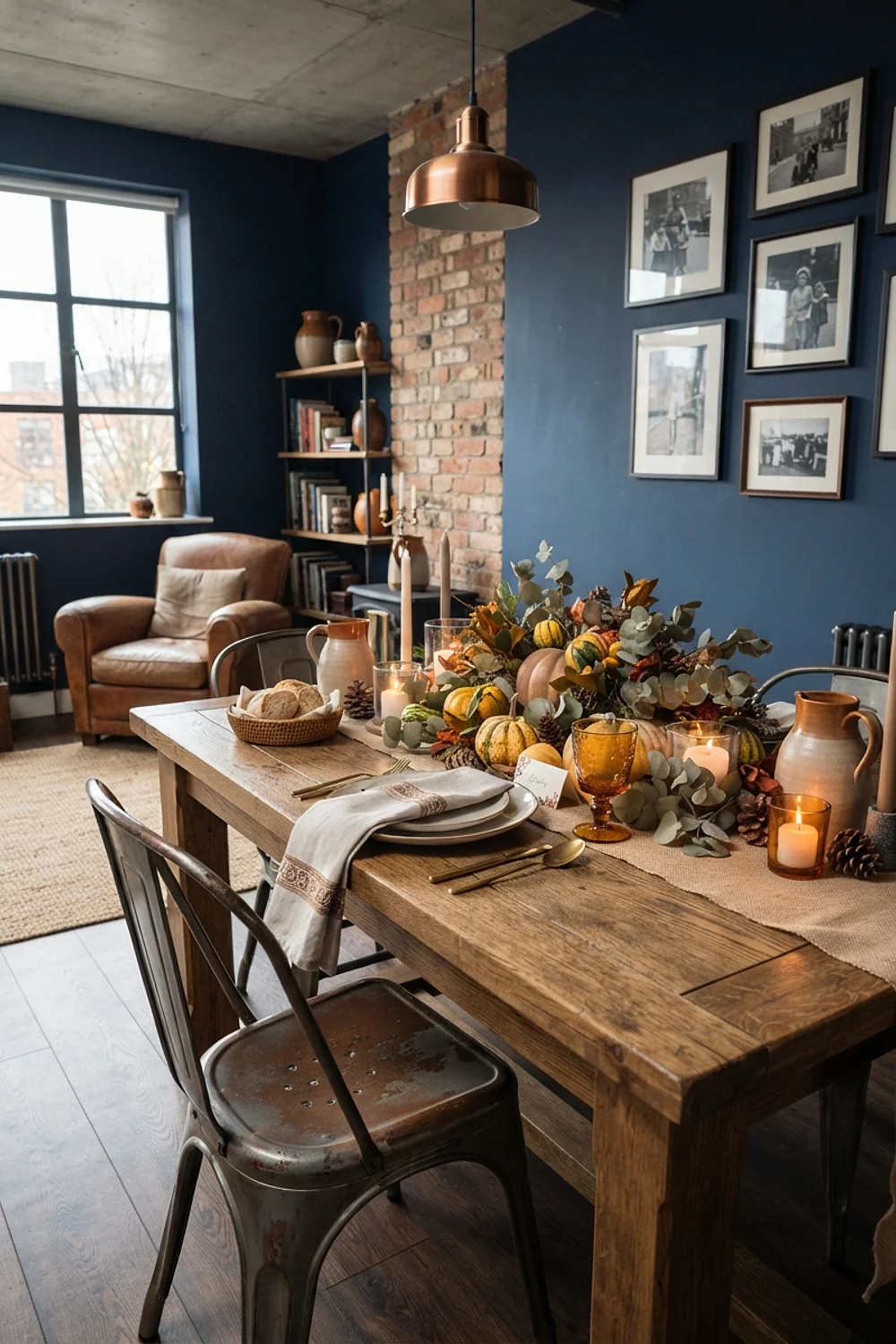
A band of decoration 10 to 12 inches wide down the center of a 36-inch table leaves 12 inches a side for a 10.5-inch plate. That’s tight but workable, and a 36-inch table can’t spare much more than that. Wider tables, 40 inches and up, can take a wider band.
This layout suits rectangular tables seating 6 to 8. Scattering pieces out to the edges is the usual error, because it leaves no clear spot for platters to land.
Keep a 6-inch gap between objects so serving spoons and elbows both fit.
8. Low branches in place of a tall arrangement
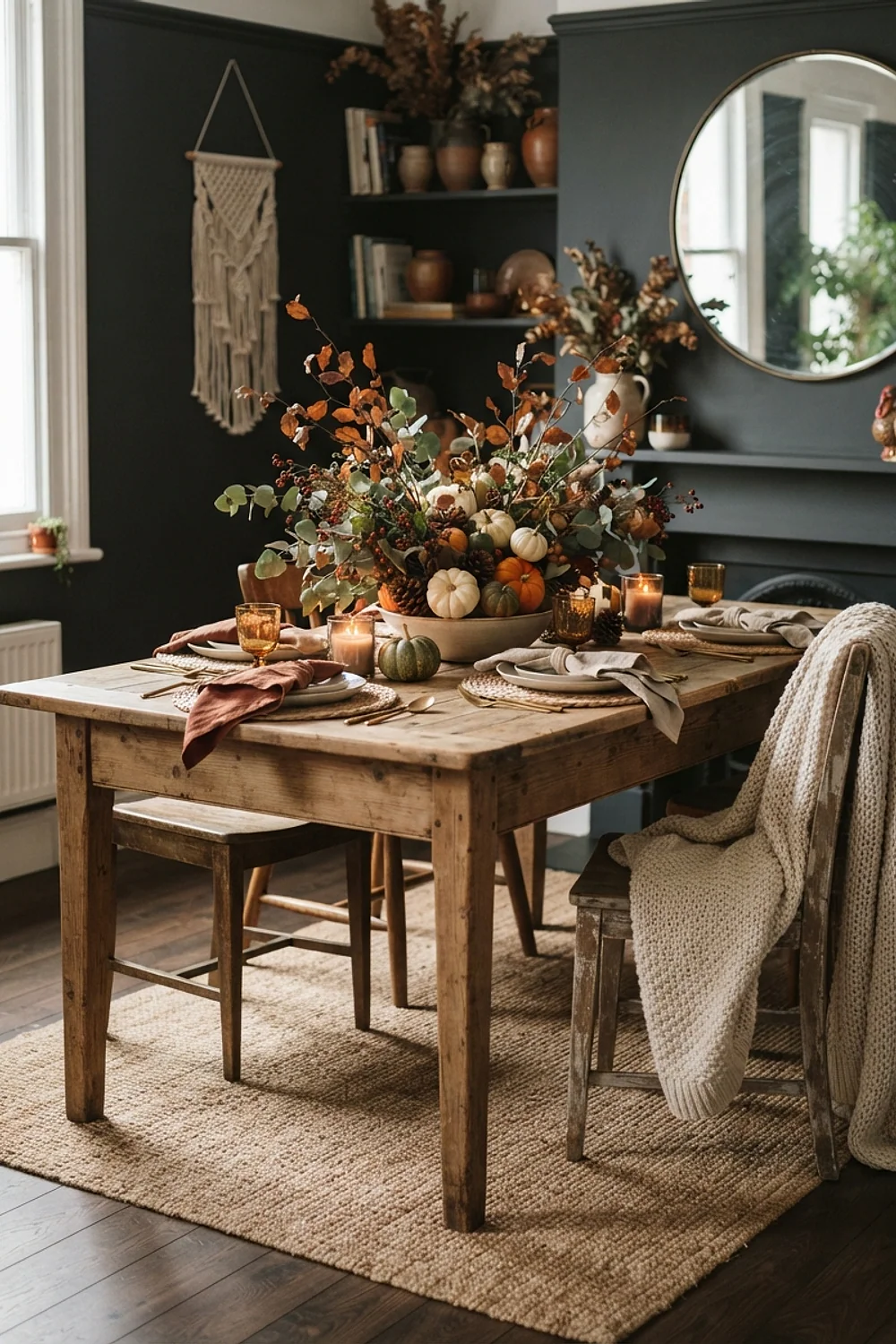
Anything taller than 12 inches in the middle of the table cuts conversation in half. Tall floral arrangements look dramatic in photos, then block sightlines the second people sit down.
The fix is a short vase under 8 inches with long-stemmed branches starting above 20 inches, so eyes pass underneath. Bare oak or birch branches with a few dried hydrangea heads do it well.
This suits big gatherings of ten or more, where cross-table talk is the whole point. For a table of four, a low bowl is plenty.
9. A cluster of three mismatched pumpkins
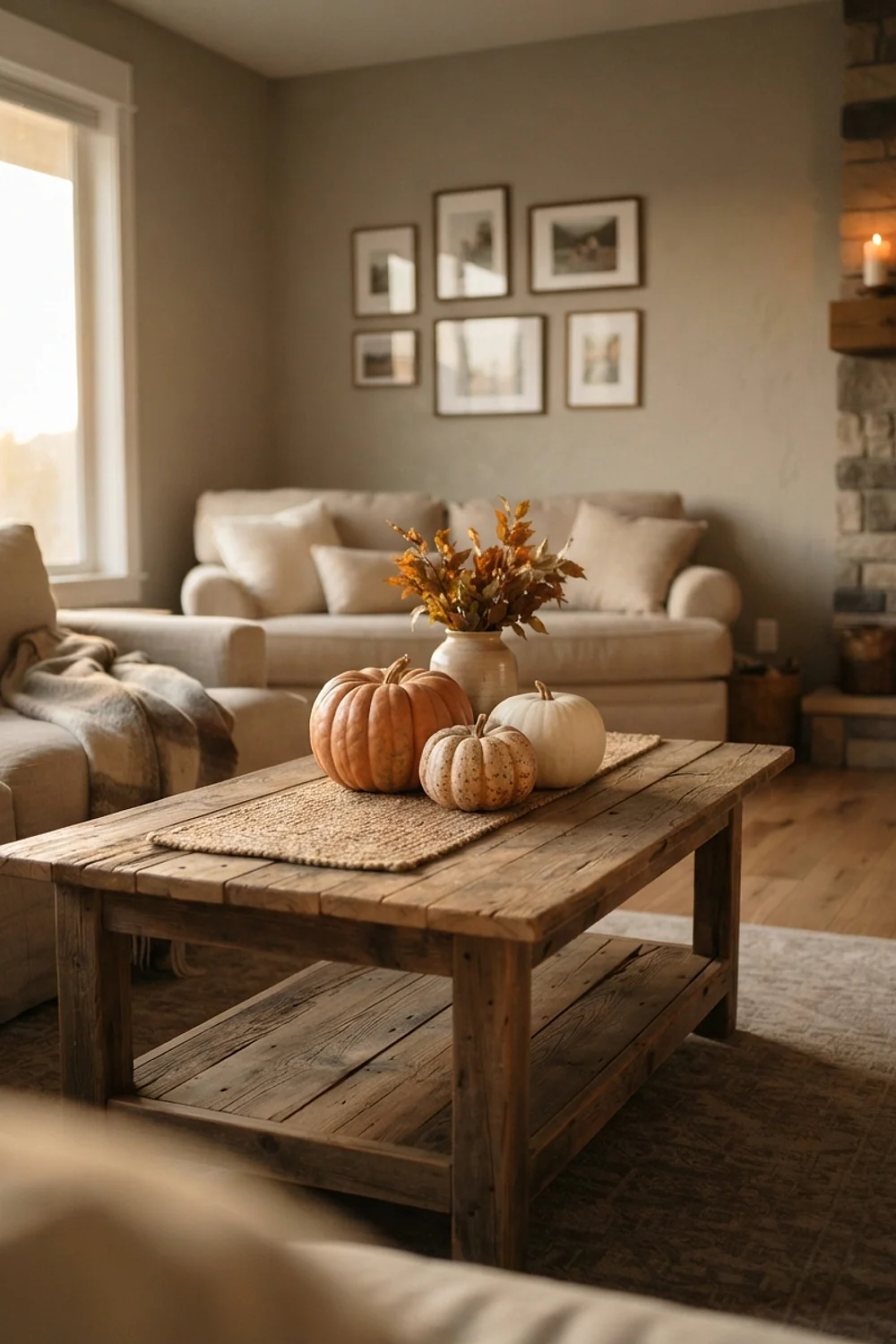
Three heirloom pumpkins at roughly 4, 7, and 10 inches, grouped slightly off-center, fill a 72-inch table better than twelve identical minis. A Jarrahdale gives blue-gray and a Cinderella gives a squat red-orange. Isn’t a cluster of grocery-store pumpkins the cheapest centerpiece going? Exactly.
At about $4 to $8 each, they undercut a $35 ceramic pumpkin, and the real ones look better. Here’s the counterintuitive part: an uncut pumpkin lasts 6 to 8 weeks, while cut flowers wilt in about one.
Wipe each stem and base with a dry cloth, because a damp pumpkin leaves a ring on a wood table.
10. A three-color palette held to 60/30/10
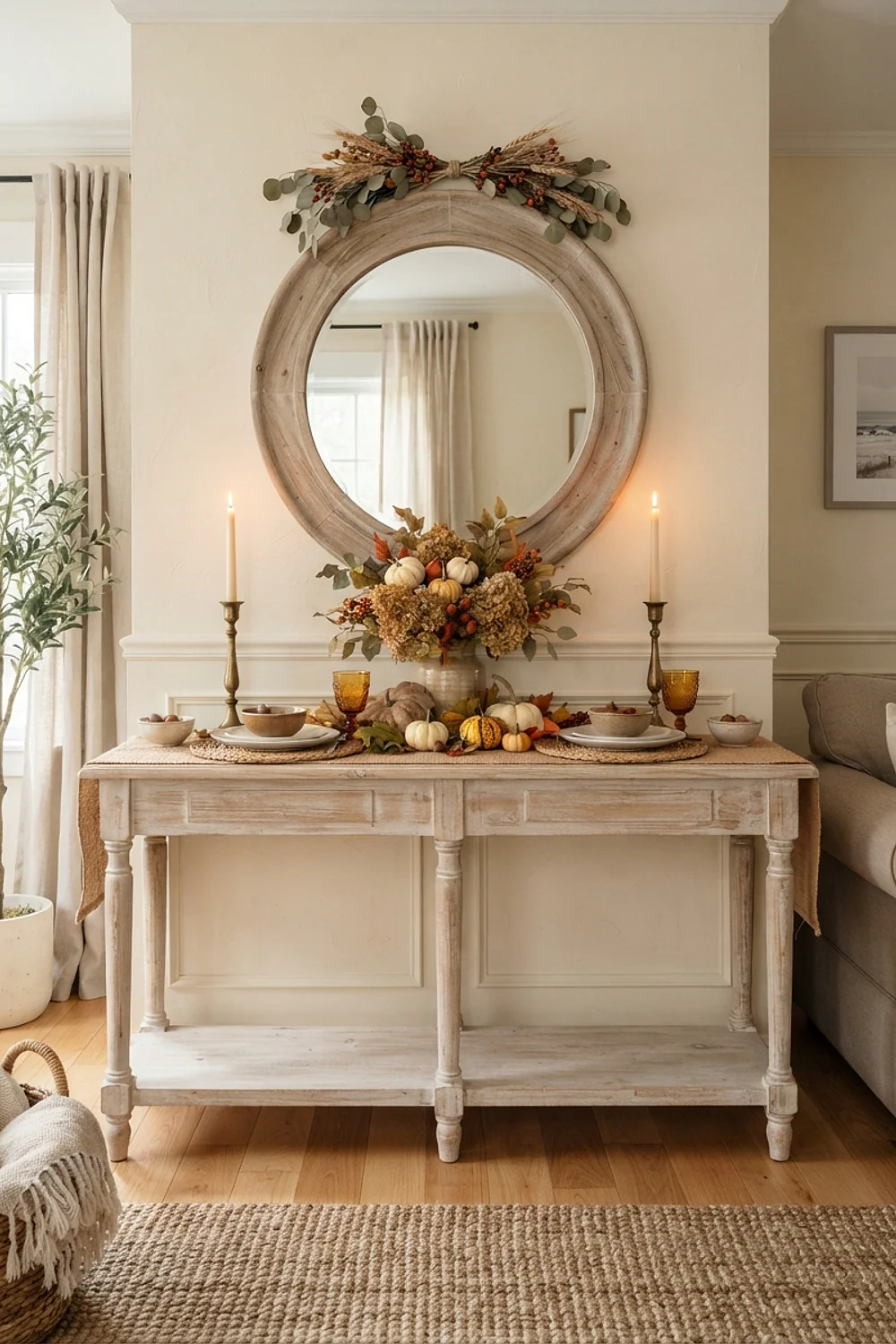
Aim for roughly 60 percent neutral (cream or oatmeal), 30 percent rust or terracotta, and 10 percent a darker accent such as plum or deep olive. That ratio is what makes a table look planned rather than collected from a gift shop clearance aisle.
Test fabric swatches at the actual dinner hour. Afternoon light in November runs cool and slightly gray, and a pumpkin orange that glows at noon can go muddy by 4pm.
Avoid full-strength orange, yellow, red, and brown all at once. That combination reads as a school bus.
11. White napkins dyed rust at home
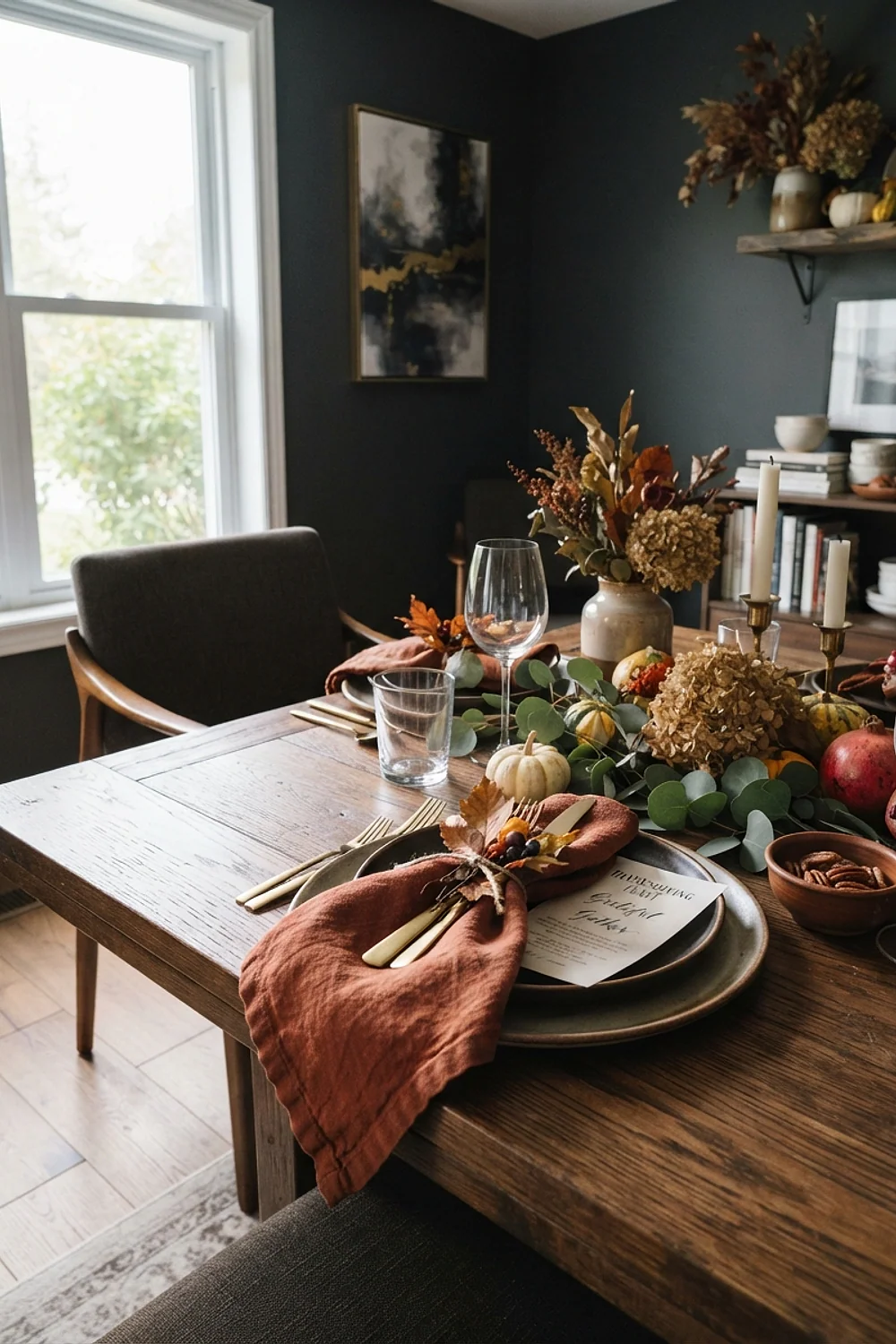
White cotton napkins, 20 by 20 inches, cost about $1 each from a restaurant-supply shop. A $5 bottle of liquid fabric dye in rust turns a dozen of them into a set that would run $6 to $8 apiece in linen. The math clearly favors the bucket.
Dye them in a large bucket, not a small pot, and stir for about 20 minutes with hot water. Rinse until the water runs clear, then wash them alone the first time.
Fold each napkin in thirds and slip a rosemary sprig under the fold. It smells good and costs nothing from a garden pot.
12. A kids’ table covered in kraft paper
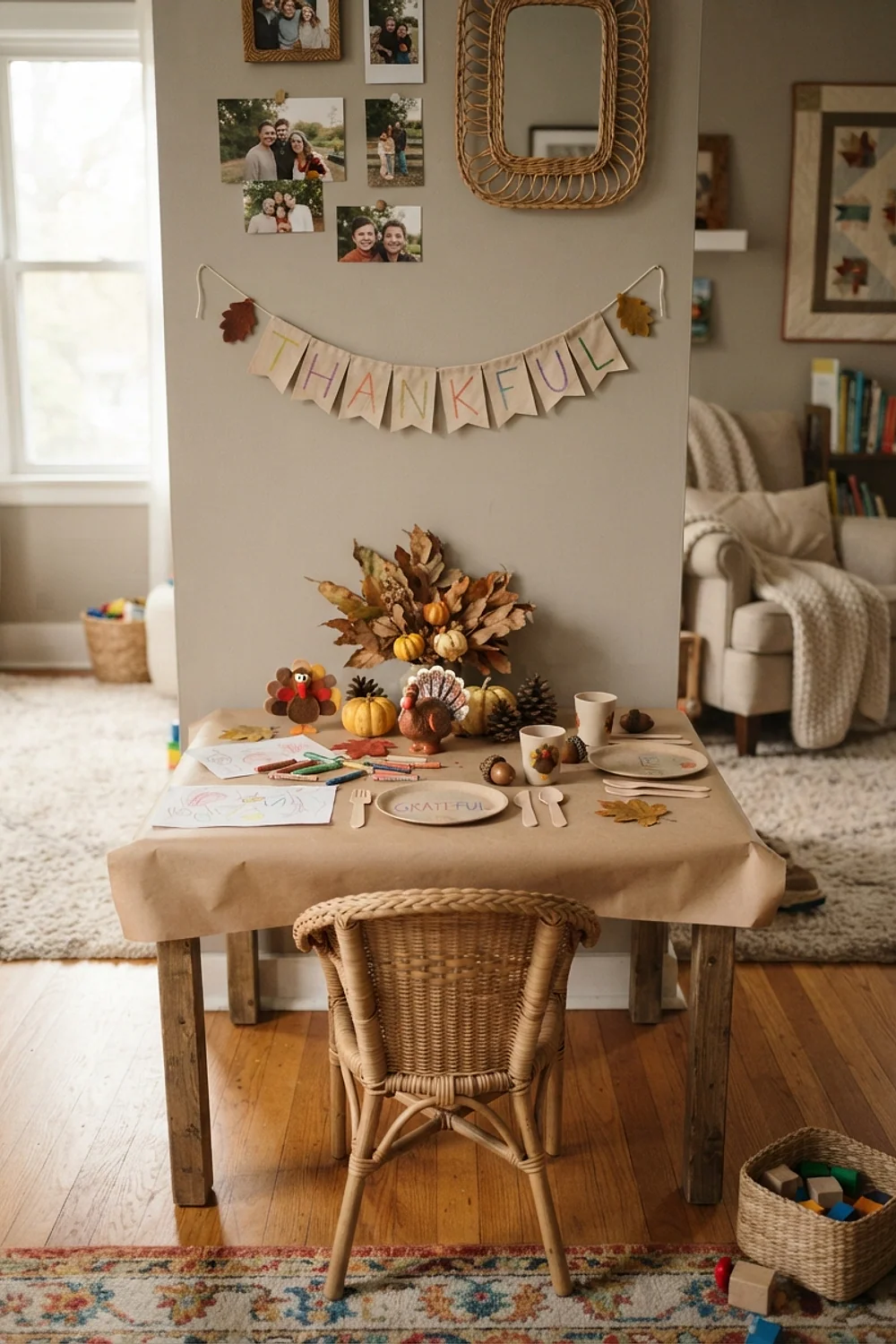
A roll of 30-inch kraft paper taped under the edges of a card table turns it into a drawing surface. Add a mug of crayons and the kids stay busy while the main table keeps its good cloth. It suits families with four or more children under ten.
Use crayons, not washable markers, which bleed through the paper and mark the table underneath. Tear the paper off as one sheet afterward and the cleanup takes about 30 seconds.
13. A felt table pad under the cloth

A felt or flannel-backed pad about 1/8 inch thick, under the cloth, muffles the clatter of forks and protects wood from hot platters. Noise is part of comfort, and a bare table at a loud dinner sounds like a cafeteria.
It matters most at larger gatherings of ten or more, where a hard surface bounces every sound back at you.
Cut the pad 1 inch smaller than the tabletop on every side. A pad that peeks out past the cloth edge ruins the clean line.
14. A dimmer and 2700K bulbs overhead
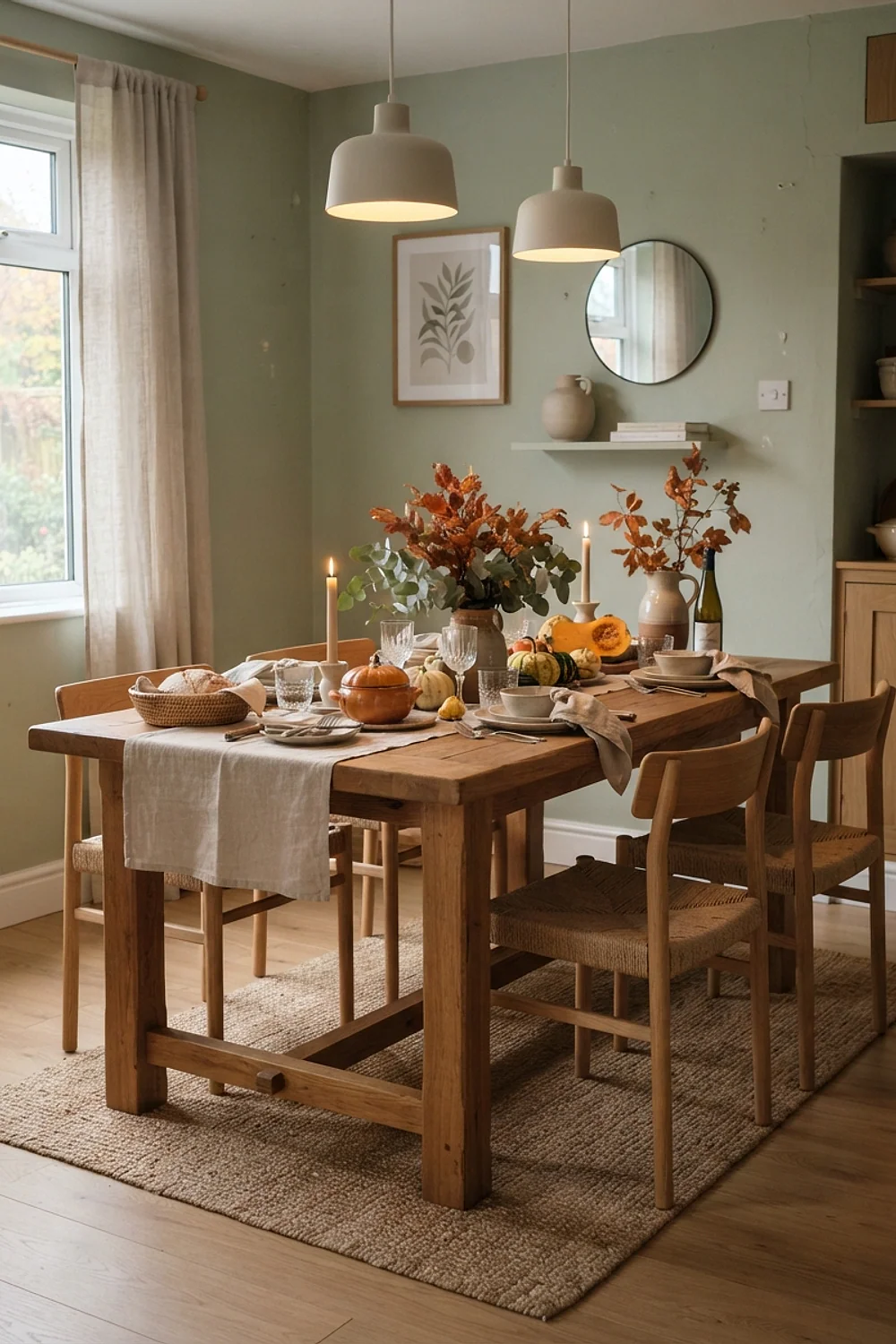
By about 4:45pm in late November, the sun is down across much of the US, and an overhead fixture at full power flattens every color on the table. A plug-in dimmer runs $12 to $15, and it pays for itself the first evening.
Swap in 2700K bulbs, which give a soft amber glow. Daylight bulbs at 5000K turn the whole table blue-white and make candlelight look weak.
Set the dimmer to roughly 40 percent when guests sit down. Lower than that and people can’t read the place cards.
15. A labeled bin for next year’s table
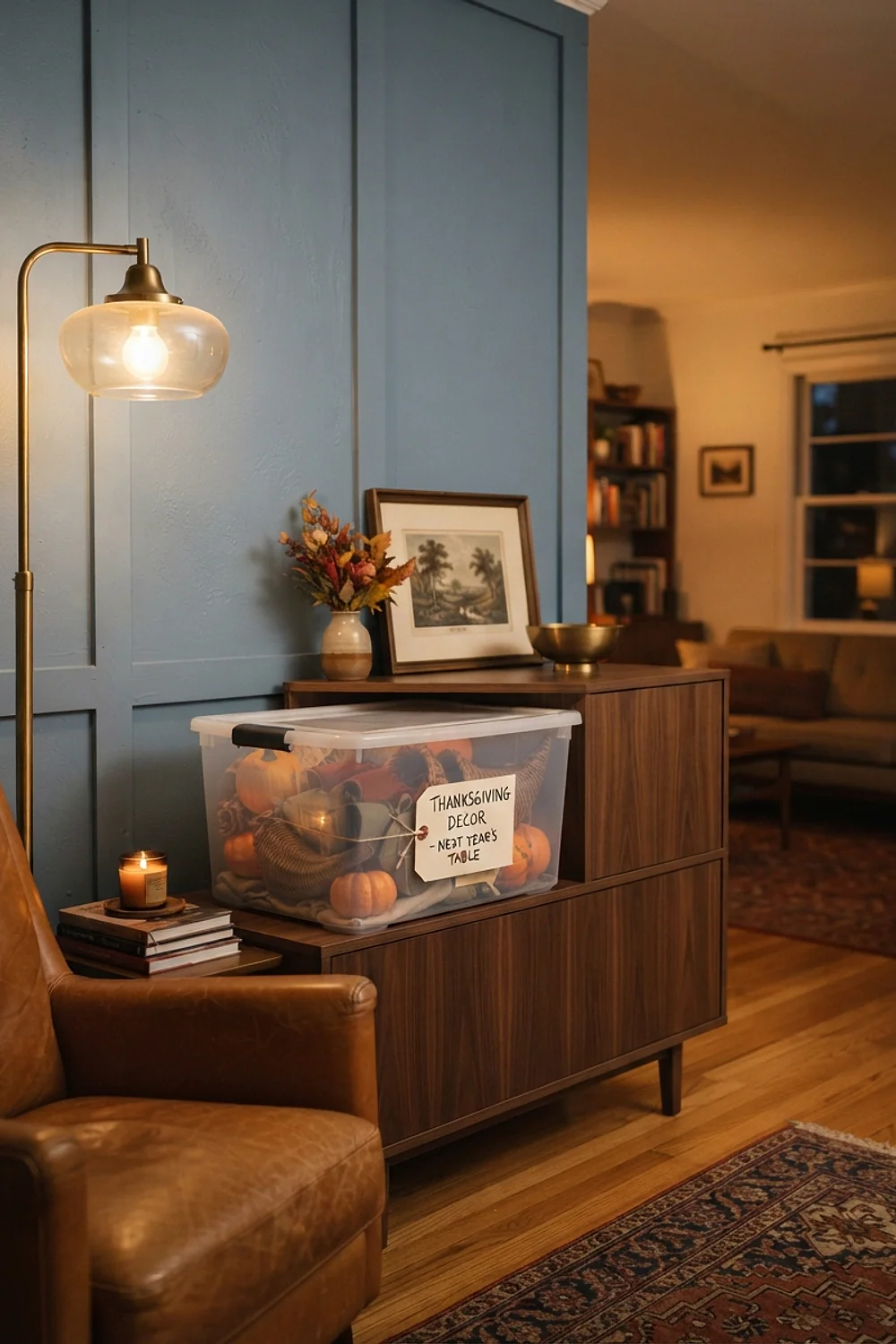
A lidded 27-quart plastic bin holds the runner, folded flat, plus tissue-wrapped candlesticks, dyed napkins, and place-card tags. Reusing everything makes the budget argument complete, since the decor costs nothing from year two on.
Label the bin “Thanksgiving table” in marker. It saves a frantic search in November, and the same bin works for any other autumn dinner.
Make sure the linen is fully dry before it goes in. Damp fabric sealed in plastic grows mildew spots by spring, and a cedar block tucked in the corner helps.
The step-by-step process
A thanksgiving decorations table comes together fastest when the work happens in a set order. Start with the surface and finish with light, because each layer depends on the one beneath it.
- Pad the table, then lay the runner or cloth.
- Set the center band with the pumpkin cluster or low branches.
- Place chargers, plates, napkins, and place cards.
- Add candles last and dim the overhead light.
Don’t try all 15 ideas at once. Four or five chosen deliberately beat fifteen that fight each other.
A budget-friendly combination: a runner, three pumpkins, dyed napkins, and tapers in thrifted holders. That covers the base, the center, the place setting, and the light for well under $60.
But set the whole thing up the night before. Morning-of styling means the table competes with a hot kitchen for your attention.
Things that elevate the room
The most common thanksgiving decorations table mistake is decorating for the camera instead of the guests. A tall, wide arrangement photographs well and makes dinner awkward.
- Centerpieces over 12 inches that block conversation
- Scented candles competing with the smell of the food
- Too many colors at full strength
- Chargers and glasses crowding the 12 inches each guest has
- Pads or throws so thick they push guests away from the table
Over-buying is another trap. A $60 premade centerpiece rarely beats a bunch of eucalyptus and three pumpkins, and the money is better spent on seat pads that keep people at the table longer.
And skip anything that needs constant fixing. If a decoration has to be rearranged between courses, it’s too fussy.
Closing thoughts on the thanksgiving decorations table
A strong thanksgiving decorations table is built from layers: a good base, a low center, thoughtful place settings, and amber light. Cheap, reusable pieces do most of the work, and the extras are optional.
Save or pin this list so it’s handy when planning begins. Start with one idea, the runner or the pumpkin cluster, and measure your table’s width and length before buying anything.