26 Kitchen Decor Inspiration Picks Designers Reach for First
It’s 4pm on a gray Tuesday in October, and the light through the sink window has gone the color of weak tea. That’s the hour when a kitchen either looks finished or looks like a rental, and it’s the best moment to judge kitchen decor inspiration.
Below are 26 picks with the reasoning behind each, plus the measurements, materials and mistakes that decide whether a piece earns its spot. Skim the headings or read straight through. Either way, you’ll leave knowing what to buy first.
Kitchen decor inspiration: The vision board
A kitchen is the hardest room to decorate because it works all day. Steam, grease, sticky hands and a dropped jar of pickles are all part of the brief. Decor that can’t handle those things stops looking good by March.
Designers screen every piece with a short mental checklist:
- Can it be wiped, washed or dusted in under a minute?
- Does it sit at the right scale for the wall, counter or island it lives on?
- Does it improve light at the hours the room is actually used?
- Will it still look good after two years of daily handling?
Pieces that fail two of those four don’t make the list. The 26 below pass all four, and they’re ordered so the lighting, comfort and layout decisions come up repeatedly instead of bunching together.
1. Opal glass pendants over the island
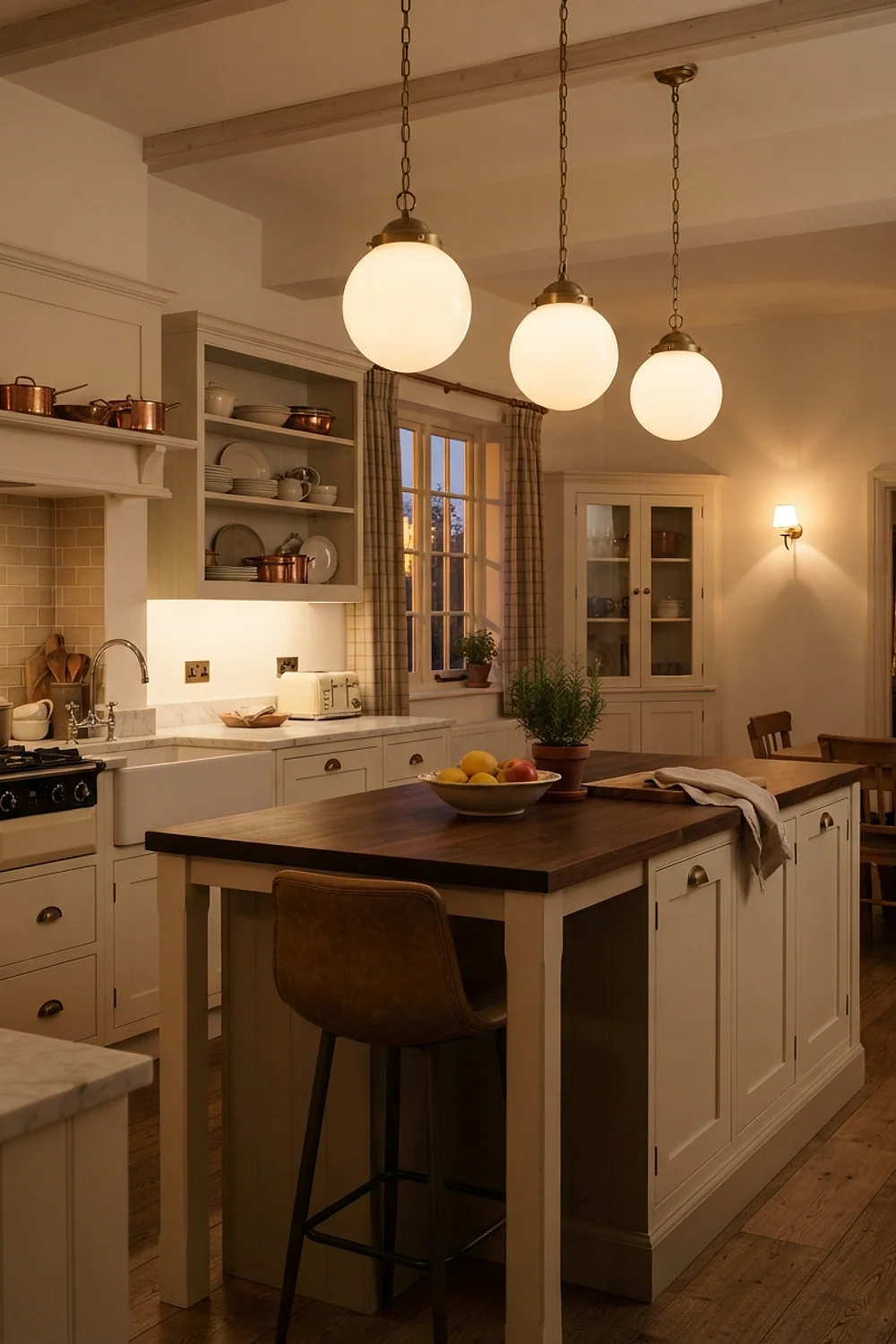
Opal glass pendants should hang 30 to 36 inches above the counter, and that range matters more than the style. Globes 12 to 14 inches wide from makers like Schoolhouse or Rejuvenation run roughly $150 to $300 each. The milky glass diffuses light, so there’s no glare in anyone’s eyes.
An island longer than six feet wants two, spaced 24 to 30 inches apart. Shorter islands do better with one oversize fixture.
The common mistake is hanging them too high. They float, light the ceiling instead of the counter, and look like an afterthought.
2. A flat-weave runner with a felt pad
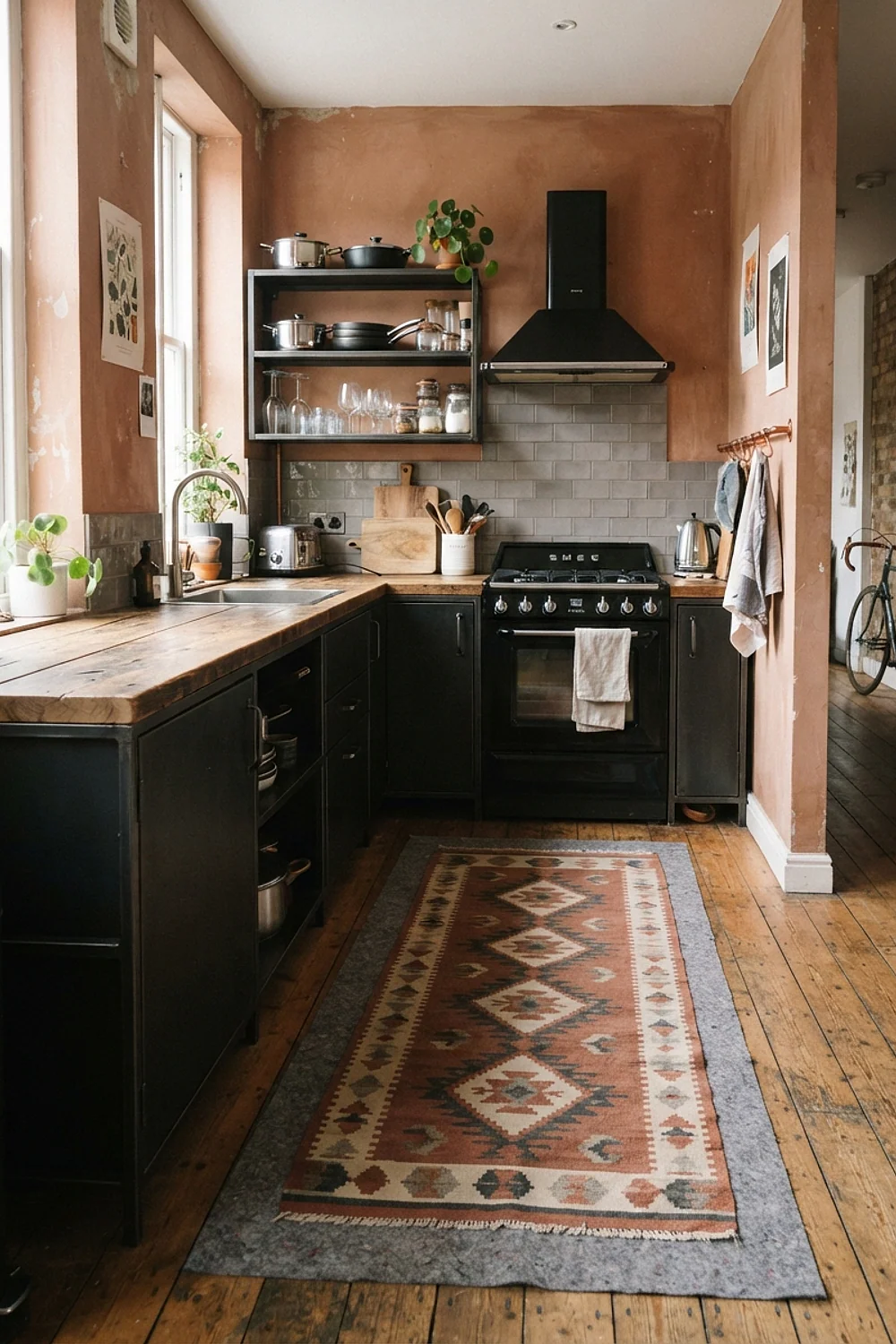
A flat-weave runner, about 2 by 6 feet, takes the sting out of 20 minutes of standing at the sink. In a house with kids, a dog and Friday guests, the runner that survives is a wool blend or washable polyester over a thin felt-and-rubber pad. Shaggy weaves trap crumbs and never let go.
Cheap latex-backed runners curl at the corners like a garden hose left out in July sun. That’s a trip hazard waiting for a full tray of glasses.
3. One 30-by-40-inch framed print on the long wall
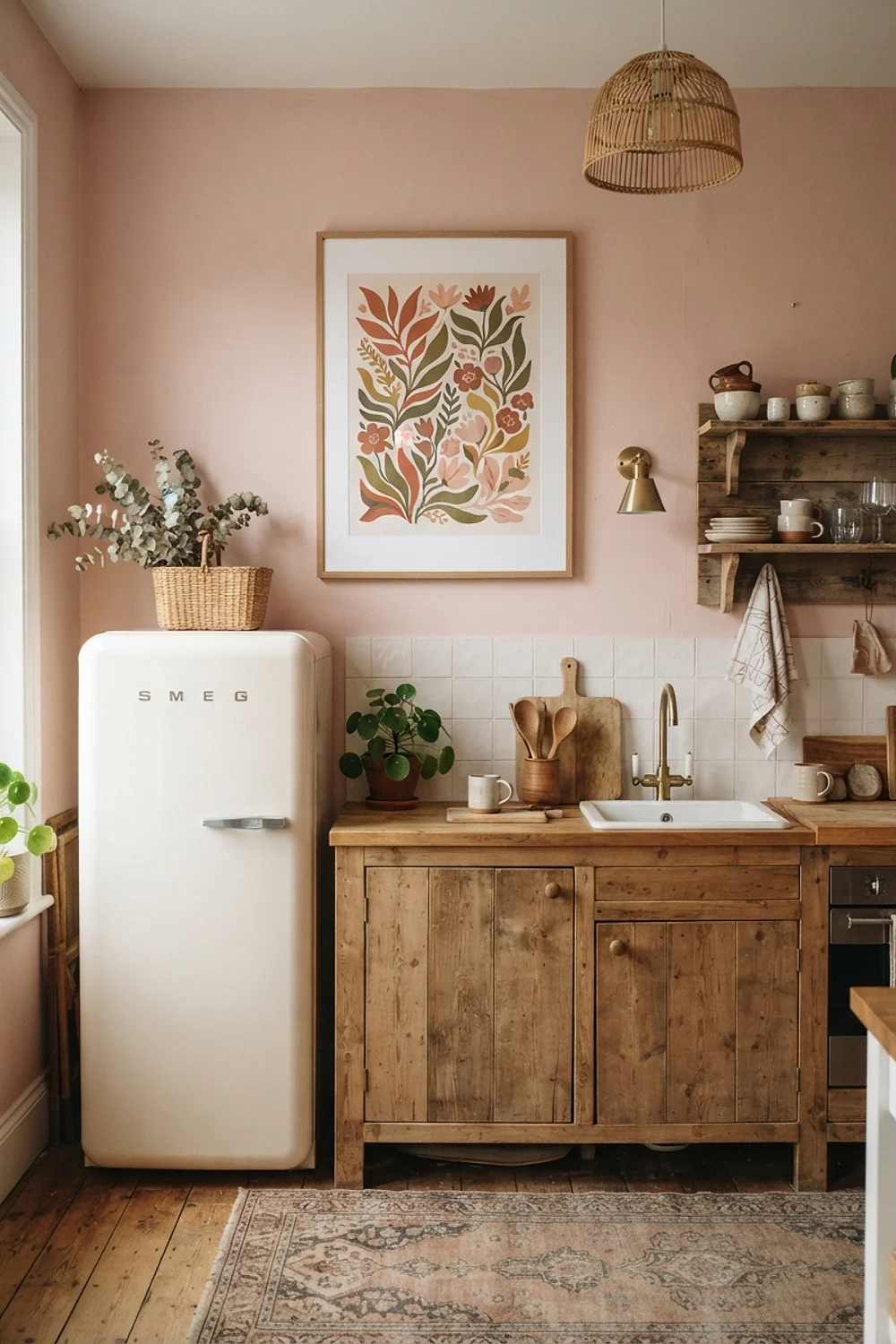
One big frame beats a cluster of small ones in a kitchen, because hard surfaces already create plenty of visual noise. A 30-by-40-inch print reads as a decision. Five 8-by-10s read as a pile.
It suits any kitchen with an uninterrupted wall of eight feet or more. Hang the center at 57 to 60 inches from the floor.
Keep it away from the range, since grease lands on glass fast. Go with glass or acrylic and a wide mat.
4. A 36-inch rail with S-hooks
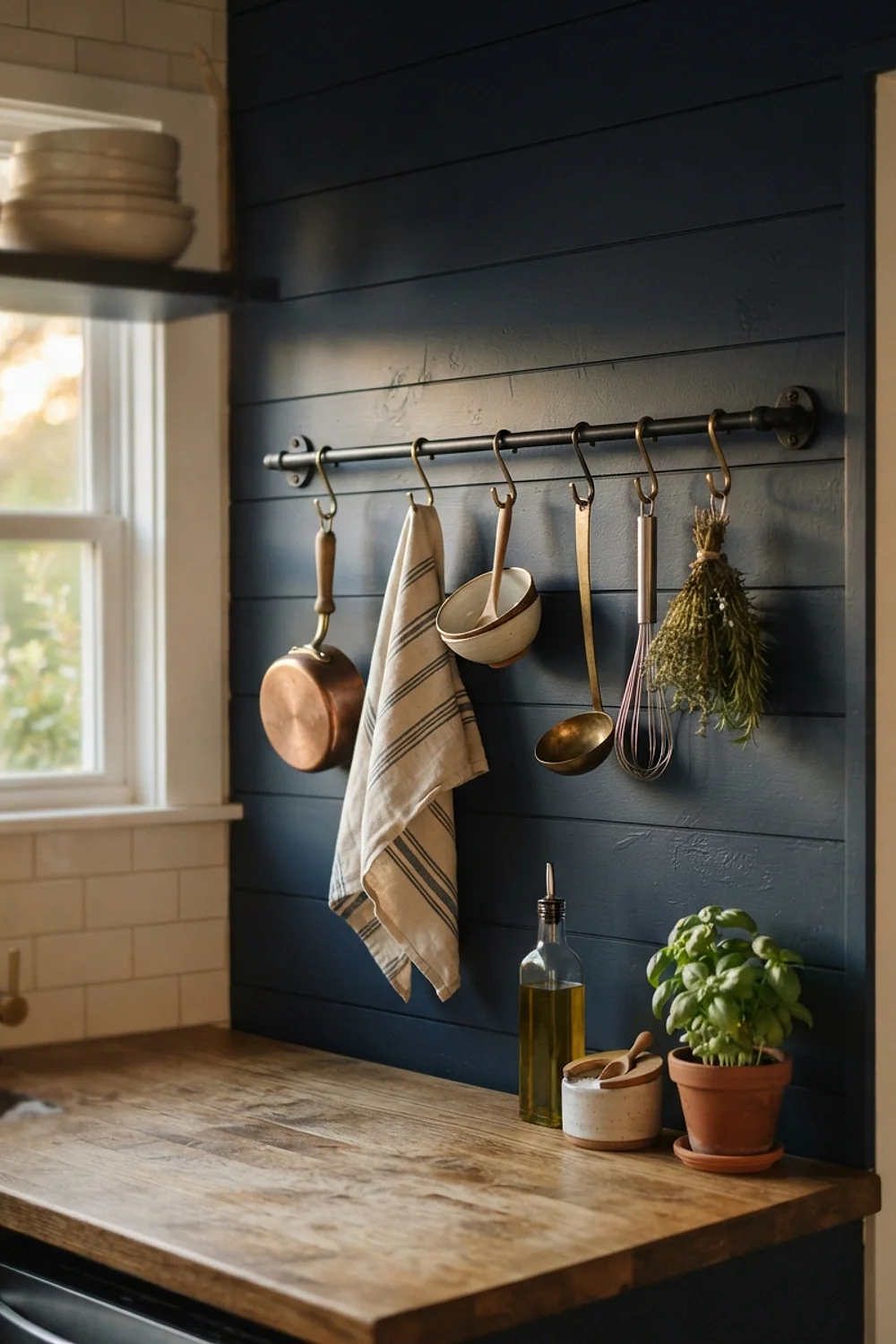
A 36-inch stainless or brass rail with S-hooks keeps ladles, a colander and favorite mugs within forearm reach. IKEA‘s Grundtal rail is the budget-friendly benchmark, and it works because it’s plain and sturdy. Small kitchens with too few drawers gain the most.
Screw it into studs, not drywall anchors. A single 8-pound pan on a loose anchor will pull the whole thing off the wall.
Leave about four inches between hooked items so nothing clanks.
5. Bare cabinet tops, not faux ivy

Dusty faux ivy draped on top of the upper cabinets is the most common kitchen decor mistake. Grease settles into the leaves, and by spring the green has faded to gray. Nobody wants to take it down and wash it.
If there’s a gap of 12 inches or more to the ceiling, three large lidded baskets look intentional. Otherwise, leave the tops empty.
Honestly, a clean line to the ceiling makes a kitchen look taller.
6. A thick end-grain maple board, leaned and displayed

An end-grain maple board, 1.5 inches thick, brings warmth to cold stone counters and costs around $90 to $140. The fibers close back up after knife cuts, so it ages gracefully. Rub in food-grade mineral oil about once a month.
Lean it against the backsplash, away from the sink splash zone. Thin face-grain boards warp within weeks when they sit near water.
Skip the machine wash entirely. It cracks the glue lines.
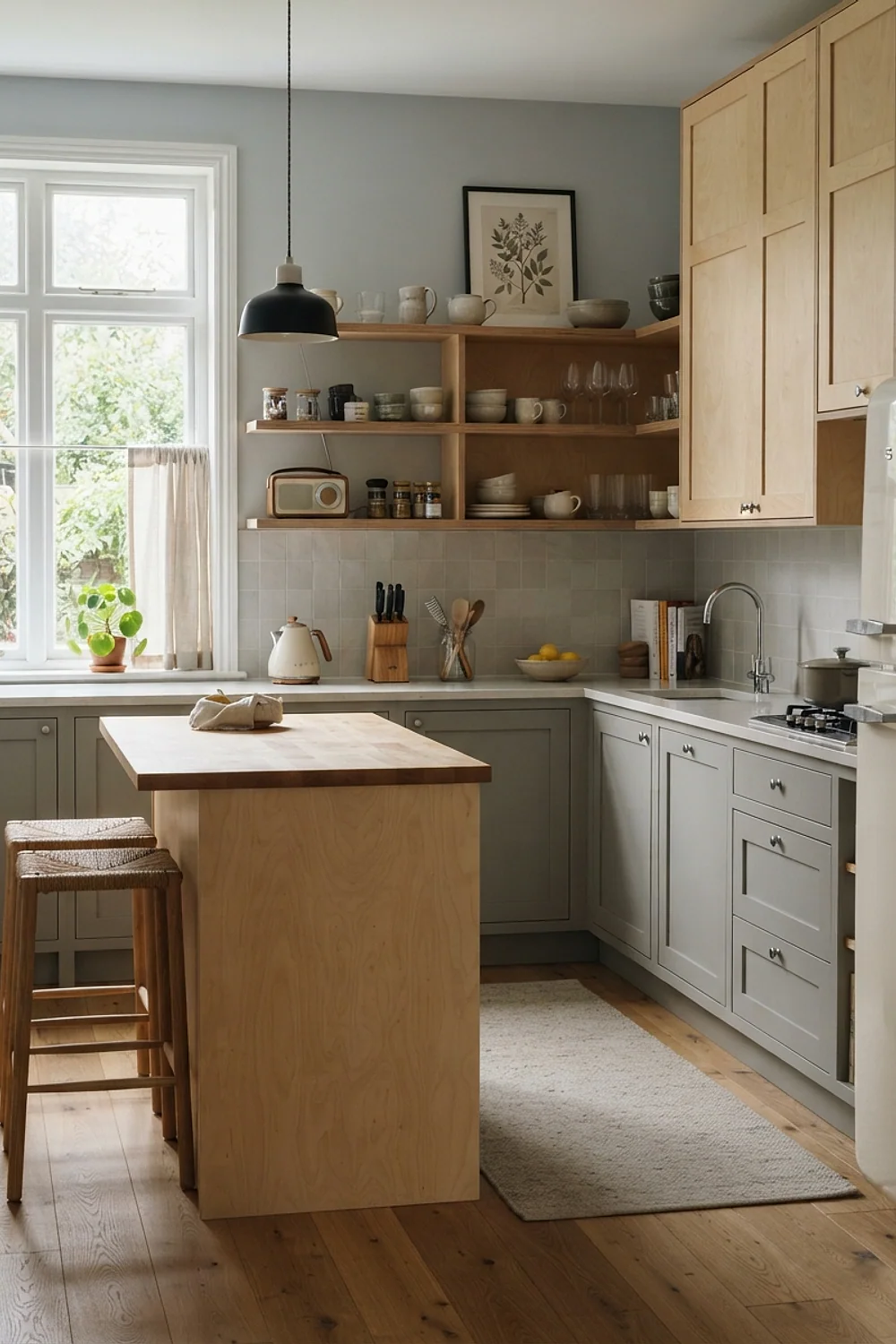
7. Muted green on the lower cabinets
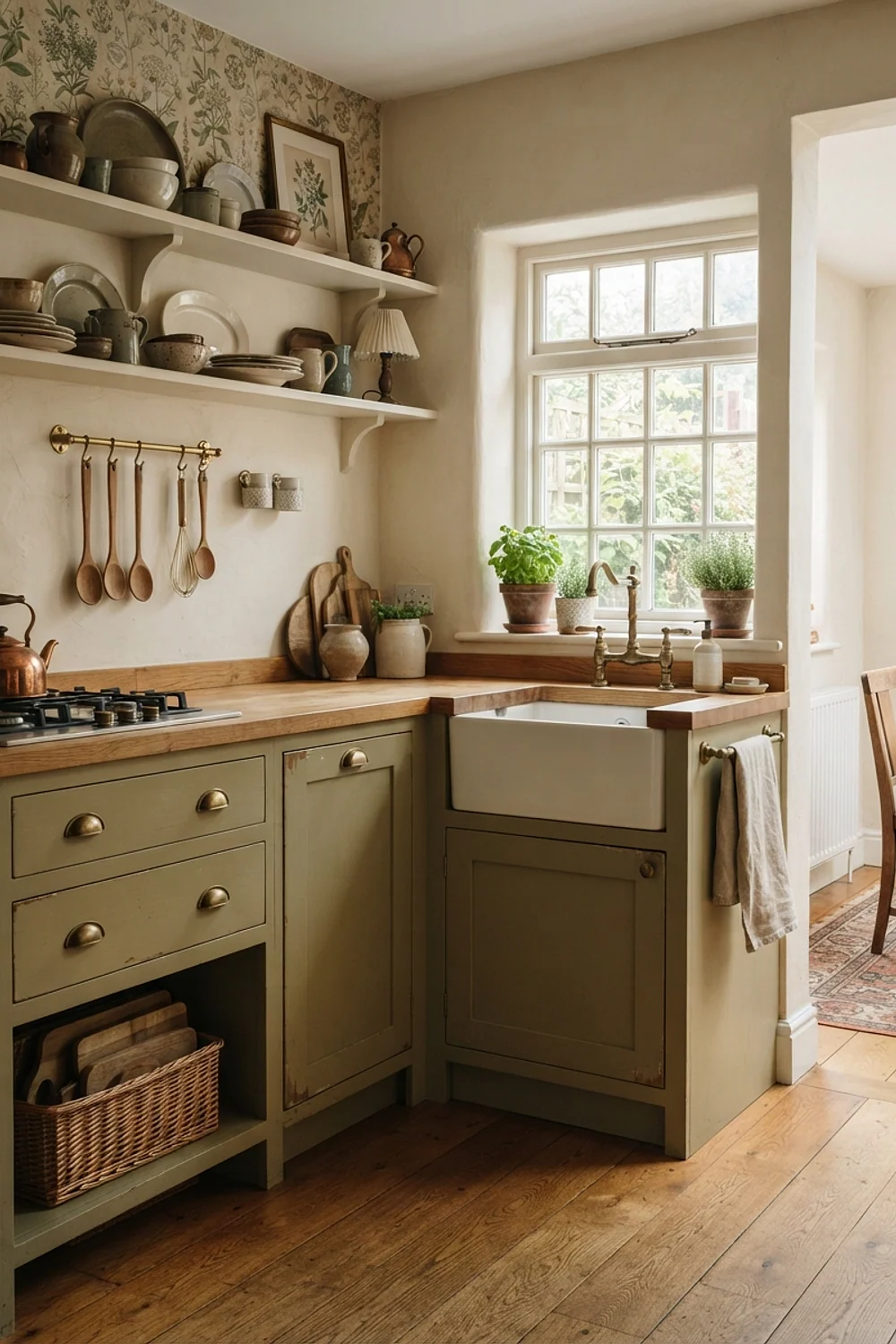
Muted green lower cabinets, in a shade such as Farrow & Ball Green Smoke, read as a neutral in daylight and flatter brass and wood. Here’s a counterintuitive fact: matte dark paint shows fingerprints and grease more than a satin finish does. Choose a scrubbable satin.
North-facing kitchens turn green slightly blue. Hold a two-foot swatch against the wall at 4pm and again under evening bulbs before committing.
8. A corner banquette with an 18-inch seat
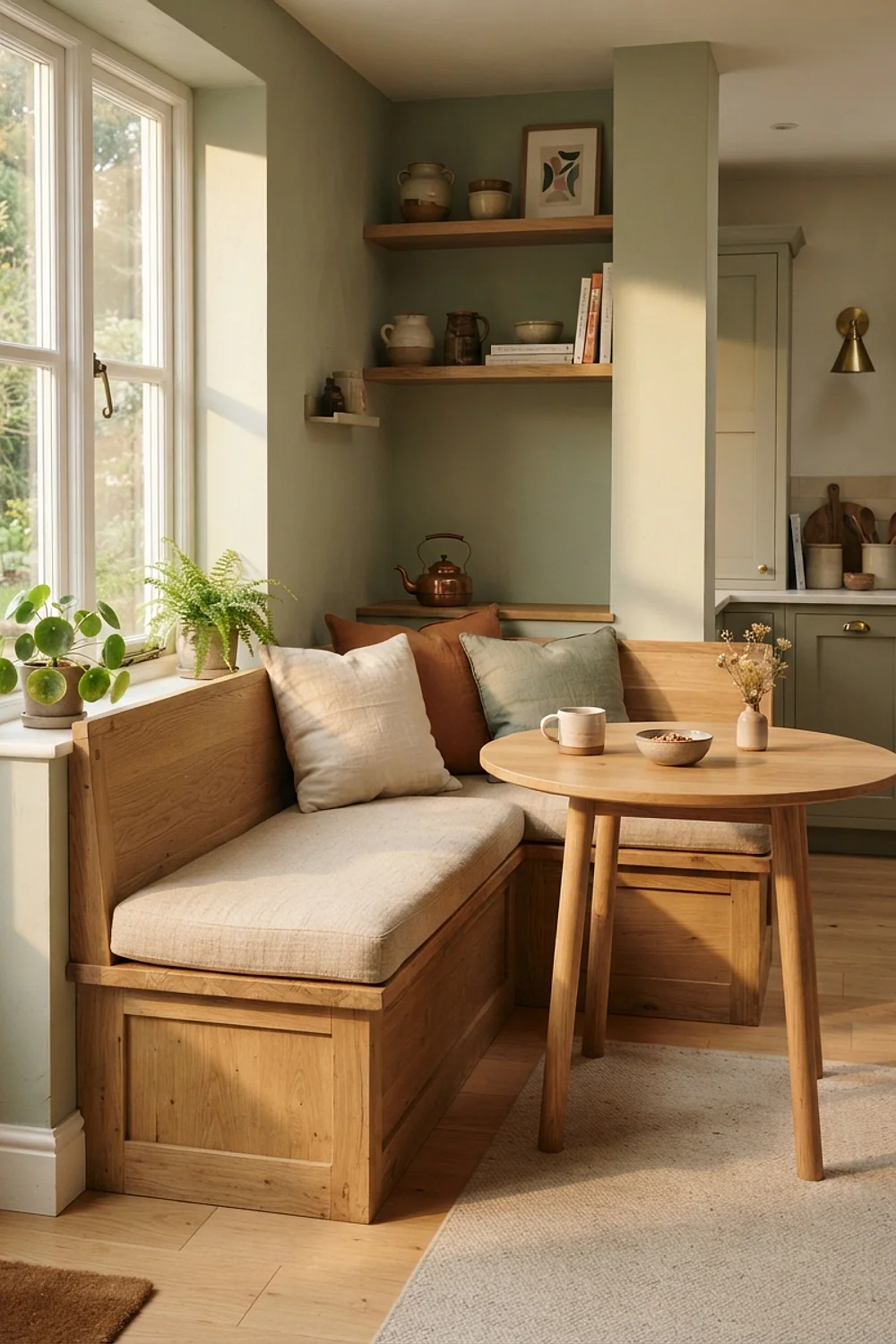
A built-in corner banquette with an 18-inch seat depth and a 17 to 18-inch seat height frees the floor because no chairs pull out. It works in kitchens about ten feet wide. A 30-inch table fits the corner without crowding.
Go shallower than 16 inches and the seat turns into a bench of punishment. Lift-up seats add hidden storage for seasonal platters and extra tablecloths.
9. A 14-inch tray beside the range
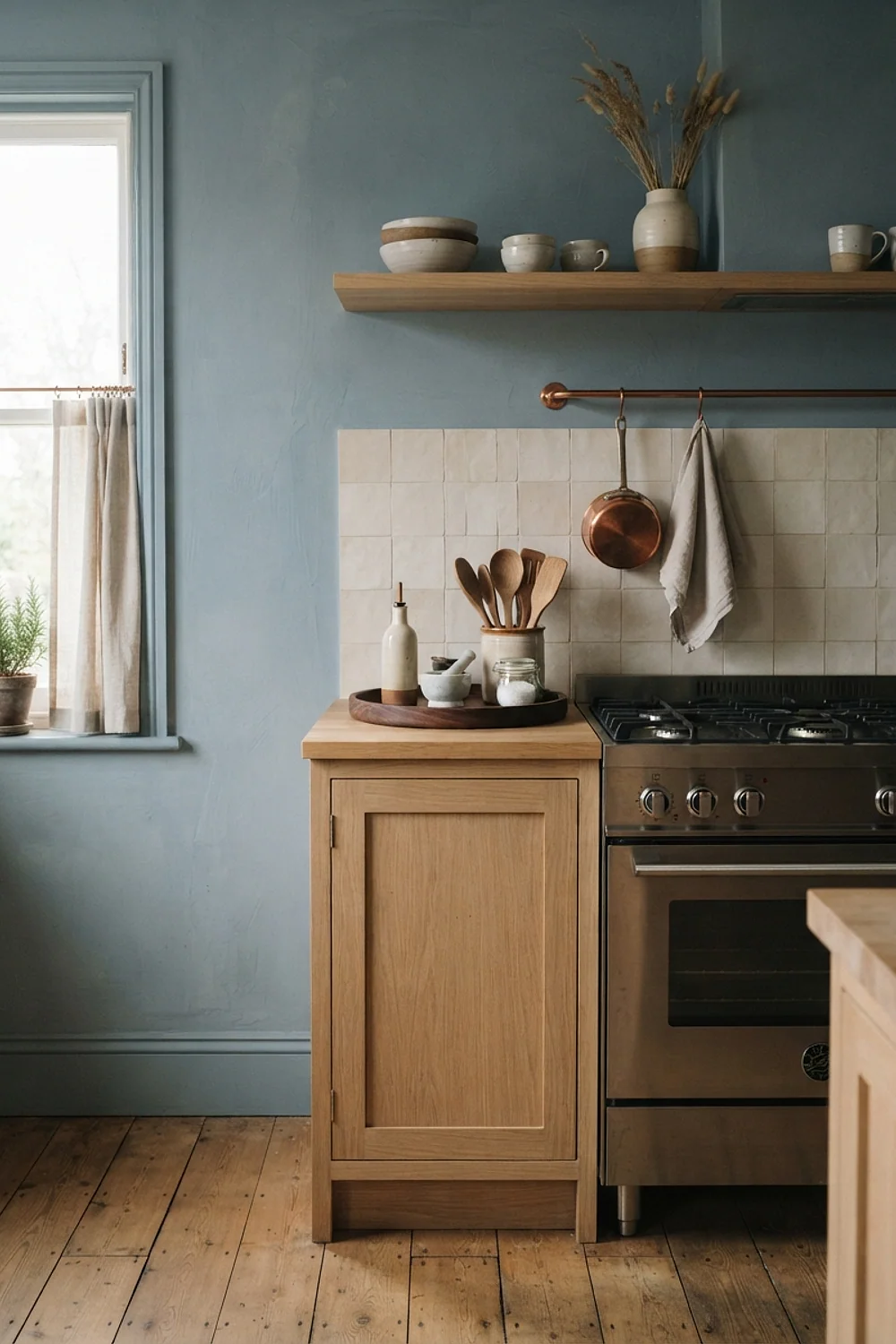
A 14-inch marble or acacia tray beside the range corrals oil, a salt cellar and a pepper grinder into one tidy group. Vary the heights: one tall, one medium, one short. The eye reads it as arranged, not scattered.
It suits counters under six feet, where every inch of clear surface counts. Pick a lipped tray in a matte finish, and wipe the underside weekly so it doesn’t leave rings.
10. Floating oak shelves, 12 inches deep
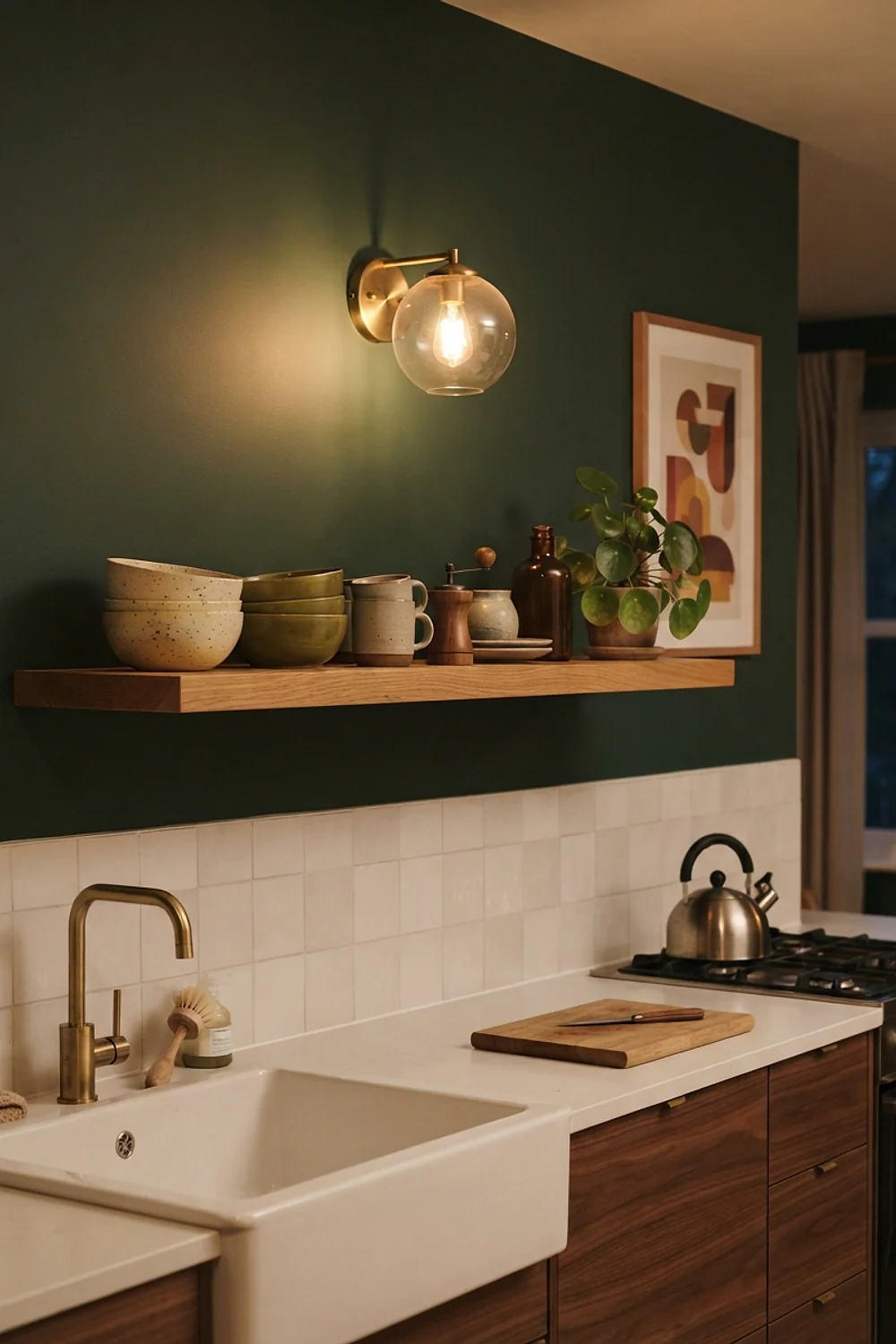
Floating oak shelves 12 inches deep hold dinner plates, which run 10 to 11 inches across, with a little breathing room. Ten-inch shelves look neater but push plates to the edge. Mount them with proper brackets into studs.
The surprise is grease. Open shelves within 24 inches of the range collect a sticky film, so store only things in weekly rotation there.
Keep the display pieces, the ones used twice a year, on the far wall.
11. Under-cabinet LED strips
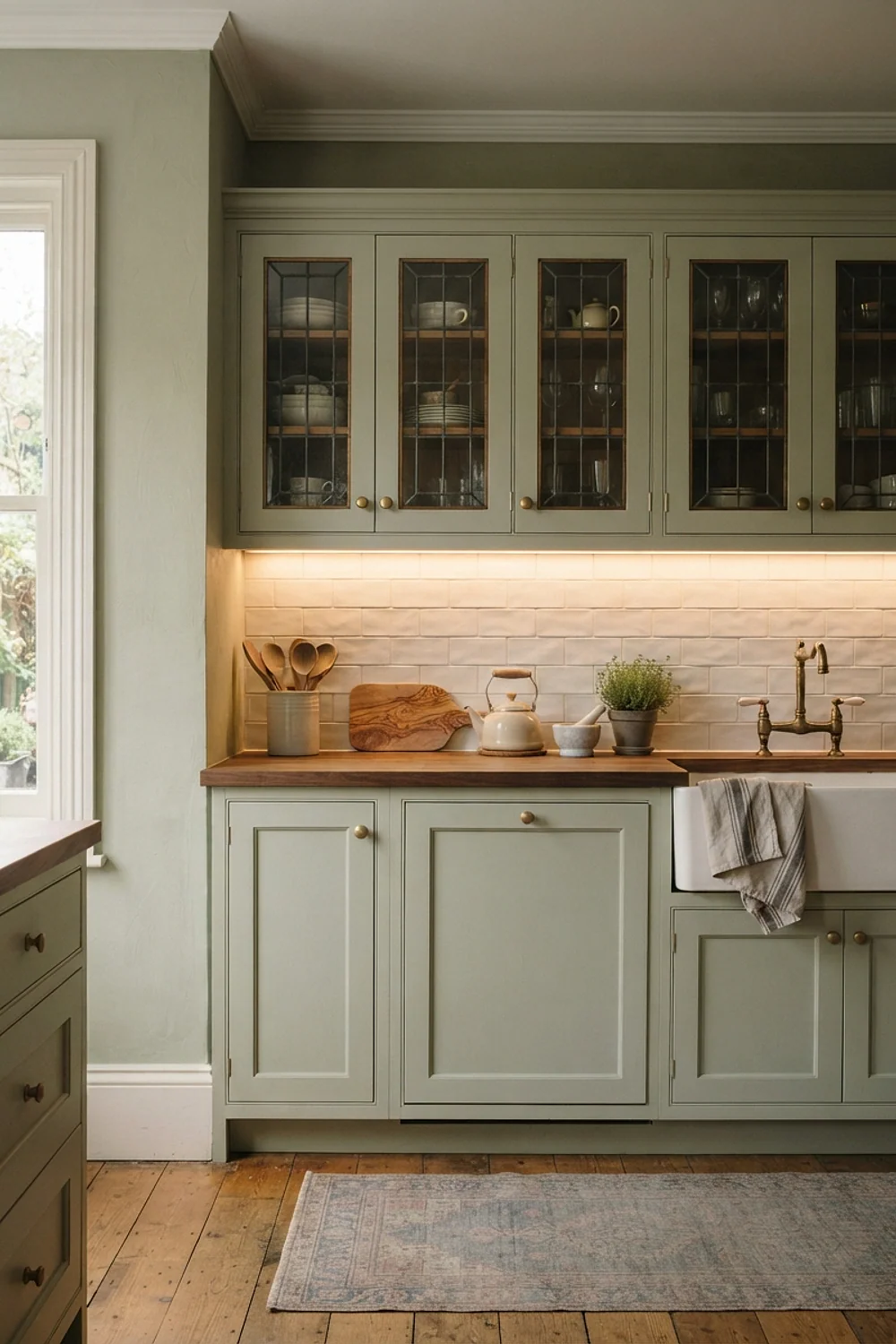
Under-cabinet LED strips at 3000K with a CRI of 90 or higher show food and counters in true color, and typically cost $40 to $80 per run. Overhead fixtures cast shadows exactly where hands are working. These fill the gap.
Mount them at the front edge of the cabinet underside, inside a frosted diffuser channel. Bare strips on a reflective counter create scalloped hot spots that look cheap.
12. Counter stools with a low back
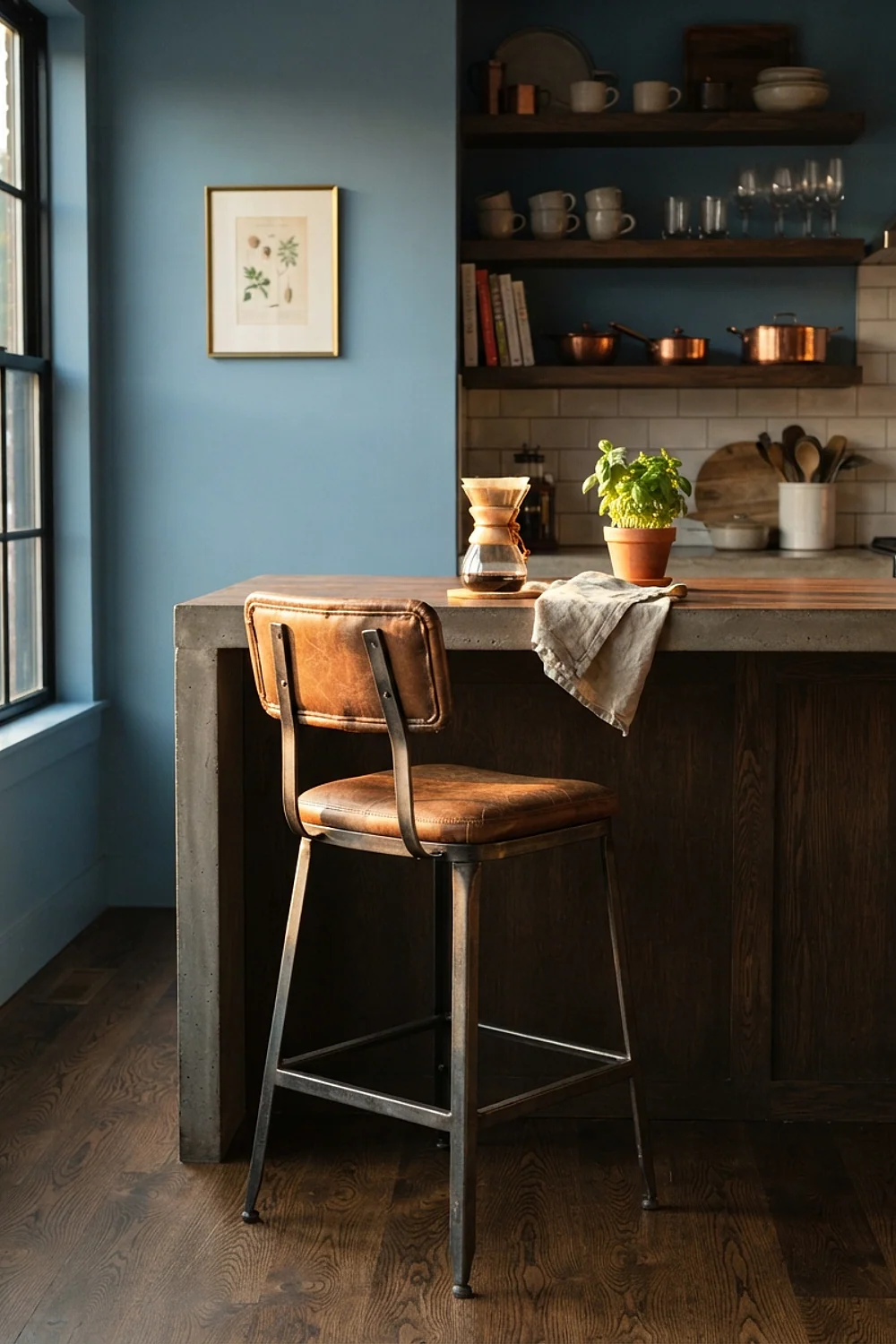
Counter stools with a 24 to 26-inch seat height and a low back suit a standard 36-inch counter. Kitchen decor inspiration often skips seating, which is why so many islands go unused. Nobody lingers on a backless perch.
Leave 10 to 12 inches between the seat and the counter underside. Choose a wipeable performance fabric or leather, because spilled juice finds every seam.
13. A 16-inch stoneware bowl on the island
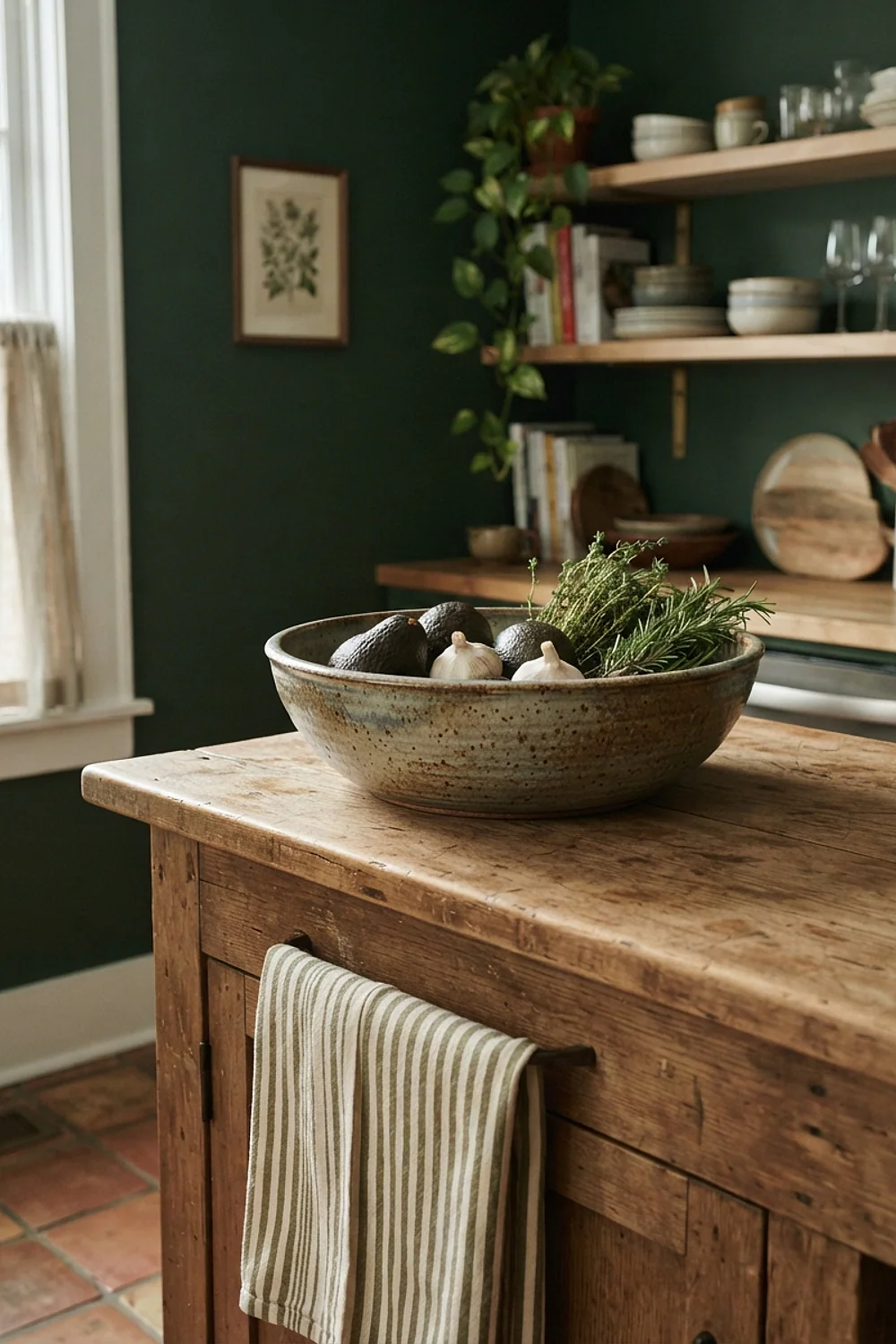
A 16-inch stoneware bowl anchors a long island better than a cluster of small accessories. Fill it with lemons or pears and the color does the work. Real fruit beats fake, which looks dusty within a month.
It suits islands four feet or longer. Leave about six inches clear to the counter edge, and remember a bowl this size weighs five pounds or more before the fruit goes in.
14. A locking bar cart, 30 by 16 inches
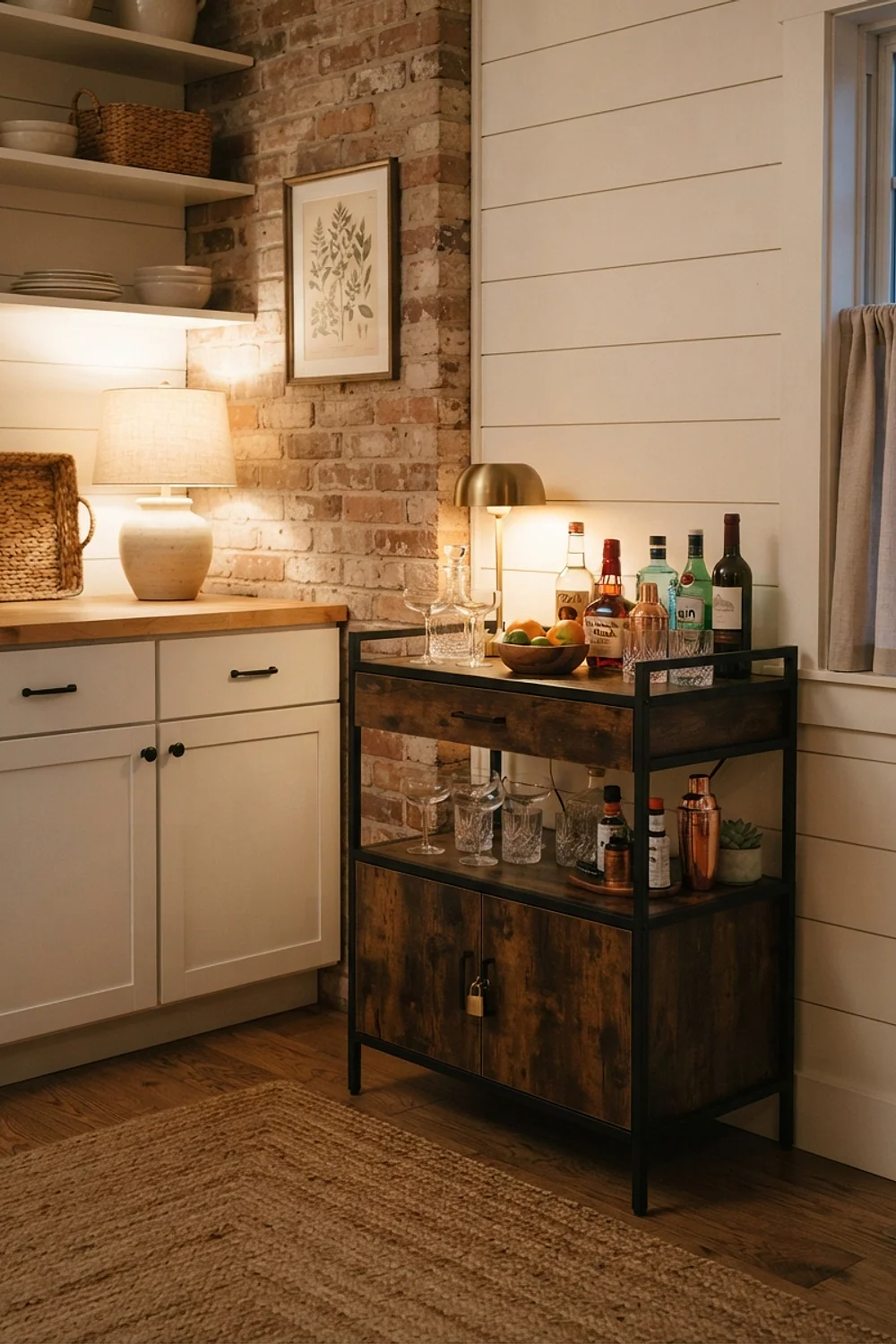
A bar cart on locking casters, roughly 30 by 16 inches, doubles as a prep surface and rolls to the dining table for guests. It’s a smart fit for rentals and small kitchens that can’t take another cabinet. Aim for a top shelf near 34 to 36 inches, level with the counter.
Unlocked swivel casters are the trap. A loaded cart that drifts across tile is how glassware breaks.
15. Warm gray grout, not bright white
Bright white grout behind the range turns tan within a few months, and no amount of scrubbing brings it back. A warm gray or sandy grout hides splatter and still looks clean. Epoxy grout resists stains best.
If cement grout is the only option, seal it once a year. That one habit separates a backsplash that looks tired from one that looks lived in.
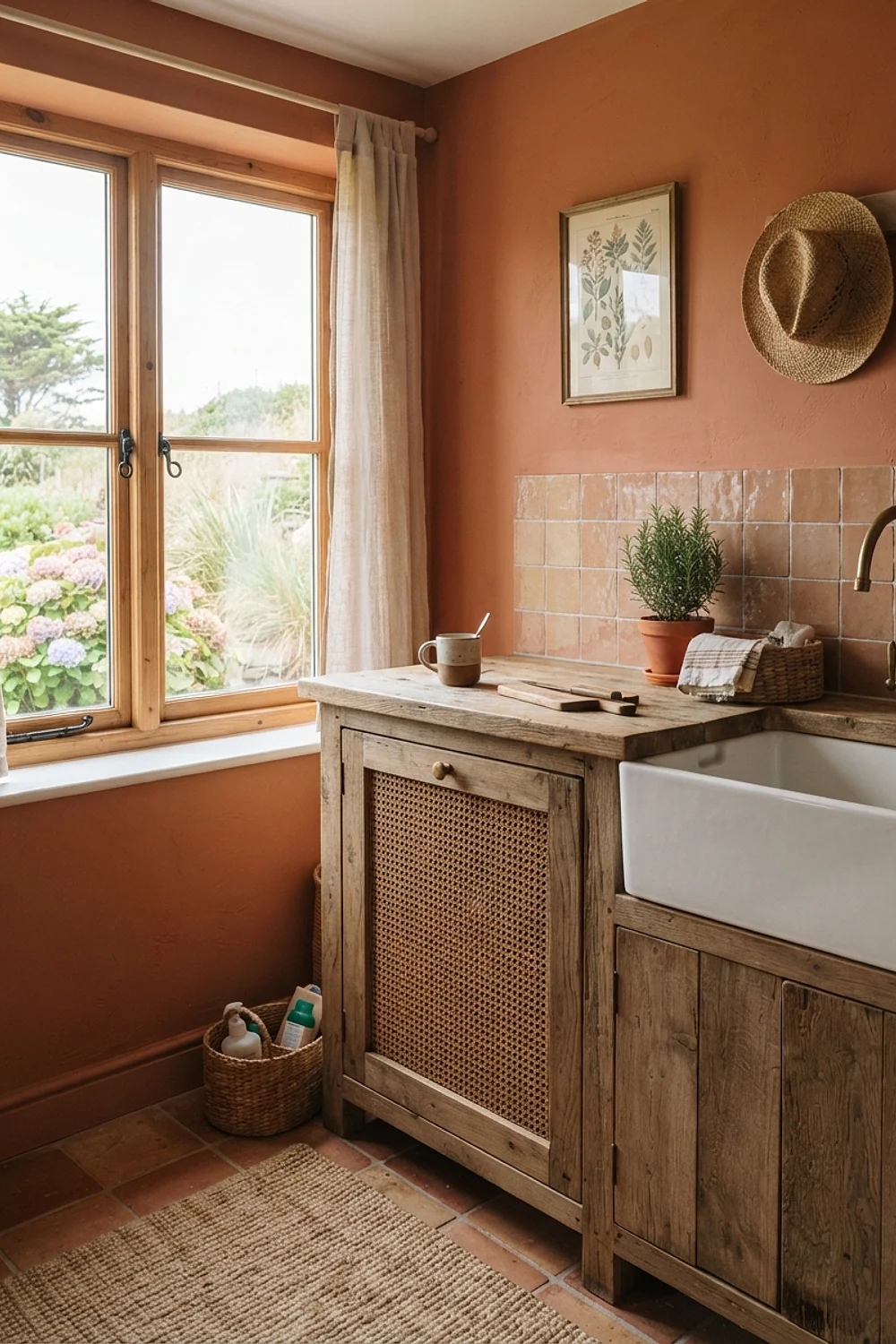
16. Handmade zellige tile

Handmade zellige tile in 4-by-4-inch squares, from sources like Clé, runs about $20 to $50 per square foot. The glaze pools unevenly, so light bounces around the wall instead of sliding off. It looks different at every hour.
It’s worth it for backsplashes under 30 square feet. The irregular edges need grout joints near 1/8 inch and an installer who’s done it before, or the wall looks wavy.
17. Unlacquered brass pulls
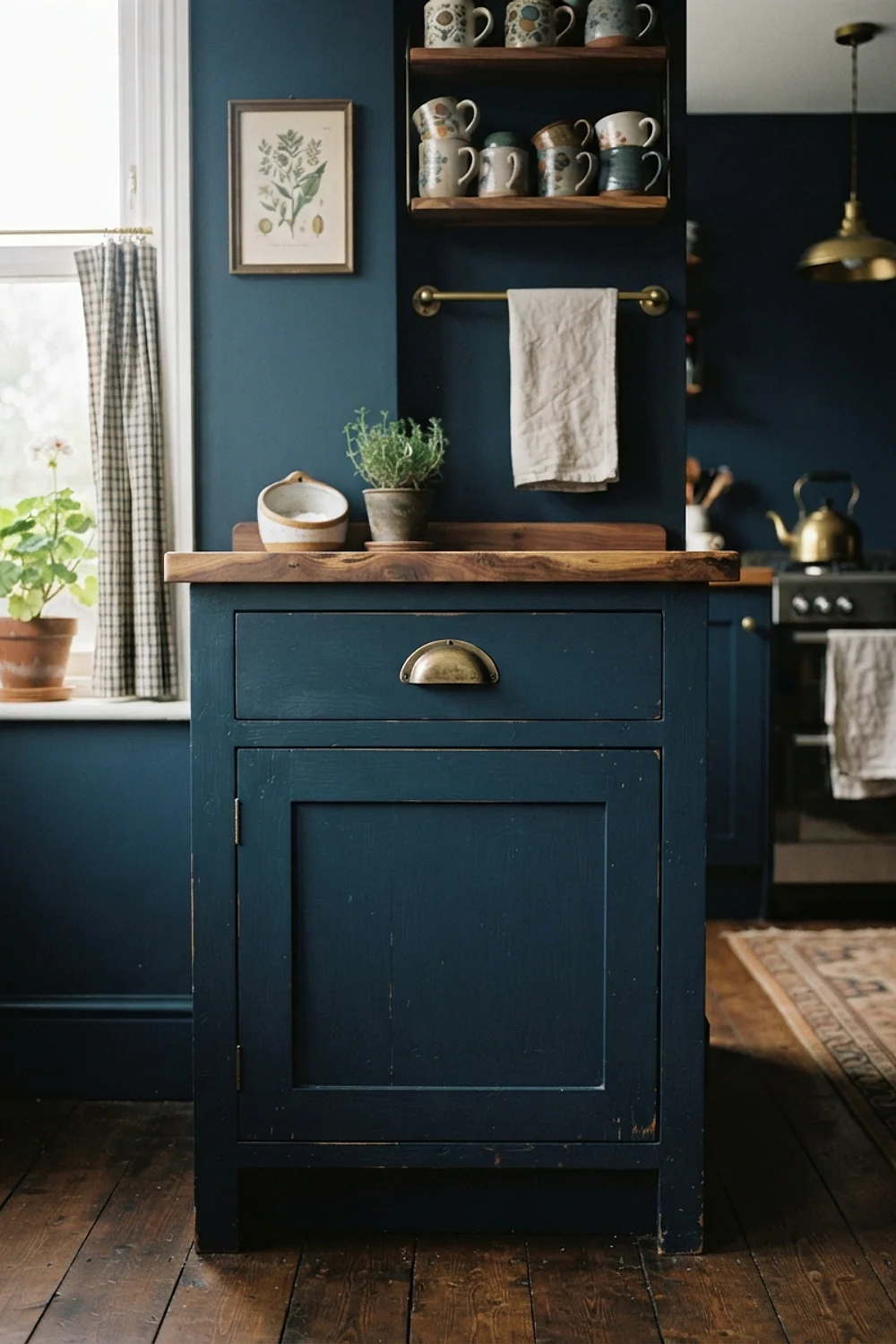
Unlacquered brass pulls darken from bright gold to a deep honey in about six months, shaped by the oils in your hands. Each cabinet ages a little differently, which looks great on a green or navy base.
If you want the shine to stay, buy lacquered brass instead. And skip polished chrome faucets next to it, because the two finishes fight.
18. A picture ledge along the long wall

A picture ledge, 4 inches deep and 60 to 72 inches long, gives a galley kitchen one busy wall and one calm one. Galleys have two parallel walls, and decorating both makes the aisle feel tighter.
Hang it above 54 inches so nobody bumps a head, and keep it at least 24 inches from the cooktop. Lean frames in layers, tallest at the back.
19. A thrifted enamelware pitcher
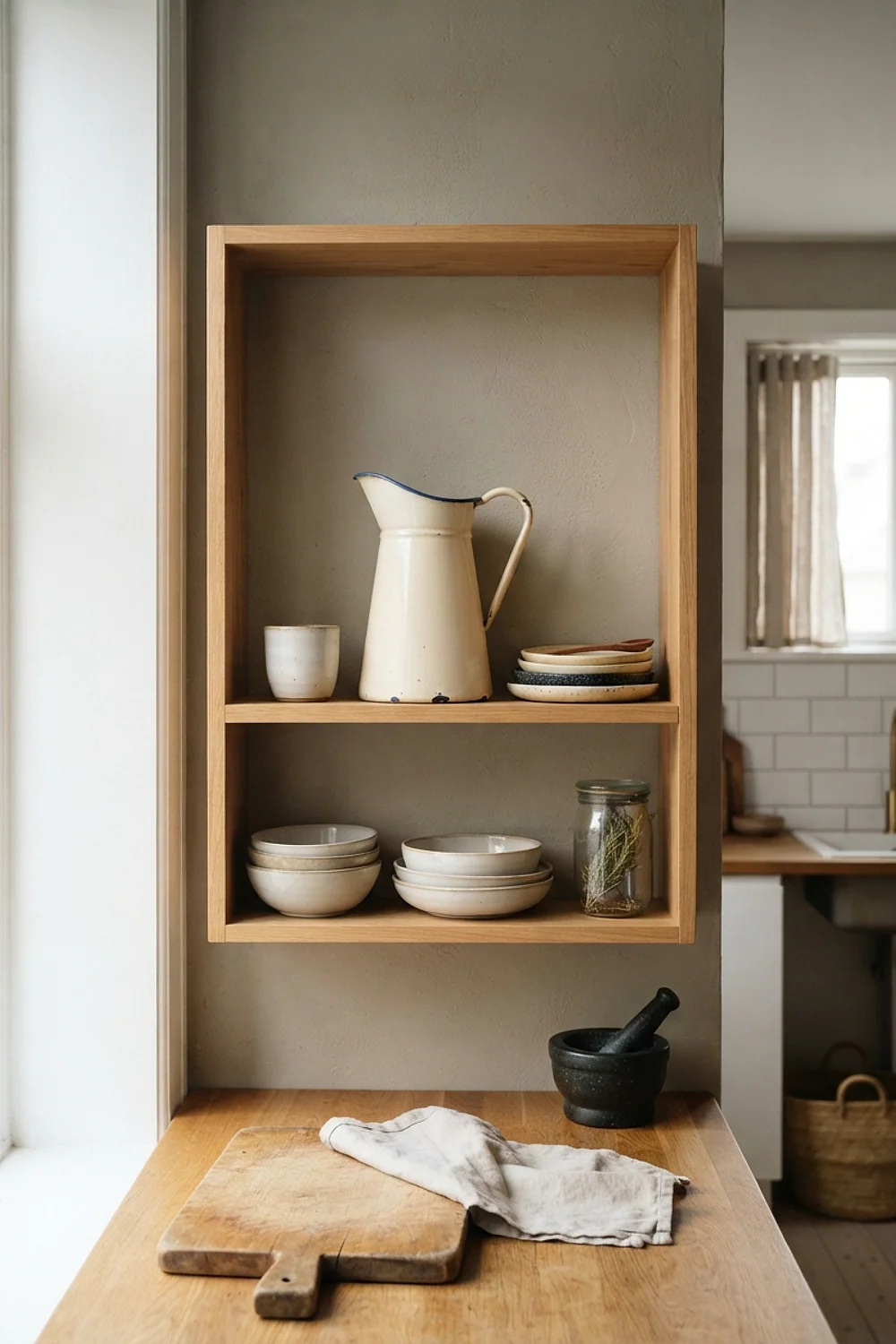
A thrifted enamelware pitcher holding eucalyptus or dried grasses costs $15 to $30 at estate sales and flea markets. The chips are part of the charm. White with a navy rim is the classic, though green and red turn up as well.
Hold it to the light to check for pinholes, and look inside for rust at the base. A glass jar insert keeps the water off the metal.
20. Lidded wicker baskets at the island end
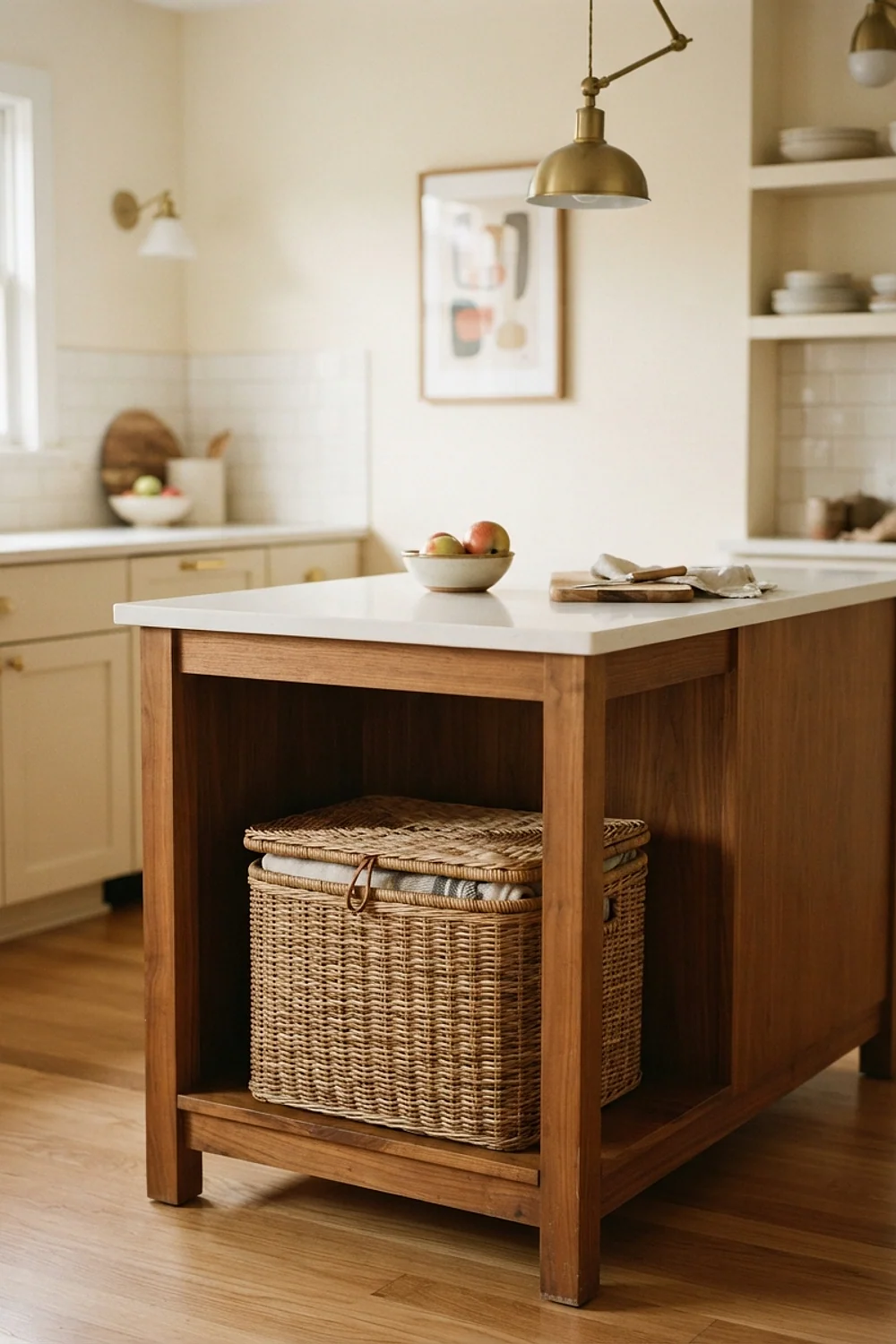
Lidded wicker baskets, about 14 by 10 by 10 inches, hide tea towels, cloth napkins and the stray phone chargers every family accumulates. Under the end of an island, they look like furniture instead of storage.
Line them with cotton so the weave doesn’t snag fabric. Pick lids that lift without a fight, since a basket that’s annoying to open stays empty.
21. A plug-in swing-arm sconce
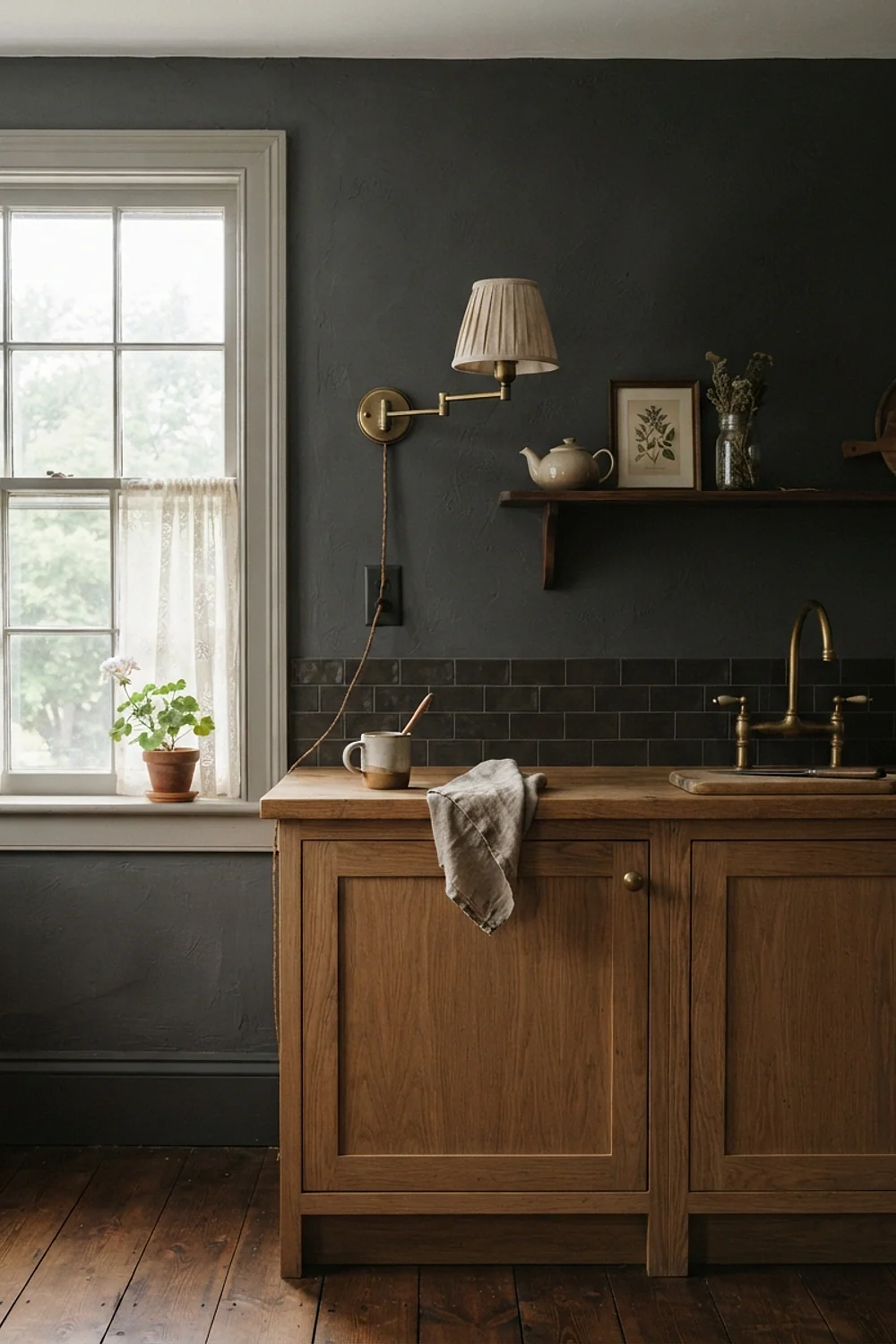
A brass swing-arm sconce, in a plug-in version, brings 2700K evening light to an open shelf wall. On a rainy Sunday morning it makes the corner glow. Renters can have it without hiring an electrician.
Mount it 66 to 72 inches off the floor, and paint a cord cover to match the wall. Add an inline dimmer so it can go from reading light to nightlight.
22. Tie-on seat cushions in cotton duck
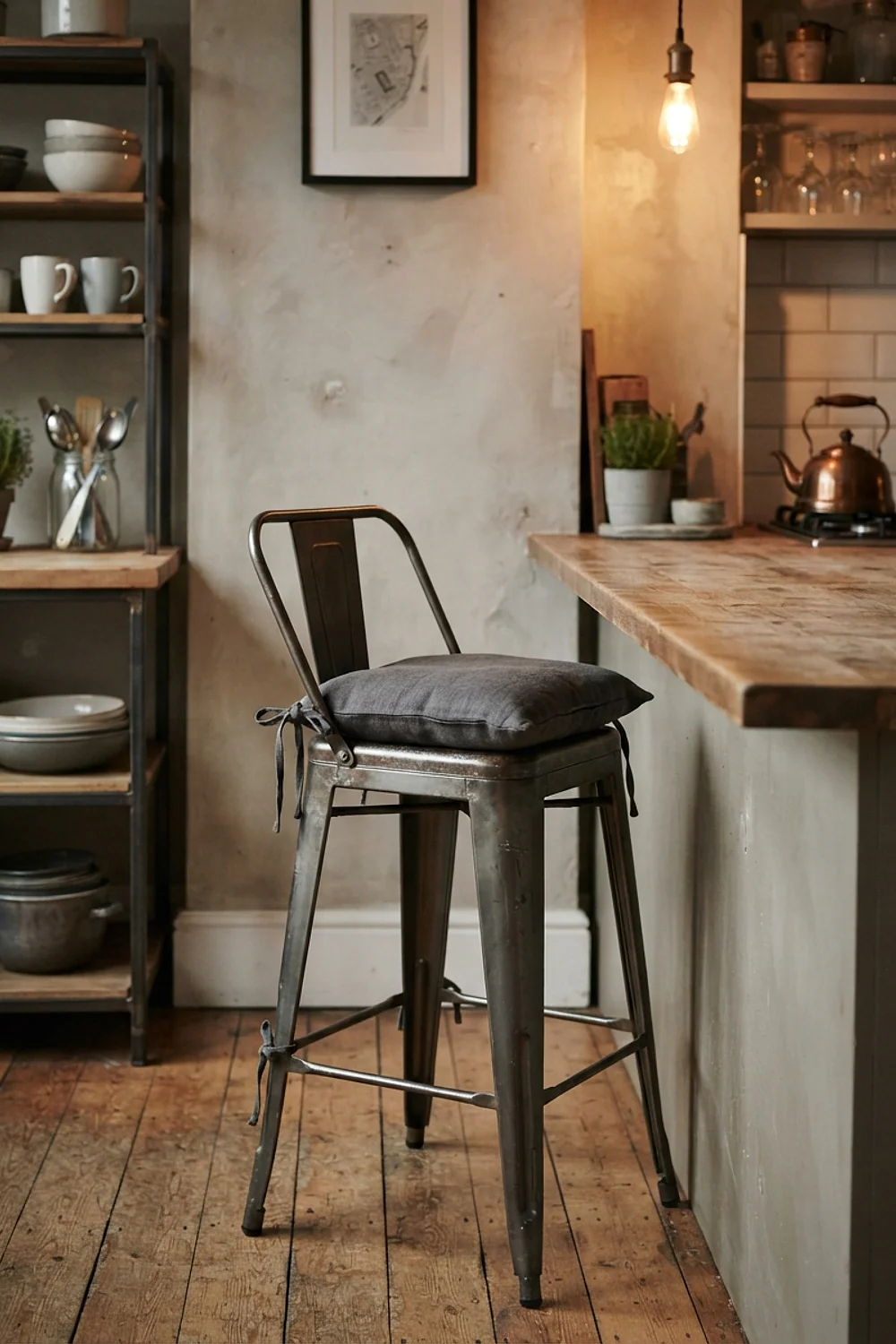
Tie-on seat cushions in washable cotton duck, 1.5 inches thick, soften hard wooden chairs in a breakfast nook. Duck cloth is tough and cleans easily, so it handles toast crumbs and spilled juice better than velvet.
Foam over two inches tilts the sitter forward. Choose a zip cover so it can go in the machine, and two sets lets one dry while the other works.
23. A 5-foot olive tree beside the pantry door
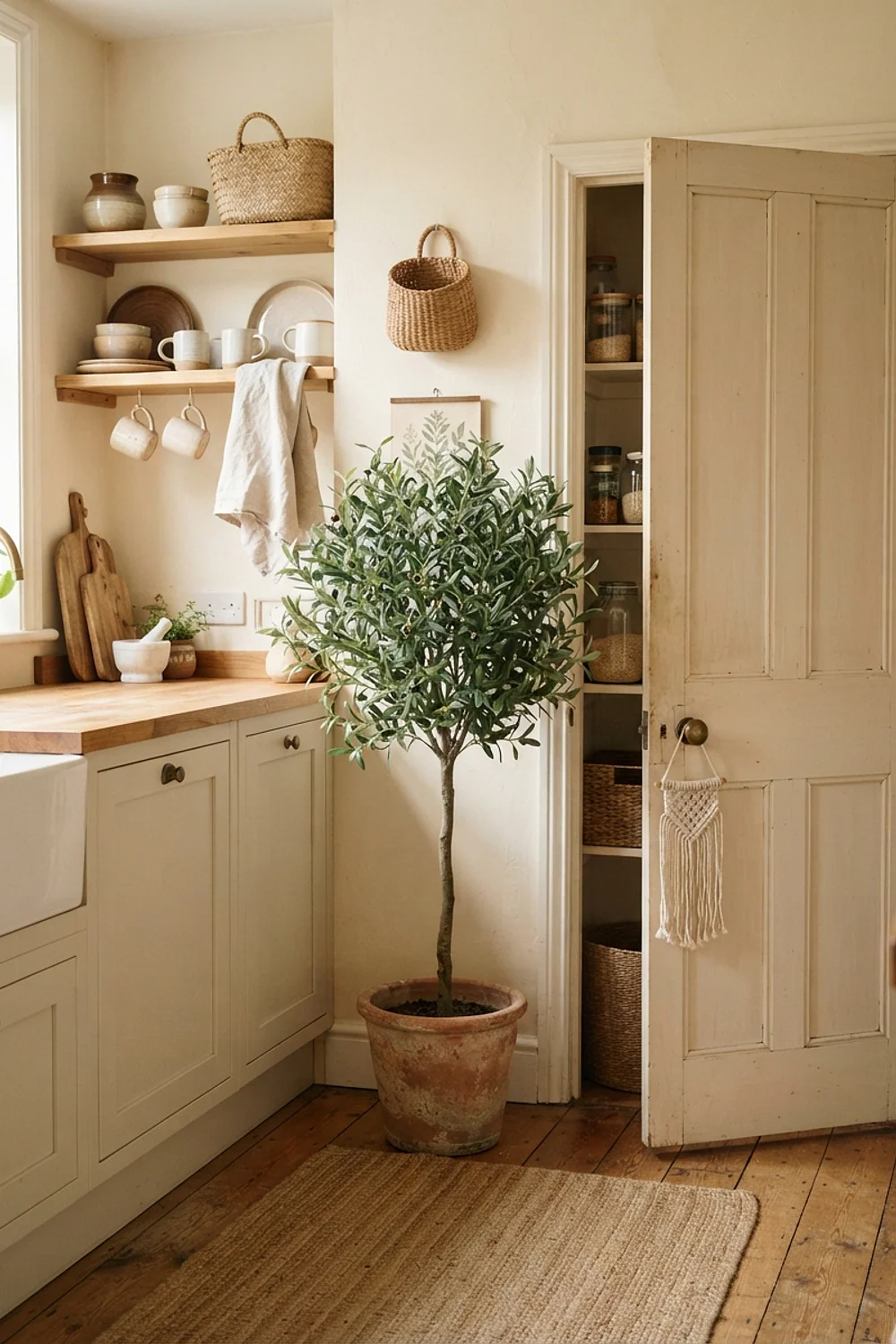
A five-foot olive tree in a 14-inch planter fills the vertical gap beside a pantry door and adds soft gray-green. It suits kitchens with 9-foot ceilings, where a tall plant doesn’t crowd the cabinets.
Real olives want six hours of direct sun, so a dim kitchen needs a good faux instead. Set the pot on a wheeled caddy, with a saucer, for the first watering mishap.
24. A magnetic knife strip in oak
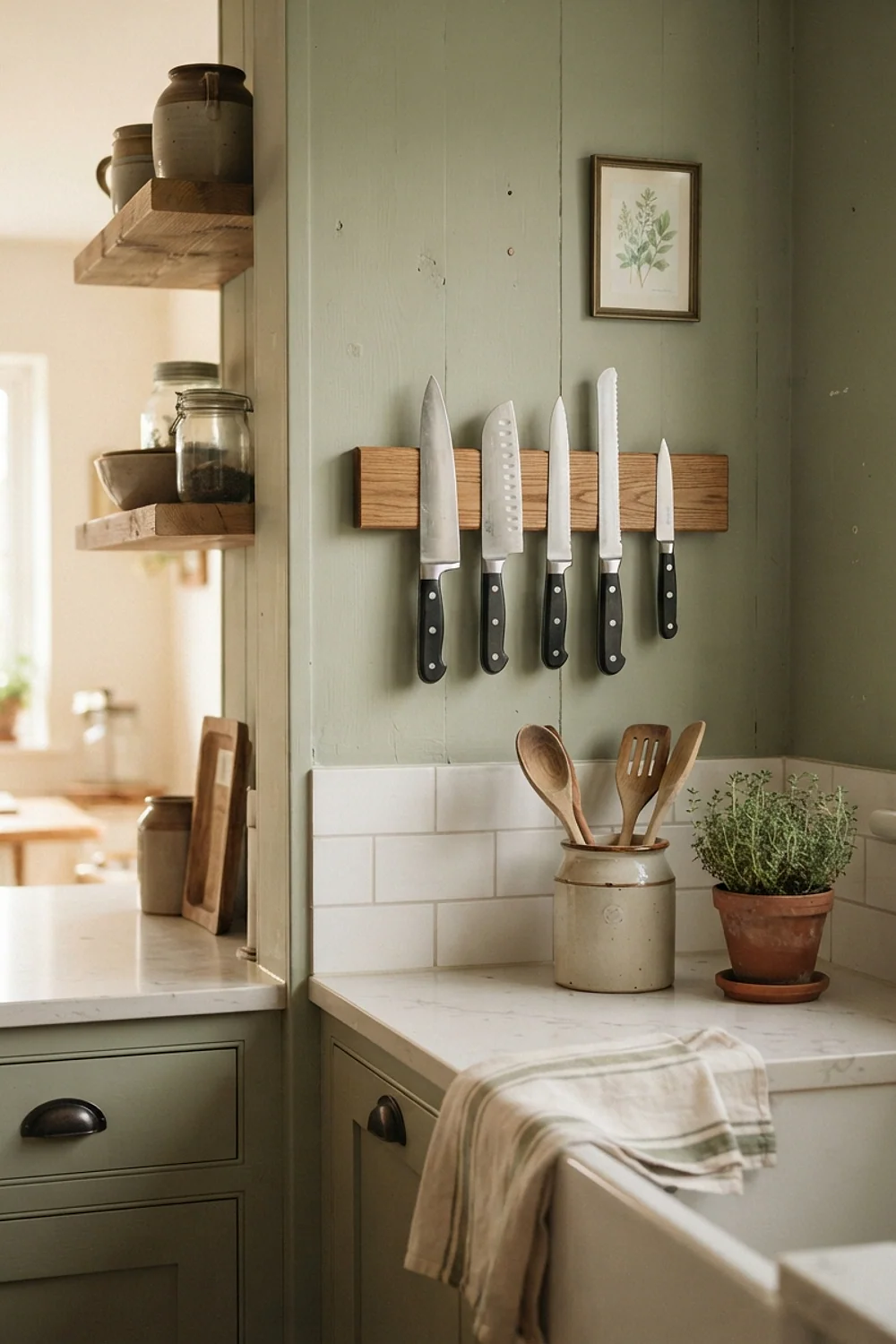
Knife storage gets easier with an oak magnetic strip, 16 inches long and about $35, which clears the block off the counter and keeps edges from dulling in a drawer. It’s the right move where counter space is scarce.
Mount it near 60 inches, out of reach of small hands, and into studs. Keep it away from range steam, which dulls the finish and weakens the magnets over time.
25. A big flat-weave rug under the breakfast table
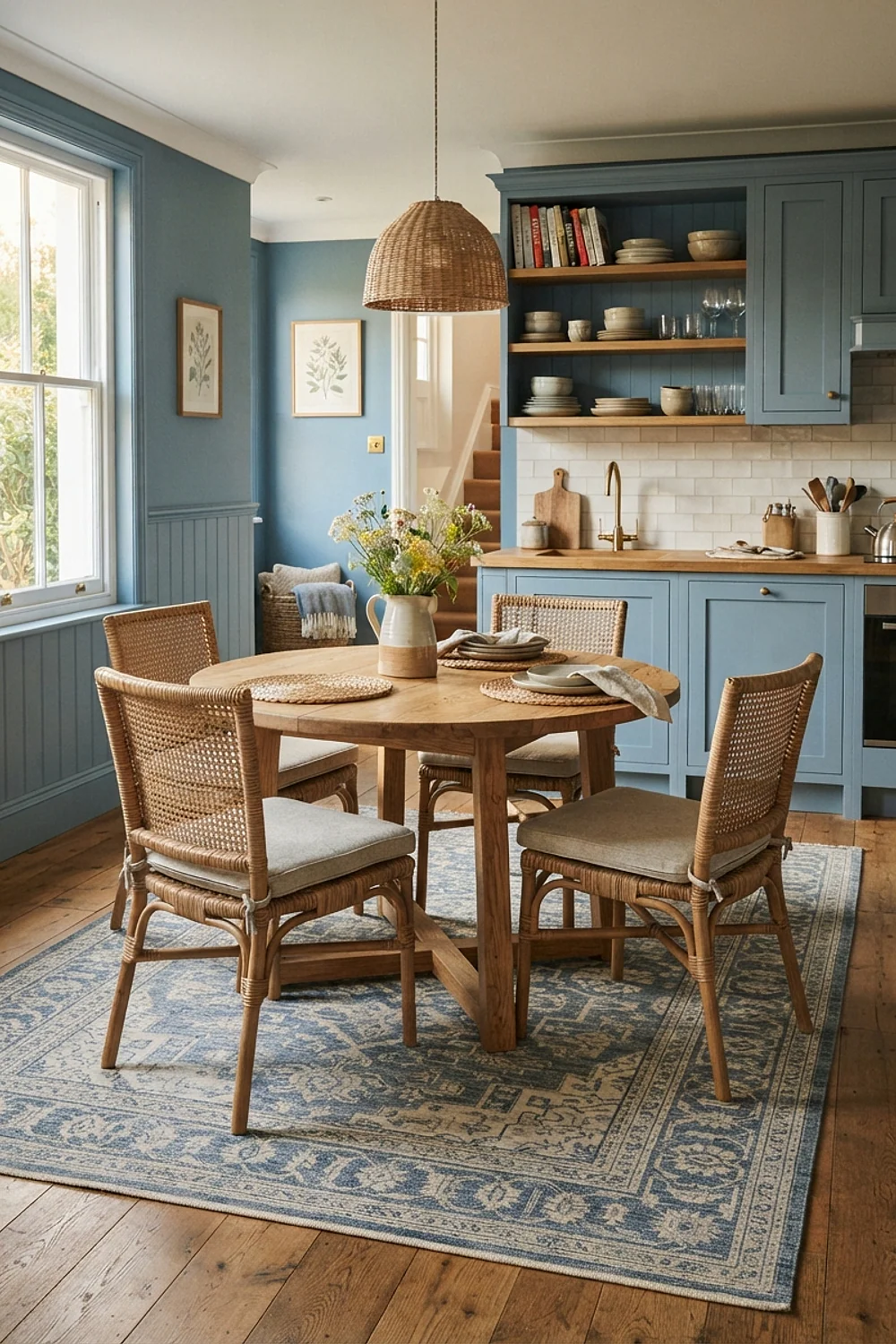
A 5-by-7 rug under a six-person table is the usual mistake, because chairs slide off the edge the moment someone stands. The rug should extend 24 to 30 inches past the table on every side. That usually means 8 by 10.
Choose a flat-weave in polypropylene or wool so chairs glide over it. Indoor-outdoor fibers hose clean when the spills come.
26. A honed soapstone counter
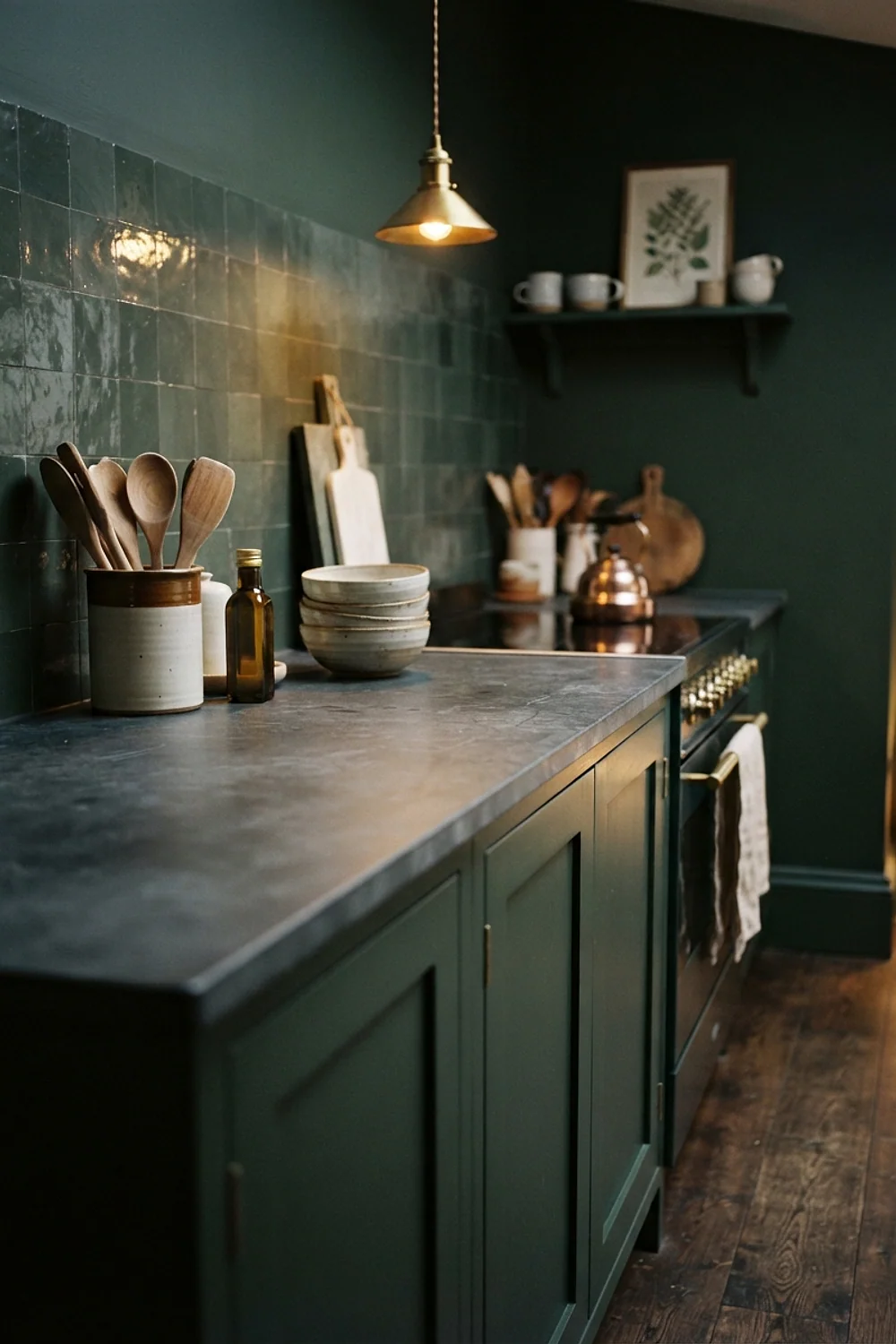
Honed soapstone is nonporous, never needs sealing, and shrugs off hot pans. It starts pale gray and darkens, and a little mineral oil evens the patina. Light scratches sand out with 220-grit paper.
It’s softer than granite, so it will nick. That’s the trade-off, and it only suits people who like the lived-in look. A slab between 3/4 and 1.25 inches thick is the standard range.
How to get the look
Kitchen decor inspiration works best when each piece takes a different job. Light, texture and color all need a lead, and no two pieces should compete for the same role. Three simple rules keep it balanced:
- Limit metals to two finishes, such as brass hardware and a black or stainless faucet.
- Pair one smooth surface with one rough one, like glazed tile beside raw oak.
- Repeat any color at least twice, in different sizes, across the room.
Then look at the room from the doorway. If your eye lands on three things at once, remove one.
Open shelves, a rail and a ledge shouldn’t all appear in the same kitchen. Choose one display zone, and let the rest of the walls stay quiet.
Key pieces and where to find them
Kitchen decor inspiration splits into things that stay and things that rotate. Pay for what you touch every day: lighting, hardware, counters and tile. Those take real wear, and replacing them is a pain.
Trend pieces are the ones that cost little to swap: pitchers, trays, bowls, baskets and art. Thrift stores and estate sales are the best source, and a color you tire of in a year costs almost nothing to replace.
The sorting question is simple. Would swapping it take an afternoon or a contractor? Afternoon items can follow the trend. Contractor items should follow the room.
Starting points for your space
The strongest kitchen decor inspiration is quiet and tough. Light the work surfaces first, then fix what hurts to stand on, then add the pieces that give the room a face.
Save or pin this list so it’s ready when you start. Try idea 11, under-cabinet LED strips, first, and measure your cabinet underside before you buy.