19 Thanksgiving Decor Ideas That Look Expensive
By the first cold snap of late October, the porch light is on by 5:30 and every store has flipped to orange. That’s when the scramble for thanksgiving decor ideas starts, and this year the smartest answer is quieter than the plaid-and-plastic-leaf pileup of seasons past.
Below are 19 ideas, each tied to a shift in how people are dressing their homes for the holiday, with measurements, materials and the one mistake to dodge in each.
Thanksgiving decor ideas: Where the inspiration comes from
Thanksgiving decor ideas are trending because the holiday finally has its own look, separate from Halloween. The pumpkin-spice orange is giving way to clay, olive, oatmeal and deep brown, a palette borrowed from the earthy, textured interiors that dominated design feeds for the past few years.
There’s also a practical push. Hosts want decor that survives a crowded table, goes up in an afternoon and doesn’t look tired by November 30. Each idea below respects that.
1. A burnt-clay and olive palette in place of bright orange

A paint-swatch obsessive will tell you that orange reads cheap under warm bulbs, while a muted terracotta such as Sherwin-Williams Cavern Clay reads like baked earth. Pair it with an olive green and a creamy off-white, and the whole room settles into three colors that actually belong together.
This suits anyone with neutral walls who wants a seasonal shift without repainting. Hold the line at three colors, though. A fourth, especially a saturated red, is where the palette starts to look like a clearance aisle.
2. A stonewashed linen runner, 14 to 16 inches wide
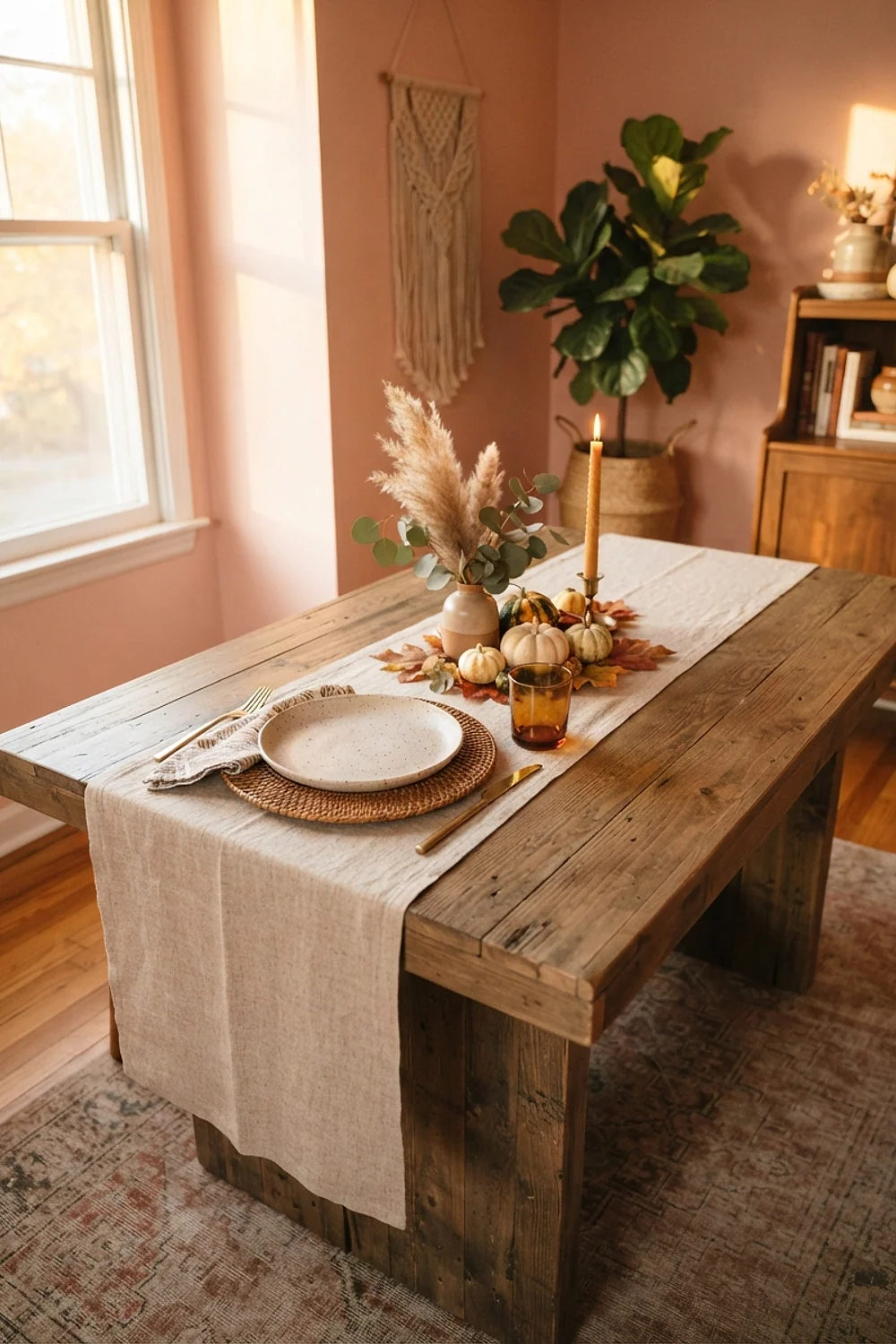
Linen that’s been stonewashed has a soft, slightly dry hand, and it wrinkles in a way that looks intentional instead of sloppy. A runner of 14-16 inches leaves room for plates on both sides of a standard 36-inch-wide table, and a decent one runs about $35-60.
Choose oatmeal or flax over stark white, which shows every drip of gravy. And skip polyester “linen-look” versions, since they slide around and shine under candlelight.
3. A low walnut tray down the center of the table
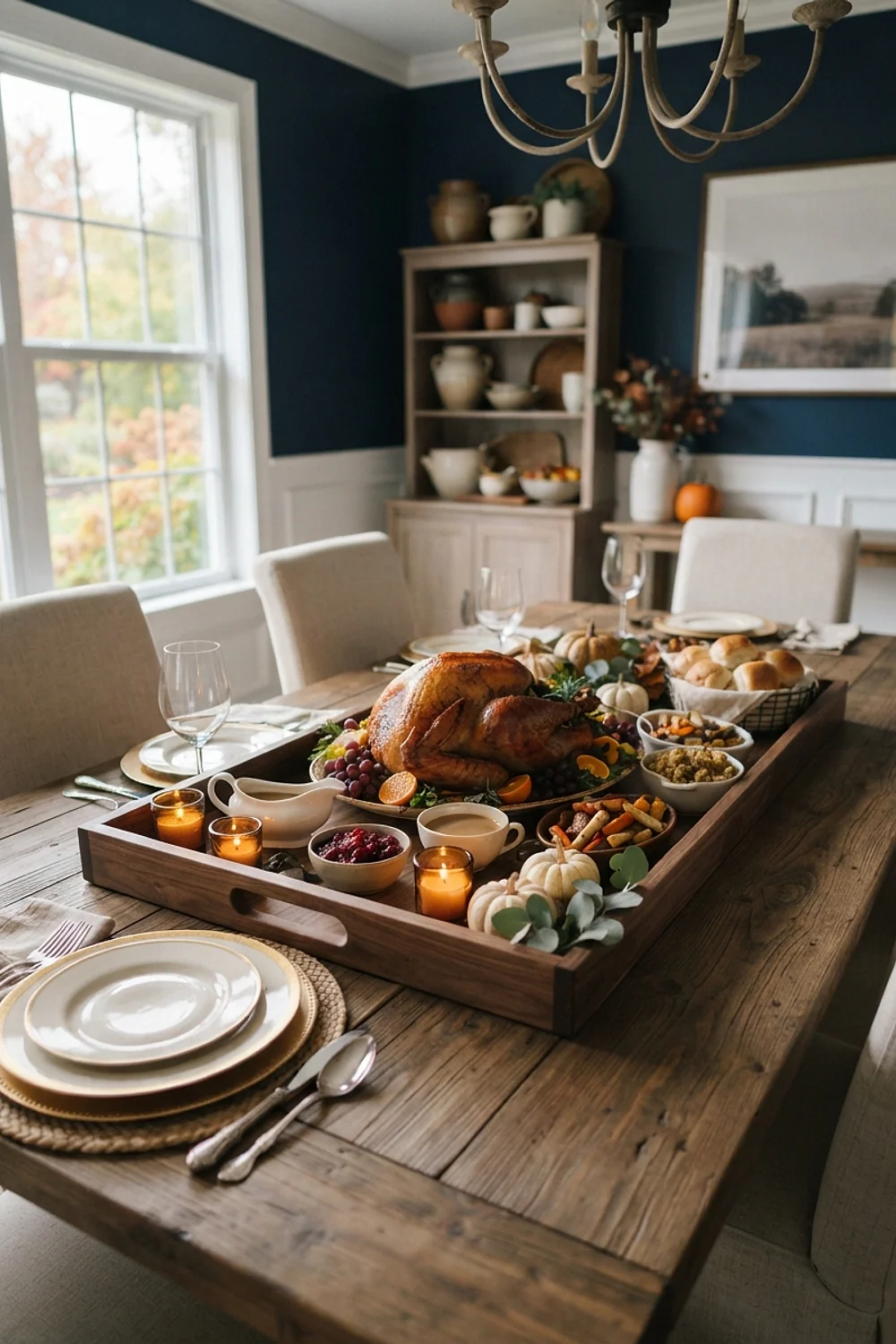
A long tray, around 30 inches by 8 inches, corrals candles and gourds on one base, so the whole centerpiece lifts off in a single move when the food arrives. That function is why trays are quietly replacing scattered loose pieces.
It suits small tables and chaotic hosts equally. Pick a tray with a raised lip of at least half an inch, or the first nudged elbow will send a taper rolling.
4. Tapers in mixed heights and mixed metals
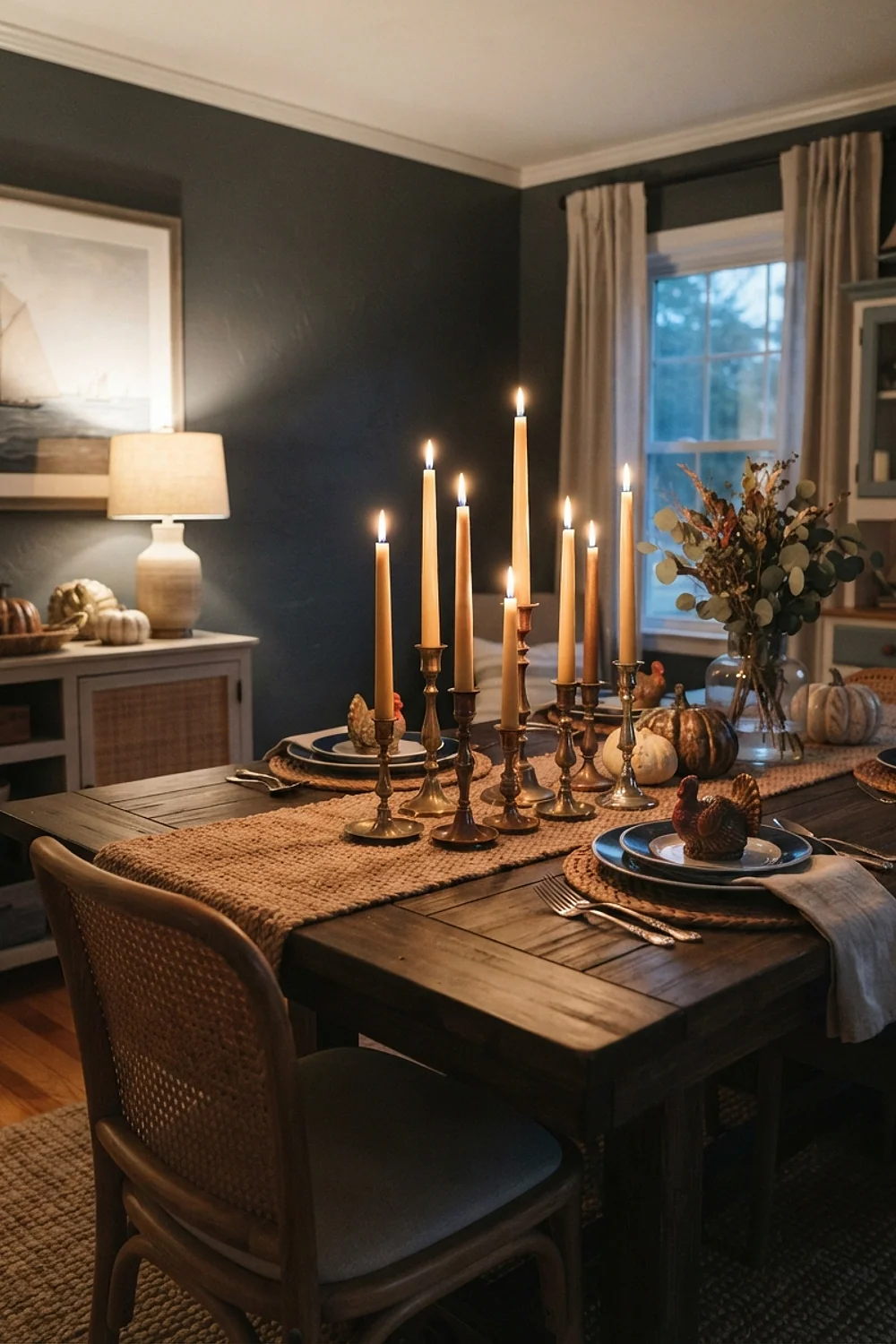
Set three or five unscented tapers at 10, 12 and 9 inches in brass, ceramic and dark iron holders. The uneven heights draw the eye along the table, and the mismatched finishes look collected rather than bought as a set.
Use odd numbers and keep the holders under 4 inches wide so they don’t crowd guests. The common mistake is lighting scented tapers at the table, which fights with the food for noses’ attention.
5. Branches 36 to 48 inches tall in a floor vase
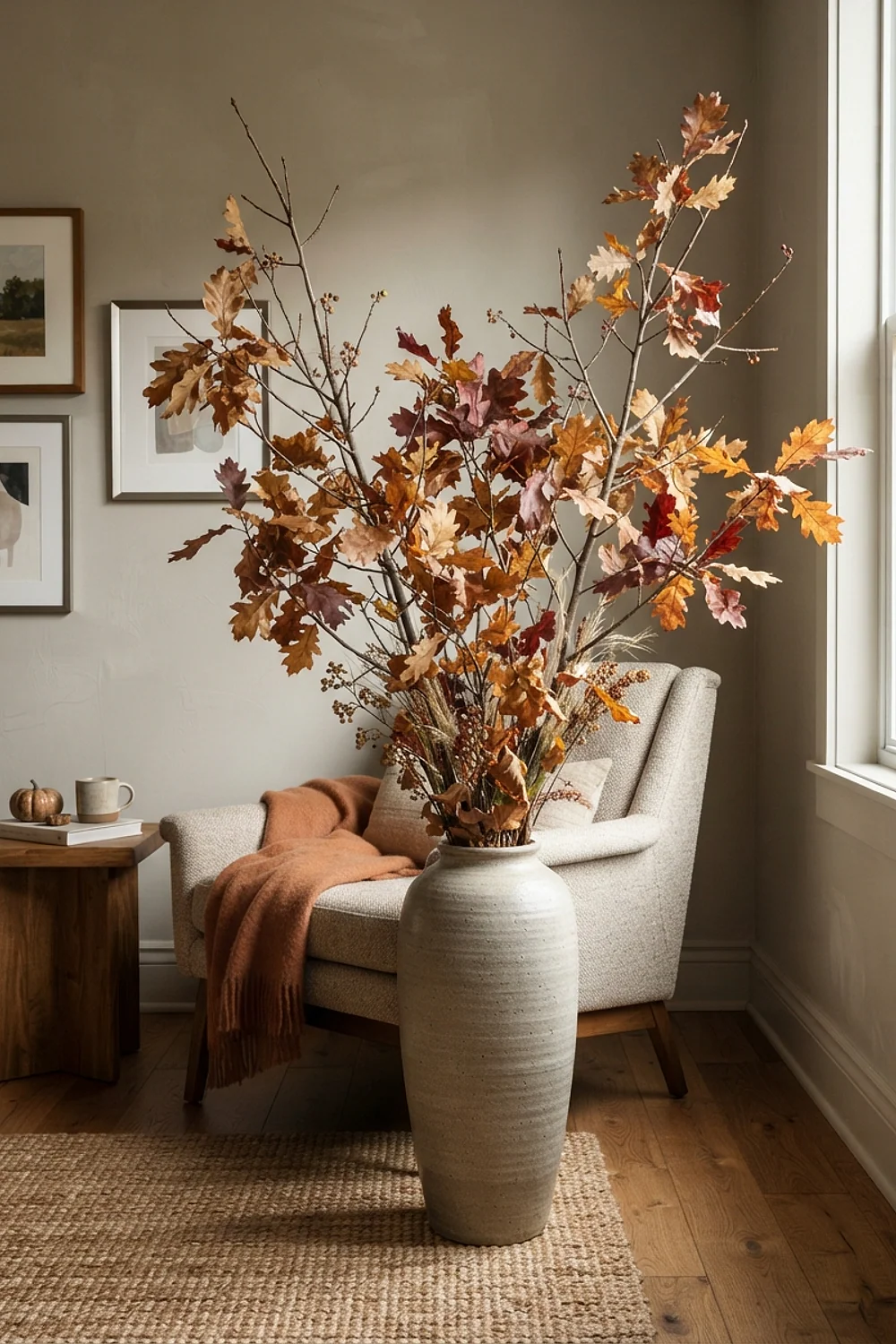
Bare or dried branches in a heavy ceramic floor vase give an entry or corner height that no tabletop arrangement can match. Birch, oak with a few leaves kept on, or flowering quince all work, and a 20-inch vase weighted with river stones costs about $40-80.
This one is for rooms with ceilings 9 feet or higher, where a lot of wall sits empty. In a low-ceilinged room, stay under 36 inches or the branches look like they’re scraping the plaster.
6. Three clusters rather than one long line

On a 72-inch table, split the centerpiece into three groupings placed at roughly the thirds. Guests can see across the table, and the eye keeps moving instead of stopping at one big hump in the middle.
Keep each cluster under 8 inches tall at conversation height. The thing to avoid is symmetry so exact it looks like a shop display, so shift one cluster an inch or two off center.
7. Sheepskin or bouclé pads on the dining chairs
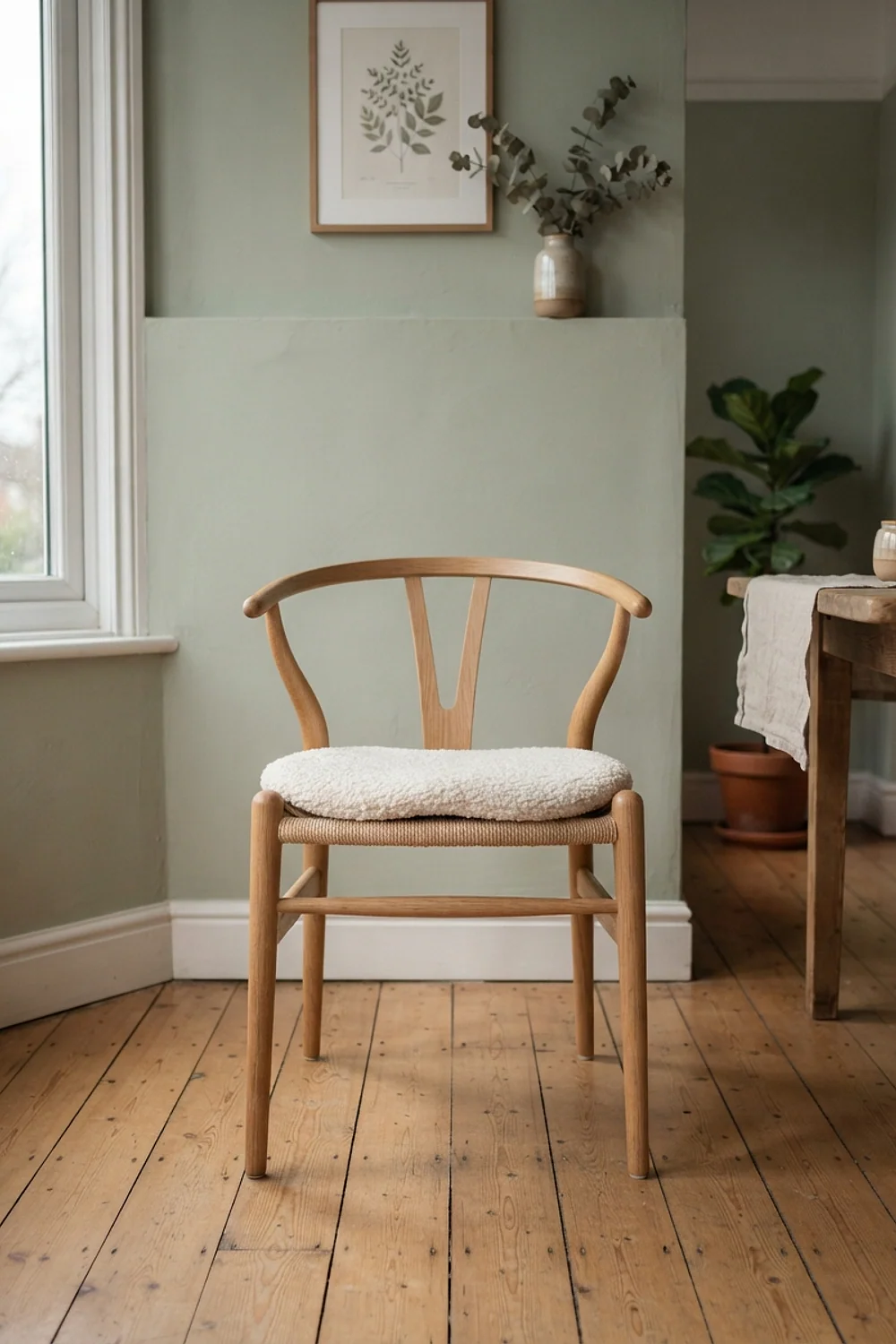
Run your hand across a real sheepskin seat pad and the deep, springy wool explains why guests linger an extra half hour. Bouclé is a strong second, with a nubby loop texture that hides spills better than flat fabric.
These suit hard wooden or rattan chairs that get hours of use on the holiday. Choose pads with a non-slip backing and ties, because a pad that migrates under a seated guest is the opposite of comfort.
8. Preserved eucalyptus garlands instead of shiny faux leaves
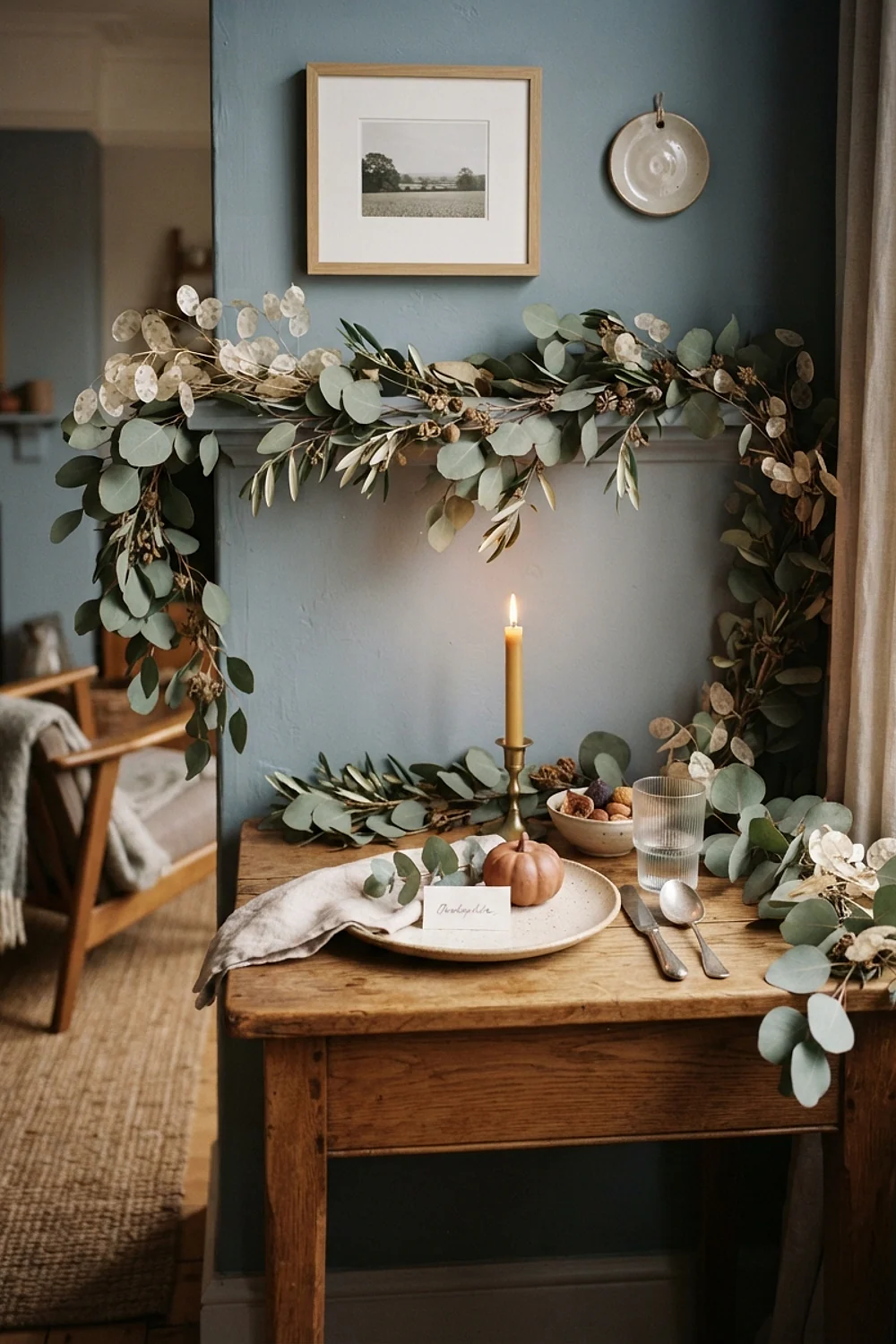
Shiny plastic maple leaves are the fastest way to make a mantel look like a party store aisle. Preserved eucalyptus or dried oak leaves have a matte, papery finish and a faint scent that’s herbal rather than perfumey.
A 6-foot garland covers a standard mantel with some drape on each end. The mistake is wiring it tightly flat; let it hang in loose swags so the shadows do some of the work.
9. A lidded wicker trunk that stores the decor and doubles as a side table
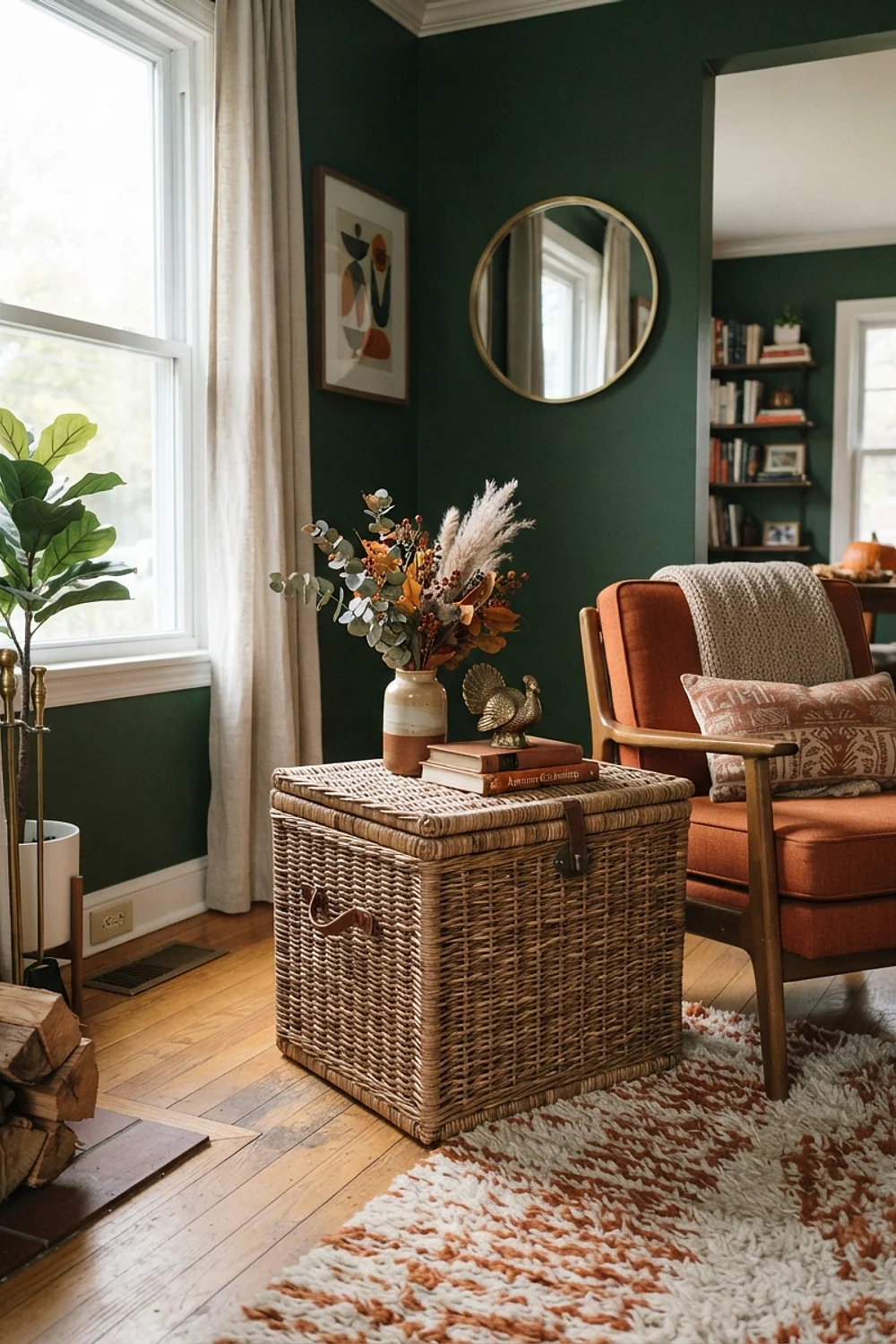
A 24-inch-wide trunk lives in a corner as a table most of the year, then opens in late October to give up the candle holders and linens it’s been holding. Around $90-150 gets a sturdy one with a woven lid that doesn’t sag.
That’s ideal for apartments with no spare closet. Line the inside with an old cotton sheet so wicker snags don’t catch the linens.
10. Warm 2200K to 2700K bulbs and a dimmer by 4 pm
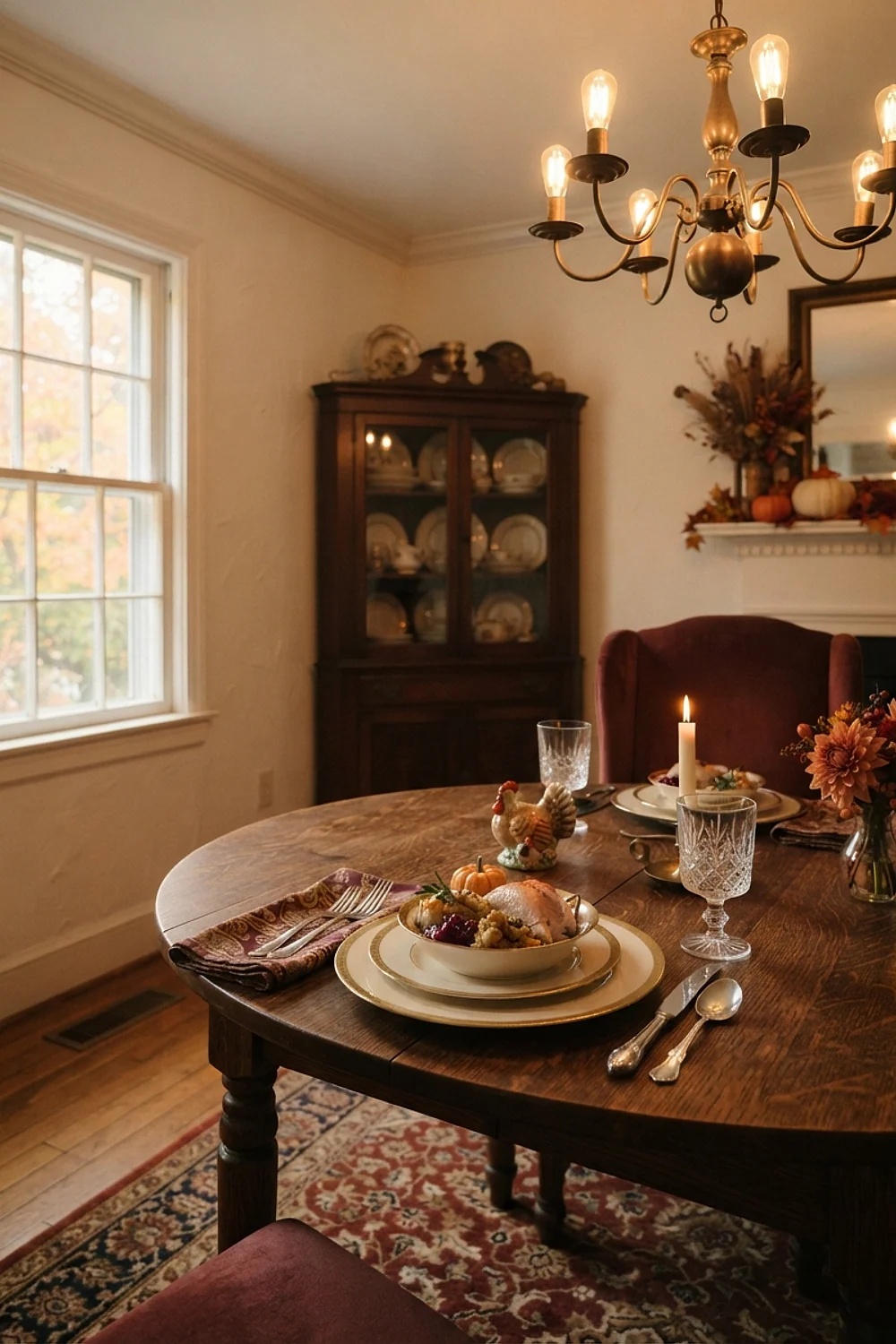
Around 4 pm in November, the low sun turns a dining room amber for about twenty minutes, then drops it flat blue. A dimmer set near 40 percent and bulbs between 2200K and 2700K keep that glow going after dark.
If hardwiring isn’t an option, plug-in dimmer cords cost about the price of a pumpkin. Avoid anything labeled “daylight,” which turns terracotta and linen a cold gray.
11. Heirloom pumpkins in blue-gray, cream and sage

Jarrahdale pumpkins have a dusty blue-gray skin that looks almost velvety, and white Lumina or sage-toned varieties sit beautifully against clay. Stacking them in odd numbers on a stair or hearth gives instant color without anything orange.
Uncarved, they last two to three months, which is the counterintuitive bit: real pumpkins outlast most fresh flowers by weeks. Keep them off wood surfaces without a coaster, because they sweat as they age.
12. Reactive-glaze stoneware plates in mismatched tones
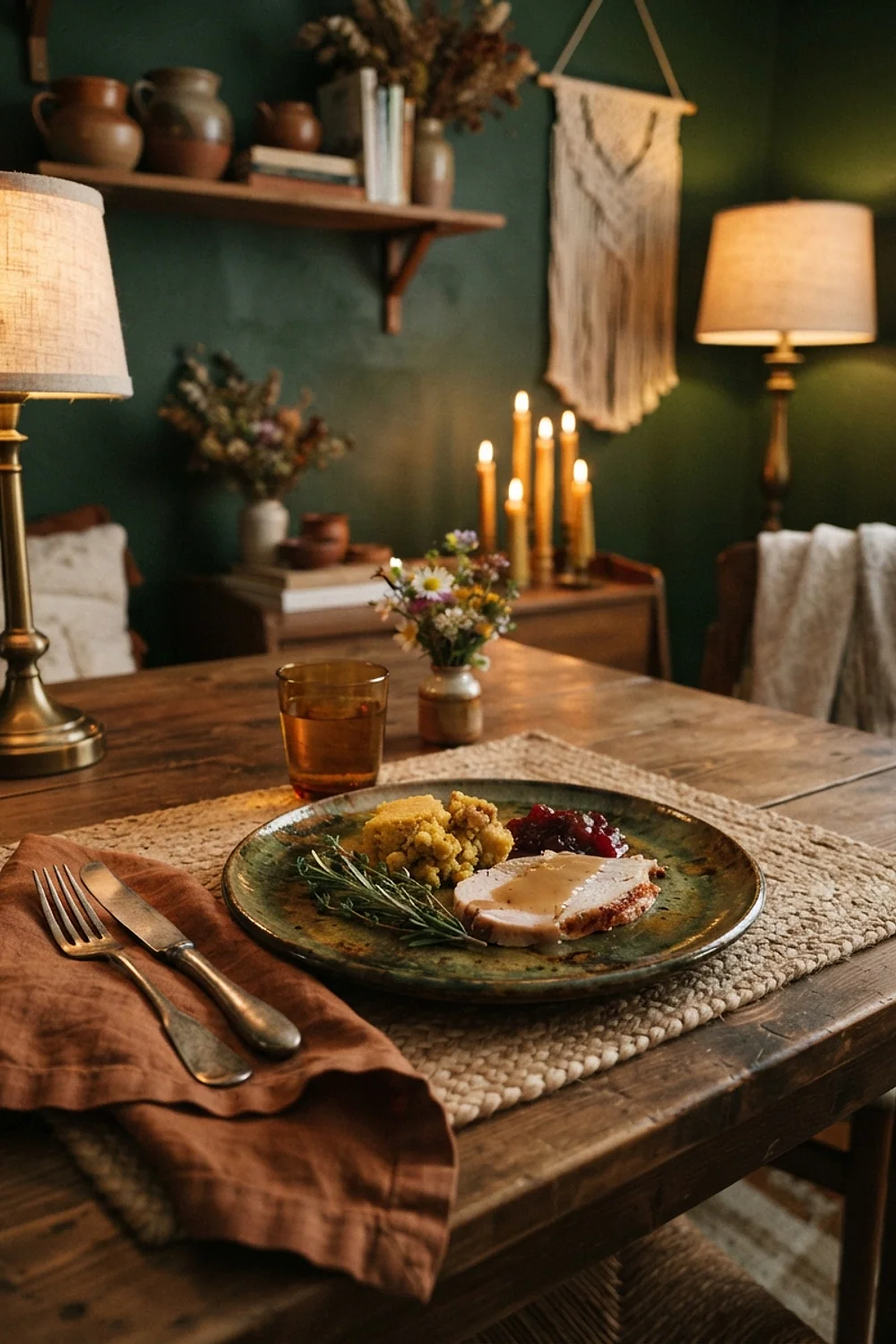
Reactive glazes pool and break in slightly different ways on every plate, so a table of ten never looks like a catalog. Secondhand shopping is the best source: thrift-store stoneware often runs $3-8 a plate and weighs a satisfying amount.
Mix two or three glaze colors in the same family, say cream, moss and rust. Check the rim for chips and crazing before buying, since fine cracks in the glaze trap stains.
13. Hand-lettered place cards that settle the seating
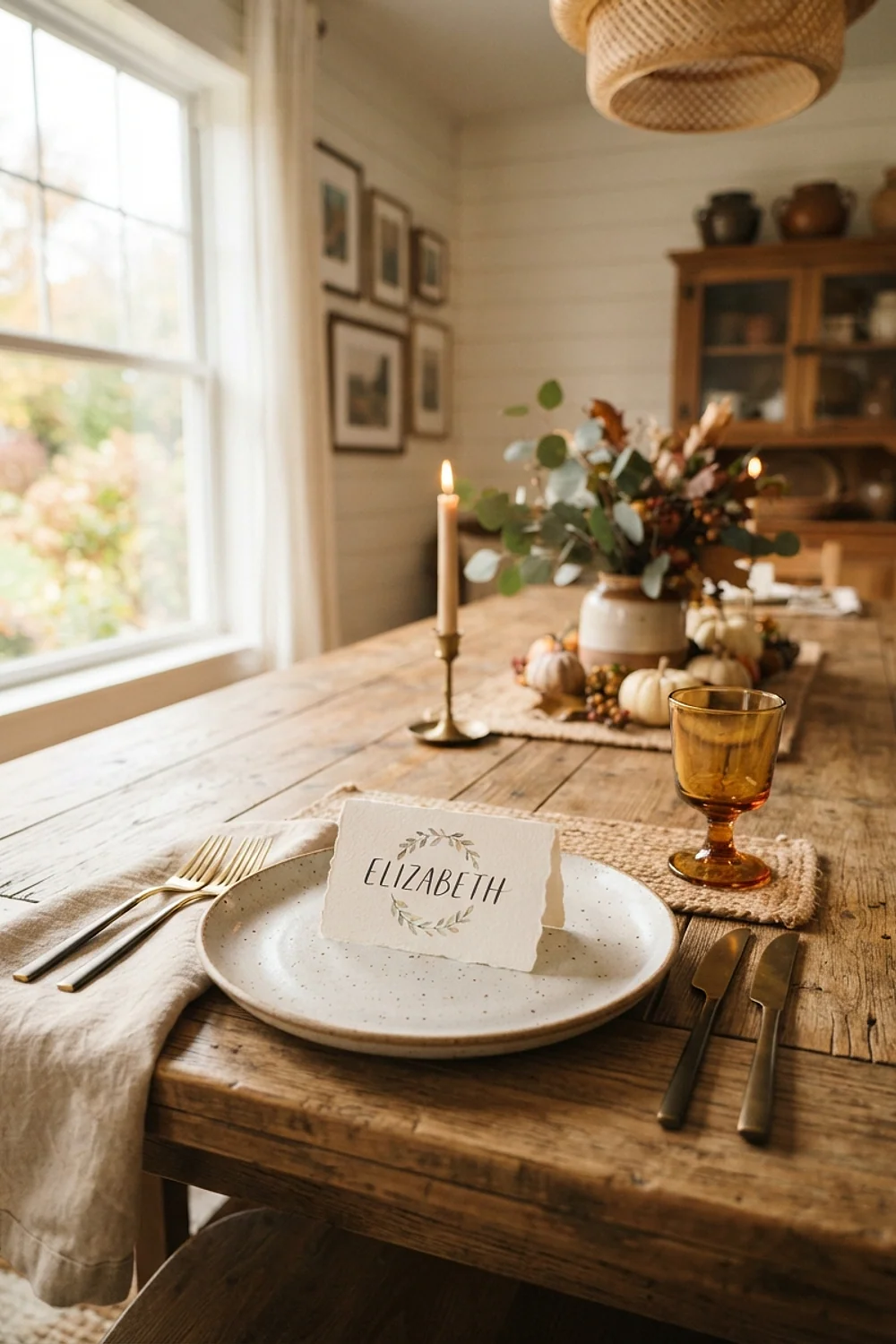
Small kraft or cotton-paper cards, about 2 by 3.5 inches, stop the awkward shuffle at the table and let a host seat the loud uncle away from the quiet cousin. They also read as thoughtful at a glance.
These suit gatherings of eight or more. Write names in a dark brown ink rather than black, which looks harsh on warm paper.
14. A dried wheat and olive wreath, 22 inches across
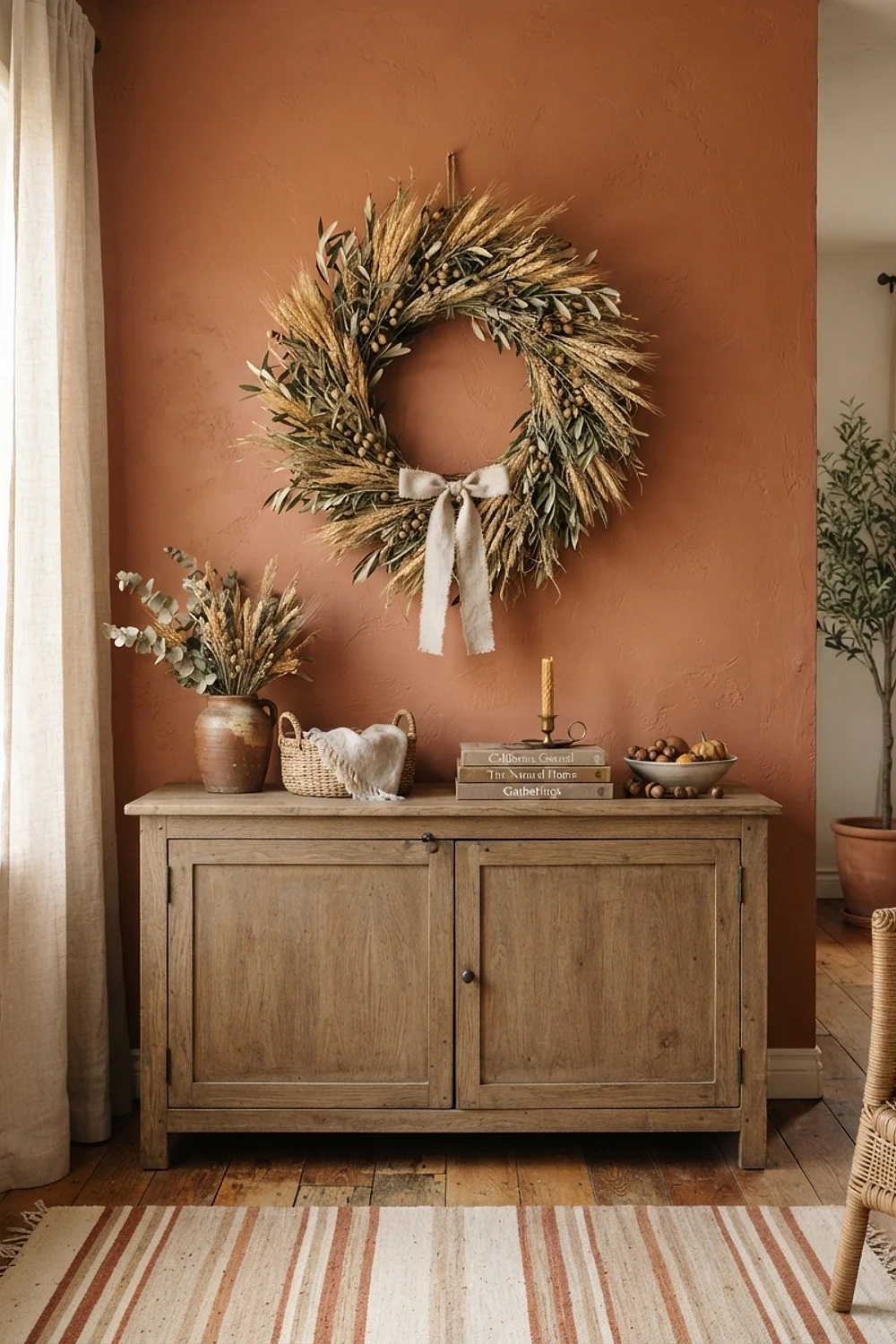
A wreath of dried wheat, olive branches and a few preserved leaves has a gold-green color that suits almost any door color, from navy to black to natural wood. At 22 inches, it fills a standard door without crowding the knocker.
Hang it under a porch or covered entry, because rain turns dried wheat to mush within a week. Use a ribbon hanger rather than a hook so it sits flush instead of tilting.
15. A row of 4 to 6 inch bud vases down the table
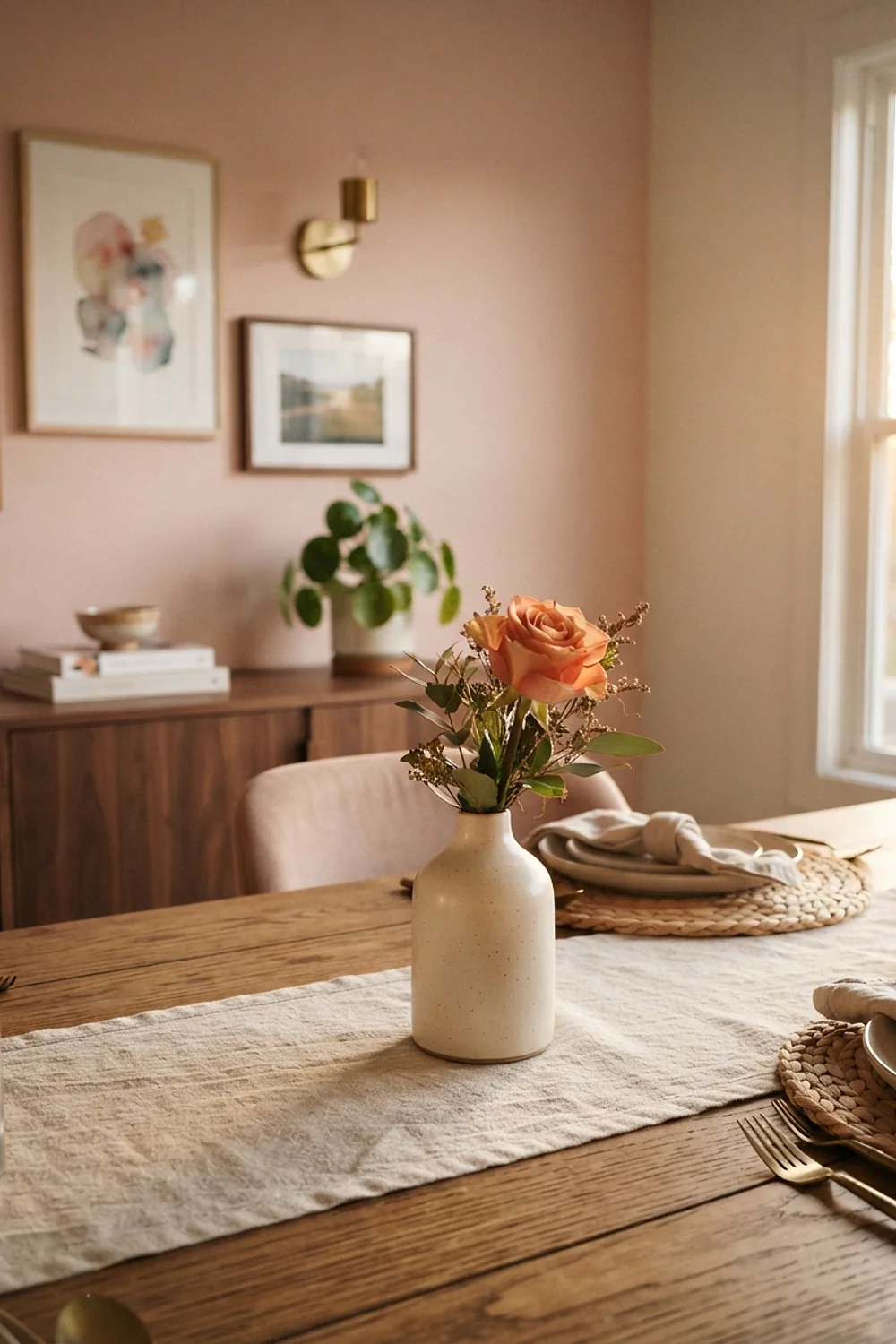
Six or seven bud vases holding a single dried stem each take up almost no plate room, and the sight lines stay open for conversation. Mismatched glass in amber, smoke and clear looks especially good with candlelight behind it.
This is the move for narrow tables under 34 inches wide, where a big centerpiece would crowd everything. Weight each vase with a spoonful of sand so a passing sleeve doesn’t tip it.
16. A sideboard divided into three zones for a buffet

Lay out a sideboard of about 60 inches with plates and napkins on the left, a decor cluster in the middle, and a drink station on the right. The guests flow in one direction, and the decor stops being a hazard.
It suits hosts of more than ten, where a single table can’t hold everything. Leave at least 36 inches of clear floor in front, or the line backs up into the living room. A good wooden sideboard, even secondhand, runs about $150-300.
17. A basket of throws and hooks by the door
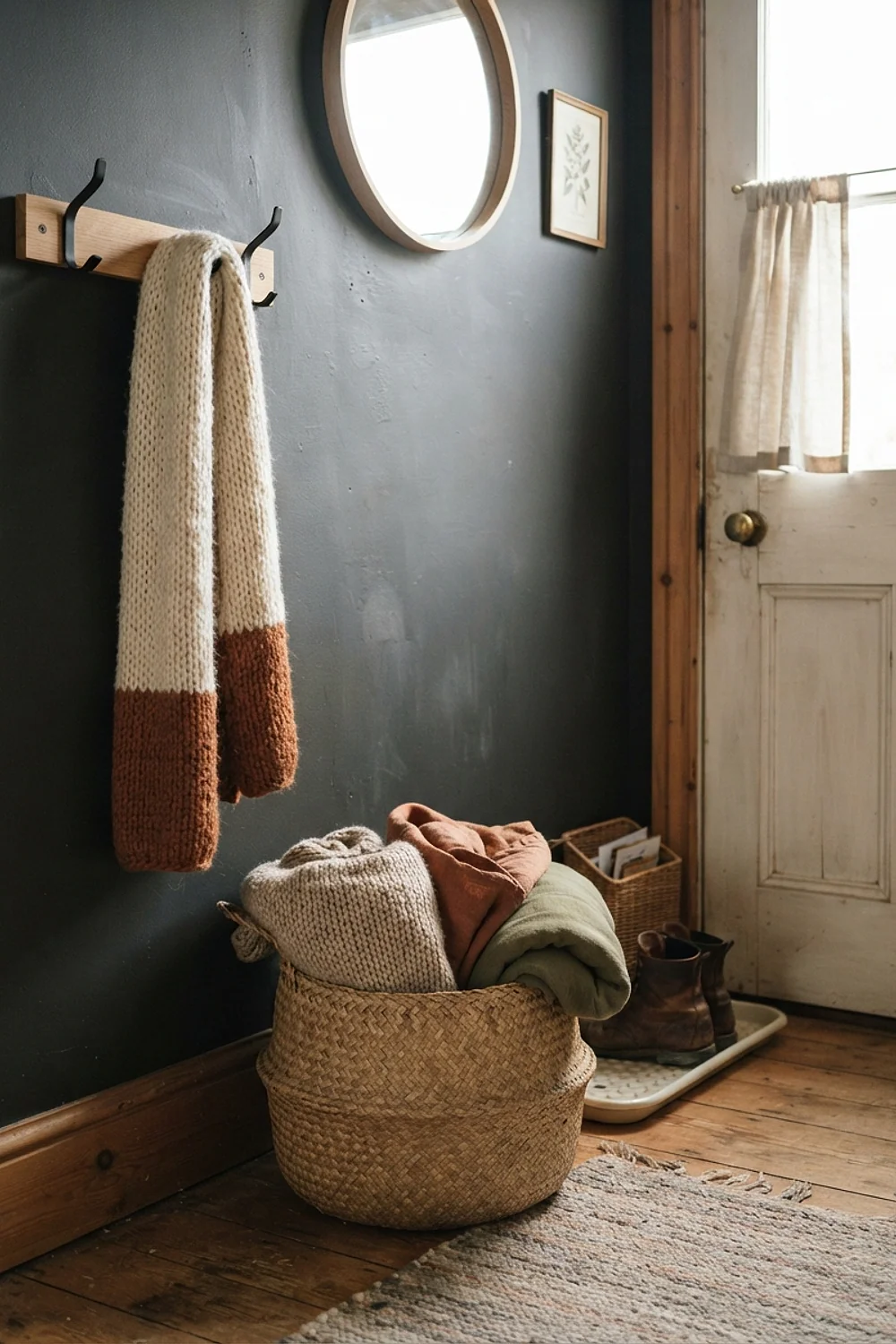
A wide basket holding three or four chunky throws, plus a row of coat hooks 60 inches off the floor, tells arriving guests exactly where everything goes. Wool throws smell faintly of lanolin and feel dense and heavy, which is the point.
Choose throws about 50 by 60 inches so they actually cover a lap. Avoid putting the basket where the door swings, because it will get kicked within an hour.
18. A table with 24 inches of clear space per setting
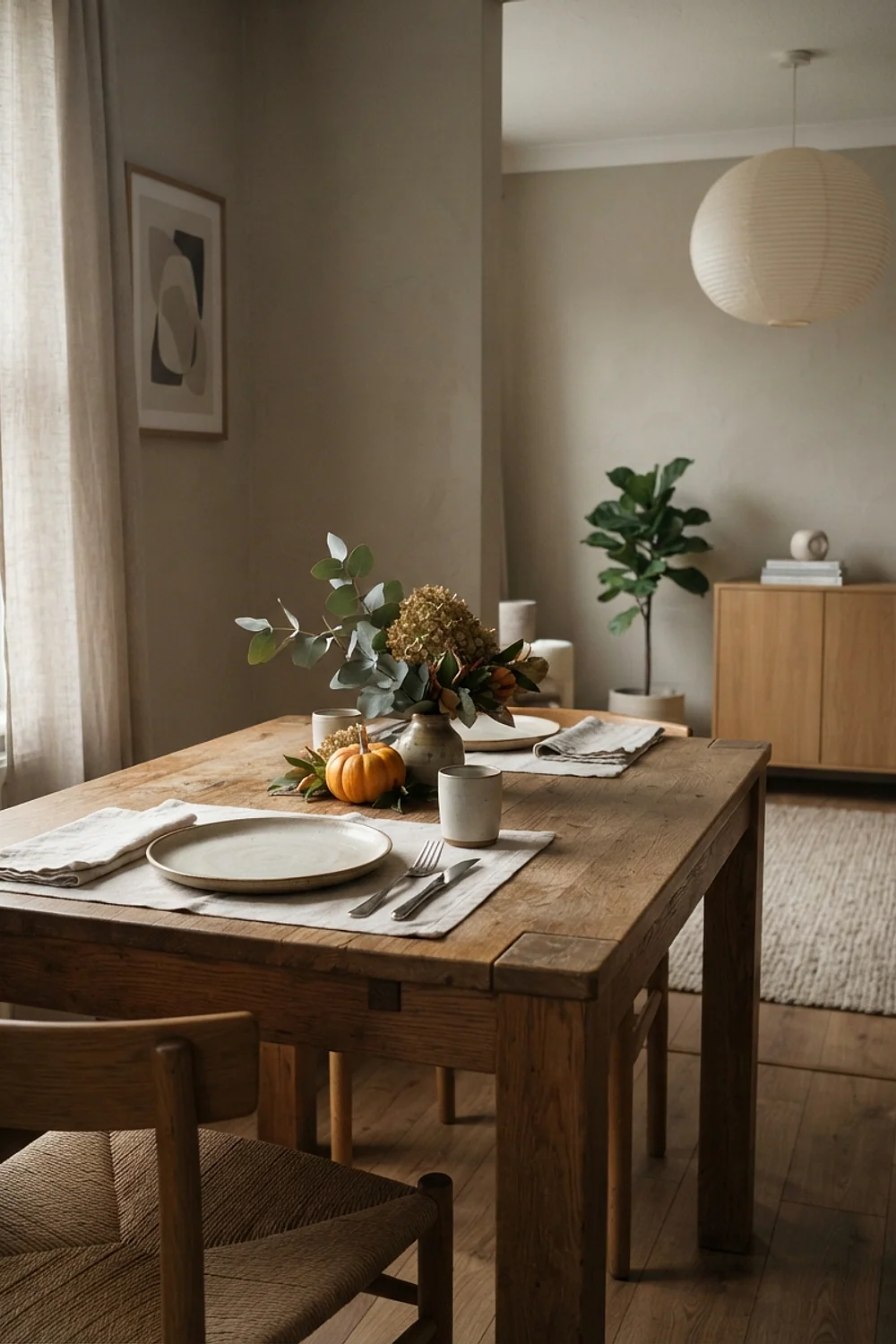
The most common mistake in thanksgiving decor ideas is crowding the table until plates have nowhere to land. Reserve 24 inches of width per person, and keep the center decor narrower than 12 inches.
That rule matters most in the 3-4 inch gap where serving bowls and decor collide. If an item can’t be moved in under five seconds, it doesn’t belong in the middle of the table.
19. A 90-minute setup that gets finished the first time
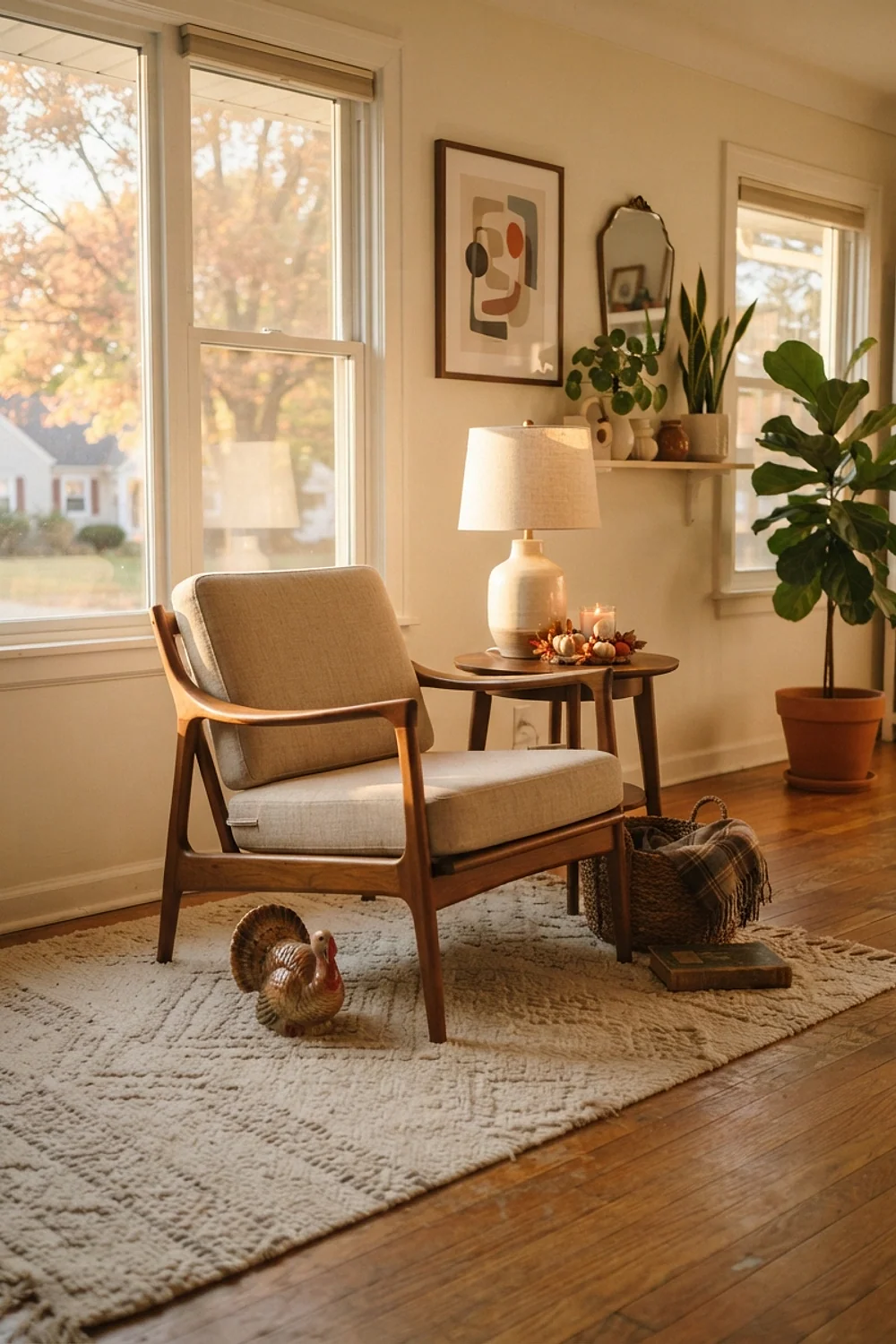
Half-measures are tempting, and a mantel dressed on only one side looks like a haircut abandoned midway. Block out 90 minutes, do the entry, mantel and table in that order, and stop when each is complete.
This suits anyone hosting on short notice. Lay everything out on the dining table first, edit it down by a third, then place it, because the pile always looks smaller than the room.
Putting the space together
Thanksgiving decor ideas work best when the palette is chosen before a single item is bought. Start with a swatch card, hold it against the existing sofa and walls, and commit to three colors.
Does every surface need a pumpkin? Exactly not. One strong moment on the table, one on the mantel and one at the door beats twelve small ones.
Use this order of operations to avoid the usual buy-then-return cycle:
- Measure the table and mantel before shopping.
- Pick three colors and stick to them.
- Buy natural materials first (linen, wood, dried stems).
- Test lighting at 4 pm and again after dark.
- Edit by a third before placing anything.
Natural materials also make the decor reusable. Linen, stoneware and dried branches carry into December with a swap of candle color, which stretches the money further than anything stamped “harvest.”
What’s fading out
The gingham-and-“gather” wooden sign era is winding down, as are rainbow-orange plastic leaves and anything glitter-dipped. Thanksgiving decor ideas now lean on texture over slogans, so the hand-lettered words move onto place cards and out of the foyer.
Also on the way out:
- Scented candles burning on the dining table, which compete with the food.
- Faux turkey figurines, which look dated by about five seasons.
- Fully matching orange and brown sets, now replaced by mixed earth tones.
The shift isn’t about throwing everything out. Keep the pieces with real wood, ceramic or fabric, and retire the plastic and the slogans.
The vision board
The thanksgiving decor ideas that hold up all share a few traits: a limited palette, natural textures, and a layout that leaves room for people and plates. Pick two or three from the list rather than all nineteen, and finish them properly.
Save or pin this list so it’s there when the first cold snap arrives, then start by measuring the table and choosing the three colors before buying a thing.