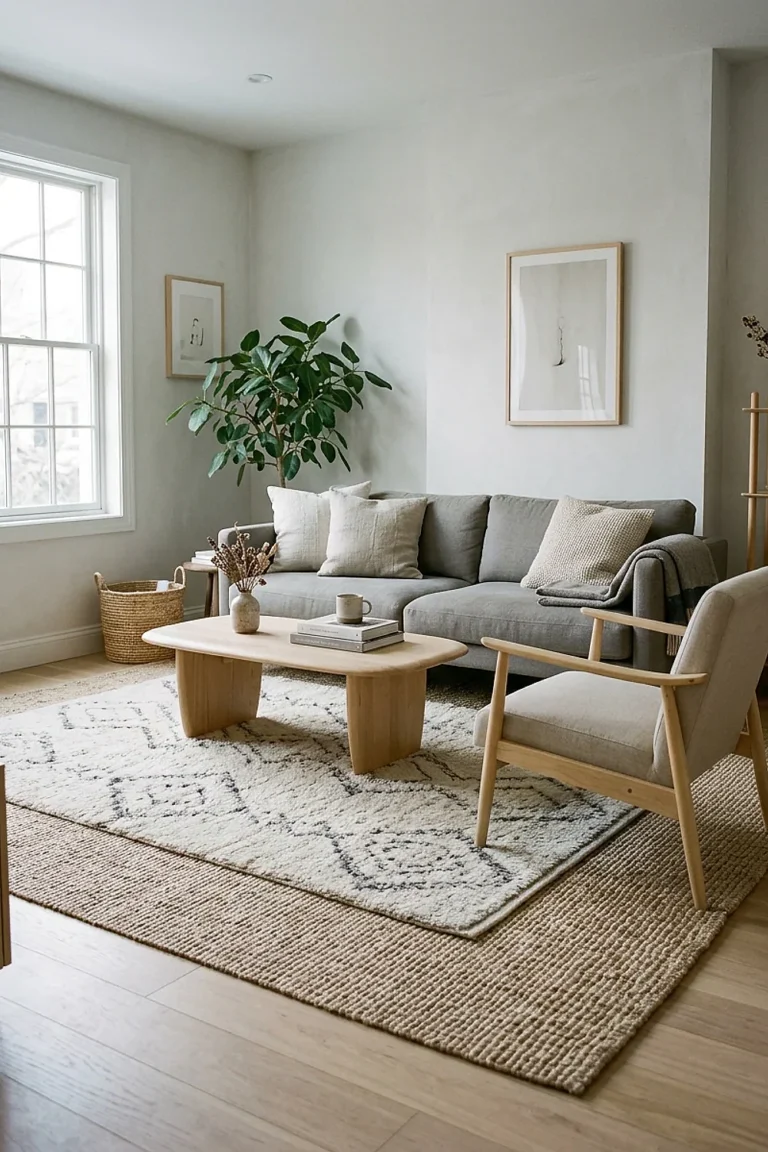
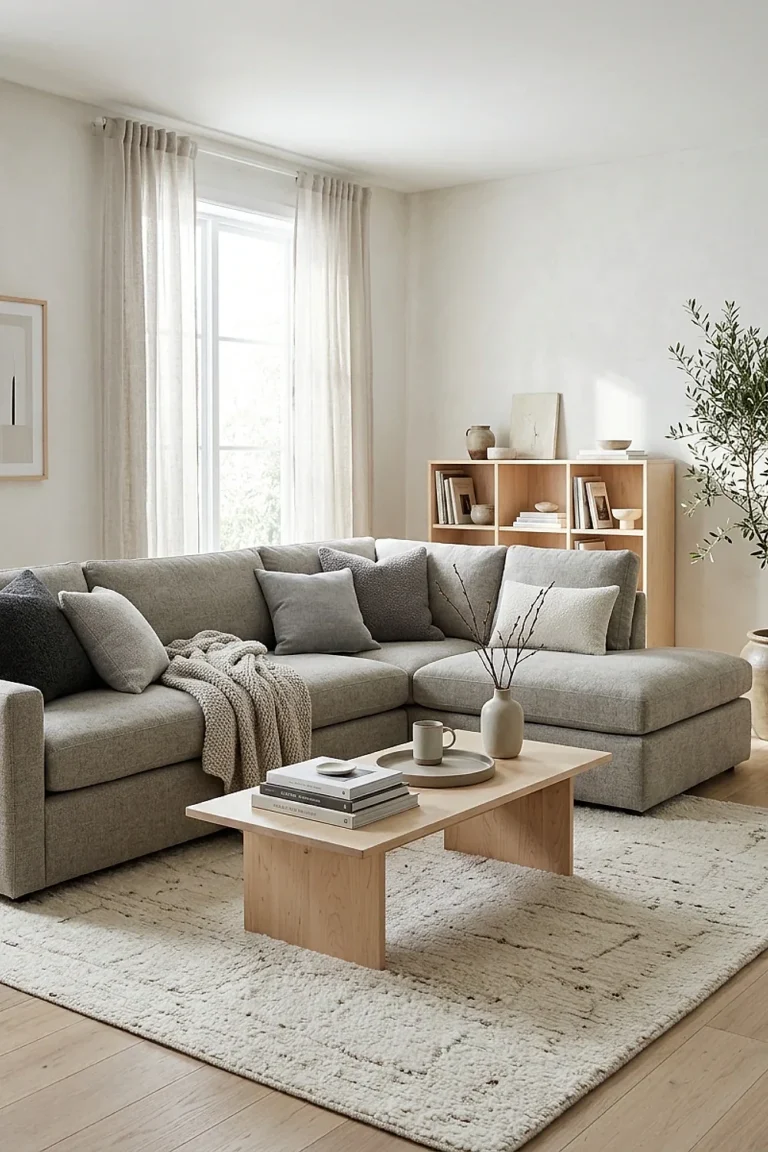
16 Hosting Thanksgiving Decorations Swaps for a Warmer Home
Buying one big matching decor set is the most common mistake people make before a holiday gathering, and it’s why so many Thanksgiving tables look like a store display. Hosting thanksgiving decorations work better when they’re swapped in layer by layer, using what’s already in the house plus a few deliberate pieces.
Half-measures are tempting. One lonely gourd on a bare table feels like effort, and it isn’t. Below are 16 swaps you can finish properly in a single afternoon, with measurements and materials so nothing stays half-done.
Refreshing your hosting thanksgiving decorations this season
1. A low runner of dried wheat and olive branches
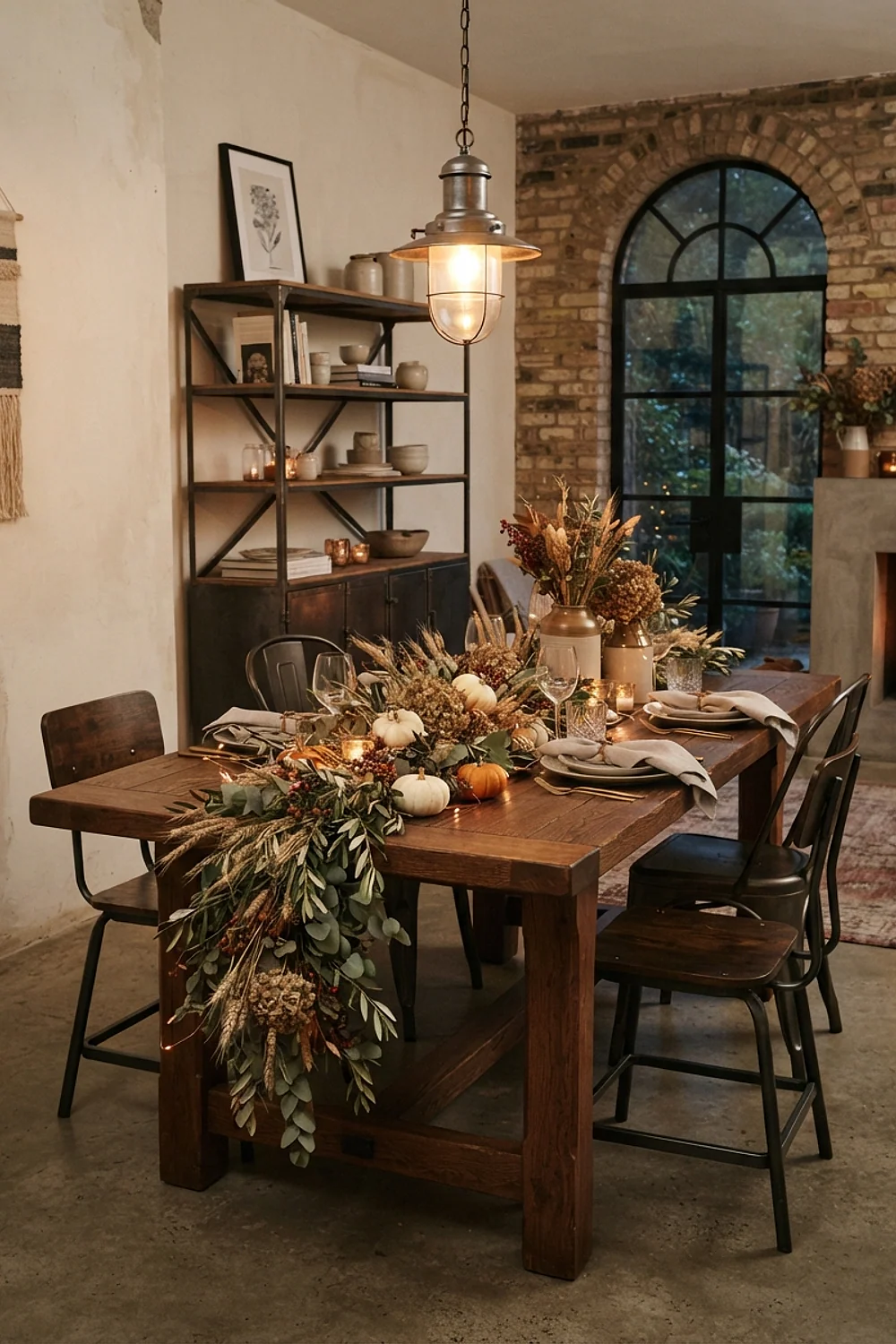
Lay a 6-foot bundle of dried wheat stems and olive branches down the center of the table, stems overlapping like shingles. The pale gold reads as harvest without the orange overload, and the dry rustle is a pleasant texture against a smooth tabletop.
This suits long rectangular tables that seat eight or more. The catch is shedding. A light mist of unscented hairspray holds the grain heads on, and a fabric underlay catches whatever falls.
2. Rust linen napkins in place of paper
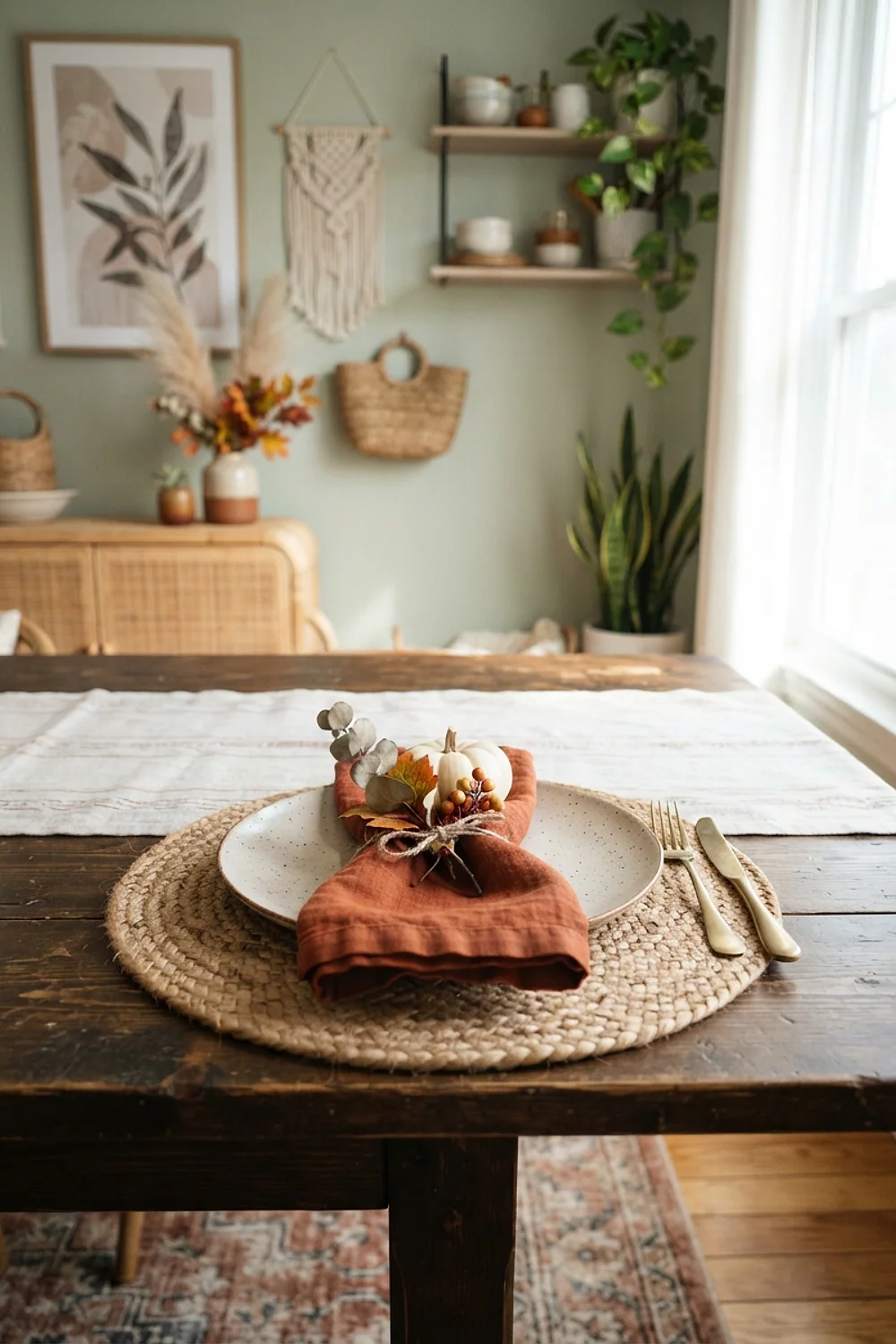
Swap the white napkins for stonewashed linen in rust, olive, or deep plum. A set of eight runs about $30-45, and the slightly wrinkled drape looks intentional rather than ironed to death.
Color-wise, rust is the safest anchor because it flatters both white and cream plates. Avoid bright pumpkin orange, which turns loud under overhead bulbs and fights with any red wine on the table.
3. Chair spacing measured, not guessed
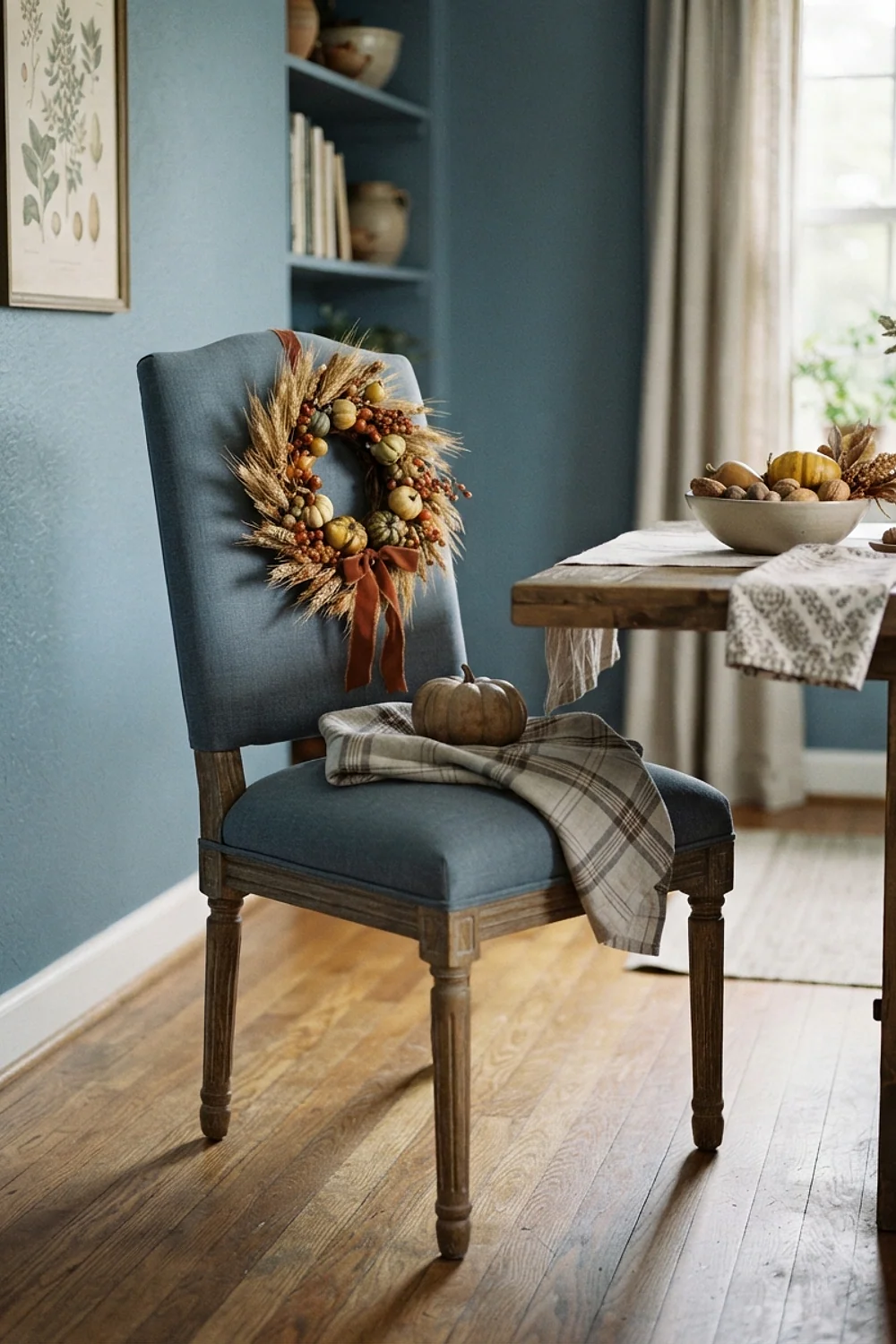
Allow 24 inches of table edge per guest and pull chairs about 18 inches out from the table when someone sits. Cramped elbows ruin a long dinner faster than any bland centerpiece, so measure before you add a ninth setting.
For a 72-inch table, six chairs is comfortable and eight is a squeeze. If you must seat more, put a bench along one side and let two kids share it.
4. Sheepskin or boucle pads on hard dining chairs
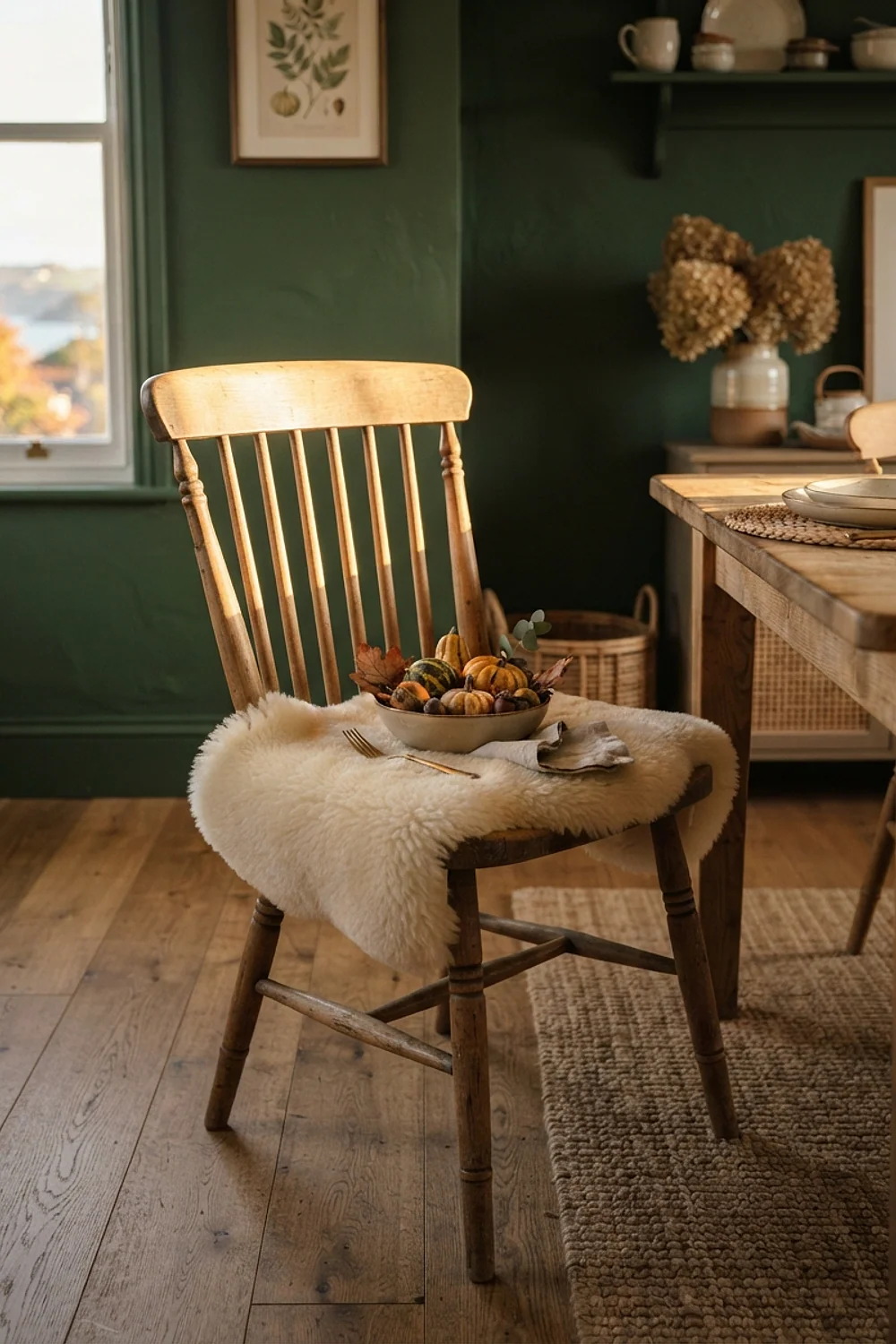
Tie a 16-inch round seat pad in boucle or faux sheepskin onto wooden chairs. The nubby surface feels good under a hand and keeps guests from shifting around after the second hour of conversation.
Pick pads with a non-slip backing and ties, since a sliding cushion is worse than none. Pale cream pads also hide the usual dog hair better than charcoal ones.
5. A centerpiece no taller than a toaster
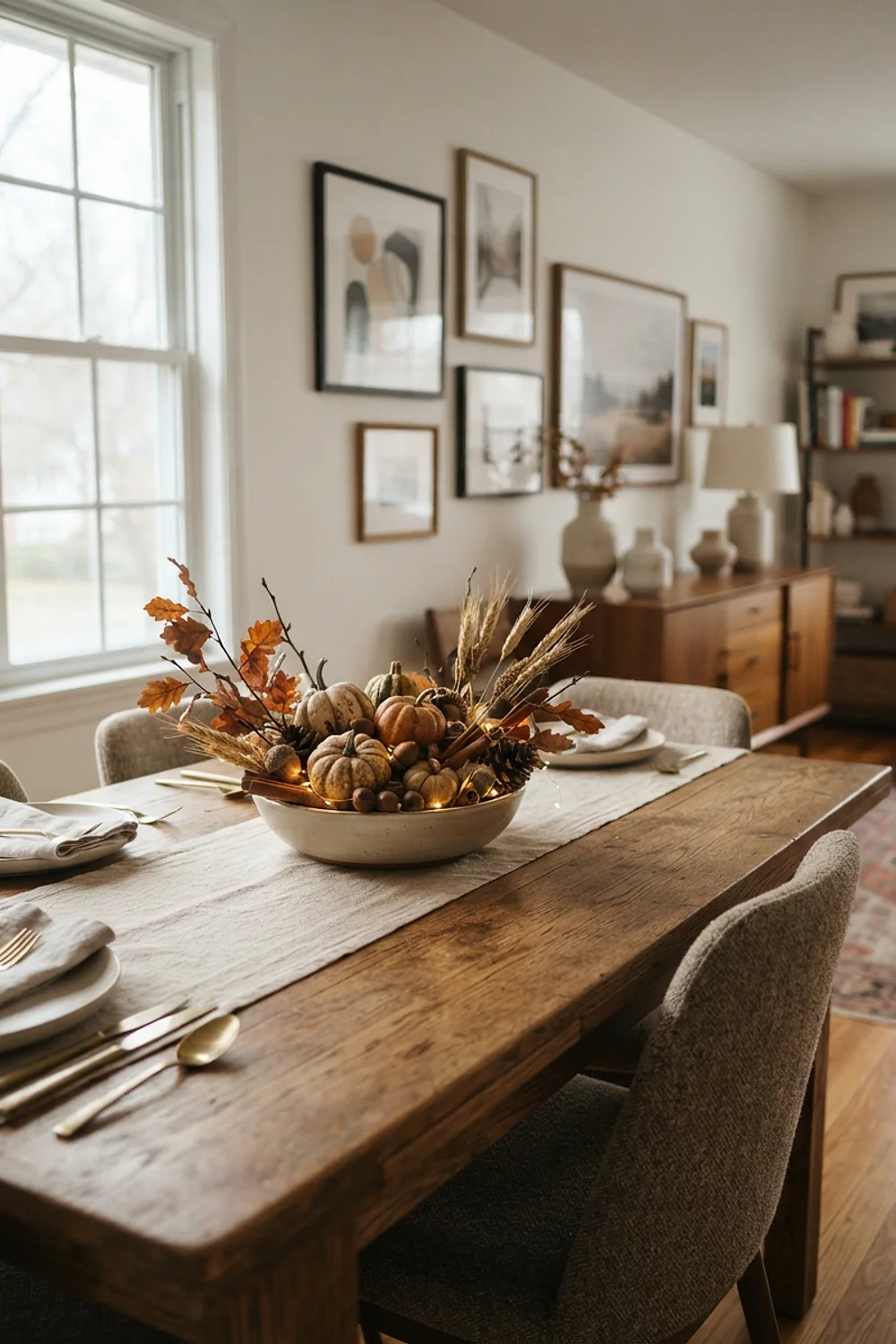
Keep everything on the table center under 12 inches, about the height of a pop-up toaster. Anything taller blocks eye contact across the table, and conversation quietly dies on both sides of a tall arrangement.
A cluster of three small vessels, such as a ceramic bud vase, a squat pumpkin, and a brass bowl, beats one tall urn. Odd numbers sit more naturally, and you can shift pieces to make room for platters.
6. Brass tapers at 4 pm light
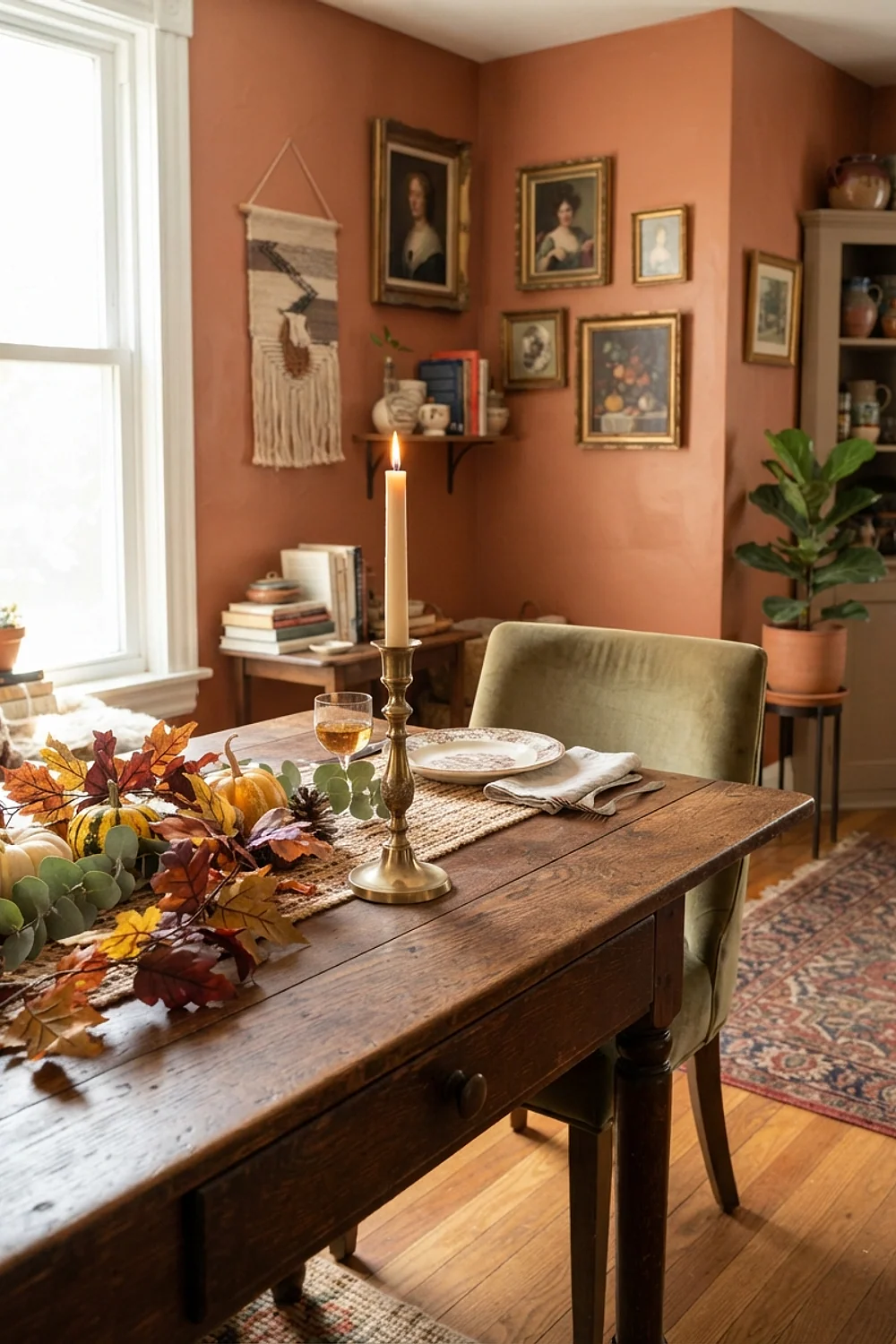
Set 12-inch taper candles in brass holders, and light them when late afternoon sun goes amber and starts to slide off the table. Unlit tapers still look good in that light, and the first flame feels like the party starting.
Holders run about $20-30 a pair at most home stores. Use dripless candles, and cut the wicks to a quarter inch so they don’t smoke over the tablecloth.
Hosting thanksgiving decorations beyond the table: rooms and corners
7. A lidded basket for coats and boots
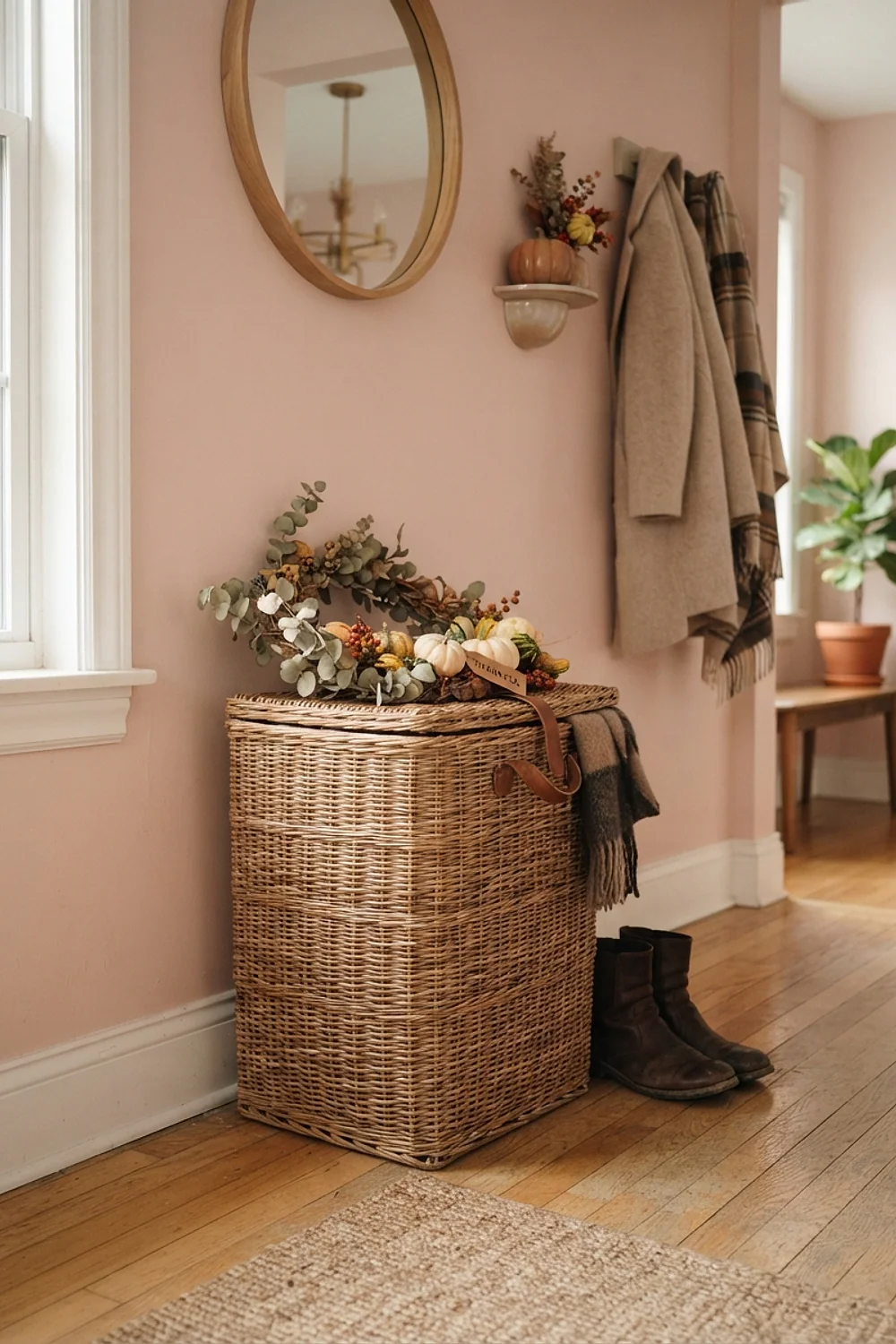
Park a large lidded seagrass basket, about 18 inches wide, by the front door for scarves, hats, and wet boots. Rain-soaked guests then have a landing spot, and the entry stays clear of clutter.
This works best in small hallways with no closet. Line the bottom with a rubber mat, because wet wool left against raw wicker leaves a damp smell by the next morning.
8. No scented candles near the food
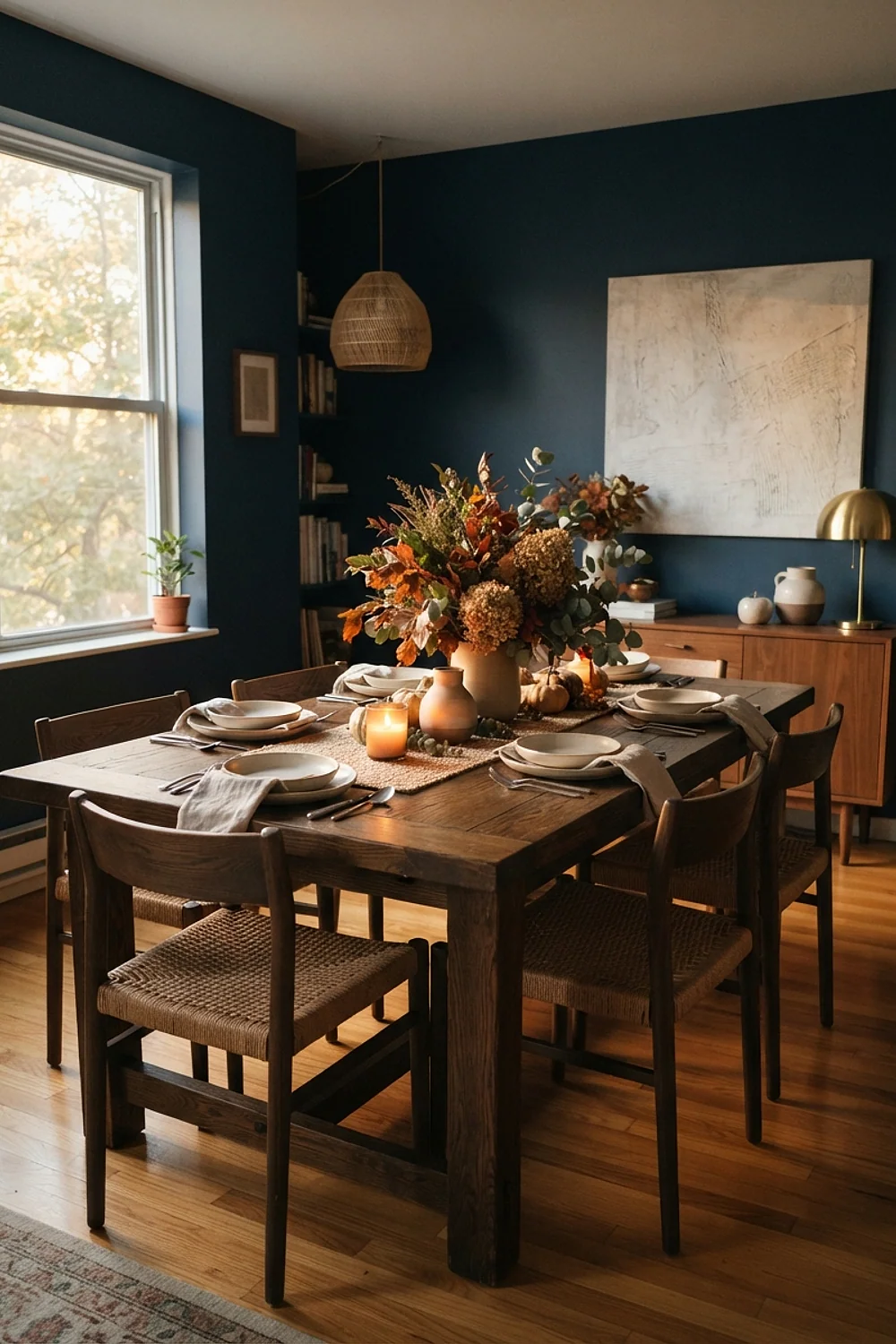
Move cinnamon and pumpkin-spice candles out of the dining room, because they fight with roasting aromas and make everything smell muddled. This is the classic mistake: more scent feels more festive, and it’s wrong.
Use unscented beeswax or soy tapers at the table and keep one scented candle in the entry or powder room. Guests get a welcome as they come in and a clean smell at dinner.
9. A cleared sideboard as a landing zone
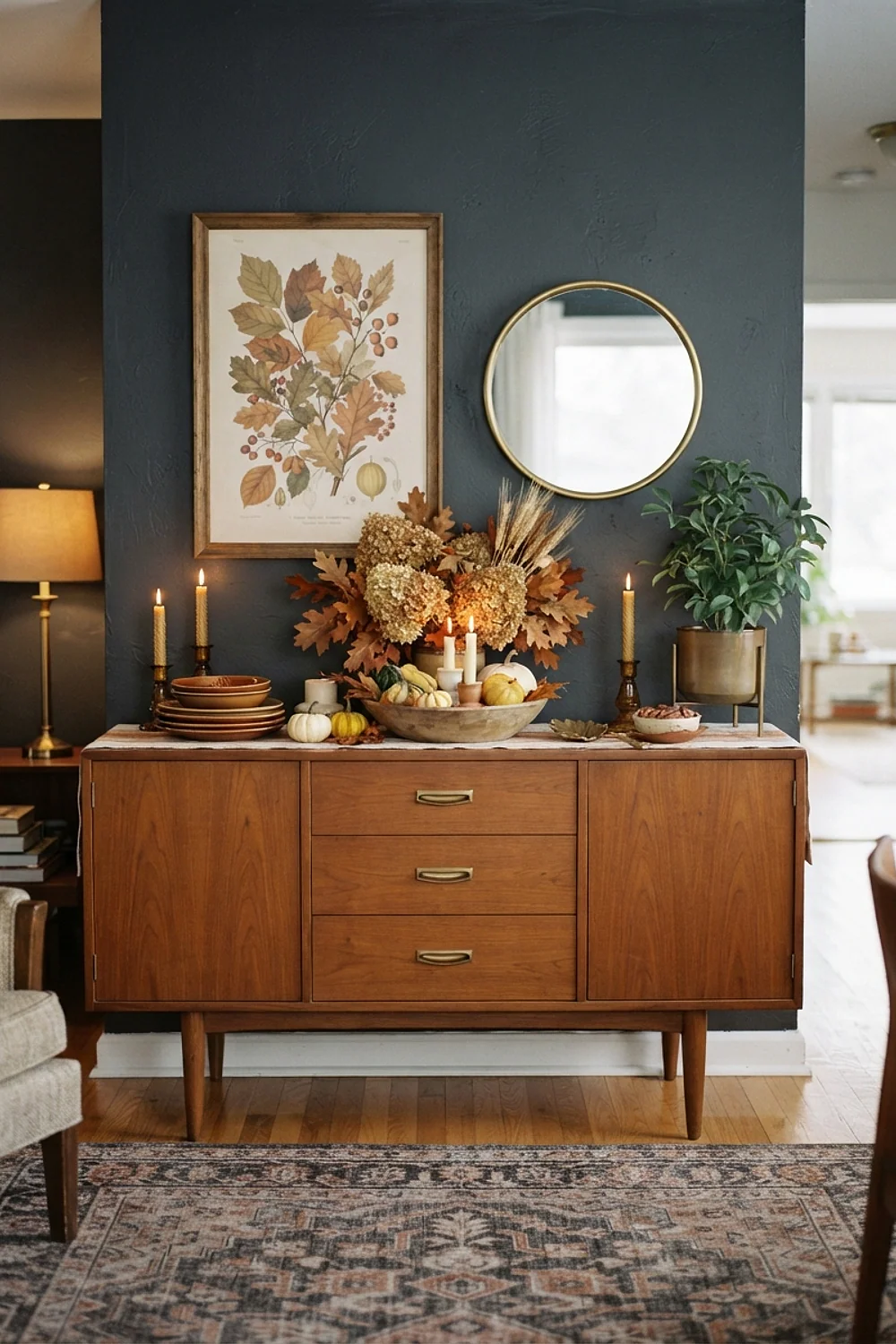
Clear a 16-inch-deep sideboard or console completely, then lay a folded linen towel across it as a heat barrier. Hot dishes need a place to land in the minute before they reach the table.
Hosts in open-plan rooms benefit most, because the sideboard separates cooking from seating. Keep the decor there to a single low tray with serving spoons, nothing that has to be moved when platters arrive.
10. Stoneware plates with a matte glaze
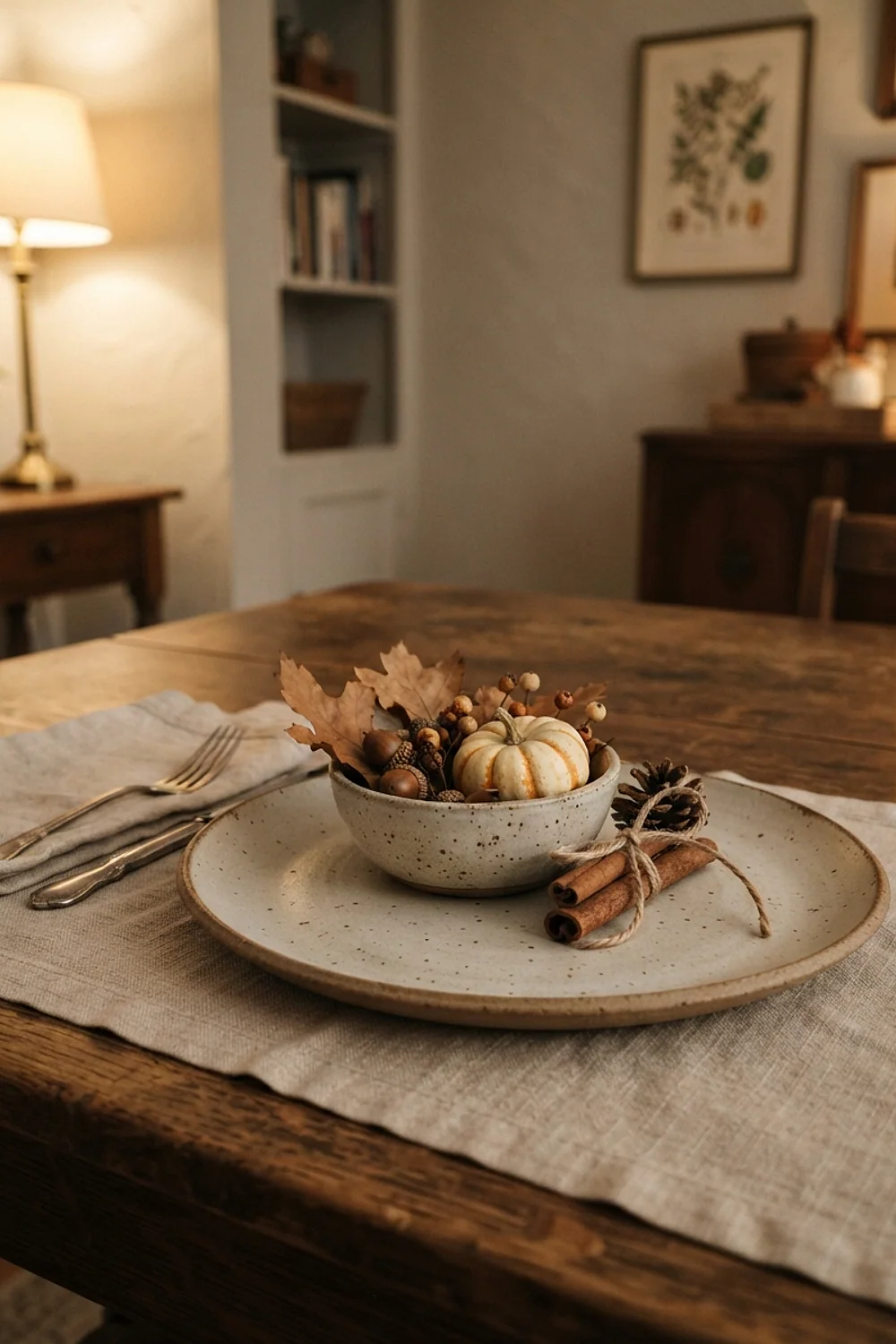
Handmade-looking stoneware in oatmeal, clay, or charcoal gives a table weight and a soft clink. Four-piece place settings at big-box stores start around $25-40, and mixing two glazes looks collected rather than matched.
Matte glaze hides knife scratches better than glossy porcelain. Check that the plates are dishwasher safe and 10 to 11 inches across, since oversized platters crowd a standard table.
11. A mantel garland of dried leaves
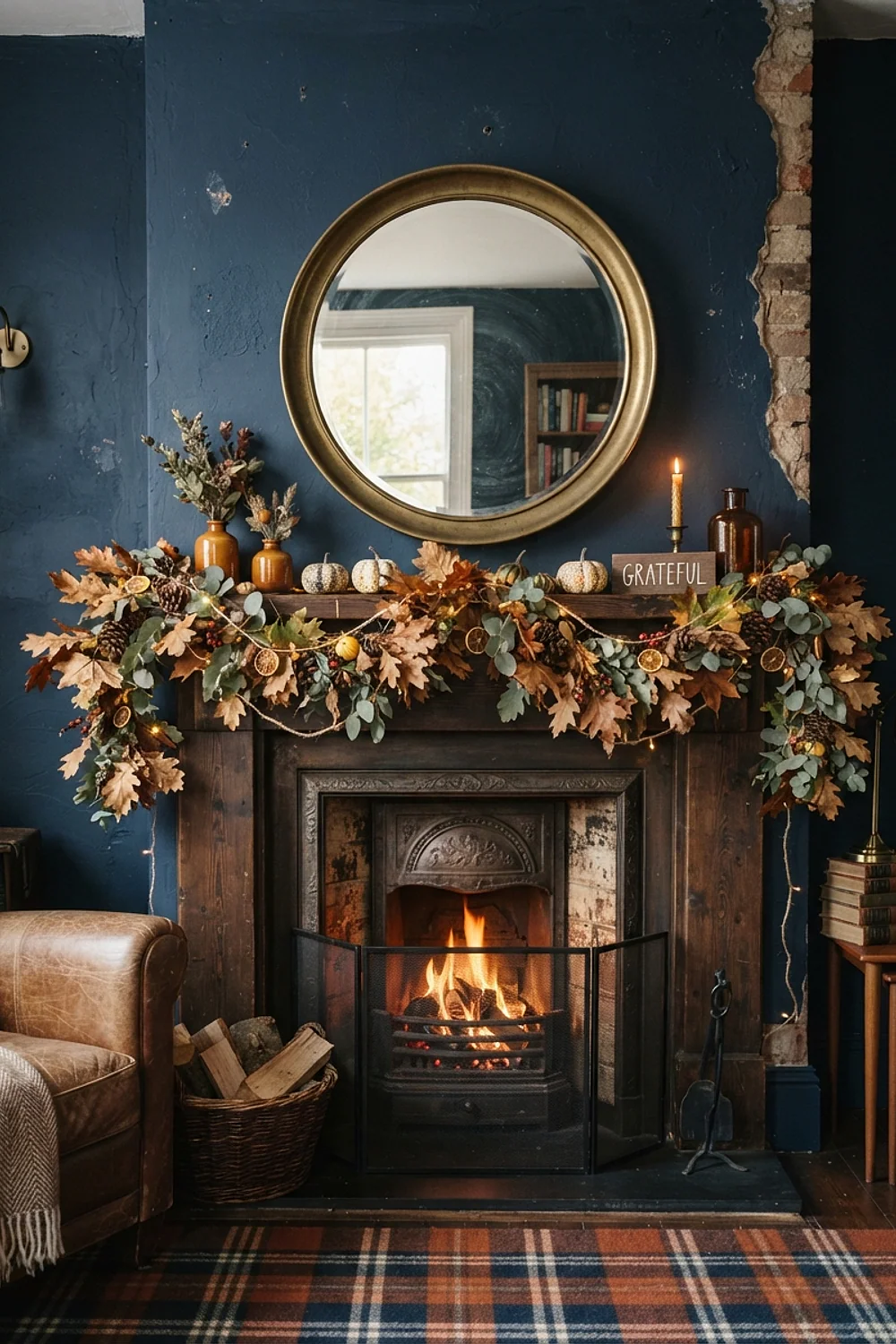
Drape a 5-foot garland of dried magnolia or oak leaves along the mantel, with the ends hanging 8 inches past each edge. The leathery brown undersides of magnolia catch firelight in a way plastic garland can’t.
This suits living rooms with a real or faux mantel. Skip it above a working fireplace unless the garland sits at least 12 inches from the flame, because dried leaves ignite fast.
12. Pillow covers in mustard, rust, and olive
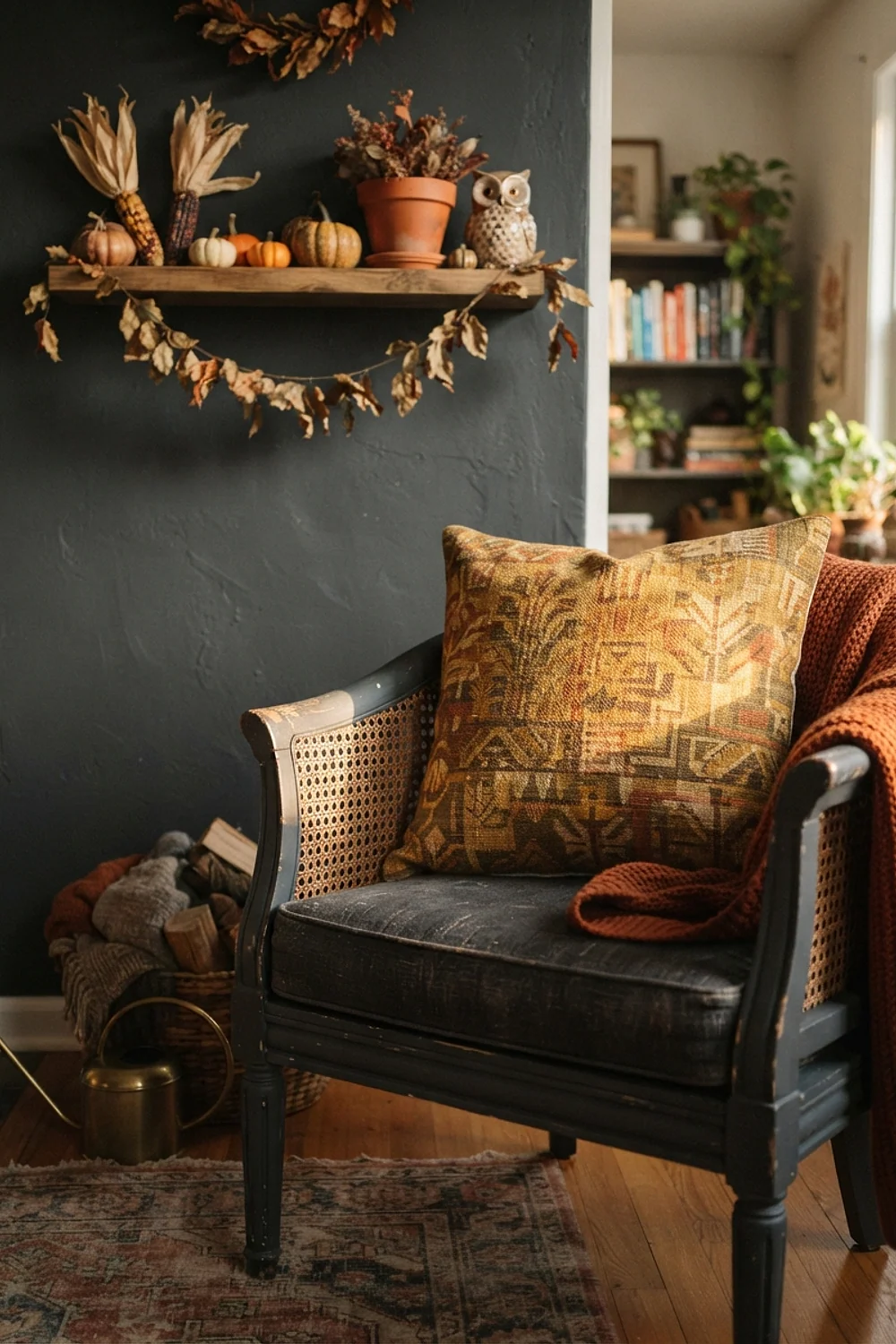
Change the covers on 18-inch sofa pillows to mustard, rust, and olive, and leave the inserts alone. Three colors from the same autumn family look settled, while five start to look like a color wheel.
Choose heavier weaves like corduroy, velvet, or slubby cotton in winter weight. Cover swaps take two minutes each, which is the whole appeal if you’re redecorating the same room every season.
It’s not foolproof. But it works.
Last-mile swaps for guests, porch, and light
13. A second seating zone for kids
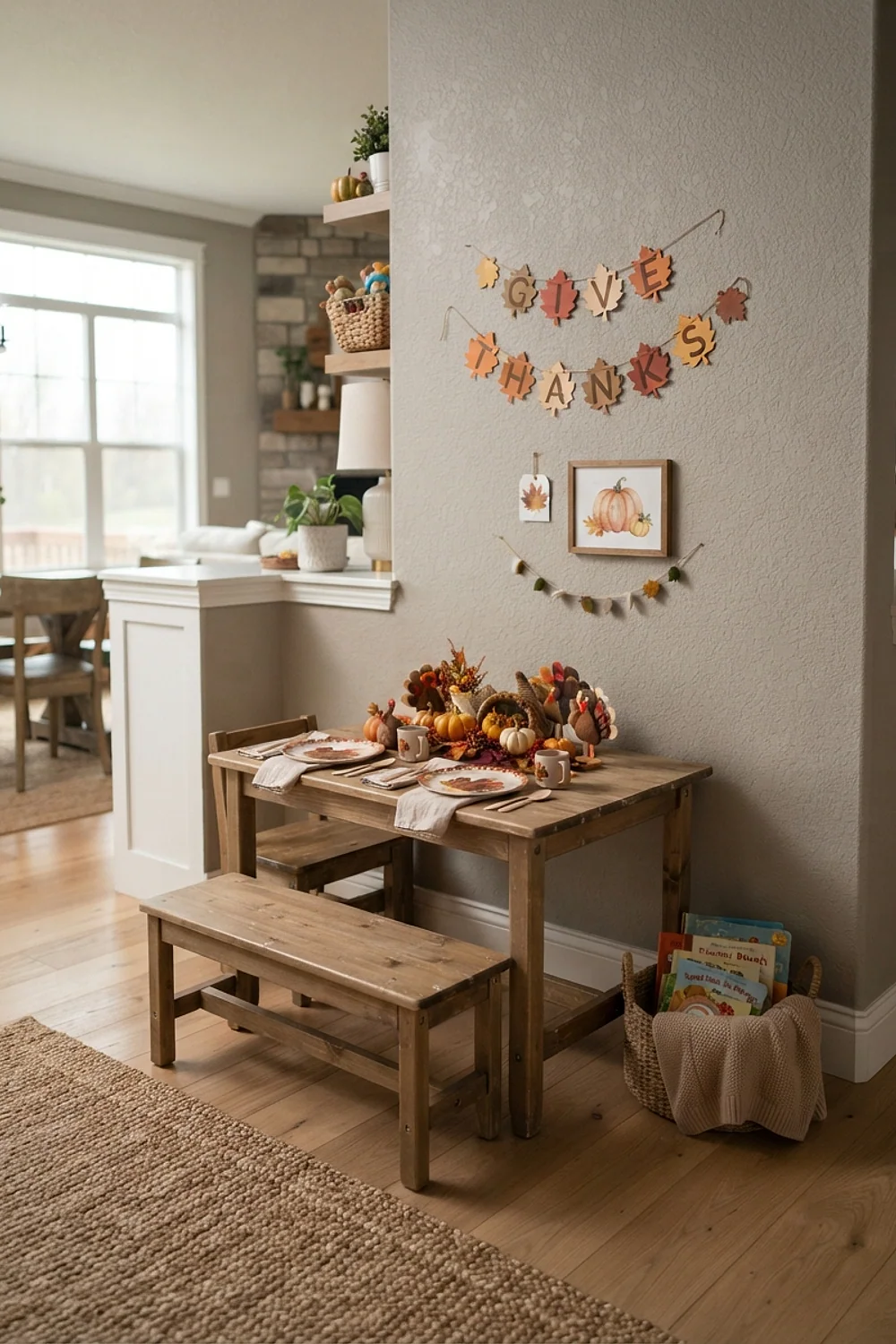
Put a card table or low coffee table with floor cushions in a corner for children, covered in kraft paper and a cup of crayons. Splitting the age groups lets the adults’ table stay calm and the little ones stay entertained.
This helps most when you’re hosting more than ten. Keep it within sight of the main table so nobody feels exiled, and tape the paper down at all four corners.
14. A basket of lap blankets by the sofa

Fold three chunky knit or wool-blend throws, about 50 by 60 inches, into a basket beside the sofa. After the big dinner, people drift to the living room and the first thing they reach for is something warm.
Pick washable fibers, since red wine and gravy find throws without fail. Cotton-wool blends hold up to a 30-degree wash far better than loosely knit acrylic.
15. Heirloom pumpkins in three sizes on the front steps
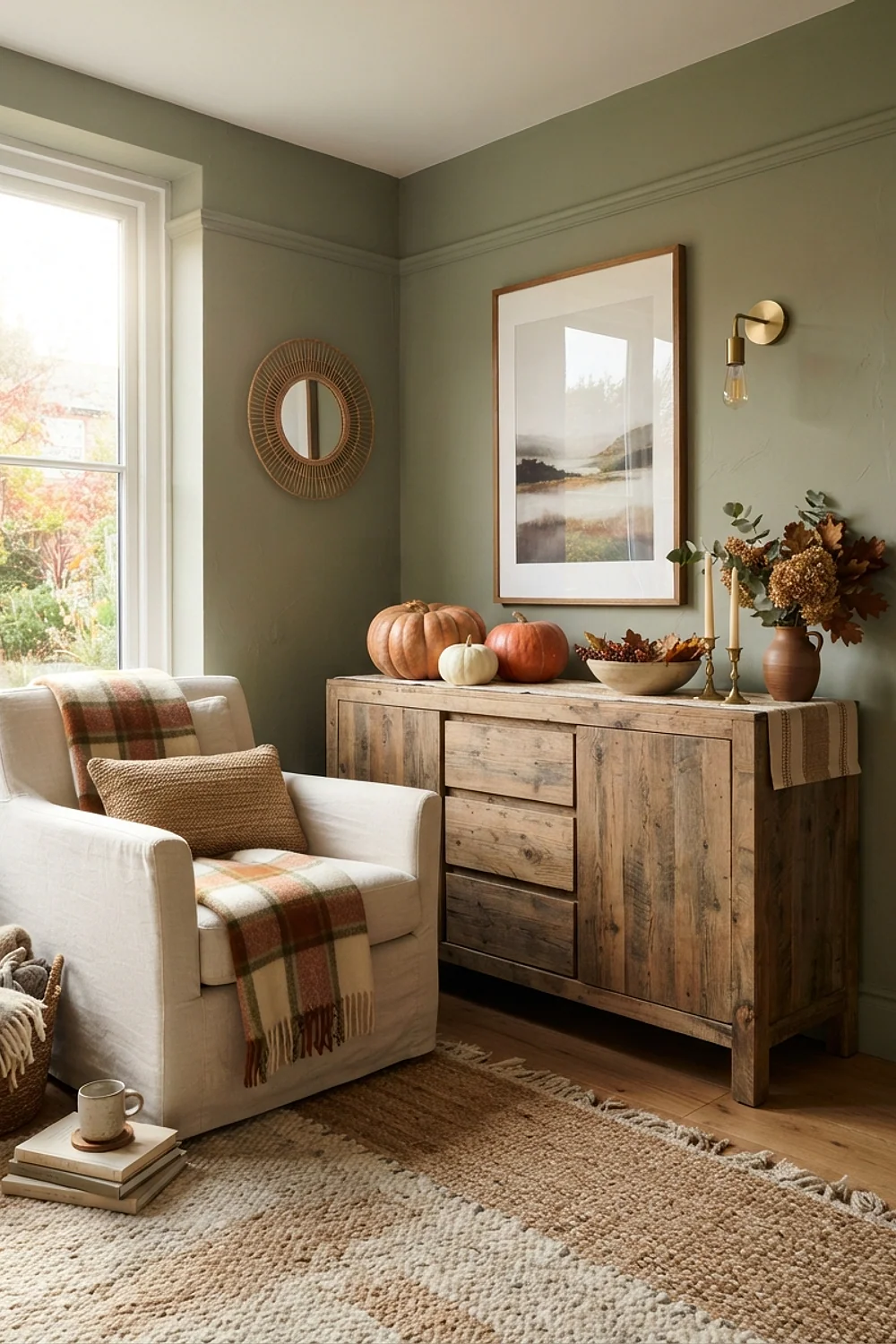
Group three pumpkins or squash in large, medium, and small sizes on the porch steps, with the biggest around 14 inches wide. Pale Cinderella and blue-gray Jarrahdale varieties cost about $5-8 each and look richer than uniform orange.
The grouping works on narrow stoops as long as a path stays 36 inches clear. Rotate them off the wood boards after the weekend, since wet squash stains porch paint.
16. Warm bulbs and a dimmer for dinner

Screw in 2700K bulbs in the dining room and dim them to about 40 percent once guests sit down. Counterintuitively, the cooler 4000K bulbs turn rust napkins muddy brown, while warm light makes them glow.
Plug-in dimmers cost little and work in rentals with no electrician. On a gray November Tuesday, test the setting at 4 pm so there’s no scrambling when the real guests arrive.
Storing the off-season pieces
Storing hosting thanksgiving decorations properly takes about 20 minutes and saves a replacement purchase next year. The usual mistake is tossing everything into one bin, which crushes dried stems and tangles garland.
Pack by category and label the outside of each box in marker. A sorting plan that works:
- Dried florals and wheat go in a shallow cardboard box layered with tissue, never plastic, which traps moisture and breeds mildew.
- Linens go in a breathable cotton bag, washed and fully dry first.
- Candle holders and brass pieces get wrapped in a clean sock or tissue so they don’t scratch each other.
- Pillow covers fold flat into a labeled shoebox-sized tub on a closet shelf.
Store the box in a closet or under a bed, not a garage or attic. Temperature swings crack glaze and fade dried flowers within a season.
Year-round foundations worth keeping
Hosting thanksgiving decorations land better on a base of neutral pieces that stay all year. These are the ones worth buying once:
- A natural wood or oak dining table, which warms up under any seasonal linen.
- Plain white or cream stoneware, so every season’s color reads against it.
- A neutral jute or wool rug in the main living area, roughly 8 by 10 feet.
- Warm-white 2700K bulbs in every lamp, so the lighting never fights the palette.
Everything seasonal sits on top of that base. Keep the base quiet and the swaps do the talking.
Wrapping up the season
Good hosting thanksgiving decorations come down to proportion, warm light, and a few textures people can feel. Choose three or four swaps from the list rather than all sixteen, and finish each one fully before starting the next.
Save or pin this list so it’s ready when the season turns. Start with item 16 (swap in 2700K bulbs and a dimmer), and measure your table before buying a single runner.
Frequently Asked Questions
When should I put up hosting thanksgiving decorations?
The weekend before Thanksgiving is enough for most homes, and the first week of November works if you want a longer autumn run. Dried and fabric pieces last the full month, but fresh pumpkins are best put out within 10 days of the dinner.
What are the best hosting thanksgiving decorations for a small apartment?
Stick to a low table centerpiece, rust linen napkins, and a pair of pillow cover swaps, because none of them need storage space. A 12-inch runner of dried wheat on a small console also reads as festive without taking up floor area.
How much should I spend on a Thanksgiving table?
A good table can come together for about $60-100 if you reuse neutral plates and buy only linens, tapers, and a few gourds. Spend first on napkins and bulbs, since they change how the table looks and feels the most.
Are real or faux leaves better for a mantel garland?
Dried real leaves look more convincing and smell faintly of the outdoors, but they’re brittle and fire-prone near a flame. Faux garlands last for years and work above working fireplaces, so choose based on the heat source.