
18 DIY Thanksgiving Decorations Mistakes to Avoid
Follow this list and the diy thanksgiving decorations in your home will look planned instead of piled on. You’ll get a low centerpiece nobody has to peer around, a wreath that fits the door, and a mantel that still looks fresh on Friday.
Each mistake below is named, then fixed. On a gray November afternoon around 4pm, low sun rakes across the table and every flaw shows, so it pays to sort these out before guests arrive.
Diy thanksgiving decorations: Common mistakes
Diy thanksgiving decorations go wrong in predictable ways, mostly through scale, color, and glue. Start with the table, because that’s where guests stare for two hours.
1. Centerpieces that block the sightline
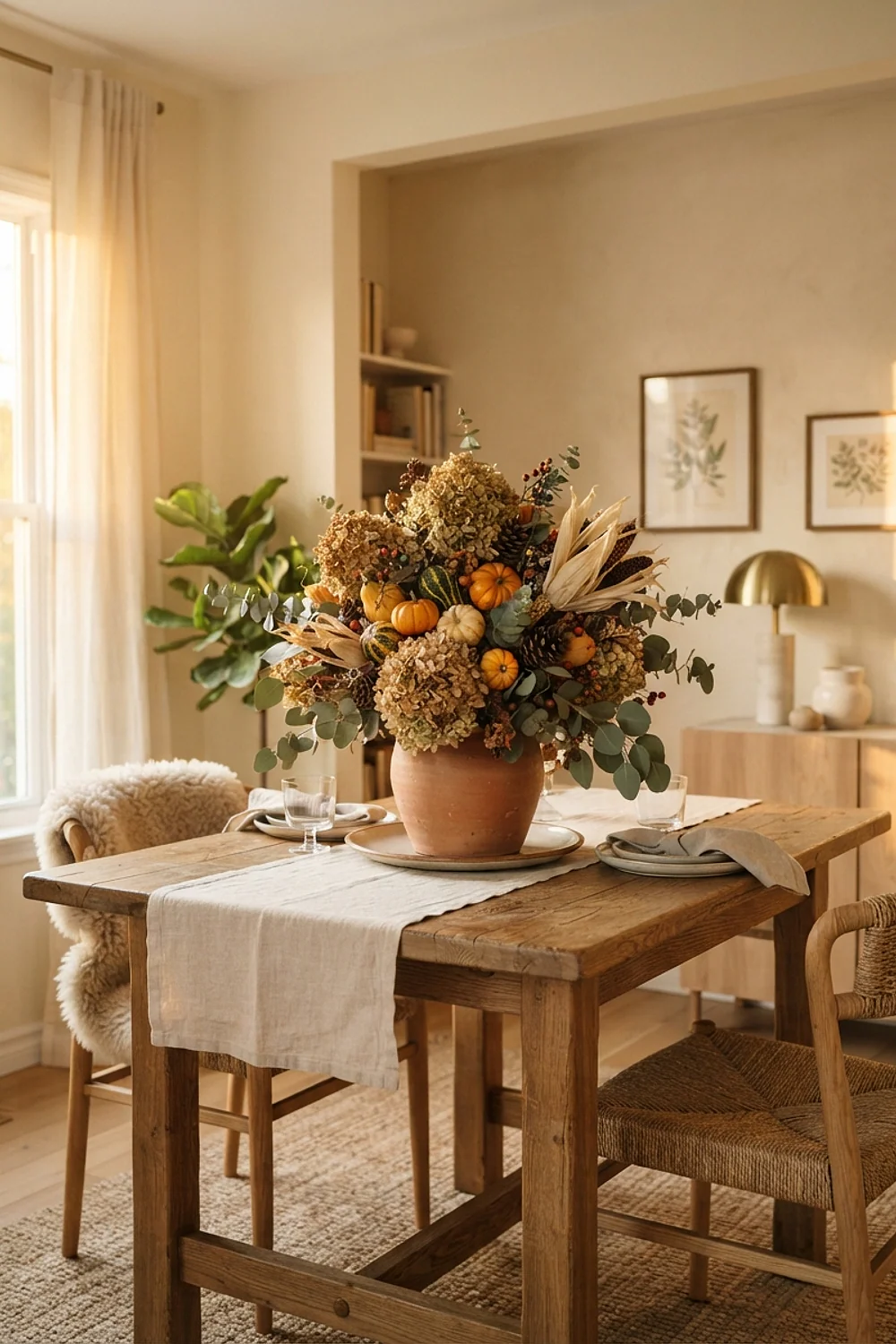
A centerpiece taller than 12 inches turns a dinner table into a wall. Guests at a standard 30-inch-high table can’t see the person opposite, so the conversation splits in two and everyone leans like they’re peeking around a tree.
Keep arrangements under 10-12 inches, or go tall on bare stems above 20 inches so eyes pass underneath. Also hold the footprint under 10 inches wide on a 36-inch table, because platters need that room.
2. Orange on everything
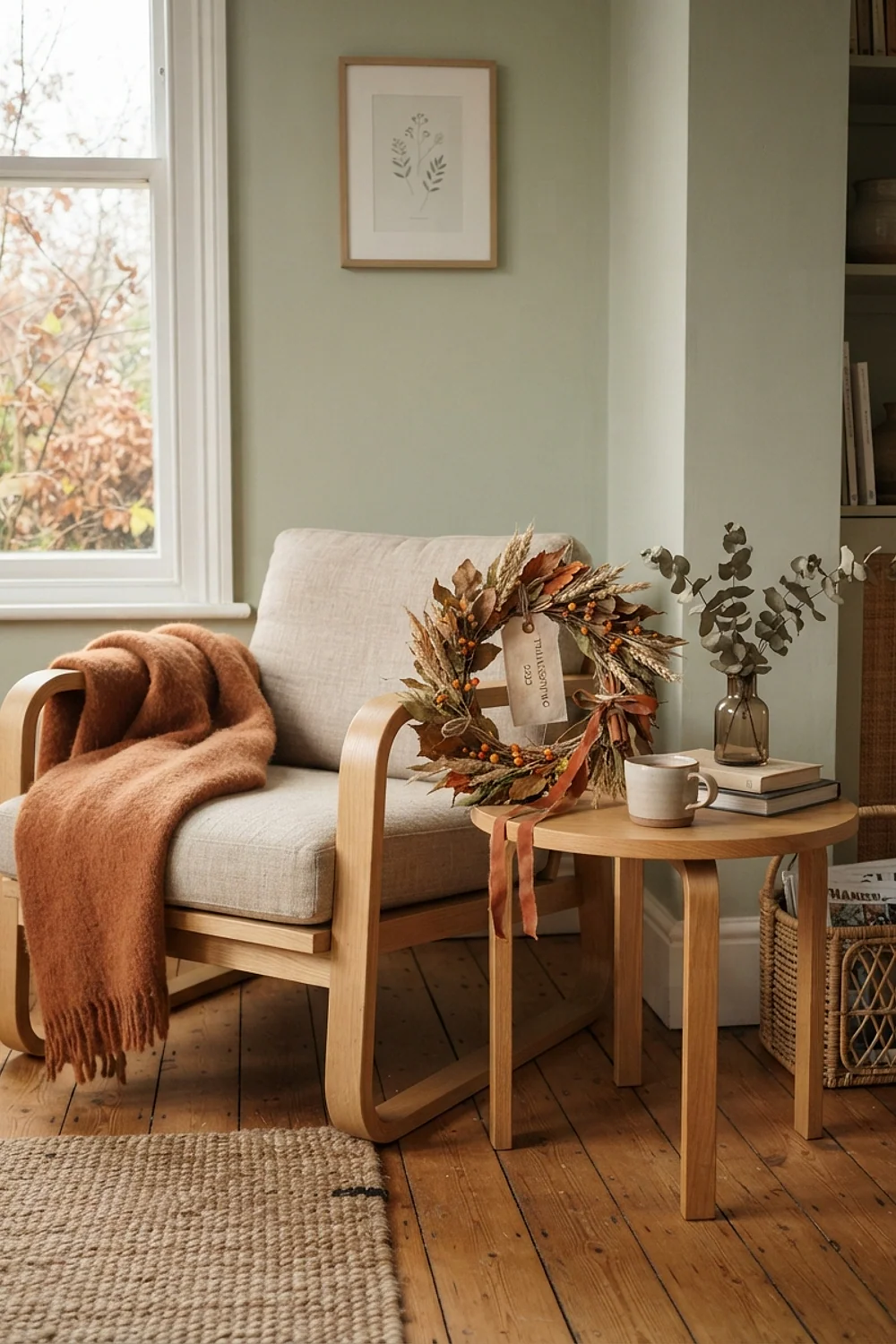
A table where the napkins, candles, pumpkins, and runner are all the same pumpkin orange looks like a seasonal aisle at a big-box store. Orange is loud, and it fights with food on the plate.
Pull from a muted range instead: rust, oatmeal, deep olive, and one dark accent such as aubergine. A dusty clay shade in the vein of Sherwin-Williams Cavern Clay shows how orange calms down once it has some brown in it. This works best in dining rooms with painted walls, where saturated orange would clash.
3. Pumpkins lined up like soldiers
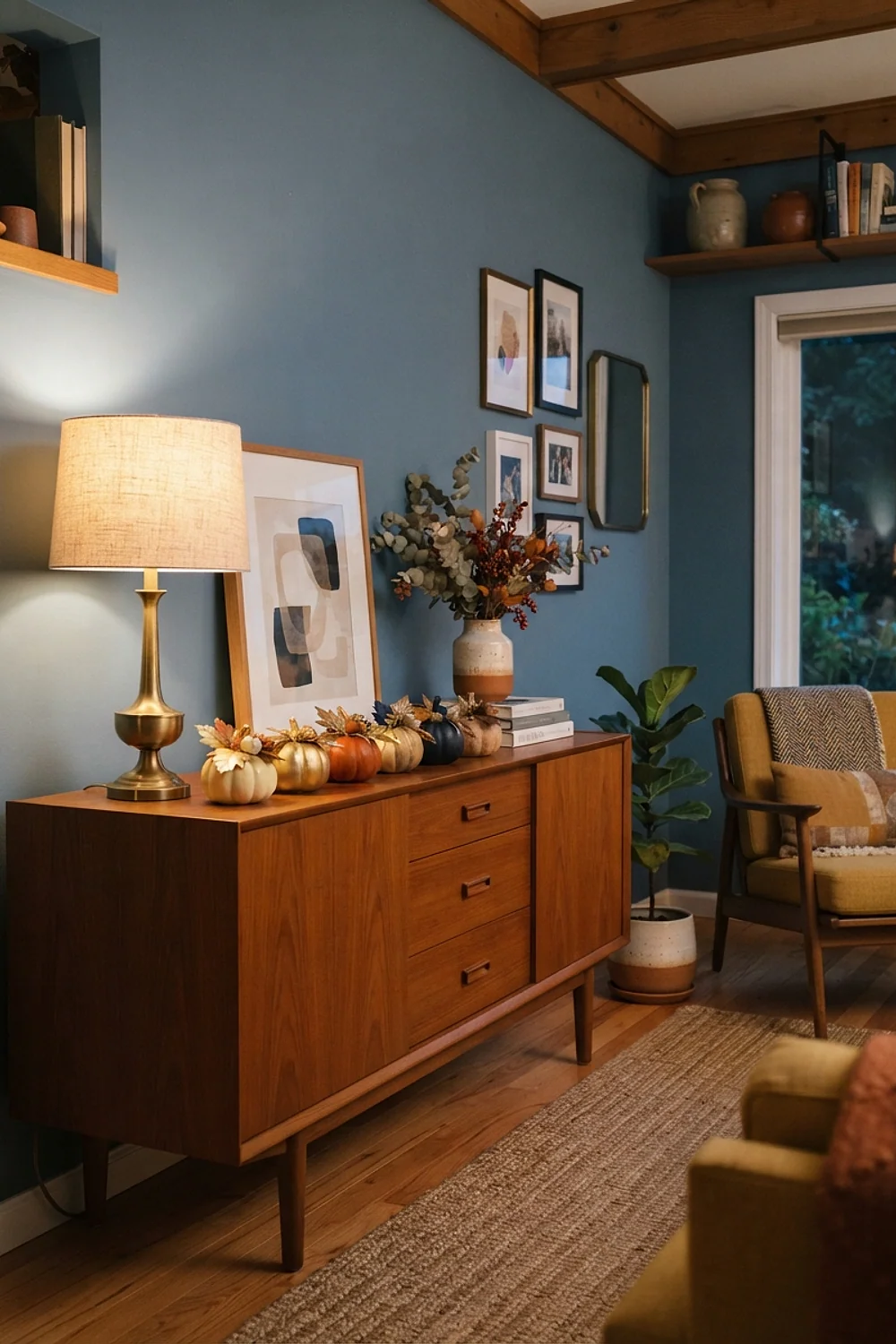
Five identical 8-inch pumpkins in a row read as a delivery, not a display. Even spacing flattens everything because the eye has nowhere to travel.
Cluster them in odd numbers with different heights, say 4, 7, and 10 inches, and mix textures: matte white, warty green, and a smooth classic. Heirloom pumpkins run about $4-$12 at a farm stand, and the odd shapes do most of the styling for you.
4. Overhead lights at full blast
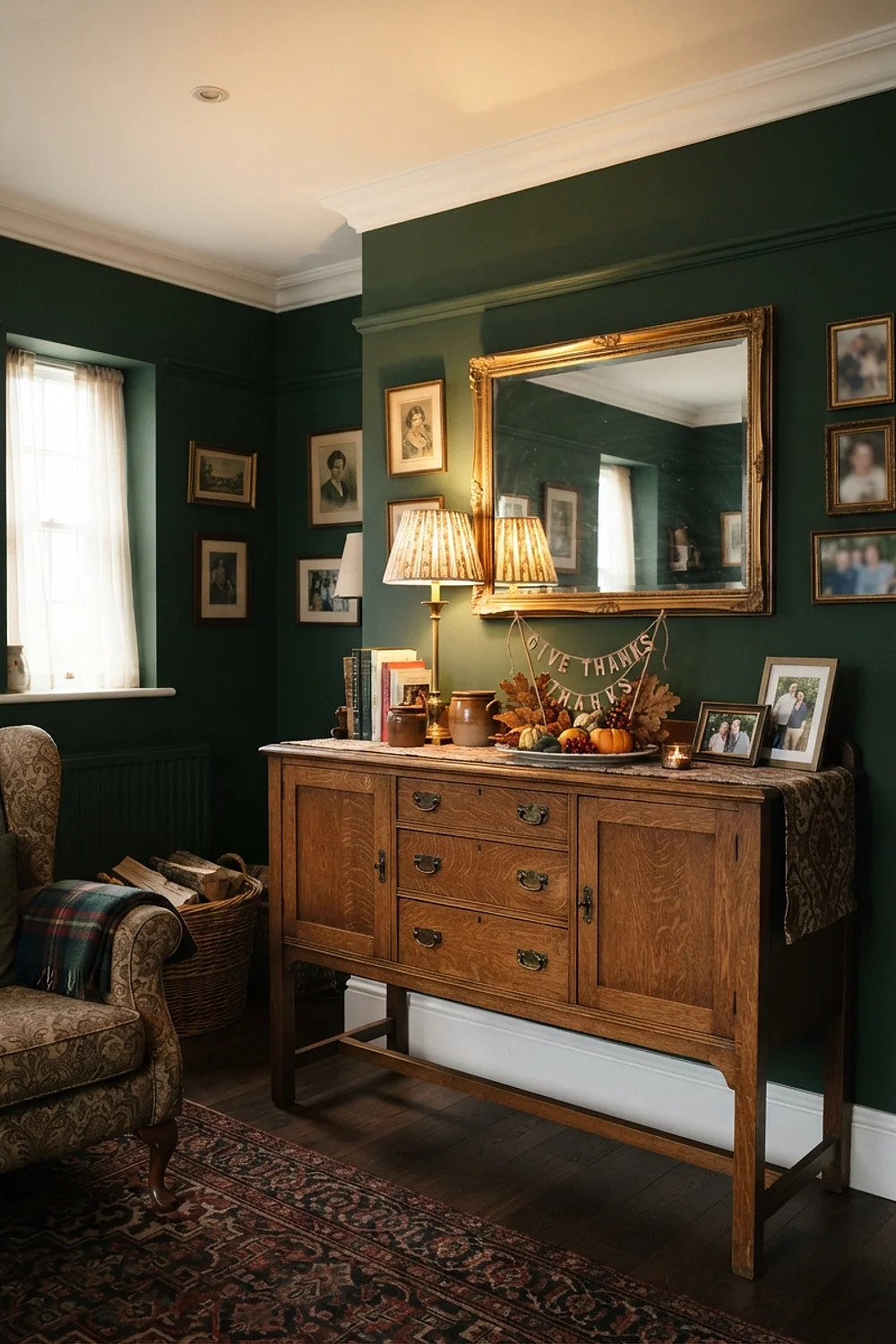
A dining room light on 100% washes out every texture you’ve just spent a weekend arranging. Velvet looks flat, candlelight looks pointless, and faces get that interrogation-room cast.
Put the overhead on a dimmer at 30-40%, and use bulbs between 2200K and 2700K so the glow stays amber. If there’s no dimmer, switch off the ceiling fixture and run lamps and candles instead. A plug-in dimmer for a lamp costs very little and changes the room more than any garland.
5. Decor that crowds the place settings
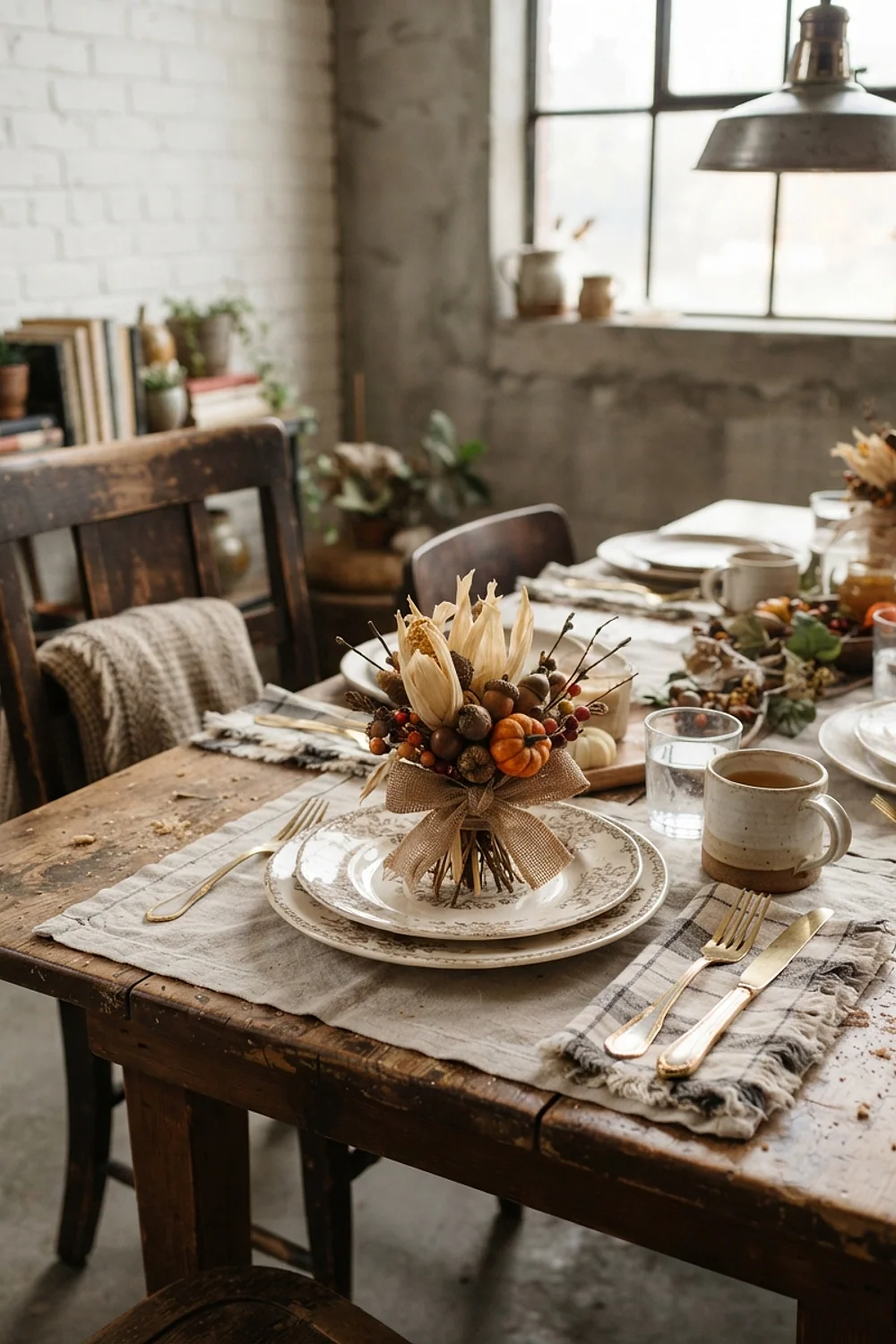
Each guest needs about 24 inches of table width for plate, glass, and elbows. A runner studded with gourds, candles, and leaf scatter eats half of that, and dishes end up balanced on a pinecone.
When ten people share a table, move the display to a sideboard or mantel and leave the table nearly bare. Keep the middle strip 8-10 inches wide, and nothing else touches the cloth. Small tables for four can handle more, since there’s less traffic.
6. Trusting that only real greenery counts

Conventional advice says use fresh branches and nothing else. Skip that for the mantel. Real eucalyptus over a fireplace or near a radiator crisps in about four or five days and sheds on the stone, and a vacuum run on Friday morning isn’t a great start to the long weekend.
A decent faux 6-foot garland runs $25-$40, drapes without drooping, and comes out again for years. Save real stems for the table, where they only have to last one evening. The upkeep trade-off is plain: faux needs a dusting, real needs replacing.
Lessons learned
Outside the dining room, diy thanksgiving decorations face weather, heat, and gravity. Most of these mistakes only show up on day three.
7. Carving pumpkins too early
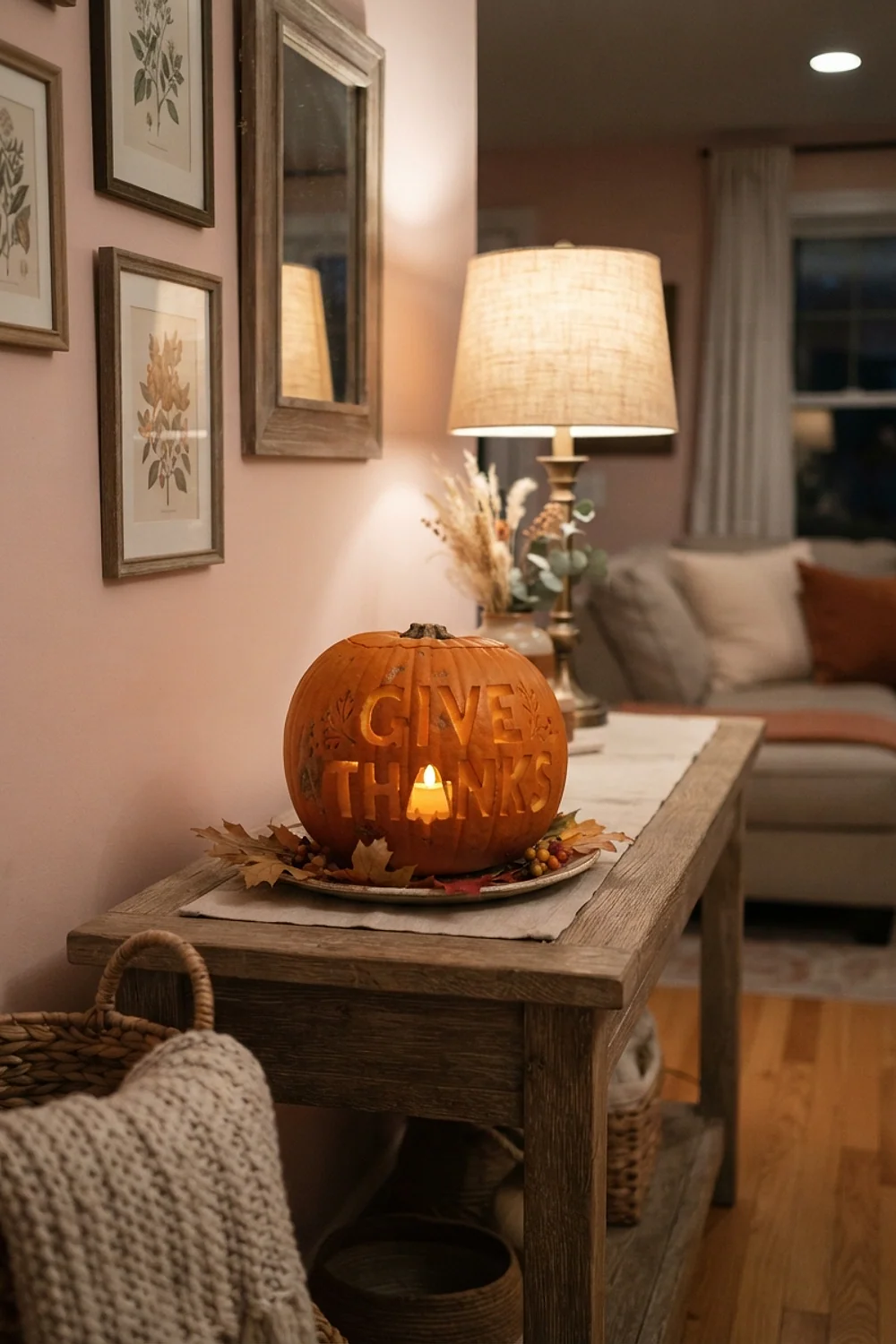
A carved pumpkin lasts three to five days. An uncarved one kept cool can sit out for two to three months, which is the counterintuitive part: the cut is what starts the rot, not the season.
Leave them whole, paint or stencil the surface, and never carry one by the stem, since a snapped stem is an open door for mold. Set each pumpkin on a cork trivet or saucer so the porch boards don’t stain. This suits anyone decorating by mid-October.
8. Stuffing last year’s pieces into a trash bag
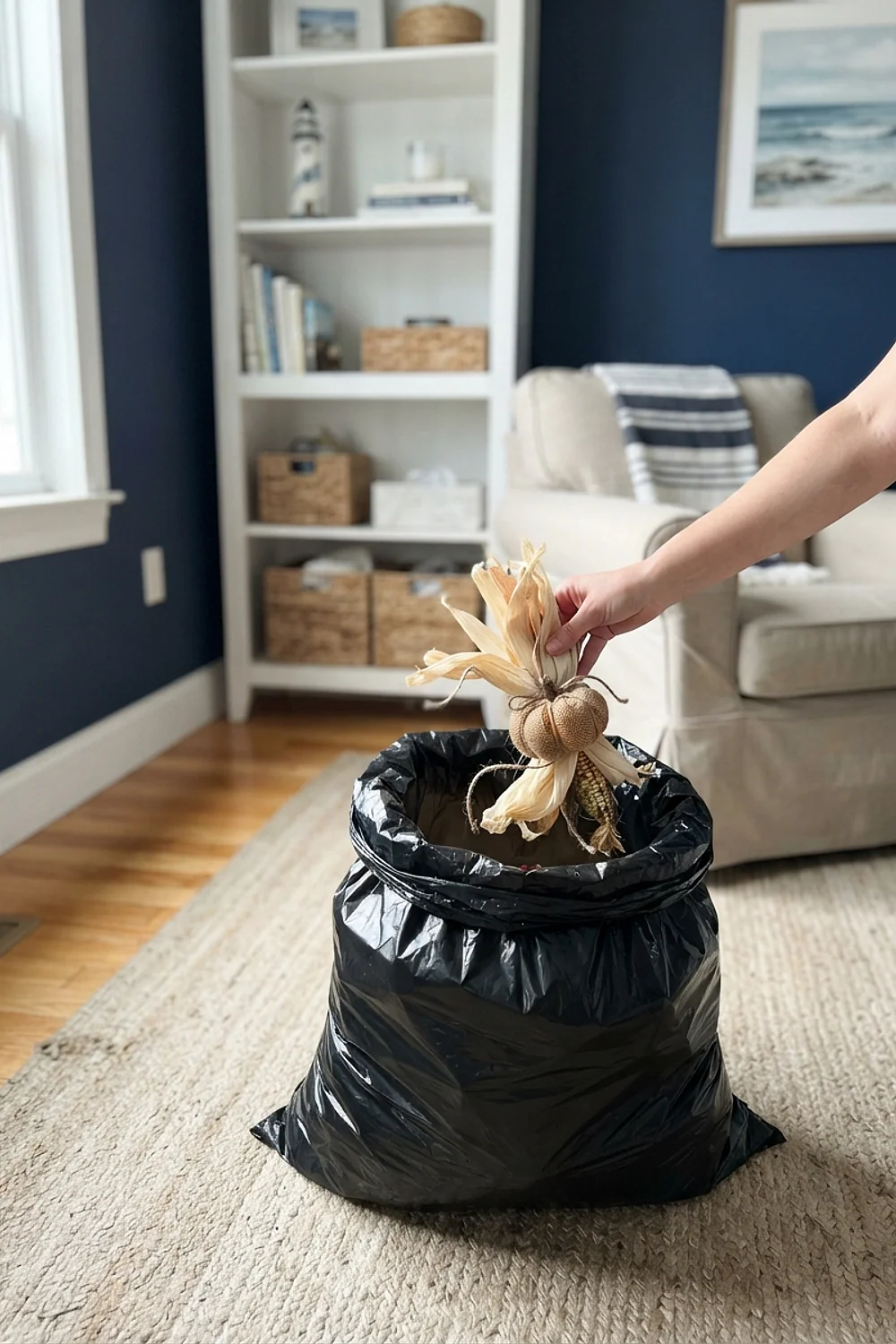
A garland crushed into a bag comes out flat on one side and tangled on the other. Fabric leaves crease for good. Wrap each fragile piece in tissue, one bin per room, and write the room on the lid.
Use two layers per 27-quart bin, wait, no, scratch that: one garland per bin, coiled loosely, with anything breakable on top rather than underneath. Add a silica gel packet if the bin lives in a damp garage, since dried gourds and pinecones will mold there.
9. A wreath too small for the door
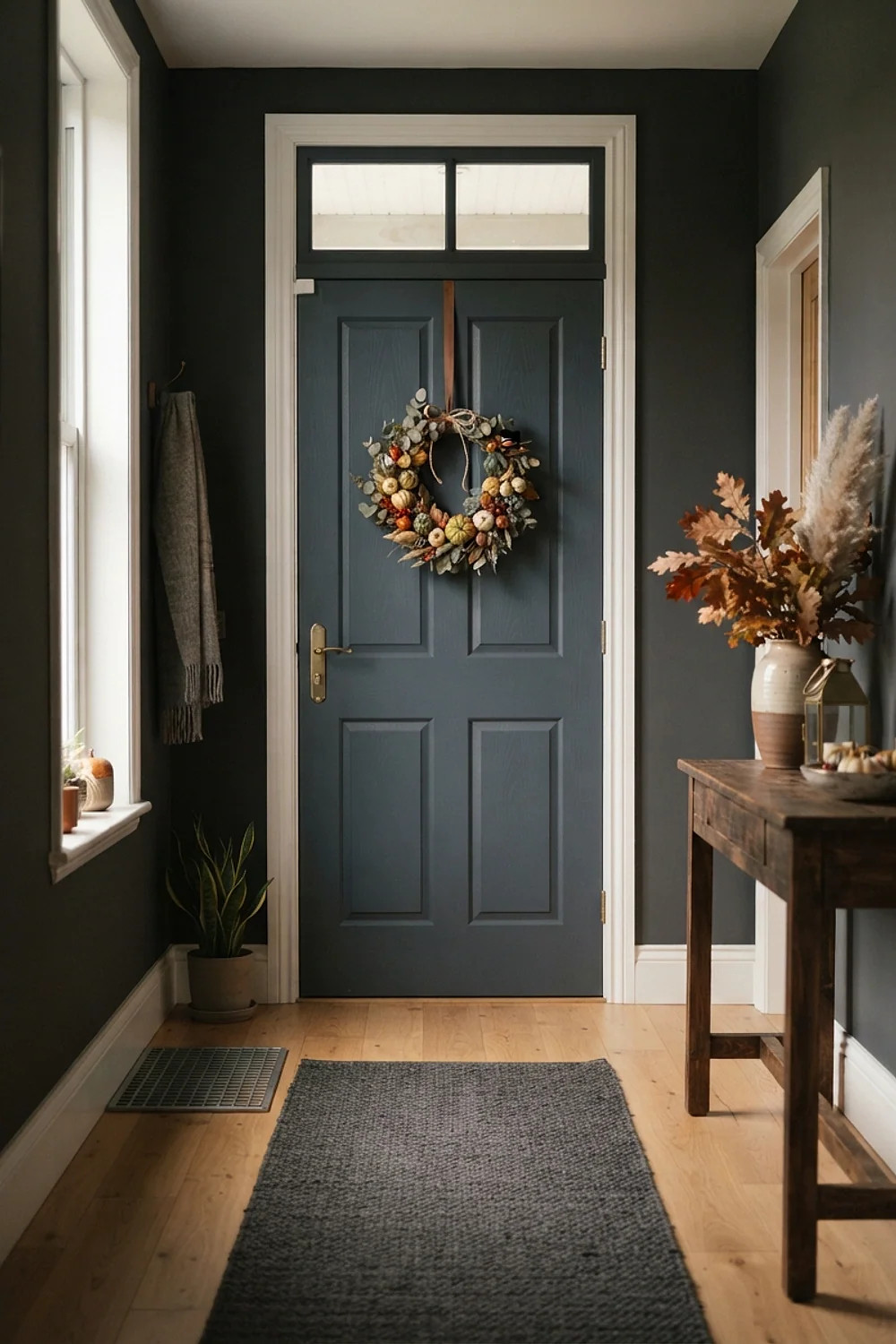
A 14-inch wreath on a 36-inch door looks like a coaster on a dinner plate. The eye reads it as an afterthought, and it vanishes from the sidewalk.
Aim for about two-thirds of the door’s width, so 22-24 inches for a standard door. A 24-inch grapevine base is around $15 and gives a sturdy frame to wire stems onto. Anyone with a glass-paneled door can go slightly smaller and center it on the glass.
10. Scratchy burlap where arms rest
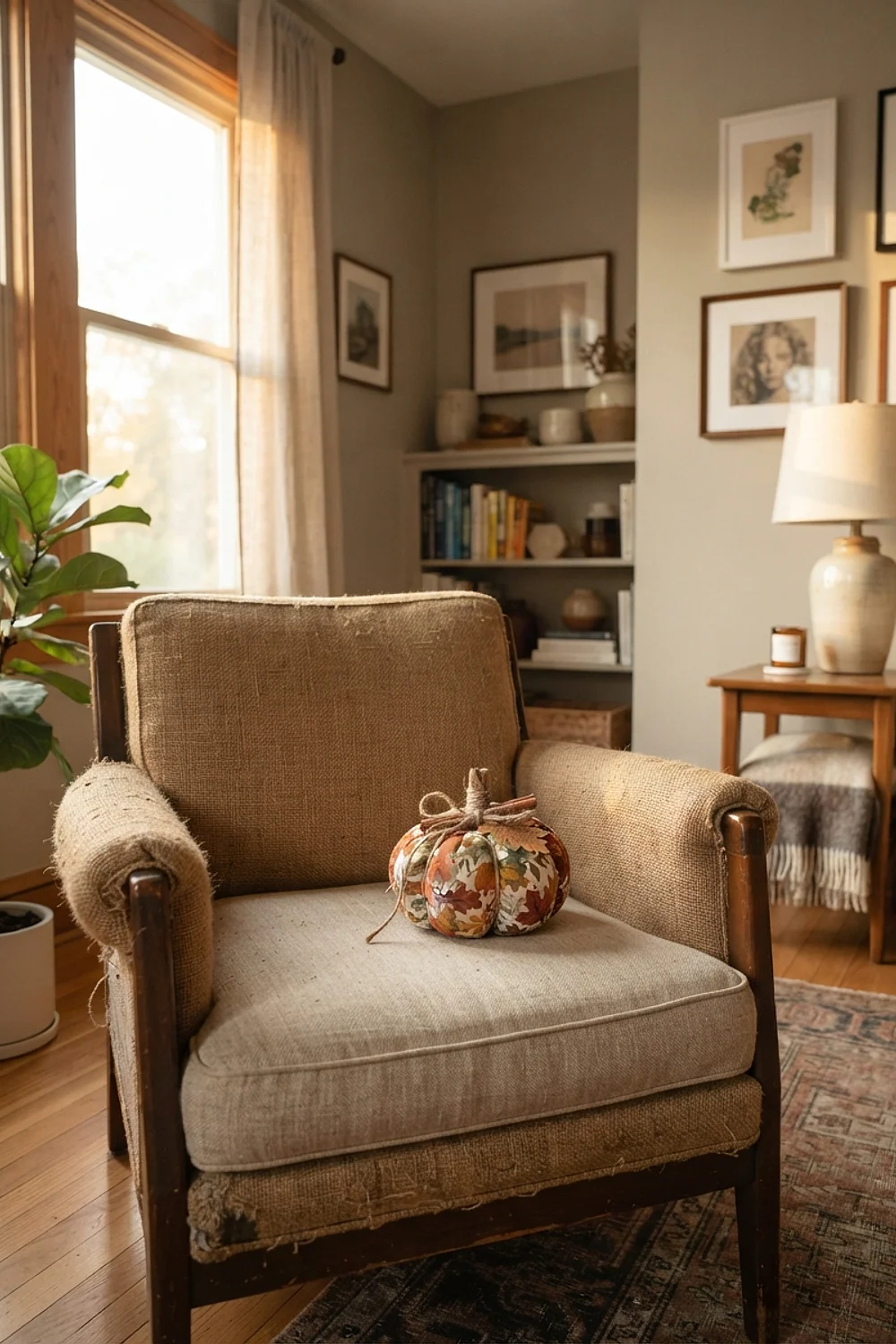
Burlap runners look right in photos, but forearms rest on a table for hours and burlap feels like a doormat against skin. It also sheds brown fibers onto dark sleeves.
Washed linen or cotton flannel in oatmeal or rust gives the same rustic color with a soft hand. Linen wrinkles, so steam it or embrace the rumple, and it needs a 40°C wash. Burlap is still fine as a bundled wrap on a vase, where no one touches it.
11. Heavy wreaths on adhesive hooks
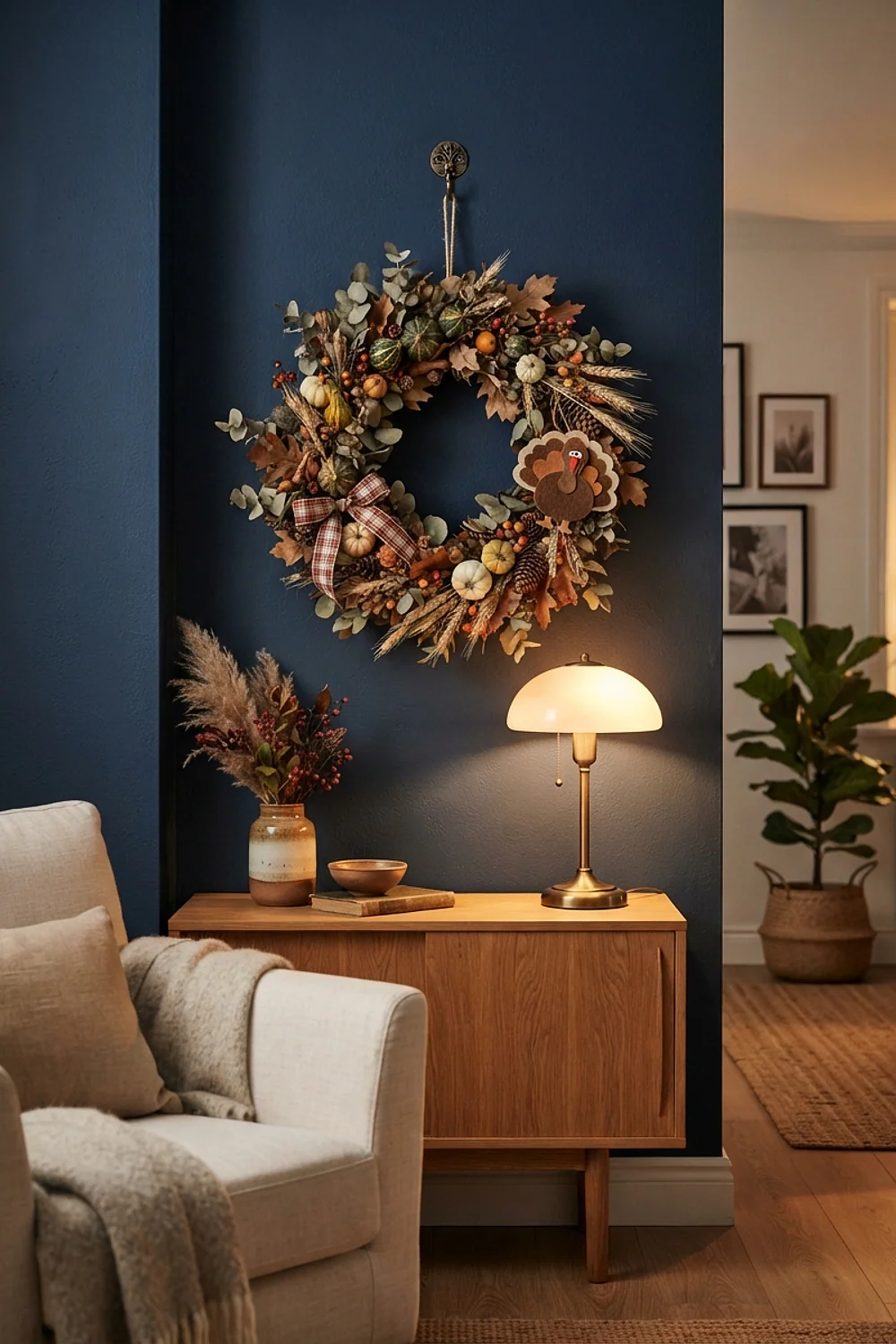
An adhesive hook rated for 5 pounds fails on a cold door, because the adhesive loses grip below roughly 40°F. A wreath loaded with faux pumpkins and wood beads easily weighs 3-4 pounds and takes a Friday-morning tumble.
Use an over-the-door hanger rated for 10 pounds, with a felt pad so the paint isn’t scraped. Renters get the same hold without drilling into the frame. A sticky hook is fine only for lightweight paper pieces indoors.
12. Brown-on-brown against a dark wall
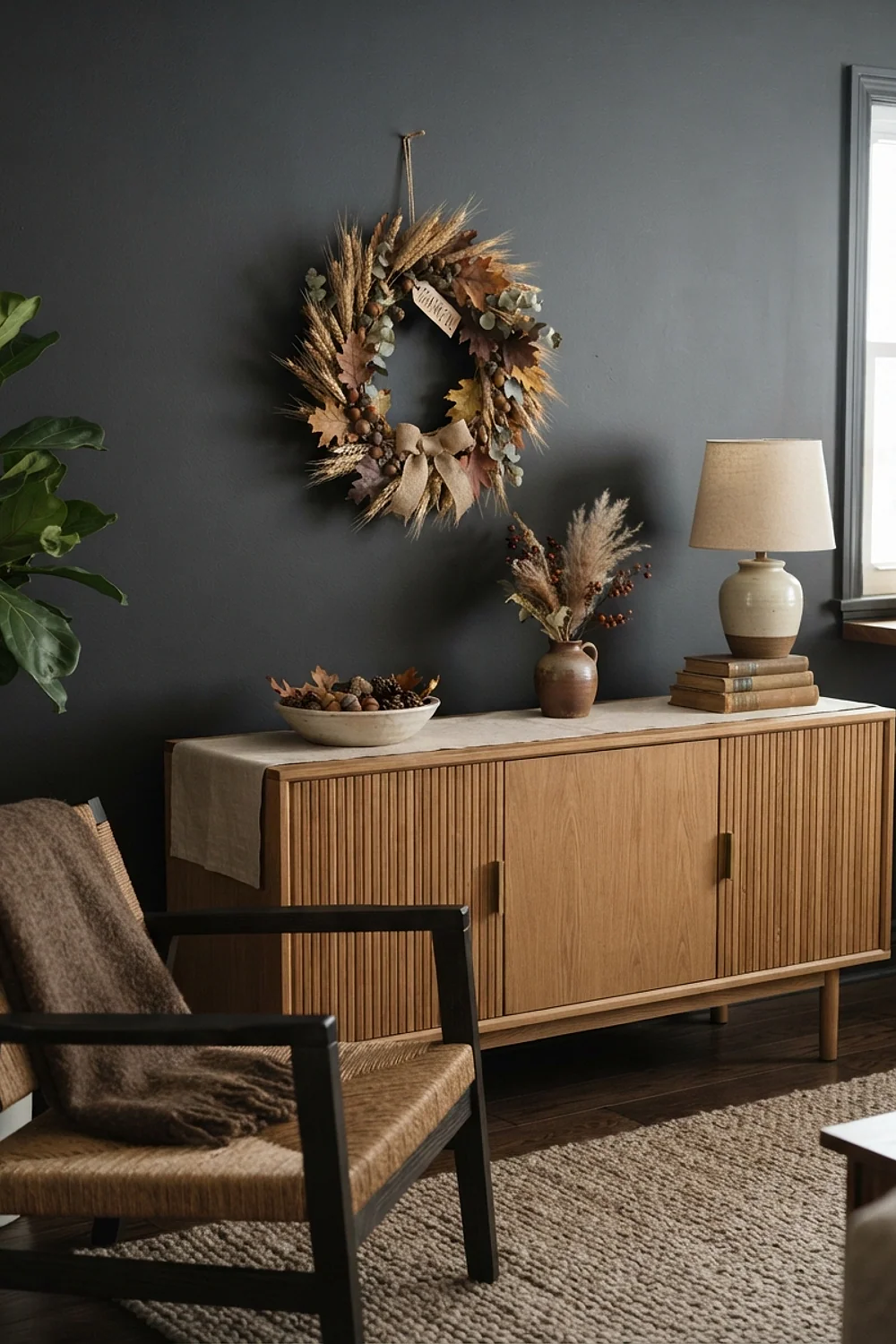
Dark gourds and bronze candlesticks on a charcoal wall or dark brick mantel simply disappear. The room ends up looking muddy even though every individual piece is nice.
Contrast does the work. Use cream candles, white pumpkins, and pale pampas against dark surfaces, and deep greens or aubergine against white walls. Hold the mantel to three colors at most, with one repeated at both ends so the eye reads a pattern.
More common mistakes
The details show up closest to guests: place cards, candles, the hall console. These are small jobs where a fixable error is easy to miss.
13. Real-leaf place cards that curl by dinner

A fresh leaf with a name written in marker starts curling within an hour and the ink bleeds into the veins. By the time guests sit, half the cards look like crumpled receipts.
Press leaves between parchment under heavy books for 5-7 days, or write on kraft tags and tie a dried leaf on with twine. A pack of 50 kraft tags costs about $5. Pressed leaves suit hosts planning a week ahead, while tags rescue the last-minute crowd.
14. Open flames beside dry material

A taper candle next to dried corn husks, wheat stalks, or paper leaves is a fire hazard, and the glow of a mantel makes it tempting. Dry garland catches in seconds once a flame leans toward it.
Keep a 6-inch clearance around any flame and put candles in deep glass holders. For mantels loaded with dry material, flameless LED candles with a flicker setting are the safer call, though they need fresh batteries every few weeks.
15. A hall console pushed flat against the wall
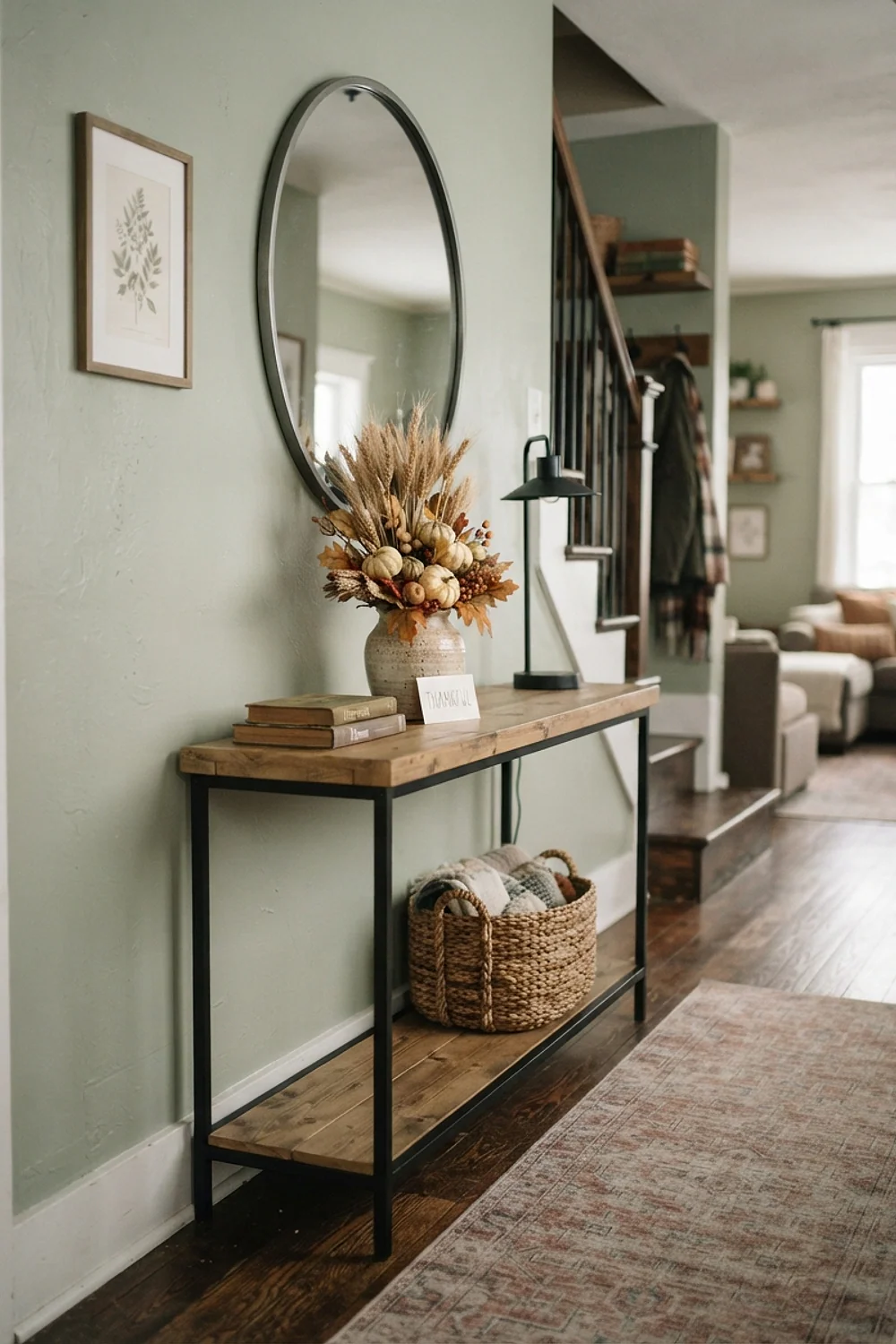
Everything lined up in one row on a console reads as shelf stock. The arrangement has no depth, so it disappears as soon as someone walks past with a coat.
Build a loose triangle instead: tallest piece (a 24-inch branch vase) off-center at the back, a mid-height candle on one side, a low bowl in front. Keep the whole thing within 10 inches of depth so guests can still drop keys. Narrow consoles of 12 inches or less need only two pieces.
16. Glossy metallic spray on gourds

High-shine gold spray paint turns a handsome gourd into a plastic ornament. It also chips where hands grab it, and the exposed patches show raw peel underneath.
Choose a matte or satin finish, or dry-brush a little gold wax such as Rub ‘n Buff over the ridges so the natural color shows through. Seal with a light coat of matte clear spray. Painted gourds won’t hold up to heavy handling, so treat them as look-don’t-touch pieces.
17. Buying everything new
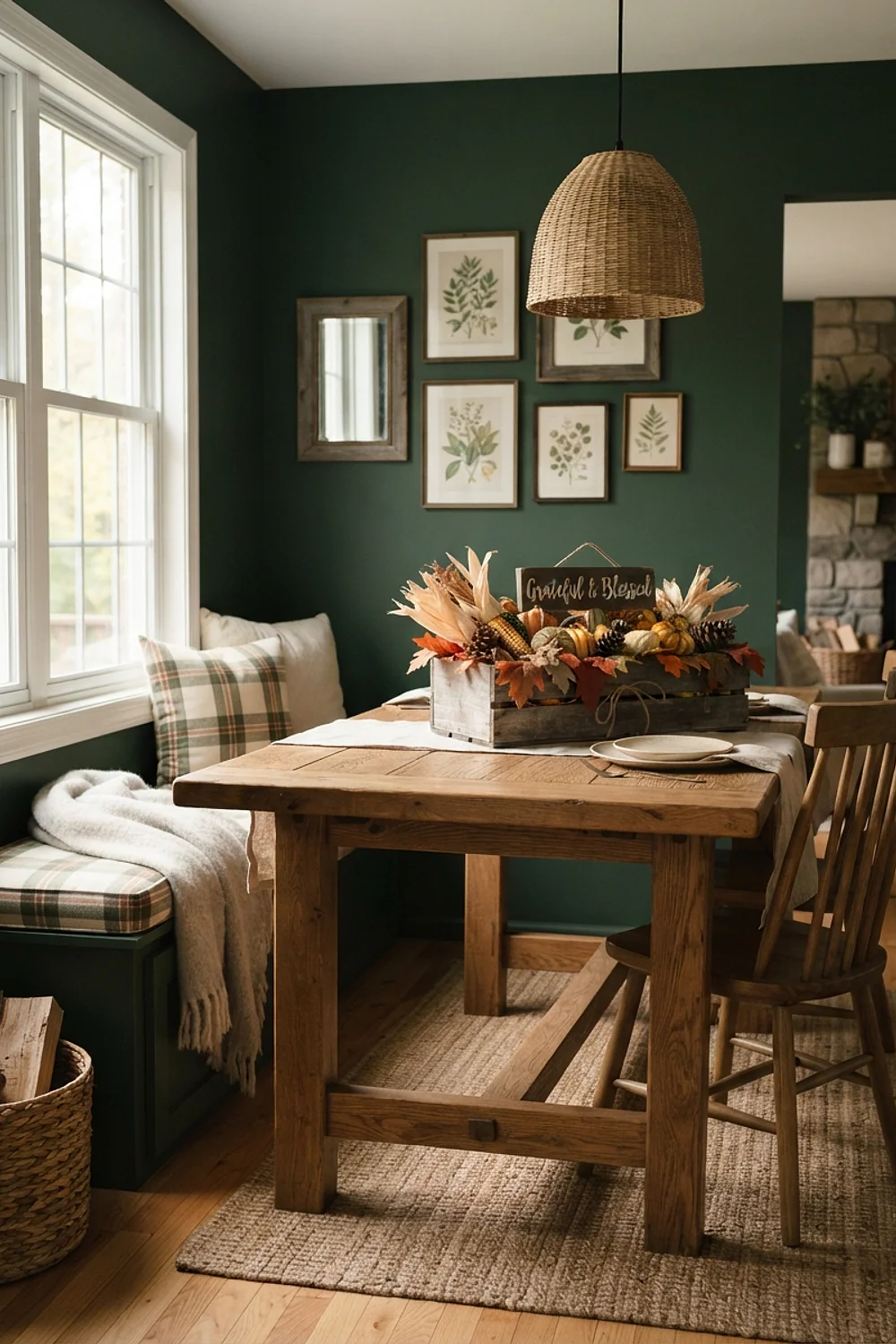
A big-box seasonal aisle sells the same copper pumpkin to a thousand houses, and the quality is usually thin. Thrift shops and estate sales carry better raw material: brass candlesticks, copper bowls, and linen napkins at roughly $2-$6 each.
Test brass with a magnet, since solid brass won’t stick, and polish unlacquered pieces with Brasso if you like a bright finish. Unlacquered brass tarnishes over time, which some people love and others find annoying. Embrace the patina for a table, but polish for a mantel.
18. DIY pieces too big to store
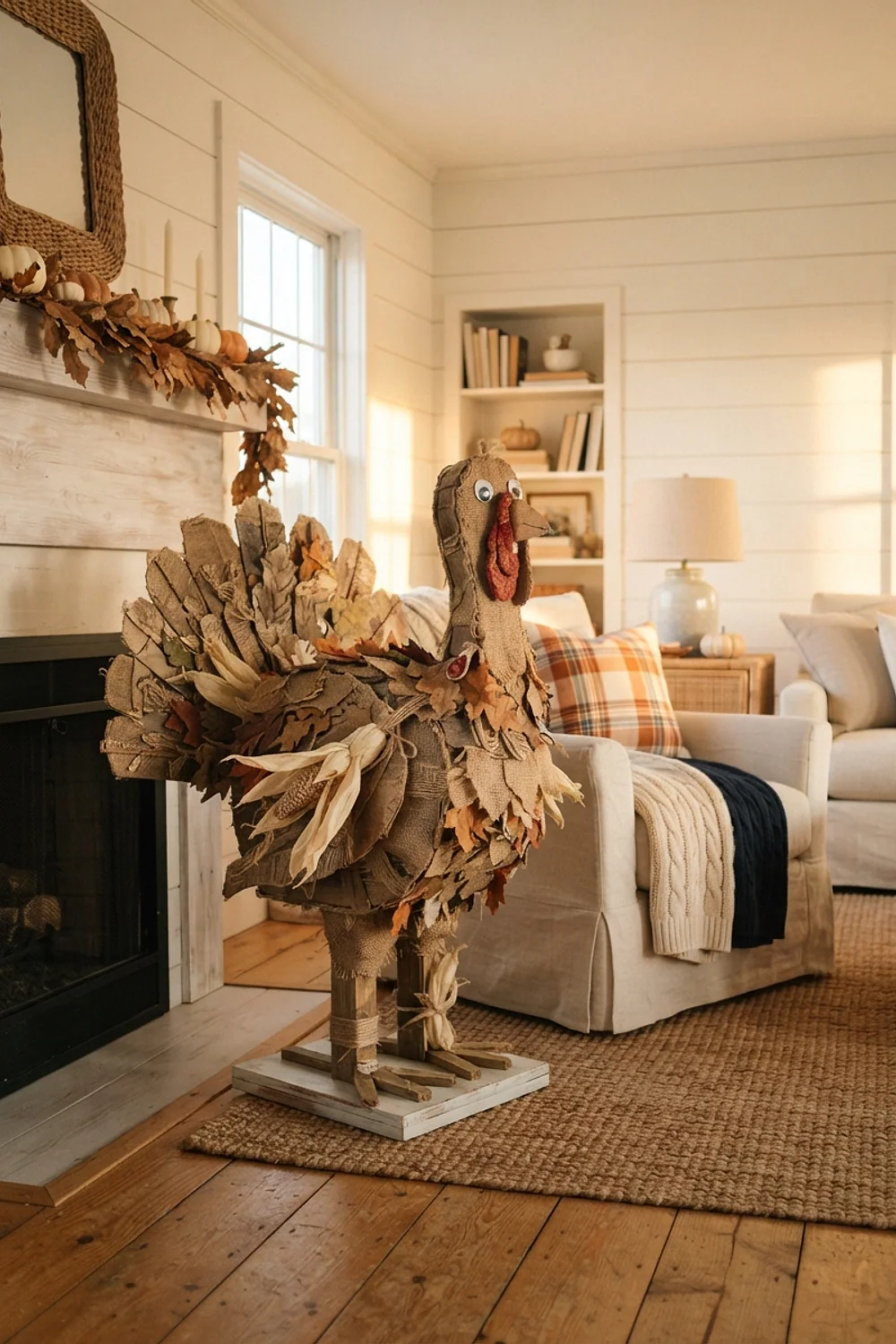
A 30-inch hand-wired wreath won’t fit in a 27-quart bin, so it ends up hanging on a garage nail where dust and temperature swings finish it off. Oversize projects are the ones that get thrown out in February.
Plan the storage before gluing. Paper garlands fold flat into a 16 by 12 inch file box, and wreaths under 24 inches stack in a wide shallow bin. Anyone short on closet space should favor flat or collapsible designs over bulky ones.
How to get the look
Good diy thanksgiving decorations come from a sequence, not a shopping spree. Work in this order and most of the mistakes above never happen.
- Measure the table, mantel, and door before buying anything.
- Choose a three-color palette, with one color dark enough to contrast with your walls.
- Set the lowest, most functional layer first: runner, napkins, place cards.
- Add height with stems or branches, keeping the table below 12 inches.
- Dim the lights and test everything at 4pm and again after dark.
And consider upkeep before committing. Linen needs ironing, brass needs polish, real greenery needs replacing, so pick the maintenance you’ll tolerate in a year.
When to call a professional
Most diy thanksgiving decorations are safe to handle alone, but a few jobs aren’t. Call someone when the stakes are structural, electrical, or fire-related.
- A chimney sweep, before lighting a fire under a mantel loaded with garland.
- An electrician, if you want string lights wired to a hardwired outdoor outlet or a new switch.
- A florist, for an oversize arrangement above 30 inches that has to hold water for a long table.
- A handyman, for anything that needs to hang from a ceiling beam or support more than 10 pounds.
Everything else is a Saturday afternoon and a glue gun on low.
Pull it together
Diy thanksgiving decorations look best when each piece solves something: a low arrangement for conversation, a wide wreath for the walkway, a dimmed room for atmosphere. Skip the mistakes above and the rest is arranging.
Save or pin this list so it’s handy when you’re ready to start. Begin with one step: measure the table and door, then buy only what fits those numbers.
Frequently asked questions
How far ahead can I make diy thanksgiving decorations?
Two to three weeks ahead works for anything dried, faux, or paper. Real leaves, flowers, and carved pumpkins should wait until the day before or the morning of, since they wilt and rot fast.
Can I do diy thanksgiving decorations in a rental?
Yes, with over-the-door hangers, removable hooks for light items, and freestanding displays on a console or table. Skip nails and strong adhesives on painted surfaces, and test any hook in a hidden spot first.
How much should I spend on diy thanksgiving decorations?
About $40-$80 covers a table, a wreath, and a mantel if you mix farm-stand pumpkins with thrifted candlesticks and linens. Spending more rarely helps, since scale and color matter more than price.
Which decorations are safe around kids and pets?
Choose sturdy faux or fabric pieces over small glass ornaments, dried berries, and loose pinecones, which are choking hazards. Skip lit candles within reach, and note that some plants, such as chrysanthemums, are toxic to cats and dogs.